Faust previews seven sepsis papers for ER doctors, but the findings are video-only
His ACEP lecture preview covers fluids versus vasopressors, steroids, procalcitonin, cefepime safety and antibiotic length for kids' pneumonia. The text lists topics, not results.
Why it matters · These seven papers cover everyday choices in septic shock and pediatric infection that decide hospital admission, drug choice and antibiotic length. The text here names the questions but not the answers, so the evidence is in the video.
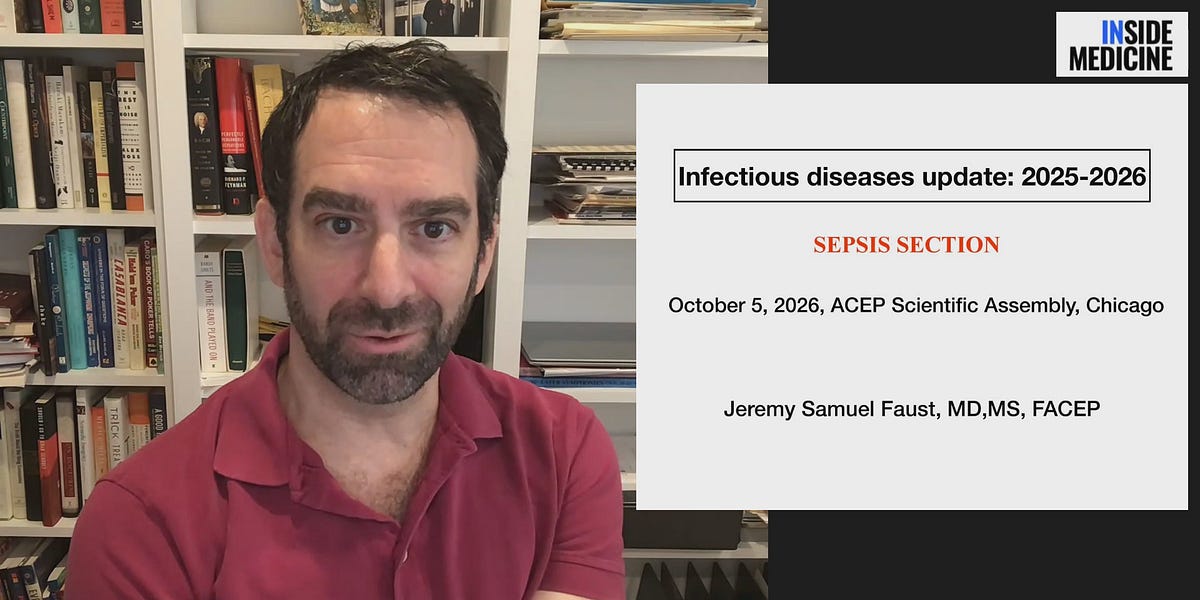
Jeremy Faust, an emergency physician who writes Inside Medicine, is giving a lecture at the American College of Emergency Physicians annual meeting. It covers the most important infectious-disease research published since last year's meeting, and this is his third year giving it. Before the talk, he posted a video version for general readers that walks through seven recent papers on sepsis and related problems such as pneumonia. He says he slows down in the video to explain background that his fellow doctors already know.
One caveat up front: the written post lists the questions the papers address. It gives no effect sizes, trial designs, sample sizes or conclusions. Those are only in the video.
The questions covered
- Real infection or contamination in children's blood cultures. When a child's blood culture grows bacteria, doctors have to decide whether it is a true bloodstream infection or a harmless contaminant. Faust notes that this call decides whether a child stays in hospital for days on antibiotics or goes home safely.
- Vasopressors or IV fluids for septic shock. He covers which works better: drugs that raise blood pressure or intravenous fluids. A second study compares types of fluids.
- Steroids in sepsis. Whether they improve outcomes, in both children and adults.