Organ banking takes a promising preclinical step, while claims about amoeba drugs, candy rules and data center harms still need stronger evidence.
Picked from 104 new articles across 12 sources · arrow keys for other days
Today in 30 seconds
30s left
Pig kidneys made urine after a year in cryostorage, using rewarming scaled 100-fold from rodents; banked organs could ease transplant time limits. story 1 ↓
A marine bacterium's compound killed brain-eating amoebas faster than current treatment, but whether it crosses the blood-brain barrier is untested. story 2 ↓
A dietitian argues fewer candy rules may curb children's overeating, but her article offers no effect sizes or trial results. story 3 ↓
Data center health fears are shaping midterms; a model projects nearly 1,300 annual deaths by 2030, but no resident studies are cited. story 4 ↓
As many as 5 million seniors may need a new Medicare Advantage plan because theirs is ending; enrollment closes Dec. 7.
1/4Fight Aging!· Reason· Nov 1
Pig kidneys make urine after a year in cryogenic storage
Researchers stored human-sized pig kidneys at -150 °C for up to a year, rewarmed them using iron oxide nanoparticles and a magnetic field, then transplanted them. The organs produced urine immediately.
Why it matters · Banking organs for months instead of hours would loosen the time limits that now constrain how far donor kidneys travel and how carefully recipients are matched.
Know this first
Context from the editor, not the article · 27 sec
1 · The source's viewpoint
Fight Aging! argues that aging's mechanisms should be medical targets. Its author, Reason, founded Repair Biotechnologies and sells longevity consulting. The newsletter wraps commentary around quoted paper abstracts, so sample sizes are often absent.
2 · Why organ storage matters
A donor kidney on ice stays usable for roughly a day. That window limits how far organs travel and how carefully recipients can be matched, and good organs are discarded when no match is found in time.
3 · Freezing damages tissue
Ice crystals tear cells apart. Vitrification avoids them by loading tissue with antifreeze-like chemicals and cooling it into a glassy solid. It works easily on small samples; whole organs have been the hard part.
2/4STAT· Amanda Erickson· Oct 27
Compound from marine bacterium kills brain-eating amoebas faster than current treatment
Researchers isolated a marine bacterial compound that killed several strains of the brain-eating amoeba faster than the current treatment. STAT gives no effect sizes, and it isn't yet known whether the compound can reach the brain.
Why it matters · This is a lead against a disease that kills nearly everyone it infects, but the evidence shown here is too thin to change care or justify optimism about patients.
Know this first
Context from the editor, not the article · 18 sec
1 · The brain-eating amoeba
Naegleria fowleri lives in warm fresh water. It infects people when contaminated water goes up the nose, then travels along the olfactory nerve to the brain. Swallowing the water does not cause this infection.
2 · Why brain drugs often fail
The blood-brain barrier is a tightly sealed lining of the brain's blood vessels that keeps most molecules out. A compound can kill a pathogen in a lab test yet never reach useful levels inside the brain.
Image: STAT
3/4The Conversation: Health· Bryn Beeder, Assistant Clinical Lecturer in Kinesiology, Nutrition, and Health, Miami University· Nov 1
Dietitian argues fewer candy rules may curb children's overeating
A registered dietitian argues that treating candy as ordinary food, rather than locking it away, may help children heed fullness cues. It is a reasoned opinion, and the article gives no trial data or effect sizes.
Why it matters · Candy rules are a routine family decision, and the case for loosening them sounds more proven than it is, so the strength of the evidence matters.
Know this first
Context from the editor, not the article · 20 sec
1 · Why parents restrict food
Candy has little nutritional value, and the American Heart Association advises children aged 2 to 18 to stay under about 25 grams of added sugar daily, and under-2s to avoid it. Limits therefore have a real rationale.
2 · The restriction research
Small short-term experiments, notably Fisher and Birch in 1999, found preschoolers wanted a snack food more after access was limited. Much other research is observational: parents may restrict because a child already overeats, which muddies cause and effect.
Image: The Conversation: Health
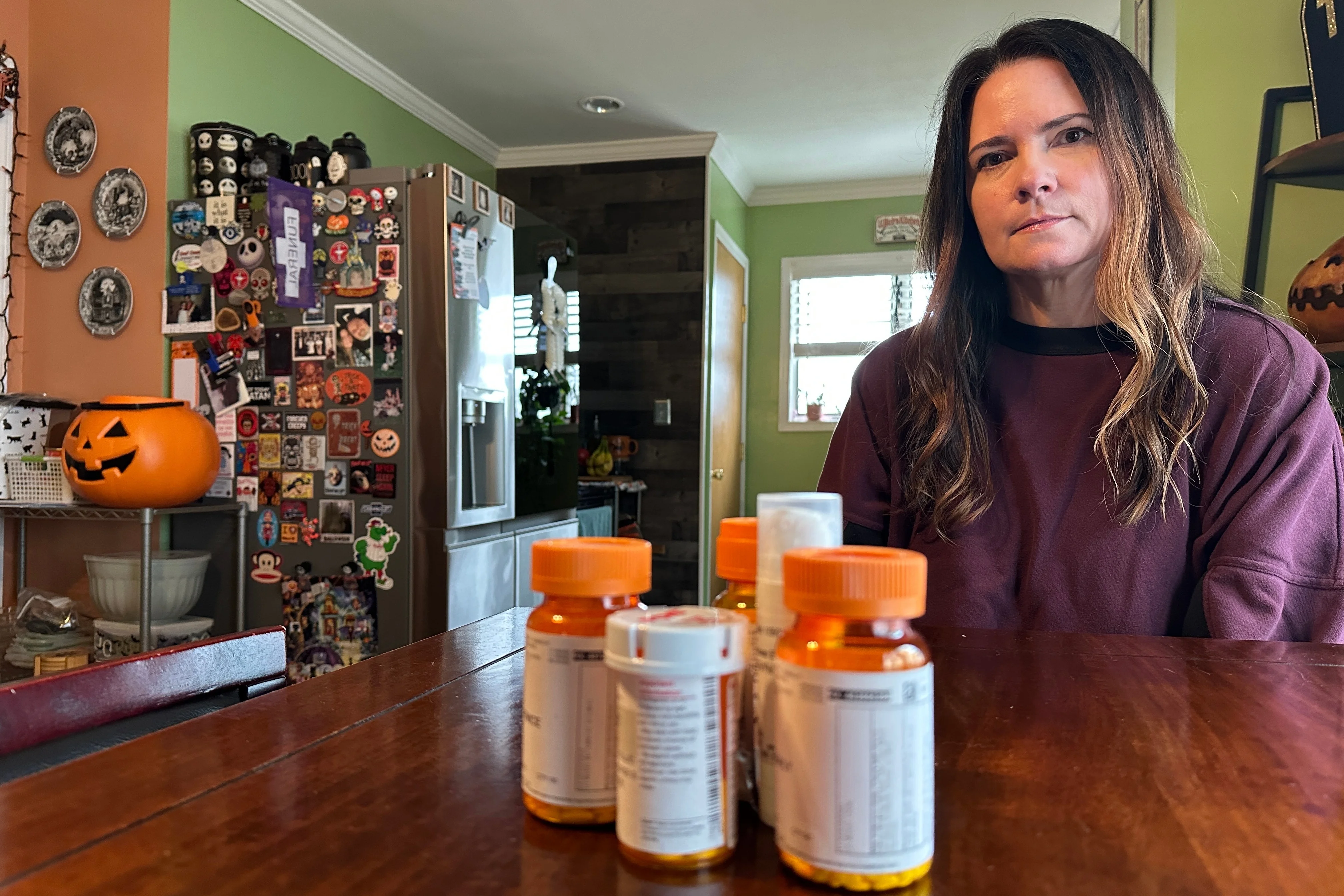
With Halloween just past, Bryn Beeder, a registered dietitian and clinical lecturer at Miami University, is urging parents in The Conversation to stop policing the candy bag. She argues that fewer limits may help children notice hunger and fullness, and make sweets less of a fixation.
4/4KFF Health News· Stephanie Armour and Amanda Seitz· Oct 29
Data center health fears shape midterm races, though the research is early
Opposition to AI data centers is shaping key races in Arizona and Ohio, driven partly by health fears. The main number is a modeled projection of 1,300 deaths yearly by 2030, not measured harm.
Why it matters · Siting decisions are being made before direct health evidence exists, so separating established pollution science from modeling and advocacy claims matters for judging the risks.
Know this first
Context from the editor, not the article · 27 sec
1 · Why data centers pollute
Data centers use enormous amounts of electricity. Pollution can come from the power plants that supply them and from on-site turbines or diesel generators, which release combustion pollutants such as nitrogen oxides.
2 · How health burden models work
These studies generally estimate emissions, simulate where pollution travels, then apply known links between exposure and illness to calculate expected deaths and costs. They produce projections, and do not count illnesses in actual people.
3 · Modeled versus observed evidence
Direct evidence would compare the health of people living near facilities with similar people living farther away, ideally over years. Such studies take time, and even then are observational, so they can show association more readily than cause.
The November 2nd newsletter from Fight Aging! — a site run by Reason, founder of the longevity biotech Repair Biotechnologies — rounds up fifteen research items. Most are reviews or preclinical work. Two have hard numbers.
A kidney stored for a year, then transplanted
Donor kidneys currently sit on ice for about a day before they must be used. Vitrification would change that: load tissue with 1, an antifreeze-like solution, and cool it into a glassy solid instead of letting cell-shredding ice crystals form.
Scale has been the obstacle, and rewarming most of all. Heat applied from outside a large organ creeps inward, so the core lingers where ice can form and uneven expansion cracks the tissue. The fix used here is 2: silica-coated iron oxide nanoparticles are perfused through the blood vessels before freezing, and an alternating electromagnetic field later makes them heat the whole volume at once. As an analogy, thousands of microscopic heaters built into the block rather than an oven around it.
The method had worked in rodent kidneys. These were human-scale pig kidneys, 100 times larger, held at -150 °C for up to a year. A new cryoprotectant formulation and multi-temperature perfusion allowed ice-free 3 at the slow cooling rates a big organ permits; controlled cooling with 4 cut thermal stress; staged rewarming avoided cracking.
On a warm perfusion machine the rewarmed kidneys showed vascular, metabolic and excretory function with limited tissue injury. Transplanted, they received blood evenly and produced urine immediately. Function approached that of conventional cold storage — and resembled kidneys given cryoprotectant but never frozen, suggesting freezing, a year of storage and rewarming added little extra damage.
The quoted abstract gives no animal numbers, follow-up length or survival. Reason reads this partly as progress toward reviving 5 patients, while noting the nanoparticles must be loaded before preservation, so it cannot help anyone already stored.
14% longer life in mice, via RNA splicing
6 can make old cells youthful but risk erasing cell identity and causing tumours. So a team trained a machine learning model to score the "transcriptomic age" of human skin cells, then screened genes for ones that pushed old cells younger.
The top hit was SRSF1, a 7 — a protein controlling how RNA transcripts are cut and joined, affecting thousands of genes. Overexpressing it reduced senescence, protein-folding stress and inflammation while the cells kept their fibroblast identity. In aged mice, where it concentrated in the liver, it extended lifespan by 14%.
That is a middling figure for the field, with no cohort size or starting age given, and liver-dominant delivery leaves open how much is whole-body effect. Elsewhere in the issue, a "lysosomal clock" predicts age from changes in cells' recycling organelles; Reason notes a clock that tracks age does not show the change causes aging.
The November 2nd newsletter from Fight Aging!, a site run by Reason, founder of the longevity biotech Repair Biotechnologies, collects fifteen recent research items with commentary. Six are reviews or position papers; most of the remainder are studies in cells, worms, mice or pigs. Two items carry concrete results worth reading closely: a kidney preservation experiment and a mouse lifespan study.
Storing a human-sized kidney for a year
Transplant organs are currently kept in static cold storage — on ice, usable for about a day. Vitrification would extend that enormously: tissue is loaded with a 1, an antifreeze-like solution, and cooled until it becomes a glassy solid rather than forming ice crystals that shred cells.
The difficulty is scale. Reason lists the obstacles: pushing cryoprotectant evenly through a large organ, finding a formulation that works at the slower cooling rates a big mass permits, and rewarming deep tissue consistently. Warming from the outside is the core problem. Heat crawls inward, so the centre lingers at temperatures where ice can form, and uneven expansion cracks the organ.
The answer used here is 2. Silica-coated iron oxide nanoparticles are perfused through the blood vessels before 3. On rewarming, an alternating electromagnetic field makes those particles generate heat throughout the organ's volume at once. As an analogy: instead of putting a frozen block in an oven, you build thousands of microscopic heaters into it and switch them all on together.
The approach had already supported long-term storage and transplantation of rodent kidneys. The new work applied it to human-scale porcine kidneys — organs 100 times larger than any previously nanowarmed — stored at -150 °C for up to one year. Three other changes made the scale-up work: a new cryoprotectant formulation combined with a perfusion strategy run at several temperatures, which allowed ice-free vitrification at achievable cooling rates; controlled cooling with 4 (a hold at an intermediate temperature) to limit thermal stress; and staged volumetric rewarming, fast enough to avoid ice but without cracking.
The results: rewarmed kidneys showed vascular, metabolic and excretory function on 5 — a machine that circulates warm fluid through an organ to test whether it works — with limited histological injury. After transplantation they reperfused homogeneously, meaning blood reached all regions evenly, and produced urine immediately. Across several measures, function approached that of static cold storage. It was also similar to kidneys that had been exposed to cryoprotectant but never frozen, which is the more informative comparison: it implies the freezing, the year of storage and the rewarming added little injury beyond whatever the cryoprotectant itself causes.
What the quoted text does not give: how many animals, how long recipients were followed, whether the kidneys sustained life. Immediate urine production is encouraging but not the same as durable function. Human organs and human recipients are further steps again. Reason frames this partly as progress toward reviving people preserved by 6, and notes a limit on that reading — the nanoparticles must be loaded before vitrification, so the method cannot be applied retroactively to anyone already preserved. The cryonics framing is his; the demonstrated result is about kidneys.
A 7 that extended mouse lifespan 14%
The second substantive item concerns partial reprogramming. 8 are four proteins that push adult cells back toward an embryonic-like state. They restore youthful patterns of gene activity, but they also risk erasing a cell's identity and seeding tumours, and the right dose and timing differ across cell types within a single tissue. As one researcher quoted puts it, achieving rejuvenation without losing cell identity "requires walking a fine line."
So the team built a machine learning model trained on gene-expression profiles from human skin fibroblasts across a wide age range, which could estimate a cell's "transcriptomic age." That gave them a score to optimise. They screened a focused set of candidate genes for ones whose overexpression moved old cells toward a younger score.
The winner encoded SRSF1, a splicing factor — a protein that governs how RNA transcripts are cut and rejoined, and so can influence the expression of thousands of genes at once. That centrality is why splicing factors interest the field: they are control points rather than single levers.
Overexpressing SRSF1 reduced three hallmarks of aging in the fibroblasts: 9 (cells that stop dividing but don't die and secrete inflammatory signals), proteostatic stress, and chronic low-grade inflammation. Crucially, the cells kept their identity — spindle shape, fibroblast gene expression, no activation of pluripotency programs. Delivered to aged mice, where it accumulated mainly in the liver, SRSF1 slowed the rate of aging and extended lifespan by 14%.
Fourteen percent in mice is a real but unremarkable number by the standards of the field; many interventions reach that range and none has translated. The summary gives no cohort size, no sex breakdown, no starting age, and no indication whether the gain came from delaying deaths or truncating a sick tail. Liver-dominant delivery also raises the question of how much of the effect is systemic rejuvenation versus one organ working better.
The rest, briefly
Other items include a "lysosomal clock" — a conserved signature of aging in lysosomes (the cell's recycling organelles) built from accumulated glycerophosphodiesters and cystine, blunted by caloric restriction in peripheral tissues but not the brain. Reason is careful here: a clock that predicts age does not show that the measured change causes aging. Proving that means reversing the change in isolation and watching what happens.
A worm study traces cold-induced longevity to a muscle-made metabolite, dihydrobiopterin, transported to other tissues and converted into the cofactor tetrahydrobiopterin; raising its synthesis in muscle alone extended lifespan and suppressed protein aggregation elsewhere, even at normal temperatures. In human cells, the same metabolite reduced aggregation of Huntington's- and ALS-associated proteins.
A third notable item reports a mouse model in which liver cancer arose from DNA demethylation driven by a YAP1–TEAD–TET1 pathway, without the canonical driver mutations — relevant to how much of aging's cancer risk is epigenetic rather than mutational.
Remember
Rewarmed kidneys matched organs given cryoprotectant but never frozen — the freezing itself added little measurable injury.
No animal counts, follow-up duration or recipient survival are reported, so durable kidney function remains unproven.
An aging clock that predicts age proves correlation only; causation needs the change reversed in isolation.
Researchers have isolated a compound from a marine bacterium that killed multiple strains of 1, the so-called brain-eating amoeba, faster than the current treatment. The news comes from a short item in STAT's Morning Rounds newsletter, which gives no compound name, kill times or journal. It is a lead, not a result that changes care.
Why this infection is so hard to treat
N. fowleri lives in warm fresh water. Water carrying the amoeba goes up the nose, and the organism follows the olfactory nerve into the brain, causing a rapid infection called 2. STAT calls it "nearly always fatal"; US public health figures put deaths above 97%.
The disease usually moves over days, so a faster-killing drug has obvious appeal. But the current treatment isn't named in the item, and we aren't told how much faster the compound worked or whether it harms human cells. The experimental setting isn't described either, though the next steps suggest early, preclinical work.
The next test
The researchers say they will now study whether the compound can cross the 3, the tightly sealed lining of the brain's blood vessels that keeps most molecules out. This is the key question: a compound that kills amoebas but can't reach them in the brain may not help patients, unless another delivery route can be found. STAT says "much work" remains before this could become a medicine.
Also in the newsletter
Cancer results. At the European Society for Medical Oncology meeting in Madrid, STAT's Andrew Joseph highlights Amgen's 4 plus AstraZeneca's 5, two immune-based drugs that "greatly extended survival" in small cell lung cancer. No figures are given here. Merck and Moderna also presented their melanoma vaccine results, which STAT calls a milestone. New drugs targeting 6, a commonly mutated cancer gene, showed encouraging data in lung and pancreatic cancer.
Children's emergency care. In an opinion piece, two pediatric care experts argue that community hospitals are losing the ability to manage even common childhood conditions. They describe a baby who died of 7 (respiratory syncytial virus) at a rural California hospital after no children's hospital had room. That is one case and an argument, with no national data in the newsletter.
Gene therapy for Amish and Mennonite communities. Physician Kevin Strauss is building a company to develop gene therapies for rare diseases common in these groups, including reviving treatments shelved as unprofitable. A calf treated for a bovine form of 8, an inherited disorder, is now a healthy 5-year-old. That is one animal, not evidence in humans.
Researchers have isolated a compound from a marine bacterium that killed multiple strains of 1, the so-called brain-eating amoeba, faster than the current treatment. The report comes from STAT's Morning Rounds newsletter and runs to two short paragraphs. It gives no compound name, kill times, journal or authors, and it doesn't describe the experiments. This write-up can only go as far as that source allows.
The problem
N. fowleri lives in warm fresh water and is rare as a human infection. Established public health guidance describes the route: water carrying the amoeba goes up the nose, and the organism follows the olfactory nerve into the brain. There it causes 2, a rapid and destructive brain infection. STAT calls the infection "nearly always fatal"; US public health figures put the death rate above 97%.
Treatment is hard for three reasons, the last of them specific to this organism's location:
Speed. The disease usually progresses over days, so slow-acting drugs may arrive too late.
Thin evidence. Cases are too rare for conventional trials, so doctors rely on drug combinations, typically including amphotericin B and miltefosine, supported mainly by lab data and case reports. STAT doesn't say which drug or regimen served as the "current treatment" in this comparison.
Location. A drug has to reach the infected brain tissue in sufficient concentration.
What was found, and what it doesn't show
Two claims are reported. The substance killed more than one strain, which matters because a drug that works on only one lab strain might miss others found in patients. It also killed them faster than the current treatment, which is relevant to a disease that moves this quickly.
STAT doesn't report how much faster, at what dose, or whether the compound harms human cells. The article also doesn't explicitly say where the killing was measured. Because crossing the 3 is described as a future question, this appears to be early, preclinical work, though that is an inference.
The next hurdle
The researchers say their next focus is whether the compound can cross the blood-brain barrier, the tightly sealed lining of the brain's blood vessels that keeps most molecules out. As an analogy, a key that opens the lock is of no use if it can't get into the building. If the compound can't get through, its speed against the amoeba may not help patients, unless another delivery route can be found.
STAT says only that "much work" remains. In general, a candidate drug would also need animal efficacy and safety testing before any human use. Rare, fast-moving cases would make a conventional trial difficult, so even a promising compound might face an unusual path to evidence. That last point is general context, not a claim from the article.
Also in the newsletter
Cancer results from Madrid. STAT's reporters cover the annual meeting of the European Society for Medical Oncology, though this roundup gives no effect sizes.
Andrew Joseph singles out the combination of Amgen's 4, which directs immune T cells to tumor cells, and AstraZeneca's , a checkpoint inhibitor that releases a brake on immune cells. It "greatly extended survival" in small cell lung cancer.
Pediatric emergency care. In a STAT opinion piece, two pediatric care experts describe a baby who died of 8 (respiratory syncytial virus) at a small rural hospital in northern California after staff could not find a children's hospital with room. They argue that community hospitals are losing the ability to manage even common childhood conditions, while children's hospitals now "routinely turn sick children away." This is an argument built around one case, and the newsletter gives no national figures.
Gene therapy for Amish and Mennonite communities. Physician Kevin Strauss is building a biotech company to develop gene therapies for rare diseases that are unusually common in these groups. One is 9, an inherited disorder that is life-threatening in its human form. A calf named Petunia, treated for a bovine version, is now a healthy 5-year-old. That is a single animal, not human evidence. The company is also trying to revive treatments abandoned because too few patients make them unprofitable.
Remember
Killing an amoeba quickly matters only if the drug reaches the brain, which hasn't been tested for this compound.
The report names neither the compound nor the comparator and gives no effect size, so its claim can't be judged yet.
One recovered calf shows a gene therapy story worth following, not evidence that the approach works in people.
This is a reasoned opinion, not a new study. The article says "research suggests" but gives no effect sizes, sample sizes or trial results.
The argument
Beeder accepts that some foods are more nutritious than others. Her objection is to calling them "good" or "bad," moral words that she says tie eating to willpower and guilt.
She also separates two kinds of limit. In 1, the child knows about the limit: the candy is in the house but kept out of reach. In 2, the parent simply doesn't buy it. Her concern is the overt kind. A visible limit may raise interest in the food, and that preoccupation may make fullness signals harder to notice once the cupboard opens.
The alternative
She draws on 3, an approach that teaches people to rely on body signals for when to start and stop eating. She pairs it with the 4, a framework from the nonprofit Ellyn Satter Institute. Parents decide when and what food is served; children decide what and how much they eat from their plates.
So parents still control the menu, which makes this more structured than the headline's "as much candy as they want." Candy joins the regular rotation, served alongside the rest of the meal so it isn't a reward. Beeder also advises against commenting on what children eat, even to praise them for trying broccoli.
Her own three children eat freely on Halloween night, "quite a bit" by her account. After that, she offers a piece or two with meals, and she says their interest fades within days. That is one family's experience, not evidence.
How far the evidence goes
The article doesn't assess this, so here is some outside context. Small experiments, notably by Fisher and Birch around 1999, found that preschoolers wanted a snack food more and ate more of it after access was limited. But those studies measured short-term behavior, not long-term health.
Longer-term findings are largely 5 and prone to 6: parents may restrict food because a child already overeats.
The article also doesn't address how much sugar is reasonable, dental health, or children with diabetes or a history of disordered eating. Letting go for one evening looks low-risk. Serving candy regularly all year is a bigger step, and the article shows no data for it.
Halloween has revived a familiar household negotiation over how much candy is enough. In an essay for The Conversation, Bryn Beeder, a registered dietitian and clinical lecturer at Miami University, argues that parents should do less of it. Her position is that managing the candy supply less tightly and giving children more say may help them learn to read hunger and fullness, and may leave them less fixated on sweets.
This is an argued opinion from a clinician and parent, not a report of a new study. As provided to us, the piece says "research suggests" but gives no sample sizes, effect sizes or study names.
The problem she describes
Beeder starts from a fact she doesn't dispute: some foods are more nutritious than others. Her objection is to how people express that difference. "Good" and "bad" are moral words, she writes, and applying them to food can turn eating into a test of willpower that ends in pride or guilt. That judgment can then shape what is served freely at home and what is kept off limits.
The article separates two kinds of restriction:
Overt restriction: the child knows a limit exists. The candy is in the house, but it sits in a cupboard out of reach, or the child is told it's off limits.
Covert restriction: the child doesn't experience a limit directly, because the parent simply doesn't buy bags of candy.
Her criticism is aimed at the overt kind. The proposed mechanism has two steps. A visible limit raises a child's interest in the forbidden food, and that preoccupation then makes fullness signals harder to notice. So when the cupboard finally opens, the child may eat well past the point of feeling full.
What she suggests instead
Her alternative combines 1, an approach that teaches people to rely on their body's signals for when to start and stop eating, with the 2. That framework comes from the Ellyn Satter Institute, a nonprofit focused on people's relationship with food. It divides the job in two: parents decide when and what food is served, and children decide what and how much they eat from their plates.
That split is more structured than the headline's "as much candy as they want" implies. Parents still control the menu. Candy simply becomes one item in the rotation, including outside holidays, so that repeated exposure makes it less special. It still tastes good, Beeder notes, but a child who trusts it will appear again has less reason to overdo it.
Her practical suggestions are:
Involve children in planning and shopping. Let them pick a treat for a few meals each week and serve it on the plate with everything else, so that dessert isn't something earned.
Don't comment on what they eat. That includes praise for finally trying the broccoli, which she says builds a hierarchy of foods.
Examine your own habits. Children notice whether you restrict your cravings as punishment or struggle to stop eating a favorite treat.
Consider a free-for-all day. Her three children eat without limit on Halloween night, usually "quite a bit."
In her family, a stomachache afterward becomes a judgment-free conversation about how a lot of candy makes the body feel. Over the next few days, she says, interest fades while the family offers a piece or two with meals, and leftovers end up as props for pretend play. That is one family's experience, not evidence.
How strong is the evidence?
The article doesn't assess this, so what follows is outside context. The restriction idea has real support, most often traced to work by Jennifer Fisher and Leann Birch around 1999. Preschoolers in their experiments showed more interest in a snack food, and ate more of it when it became available, after access had been limited. But those were small, short studies of immediate behavior. They cannot show what happens to a child's weight, health or eating habits years later.
Longer-term findings are mostly 3, and they have a built-in problem of 4. A parent may tighten the rules because a child already eats a lot, which makes restriction look like the cause of overeating when it may be partly a response to it. Studies relying on parents' reports of their own feeding styles add further noise.
So the defensible claim is narrow: conspicuously forbidding a tasty food can raise a young child's short-term interest in it. The article's stronger implication, that fewer limits produce better long-term eating, is plausible but much less firmly established. Its "research-based" label for the Satter framework also can't be checked from the piece, which gives no outcome data.
What the article leaves open
Several questions a parent might ask go unanswered:
Dose: "a few meals each week" and "a piece or two" are not tested amounts. The article doesn't set them against added-sugar guidance, or address teeth.
Which children: it doesn't discuss diabetes, food allergies, a history of disordered eating, or differences by age. Its examples read as aimed at generally healthy children. Those with a medical condition should get individual advice.
Covert restriction: the article defines it but doesn't say whether it works better or worse. Not stocking candy may spare a child the forbidden-fruit effect, though the article doesn't make that argument directly. Its approach of serving treats regularly is a different choice.
Abundance: intuitive eating assumes a child can respond to internal cues even when surrounded by foods engineered to be very appealing. The article doesn't test that assumption.
Beeder's closing point is much easier to defend than her broader theory: one evening of holiday eating does not define a child's health. A low-drama approach to a single night carries little apparent risk. Serving candy regularly year-round is a bigger step, and it is the part of her advice that most needs evidence the article doesn't provide.
Remember
The best-supported finding is narrow: forbidding a tasty food visibly can raise young children's short-term interest in it.
The Satter framework keeps parents in charge of timing and menu, so it isn't a free-for-all.
Tolerating one night of excess and serving candy regularly year-round are separate decisions, and the second needs stronger evidence.
Open desert in Page, Arizona, illustrating the rural land data centers are moving onto for space.
Opposition to artificial intelligence data centers has become a campaign issue ahead of the Nov. 3 US midterm elections, and KFF Health News reports that health fears are part of the reason. The evidence behind those fears is uneven, and its best-known number is a projection, not a count of observed harm.
One town's fight
In Page, Arizona, population about 7,000, the City Council approved selling 500 acres for a proposed $10 billion 1 data center, a very large complex housing the servers behind AI. The developer still needs zoning and other approvals. In July, voters ousted the mayor amid backlash over the sale. Neighbors cite noise, light and heat.
How strong is the evidence?
Air pollution has the firmest footing. Gas turbines and diesel generators emit pollutants such as 2, a combustion gas, and this kind of pollution has been linked to heart and respiratory disease. Modeling led by University of California-Riverside researchers projects nearly 1,300 deaths annually by 2030 and a 3, the estimated cost of illness and early death, above $20 billion in 2028. That estimate shows what is expected under the model's assumptions. The article doesn't give its methods or uncertainty range.
Noise can exceed 90 decibels, enough to harm hearing. But the article doesn't say at what distance. Sound fades as it travels, and damage depends on duration as well as loudness, so that figure doesn't establish the risk at a nearby home.
Other claims are less developed here. Advocacy and environmental groups say cooling components can contain 4, synthetic substances that build up in human tissue, and that round-the-clock lighting can raise chronic disease risk. The article reports no measured contamination or health outcomes from these sources.
The 5, the industry's trade group, says a review of Virginia, the largest market, found backup generator use minimal and that existing rules limit emissions. Alison Steele of the 6, a public health nonprofit, argues that waiting is the problem: by the time substantial research exists, "the decisions are being made now."
The political fallout
About 1,400 data centers operate in the US, and more than 2,000 others are planned. Excluding Virginia, 92% of capacity under construction is in states Trump won, according to market intelligence company 7. Two in three Americans oppose new construction, per an October Washington Post-ABC News-Ipsos poll.
Ohio has more than a dozen local ballot measures on the facilities, and Democrat Sherrod Brown is attacking Republican Sen. Jon Husted as "the face of data centers." A Republican campaign memo called the issue "the anchor" around Husted's neck. Husted says the decision should stay local.
These polls measure concern, not harm. The article cites no study tracking the health of people living near data centers, so the risk for a town like Page remains unknown.
Opposition to artificial intelligence data centers has become a campaign issue ahead of the Nov. 3 US midterm elections, and health concerns are part of the reason. KFF Health News reports that emerging research is giving ammunition to Democrats and to some Republicans who have broken with President Donald Trump, who backs the facilities as vital for economic growth. The research itself is at an early stage. The most quoted numbers are modeled projections, and several of the other health claims come from advocacy and environmental groups.
A town of 7,000 and a $10 billion proposal
Page, Arizona, near the Horseshoe Bend curve of the Colorado River, shows how the fight plays out locally. The City Council approved selling 500 acres for a proposed $10 billion 1 data center, meaning a very large complex built to house the servers behind AI. The exact location within that acreage is undecided, and the developer still needs zoning and other approvals.
Residents have signed petitions and put up "No Data Centers" signs. In July, voters ousted the mayor amid backlash over the land sale. One neighbor, Doug Herrera, 64, cites light, sound and rising temperatures. Another, Jan Boehme, worries about noise and hearing loss.
These projects are hard to settle locally because the decision comes first and the evidence later. Alison Steele, who runs the 2, a public health nonprofit, says research is at "the very early edge of the wave," and that by the time there is a substantial volume of it, "it's going to be too late, because the decisions are being made now."
What each health claim rests on
Air pollution has the firmest footing. Data centers consume large amounts of electricity and can rely on gas turbines and diesel generators. These machines emit pollutants including 3, a combustion gas that, as Shaolei Ren, an engineering professor at the University of California-Riverside, puts it, can "travel around the community and to those downwind." Environmental studies have linked this kind of pollution to heart conditions, respiratory problems, asthma and elevated cancer risk.
The headline figures come from modeling led by University of California-Riverside researchers: nearly 1,300 deaths annually by 2030, and a 4 of more than $20 billion a year in 2028. A public health burden is the estimated cost of illness and early death. The article doesn't describe the model's methods or its uncertainty range. Models like this generally apply established links between pollution and illness to projected emissions, so they show what would be expected if the assumptions hold. They do not show that deaths have been observed near any facility.
For scale, published estimates of US deaths from all fine-particle air pollution generally run to tens of thousands a year or more. That comparison comes from outside the article and is only rough, since the pollutants and methods may differ. It suggests the projected toll is real but a modest share of the national pollution burden, and that any harm would likely depend heavily on location.
Noise is plausible, but the exposure is unclear. Generators and heating and cooling systems can exceed 90 decibels, a level that can harm hearing, according to the article. It doesn't say how far from the equipment that level applies. That distance matters: sound fades as it travels, and hearing damage depends on both loudness and duration. As a benchmark, the US National Institute for Occupational Safety and Health recommends limiting workplace exposure to 85 A-weighted decibels averaged over eight hours. A reading beside a generator therefore says little about levels on a porch some distance away. Persistent lower-level hum could still be a nuisance, but the article offers no measurements at homes.
Forever chemicals and light rest largely on group claims here. Advocacy and environmental groups say cooling components can contain 5, synthetic substances that accumulate in human tissue. Containing a chemical is not the same as exposing residents to it, and the article reports no measured contamination from a facility. It also says cooling chemicals, heavy metals and construction runoff can enter water supplies or rivers, without quantifying how often. The groups also say light pollution from round-the-clock lighting can raise chronic disease risk.
Heat is described but not linked to outcomes. The facilities create "6," higher-temperature zones caused by intense energy demands. The article gives neither the size of the temperature rise nor any health outcome tied to it.
The industry's answer
Dan Diorio of the 7, the industry's trade group, says a review of Virginia, the largest US market, found that backup power use, including diesel generators, is minimal, and that existing state and federal rules limit emissions and other impacts. That is a real counterpoint on generators. However, as described, it covers one state and addresses backup use, so it may not settle the question for turbines or facilities elsewhere. The article gives no details of who conducted the review.
The political effect
About 1,400 data centers operate in the US, and more than 2,000 others are planned. According to 8, a market intelligence company, 60% of capacity under construction is in states Trump won by at least five points. Excluding Virginia, 92% is in states he won. Lee Hannah, a political scientist at Wright State University, says rural sites put Trump's coalition at particular risk, and that decisions made a year ago can now be "career-ending."
In Ohio, where about $2.5 billion in state and local tax breaks over a decade helped attract dozens of centers, more than a dozen local ballot measures on the facilities are up for a vote, the most of any state. Democrat Sherrod Brown calls Republican Sen. Jon Husted "the face of data centers." A National Republican Senatorial Committee memo obtained by Politico called the issue "the anchor hanging around Husted's neck." Husted says the decision should stay local and that companies should pay infrastructure costs. In Arizona's competitive 1st Congressional District, Republican Jay Feely says the centers are key to keeping up with China, while Democrat Amish Shah wants a pause in the district. The state's attorney general has called for a pause on new approvals and building.
The polls are consistent, with varying rigor:
National: two in three Americans oppose new construction (Washington Post-ABC News-Ipsos, October).
Arizona: 57% of registered voters oppose more large centers (Noble Predictive Insights, 1,040 respondents).
Ohio: 55% of adults oppose construction, about two-thirds view the environmental effect negatively, and about half say the same about quality of living (Ohio Northern University and SurveyUSA, 1,650 respondents).
The Arizona and Ohio surveys are 9, meaning respondents chose to join rather than being randomly sampled, which makes them less reliable. Polls also measure concern, not harm.
What remains open
The article cites no study tracking the health of people living near data centers, and doesn't report measured air, noise or water levels around any facility. Those are the data that would show whether the projected harms occur at real sites, and at what distance. Until then, the pollution concern has a sound basis in general, while the size of the risk for a given town like Page remains unknown.
Remember
Combustion pollution is a well-established health hazard; how much harm specific data centers cause remains far less certain.
A 90-decibel equipment reading doesn't establish risk at a home without knowing distance and duration of exposure.
Political backlash has outrun the science: Page's mayor lost in July, before any study of health near such facilities was cited.
Merck and Moderna presented results for their melanoma cancer vaccine, which STAT calls a milestone, though an embargo break took some of the wind out of the presentation.
More drugs targeting 6, a commonly mutated cancer-driving gene, are arriving. Roche reported strong data for divarasib in non-small cell lung cancer, and Incyte reported promising results for INCB161734 in pancreatic cancer.
7, which link chemotherapy to an antibody that seeks out tumor cells, had important readouts from Merck, AstraZeneca and GSK. Joseph notes that they should in theory be safer than standard chemotherapy, yet some carry serious side effects, and he asks whether better design can reduce them.