Reversed Diagnoses, Flipped Congress, Boiled Water · Morning Gist
Thursday, November 55 stories · 16 min
Reversed Diagnoses, Flipped Congress, Boiled Water
Democrats' congressional win reshapes the health policy fight, while stories on MS, tap water and IVF show how uncertainty plays out for patients.
Picked from 31 new articles across 12 sources · arrow keys for other days
Today in 30 seconds
30s left
Democrats won Congress and could target expired insurance subsidies and Medicaid cuts first, but Trump's veto limits what can become law. story 2 ↓
Doctors won key races, two candidates tied to Make America Healthy Again lost, and Democrats gain subpoena power over RFK Jr.'s department. story 5 ↓
Christina Applegate's MS diagnosis was reversed; neurologist Steven Novella says up to 20% of those diagnosed don't have it, often without medical error. story 1 ↓
One E. coli-positive sample triggered a two-day Pennsylvania boil-water advisory; it signals possible risk, not confirmed illness, and clearance requires two clean days. story 3 ↓
At least 24 states have fetal personhood language in law; one Georgia clinic sometimes trims egg yields by 30% to ease legal fears. story 4 ↓
1/5Science-Based Medicine· Steven Novella· Nov 4
Christina Applegate's MS diagnosis was reversed. A neurologist explains how that happens
Doctors told actress Christina Applegate her 2021 multiple sclerosis diagnosis is likely wrong. Neurologist Steven Novella argues this needn't signal error: MS has no definitive test, and doctors often must treat before certainty.
Why it matters · A reversed diagnosis can feel like failure or abandonment; this explains why working diagnoses change and why care can continue without a specific label.
Know this first
Context from the editor, not the article · 27 sec
1 · What multiple sclerosis is
In multiple sclerosis, the immune system attacks the brain, spinal cord and optic nerves, leaving inflamed patches of damage. Symptoms depend on where these occur, so the disease can look very different from one patient to another.
2 · Why diagnosis takes judgment
Most forms of MS have no single confirming test. Neurologists combine symptoms, examination, MRI scans and sometimes spinal fluid results, usually under formal criteria, while excluding other conditions that can produce similar findings.
3 · Long-term MS drugs
Since the 1990s, MS has had drugs that aim to reduce new inflammatory attacks and slow the disease rather than simply ease symptoms. Their existence raises the stakes of deciding early who should start treatment.
2/5KFF Health News· Stephanie Armour and Amanda Seitz· Nov 4
Democrats win Congress, setting up fight over Medicaid and Obamacare cuts
Democrats won the House and Senate and plan to reverse Republican health cuts, lower costs and investigate the Trump administration. Trump can still veto bills, so oversight may move faster than new coverage.
Why it matters · Coverage costs, Medicaid eligibility, drug pricing and federal vaccine policy could all be contested in 2027, but the deadlines facing patients may arrive before Washington acts.
Know this first
Context from the editor, not the article · 26 sec
1 · Obamacare subsidies
The Affordable Care Act sells private plans on insurance marketplaces, with tax credits lowering premiums. Pandemic-era relief laws enlarged those credits. The larger version ended last year, raising what many enrollees pay.
2 · The 2025 Republican law
The One Big Beautiful Bill Act, also called HR 1, made large cuts to public health programs. It also added work requirements for many adults on Medicaid, the state-federal program for low-income and disabled people.
3 · Why majorities aren't enough
A president can veto any bill, and overriding a veto takes two-thirds of both chambers. Most Senate legislation also needs 60 votes to end debate. Democrats' projected majorities fall short of both thresholds.
3/5The Conversation: Health· Sarah Fakhreddine, Assistant Professor of Civil and Environmental Engineering, Carnegie Mellon University· Nov 4
Why one E. coli-positive water sample triggered a Pennsylvania boil-water advisory
A routine sample near Pittsburgh tested positive for E. coli, prompting a two-day boil-water advisory. Two engineers explain why: the bacterium signals possible fecal contamination, and connected pipes mean one result can implicate a wider area.
Why it matters · Boil-water notices are a common public health alert, and knowing that a positive test signals possible risk, rather than confirmed illness, helps you respond proportionately and follow the precautions that matter.
Know this first
Context from the editor, not the article · 27 sec
1 · Indicator testing
Utilities cannot practically test water for every germ. They look for common gut bacteria instead, because finding them suggests fecal contamination, which may also have brought in pathogens that are harder to detect.
2 · Coliforms and E. coli
Coliforms are a broad bacterial group, and many live harmlessly in soil and water. E. coli is a member found mainly in the guts of people and animals, so it points more directly to fecal contamination.
3 · Why pipe pressure matters
4/5KFF Health News· Cheryl Platzman Weinstock· Nov 4
Fetal personhood laws are changing IVF care, doctors and patients say
KFF Health News reports that U.S. fertility doctors and patients are changing in vitro fertilization decisions over laws giving embryos legal rights, though the article cites no prosecution of an IVF doctor.
Why it matters · Legal uncertainty is already altering fertility counseling, embryo storage and some treatment protocols, so patients may need to ask about state law as well as medical odds.
Know this first
Context from the editor, not the article · 27 sec
1 · Why IVF leaves spare embryos
In vitro fertilization usually matures several eggs at once and fertilizes them in a lab. Some embryos are transferred, some frozen for later, and abnormal or unwanted ones are often discarded, which is why embryo status matters legally.
2 · After Roe fell
The Supreme Court's 2022 Dobbs decision ended the federal constitutional right to abortion and returned the question to states. Some states have since written rights for embryos or fetuses into abortion, civil or criminal law.
3 · Alabama's 2024 turning point
In February 2024 the Alabama Supreme Court ruled that frozen embryos count as children under the state's wrongful death law. Some clinics paused IVF, and legislators soon passed immunity protections for providers.
5/5STAT· Daniel Payne, Anil Oza, Sarah Todd, Bob Herman, Chelsea Cirruzzo,and John Wilkerson· Nov 4
Democrats win Congress in midterms that featured health care prominently
Democrats won both chambers of Congress after many campaigned on health costs and Medicaid. They can now investigate the Trump administration's health policies, though how far health care drove the vote remains unclear.
Why it matters · Control of Congress and key governorships shapes Medicaid coverage, insurance subsidies, vaccine policy and scrutiny of federal health agencies, which directly affect patients' access and costs.
Know this first
Context from the editor, not the article · 30 sec
1 · Medicaid cuts and ACA subsidies
Republicans' 2025 One Big Beautiful Bill reduced federal Medicaid spending and added work requirements. Separately, enhanced Affordable Care Act premium subsidies, which lowered marketplace insurance costs, expired at the end of 2025 after Congress did not extend them.
2 · What MAHA is
Make America Healthy Again is a movement built around Health Secretary Robert F. Kennedy Jr. It targets pesticides, ultra-processed food and chronic disease, and many of its leaders are skeptical of vaccines. It allied with Trump in 2024.
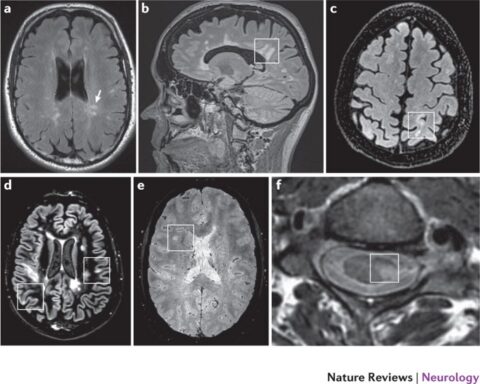
MRI scans with marked brain and spinal cord lesions, the type of evidence weighed when diagnosing MS.
Actress Christina Applegate said on her podcast that her doctors no longer think she has 1, an 2 disease of the brain, spinal cord and optic nerves. Diagnosed in 2021, she now feels "back to square one."
Steven Novella, a recently retired neurologist and the founder of Science-Based Medicine, argues that this doesn't mean her doctors erred. He says up to 20% of people diagnosed with MS turn out not to have it, though he cites no source for the figure. This is expert commentary rather than a study, and he has no inside knowledge of her case.
Why MS is hard to confirm
Few medical findings prove a disease on their own. MS is diagnosed by assembling evidence:
3, or areas of damage, arising at different times and in different parts of the 4
signs that those lesions are inflammatory
exclusion of other diseases that could explain the findings
Apart from certain subtypes, Novella says, no test definitively shows that someone has MS. More invasive testing isn't always the answer either, since the risks of a brain biopsy can outweigh the value of what it reveals.
Treating before certainty
Since the 1990s, 5, drugs that alter the course of MS rather than just ease symptoms, have become quite effective. Novella says this changed the clinical question from "does this patient have MS?" to "should this patient be treated for MS?"
MS then becomes a 6, a label doctors act on while knowing it may be revised. As an illustration using his upper figure, if 20 of 100 diagnosed patients don't have MS, they receive drugs they don't need. Waiting for certainty, however, delays treatment for the other 80. Novella judges delay the greater harm when time is critical, though he doesn't quantify either cost.
What changed
By his account, Applegate didn't respond to treatment, which he calls unusual. Her doctors repeated the workup, including a newer 7 technique the article doesn't name, and concluded she likely never had MS. Novella sees this as sound reassessment, not a failure.
Care without a label
Novella says the idea that effective treatment requires a specific diagnosis is a misconception, one reinforced by TV dramas like House. Neurologists often rule out anything active, progressive or specifically treatable, correct what they find, then manage symptoms and keep monitoring.
Having no diagnosis can therefore be better than having a destructive disease. That reassurance has limits: the article doesn't say what now explains Applegate's symptoms or whether every active cause has been excluded. And while a reversal doesn't prove a mistake, it doesn't rule one out either.
Actress Christina Applegate, a prominent advocate for people with 1, an 2 disease of the brain, spinal cord and optic nerves, said on her podcast that her doctors no longer think she has the condition. She was diagnosed in 2021. She now describes herself as "back to square one," without a specific diagnosis.
Steven Novella, a recently retired neurologist and the founder of Science-Based Medicine, uses the news to argue that a changed diagnosis is neither rare nor proof of poor care. He says up to 20% of people given an MS diagnosis turn out not to have it, though the article cites no source for that figure.
This is expert commentary, not a study. Novella was not an MS specialist, and he has no inside knowledge of Applegate's case. He relies on public information and general clinical principles.
Why a diagnosis can change without an error
Novella starts with what a diagnosis is. Some labels rest on objective pathology that can be documented unambiguously. Others describe a recognizable cluster of symptoms with a typical natural history but no known cause. Many fall in between, and doctors may draw on symptoms, examination, blood tests, biopsies, imaging, electrical tests of nerves and muscles, the time course, and response to treatment.
Few findings settle the question alone. A finding that is unique to one disease and confirms it is called 3, but Novella calls these "the happy exception." More often the evidence is partial. As a general example, he says an antibody in the blood might correlate with a particular syndrome only 60–80% of the time. Other findings show up in several diseases, or point only to a category of disease.
Why MS is especially hard to pin down
To diagnose MS, a doctor needs three things:
Multiple 4, or areas of damage, separated in time and space. They must arise at different times and in different parts of the 5.
Evidence that the lesions are inflammatory.
Exclusion of other diseases that can produce the same findings.
Apart from some specific subtypes, Novella says, no test definitively shows that a patient has MS. A diagnosis therefore reflects how well the evidence fits and how thoroughly alternatives have been ruled out.
Going further to reduce uncertainty also has a price. A brain biopsy might sometimes help confirm or exclude a diagnosis, but its risks can outweigh the value of the information. Novella's test is practical: will the result change treatment, prognosis, further testing or management?
From "is it MS?" to "should we treat it as MS?"
The central step in Novella's argument is what happened after effective 6, drugs that alter the course of the illness rather than just ease symptoms, arrived in the 1990s. Once a good treatment exists, he says, the clinical question shifts. Experts stop asking only "does this patient have MS?" and also ask "should this patient be treated for MS?" Evidence-based criteria emerged to answer that second question and guide the choice of drug.
MS then becomes the 7, a label doctors act on while accepting that it may be revised. Novella says Applegate appears, from what he has read, to have met criteria for treatment after a proper workup.
An illustrative calculation, using his upper figure rather than data from any trial: take 100 patients given an MS diagnosis, 20 of whom do not actually have it. Treating all 100 exposes those 20 to medication they don't need. Waiting for greater certainty delays treatment for the 80 who do have MS. Novella's position is that when time is critical, the cost of unnecessary treatment is much smaller than the cost of delay. He doesn't quantify either side, and the article doesn't discuss the side effects of specific drugs, which would determine how that balance looks for an individual patient.
What changed in Applegate's case
According to Novella's account, Applegate did not respond to treatment, which he describes as unusual. That prompted her doctors to repeat the workup, including a newer 8 technique that the article does not name. With the new results and her lack of response, they concluded she likely never had MS.
Novella reads this as doctors "thinking nimbly," updating their view as the disease course unfolded. Note the word "likely": the revised conclusion is also a probability judgment.
Treatment without a label
Applegate says her doctor called the news good, while she saw it as losing a specific diagnosis. Novella calls that reaction a common misconception, reinforced by medical dramas such as House, in which a precise diagnosis is the only route to effective treatment.
He describes another common path in neurology: rule out anything active, progressive or needing specific treatment, then manage symptoms while monitoring the patient. The working question becomes whether there is something to treat, such as an infection, active inflammation, a fixable anatomical problem, or a metabolic or hormonal disturbance. A doctor might find and correct a low vitamin B12 level, for instance, even if its link to the patient's symptoms remains unclear.
Many of his own patients, he says, were better off once specific diseases had been excluded. Their symptoms might come from something subtle or non-progressive, or from a past event that is no longer active. He considers either outcome better than an active destructive process, and he argues patients should not prefer a bad diagnosis to none.
What remains open
Novella's reassurance is a general argument, and it can't establish how Applegate's case will go. The article doesn't say what her doctors now think is causing her symptoms, or whether the repeat workup has excluded every active process. "Good news" depends on that second point.
The 20% figure is also uncited, and the article doesn't explain how often later reversals come from new evidence and how often from an avoidable error. Novella shows that a changed diagnosis doesn't by itself mean someone made a mistake, but that doesn't show mistakes never happen. He also concedes the communication gap: clinicians can underestimate the assumptions patients bring into the clinic, and this nuance is hard to explain.
Remember
"Misdiagnosis" can describe a reasonable decision made under uncertainty, later revised by new evidence, rather than substandard care.
Unexpected non-response to a well-chosen treatment is itself diagnostic information and can justify reopening the original conclusion.
Ask less "what's the label?" and more "is anything active, progressive or treatable?"; management can often proceed without a name.
Democrats won both chambers of Congress in Tuesday's midterms. As of Wednesday afternoon, the Associated Press projected them to hold at least 237 of 435 House seats and at least 54 Senate seats, with some races unresolved. They take over in January and plan to reverse Republican health cuts. President Trump can still veto their bills.
What they want to undo
Two targets lead the list. One is the 2025 1, or HR 1, which made historic cuts to public health programs and added work requirements for many adults on Medicaid, the state-federal program for low-income and disabled people.
The other is the end of 2 for Affordable Care Act (Obamacare) plans, a pandemic-era benefit that expired last year. KFF researchers say premiums for 3, the reference plans used to set subsidies, will rise an average of 13% for 2027.
Why winning isn't enough
Overriding a veto takes two-thirds of both chambers, well beyond Democrats' numbers. Larry Levitt of KFF, a health policy nonprofit, says reversing all the cuts "will be impossible" with Trump in office. Attorney Allison Orris of Manatt adds that even delaying HR 1 costs money. Trump told Politico he doesn't want to spend two years "vetoing everything," but whether that covers his own signature law is unknown.
The timeline
January: The new Congress arrives during 4, the annual Obamacare sign-up window, which closes Jan. 15 in most states. An advocate says Democrats could renew subsidies and extend enrollment only by acting within days. A Georgetown insurance expert instead expects subsidies to be folded into a broader budget deal.
Spring: Former Republican aide Rodney Whitlock expects a government funding fight that Democrats could center on Medicaid.
Until then, Republicans keep control in the 5. Stopping Medicare pay cuts for doctors, set for Jan. 1, has bipartisan support but is called a long shot.
What doesn't need Trump's signature
Committee control brings 6, the authority to demand documents and testimony. But Trump's Justice Department largely handles enforcement, so results are uncertain. Likely targets include Trump's undisclosed drug-pricing deals with manufacturers, the vaccine and staffing changes under Health Secretary Robert F. Kennedy Jr., and insurers' denials of care.
Longer shots and common ground
Progressive wins may revive calls to extend Medicare to everyone. The reporters see formidable obstacles, including industry opposition and unresolved costs. Smaller ideas include dental and hearing coverage and a lower eligibility age.
Drug prices look like the likeliest overlap. Both parties have proposed limits on 7, the middlemen who negotiate prices for insurers and employers, and benchmarking U.S. prices against other countries'.
Democrats won control of both chambers of Congress in Tuesday's midterm elections. As of Wednesday afternoon, the Associated Press projected them to hold at least 237 of 435 House seats and at least 54 Senate seats, with several key races unresolved, including Senate contests in Alaska and Mississippi. KFF Health News reporters Stephanie Armour and Amanda Seitz expect the result to bring a push to reverse Republican cuts to public coverage, a run of investigations into the Trump administration, and a renewed argument over how far government insurance should reach.
For patients, the near-term picture is less dramatic. The new Congress does not take office until January, and President Donald Trump keeps his veto.
What Democrats say voters asked for
Democrats will claim a mandate, citing preelection surveys in which voters named healthcare affordability a top concern. Matt Hogan of Impact Research, a Democratic polling firm, says healthcare and prescription drug prices, taken together, are the top cost concern for voters over 50. He calls this the third straight election focused on affordability. The polling supports the concern, but a "mandate" for specific policies is a political argument, not a measured result.
Two Republican-era changes are the main targets. The first is the 2025 1, also known as HR 1, which made historic cuts to public health programs. It also added work requirements for many adults on Medicaid, the state-federal program for low-income and disabled people. Republicans campaigned on the overhaul as a signature achievement.
The second is the end of 2 for Affordable Care Act (ACA, or Obamacare) plans. These larger subsidies began as pandemic relief and ended last year after Trump and the Republican Congress declined to extend them. KFF researchers say premiums for ACA 3, the reference plans used to calculate subsidies, will rise an average of 13% for 2027.
Why winning isn't enough
Overriding a veto takes two-thirds of both chambers, far above Democrats' projected numbers. The article doesn't discuss the Senate filibuster, but most legislation there also needs 60 votes to advance.
Larry Levitt, an executive vice president at KFF, says Democrats will propose an expansive agenda, but that "achieving all of that will be impossible with President Trump still in the White House." Allison Orris, a partner at the law and consulting firm Manatt, told clients before the election not to count on change. The White House would have to sign any bill, HR 1 was a signature accomplishment, and undoing or even delaying it costs money.
Trump struck a softer tone in a Politico interview: "I don't want to just be sitting there for two years vetoing everything." The reporters suggest he may want deals to cement his legacy and deflect fallout from investigations. Whether that extends to undoing his party's own law is unknown.
The calendar that matters
Sabrina Corlette, of Georgetown University's Center on Health Insurance Reforms, guesses that any subsidy restoration would be folded into a broader budget package. That would make a quick, standalone fix less likely, and Dach's timetable looks optimistic if she is right.
Oversight doesn't need a signature
Investigations are the one tool Democrats can use without Trump. Committee control brings 7, the legal authority to demand documents and testimony. The limit is enforcement: the Justice Department, under Trump, largely handles it, so it is unclear whether documents will actually come out. Democratic leaders could also sue the administration.
A June report from Democrats on the House Oversight Committee previewed possible targets:
Drug-pricing deals: Trump's agreements with pharmaceutical companies in return for relief from certain tariffs. No contracts or paperwork have been made public.
Bigger ideas, and the few bipartisan openings
Wins by progressives such as Sen.-elect Abdul El-Sayed of Michigan may embolden advocates of extending Medicare, the federal program for people 65 and older, to all Americans. The reporters judge that this faces formidable obstacles even if Trump were open to it. Doctors, hospitals and insurers would fight it, and Democrats have never seriously worked through the budget and tax implications. Smaller steps under discussion include:
adding dental and hearing benefits to traditional Medicare
lowering Medicare eligibility to 60 or younger
a federal fix for the 10 states that have not fully expanded Medicaid
letting children stay on parents' insurance past 26
Drug prices look like the likeliest common ground. Both parties have proposed limits on 9, the middlemen who negotiate drug prices for insurers and employers. Both have also floated patent restrictions on certain drugs and benchmarking U.S. prices against what other countries pay.
What's still unsettled
The Food and Drug Administration has had no top leader since May, and a confirmation vote on nominee Heidi Overton is expected soon. Democrats uniformly oppose her. Some Republicans doubt she will sufficiently restrict medication abortion, and Sen. Bill Cassidy of Louisiana has asked whether she supports the administration's vaccine changes. Cassidy lost his seat after Trump endorsed his primary challenger, Rep. Julia Letlow, who narrowly won on Tuesday.
The larger unknown is whether Trump's conciliatory words survive contact with the cost of reversing his own law.
Remember
Enhanced subsidies are the likely first fight, but Jan. 15 enrollment deadlines leave Democrats only days to act.
Subpoenas may be issued freely, yet Trump's Justice Department largely controls whether they are enforced.
Drug pricing is the likeliest bipartisan opening; Medicare for all faces industry opposition and unresolved budget questions.
Water mains normally hold enough pressure to push water outward through any small gaps. If a break makes pressure fall, flow can reverse direction and draw surrounding groundwater or soil contaminants into the pipes.
Image: The Conversation: Health
On Nov. 2, 2026, officials in Center Township, Pennsylvania, 25 miles from Pittsburgh, issued a 1, a notice telling residents to boil tap water before using it for drinking or food. A routine sample had tested positive for 2, a broad group of microbes, including 3, according to the township's water authority.
Central Valley School District students attended class remotely on Nov. 3-4 as a precaution. The advisory was lifted on Nov. 4. The article doesn't report a cause or say whether anyone fell ill.
Environmental engineers Sarah Fakhreddine of Carnegie Mellon University and Marlee Shaffer explain why one result can have such wide effects.
What the positive test means
Most E. coli strains don't make people sick. The bacterium matters because it is an 4: it lives in human and animal guts, so finding it suggests that waste got into the water. That waste can carry bacteria, viruses or parasites that do cause illness. A positive result therefore signals possible danger, not confirmed danger.
Contamination can enter in two main ways. Treatment may fail to fully remove 5, or disease-causing germs. Or treatment may work, but a broken pipe causes a pressure drop that lets contaminated water into the delivery lines.
Why one sample is enough
The 6 sets a goal of zero E. coli in drinking water. A sample is also only a snapshot of one place and moment. Because water systems are interconnected, a problem at one point could mean contamination elsewhere.
Finding the source, fixing it and retesting all take time. The advisory protects people during that gap, when the size of the problem is still unknown.
What boiling does
Heat damages key structures in microbes, leaving them unable to multiply and cause infection. The authors say most harmful microbes die in under a minute at boiling temperatures. They also suggest keeping some bottled water on hand in case you can't boil.
How an advisory ends
A utility must investigate the cause, fix it and keep testing, then get approval from its regulator. Pennsylvania's 7 requires two consecutive days of negative samples after the problem is addressed.
Why schools may close
An advisory covers more than drinking fountains. Cafeterias also use water to wash produce, cook and clean dishes. Some schools can comply, depending on their size, resources and access to trucked-in bottled water; others close or go virtual. The authors note that children can be more vulnerable than healthy adults to waterborne illness.
On Nov. 2, 2026, officials in Center Township, in Beaver County, Pennsylvania, 25 miles from Pittsburgh, issued a 1: a notice telling residents to boil tap water before drinking it or using it for food. According to the township's water authority, a routine sample had tested positive for 2, a broad group of microbes, including 3.
Testing continued while the advisory stayed in place. Central Valley School District students attended class remotely on Nov. 3-4 as a precaution, and the authority lifted the advisory on Nov. 4. The article doesn't report what caused the positive result, or whether anyone became ill.
Sarah Fakhreddine, of Carnegie Mellon University, and Marlee Shaffer, both environmental engineers, use the episode to explain how the system responds to a result like this. Their piece is an explainer rather than a study, so it offers no outbreak data or estimates of how often a single positive sample reflects widespread contamination.
What a positive result signals
Most strains of E. coli don't make people sick. Its importance is as an 4, something measured because of what it implies. E. coli is common in the digestive systems of people and animals, so finding it in water suggests contamination by human or animal waste. That waste can carry bacteria, viruses or parasites that do cause illness.
As an analogy, the test works something like a smoke alarm. The alarm doesn't measure how much damage a fire will do; it tells you to act before you know. A positive sample likewise establishes a possible route for disease, not that people are being infected.
Two routes into the water
A drinking-water system does two jobs: it treats water, then delivers it through pipes to taps. Contamination can occur at either stage.
Treatment: a problem in the process can leave 5, the germs that cause disease, in the water.
Delivery: treatment may work properly, but a pipe breaks and pressure drops, allowing contaminated water into the lines serving homes and businesses.
The second route explains why water that left the plant clean can still be unsafe by the time it reaches a tap.
Why utilities don't wait for more evidence
Three facts combine to make one sample enough to act on. First, the 6, the federal regulator for drinking water, sets a goal of zero E. coli, so there is no tolerated level that a low count could fall under. Second, a sample shows water quality only at the time and place it was collected. Third, the system is interconnected, with water flowing through it, so trouble at one point might extend elsewhere.
How far a problem reaches depends on where and why it occurred, and a utility may not know that at first. Finding the source, fixing it and running more tests all take time. The advisory covers that period of uncertainty. Its cost in this case was real: a community changed how it drank, cooked and washed dishes, and a school district moved online for two days. The authors present those disruptions as the price of protecting the public while the investigation runs.
What boiling does, and its limits
Boiling kills harmful bacteria and 7, single-celled parasites, and inactivates viruses. High temperatures damage key structural parts of these microorganisms, leaving them unable to multiply and cause infection. The authors say research shows most harmful microbes die in under a minute at the temperatures boiling water reaches. They also suggest keeping some bottled water on hand in case you can't boil.
Two points from general public health guidance, not the article, add useful context. The U.S. Centers for Disease Control and Prevention advises a rolling boil for one minute, or three minutes above 6,500 feet. And boiling addresses germs, not chemical contaminants, so it is the right response to a microbial alert but not to every water problem.
How the advisory ends
A utility can't simply decide that the water is safe again. It must investigate what caused the contamination, fix it and keep testing to make sure no more samples come back positive. It then shares the results with its state or federal regulator, which decides whether the requirements for lifting the advisory have been met.
In Pennsylvania, the state 8 requires two consecutive days of negative samples after the problem is addressed. Center Township's timeline, with the advisory issued on Nov. 2 and lifted on Nov. 4, is short and fits that rule, though the article doesn't give the authority's test results or say what, if anything, was repaired.
Why schools are a special case
A school's obligations go well beyond drinking fountains. In a cafeteria, the advisory also applies to water used to wash fruits and vegetables, cook food and wash dishes. Whether a school can meet those requirements depends on its size, its resources and whether it can get other water, such as bottled water brought in by truck.
So some schools can stay open while others close or switch to virtual learning. The authors add that children can be more vulnerable than healthy adults to waterborne illness, which makes compliance especially important in schools. The article doesn't say which of these factors drove Central Valley's decision, beyond describing it as a precaution.
What remains unanswered
The article leaves the central question about this incident open: where the E. coli came from. A clean run of follow-up samples supports lifting the advisory, but the piece doesn't say whether a source was found. Nor does it quantify the risk to a resident who drank the water before the notice went out. For readers, the practical message is narrower and firmer: treat an advisory as a precaution issued under uncertainty, follow it until it is lifted, and remember that it also covers water used for food and dishes.
Remember
A positive E. coli test flags possible fecal contamination; most strains are harmless, and it doesn't itself confirm illness.
Water can leave a treatment plant clean and still become contaminated if a pipe break drops pressure.
Advisories extend to washing produce, cooking and dishwashing, which is why some schools go remote rather than comply.
In 2022, Allison Mertzman and her wife told a Michigan clinic to destroy their nine frozen embryos, created through 1 (IVF), in which eggs are fertilized in a lab. They wanted more children, but after the Supreme Court's 2 decision ended the constitutional right to abortion, they feared the legal fallout if the embryos were damaged while moving through certain states. "I was strong-armed," she told KFF Health News.
Their worry stemmed from "3" laws, which give embryos legal rights from fertilization.
The legal risk
At least 24 states now have some form of personhood language in abortion restrictions or other civil or criminal statutes, and 13 have total or near-total abortion bans. Louisiana forbids intentionally destroying IVF embryos. Alabama is the only state giving IVF providers broad civil and criminal immunity; Louisiana shields them from criminal liability only.
Routine IVF steps create the exposure, because abnormal embryos are discarded and some are lost in freezing. Jessica Waters, a legal scholar at American University, calls 4 suits over such events "real possibilities." University of Alabama law professor Benjamin McMichael says the shift from "property" to "people" could raise damages in injury lawsuits, along with insurance premiums. Doctors also fear felony charges and suits their malpractice policies would not cover.
The 5, a conservative think tank that has helped craft these laws, says they affirm that embryos "have a right to life."
What changes for patients
Georgia fertility doctor Karenne Fru says patients ask whether they can make fewer eggs to limit liability, and whether they are liable if an embryo dies in storage. She sometimes stops ovarian stimulation a day or two early, which she says cuts mature eggs by 30%. The article reports no outcome data; generally, fewer eggs means fewer embryos to work with.
At a New Orleans clinic, advocacy director Nicole Ulrich avoids discussing embryo destruction at all, fearing murder or manslaughter charges despite Louisiana's protections.
Confusion also reaches pregnancy care. In Alabama, an insurer first refused to cover Julie Cohen's procedure for lethal fetal anomalies, leaving her facing a possible $20,000 bill, before reversing itself. Lauren Hock, hemorrhaging at 14 weeks, was told a hospital would have to approve ending her pregnancy if her life was threatened.
How strong is the evidence?
Mostly this is anecdote and legal forecasting. The article cites no prosecution or wrongful death judgment against an IVF doctor under these laws, and no count of patients who gave up IVF. It mentions one study showing significant OB-GYN declines in the most restrictive states after Dobbs, without giving the size of the drop. Asked about safeguards for doctors, the White House pointed instead to fertility drug costs and a proposed employer benefit rule.
In the summer of 2022, Allison Mertzman and her wife, Leanne, told a Michigan fertility clinic to destroy their nine frozen embryos. They had two daughters through 1 (IVF), in which eggs are fertilized in a lab and the resulting embryos are transferred to the uterus or frozen. They wanted more children, but Mertzman's breast cancer diagnosis in 2021 had put implantation on hold.
Then came 2, the June 2022 Supreme Court decision that overturned the constitutional right to abortion. It triggered laws in several states establishing "3," meaning legal rights for embryos from fertilization. The couple, by then living in California and paying $3,000 a year for storage, wondered what would happen if the embryos were damaged in transit through a personhood state, for example by a temperature-control failure. They chose not to find out. "I was strong-armed into destroying my embryos," Mertzman said. She says she does not regret it.
KFF Health News, a health policy newsroom, uses stories like hers to describe a field working around legal questions no one has settled.
The legal landscape
Thirteen states have total or near-total abortion bans. Doctors who provide or assist illegal abortions in states such as Texas and Alabama face civil penalties of $100,000 or more, loss of their medical license, or prison, potentially for life.
At least 24 states have put some form of fetal personhood language into abortion restrictions or broader civil or criminal statutes. The article names Alabama, Georgia, Louisiana and Missouri as having some of the most sweeping laws on pregnancy and embryos. Louisiana forbids intentionally destroying IVF embryos.
Protections are thin. Alabama is the only state giving broad civil and criminal immunity to doctors and allied professionals who provide IVF care. Louisiana enacted a narrower law last year shielding IVF clinicians from criminal liability.
Why the wording matters to clinics
IVF routinely involves steps that can end an embryo's development: discarding abnormal embryos, freezing them, and thawing them. Jessica Waters, a senior scholar in residence at American University, calls lawsuits under 4 statutes over discarded embryos or flash-freezing errors "real possibilities." She also notes that states are trying to criminally charge doctors from other states, though not, in the examples implied here, IVF doctors specifically.
The second issue is money. Benjamin McMichael, who studies healthcare law at the University of Alabama, puts it this way: "We have gone from 'Embryos are property' to 'Embryos are people.'" That could change 5, the compensation awarded when someone is harmed by another's wrongdoing, because "the average person is worth more than property."
In practical terms, a freezer failure treated as property loss looks very different from one treated as many deaths. McMichael says clinics in the most restrictive states may face surging insurance premiums and compliance costs. Fertility doctors also worry about felony charges and wrongful death suits that malpractice policies do not cover. Doctors are already paying for more legal consultations, the article says.
Emma Waters, a senior policy analyst at the 6, the conservative think tank that has helped craft personhood laws, defends them: they "ensure that there are no arbitrary distinctions" among human lives and "underscore that the human embryos we create have a right to life." (She and Jessica Waters are different people.)
What is changing in clinics
Karenne Fru, founder and medical director of Muna Fertility in Georgia, says patients now ask:
whether they can limit how many eggs are made and fertilized, to reduce liability
whether they are liable if an embryo does not survive freezing or storage
what happens if 7, a biopsy-based screen of embryos, damages an embryo
whether several embryos can be transferred at once
how miscarriages and 8, in which an embryo implants outside the uterus, will be handled
Some then decide against IVF. Fru sometimes stops hormonal stimulation of the ovaries a day or two early, which she says limits mature eggs by 30%, "to optimize outcome but limit risk." The article gives no data on how this affects birth rates. As general background, fewer eggs usually means fewer embryos to test or transfer, so the trade-off deserves a direct conversation with a doctor.
At the Fertility Institute of New Orleans, advocacy director Nicole Ulrich avoids even discussing embryo destruction with patients. She tells them at the outset that the clinic is not set up for long-term storage; once embryos are out of state, patients can discuss options with their transfer company. Louisiana's protective law does not fully reassure her: "My concern is being charged with murder or manslaughter."
Patients in the middle
Two Alabama cases show how confusion can reach care during pregnancy. Julie Cohen learned in July 2022, eight weeks into a pregnancy, that the fetus had lethal anomalies. Her insurer said it would not cover the hospital procedure and that she might owe about $20,000, believing it illegal under the state ban, though Cohen says the state allowed it for lethal anomalies. The insurer eventually reversed its denial.
Lauren Hock, 34, was 14 weeks pregnant through IVF in August 2025 when she began to hemorrhage. Her doctor told her that if the situation became life-threatening, the hospital would have to approve ending the pregnancy. Four weeks later she hemorrhaged again and the fetus died, so no permission was needed. She is now expecting a child through IVF in March.
Lauren Berman, an Atlanta clinical psychologist, says more patients arrive frightened and asking whether to move, get pregnant, or have children at all. For same-sex couples, George Washington University law professor Sonia Suter adds a separate concern: varying state rules on establishing parentage through assisted reproduction.
Policy and what the evidence shows
The White House did not directly answer a question about prosecutorial safeguards for IVF doctors. A spokesperson instead pointed to lower fertility drug costs and a proposed rule letting employers voluntarily expand fertility benefits. Jessica Waters argues that the post-Dobbs climate interferes with good medical practice despite President Trump calling himself an "IVF president."
The evidence here is mostly anecdote and legal forecasting. The article cites no prosecution or wrongful death judgment against an IVF doctor under these laws, and no figures on how many patients have abandoned IVF or destroyed embryos. Its one study found that OB-GYN numbers fell significantly in the most restrictive states after Dobbs compared with states without restrictions, but the article reports no effect size, and that study concerns OB-GYNs rather than fertility specialists. The fear is well documented. How often the feared liability will materialize remains unknown.
Remember
Only Alabama gives IVF providers broad civil and criminal immunity; Louisiana's protection covers criminal liability only.
The feared shift is financial as well as criminal: treating embryos as people could raise damages and insurance costs.
Reducing egg yields to limit legal risk is one doctor's practice, with no outcome data reported here.
The majority party in each chamber chairs committees, which can hold hearings and issue subpoenas compelling testimony or documents. New bills still need the president's signature, and Trump can veto them, so oversight is easier to use than legislation.
Image: STAT
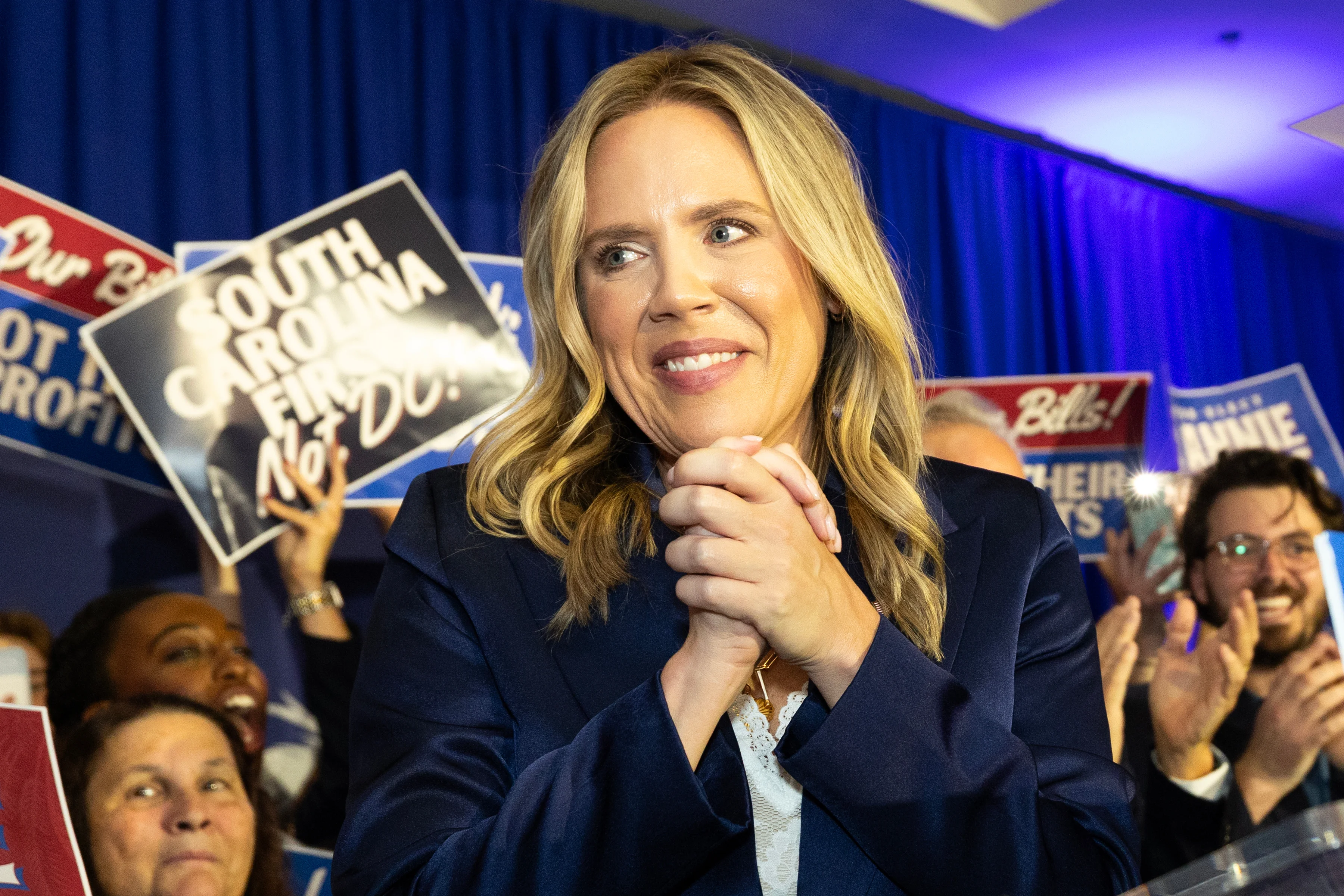
Democrats won control of both chambers of Congress in Tuesday's midterm elections, STAT reports, with upsets in Republican strongholds including Texas, Kansas and South Carolina. Many candidates campaigned on health care, and STAT's reporters expect the result to be read as a rebuke of Republican health policy.
That is interpretation. The newsletter, written with results still coming in, cites no polling that isolates health care, and it notes that gas prices, groceries and the war in Iran also loomed large.
The affordability message
Candidates in several key races promised to restore 1, which lower premiums on marketplace insurance, and to fight 2 cuts in the 3, the 2025 Republican law.
States are where some of this could move first:
Ohio: Physician Amy Acton, who led the state's Covid-19 response, won the governorship. She pledged to protect Medicaid access, forgive medical debt and create a drug plan to lower costs.
Georgia: Governor-elect Keisha Lance Bottoms promised 4. The state's current partial program, limited to low-income adults who prove they work, expires at year's end.
California: Former federal health secretary Xavier Becerra won the governorship and may keep pressing on drug prices.
Doctors head to the Senate
Pediatrician Annie Andrews won South Carolina's open Senate seat, a race once considered a longshot. She and Michigan's Abdul El-Sayed, who finished medical school but not residency, will be the first Democrats with medical degrees in the Senate since 1969.
STAT sees El-Sayed as Democrats' main challenger to Health Secretary Robert F. Kennedy Jr. He also plans to advocate for 5, a single government health plan.
A bad night for MAHA
6 (MAHA), the movement allied with Kennedy, lost two prominent figures. Zach Lahn, who promised to ban Covid-19 vaccines and take on Big Agriculture, lost Iowa's governor's race despite a million dollars from the 7, the movement's fundraising committee. Sen. Roger Marshall of Kansas, a founder of Congress's 8, also lost.
These aren't clean tests of the movement's appeal. Marshall faced discontent over diesel and fertilizer prices, reports of aggressive medical debt collection in his OB-GYN practice, and an unusually strong opponent. Still, some MAHA leaders are openly angry at Republicans, and one called the loss "well-deserved."
What changes
Oversight changes most clearly. Democrats gain new power to investigate the administration; Sen. Ron Wyden of Oregon posted one word on election night: "Subpoenas."
Legislation is harder, because bills restoring subsidies or reversing Medicaid cuts would still face President Trump's veto, a limit the newsletter doesn't discuss. Nothing changes for patients immediately, and Georgia's expiring program is the nearest concrete test.
Democrats won control of both chambers of Congress in Tuesday's midterm elections, STAT reports, with upsets in Republican strongholds including Texas, Kansas and South Carolina. Many of their candidates campaigned on health care. Republicans had spent two years pursuing large changes to it, from 1 cuts to the 2 (MAHA) agenda of Health Secretary Robert F. Kennedy Jr.
STAT's reporters, writing while results were still coming in, say the outcome is likely to be read as a rebuke of that agenda and could be taken as a mandate for bigger Democratic moves on health. Treat that as interpretation. The newsletter cites no exit polls or voter surveys isolating health care, and it notes that gas prices, grocery costs and the war in Iran also loomed large. The results show who won, not why.
Affordability as a campaign message
Candidates in several closely watched races promised to restore 3, the federal help that lowers premiums on marketplace insurance, and to fight the Medicaid cuts in the 4, the Republican law passed in 2025.
Two governor's races show how this can play out at state level, where much of Medicaid is run.
Ohio. Amy Acton, a physician who led the state's Covid-19 response, won the governorship. She pledged to protect access to Medicaid, forgive medical debt, tackle 5 (unexpected charges, often from out-of-network providers) and create a new prescription drug plan to lower costs. Her opponent, biotech entrepreneur Vivek Ramaswamy, tried to make the race a referendum on the lockdowns and school closures of her pandemic tenure. That argument did not carry the race.
Georgia. Keisha Lance Bottoms won and becomes the first Black woman to serve as governor of any state. Georgia's Medicaid program partially expanded coverage to low-income adults who could prove they were working, and it expires at the end of this year. Bottoms promised to replace it with 6 under the Affordable Care Act, which covers low-income adults without a state-level work test of that kind. She defeated Rick Jackson, founder of the staffing company Jackson Healthcare. The newsletter doesn't say how she would get the switch through the state's legislature, or how the 2025 law's federal work requirements would apply.
In California, Xavier Becerra, health secretary under President Biden, won the governorship easily. STAT expects him to keep working on drug pricing, already a priority for the state's leaders.
Doctors and scientists in Congress
The group 7, which supports candidates with science backgrounds, called the night a "STEM Wave." The new Democratic members include a microbiologist, a doctor and a nuclear engineer.
The most surprising win, STAT says, was pediatrician Annie Andrews, who took South Carolina's open Senate seat, held by Republican Lindsey Graham for 23 years until his death. Last year her race was considered a longshot. She campaigned in scrubs, calling health care a right, and says she will work to maintain vaccine access and keep rural hospitals open.
Andrews and Michigan's Abdul El-Sayed will be the first Democrats with medical degrees in the Senate since 1969. El-Sayed completed medical school but not residency, the hospital training that follows it. He researched health disparities and maternal health, then ran Detroit's public health department.
STAT sees El-Sayed as Democrats' main challenger to Kennedy. He told the newsletter's reporter he wants to hold Kennedy and Trump "accountable for all of the failures" and to lay groundwork for a 2028 administration to rebuild the Department of Health and Human Services. He also plans to use his national platform to advocate for 8, a proposal to replace most private and public coverage with a single government plan.
Going the other way, Republican Sen. Susan Collins of Maine lost to Democrat Troy Jackson. She was a prominent supporter of federal funding for academic research and had criticized the administration's moves to reshape that system, so research advocates lose a Republican ally.
MAHA's bad night
STAT describes the movement as "on life support," citing two losses.
Zach Lahn, Iowa governor's race. He promised to take on Big Agriculture, ban Covid-19 vaccines from the market and tackle Iowa's high cancer rate. The 9, the movement's political fundraising committee, spent a million dollars on his campaign, and Kennedy enthusiastically backed him.
Sen. Roger Marshall, Kansas. A doctor and a founder of the congressional 10, he lost to Adam Hamilton, who leads one of the state's largest megachurches and won endorsements from two former Republican governors.
Neither loss is a clean test of MAHA's appeal. Marshall's troubles began with high diesel and fertilizer prices, and he spent the campaign's last two months answering reports of aggressive medical debt collection in his OB-GYN practice. Hamilton was also an unusually well-suited opponent.
The stronger sign may be the movement's own anger at Republicans. Some members have grown frustrated at slow progress on issues such as pesticides. Jeffrey Tucker, founder of the MAHA-aligned Brownstone Institute, told STAT the loss was "well-deserved" and that the party had failed "to take its mandate seriously."
What changes, and what doesn't yet
The clearest near-term change is oversight. Democrats will have new tools to investigate the administration. Sen. Ron Wyden of Oregon, a health policy leader, posted a single word on X late Tuesday: "Subpoenas."
Legislation is harder. Restoring subsidies or reversing Medicaid cuts would need President Trump's signature or enough votes to override a veto, a limit the newsletter doesn't discuss. For patients, nothing changes immediately. The nearest concrete question is Georgia, where the current program runs out at year's end.
This is also a first-day newsletter built on partial results, and it does not estimate what any of these pledges would cost or how many people they would cover. STAT promised a fuller breakdown of how doctors and scientists fared on the ballot.
Remember
Election results alone can't show health care decided these races; the newsletter cites no polling, and other issues loomed large.
Georgia's expiring work-linked Medicaid program makes it the nearest concrete test of a campaign health promise.
Subpoenas are usable sooner than new health laws, which still need Trump's signature or a veto override.
Now through December: Republicans keep their majority in a 4, the period before the new Congress arrives. It will focus on government funding and expiring health programs. Congress will likely pass another short-term funding bill in December.
Jan. 1: Cuts to Medicare payments to doctors are scheduled to begin. Preventing them has bipartisan support, as do fixes to the 5, the 2022 law protecting privately insured patients from unexpected out-of-network bills. Action on either is described as a long shot. "Everyone gets hyped up for lame ducks, and they're always a disappointment," says Doug Holtz-Eakin, president of the conservative-leaning American Action Forum.
January: The new Congress is sworn in during 6, the annual ACA sign-up window. In most states it closes Jan. 15. Leslie Dach, who chairs the Democratic-aligned group Protect Our Care, says Democrats could renew the subsidies and extend enrollment, but would have to act within days.
March or spring: Rodney Whitlock, a consultant who previously worked for Republicans in Congress, expects a government funding fight that Democrats could center on healthcare. "Doesn't it scream repeal or delay all the Medicaid cuts?" he says.
Stock gains: Democrats claim Trump benefited when stock prices rose after companies won exemptions from Medicare price negotiation. This is an allegation, and the article offers no evidence either way.
Scientific decisions: More sales of flavored vapes and White House promotion of the herbicide glyphosate, including any links to political contributions.
Health and Human Services: Secretary Robert F. Kennedy Jr. has dismantled U.S. vaccine recommendations, gutted agency staff and cut public health funding. Democrats must balance investigating him against their legislative goals.
Industry: Insurers' preauthorization denials, meaning refusals to approve care in advance; 8, the alternative to traditional Medicare run by commercial insurers; and the use of AI in medical decisions.