Fire-made ozone and repeat droughts are eroding the Amazon's carbon sink
Two new studies: smoke-driven ozone cuts tree uptake by a quarter of fire emissions, and 2023–24-style heat-drought may become annual by the 2040s.
Why it matters · Tropical forests are part of the 11-billion-ton-a-year land sink that carbon budgets depend on. These studies show a new loss to that sink, and a fast-approaching period when drought becomes the normal condition.
Forests absorb more than a quarter of human-caused CO2 each year, over 11 billion metric tons. Two studies published Monday add to evidence that tropical forests, the Amazon above all, are losing that capacity. More and more forest area now releases more CO2 than it takes up during droughts and heat waves.
Fires do damage twice
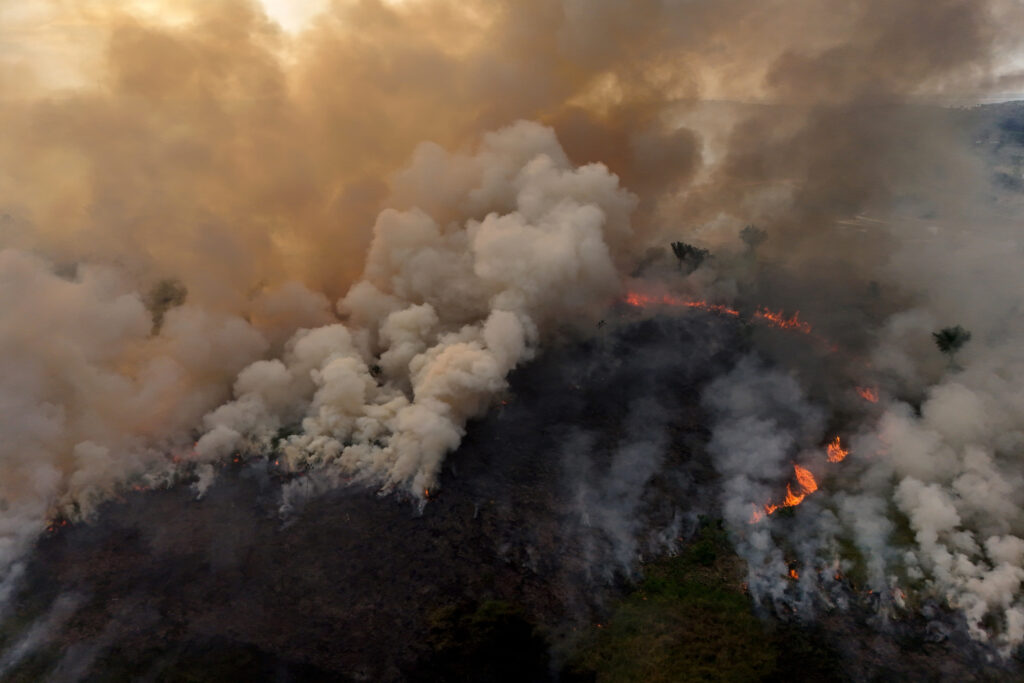
The first study, in Communications Earth & Environment, measures a cost of Amazon fires that carbon budgets have not counted. Fires set for agriculture and land clearing often escape control during droughts. When they do, they release nitrogen oxides that travel long distances and react with organic molecules to form ozone. The ozone damages leaves on trees far from the flames and cuts their CO2 uptake. Lead author Flossie Brown of ETH Zürich puts the lost uptake at about 24% of the carbon the fires release directly.
The team combined three data sources. Controlled-exposure experiments at the TropOz lab set ozone levels around growing trees. Satellites tracked how much light vegetation reflects. Flux towers in the canopy picked up changes in air chemistry.
One finding ran the other way. From 1997 to 2024, overall ozone damage fell. Higher CO2 lets trees photosynthesize more efficiently, so they open their stomata less and take in less ozone. More frequent and severe fire, smoke, drought and heat more than cancelled out that gain.
Extreme years becoming normal
The second study, in AGU's Earth's Future, led by Johanna Van Passel of Ghent University, looks back at the 2023–24 El Niño period. Tropical forests stayed unusually hot for about 18 months on average, and 80% were drier than normal. Three-quarters faced extreme heat and drought together for an average of six months. In the Amazon, water levels at the port of Manaus fell to their lowest in more than a century of records.