Data centers want gigawatts, coal gets a blip · Morning Gist
Saturday, October 175 stories · 15 min
Data centers want gigawatts, coal gets a blip
Data centers' demand for power runs through today's stories, along with a coal record analysts expect to fade and the first drop in clean energy jobs in years.
Picked from 31 new articles across 13 sources · arrow keys for other days
Today in 30 seconds
30s left
Congress's permitting bill leaves untouched the state air permit holding up Oracle and OpenAI's Project Jupiter data center in New Mexico. story 1 ↓
The IEA expects coal use to hit a record 8.94 billion tonnes in 2026. Analysts blame short gas supply, not new demand for coal. story 2 ↓
US clean energy jobs fell about 1% in 2025 after four years of growth. Efficiency and EV jobs, where federal cuts hit, lost most. story 3 ↓
Peter Erickson, whose research is cited against pipelines, says supply limits cut emissions by raising prices, which enriches every oil producer. story 4 ↓
Virtual power plant companies say buyers finally want them. But they offer hundreds of megawatts, and data centers want gigawatts. story 5 ↓
Under US pressure, the World Bank says it will now back gas projects "where appropriate," a shift for energy finance in poorer countries.
1/5Heatmap· Jael Holzman· Oct 16
Would Congress's permitting bill help New Mexico's stalled Project Jupiter data center?
Heatmap used Project Jupiter, a huge gas-powered AI data center held up by permits in New Mexico, to test a bipartisan permitting bill. Its finding: the bill changes little directly, but easier grid connections might.
Why it matters · Whether AI data centers connect to the grid or build their own gas plants will shape both emissions and power bills, and federal permitting reform is aimed at that decision.
Know this first
Context from the editor, not the article · 30 sec
1 · Off-grid data centers
Connecting a large new load to the grid can take years of studies and upgrades. Some AI data center developers skip that wait by building their own on-site gas power, called a private microgrid, which needs its own state air permit.
2 · NEPA and Seven County
The National Environmental Policy Act requires federal agencies to study a project's environmental effects. The Supreme Court's 2025 Seven County ruling narrowed that review, so agencies need not fully analyze separate upstream or downstream projects.
3 · Who approves what
Air permits come from states under the federal Clean Air Act. Interstate gas pipelines are approved by FERC, the Federal Energy Regulatory Commission, which also sets rules for transmission and for how utilities charge for using the grid.
2/5Grist· Kate Yoder· Oct 16
Coal use heads for a 2026 record, but analysts call it a blip
The war with Iran cut oil and gas supplies, so countries are burning more coal and 2026 use is heading for a record. Analysts call it a short spike as the same crisis speeds up renewables.
Why it matters · Mining companies are using the coal headlines to justify new mines and power plants. Telling a temporary fuel swap from a real coal revival decides whether those bets make sense.
Know this first
Context from the editor, not the article · 26 sec
1 · Swapping gas for coal
Many power systems can run either gas or coal plants. When gas gets scarce or expensive, utilities run their coal plants harder. Coal use then rises even though nobody's long-term demand for coal has changed.
2 · The Strait of Hormuz
A narrow sea passage between Iran and the Arabian Peninsula. A large share of the world's seaborne oil and liquefied natural gas passes through it, so trouble there quickly pushes up global fuel prices.
3 · The Glasgow coal pledge
At the 2021 United Nations climate summit in Glasgow (COP26), nearly every country agreed to "phase down" coal. That wording is weaker than "phase out" and sets no binding numbers or deadlines.
3/5Canary Media· Julian Spector· Oct 16
US clean energy jobs fell about 1% in 2025, ending four years of growth
An analysis of federal data by the business group E2 finds US clean energy jobs fell by nearly 37,000 in 2025, to 3.52 million. Overall energy employment fell too, which makes the cause harder to pin down.
Why it matters · Record installations suggested clean energy was shrugging off federal hostility. Jobs data offers a second test, and it shows a small dent that lines up with where policy cuts landed.
Know this first
Context from the editor, not the article · 26 sec
1 · One Big Beautiful Bill Act
The Republican budget law passed in mid-2025. It ended renewable energy tax credits about a decade early and cut consumer incentives for EVs and home electrification. Tax credits for grid batteries survived.
2 · Who E2 is
E2 (Environmental Entrepreneurs) is a business-focused environmental advocacy group. It publishes yearly counts of US clean energy jobs built from federal employment data, so it has a point of view but a consistent method.
3 · Deployment vs. employment
Solar, batteries and wind still made up most new US power plants in 2025. Installation numbers alone can hide changes in manufacturing, efficiency retrofits and vehicles, which are labor-heavy parts of the sector.
4/5Heatmap· Robinson Meyer· Oct 16
Blocking pipelines can cut emissions but enriches every oil producer, researcher says
Peter Erickson, whose research helped activists fight the Keystone XL pipeline, says blocking oil supply cuts emissions only by raising global prices. Every producer worldwide then collects that higher price, paid by consumers.
Why it matters · "Keep it in the ground" campaigns are a major climate strategy, and their main supporting researcher is now saying they have a hidden cost that moves money from consumers to producers.
Know this first
Context from the editor, not the article · 26 sec
1 · Supply-side climate policy
Most climate policy targets demand: efficiency, electric cars, carbon prices. Supply-side policy instead limits fossil fuel production directly, by blocking pipelines, refusing drilling leases or banning new oil and gas fields.
2 · The substitution objection
Critics of supply limits argue that a blocked barrel is simply replaced by one produced elsewhere, so global emissions don't change. How much replacement actually happens depends on how producers and consumers respond to price.
3 · Who Erickson is
Peter Erickson is an affiliated researcher at the Stockholm Environment Institute (SEI), a research organization. His papers model how new oil and gas supply changes global emissions, and lawyers fighting pipelines have cited them heavily.
5/5Latitude Media· Lisa Martine Jenkins· Oct 16
Virtual power plant industry upbeat but short of data-center scale
At an Austin industry summit, companies that pool home batteries and other small devices into virtual power plants said demand from data centers has turned skeptical buyers into customers. Scale, regulation and fragmented markets still hold them back.
Why it matters · Whether distributed resources can count as firm capacity affects how fast large new loads get served and how much ratepayers end up paying for new grid build-out.
Know this first
Context from the editor, not the article · 32 sec
1 · What a VPP is
A virtual power plant (VPP) is software that coordinates many small distributed energy resources (DERs), like home batteries, rooftop solar, smart thermostats and EV chargers, so the grid operator can dispatch them together as if they were one power plant.
2 · Firm capacity
Grid planners count a resource as firm capacity only if they trust it to deliver a set amount of power at peak times. Counting it that way decides whether it can replace a new gas plant or substation in a utility's plan.
3 · Why demand is rising
After roughly two decades of flat U.S. electricity demand, data centers for AI, electrification and new factories are pushing load up quickly. Large new loads often ask for multiple gigawatts, and new conventional plants and grid lines take years to build.
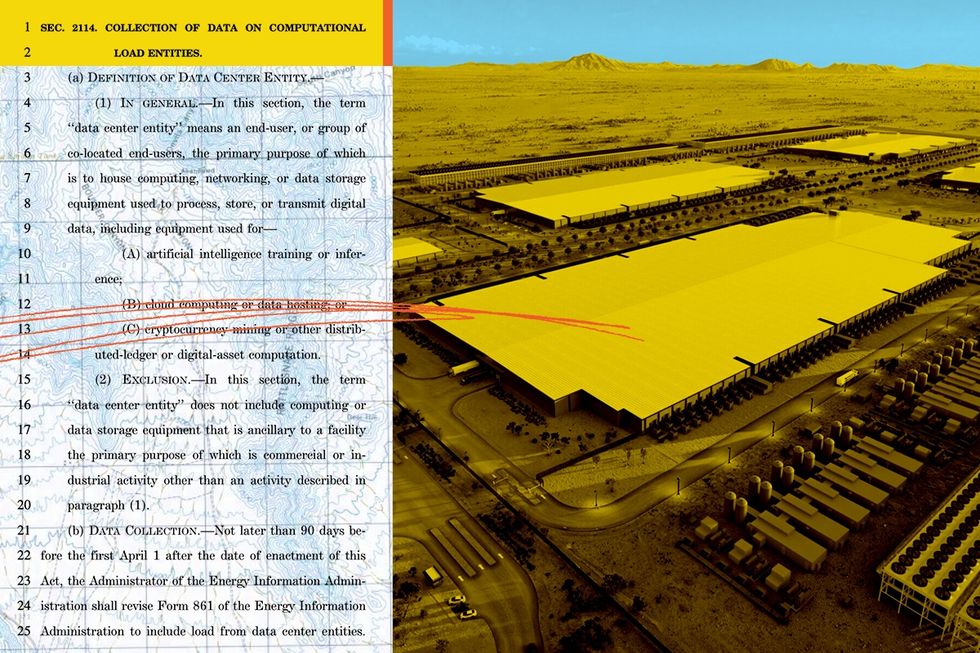
Project Jupiter, a planned data center in Doña Ana County, New Mexico, would be one of the largest in the US. Oracle and OpenAI are developing it with SoftBank money, as part of the Trump administration's 1 AI initiative. The plan is to run it off-grid on fuel cells that turn natural gas into electricity. Heatmap's Jael Holzman uses it to test whether the Bipartisan American Affordability and Jobs Act of 2026 (2), a permitting reform deal now in Congress, would help projects like it.
Why it's stuck
Air permit. The state's review of Jupiter's air permit restarted in September after the New Mexico Supreme Court lifted a stay. Then leaked emails showed that independent modeling found more pollution than the developers had predicted. The developers had already asked to emit more CO2 than the state's three largest cities combined. A decision expected in November may slip, and Oracle now says it will try to cut emissions by more than 30%.
Pipeline. New Mexico is challenging the environmental review by 3 (the Federal Energy Regulatory Commission) of a gas pipeline that would supply the site. The state says FERC ignored the data center's impact. A dozen Republican attorneys general reply that the Supreme Court's 2025 4 ruling means FERC doesn't have to consider it. Oracle has declared 5, a contract clause that excuses delays outside a party's control.
What the bill does
Air rules: no change. BAAJA leaves the Clean Air Act alone, so the state's permit decision is unaffected.
Gas pipelines: lower legal risk for future interstate lines that could reach the site, such as the Desert Southwest Expansion.
Solar: faster permitting on federal land run by the Bureau of Land Management. Jupiter is seeking 2 gigawatts of renewable power to meet its 2031 clean-energy pledge.
Holzman calls these effects too hypothetical to judge.
Where it might matter
Holzman argues the real lever is grid access. The bill would speed transmission and require data centers to pay both for new grid upgrades and for using the existing grid. Without that, developers build private gas plants, as is happening in Texas. An Oracle executive told county officials that if the air permit fails he would turn to a grid provider, and that doing so would have to lower local rates. But when Jupiter proposed a grid hookup for emergency power this week, the county commission reacted angrily.
The office of Senator Martin Heinrich, who helped negotiate the bill, says it "does not 'permit' data centers": state and local approval still decides Jupiter's fate. For now, on-site gas remains the plan.
A data center stuck on permits
Project Jupiter would be one of the largest data centers in the US. It is planned for Doña Ana County in southern New Mexico and is being developed by Oracle and OpenAI, with money from SoftBank. It is part of 1, the Trump administration's public-private push to build AI infrastructure. The current plan is to run it off-grid, on a private 2 of fuel cells that turn natural gas into electricity. The developers say this will burn much cleaner than a typical off-grid gas turbine plant.
Power is now the project's biggest problem. Writing in Heatmap, Jael Holzman uses Jupiter to test a question being argued in Washington: would the Bipartisan American Affordability and Jobs Act of 2026 (3), a major permitting reform deal now in Congress, make projects like this easier to build? Or does it barely matter to hyperscale data centers trying to switch on within a year or two?
Two fronts of delay
The air permit. In mid-September the New Mexico Supreme Court lifted a stay it had put on the state's review of Jupiter's air permit application. Then the Santa Fe New Mexican published emails between the New Mexico Environment Department and project staff. They showed that independent emissions modeling found pollution would be higher than the developers had predicted. The developers had already asked to emit more CO2 than New Mexico's three largest cities combined. A final decision was expected in November, and the emails suggest it may slip. After the story ran, Oracle said it would try to cut the site's emissions by more than 30%.
The pipeline. New Mexico's Justice Department is challenging the environmental assessment by 4, the Federal Energy Regulatory Commission, for a gas pipeline that is key to powering the site. The assessment was done under , the National Environmental Policy Act. The state argues FERC wrongly failed to look at the environmental effects of the data center the pipeline would feed. This week a dozen Republican attorneys general from gas-producing states wrote to FERC asking it to ignore those objections. They cite , a recent Supreme Court ruling that, in their reading, means pipeline reviews need not consider the data centers the lines supply. Oracle has declared , a contract clause that excuses delays caused by events outside a party's control, over the pipeline holdup. There have been rumors that gas could be trucked in instead. Company representatives told the county commission those claims were "misinformation."
What the bill would and wouldn't change
Air permits: no change. BAAJA does not amend the Clean Air Act. Jupiter would still have to meet national air emissions standards, and the state's pending air permit decision is unaffected.
Gas pipelines: a hypothetical help. The bill would lower legal risk for future interstate gas pipelines that might branch out to Jupiter, such as the proposed Desert Southwest Expansion pipeline. Holzman says this looks like an easier path to more gas generation in the region.
Solar on federal land: also hypothetical. BAAJA would write into law permitting-certainty and timeline provisions meant to make solar easier to build on land run by the Bureau of Land Management (BLM). Jupiter just finished a request for proposals for 2 gigawatts of renewable power, including solar. The power is meant to meet its pledge of 100% 8 by 2031, meaning it would buy enough clean electricity to offset its consumption. Oracle has said it has looked at nearby solar on BLM land. Holzman calls all of this too theoretical to judge, and notes that no one knows how the Trump administration would apply the certainty language.
The part that might matter: grid connections
Holzman argues the real test is whether making it easier and more transparent to connect to the existing grid would lead data centers to use less on-site gas. Besides speeding transmission build-out, the bill includes ratepayer protections for data centers. FERC would have to require utilities to charge data centers both for new grid upgrades and for using the existing grid. Her colleague Robinson Meyer describes this as making data centers pay both embedded costs (the existing system) and incremental costs (what they add). In effect, they would help lower rates and pay for new generation.
The alternative is visible already. When grid hookups stall, companies build private fossil fuel "islands." In Texas, transmission connection delays are pushing companies to build their own gas plants. Holzman says companies may still go off-grid if the bill passes, but the pattern is a serious consequence of an aging grid.
Jupiter has already floated the grid option. At a county commission meeting in early September, Oracle executive vice president Mahesh Thiagarajan said that if the air permit is denied, "I do have to work with a grid provider. Whether it is actually part of the grid or they built the grid for me could be TBD." Commission chair Manuel Sanchez said the microgrid was written into the community benefit agreement. He also backed rules making data centers pay for upgrades and pay directly to lower nearby residents' rates, citing a Georgia Public Service Commission policy that he said has "provided a downward pressure on rates." Thiagarajan agreed: if he had to connect, "I actually have to come in and say, I am lowering the rates here."
Local tempers are short. This week, when Jupiter proposed a grid connection for emergency power, the county commission reacted angrily. For now the plan is still on-site gas fuel cells.
Heinrich's position
New Mexico's senior senator, Martin Heinrich, helped negotiate BAAJA. In August his office republished a Santa Fe New Mexican article arguing that his GRID Savings Act, a data center ratepayer bill, could give Jupiter another way to get power if its air permit is denied. Sanchez was quoted calling it a possible "avenue" for the project.
Asked whether BAAJA would help Jupiter get built, Heinrich's office said the project "botched community engagement from the start." It said the bill would mainly help get clean generation onto the grid, where state law such as New Mexico's Energy Transition Act can keep pushing it cleaner. It said data centers would have to pay all of their associated transmission costs. And it said BAAJA "does not 'permit' data centers": state and local approval is still required.
What stays open
Whether the bill, if passed in the lame-duck session, would move Jupiter onto the grid can't be proven either way, and project representatives did not respond to Heatmap. The piece points to a more general tension. The bill's gas-pipeline provisions could make off-grid gas easier. Its grid-access and cost-allocation provisions could make the grid more attractive. Which effect wins depends on how a future administration implements it.
Remember
Permitting reform leaves the Clean Air Act untouched, so it can't speed state air permits for on-site gas plants.
Gas-pipeline provisions could ease off-grid gas, while grid cost rules could pull data centers onto the grid.
Making data centers pay both embedded and incremental grid costs is pitched as a way to protect household power bills.
The 1, which tracks world energy markets, said last year that global coal demand had levelled off and would soon fall. It now expects coal use to hit a record 8.94 billion metric tons in 2026. Headlines call it a comeback. The analysts Grist's Kate Yoder spoke to mostly disagree.
Gas got scarce, so coal filled in
In February, the US and Israel attacked Iran. The war partly cut off oil and gas shipments through the 2, the narrow channel that carries much of the world's seaborne fuel. Prices soared. Countries with coal plants ran them harder to replace gas they couldn't get or afford. "Coal is going up because gas is going down," said Daan Walter of 3, an energy think tank.
Christine Shearer of 4, which tracks coal plants worldwide, says the key distinction is between "a small short-term bump in coal use and a genuine resurgence of the coal industry." The article doesn't put a number on how big the bump is.
Money is chasing it anyway
The IEA says coal investment hit a 14-year high in June.
Queensland's premier, David Crisafulli, said he would welcome new coal plants to power Anthropic's AI data centers.
The miner Northback is trying to reopen an Alberta mine that closed almost 60 years ago.
Walter calls it a "sugar rush" built on "reckless business plans." Mines and plants take years to build, and the gas shortage that makes coal attractive today may be over by the time they open.
The crisis also helps clean power
This was the second fuel price shock in four years, after Russia's invasion of Ukraine in 2022. Governments increasingly see home-grown wind and solar as more secure than imported fuel. Much of the new electricity demand, from data centers and air conditioning, is being met by renewables. The 5 credits clean power with softening the shock's economic damage, but warns the world is near the "limits of resilience" for another one.
India shows both trends at once. It may need far more new coal power than planned, because demand is rising and a weak monsoon has cut hydroelectric output. It has also roughly quadrupled its renewable capacity in a decade, to about 300 6, and is ahead of its targets under the 7, the 2015 global climate treaty.
Walter's verdict: coal is gaining share within a fossil-fuel slice that is shrinking overall. He likens it to being "the most powerful man on the Titanic." The open question is how much coal capacity gets built, and locked in, before gas supplies recover.
A year ago, the 1, the Paris-based body that tracks world energy markets for its member governments, said global coal demand had levelled off and would soon start to fall. It has now changed that forecast. The IEA expects coal use to reach a record 8.94 billion metric tons in 2026, and headlines are calling it a coal "comeback." In a piece for Grist, Kate Yoder asked analysts whether that is true. Mostly, they say, it isn't.
What changed: gas got scarce
The trigger was the war with Iran. In February, the US and Israel attacked Iran. Oil and gas shipments through the 2, a narrow channel that carries a large share of the world's seaborne oil and liquefied gas, were partly cut off. Prices jumped so far that some journalists compared the effect to a carbon tax. It was the world's second oil-and-gas shock in four years, after Russia's 2022 invasion of Ukraine.
Countries that could switch fuels did. "The main thing is that coal is going up because gas is going down," said Daan Walter, who leads research on the future of energy at 3, an energy think tank. In practice, utilities with idle or lightly used coal plants ran them harder to replace gas they couldn't get or couldn't afford.
That is why analysts separate a rise in coal use from a revival of the coal industry. "I think it's important to distinguish between a small short-term bump in coal use and a genuine resurgence of the coal industry," said Christine Shearer, a coal analyst at 4, a group that tracks coal plants and other energy projects worldwide.
The article doesn't say how big the bump is compared with last year or with the IEA's earlier forecast. So the claim that it is "small" rests on Shearer's judgment, not on a figure.
The money is moving anyway
Coal has a lot to answer for. Per unit of energy, it releases more carbon dioxide and more air pollution than oil or gas. That is why nearly every country agreed in Glasgow in 2021 to "phase down" its use. Even so, investors and politicians are treating the crisis as an opening:
In June, the IEA reported that investment in coal had reached its highest level in 14 years.
David Crisafulli, premier of the Australian state of Queensland, said he would welcome proposals for new coal power stations to supply Anthropic's AI data centers.
The mining company Northback is working to reopen a mine in Alberta, Canada, that closed almost 60 years ago. It points to forecasts that the world will still need coal over the next decade.
Walter calls this a "big sugar rush" that could turn into a crash, possibly before the new mines and plants are even finished. "They're all rushing in, and they are all making, I think, reckless business plans," he said. The risk he describes is about timing. Mines and power stations take years to build and decades to pay back. The fuel shortage behind today's high coal use may be over long before they open.
The other effect: a push toward clean power
The same shock is also pushing countries toward wind, solar and other clean technology. The article suggests it may permanently cut demand for oil. After two price shocks in four years, governments increasingly see power generated at home from wind and sun as more secure than imported fuel.
Electricity demand is also rising, driven by AI data centers and by more air conditioning as temperatures climb. The article says much of that new demand is being met by wind and solar, though it gives no global figures. In a report released Monday, the 5 listed the growth in clean power as one of several things softening the oil shock's economic damage so far. It also warned that the world is nearing the "limits of resilience" to absorb another shock.
Shearer explains how both trends can happen at once: "The immediate response to an energy crisis can be more fossil fuel use, even as the longer-term response is to reduce dependence on those fuels altogether."
India shows both at once
India is the clearest example. This week the head of its power sector said the country may have to add much more coal power capacity than planned. Two pressures are behind this: fast-growing electricity demand, and weaker monsoon rains, which have cut output from hydroelectric dams. Weather can force a grid back onto fossil fuels even when policy points the other way.
Yet India has also roughly quadrupled its renewable capacity over the past decade, to about 300 6, and is well ahead of schedule on its climate targets under the 7, the 2015 global climate treaty. New coal plants and fast renewable growth are happening in the same country at the same time.
Walter's verdict, and what's still unclear
Walter's argument is about shares. Coal is gaining ground within fossil fuels as gas becomes scarce. But fossil fuels as a group are on track to shrink compared with clean sources. He compared coal's position to being "the most powerful man on the Titanic. It's a great party to have for a couple of hours, but then you're going down with the ship."
That is a forecast, and the article leaves big questions open:
How long will gas stay scarce? Whether coal use falls back depends on gas supplies from the Gulf recovering. The article doesn't predict when.
Will new coal plants get locked in? If India and others build coal capacity now, those plants could run for decades, whatever happens to gas.
Can wind and solar keep up? The article says renewables are meeting "much" of the new electricity demand but gives no numbers. Without them, you can't tell how much growth they cover and how much falls to coal.
How many coal projects get built? Record investment and mine reopenings are clear signals. But the article gives no figures on how many proposed plants or mines are actually going ahead.
For now, the evidence in the article points to a fuel swap caused by a supply shock, not a lasting change in direction. But whether this ends up as a blip depends on decisions about plants and mines that are being made now.
Remember
Coal's 2026 record comes mainly from countries swapping gas for coal after the Iran war cut gas supplies, not from new demand for coal.
Coal investment is at a 14-year high, and analysts warn new mines may open after the shortage ends.
India is planning more coal plants while quadrupling renewables to about 300 gigawatts, ahead of its climate targets.
Moving manufacturing back to the US from overseas, here for batteries, solar panels and solar cells.
Image: Canary Media
US clean energy employment fell in 2025, the first drop after four straight years of growth. That's the finding of an analysis of federal jobs data by 1, a business-focused environmental advocacy group, reported by Canary Media's Julian Spector.
The numbers
The US ended 2025 with 3.52 million clean energy jobs, nearly 37,000 fewer than a year earlier. That is only about 1% of the workforce, but it wiped out roughly 40% of the jobs the sector added the year before.
There is a big caveat. Overall energy employment also fell between 2024 and 2025, and clean energy's losses closely match its share of all energy jobs. So the drop may reflect trends across the whole energy sector more than anything specific to clean energy.
Where the losses landed
The losses line up with the areas federal policy targeted:
Clean vehicles lost 9,619 jobs (2.4%), the largest decline in percentage terms. The 2, the mid-2025 Republican budget law, ended the 3 in September 2025. Automakers then shut planned and operating production lines and moved some battery factories toward grid storage products.
Energy efficiency lost the most jobs in absolute terms: 21,443, or more than half the total decline. That is still under 1% of its nearly 2.4 million jobs. The administration froze or clawed back billions in federal efficiency and community clean energy funding.
4 grew 3.2%. Grid batteries kept their tax credits under the budget law and still have support from both parties.
Strong deployment, softer jobs
The jobs data sits alongside strong installation figures. Solar is the most common type of new power plant in the US, followed by batteries and wind. New factories for batteries, solar panels and solar cells kept opening. Installations show what is being built, while jobs data adds manufacturing, retrofits and vehicles, where policy changes hit sooner.
What the count leaves out
The figures only cover jobs that existed, not jobs that were expected. E2 says companies canceled or downsized nearly 150 clean energy manufacturing, generation and storage projects in 2025. Those projects were expected to create nearly 85,000 jobs, more than twice the measured loss. The article doesn't say how many of those jobs would have arrived in 2025 rather than later.
US clean energy employment shrank in 2025, the first full year of Donald Trump's second term. That breaks a four-year run of steady growth. The figures come from an analysis of federal jobs data by 1, a business-focused environmental advocacy group, written up in Canary Media's "Chart of the Week" column by Julian Spector.
The headline numbers
At the end of 2025 the US had 3.52 million clean energy jobs, down nearly 37,000 from a year earlier. As a share of the workforce that's small, about 1%. But E2 says it erased about 40% of the previous year's job gains. That implies the sector added somewhere around 90,000 jobs in 2024. This is our arithmetic, not a figure from the article.
The most important caveat comes from the article itself. Total US energy employment, fossil and clean together, also fell between 2024 and 2025. Clean energy's losses closely match its share of all energy jobs. If energy employment fell evenly across the board, clean energy would have lost about this many jobs anyway. The drop breaks clearly from the previous four years, but it may reflect conditions across the whole energy sector more than anything specific to clean energy. The article doesn't explain what drove the wider energy decline.
Why it's hard to read
Judging clean energy under this administration has been difficult because the signals point in different directions. Federal policy has repeatedly turned against renewables and electric vehicles. Yet deployment has kept up its Biden-era pace: solar is the most common type of new US power plant, followed by batteries and wind. Factories making batteries, solar panels and even solar cells (the hardest step to bring back from overseas) have kept opening.
Deployment and employment measure different things. A utility-scale solar farm needs a large crew while it's being built and few workers afterward. Efficiency retrofits, vehicle assembly and component factories employ people steadily, and they depend more directly on consumer incentives and federal grants. Jobs data can therefore show policy damage that installation charts hide.
What changed in policy
Two federal moves matter here:
The 2, the budget law the Republican-controlled Congress passed in mid-2025. It removed renewable energy tax credits that were meant to run about another decade, along with consumer incentives for electric cars and home electrification. The 3 went first, ending in September 2025. Tax credits for grid batteries survived.
Executive-branch freezes and 4 of billions of dollars Congress had set aside for efficiency upgrades and community clean energy installations.
Where the jobs went
Spector notes there are "many variables at play," but the changes by sub-sector line up with these policy targets:
Sub-sector
Change in 2025
Notes
Clean vehicles
−9,619 (−2.4%)
Largest percentage loss
Energy efficiency
−21,443 (under −1%)
Largest absolute loss; ~2.4M jobs total
Storage & grid modernization
+3.2%
Only growth area highlighted
Clean vehicles. After the EV credit ended, US automakers backed away from earlier electric vehicle plans. They closed planned and operating production lines and moved battery manufacturing toward grid storage products. A 2.4% loss of 9,619 jobs implies a base of roughly 400,000 clean vehicle jobs (our calculation).
Energy efficiency. This is the largest category by far, at nearly 2.4 million of the 3.52 million jobs, and it absorbed more than half of the total decline. Spector ties it to the funding clawbacks. Relative to its size, though, the loss was under 1%.
5. This was the one clear bright spot, growing 3.2%. Grid batteries kept their tax credits and have support from both parties. The automakers' shift from EV batteries to grid storage products also points work in this direction.
The jobs that won't appear
The employment count measures only jobs that existed. It misses jobs that were planned but never created. E2 says companies canceled or downsized nearly 150 clean energy manufacturing, generation and storage projects in 2025. Those projects were expected to create nearly 85,000 new jobs, more than double the measured net loss.
Read that figure carefully. It is E2's tally of announced expectations, and announced job numbers for new projects tend to be optimistic. Many of those jobs would also have arrived in later years, not in 2025. The article doesn't say when they were due or how E2 counted them. It is better read as lost future growth than as a loss alongside the 37,000.
Assessment
The measured hit is modest: a 1% decline that largely tracks a broader drop in energy employment. The pattern within the sector is clearer. Jobs fell fastest where incentives were removed (EVs) and where federal money was pulled (efficiency), and grew where tax credits survived (grid storage). That pattern doesn't prove cause and effect, but it fits the policy changes.
Several things remain open. The article doesn't say what pulled down overall energy employment. It doesn't show how manufacturing jobs fared separately from installation jobs. And 2025 includes only part of the policy changes: the renewable credit phase-outs and the canceled projects will show up in later years' figures, not this one.
Remember
Clean energy's losses roughly match its share of a wider energy-sector job decline, which weakens claims that clean energy was singled out.
Jobs grew where tax credits survived (grid storage, +3.2%) and fell where incentives or grants were cut.
Cancelled projects worth an expected 85,000 jobs will show up in later years' figures, not in 2025's count.
Peter Erickson has done more than any other researcher to give legal backing to fights against fossil fuel infrastructure. He is an affiliated researcher at the 1, and his work on how new oil supply raises global emissions was central to campaigns against the 2 and 3 pipelines. On Heatmap's 4 podcast, he told host Robinson Meyer that the strategy has a cost its supporters need to state openly.
How blocking supply cuts emissions
Erickson's long-standing argument answers the common objection that a blocked barrel just gets produced somewhere else. Some of it does. But when one region's supply is cut, or even just its expected future supply, the oil price rises. The higher price is what makes other new projects worth developing, and it is also what pushes consumers, carmakers and the rest of the economy to use less oil. Lower consumption means lower emissions. Price is the mechanism.
Who pays
The higher price doesn't stay in the region that was blocked. "The price increase applies globally, and all producers see that," Erickson said. Once the market settles at its new price, consumers everywhere pay more and every producer in the world collects the difference. Penalizing one region's production ends up rewarding the oil industry as a whole.
Here is an illustrative calculation, not one from the episode. The world uses roughly 100 million barrels of oil a day. A price rise of just $1 a barrel would move about $100 million a day, or around $36 billion a year, from buyers to sellers.
The Hormuz comparison
Meyer pointed to early 2026, when Iran closed the 5 after the US-Israeli war with Iran began. Oil and fuel prices jumped worldwide, and producers' profits rose with them. Erickson agreed that a local supply limit works like "a mini version of that."
He says the logic hasn't changed across his papers. What has changed, he argues, is that events like Hormuz make it urgent for climate policy and the supply-limiting movement to "daylight" this effect from the start instead of leaving it unstated.
What's missing
The published excerpt doesn't give Erickson's estimates of how big these transfers are, how they compare with the emissions saved, or his answer to the episode's title question: should activists keep fighting fossil fuel infrastructure? The full transcript and his papers, including "Rethinking the case against new oil and gas fields," may cover those points.
On Heatmap's 1 podcast, the researcher whose work most often supports lawsuits against fossil fuel infrastructure laid out a cost of that strategy that its supporters rarely mention. Peter Erickson, an affiliated researcher at the 2, told host Robinson Meyer that limiting oil supply does cut emissions. It works by raising prices, though, and higher prices move money from energy consumers to every fossil fuel producer on Earth.
The point matters because of where it comes from. Erickson's analyses were central to the activist and legal fights against the 3 pipeline, the 4 pipeline and other projects. Meyer describes Erickson as having taken "a more nuanced approach" to supply-side policy in recent years. The reason is partly his own finding that blocking supply can enrich the oil and gas industry "in a surprising but direct way."
The problem supply limits are meant to solve
Climate policy has mostly targeted demand: cleaner cars, efficient buildings, carbon prices. Since the 2010s, a parallel movement has pushed to limit supply directly, by blocking pipelines, refusing drilling leases and opposing new oil and gas fields. The standard objection is called 5. If one pipeline is blocked, the argument goes, the same oil reaches the market some other way, so emissions don't change.
Erickson's papers have argued that substitution is incomplete. Their titles show the progression: "Impact of the Keystone XL pipeline on global oil markets and greenhouse gas emissions"; "Would constraining US fossil fuel production affect global CO2 emissions? A case study of US leasing policy"; "Limiting fossil fuel production as the next big step in climate policy"; and most recently, "Rethinking the case against new oil and gas fields." The excerpt doesn't give the papers' findings or numbers.
How the mechanism works
Erickson set out the chain in the episode:
Supply is constrained. That can mean actual barrels, or just the outlook for future supply, such as a pipeline that won't be built or a lease that won't be offered.
The price rises. Expected scarcity pushes up current and expected oil prices.
Two responses follow. The higher price is "what is needed to bring on the other new projects," so some of the lost supply is replaced elsewhere. The same price also leads consumers, and "the institutions that surround consumers, the car industries, et cetera," to cut their oil use.
A new 6. The market settles with somewhat less oil consumed, and so less CO₂ emitted.
The price rise is what makes the policy work. Without it, nothing would push consumption down. But that price isn't limited to the blocked region. "You've penalized one producer or one whole region of the world by saying, 'You can't produce oil here,' but the price increase applies globally," Erickson said. "All producers see that. And all consumers see that." When things settle, "the consumers are paying for that price increase and giving the money to the producers."
He calls the first-order estimate "straight-ahead math": the price change multiplied by the volume sold. Here is an illustrative version, not from the episode. Global oil use runs at roughly 100 million barrels a day. If a supply limit raised the long-run price by $1 a barrel, consumers worldwide would pay about $100 million more per day, around $36 billion a year. That money goes to producers everywhere: national oil companies, US shale drillers, Gulf exporters. The producer that was blocked loses out, and the rest of the industry gains.
The Hormuz test case
Meyer cited an event both had discussed on the show. In early 2026, after the US-Israeli war with Iran began, Iran closed the 7, a narrow channel for a large share of the world's seaborne oil. Prices for crude and refined products spiked everywhere. Consumers paid more for fuel and producers earned more. "It was quite mechanical, and we all saw it happen," Meyer said. He suggested that blocking production in one state or region is "a mini version of that," and Erickson agreed: "That's completely right."
Erickson says this logic has been "consistent through all of my papers." What has changed is how urgent it is to say so. Hormuz and similar shocks, he argues, mean the dynamic "needs to be daylighted in climate policy and in the fossil-fuel-supply-limiting community." In his words: "Price is the mechanism that causes a decrease in supply to lead to a reduction in consumption and a reduction in emissions, and that price has other effects that need to be considered."
Trade-offs and comparisons
The excerpt doesn't make the comparison explicitly, but standard economics shows why Erickson's point bites. A carbon tax also cuts emissions by raising the price consumers pay. The extra money, though, goes to governments, which can rebate it or spend it. A supply restriction raises prices too, but the extra money, which economists call 8, goes to oil producers, including petrostates and companies that climate campaigners usually oppose. Both raise costs for consumers. Only the supply limit adds to fossil fuel profits.
This doesn't mean supply limits fail to reduce emissions. Erickson still says they do. It means the policy has a distributional cost: households pay, and that money goes to producers. That cost should be weighed against the emissions avoided, alongside the political weight that higher fuel prices carry.
What the excerpt leaves open
This is a short excerpt from a longer conversation, and several key questions go unanswered here:
Magnitude. How large is the wealth transfer per tonne of CO₂ avoided, and how does that compare with other policies?
The headline question. Should activists keep fighting pipelines? The excerpt never gives Erickson's answer, and "a more nuanced approach" isn't a verdict.
Design fixes. It's unclear whether some forms of supply-side policy, such as phasing down with demand, coordinating internationally or pairing limits with consumer rebates, could reduce the transfer.
Readers who want those answers will need the full transcript or Erickson's "Rethinking the case against new oil and gas fields."
Remember
Supply limits cut emissions only through higher prices, which also bring on replacement oil projects elsewhere.
The price rise is global, so every producer gains while consumers everywhere pay for it.
Unlike a carbon tax, whose revenue goes to governments, a supply limit sends the extra money to oil producers.
Lisa Martine Jenkins of Latitude Media wrote up the outlet's first Flex Summit, held in Austin. Her main impression: the companies behind 1 are optimistic for the first time in years. A VPP is software that pools thousands of 2, such as home batteries, rooftop solar and smart thermostats, and dispatches them like one power plant.
"For the first time, people are actually buying what we are selling," said Tim Hade, a senior vice president at the aggregator Voltus.
Why now
The reason is load growth. 3, the giant cloud and AI data-center operators, and other large new loads need capacity soon, and flexible resources can be deployed faster than new plants. VPPs also keep their original selling point. They were first pitched as a way to put off grid capital spending, and with angry customers pushing back on rate increases, saving ratepayers money still sells. Latitude executive editor Stephen Lacey said DERs are now "being evaluated as power plant-grade resources" by utilities, policymakers and hyperscalers.
There is real evidence. Last week Tesla and Sunrun ran a record 745-megawatt 4 in California, meaning they told aggregated home batteries to discharge together.
What still stands in the way
The long view
Jenkins notes that most of these barriers are the same ones Jigar Shah described three years ago, when the Department of Energy's 2023 VPP "7" came out. Shah ran DOE's Loan Programs Office at the time. Back then he called for utilities to change how they plan, manage and measure grid performance. The demand is new. Whether it can push those changes through is still open. The piece is an event recap and gives no figures for the industry's total deployed capacity.
Latitude Media held its first Flex Summit in Austin this month. The event was about 1: software that pools many 2, such as home batteries, rooftop solar, smart thermostats and EV chargers, and dispatches them as one grid resource. In her newsletter recap, reporter Lisa Martine Jenkins says the mood was mostly optimistic, though the obstacles have barely changed in three years.
The football metaphor that stuck
David Visneau, who runs demand response and VPPs at the utility and retailer NRG, opened with a Dallas Cowboys analogy: high forecast hopes every season, then underdelivery. His point was technical. A VPP is only worth something to a grid operator if the capacity it actually delivers matches what it forecast. If a utility plans on 100 megawatts from aggregated batteries at 6 p.m. and only 70 show up, the shortfall has to come from somewhere else, and the utility learns to discount the resource next time.
Other speakers stretched the metaphor. If the Super Bowl means DERs used as a true grid resource, the industry is driving downfield and must not fumble. Or VPPs are the New York Knicks: underdogs for decades until the timing finally works.
Why the mood has turned
The driver is load growth. 3, the operators of giant cloud and AI data centers, plus other large new loads, want capacity faster than new power plants and transmission can be built. Flexible resources that can be enrolled and dispatched quickly are worth more as a result.
The older argument for VPPs still holds. They were first pitched as a way to defer utility capital spending: if aggregated customer devices shave the local peak, a utility can delay a substation upgrade or a peaking plant. Customers are increasingly angry about rate increases, so lower costs for ratepayers remain part of the pitch.
Latitude executive editor Stephen Lacey said DERs and other advanced grid technologies are now "being evaluated as power plant-grade resources" by utilities, policymakers and hyperscalers. Tim Hade, a senior vice president at the aggregator Voltus and a longtime VPP advocate, put it more bluntly: "For the first time, people are actually buying what we are selling."
The clearest evidence cited is a record 745-megawatt 4 in California last week by Tesla and Sunrun. In an event like this, the companies signal enrolled home batteries to discharge at the same time during a stressed period. That is roughly the output of a mid-sized gas plant. The article doesn't say how long the event lasted or how closely delivery matched the forecast.
Five barriers
Jenkins lists what still stands between the industry and that "championship."
Scale. This is the biggest. Aggregators celebrate deployments in the hundreds of megawatts, while data centers want multiple gigawatts. Even the 745-MW record is well short of what a single large campus might request. Jenkins writes that it is unclear whether the industry has the installers and other labor, or the business models, to grow that fast.
Investment. U.S. spending on VPP programs is far higher than a few years ago but remains a rounding error against the trillion-dollar grid build-out. The article gives no exact figure.
Trust in firmness. Utilities are willing to count less DER capacity as firm, meaning dependable at peak, than providers say they can supply. Regulators share that caution. Paul Dickson, president and chief revenue officer of the residential solar company Sunrun, said they are moving "frustratingly slowly" on whether 5 capacity (devices on the customer's side of the electric meter) can be counted as firm. This matters because firm status decides whether a VPP can replace a plant in a utility's resource plan or only earn occasional event payments.
Data. There is little public data on how much of the grid's existing capacity is actually used. Without it, it's hard to show where flexibility would avoid upgrades. That is starting to shift. Dominion Energy has just filed one of the country's first grid-utilization metrics proposals, as Virginia's new law requires. The article doesn't describe what the metric measures.
Fragmentation. Every region, and often every locality, treats DERs differently. Rules vary between regulated markets, where vertically integrated utilities own generation and plan centrally, and unregulated, competitive markets like Texas. So a big success in one place doesn't automatically make DERs a planning-grade resource elsewhere, and many utilities still don't treat them as one.
What the sessions covered
Jenkins says the onstage discussion got into operational detail. That included a live debate over how much flexibility data centers will accept, meaning how far they will agree to curtail or shift their own load in exchange for faster grid connections, and the practical differences between regulated and unregulated markets. The recap doesn't report where that debate landed.
Same barriers, new demand
Jenkins ties the summit to Latitude's launch three years ago, which came the same week as the Department of Energy's 2023 VPP "6." Jigar Shah, who ran DOE's Loan Programs Office at the time, wrote then that "it's time for electricity providers to choose virtual power plants." He called for changes in how utilities plan, manage and measure grid performance. Jenkins notes those were the same topics discussed in Austin this week. DOE has since taken the original report down, though a 2025 update is archived.
Her verdict is that load-growth momentum now outweighs the inertia that held VPPs back, and that people in the room believe it. That is a reading of sentiment, not a measured result. The open questions are concrete. Can aggregated capacity grow from hundreds of megawatts to gigawatts? Will regulators credit it as firm? Will utilization data like Dominion's reveal how much headroom flexibility can unlock? The piece is an event recap and doesn't try to answer them.
Remember
Tesla and Sunrun's 745-MW California battery event is a record, yet still short of one data center's gigawatt-scale ask.
Whether regulators count behind-the-meter capacity as firm decides if VPPs can replace plants or just earn event payments.
Virginia now requires utilities to report grid utilization; Dominion's filing is among the country's first such metrics.
Scale. Aggregators celebrate deployments in the hundreds of megawatts. Data centers want multiple gigawatts. Jenkins writes that it's unclear whether the industry has the labor or the business models to close that gap quickly.
Money. U.S. spending on VPP programs has grown a lot, but it is still a rounding error next to the trillion dollars going into the grid.
Trust. Utilities count on DERs for less 5 than providers say they can deliver. Sunrun's Paul Dickson said regulators are moving "frustratingly slowly" on whether 6 capacity can count as firm.
Data. There is little public data on how much of the grid's existing capacity is actually used. That is starting to change: Dominion Energy just filed one of the first grid-utilization metric proposals, as Virginia's new law requires.
Fragmentation. Each region, and even each locality, treats DERs differently. So big proof points don't add up to a resource most utilities will plan around.