Sensible Medicine podcast questions colonoscopy in old age and p-tau217 tests
A 38-minute audio episode covers two studies: stopping colon cancer screening in older adults, and blood p-tau217 for predicting dementia. The page gives no data.
Why it matters · Both topics affect real decisions: when older patients can stop colonoscopy, and whether a blood test should flag dementia risk. But this page links the studies without giving any results, so you'd have to listen to judge them.
This is the show-notes page for a podcast episode, not a written article. In episode XXXV of This Fortnight in Medicine, a 38-minute audio discussion, Adam Cifu, John Mandrola and Andrew J Foy take on two recent studies. The page gives the studies' titles and two linked commentary headlines. It has no effect sizes, sample sizes or conclusions, so this summary can only say what the episode covers and which way the hosts appear to lean.
Topic 1: Stopping colon cancer screening
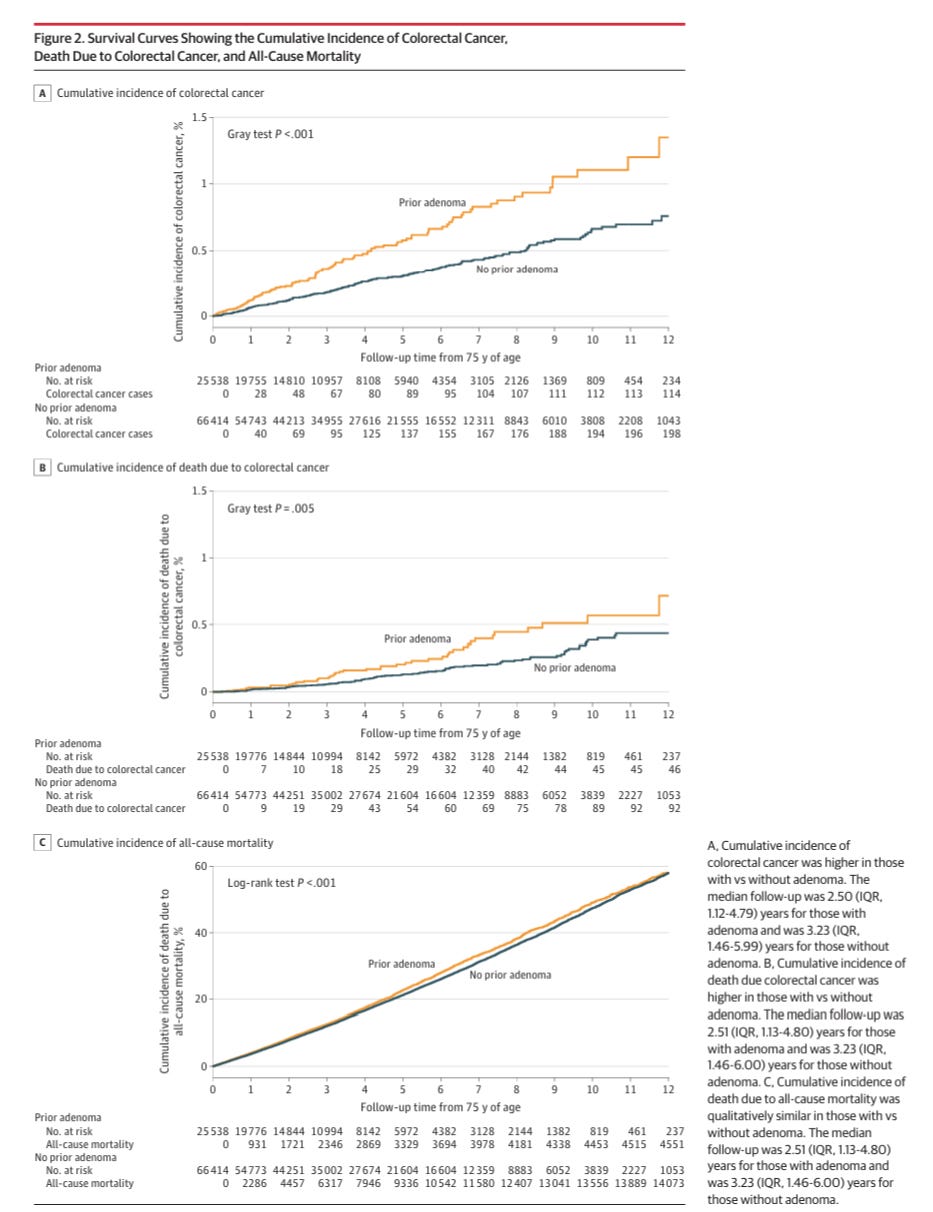
The first paper is titled Colorectal Cancer and Mortality Risk Among Older Adults With vs Without Adenoma on Prior Colonoscopy. From the title, it compares later colorectal cancer and death rates in older adults by whether their earlier colonoscopy found an adenoma, a precancerous polyp. The clinical question behind it is whether an older patient's past findings should decide when surveillance colonoscopy can end. The episode summary frames this as "discontinuing colon cancer screening."
The hosts pair it with a commentary titled "The Hubris of Screening for Disease — Again." That title suggests they are skeptical of screening for its own sake. They probably lean toward screening older adults less, not more. The page doesn't give the study's results, so it can't tell you how much an earlier adenoma changes later risk.