Two heart drugs hit their biomarkers but didn't improve outcomes, Medicare may cut vendor-run home monitoring, and pig kidneys frozen for a year still worked.
Picked from 33 new articles across 12 sources · arrow keys for other days
Today in 30 seconds
30s left
Ziltivekimab and pelacarsen hit their targets but didn't cut heart attacks, strokes or deaths; a cardiologist warns against subgroup rescues. story 1 ↓
A proposed Medicare rule would stop paying for vendor-run home monitoring, which most rural clinics rely on; 230+ groups oppose it. story 2 ↓
Jalen Hurts' lung clots spotlight a killer of 60,000–100,000 Americans yearly; most clots start in hospitals and are often preventable. story 3 ↓
Pig kidneys frozen up to a year produced urine after transplant, rewarmed from inside by iron oxide nanoparticles without ice or cracking. story 4 ↓
Three of four authors of a review endorsing 'moderate' beef work for the beef industry, and it never defines 'moderate.' story 5 ↓
Merck and Moderna's mRNA melanoma vaccine, paired with immunotherapy, reduced recurrence or death in trial data presented at ESMO.
1/5Sensible Medicine· John Mandrola· Oct 26
Two heart drug trials failed; a cardiologist warns against rescuing them with subgroups
The ZEUS trial of the anti-inflammatory ziltivekimab and the HORIZON trial of pelacarsen, which lowers lipoprotein(a), both missed their heart-outcome goals. Cardiologist John Mandrola warns readers not to trust the subgroup "wins" likely to follow.
Why it matters · Inflammation and Lp(a) were two of the most promising new targets in heart prevention, and subgroup claims after null trials have shaped drug approvals before.
Know this first
Context from the editor, not the article · 26 sec
1 · Biomarker versus outcome
Drugs often move a blood marker, such as cholesterol, CRP or Lp(a), in the intended direction. That does not prove they prevent heart attacks or deaths. Only outcome trials, which count actual clinical events, can show that.
2 · Two hopeful new targets
Inflammation has been tied to atherosclerosis for decades. Lipoprotein(a) is a cholesterol-carrying particle whose level is mostly set by genes. People with high levels have more heart events in observational and genetic studies.
3 · Reading hazard ratios
A hazard ratio (HR) of 1.0 means no difference between drug and placebo. Below 1 favors the drug. If the 95% confidence interval includes 1.0, the result is not statistically significant.
2/5KFF Health News· Arielle Zionts· Oct 26
Proposed Medicare rule would stop paying for vendor-run home health monitoring
Medicare's regulator has proposed paying for home monitoring of vital signs only when the clinician's own facility does the monitoring. It says outside vendors fragment care and invite fraud. Critics say rural patients would lose the service.
Why it matters · Home monitoring is a fast-growing way to manage blood pressure, diabetes and heart disease. This rule would decide who can offer it to older Americans, and whether rural patients can get it at all.
Know this first
Context from the editor, not the article · 28 sec
1 · What remote monitoring is
Patients use connected devices at home, such as blood pressure cuffs, scales or glucose meters, and readings go automatically to staff who watch for worrying trends. Staff then call the patient, adjust care, or book a doctor visit.
2 · How Medicare pays for it
Since Trump's first term, Medicare has had billing codes that pay clinicians to start and oversee monitoring. Many practices use part of that payment to hire tech companies that supply the devices and do the day-to-day watching.
3 · Two kinds of Medicare
3/5The Conversation: Health· Ali Ataya, Professor of Medicine, University of Florida· Oct 26
Jalen Hurts' lung clots show how a common, preventable killer develops
Eagles quarterback Jalen Hurts, 28, developed a leg clot that spread to both lungs after a calf injury and long flights. A lung specialist uses his case to explain clot risk and new state hospital-prevention laws.
Why it matters · Clots kill an estimated 60,000 to 100,000 Americans a year. Most start in hospitals, many are preventable, and fewer than half of at-risk patients get standard prevention.
Know this first
Context from the editor, not the article · 20 sec
1 · Clots in veins vs. lungs
A deep vein thrombosis is a clot in a deep vein, usually in the leg. If a piece breaks off, it can travel through the heart and lodge in lung arteries. That is a pulmonary embolism, which blocks blood flow and lowers oxygen.
2 · How clots are prevented
Hospitals can give at-risk patients low-dose blood thinners or inflatable leg sleeves that squeeze the calves to keep blood moving. First they have to assess each patient's risk, and that step is often skipped.
Jalen Hurts, whose leg clot traveled to both lungs and is expected to end his season.
Philadelphia Eagles quarterback Jalen Hurts, 28 and an elite athlete, was diagnosed in October 2026 with a blood clot in his left leg that spread to both lungs. He's on blood thinners, his prognosis is described as "very good," and he will likely miss the rest of the season. Ali Ataya, a University of Florida specialist in lung blood-vessel disease, argues the case shows that anyone can get clots, and that many are preventable.
4/5Fight Aging!· Reason· Oct 26
Pig kidneys frozen for up to a year make urine after transplant
Researchers stored human-sized pig kidneys at −150 °C for up to a year, then rewarmed them from the inside with magnetic nanoparticles. After transplant, the kidneys produced urine right away.
Why it matters · Donated kidneys last about a day on ice. If organs could be banked for months, matching donors to patients would no longer be a race against time.
Know this first
Context from the editor, not the article · 29 sec
1 · Why organs expire
Donor kidneys today are kept on ice (static cold storage) and are normally transplanted within about a day or so. That clock forces rushed matching, limits shipping distance, and contributes to discarded organs.
2 · Vitrification versus freezing
Ordinary freezing forms ice crystals that shred cells. Vitrification soaks tissue in high concentrations of antifreeze-like cryoprotectants so it cools into a solid glass with no ice. The catch is that these chemicals are toxic, and rewarming can let ice form or crack the glass.
3 · Nanowarming's earlier record
A University of Minnesota-led group showed nanowarming in rats in 2023: kidneys stored for up to 100 days were rewarmed, transplanted and kept the animals alive. Rat kidneys weigh only a gram or two.
5/5Food Politics (Marion Nestle)· Marion· Oct 26
Beef industry employees write review endorsing "moderate" beef in sustainable diets
A new review argues that moderate beef eating fits healthy, sustainable diets. Three of its four authors work for beef industry groups, a beef body invited it, and it never says what "moderate" means.
Why it matters · Reviews like this get cited in dietary guidelines and policy debates. Knowing who wrote one, and what it leaves out, matters as much as what it concludes.
Know this first
Context from the editor, not the article · 28 sec
1 · Nestle's weekly series
Marion Nestle, a nutrition professor emerita at NYU, runs a regular 'Industry funded study of the week' feature. It points out food research paid for or written by companies or trade groups that benefit from the findings.
2 · Why funding matters
Analyses of nutrition research have found that industry-funded studies reach conclusions favorable to their sponsor more often than independent ones. Funding doesn't prove a study wrong, but it is a reason to read it closely.
3 · Beef's two debates
Observational studies link high red and processed meat intake to heart disease, type 2 diabetes and colorectal cancer. Separately, cattle are a large source of methane and need a lot of land per unit of food.
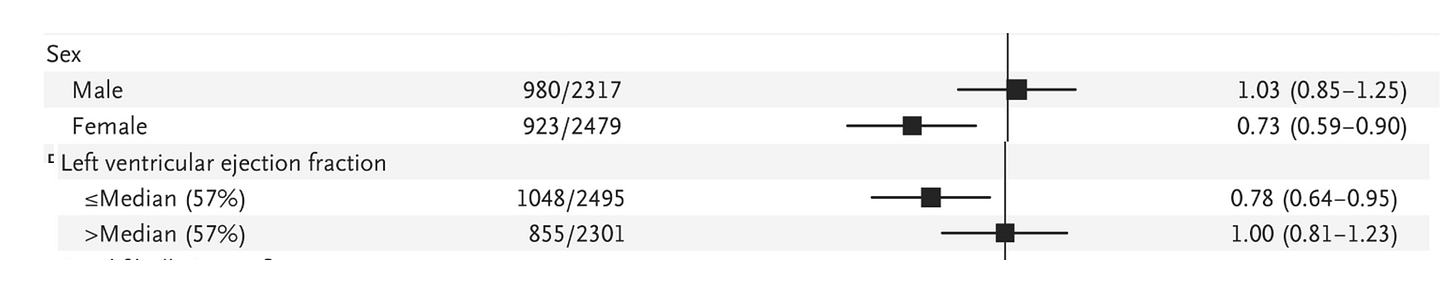
PARAGON-HF subgroup results, which were used to seek approval in women and lower-LVEF patients despite a null trial.1 / 4
Two misses in heart prevention
Two closely watched heart trials have announced, so far only in press releases, that they failed. Full results come in two weeks at the American Heart Association meeting in Chicago.
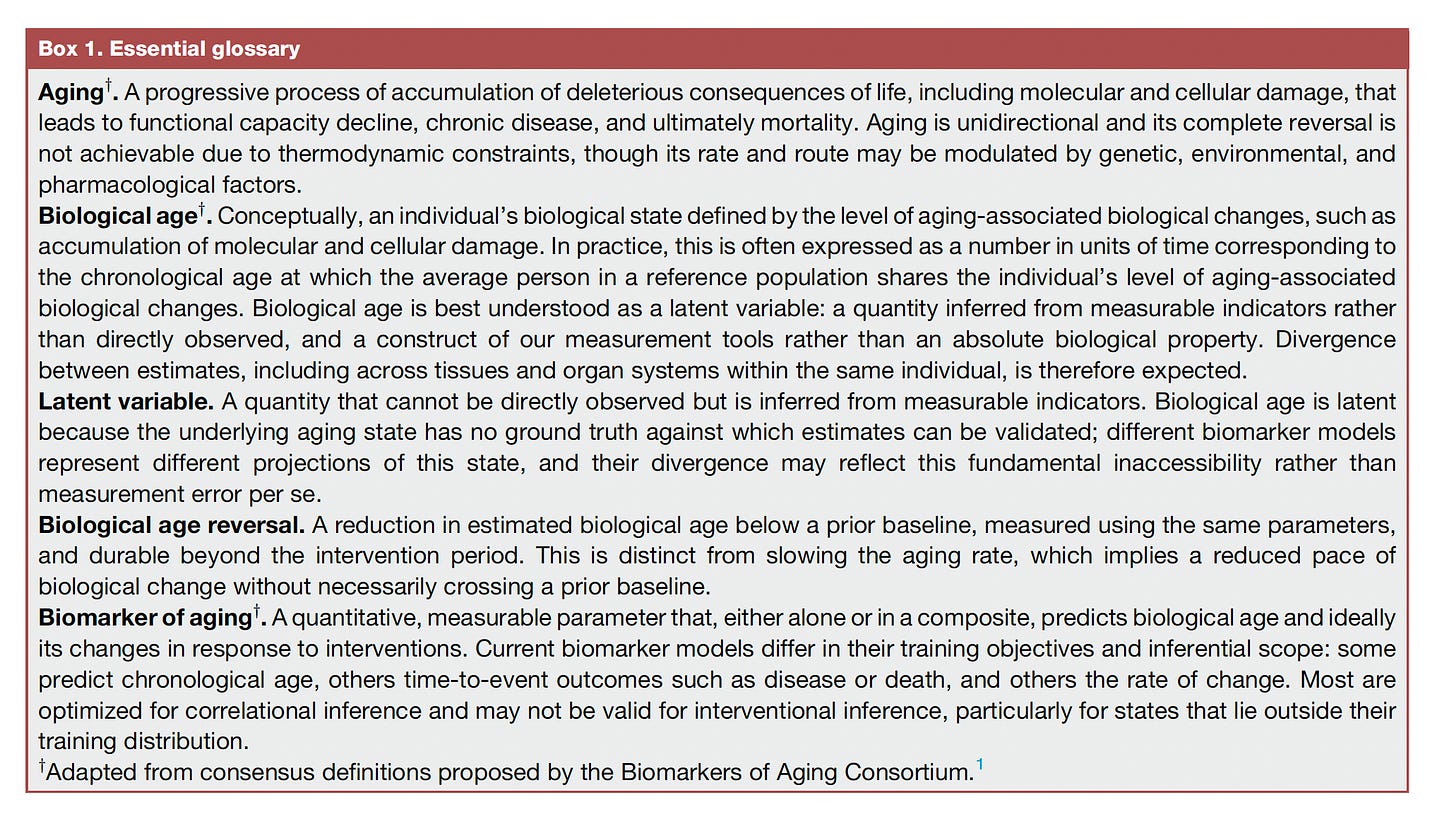
ZEUS tested ziltivekimab, which blocks interleukin-6 (1), a protein that drives inflammation. It did not reduce cardiovascular death, heart attack or stroke: 2 0.99 (95% confidence interval 0.88–1.11), which is essentially no difference from placebo. It did lower 3, a blood marker of inflammation.
HORIZON tested pelacarsen, which lowers lipoprotein(a), or 4, an inherited cholesterol-carrying particle linked to heart disease. It missed its primary outcome too. Earlier trials showed it cuts Lp(a) by about 80%.
Both trials enrolled patients who should have been ideal candidates. ZEUS patients had vascular disease, kidney disease and raised hs-CRP, averaging 4.5 mg/L. HORIZON patients had vascular disease and high Lp(a), averaging 108 mg/dL. The failures add to a run of weak results for anti-inflammatory heart drugs, including colchicine's modest effect and canakinumab, which was never marketed.
The coming subgroup claims
Cardiologist John Mandrola expects people with financial or academic stakes to point to patient groups where the drugs "worked," such as those with the highest Lp(a). He points to a precedent. After the PARAGON-HF trial of sacubitril/valsartan in one type of heart failure came out null (HR 0.87, 95% CI 0.75–1.01), the manufacturer sought approval for women and for patients with lower pumping function. Those were two of many subgroups tested.
Subgroups mislead for two reasons:
Fewer events. Trials are sized for the whole population, so each subgroup is noisier.
Many looks. At p < 0.05, testing 20 subgroups should produce about one false positive by chance alone.
Richard Peto showed this in the ISIS-2 aspirin trial. Splitting patients by star sign "revealed" that aspirin did not work for Libras or Geminis.
When to take a subgroup seriously
A subgroup deserves weight when both the group and the expected direction of effect were declared before the trial. HORIZON did this for patients with Lp(a) of at least 90 mg/dL. Plausible findings, like younger patients benefiting from defibrillators in the DANISH trial, still only generate hypotheses for a new trial. One subgroup finding Mandrola accepts is that statins don't help people with advanced kidney disease, because two dedicated trials (4D and AURORA) confirmed it. Following Peto, he argues the safest default is to apply a trial's overall result to every subgroup.
Two null trials
Two large heart-prevention trials have announced, through press releases, that they missed their main goals. Full results come in two weeks at the American Heart Association (AHA) meeting in Chicago. John Mandrola, a cardiologist who writes for Sensible Medicine and is preparing a Medscape column on the trials, uses the moment to warn readers about what usually follows a failed trial: hunting for subgroups where the drug seemed to work.
ZEUS tested ziltivekimab, which blocks interleukin-6 (1), a signalling protein that drives inflammation. Its primary outcome was a composite of cardiovascular death, heart attack (myocardial infarction, MI) and stroke, one version of what cardiologists call 2 (major adverse cardiac events). Event rates were almost identical in both arms: 3 (HR) 0.99, 95% confidence interval (CI) 0.88–1.11. The drug did lower inflammatory markers such as 4 (high-sensitivity C-reactive protein, a blood test for low-grade inflammation). It changed the biomarker and left the outcomes unchanged.
HORIZON tested pelacarsen, which lowers lipoprotein(a), or 5. The only public information so far is that it failed its primary outcome: cardiovascular death, MI, stroke and urgent coronary revascularization (an emergency stent or bypass). It also lowered Lp(a). Phase 2 trials had shown cuts of about 80%, but the HORIZON figure has not been released.
Why the results surprised people
Both trials picked patients in whom the drugs should have had the best chance. ZEUS required established vascular disease, chronic kidney disease and an hs-CRP of at least 2 mg/L. Baseline hs-CRP averaged 4.5 mg/L, according to the design paper. HORIZON required vascular disease and Lp(a) of at least 70 mg/dL, with a baseline of 108 mg/dL.
A lot was riding on them. Observational and genetic data strongly link inherited Lp(a) levels to heart events, so a drug that lowered the particle looked like a likely blockbuster. Many academics also back the inflammation theory of heart disease. Mandrola notes that inflammation plays some role in vascular disease but that the search for a big anti-inflammatory win keeps failing. Colchicine has shown only modest effects on cardiac events. Canakinumab, which blocks a different inflammatory signal, had so small an effect that its maker did not bring it to market. Other Lp(a)-lowering drugs are still in trials.
The subgroup temptation
When money and reputations depend on a drug, Mandrola argues, people look for positive pockets inside a null trial. A typical example would be "the drug worked in patients with the highest Lp(a) or hs-CRP." He makes one exception. HORIZON 6, meaning it declared before the results were known, a group with Lp(a) of at least 90 mg/dL. A positive result there would deserve more weight than an ordinary subgroup.
His cautionary case is sacubitril/valsartan in heart failure with preserved ejection fraction (7), where the heart pumps a normal share of its blood but is stiff. The pivotal PARAGON-HF trial was null (HR 0.87, 95% CI 0.75–1.01). The manufacturer then lobbied for approval in women and in patients with a left ventricular ejection fraction (8, the share of blood pumped out per beat) below 57%, because those groups seemed to do better. Mandrola is unconvinced. These were two of many subgroups tested, the overall effect was a small 13% reduction, and he thinks chance is a likely explanation.
Why subgroups mislead
He gives two mechanisms.
Smaller numbers. Trials are sized, or "powered," to detect an effect across everyone enrolled. Split the population by sex, age or diabetes and each piece has fewer events. Fewer events means more noise, so you are more likely to see a false signal and also more likely to miss a real one.
Multiple looks. At a significance threshold of p < 0.05, testing 20 subgroups is expected to produce about one "significant" result by chance alone. As an illustration (not from the article): a trial reporting a forest plot with 20 subgroups and one standout bar is showing exactly what randomness predicts.
The classic demonstration comes from Richard Peto and the ISIS-2 trial, which showed that aspirin helps after a heart attack. Lancet editors pushed him to report which groups benefited more or less. He objected but complied, and added an analysis by astrological sign. After splitting patients into 12 signs and grouping the least promising ones, his team "discovered" that aspirin did nothing for people born under Libra or Gemini while everyone else benefited a great deal. The point was that any trial sliced finely enough will produce findings like this.
When a subgroup might be real
Peto said subgroups can be informative when both the subgroup and the expected direction of effect are set before the trial. Mandrola offers two more nuanced cases.
DANISH, a trial of implantable cardioverter-defibrillators (9) in heart failure not caused by coronary disease, was null overall. Younger patients appeared to benefit and older ones did worse, and the interaction test (which checks whether the effect really differs between groups) was significant. The pattern is biologically plausible: older patients face more competing causes of death and more device complications. Even so, Mandrola calls it "hypothesis-generating." Settling it would take a new randomized trial of ICDs in DANISH-like patients younger than 59.
Statins and kidney function. A meta-analysis of 28 statin trials found no benefit in patients with the worst kidney function. This one is probably real, he argues, because two dedicated trials in advanced kidney disease, 4D and AURORA, were both null. Separate randomized evidence confirmed it.
What to watch for
Peto's advice was that the safest approach is to apply the overall trial effect to every subgroup. Mandrola agrees that some subgroup effects might be real, with the emphasis on might, and says the right use of one is to design the next trial. When ZEUS and HORIZON are presented, he advises skepticism toward claims about high-CRP or high-Lp(a) patients, with possible extra credit for HORIZON's prespecified ≥90 mg/dL group.
Several questions stay open until the full data appear: how much pelacarsen lowered Lp(a) in HORIZON, HORIZON's effect size and confidence interval, and why lowering IL-6 or Lp(a) failed to cut events despite strong biological and genetic reasoning.
Remember
Lowering a biomarker is not the same as preventing events: both drugs hit their targets without reducing heart attacks or deaths.
Test 20 subgroups at p<0.05 and about one will look significant by chance alone.
A subgroup earns trust when it was prespecified with a predicted direction, or when separate trials confirm it.
Traditional Medicare is the government-run fee-for-service program. Medicare Advantage plans are run by private insurers and now cover more than half of Medicare enrollees. The proposed rule applies only to traditional Medicare.
remote physiologic monitoring
The most common type of remote monitoring, tracking body measurements such as blood pressure, weight or blood glucose.
Dianne Williams takes a home blood pressure reading that is sent automatically to her monitoring team.
The 1, the agency that runs Medicare, has proposed to stop paying clinicians for 2 when an outside technology company runs it. Medicare would pay only if staff at the clinician's own facility do the monitoring. Critics say this would end the service for many 3 patients, especially rural ones.
How the service works
KFF Health News centers the story on Dianne Williams in rural Georgia. She uses a home blood pressure cuff that sends readings to CoachCare, a private company whose staff monitor patients. She also gets monthly calls from a CoachCare nurse. The nurse pushed her toward daily walks and baked instead of fried fish, and Williams says she lost weight and lowered her blood pressure. That is one patient's story; the article offers no outcome data for these programs.
More broadly, devices such as scales, glucose meters and cuffs send data to staff, sometimes helped by artificial intelligence. When readings trend badly, staff call the patient, book a follow-up, or tell them to call 911. Most facilities hire vendors to do this. The medical chief of Williams' clinic system says his understaffed system couldn't offer monitoring otherwise.
Why CMS wants to change it
The proposal follows 2024 and 2025 reports from the 4, the federal health department's internal watchdog. The reports found fraud, poor data collection, and patients not being treated by the clinician who prescribed the device. CMS says vendors often have little relationship with patients and "fragment care."
Use is small but rising fast. About 1% of traditional Medicare patients use monitoring. The nonprofit Peterson Center on Healthcare found enrollment rose tenfold from 2019 to 2023, and spending went from under $7 million to over $194 million. Average enrollment grew from 1.7 to 5.2 months. Caroline Pearson, the center's executive director, says the evidence supports monitoring mainly while treatment is being adjusted, until the patient is stable. Years of reviewing readings for patients whose blood pressure is controlled, she says, looks like "a revenue decision."
The pushback
Pearson still says the rule would "virtually eliminate" monitoring for many patients, because rural facilities depend on vendors. More than 230 vendors, health systems and advocacy groups signed an opposition letter. The industry group that organized it says the rule clashes with Trump's $50 billion 5, and states have set aside at least $240 million of that program's money for monitoring. Humana, Blue Cross Blue Shield Association and Sutter Health, which runs its own program, largely support the rule.
Pearson would rather cap how long patients stay enrolled, require reporting of outcomes, and pay for results. The rule covers only traditional Medicare, though private insurers could follow. The article doesn't say when it will be finalized.
The 1 runs Medicare and sets what it pays for. It has proposed a rule that would stop paying clinicians for 2 when an outside technology company does the work. Under the proposal, Medicare would pay only when the monitoring is done by someone at the facility where the billing clinician works. Health policy researchers, vendors and rural providers say this would end the service for many 3 patients, especially in rural areas. A few large industry players back the change.
What remote monitoring looks like in practice
KFF Health News reporter Arielle Zionts builds the story around Dianne Williams, a Medicare patient in rural Georgia. Williams straps on a blood pressure cuff and presses a button. The reading goes automatically to CoachCare, a private company whose staff watch patients' data. She also sees her doctor every quarter and gets a phone call from a CoachCare nurse every month. When her medication wasn't bringing her pressure down, the nurse suggested exercise and diet changes. Williams now walks at a local track every day and has switched from fried to baked fish. She says she has lost weight and lowered her blood pressure. That is one patient's account, not trial evidence, and the article gives no outcome data for monitoring programs in general.
The general model is the same across conditions. Patients recovering from surgery, in physical therapy, or living with diabetes or heart disease use devices that send readings to nurses or other staff, increasingly with help from artificial intelligence. When the data trend the wrong way, staff call with advice or book a follow-up. When vital signs suggest something life-threatening, staff tell the patient to call 911. The goal is to head off complications and costly emergency visits, and to reach people who struggle to travel: those with disabilities, without cars, or living far from hospitals.
Some large academic health systems build their own devices or use their own staff. Most facilities contract with vendors. Edward Vance is chief medical officer of Albany Area Primary Health Care, the system that includes Williams' clinic. He says it couldn't offer monitoring without a vendor because community health centers already run "borderline understaffed" on "shoestring budgets."
Why regulators want to change it
The proposal responds to 2024 and 2025 reports from the 4 (OIG), the independent watchdog inside the Department of Health and Human Services. The reports flagged fraud, poor data collection, and patients not being treated by the clinician who prescribed the device. CMS's proposed rule argues that outside vendors may have "little to no established relationship" with patients or their clinicians, which "fragments care." It also suggests some billing clinicians aren't involved enough to earn the payment. CMS spokesperson Timothy Foster said the agency recognizes technology's value for rural access but believes more safeguards are needed.
The numbers show why the program is drawing scrutiny. Remote physiologic monitoring is the more common type, covering vital signs such as blood pressure and weight. Only about 1% of traditional Medicare patients use it, and it is a small share of spending. But it is growing fast. The Peterson Center on Healthcare is a nonprofit focused on healthcare affordability. Its April 2025 report found:
Enrollment grew tenfold from 2019 to 2023.
Spending rose from just under $7 million to more than $194 million over the same period.
Average time enrolled rose from 1.7 to 5.2 months.
That last figure worries Caroline Pearson, Peterson's executive director. She says the evidence suggests monitoring helps most when clinicians use the readings to change treatment, such as adjusting medication, and only until the patient is stable. "We shouldn't be paying for doctors to be reviewing huge numbers of readings, for years on end, for patients that have controlled blood pressure," she said. She calls that "a revenue decision," and notes that some vendors openly pitch monitoring to health facilities as a way to make money.
Why critics say the fix is wrong
Pearson agrees the program needs tighter rules, as do other policy experts and vendors. But she says this rule "would virtually eliminate the use of remote monitoring services, or dramatically reduce the use," for many Medicare patients, with rural communities hit hardest. Most rural facilities that offer monitoring rely on vendors because they lack the capacity to run programs themselves.
Andrew Van Ostrand is senior vice president at the Alliance for Connected Care, an industry group that promotes health technology. He said the proposal "took us by such surprise." Many vendors had already adopted the inspector general's recommendations, and he notes the rule doesn't require all of them. He also points to a conflict within the administration. Trump's 5 is a five-year, $50 billion effort that encourages states to use technology in rural care. By the Alliance's count, states have set aside at least $240 million of their first-year funds for remote monitoring. Van Ostrand says the vendor rule and a "draconian" proposed cut to payment rates are in "deep misalignment" with that program. As of Sept. 14, more than 230 vendors, health systems and patient and medical groups had signed the Alliance's opposition letter.
Supporters include Humana, the Blue Cross Blue Shield Association, and Sutter Health. Sutter is a large health system that runs its own in-house monitoring program and so wouldn't lose payment under the rule. Note that the Alliance and the vendors have a financial stake on one side, and some supporters have structural advantages on the other.
What Pearson would do instead
Pearson suggests three fixes:
Limit how long monitoring can be prescribed unless there is proof it is still needed.
Require clinicians to report more data, including patient outcomes.
Over time, pay based on whether programs actually improve health.
She says CMS has started down that last path with its 6, launched in July, which pays vendors as well as clinicians. But it pays less than traditional billing. The article doesn't describe how ACCESS measures outcomes.
What remains unclear
The rule covers only traditional Medicare, not 7. Pearson and Van Ostrand warn that Advantage plans, Medicaid and private insurers could copy it. The article doesn't say when CMS will finalize the rule or whether it will change it after public comment. Nor does it give hard evidence on how much monitoring improves outcomes such as blood pressure control or hospital visits, or how that benefit depends on how long a patient stays enrolled. That is the question the whole debate turns on.
Remember
Regulators and critics agree the program needs tighter rules. They disagree on whether cutting out vendors is the right fix.
Average time enrolled in Medicare monitoring tripled to 5.2 months, raising concern about billing long after patients stabilize.
The article offers a patient's story but no outcome data on how much monitoring improves health.
After a cleat to the calf on Oct. 4 and a flight to London, an ultrasound found a 1, a clot in a vein near the skin. A follow-up scan showed it had reached a deeper vein, a 2. By Oct. 19 he had a 3: pieces of clot had lodged in the arteries of both lungs, where they block blood flow and lower oxygen. Large ones can kill within hours. About a quarter of people with superficial clots are estimated to also have a DVT, which is why doctors re-scan.
Why fitness didn't protect him
Doctors explain clotting with 4, three conditions that favor clots: a damaged vein wall, slow blood flow, and blood primed to clot. Hurts had all three. The cleat injured the vein, long flights left blood pooling in the injured leg, and inflammation, dehydration and jet lag may have made his blood clot more easily.
A common killer, mostly from hospitals
DVT and pulmonary embolism together are called 5. Up to 900,000 Americans get it each year, and 60,000 to 100,000 die of it. More than a third of cases come during or just after a hospital stay, especially after orthopedic or abdominal surgery. Up to 70% of hospital-associated clots are estimated to be preventable with blood thinners or inflatable leg sleeves. Yet the CDC says fewer than half of hospital patients get either.
States step in
Florida's 2025 Emily Adkins Family Protection Act is named for a 23-year-old who died of a pulmonary embolism in 2022. It requires hospitals to:
screen patients for clot risk and treat those at risk
train staff to recognize clot symptoms
report cases to a first-in-the-nation statewide registry
Oklahoma passed a similar law in 2026, and Mississippi has proposed one.
Caveats
The article offers no evidence yet that these laws reduce deaths, and Florida's registry is still being built. It's an explainer built on one case, not a study. Ataya discloses that he consults for several drug companies, including United Therapeutics, which makes pulmonary hypertension treatments.
Philadelphia Eagles quarterback Jalen Hurts is 28, a Super Bowl MVP and in peak physical condition. In October 2026 he was diagnosed with blood clots in his left leg and in both lungs. He is expected to miss the rest of the season. Ali Ataya is a pulmonary vascular disease specialist at the University of Florida, which means he treats clots in the lung's blood vessels. He uses the case to argue that if this can happen to an elite athlete, it can happen to anyone, and that it is often preventable.
How a small clot became a dangerous one
The timeline shows how a minor-looking problem can grow. On Oct. 4, Hurts took a cleat to the left calf in a game against the Los Angeles Rams. After a team flight to London, an ultrasound found a 1, a clot in a vein near the skin. He played that Sunday.
A follow-up ultrasound showed the clot had spread into a deeper vein. That is a deep vein thrombosis, or DVT. By Oct. 19 he had a 2, meaning clots had reached the arteries of both lungs. He started blood thinners. The team and his agent described his prognosis as "very good."
Doctors group DVT and pulmonary embolism under one name: venous thromboembolism, or VTE. The danger comes from a clot moving. A piece of a leg clot can break off, travel through the heart and lodge in the lung arteries. There it blocks blood flow, lowers blood oxygen, causes breathlessness and strains the heart. A large enough embolism can kill within hours.
Superficial clots are often treated as minor, but Ataya notes that about a quarter of people diagnosed with one are estimated to also have a DVT. That is why doctors order follow-up imaging, which is how Hurts' clot was tracked.
3, applied to one leg
Clinicians explain clot formation with Virchow's triad, three conditions that together favor clotting:
Injury to the vein wall. The cleat bruised Hurts' calf muscle and probably the vein beneath it.
Slow or stagnant blood flow. Sitting on an overnight flight from Philadelphia to London, and again on the way back, left blood pooling in the injured leg.
Blood that clots more easily. Inflammation from the injury, dehydration from playing and jet lag may all have pushed his blood toward clotting.
Ataya says Hurts' case touches every corner of the triad. Fitness did not protect him because none of the three conditions depends on being fit.
The scale of the problem
In the U.S., up to 900,000 people a year get VTE, and an estimated 60,000 to 100,000 die of it. Survivors can have lasting problems: persistent leg swelling, breathlessness and recurrent clots. Some develop 4, in which scarred clots raise blood pressure in the lung arteries over the long term.
Hurts' combination of trauma and travel is not the most common route to a clot. Hospitals are. More than a third of cases occur during a hospital stay or just after discharge. Surgery carries particular risk, especially orthopedic and abdominal operations. Other risk factors include:
leg fractures and blunt trauma, casts, bed rest and long car or plane trips
estrogen in birth control pills or hormone therapy
cancer and pregnancy
inherited clotting disorders
The prevention gap
The core of Ataya's argument is a gap between what works and what hospitals do. Up to 70% of hospital-associated clots are estimated to be avoidable with preventive blood thinners or 5, inflatable leg sleeves that squeeze in cycles to keep blood moving. According to the Centers for Disease Control and Prevention, fewer than half of hospital patients get either measure. The article gives these as estimates and does not cite the studies behind the 70% figure.
For travelers, the advice is modest: take frequent movement breaks, stay hydrated and consider compression socks. New calf swelling, tenderness or redness should raise suspicion of a DVT.
Ataya points out that Hurts had elite doctors and close monitoring, which caught his clots early. Most people don't.
State laws aimed at hospitals
In 2025 Florida became the first state to pass a law on clot prevention, the Emily Adkins Family Protection Act. Adkins died in 2022, at 23, when a clot from her leg traveled to her lungs. Her family pushed for the nation's first state work group on blood clots and pulmonary embolism, and the law grew out of its recommendations. It requires hospitals to:
have protocols to assess and treat patients at risk of clots
train staff to recognize VTE symptoms
report data to a new statewide VTE registry, the first in the country
Oklahoma followed in 2026 with the Blake Burgess Blood Clot Prevention Act. Mississippi has proposed similar legislation, and the advocacy group National Blood Clot Alliance is urging other states to act.
What the article doesn't say
The article doesn't present evidence that these laws reduce clots or deaths. Florida's registry is only being set up, so outcome data don't exist yet. Mandated risk protocols aim at the gap between the "up to 70%" preventable figure and the under-half who get prevention. Whether a legal requirement closes that gap better than existing hospital quality programs is an open question. The piece is also an explainer built on one celebrity case, not a study. The details of Hurts' care come from team statements.
Ataya discloses that he consults for Merck, United Therapeutics, Savara and Beam Therapeutics. United Therapeutics makes treatments for pulmonary hypertension.
Remember
Fitness doesn't prevent clots. Vein injury plus sitting still plus inflammation can produce one in anyone.
A superficial leg clot deserves a follow-up scan: about a quarter of patients are estimated to also have a DVT.
Hospitals are the biggest source of clots. Up to 70% are estimated to be preventable, yet fewer than half of patients get prevention.
Researchers report that pig kidneys about the size of human kidneys survived a year of storage at −150 °C. They were rewarmed and transplanted, and after transplant they produced urine right away. The paper was highlighted by the longevity blog Fight Aging! and appears to be a 1, so it has not yet been peer reviewed. Only the abstract is quoted.
The problem
Donor kidneys kept on ice last only about a day. Freezing them outright fails because ice crystals destroy cells. The alternative is 2: 3 chemicals are pumped through the organ until it cools into an ice-free glass.
Small tissue samples handle this well. Whole organs do not. Their cores cool too slowly, and the cryoprotectants are toxic. Warming a frozen organ from the outside heats the surface first. That uneven heating lets ice form in the core and can crack the glass.
How 4 works
Before cooling, the team pumped silica-coated iron oxide nanoparticles through the kidney's blood vessels. To rewarm the organ, they placed it in an alternating electromagnetic field. The particles heat up and warm the organ from the inside, throughout its whole volume. The method had worked before in rat kidneys. These pig kidneys are about 100 times larger.
Four further changes made the larger scale possible:
a new cryoprotectant that stays ice-free at the slower cooling rates a big kidney allows
loading the cryoprotectant at several temperatures
controlled cooling with pauses that let internal stress relax
rewarming in stages to avoid cracking
Results
When tested on a perfusion machine outside the body, the rewarmed kidneys showed working blood vessels, metabolism and filtration, with limited tissue damage. After transplant, blood reached all parts of the kidney evenly and it made urine immediately.
On several measures, function came close to that of kidneys kept on ice the standard way. It matched kidneys that had been exposed to cryoprotectant but never frozen. That comparison suggests the chemicals cause most of the remaining injury, while freezing, a year of storage and rewarming add little.
Caveats
The abstract gives no counts of kidneys tested and no filtration numbers. It also doesn't say how long the transplanted pigs were followed. "Urine immediately" describes the first hours after transplant, not whether the kidney kept the animal alive over the long term.
Reason, the blog's author, sees this as a step toward 5, the preservation of whole people for future revival. He notes one limit: the particles must be loaded before freezing, so the method can't help anyone already preserved.
Researchers report that pig kidneys about the size of human kidneys can be vitrified (cooled into an ice-free glass), stored at −150 °C for up to a year, rewarmed, and transplanted. After transplant they filled evenly with blood and produced urine immediately. The work is described in a paper linked from Fight Aging!, a longevity blog written by an author who goes by Reason. The DOI format suggests it is a 1, meaning it has not yet been peer reviewed. The blog post quotes only the abstract, so many details are missing.
The problem: big organs don't vitrify and rewarm the way small ones do
Kidneys for transplant are normally kept on ice in what's called 2, and they have to be used within about a day or so. Banking organs for months would change how donors and recipients are matched. The route most researchers favor is 3. Tissue is perfused, meaning the 4 is pumped through its blood vessels, until the concentration is high enough that the water cannot crystallize as it cools. Instead it sets into a glass.
Small samples are fairly easy to handle this way. Large organs run into several problems that feed into each other, and Reason lists them:
Getting cryoprotectant everywhere. The chemical has to reach deep tissue through the blood vessels. At the concentrations needed it is also toxic.
Cooling fast enough. A large mass cools slowly in its core. A cryoprotectant that stays ice-free only under fast cooling won't work.
Rewarming evenly. Warming from the outside heats the surface first. The core lags behind and can form ice as it passes slowly through the danger zone. The temperature difference between surface and core also creates stresses that crack the glass, much as an ice cube cracks in a warm drink (an analogy).
How 5 works
Nanowarming deals with the rewarming problem by generating heat inside the organ rather than at its surface. Before vitrification, silica-coated iron oxide nanoparticles are perfused through the kidney's blood vessels along with the cryoprotectant. When the frozen organ is placed in an alternating electromagnetic field, the particles absorb energy and heat up. Because they are spread throughout the vasculature, the whole volume warms at roughly the same rate. Think of a microwave compared with a stovetop, though the physics is different.
The approach was developed at small scale first. The authors say it had previously enabled long-term storage and transplantation of rodent kidneys, and the kidneys here are about 100 times larger.
What was new at pig scale
According to the abstract, four changes made the scale-up work:
A new cryoprotectant formulation. It stays ice-free at the slower cooling rates that are physically possible in a large kidney.
"Multithermic" perfusion. The cryoprotectant is loaded at more than one temperature. The abstract doesn't explain the protocol. In this field, loading at different temperatures is usually a way to balance how well the chemical penetrates against how toxic it is.
Controlled cooling with 6. Annealing means holding the organ at a set temperature so internal stresses can relax before it cools further.
Results
The abstract reports these outcomes:
Kidneys were recovered after storage at −150 °C for up to one year.
During 7, where warm oxygenated fluid is pumped through the organ outside the body to test it, the kidneys showed vascular, metabolic and excretory function. Tissue examined under the microscope showed limited injury.
That last comparison is the most informative. It suggests most of the remaining damage comes from the cryoprotectant chemicals themselves, and that vitrification, a year in storage, and nanowarming add little further injury on top of that. If so, the next target is less toxic cryoprotectants rather than better freezing or rewarming hardware.
What the article doesn't tell us
The excerpt leaves out much of what a clinician would want to know:
How many kidneys were tested, and how many failed.
What "approached" means in numbers, for example creatinine clearance or other filtration measures compared with cold-stored controls.
How long the transplanted pigs were followed. The phrase "produced urine immediately" is about the first hours, not about whether the kidney supported the animal over weeks. In the earlier rat work, the animals survived long term on the rewarmed kidney.
Whether the iron oxide particles are fully flushed out before transplant, and what happens to any that remain.
Without peer review and the full data, this is a proof of scale, not a clinical protocol. Human trials would also require a manufacturing process for the particles, regulatory approval of a new cryoprotectant, and equipment that can generate a strong, uniform field across an organ-sized volume.
The 8 angle
Reason writes from a pro-cryonics position. The blog's interest is that organ banking could bring funding and credibility to the larger goal of preserving and eventually reviving whole people. He also points out a limitation that matters for that goal: the nanoparticles must be loaded before vitrification. Organs, or people, already preserved with older methods can't be nanowarmed this way. For transplant medicine that hardly matters. For existing cryonics patients, it means this method offers no route back.
Remember
Rewarming, not cooling, was the main barrier: heating from the outside cracks large organs, and internal magnetic heating avoids that.
Freezing and storage added little harm beyond the cryoprotectant itself, so making cryoprotectants less toxic is the next target.
The abstract gives no animal counts, filtration figures or long-term survival data, so this shows the method scales but proves little clinically.
A review in the October 2026 issue of Animal Frontiers, a journal on animal agriculture, argues that beef belongs in healthy and sustainable diets. Marion Nestle picked it as her latest "Industry funded study of the week."
The paper, Beef in nutritious and sustainable diets, is a review mixed with opinion. It draws on 1 (RCTs, studies that randomly assign people to diets), observational research and farm-policy guidance. It also scores beef against the United Nations' 2, global targets on hunger, poverty and climate.
What it claims
Beef is a dense source of high-quality protein and micronutrients the body absorbs well, such as iron, zinc and B12.
In controlled trials, beef eaten as part of a balanced diet did not consistently worsen 3, the readings tied to heart disease and diabetes risk.
"The totality of evidence" supports moderate beef consumption.
Policy should count 4, land use and rural incomes, especially in lower- and middle-income countries. It should not judge foods only by environmental cost per kilogram or per calorie.
Who is behind it
The authors' affiliations:
Julia Sekula works for Beef + Lamb New Zealand, a producer group.
Shalene McNeill works for the National Cattlemen's Beef Association. It is a contractor to the 5, a US program funded by a mandatory fee on cattle sales.
Ruaraidh Petre works for the Global Roundtable for Sustainable Beef, an industry-led network.
Zachary Gould, the fourth author, declared no conflicts.
The US Roundtable for Sustainable Beef invited the paper. Nestle's verdict: the beef industry commissioned it, beef-industry employees wrote it, and its aim was to show that beef fits sustainable food systems.
The gaps
Nestle's main objection is that the paper recommends "moderate" intake without defining it. One serving a week and one a day are very different advice.
Two more cautions come from general knowledge of the field, not from her post:
Short trials track 6 like cholesterol, not disease. The links between red meat and heart disease, diabetes and cancer come mainly from observational studies, which can't prove cause.
Measuring environmental impact per unit of nutrients, instead of per kilogram or per calorie, makes beef look better.
Nestle doesn't check the review's methods in detail. Her case rests on who paid for and wrote it, and on the undefined key word.
What was published
Marion Nestle's "Industry funded study of the week" this time covers a paper titled Beef in nutritious and sustainable diets. It appeared in the October 2026 issue of Animal Frontiers, a review journal on animal agriculture (volume 16, issue 5, pages 91–97). The authors are Julia Sekula, Shalene McNeill, Ruaraidh Petre and Zachary Gould. The dietitian Chris McCullum-Gomez flagged it to Nestle.
The paper is a review mixed with opinion. It pulls together 1 (RCTs, in which people are randomly assigned to eat different diets), observational studies (which follow what people eat and what happens to them) and international farm-policy guidance. It asks how cattle production relates to nutrition, the environment and rural incomes. It also measures beef against the United Nations' 2 (SDGs), 17 global targets that include ending hunger and poverty and fighting climate change.
What it concludes
The authors make three claims:
Nutrition. Beef is a concentrated, whole-food source of high-quality protein and of micronutrients the body absorbs well, such as iron, zinc and vitamin B12. In controlled trials, eating beef as part of a balanced diet did not consistently worsen measured 3, the lab and clinic readings tied to heart disease and diabetes risk.
Who wrote it, and who asked
The conflict-of-interest statement carries the real news:
Julia Sekula works for Beef + Lamb New Zealand, which represents New Zealand's beef and lamb farmers.
Shalene McNeill works for the National Cattlemen's Beef Association, a contractor to the 5. The Checkoff is a US program funded by a mandatory fee on cattle sales that pays for beef promotion and research.
Ruaraidh Petre works for the Global Roundtable for Sustainable Beef, a network of beef supply-chain companies and non-profit groups that promotes and reports on improvements in beef sustainability.
declared no conflicts.
The US Roundtable for Sustainable Beef invited the paper. The acknowledgments carry the usual line that the views are the authors' own.
Nestle sums it up bluntly. The beef industry commissioned the study, people who work for the beef industry wrote it, and its purpose was to show that eating beef is consistent with sustainable food systems. In her view the conclusion was settled before the review started.
Where to read closely
Nestle's specific complaint is about one word. The paper argues for "moderate" beef consumption but never defines it. "Moderate" could mean one serving a week or one a day, and the health and environmental results of those two choices are very different. Without a number, the recommendation can't be tested.
Two other points follow from general knowledge of the field. They are not in Nestle's post.
Which evidence leads the argument. Short RCTs usually measure 6 such as blood cholesterol or blood pressure, not heart attacks or cancer. They also tend to test lean, unprocessed beef. The long-term links between red meat and disease come mostly from observational studies, which can't prove cause and effect. So the wording "without consistently worsening measured markers in controlled trials" puts the evidence most favorable to beef up front.
How environmental impact is measured. Beef looks worst when its emissions are counted per kilogram of food or per calorie. Counting per unit of nutrients makes it look better. Which measure is right is a real debate, but switching to the one that favors your product is an obvious move for an industry-written review.
What remains open
Nestle's post doesn't assess how the review chose its studies, whether it used a systematic search, or how it weighed conflicting results. Her critique rests on who funded and wrote the paper and on the undefined key term, not on a line-by-line check of the evidence. Readers who want to judge its scientific claims would have to read the paper itself (doi:10.1093/af/vfag028).
Remember
Three of four authors work for beef industry groups, and an industry roundtable invited the review.
The review recommends 'moderate' beef intake but never says how much that is.
Judging environmental cost per nutrient, not per kilogram or calorie, makes beef look better.
Staged volumetric nanowarming. The organ is rewarmed quickly, but in steps, so thermal stress stays limited and the glass doesn't crack.
After transplant, the kidneys reperfused homogeneously, meaning blood reached all parts evenly, and produced urine immediately.
Function "approached" that of kidneys kept in standard static cold storage on several measures. It was similar to kidneys exposed to cryoprotectant but never frozen.
Health overall. "The totality of evidence" supports moderate beef eating within healthy, balanced diets.
Policy. Food policy should weigh 4, farmland use and rural livelihoods alongside environmental impact. It should not judge foods only by environmental cost per kilogram or per calorie. The authors stress beef's economic role in lower- and middle-income countries (LMICs).