Suburban Mosquitoes and One-Patient Vaccines · Morning Gist
Wednesday, October 285 stories · 16 min
Suburban Mosquitoes and One-Patient Vaccines
Today: dengue spreading locally in Florida, a personalized cancer vaccine that works but faces a hard rollout, early Alzheimer's and bone-aging leads, and full pediatric wards.
Picked from 26 new articles across 12 sources · arrow keys for other days
Today in 30 seconds
30s left
Over 400 of Florida's 700-plus dengue cases this year came from local mosquitoes, driven by warmer seasons and suburban growth. story 1 ↓
A personalized mRNA cancer vaccine passed Phase 3. Regulators and insurers aren't set up for drugs made one patient at a time. story 2 ↓
HAEE, an anti-amyloid peptide designed in a lab, also occurs naturally in blood. Alzheimer's patients had less of it, but no effect sizes were reported. story 3 ↓
A review with no new data proposes that the aging gut drives bone loss through inflammation and nerve signals to the marrow. story 4 ↓
Pediatric doctors say the shortage of kids' emergency beds is now constant. They want higher Medicaid rates and permanent bed-matching centers. story 5 ↓
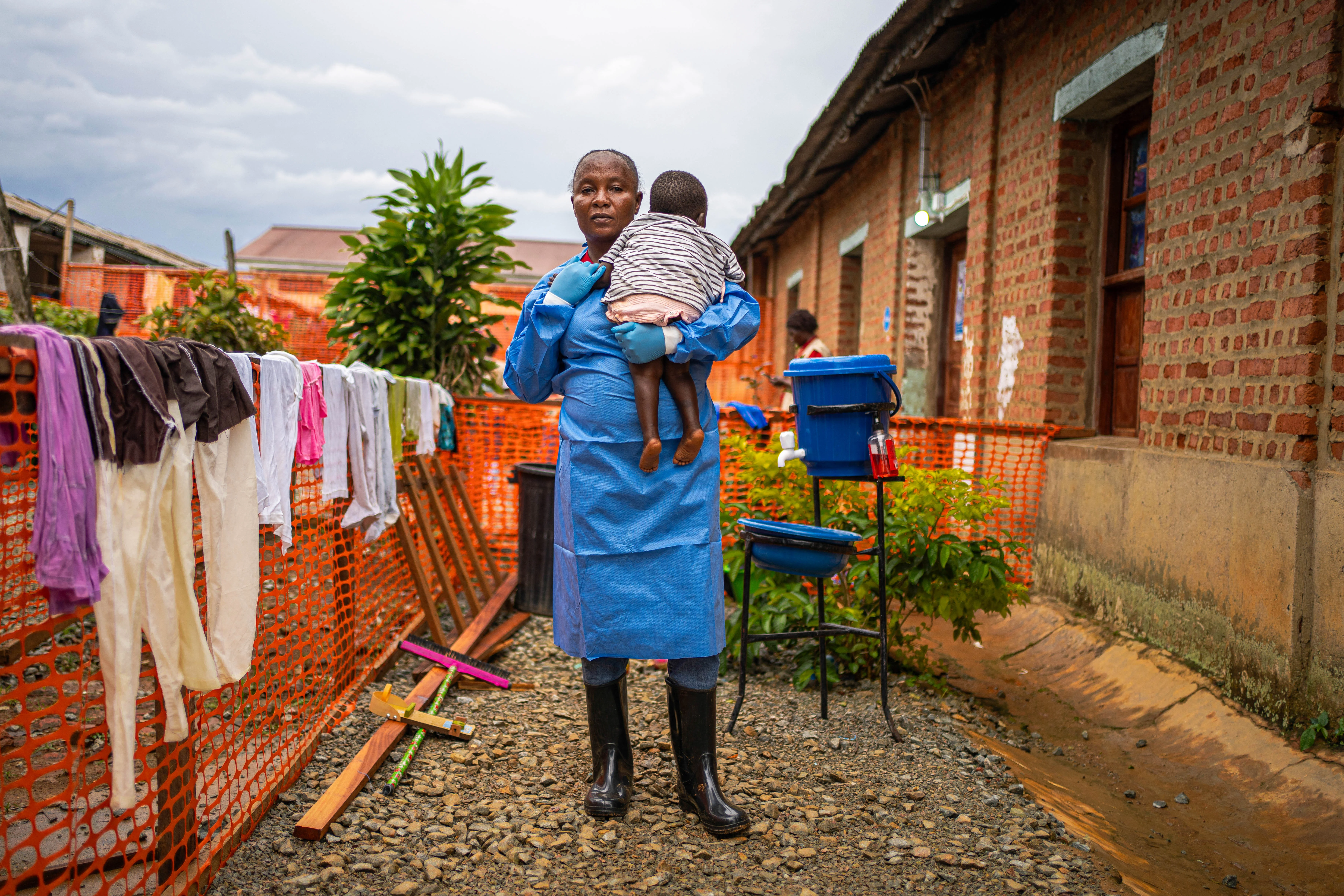
The Ebola outbreak that began in Congo has passed 10,000 patients and is still spreading fast.
1/5The Conversation: Health· Kylee Rae Noel, Postdoctoral Research Associate in Entomology, University of Illinois Urbana-Champaign· Oct 27
Florida's record dengue outbreak shows how suburbs and warming help mosquitoes spread
Florida's 2026 dengue outbreak is the largest in its modern history, and most cases were caught from local mosquitoes. Researchers say warmer, longer seasons and suburban sprawl together are widening where disease-carrying mosquitoes thrive.
Why it matters · Dengue spreading locally in the US is no longer rare, and the drivers the authors describe, warmer seasons and growing suburbs, will keep pushing that risk to more places.
Know this first
Context from the editor, not the article · 25 sec
1 · Dengue in the US
Dengue is a viral illness spread mainly by Aedes mosquitoes. Most US cases are caught abroad. A case is "locally acquired" when a mosquito nearby bit an infected person and then passed the virus on.
2 · Temperature suitability models
Mosquitoes and the viruses inside them only develop within certain temperature ranges. Researchers count the days a place falls in that range to estimate transmission potential. More suitable days does not guarantee actual cases.
3 · West Nile's bird cycle
2/5STAT· Karen E. Knudsen and Othman Laraki· Oct 27
Personalized mRNA cancer vaccine succeeds in Phase 3, raising access questions
A Phase 3 trial found a custom-made mRNA cancer vaccine plus Keytruda cut the risk of recurrence or death by 42% compared with Keytruda alone. Two cancer-care executives argue the bigger obstacle now is getting it to patients.
Why it matters · A therapy that works in trials can still take decades to reach most patients, as BRCA testing did. Payment and logistics may decide who actually benefits.
Know this first
Context from the editor, not the article · 25 sec
1 · What neoantigens are
Tumor mutations create abnormal proteins called neoantigens that healthy cells lack. A personalized vaccine encodes a patient's own neoantigens so the immune system learns to recognize and attack any remaining cancer cells.
2 · Vaccine plus checkpoint inhibitor
Pembrolizumab (Keytruda) is a checkpoint inhibitor: it releases a brake on immune T cells. The vaccine is meant to point those T cells at the right targets, so the two are tested together after surgery.
3 · The BRCA precedent
BRCA1 and BRCA2 mutations sharply raise breast and ovarian cancer risk. Tests have existed since 1996, yet most carriers still haven't been identified. That gap is the authors' warning example.
3/5Fight Aging!· Reason· Oct 27
Lab-designed anti-amyloid peptide turns out to occur naturally in blood
Researchers built a tiny peptide to stop zinc from helping amyloid-β clump in Alzheimer's disease. While developing a blood test for it, they found the body already makes it, and Alzheimer's patients have less.
Why it matters · If it holds up, one molecule could become both a cheap blood marker and a drug candidate. For now the evidence is one observational comparison, and the summary reports no numbers.
Know this first
Context from the editor, not the article · 31 sec
1 · The amyloid hypothesis
Alzheimer's is widely thought to be driven by amyloid-β, a short protein fragment that slowly clumps into plaques between neurons over years. Antibody drugs such as lecanemab and donanemab clear plaques and modestly slow decline, but they are expensive, given by infusion, and can cause brain swelling or bleeding.
2 · Zinc and plaque formation
Zinc ions, which neurons release at synapses, bind amyloid-β and help the fragments stick together. Blocking that binding is an alternative to antibodies: the idea is to stop clumping before plaques form rather than clear plaques afterwards.
3 · Blood tests for Alzheimer's
4/5Fight Aging!· Reason· Oct 27
Review links the aging gut microbiome to bone loss through immune and nerve signals
A new open-access review argues that aging gut microbes may drive osteoporosis by inflaming the immune cells in the bone marrow and disturbing nerve signals there. It offers a framework for research, not proof.
Why it matters · If the gut-to-bone route holds up, it could open new ways to spot who is at risk of bone loss and new targets for treatment. For now it rests on mechanistic, mostly preclinical evidence.
Know this first
Context from the editor, not the article · 27 sec
1 · How bone is remodeled
Bone is constantly rebuilt. Osteoblasts lay down new bone and osteoclasts break old bone down. Osteoporosis develops when, over years, breakdown runs ahead of formation, so bone thins and fractures more easily.
2 · The RANKL/OPG switch
Osteoclasts form when a signal called RANKL binds its receptor. OPG is a decoy protein that soaks up RANKL. The ratio of the two sets how much bone is resorbed. The osteoporosis drug denosumab is an antibody that blocks RANKL.
3 · Gut microbes and aging
Gut bacteria break down food into many metabolites, some helpful and some harmful. As people age, microbes that drive inflammation tend to increase and beneficial ones decline. This imbalance is called dysbiosis.
5/5STAT· Jonathan E. Kohler and Mary A. King· Oct 27
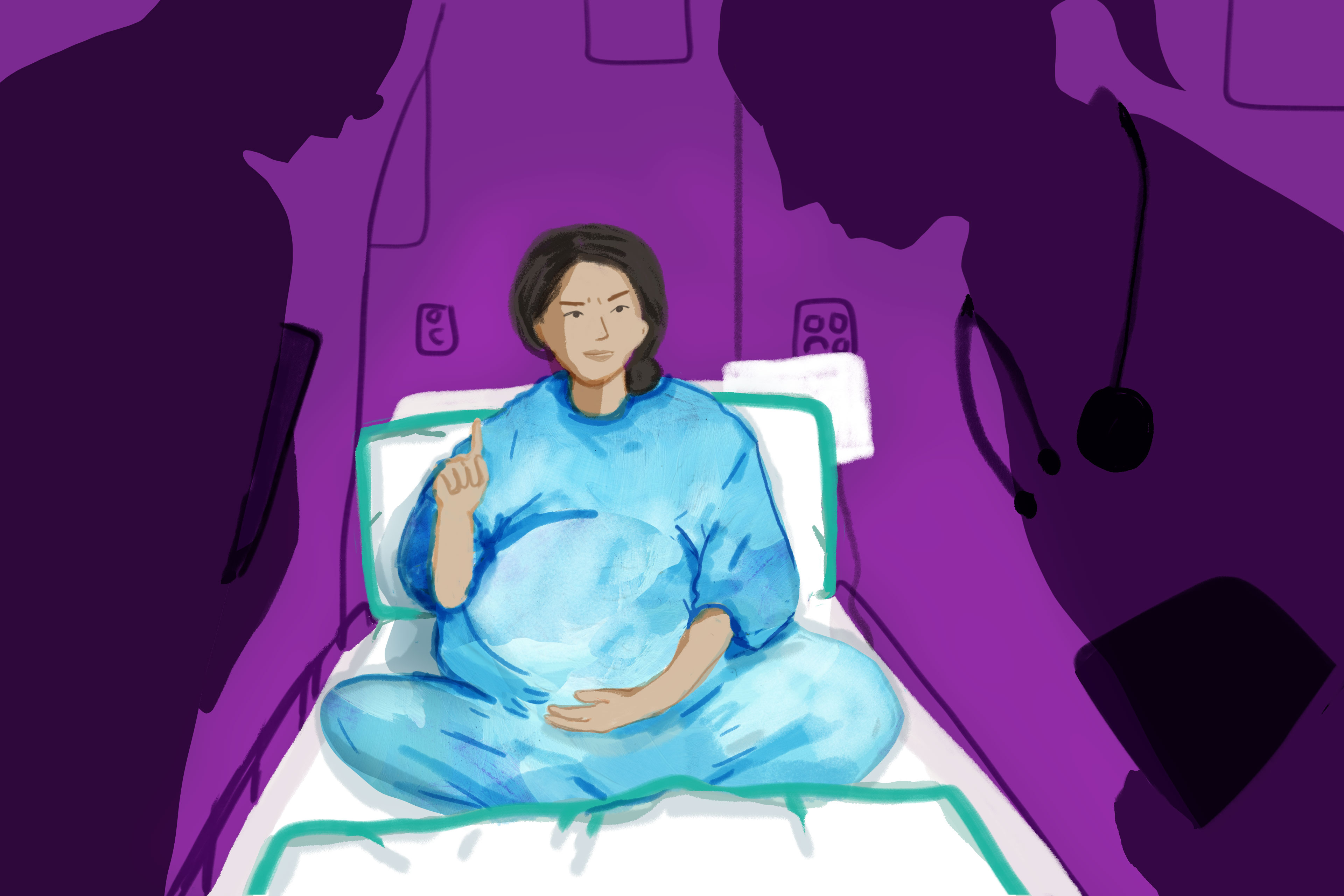
Doctors say kids' emergency hospital beds are now short all the time
A pediatric surgeon and a pediatric intensivist write that the bed shortage seen in the 2022 "tripledemic" is now routine. Small hospitals are dropping children's care, and they propose three policy fixes.
Why it matters · Where a child can get emergency care depends on hospital finances and transfer systems, and Medicaid cuts could make both worse.
Know this first
Context from the editor, not the article · 25 sec
1 · Children's care is centralized
Most US children's specialists, pediatric intensive care units (PICUs) and pediatric-trained nurses work in a fairly small number of regional children's hospitals. Rural and community hospitals depend on transferring very sick children to them.
2 · The 2022 tripledemic
In late 2022, RSV, influenza and Covid surged among children at the same time. Pediatric wards and ICUs across the US filled up, and some hospitals put up tents or delayed surgeries.
3 · Medicaid pays for children
Medicaid and CHIP, the public insurance programs for low-income families, cover roughly four in ten US children. Their payment rates usually come in below those of private insurers.
West Nile virus circulates mainly between birds and Culex mosquitoes. Humans and horses get infected when bitten, but they rarely pass the virus back to mosquitoes.
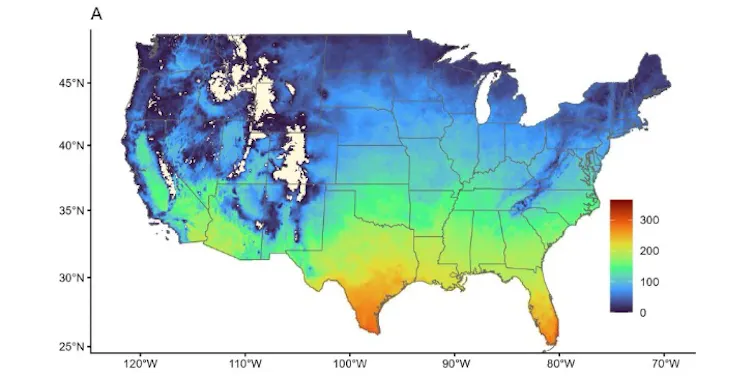
Days in 2025 that US locations were warm enough for dengue spread by Aedes aegypti; highest across the South.1 / 4
Florida is in the middle of what has been called the largest dengue outbreak in its modern history. By late October 2026 the state had more than 700 cases. More than 400 were 1, meaning the patient caught dengue from a mosquito in Florida, not while travelling. Hillsborough County, home to Tampa, had more than 350 cases, including at least one death. Miami-Dade had more than 200.
In a piece for The Conversation, entomologist Kylee Rae Noel and medical geographer Sadie Ryan argue that a warming climate is only part of the reason. The other part, which they say is often overlooked, is where people build.
Why suburbs suit mosquitoes
2 is the main carrier of dengue, Zika, 3 and yellow fever in the Americas. It lives and breeds around houses. A flowerpot saucer, a clogged gutter, a birdbath, an old tire or even a bottle cap can hold enough water for its larvae. One female lives about a month and can lay more than 100 eggs at a time, up to five times. Every new housing development adds thousands of these small containers right next to people to bite.
Its relative 4, the Asian tiger mosquito, shows how people move them around. It reached the US in shipments of used tires and lucky bamboo, and its early spread has been linked to the interstate highways. By 2017 it had been recorded in 1,368 counties across 40 states. Pennsylvania trap data from 2010 to 2018 found it mostly in the densely populated area around Philadelphia.
Climate lengthens the season
Warmer temperatures and shorter winters extend the part of the year when mosquitoes can pass on viruses. In New York State, the season warm enough for West Nile transmission grew by an average of 20 days between 1999 and 2024. West Nile, carried by the widespread 5 house mosquito, is still the most common mosquito-borne disease in the continental US. Ryan's modelling projects that by the 2030s about 70% of Floridians will live with nine months a year of possible West Nile transmission. In 2000, about 2.33 million people did.
Caveats
Most of these figures are 6 estimates. They describe when temperatures allow transmission, not how many people will get sick. Whether cases follow also depends on mosquito control, screened windows and whether the virus arrives at all. The article links Florida's slow cool-down in fall 2025 to more dengue, but it doesn't show that one caused the other. Ryan's research is funded by the CDC, NSF and Wellcome Trust.
Florida is in the middle of what has been described as the largest dengue outbreak in its modern history. By late October 2026 the state had reported more than 700 cases. More than 400 were 1: the patient had not travelled and was infected by a mosquito in Florida. Hillsborough County, around Tampa, had more than 350 cases, including at least one death. Miami-Dade County had more than 200, and there were at least seven local cases around Orlando. Hillsborough is spending millions of dollars on mosquito control.
Writing in The Conversation, Kylee Rae Noel, an entomologist at the University of Illinois Urbana-Champaign, and Sadie Ryan, a medical geographer, use the outbreak to make a broader argument. Climate change gets most of the attention for mosquitoes turning up in new places, they say, but human building patterns matter just as much and get less notice.
The climate part
Mosquitoes and the viruses they carry only develop within certain temperature ranges. Warmer average temperatures and shorter winters widen the area where mosquitoes can live and pass on viruses, and lengthen the part of the year when they can. Erratic storms and rainfall also leave more standing water for breeding.
The authors cite several measurements and projections:
New York State: the season with temperatures suitable for West Nile transmission grew by an average of 20 days between 1999 and 2024.
Florida, West Nile: Ryan's study found that in 2000 all 67 Florida counties had a suitable season of five months or more, and 2.33 million people lived with a nine-month season. By the 2030s, about 70% of Florida's population is projected to face nine months of possible transmission each year.
2025: Florida stayed warm late into the fall, and moderate temperatures plus standing water kept Aedes mosquitoes active. Dengue cases rose.
Global: a 2025 study led by Janey Messina at the University of Oxford projected large areas suitable for dengue transmission by 2050, based on temperature, rainfall and mosquito population forecasts. The suitable range extends further from the equator in North America and Australia.
Ryan also mapped how many days in 2025 different US locations fell within the temperature range for dengue transmission by 2. The highest counts were across the South, especially Florida, Louisiana and Texas.
The human part
Aedes aegypti is the main carrier of the viruses that cause dengue, yellow fever, 3 and Zika in the Americas. It probably arrived in the US with the slave trade. It has done well as an invader because it lives and breeds around houses. Its larvae need very little water: a flowerpot saucer, a clogged gutter, a discarded tire, a birdbath or a bottle cap is enough. A female lives only about a month, but she can lay more than 100 eggs at a time, up to five times.
An illustrative calculation, not a figure from the article: one female laying 100 eggs five times produces up to 500 offspring in about a month. If even a small share of those reach adulthood, a single neglected backyard container can seed a local population quickly. That is why the authors focus on new housing. Every new development creates thousands of small water-holding containers and puts them next to the people the mosquitoes feed on.
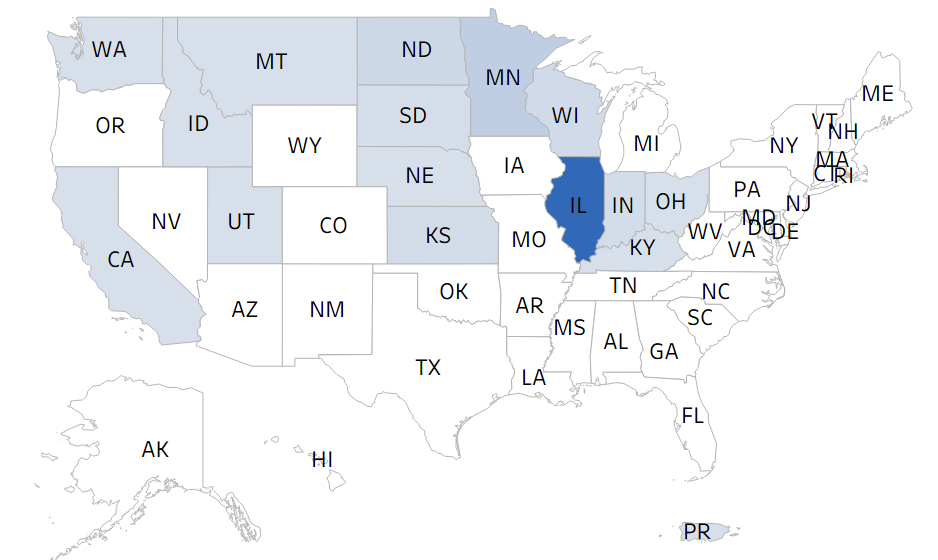
4, the Asian tiger mosquito, carries many of the same viruses and shows how people spread these insects over long distances. It is native to Southeast Asia and now lives on every habitable continent. It reached the US mostly as a stowaway, often in used tires or shipments of lucky bamboo. Its early spread within the US has been linked to the interstate highway system. By 2017 it had been documented in 1,368 counties in 40 states, and it has kept spreading across the eastern and central US. One of Iowa's first established populations appeared in the Des Moines metro area and has since spread to nearby communities. Pennsylvania trap data from 2010 to 2018 found it mostly in the densely populated region around Philadelphia, which closely matches the state's population-density map.
Global shipping also reintroduces both Aedes species to places where they had once been controlled.
West Nile: same mosquito, longer season
West Nile virus is still the most widespread mosquito-borne disease in the continental US. It cycles mainly between birds and 5 mosquitoes, including the common house mosquito. People and horses get infected when bitten. Culex breeds in storm drains, roadside ditches, retention ponds and wetlands, in both cities and the countryside, and is already found across most of the country. So the authors say climate change matters less for where Culex lives. Researchers are focusing instead on how warmer temperatures and changing rainfall affect how many mosquitoes there are, how long they stay active, and how well they transmit the virus.
How strong is the evidence?
This is an explainer, not a new study, and the strength of its claims varies.
The outbreak counts are case reports. They show local transmission is real and large this year. They don't by themselves explain why 2026 was worse than earlier years.
The article also leaves several questions unanswered: which control methods work best, whether Florida's 2026 outbreak was driven mostly by weather, imported cases or mosquito numbers, and what households and planners should change apart from emptying standing water. The practical takeaway is simple. Aedes breeds in containers around the home, so tipping out saucers, clearing gutters and getting rid of old tires reduces risk directly.
Disclosure: Ryan receives funding from the National Science Foundation, the CDC and the Wellcome Trust.
Remember
More than half of Florida's 700+ dengue cases in 2026 were caught from local mosquitoes, not during travel.
Aedes mosquitoes breed in bottle-cap-sized pools of water, so each new suburb creates thousands of breeding sites.
Most of the climate figures measure when transmission is possible, not how many people will actually get sick.
At the European Society for Medical Oncology (ESMO) Congress, a 1 trial (the large, late-stage kind that usually supports approval) reported results for intismeran autogene, a personalized cancer vaccine. Given with the immunotherapy 2 (Keytruda), it cut the risk of recurrence or death by 42% compared with pembrolizumab alone. The article says it is the first 34 therapy to meet its main goal in a Phase 3 cancer trial.
How it works
Each vaccine is made for one patient. Tumor tissue and blood are sequenced to find mutations only the cancer carries. Software then picks out neoantigens, abnormal protein fragments the immune system can recognize. mRNA instructions for those fragments train T cells to attack any cancer left after surgery. Pembrolizumab releases a brake on those T cells.
What we don't know yet
This is an opinion piece, and it gives just one figure. The 42% is a relative reduction. There's no absolute risk, follow-up length, survival data, side-effect profile, or even the cancer type. The patient it describes had melanoma and joined an earlier trial of the vaccine. Wait for the full data before judging how big the benefit is.
The argument
Karen Knudsen, CEO of the Parker Institute for Cancer Immunotherapy, and Othman Laraki, CEO of Color Health, argue that the open question is no longer whether these vaccines work but how to get them to patients. Their warning example is BRCA testing for inherited cancer risk. It went on sale in 1996, but patents, price and family-history rules held it back. Thirty years on, it still misses most people who could benefit.
They name four obstacles:
Regulation assumes every dose is identical. That pushes companies toward narrow approvals, one cancer at a time, each with its own costly trial. The authors want regulators to validate the platform once, then add new cancers faster with post-market evidence. A planned $200 million National Cancer Institute partnership, the 5, aims to build the trial networks and data standards for this.
Note the authors' stake: Laraki's company sells the kind of integrated care model the essay recommends.
The result
At the European Society for Medical Oncology (ESMO) Congress, researchers presented a 1 trial of intismeran autogene, a personalized cancer vaccine. Phase 3 is the large, late-stage kind of trial that regulators usually rely on for approval. Patients who got the vaccine plus 2 (Keytruda) had a 42% lower risk of cancer recurrence or death than patients who got pembrolizumab alone. According to the article, this is the first 34 therapy in cancer to meet its 5 in a Phase 3 trial. The primary endpoint is the main outcome a trial is designed to test.
The vaccine is built for one patient at a time. Tumor tissue removed at surgery is sequenced, along with a blood sample. Comparing the two picks out mutations found only in the cancer. Software then predicts which of those mutations produce neoantigens, abnormal protein fragments the immune system is most likely to recognize. The vaccine's mRNA, which is genetic instructions, tells the patient's cells to make those fragments, training T cells to hunt down any cancer cells left after surgery. Pembrolizumab is a checkpoint inhibitor: it takes a brake off those same T cells. One way to picture the pairing (an analogy): the drug presses the accelerator, and the vaccine supplies the address.
What the article leaves out
This is an opinion piece, not a trial report, and it gives only one number. "42% reduction" is a relative figure, roughly a 6 of 0.58. Without baseline risk you can't turn it into an absolute benefit. If 40% of patients on Keytruda alone relapsed over the follow-up period (an illustrative figure, not from the trial), a 42% relative cut would bring that to about 23%. If baseline risk were 10%, the gain would be about 4 percentage points. The article doesn't give follow-up length, overall survival, side effects, or the cancer type and stage the trial enrolled. The patient it describes had high-risk melanoma and took part in an earlier trial of the same vaccine, so melanoma after surgery is the likely setting. Still, readers should wait for the full publication before judging the size of the benefit.
The argument: delivery, not science, is now the bottleneck
Karen Knudsen, CEO of the Parker Institute for Cancer Immunotherapy and former CEO of the American Cancer Society, and Othman Laraki, co-founder and CEO of Color Health, argue that "the question is no longer whether personalized cancer vaccines can work." The question now, they say, is how to get them to patients quickly.
Their warning is BRCA testing. Mary-Claire King's team at UC Berkeley mapped BRCA1 in 1990. BRCA2 followed five years later, and a commercial test was on sale by 1996. Patents kept prices high for years. Guidelines required a family history before testing, and no one in the care system owned the whole process. Thirty years on, the test costs a few hundred dollars and still misses most people who could benefit. The authors name four obstacles that could repeat that history.
1. Regulation built for identical products. Drug approval assumes every dose is the same. Here, every vaccine is different. Regulatory demands and market pressure push makers toward narrow approvals, one tumor type and one stage at a time. Each needs its own trial, and those costs end up in the price. The authors propose a different approach. Regulators would validate the platform itself, meaning the neoantigen-selection pipeline and the manufacturing process. New cancers could then be added faster, backed by rigorous post-market evidence. They point to the forthcoming 7, a $200 million public-private partnership between the National Cancer Institute and the Foundation for the NIH. It aims to build trial networks, data standards and infrastructure, and to bring personalized vaccines to patients within the decade. They also say AI could cut time and cost "at nearly every step," from tissue analysis to quality control. The article offers no specifics on that claim.
2. A fragmented chain with no owner. One patient's vaccine requires several steps. Tumor tissue has to be collected and preserved properly at surgery. Tumor and blood are sequenced, the neoantigens chosen, and the vaccine designed, made, shipped and given on schedule. Then comes years of monitoring. Today a different organization handles each step, each with its own contract and incentives. The authors argue the "product" should be defined as an integrated end-to-end service, not what's in the vial.
3. Payers don't capture the value. To an insurer, a vaccine given after surgery looks like expensive prevention. A health plan whose members typically leave within one to two years gains little from preventing a relapse that another plan would have paid for. The authors note that coverage for screening has often come only through advocacy and legislation, and forced coverage rarely removes the day-to-day friction. Prevention can still pay off: a relapse that turns metastatic can mean years of immunotherapy, scans and hospital care. They suggest multiyear or outcomes-based contracts. They also point out that Medicare, which covers many patients for life, doesn't have the churn problem. Employer and direct-to-patient programs are other routes, though the authors admit these raise equity concerns.
4. Slow guidelines. Clinical guidelines in practice decide what gets ordered and reimbursed. The authors say many have not caught up with innovations from the past 10–15 years, such as genetic testing and 8, which uses blood tests to detect traces of cancer left after treatment. Guideline bodies were built to evaluate one fixed product in one defined population. The authors want guideline groups, professional societies and payers to agree now on what evidence is enough to extend a recommendation to a related setting, and how real-world data will be used to update it.
Weighing it
The case for planning delivery early is reasonable, and the BRCA history supports it. Keep two things in mind, though. First, the clinical case rests on a single headline figure, and the authors themselves say much is unknown: which cancers respond, how best to optimize the vaccines, and which technologies work best. Second, the authors' jobs matter here. Laraki runs a company that sells integrated testing and cancer-care services, the kind of end-to-end model the essay recommends. Knudsen leads an immunotherapy research institute. That doesn't make their argument wrong, but it is their argument. Whether regulators accept platform-level approval for drugs this individualized is still an open question.
Remember
The 42% figure is relative risk; absolute benefit, survival, side effects and cancer type weren't reported here.
Personalized vaccines need one manufacturing and logistics chain per patient, and no single organization currently owns it.
Insurer churn discourages paying for prevention; Medicare and outcomes-based contracts don't have that problem.
Diagnosis used to need brain scans or spinal taps. Blood tests that measure markers such as phosphorylated tau (p-tau217) are now entering clinics. Any new blood marker has to be measured against these tests.
Image: Fight Aging!
A research team designed a four-amino-acid peptide to block one step in Alzheimer's plaque formation. While building a blood test to track it, they found the body already makes it. Levels were also lower in people with Alzheimer's. The work is published in PNAS Nexus and was highlighted by the longevity blog Fight Aging!
What the peptide is meant to do
Alzheimer's plaques are built mainly from 1, a short protein fragment that clumps slowly over years. Zinc ions are needed for this. They attach to a stretch of Aβ at positions 11 to 14, made of the amino acids glutamate, valine, histidine and histidine, and help the fragments stick together.
The team's peptide, 2 (histidine, alanine, glutamate, glutamate, with both ends chemically capped), is a 3. It is built to take the place of that zinc-dependent contact so the fragments can't join up. In animal models of Alzheimer's it reduced Aβ clumping. The summary doesn't say which animals were used or how large the effect was.
The accidental finding
To prepare for human trials, the researchers needed to measure HAEE in blood plasma. They used 4: liquid chromatography separates the molecules in plasma, then a mass detector confirms HAEE by its exact mass and by the fragments it breaks into.
Untreated people already had HAEE in their plasma. The team then compared:
200 patients with a clinical diagnosis of Alzheimer's
150 controls with no diagnosed cognitive impairment
HAEE was "significantly reduced" in the patients. The authors suggest low HAEE could serve as a blood 5, and that synthetic HAEE could be given as a drug to slow the disease.
Caveats
No numbers in the summary. There is no average difference, no overlap between groups, and no measure of how well HAEE tells patients from controls. "Significant" here means unlikely to be chance. It doesn't tell you the test would be useful in practice.
What's interesting is that a molecule designed from first principles appears to exist naturally and to fall in the disease. That needs replication in an independent group of people with biomarker-confirmed diagnoses before it means anything for patients.
A team developing an experimental Alzheimer's drug found that their synthetic peptide already circulates in human blood, and at lower levels in people with Alzheimer's. The four-amino-acid molecule, called 1, was designed to block one step in plaque formation. The finding came from method-development work for a planned clinical trial. It is published in PNAS Nexus and was highlighted by Reason at the longevity blog Fight Aging!. The available account is a short abstract, so this write-up stays close to it and flags what it leaves out.
The problem being targeted
Alzheimer's disease is marked by plaques between neurons, made mostly of 2, a short protein fragment. The leading theory holds that slow Aβ aggregation over many years sets off the disease. The approved anti-amyloid antibodies, lecanemab and donanemab, work by clearing plaques that have already formed. They slow decline modestly, need infusions, and carry a risk of brain swelling and microbleeds. A small molecule that stops plaques forming in the first place would be a different approach and potentially a cheaper one.
Zinc is one route in. Neurons release zinc ions at synapses, and according to the paper, plaque formation requires zinc. The key contact point is a four-residue stretch of Aβ at positions 11 to 14: glutamate, valine, histidine, histidine (written 11-Glu-Val-His-His-14, or EVHH). This region is critical for the interaction between Aβ and zinc that lets the fragments stick together.
How HAEE is supposed to work
HAEE is the peptide histidine–alanine–glutamate–glutamate. Its ends are capped: an acetyl group on the front (Ac-) and an amide on the back (-NH2). Caps like these make short peptides behave more like segments of a longer protein and can slow their breakdown.
The authors describe HAEE as a 3 of the zinc-dependent interaction at the EVHH region. A loose analogy: if two Aβ fragments join like a plug and socket held by a zinc clip, HAEE is a decoy plug that fills the socket so the real fragments can't connect. The abstract doesn't give the exact molecular details. In animal models of Alzheimer's, HAEE suppressed Aβ aggregate formation. The abstract doesn't say which models were used, what dose, or how large the effect was.
The measurement that turned up a surprise
Before testing HAEE in people, the team needed a reliable way to measure it in blood plasma, for example to track how quickly it is cleared. They used high-performance liquid chromatography coupled to mass spectrometry. Chromatography separates the thousands of molecules in plasma by how they move through a column. The mass detector then checks two things: the "parent" ion with HAEE's exact mass, and the specific fragment ions HAEE produces when broken apart. Matching both is a standard way to identify a small molecule with confidence.
When they ran plasma from people who had never received the drug, HAEE was there. It appears to be a normal component of human blood.
They then compared two groups:
Group
n
Description
Alzheimer's
200
Clinical diagnosis of Alzheimer's disease
Controls
150
No clinical diagnosis of cognitive impairment
Plasma HAEE was "significantly reduced" in the Alzheimer's group. From this the authors propose two uses:
A diagnostic 4: low natural HAEE as a sign of Alzheimer's.
A treatment: synthetic HAEE given to replace a natural protective molecule that is in short supply.
The second idea strengthens the drug's rationale. If the body uses something like HAEE to keep Aβ in check and patients have less of it, topping it up is a coherent hypothesis. It is still only a hypothesis.
What the abstract doesn't tell us
Effect size. There is no average difference between groups, no measure of spread or overlap, and no accuracy figure such as sensitivity, specificity or 5. A statistically significant difference between groups of 200 and 150 can coexist with heavy overlap that makes a test useless for any individual.
Who was in the groups. Diagnosis was clinical. The abstract doesn't say whether amyloid was confirmed by PET scans, spinal fluid, or established blood markers such as 6. Clinical diagnosis alone misclassifies a meaningful share of patients. Age, sex, kidney function and medications, all of which could shift plasma peptide levels, aren't described.
Cause or consequence. This is a cross-sectional, observational comparison. Low HAEE could contribute to disease, result from it, or reflect something else that differs between patients and controls. Showing it comes first would take longitudinal data, ideally in people before symptoms start.
Where natural HAEE comes from. A four-residue sequence could be a breakdown fragment of a larger protein. The abstract doesn't identify a source. It also doesn't say whether the natural molecule carries the same acetyl and amide caps as the synthetic version or was detected in another form. That matters for whether "deficiency" and "replacement" refer to the same molecule.
Comparison with existing tests. Blood tests based on phosphorylated tau already perform well against scans. A new marker would need to add something to them, and the abstract reports no head-to-head comparison.
Drug evidence. All efficacy data are from animals. Many anti-amyloid approaches have worked in mice and failed in people. Human trials are only being prepared.
Where this leaves things
A molecule designed for a specific chemical job appears to occur naturally, and at lower levels in Alzheimer's. That makes it worth following up. What would make it matter is replication in an independent cohort with biomarker-confirmed diagnoses, published accuracy figures, a comparison with p-tau217, and eventually safety and efficacy data from the planned human trials. Until then it is an intriguing observation, not a test or a treatment.
Remember
HAEE blocks zinc from helping amyloid-β clump; so far it has worked only in animal models.
Plasma HAEE was lower in 200 Alzheimer's patients than 150 controls; no effect size or accuracy was reported.
The finding is cross-sectional and diagnoses weren't confirmed by biomarkers, so cause and diagnostic value are both unknown.
A new open-access review, highlighted by Reason at Fight Aging!, argues that the aging gut microbiome may help drive osteoporosis by disturbing immune cells in the bone marrow. The blog post doesn't name the journal or authors. The review reports no new data. It is a framework for future research, not a result.
The problem
Bone is constantly rebuilt. Osteoblasts lay down new bone and 1 break it down. Osteoporosis develops when breakdown wins.
Age-related bone loss is usually explained by local changes. Bone-building activity falls. Bone marrow mesenchymal stem/stromal cells (2), which become 3, enter 4, a damaged, non-dividing state. The marrow environment decays. The authors argue that these local changes don't explain why bone loss is gradual, affects the whole skeleton and varies so much between people. They think something systemic is involved.
The proposed mechanism
Bone marrow is also an immune organ: it makes and regulates immune cells. With age come 5, the decline and distortion of immune function, and 6, chronic low-grade inflammation. The review argues that together these raise inflammatory cytokines (immune signaling proteins). They also tip the 7 balance. RANKL tells precursor cells to become osteoclasts, and OPG is a decoy that blocks it. More RANKL relative to OPG means more bone resorption.
The authors put the gut upstream of this, acting through two routes:
Leaky gut, spreading inflammation. Aging shifts which microbes dominate and weakens the gut lining. Microbial inflammatory signals then get into the blood and reach the marrow.
Nerves. Gut microbes may weaken the vagus nerve's anti-inflammatory reflex and disturb sympathetic ("fight or flight") nerve signals to bone. Both would push marrow immune cells toward breaking bone down.
An analogy (ours): the marrow's immune cells act as supervisors for the bone builders and demolition crews. The review argues the gut reaches those supervisors through both the bloodstream and the nerves.
How much to trust it
The authors themselves say the links in this chain "have not been systematically clarified." Each piece has some support on its own. Much gut-bone evidence in general comes from mouse studies and observational human data. In those studies, diet, frailty and medication could explain both microbiome changes and bone loss. Small probiotic trials in older women have shown at most modest effects on bone density, and none has shown fewer fractures.
The authors suggest the framework could eventually help identify who is at risk and guide targeted treatments. The RANKL step is already a proven drug target: 8 blocks RANKL. The new part, gut and nerves acting upstream, is unproven, and nothing here changes treatment today.
What's new
Reason, writing at Fight Aging!, highlights a new open-access review titled "Research progress on the mechanisms by which gut microbiota dysbiosis remodels the bone marrow neuroimmune microenvironment to drive age-related osteoporosis." The blog post does not name the journal or the authors. It is a review: it pulls together existing research and proposes a framework, but it reports no new experiments, patient data or effect sizes. Read it as a map of hypotheses, not a finding.
The problem it tries to explain
Osteoporosis in old age has usually been explained by local events inside bone. Osteoblasts, the cells that build bone, become less productive. Osteoclasts, the cells that break bone down, become more active. Bone marrow mesenchymal stem/stromal cells (1), the precursors that become 2, enter 3, a state in which damaged cells stop dividing and release inflammatory signals. The marrow environment around them also degrades.
The authors argue that these local changes do not fully explain three features of age-related bone loss: it gets steadily worse, it affects the whole skeleton, and it varies a lot from person to person. Something systemic, they suggest, is pushing the balance. Reason points out that the field still debates which of the many known mechanisms matter most, and whether all the important ones have even been found.
Bone marrow as an immune organ
The review's central move is to treat bone marrow as more than a bone-repair site. Marrow also houses the hematopoietic stem cells that make blood and immune cells, and it is where many immune cells develop and are regulated. Bone cells and immune cells share this space and signal to each other, a field known as osteoimmunology.
With age, T cells, B cells, macrophages and dendritic cells all change how they behave. Two linked processes are involved:
Immunosenescence: the gradual decline and distortion of immune function with age.
Inflammaging: chronic, low-grade inflammation that rises with age even without infection.
The authors argue that together these processes raise the levels of pro-inflammatory cytokines (immune signaling proteins) and tip the 4 axis. RANKL is the signal that turns precursor cells into 5. OPG is a decoy that blocks it. More RANKL relative to OPG means more osteoclasts and more bone resorption. In the review's words, the marrow shifts "from protective immunoregulation toward a resorption-dominant state."
Where the gut comes in
The review places the gut microbiome upstream of this immune shift and describes two routes.
1. Leaky barrier, inflammatory spillover. Aging changes which microbes live in the gut and what they produce, and it weakens the gut lining. Microbial products and inflammatory signals can then get into the bloodstream, reach the bone marrow and activate immune cells there.
2. Nerve signaling. Gut microbes and their metabolites may also act on the autonomic nervous system, the part that runs body functions without conscious control. The review discusses two branches:
The vagus nerve carries a known anti-inflammatory reflex: its signals can calm immune cells. The authors suggest this vagal anti-inflammatory signaling weakens with age and gut dysbiosis.
Sympathetic outflow, the "fight or flight" branch, supplies nerves to bone and marrow. The review proposes that abnormal sympathetic activity pushes marrow immune cells toward a bone-destroying profile.
A rough analogy (ours, not the paper's): the marrow is a factory floor where builders and demolition crews take orders from immune supervisors. The review argues that the gut affects those supervisors in two ways: through the air supply, meaning inflammatory molecules in the blood, and through the phone lines, meaning the nerves.
The authors call the bone marrow "neuroimmune microenvironment" the place where gut signals, nerve control and bone remodeling meet.
How strong is the evidence?
The authors themselves say the links among dysbiosis, nerve-immune disruption, marrow immune remodeling and bone loss "have not been systematically clarified." Each piece has support on its own. Together they are a hypothesis.
The blog post doesn't cover the type of evidence behind each piece. In general, much gut-bone work comes from mice, including germ-free animals and antibiotic experiments, plus observational studies in humans that link microbiome makeup to bone density. Observational links can't show which way the cause runs. Frailty, diet, medications and reduced activity all change the microbiome and bone at the same time. A few small probiotic trials in older women have reported modest slowing of bone-density loss. None has shown fewer fractures, which is the outcome that matters to patients.
What it could change, and what's open
The authors say the framework could support risk stratification, meaning sorting patients by likely cause of bone loss, and "precision interventions." The idea that RANKL drives bone loss is already well tested in the clinic: 6 blocks RANKL directly. What's new is the claim that the gut and nerves sit upstream of that switch.
The open questions:
How much of age-related bone loss these routes explain, compared with hormones, inactivity and BMSC senescence.
Whether changing the microbiome in older humans measurably shifts marrow immune cells.
Whether that translates into bone density, and then into fewer fractures.
Nothing in this review changes how osteoporosis is treated today.
Remember
The review recasts bone marrow as an immune organ, where inflamed immune cells tip bone remodeling toward breakdown.
It proposes two gut-to-bone routes: inflammation leaking from a weakened gut, and changed vagus and sympathetic nerve signals.
The authors admit the full chain is unproven, and no study has yet shown fewer fractures from changing the microbiome.
Pediatric surgeon Jonathan Kohler (Sacramento) and pediatric intensivist Mary King (Seattle) argue in STAT that the shortage of emergency care for children has become permanent. In 2022 the "1" of RSV, flu and Covid filled every children's hospital at once. That level of crowding, they write, "has become a normal Tuesday" in 2026.
This is an opinion piece. It rests on the authors' clinical experience and two patient stories. It gives no national figures on bed occupancy, transfers or outcomes.
Two babies, two outcomes
In winter 2022 a baby boy with breathing trouble arrived at a small hospital in California's Sierra Nevada. It had no pediatric specialists and no pediatric ICU (2, an intensive care unit for children). With no central number to call, staff worked through a phone tree, ringing hospitals one by one. Every northern California children's hospital, including the authors', was full. The baby died while the team tried to insert an infant breathing tube.
That same winter, a rural hospital in Washington's North Cascades spent 12 hours looking for a bed for a sick baby girl. It then called the state's 3, a Regional Medical Operations Coordination Center that works like air traffic control for patient transfers. The center tracks open beds across the region and matches patients to them. It persuaded one hospital to make an exception to its infection-control rules and admit her to its 4. She survived. Budget cuts closed Washington's RMOCC last year, and it is now seeking new funding.
Why capacity is shrinking
The authors' main point is that community hospitals are losing the ability to treat common childhood problems, not only critical illness. They name allergic reactions, asthma attacks and gallstones in teenagers. These hospitals used to handle such cases. Now the children get transferred, and the few children's hospitals cannot take them all, so they "routinely turn sick children away."
They say the cause is mostly financial. Pediatric admissions often pay less than they cost to provide. Adult surgery and cancer care bring in much more, so hospitals shift toward them.
Three proposals
5 rates that cover costs. They warn that the coming Medicaid cuts will probably make children's reimbursement worse.
Permanent RMOCCs. At least 19 states had regional or statewide coordination centers in 2023. Many opened only during surges, and some shut down after the pandemic.
Paying children's hospitals to support smaller ones. That would mean funded 6 consults, training and quality-improvement help. The authors say this could cut transfers and lower costs over time.
The column gives no cost estimates and no evidence on how much coordination centers or telehealth improve outcomes.
In a STAT opinion piece, two physicians argue that the shortage of emergency hospital care for children is no longer a seasonal crisis. Jonathan Kohler is a pediatric surgeon in Sacramento and Mary King a pediatric intensivist in Seattle. They write that the crowding of the 2022 "1," when RSV, influenza and Covid hit children at the same time, "has become a normal Tuesday" in 2026.
Readers should know what kind of piece this is. It is advocacy built on the authors' daily experience and two patient stories. It gives no national data on pediatric bed occupancy, transfer volumes, closures of children's units or patient outcomes. The claims about trends may be right, but the column itself doesn't put numbers on them.
The problem: children's care sits in a few places
Pediatric intensive care in the US is concentrated in a small number of regional children's hospitals. These have pediatric ICUs (2), pediatric-trained nurses and subspecialists. Rural and community hospitals stabilize sick children and then transfer the hardest cases. That arrangement only works if two things hold: the regional centers have room, and the sending hospital can quickly find out which one does.
Two cases from winter 2022
The authors open with a baby boy brought, coughing and very ill, to a small hospital in California's Sierra Nevada. It had no pediatric specialists, no pediatric nurses and no PICU, but it was hours closer than any hospital that did. The doctor saw that the case was beyond what the hospital could manage and started calling children's hospitals, the authors' own among them. All were full. There was no single number to call for a bed, so staff worked "a phone tree, hospital by hospital." The baby's condition got worse, and he died while the team was trying to insert an infant-sized breathing tube.
The second case is from Washington's North Cascades. A rural hospital spent 12 hours trying to place a sick baby girl and failed. The emergency physician then called Washington's Regional Medical Operations Coordination Center (3). The authors describe it as "air traffic control for patient transfers." One center keeps track of bed availability across a region and matches critically ill patients to open beds, so individual hospitals don't have to hunt for them. The RMOCC pediatrician remembered the caller saying, "I am terrified she will die here. Why can't anyone help?" The center found a hospital willing to make an exception to its infection-control policy and admit the baby to its 4. She lived.
The contrast is the authors' argument for coordination, though two cases can't show that coordination explains the different outcomes. Washington's RMOCC closed last year after budget cuts. It is asking for funding in this year's state budget.
What has changed since 2022
The authors say the bigger change is not more critically ill children. It is that community hospitals have "quietly lost the ability to manage even common conditions." Their examples are a 1-year-old with an allergic reaction, a 6-year-old with an asthma attack and a teenager with gallstones. Local hospitals once treated these patients. As those hospitals shrink or close their pediatric services, the children are sent to regional centers. Those centers can't take everyone, so they "routinely turn sick children away and hope one of our colleagues somewhere else will have a bed." Children end up waiting hours in waiting rooms and hallways for a transfer.
Why: the money
The authors attribute the decline mainly to finances. Hospital margins rely on high reimbursement, high-volume procedures and expensive complex treatments. Admissions for common childhood illnesses often pay less than they cost, so they lose money. Adult surgery and cancer programs make money. That gives hospitals a direct reason to close pediatric beds and use the space and staff for adults. A large share of children are insured by 5 and CHIP, which generally pay less than private insurers. So pediatric revenue depends heavily on public payment rates, a point the authors build their first proposal on.
Three proposals
1. Medicaid rates that cover the cost of pediatric care. Hospitals can't be expected to lose money on every pediatric admission and emergency department visit. The authors expect coming Medicaid cuts to make this worse and call on the incoming Congress to protect and increase pediatric funding.
2. Permanent, funded RMOCCs. At least 19 states had regional or statewide coordination centers in 2023. Many ran only during surges, and some, like Washington's, wound down after the pandemic. The authors want these centers to be a standard part of regional disaster planning, with state and federal money behind them. That way a rural emergency department makes one call instead of working through a phone tree.
3. Paying children's hospitals to act as regional resources. This means incentives for 6 consults, training and quality-improvement support for community hospitals. The authors point out that children's hospitals face the same financial pressure and can't keep providing unfunded help. They argue that remote specialist support could make local care safer, cut unnecessary transfers and lower pediatric costs over time.
Trade-offs and open questions
All three proposals cost money, and the column gives no estimates. They also pull against each other somewhat. Telehealth and training aim to keep children in their local hospitals. Coordination centers make transfers work better. The authors want both, but they don't say how to split limited funding between them.
Some questions go unanswered:
How much pediatric inpatient capacity has actually been lost, and where. The authors describe the trend but don't measure it.
Whether coordination centers change outcomes, or mainly shorten searches for a bed. The Washington case is suggestive, but it is one case.
Whether higher Medicaid rates would bring hospitals back into pediatrics once they have closed units and lost staff. Rebuilding pediatric nursing and specialist teams takes years.
Workforce limits, apart from beds and money, aren't discussed.
What the column does provide is frontline testimony from both ends of the transfer call. The authors write that this crisis "has been mostly hidden within the walls of our hospitals" and has become chronic, not seasonal.
Remember
Community hospitals now transfer children for common problems like asthma attacks, not only critical illness, according to the authors.
Washington's bed-matching center, credited with saving one baby in 2022, closed last year after budget cuts.
This is opinion based on two cases and clinical experience; the column gives no national data on beds or outcomes.
Most of the climate figures measure 6. A longer suitable season means transmission is possible for more of the year. It does not predict case numbers. Real outbreaks also depend on whether an infected traveller brings the virus in, mosquito control, window screens and air conditioning, and people's immunity.
The suburb argument is plausible but presented loosely. The Pennsylvania maps show detections clustering where people live. Part of that could be because that's where traps and surveillance are concentrated. The article doesn't separate these effects or put a number on how much development adds to risk compared with climate.
The 2025 link is anecdotal. A late warm fall and rising dengue cases happened together. The article doesn't show one caused the other.
Delivery passes through surgery, sequencing, design, manufacturing and monitoring, with no single organization accountable for the whole chain.
Payers see expensive prevention. A plan whose members leave within two years won't benefit from preventing a later relapse. Outcomes-based contracts, or Medicare, which often covers patients for life, could fix that mismatch.
Guidelines are slow. They still lag on tests from the past 10–15 years.
Observational. Lower HAEE could help cause the disease, result from it, or reflect age, kidney function or medication.
Diagnosis by clinical judgment only. The summary doesn't say whether patients' amyloid was confirmed by scans or by established blood tests such as 6, and HAEE wasn't compared with those tests.
Where it comes from is unknown. A four-residue peptide in blood could be a breakdown fragment of a larger protein. The summary doesn't say whether the natural form carries the same end caps as the synthetic drug.
The drug evidence is animal-only. Human trials are still being planned.