Placentas, Old Dogs and Undecided Minds · Morning Gist
Sunday, October 115 stories · 14 min
Placentas, Old Dogs and Undecided Minds
A temporary organ that runs pregnancy, dogs that may model dementia better than mice, and three essays on indecision, improvisation and crowds.
Picked from 29 new articles across 14 sources · arrow keys for other days
Today in 30 seconds
30s left
The placenta, built by the fetus, does the work of its lungs, gut, liver and kidneys and steers the mother's body. story 1 ↓
Pet dogs with dementia had abnormal protein deposits in the same brain regions as early human dementia, plus a matching blood marker. story 3 ↓
Maria Popova uses Jeff Foster's poem "Indecision" to argue that not-knowing can be honest and fertile, not a weakness. story 2 ↓
Ted Gioia reads a 60,000-person stadium crowd for an Australian DJ as evidence people are tiring of screen-bound lives. story 4 ↓
Pianist Gabriela Montero's self-related brain network loosened as she improvised; Popova, via Natalie Hodges, asks who chooses when we act unplanned. story 5 ↓
1/5Nautilus· Susana Carmona· Oct 10
The placenta: a baby's first organ and the control center of pregnancy
Neuroscientist Susana Carmona argues the placenta is badly underrated. It forms before the heart, stands in for several fetal organs, rewires the mother's body with hormones, and shares tricks with cancer cells.
Why it matters · It changes how you see pregnancy: not just the mother's body hosting a fetus, but a temporary organ, built by the fetus, actively steering her body and possibly her brain.
Know this first
Context from the editor, not the article · 24 sec
1 · What the placenta is
A temporary organ that attaches to the inner wall of the uterus and links to the fetus through the umbilical cord. It is delivered after the baby, as the 'afterbirth', and usually thrown away.
2 · How hormones work
Hormones are chemical messengers released into the blood that change how distant organs behave. Cytokines are related signaling molecules, best known from the immune system, that also control inflammation.
3 · Implantation and the uterus lining
Each month the uterus lining, the endometrium, thickens and is shed in menstruation unless an embryo implants. Progesterone, a hormone, keeps that lining in place and ready for a pregnancy.
2/5The Marginalian (Maria Popova)· Maria Popova· Oct 9
Maria Popova argues that staying undecided can be an act of courage
In a short essay on The Marginalian, Maria Popova uses a poem by Jeff Foster to argue that we rush to decide because open possibility is hard to bear, and that this rush makes us less alive.
Why it matters · It reverses a common assumption: here, staying undecided is a way of facing reality more honestly, not a weakness to get past.
Know this first
Context from the editor, not the article · 18 sec
1 · Who is writing
Maria Popova has written The Marginalian, formerly Brain Pickings, alone for seventeen years. Her usual form is to frame a passage from a book, here a poem, inside a short reflective essay of her own.
2 · Who Jeff Foster is
Jeff Foster is a British writer of contemplative, spiritually inflected prose and poetry. His theme is accepting difficult experience instead of fixing it. The Way of Rest collects short meditative pieces in that vein.
A bird illustration about doubt from An Almanac of Birds, paired with Popova's case for uncertainty.1 / 2
3/5Nautilus· Julie Moreno· Oct 10
Old dogs' brains show the same protein damage as early human dementia
Researchers studied brains donated by owners of elderly dogs with a dementia-like condition. They found protein damage in the same regions as in early human dementia, and a blood marker that tracked it.
Why it matters · Almost all Alzheimer's drugs that work in lab mice fail in people, and an animal that gets the disease naturally could help change that.
Know this first
Context from the editor, not the article · 25 sec
1 · What Alzheimer's does
Alzheimer's is marked by misfolded proteins piling up in the brain, chiefly amyloid-beta plaques and tau tangles, along with inflammation. The damage starts about twenty years before symptoms send people to a doctor.
2 · Why mice fall short
Mice don't develop Alzheimer-like protein buildup naturally. Researchers insert human disease genes to force it, but each engineered strain copies only part of the disease. That makes them a weak stand-in for normal human aging.
3 · Biomarkers
A biomarker is a measurable sign of disease, such as a molecule in the blood. Cheap blood biomarkers for Alzheimer's would allow earlier diagnosis than brain scans or autopsy.
4/5The Honest Broker (Ted Gioia)· Ted Gioia· Oct 10
Ted Gioia: stadium DJ crowds show people tiring of screens
Music writer Ted Gioia argues that people are leaving their phones for shared live events. His evidence is a DJ filling stadiums and musicians' income moving from streaming to concert tickets.
Why it matters · The essay links a 1920s philosophy of cultural decline to today's music money. It asks whether loneliness built around screens can last, and whether the market is already turning against it.
Know this first
Context from the editor, not the article · 27 sec
1 · Who Oswald Spengler was
A German historian and philosopher best known for The Decline of the West (1918–1922). He argued that civilizations rise and decay like living things, and that a technical, rationalized age eventually exhausts the people living in it.
2 · Why streaming pays little
Streaming services pay rights holders a tiny fraction of a cent per play, and much of that goes to record labels. Working musicians have increasingly relied on touring rather than recordings for their income.
3 · Who Ted Gioia is
A music historian and critic who has written books on jazz and on music's social history. He publishes The Honest Broker, a newsletter that often argues the culture industries are failing their audiences.
5/5The Marginalian (Maria Popova)· Maria Popova· Oct 8
What a brain scan of an improvising pianist suggests about the self
Maria Popova retells violinist Natalie Hodges' account of a brain scan of pianist Gabriela Montero. When Montero improvised, links between the brain regions behind our sense of self weakened, yet her music stayed coherent.
Why it matters · It turns an old puzzle into one testable observation and a set of metaphors: who is choosing when we act without planning?
Know this first
Context from the editor, not the article · 32 sec
1 · The Default Mode Network
A set of brain regions that become more active when we are not focused on an outside task: daydreaming, recalling the past, imagining the future, thinking about ourselves and other people. It is often linked to our sense of self.
2 · How fMRI 'connectivity' works
Functional MRI, a type of brain scan, tracks changes in blood oxygen as a stand-in for neural activity. When two regions rise and fall together, researchers say they are 'functionally connected'. This means they are correlated, not that they are physically wired together.
3 · Feynman's path integral
In the 1940s Richard Feynman reformulated quantum mechanics. A particle's chance of getting from A to B is calculated by adding up contributions from every possible path. Most cancel out, and the classical path, the one of 'least action', dominates.
The placenta gets compared to broccoli, a Frisbee, a pancake. The pancake is closest to the word's roots: placenta is Latin for cake, from the Greek for "flat cake." Many cultures treated the organ as sacred. Hmong families still bury it at home, believing the soul comes back to it after death. Most modern hospitals incinerate it. Susana Carmona, a researcher who studies the maternal brain, argues in an excerpt from her book A Mother's Brain that it deserves much more attention.
The first organ
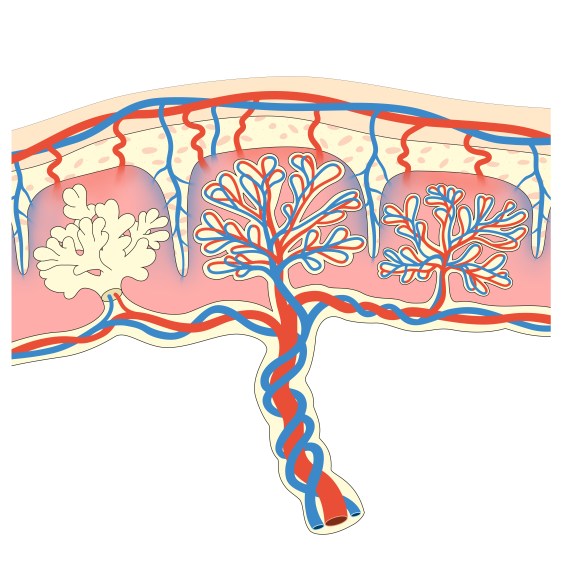
The heart is not the first organ to develop. The placenta is. It starts forming six to 10 days after fertilization and is fully working by week 12. It grows from the same fertilized egg as the baby, so it is fetal in origin. A smaller part of it comes from the mother's uterine lining.
Until birth it stands in for the fetus's lungs, gut, liver and kidneys. It takes oxygen and nutrients from the mother's blood, converts many of them into forms the baby can use, and sends carbon dioxide and waste back for her body to clear. The fetal heart, which starts beating at about three weeks, pumps blood through it.
The control center
The placenta also releases hormones that change how the mother's organs behave. Its first hormone, 1 (human chorionic gonadotropin, the one pregnancy tests detect), keeps the 2 alive. That temporary gland makes 3, which holds the uterine lining in place and so prevents menstruation. Later the placenta makes its own progesterone. It also makes estrogens and placental lactogen, which prepare breast tissue, and relaxin, which loosens joints. Near the end it releases the inflammatory signals that help start labor. Carmona says work in her lab shows these hormones also reshape the mother's brain, and she thinks this could help explain maternal mental health.
When it goes wrong, and the cancer parallel
4 affects about 5% of pregnancies. It brings high blood pressure and protein in the urine. One leading theory, though not the only one, is that the placenta builds blood vessels to the mother that are too narrow. As the fetus grows, the placenta signals for more blood, the supply still falls short, and it signals again. That loop drives up blood pressure.
Placental cells also act a lot like tumors. They divide fast, invade the uterine wall, grow new blood vessels and hide from the immune system. Carmona stresses that they are not cancerous, because their growth is tightly controlled. Still, cancer researchers now study them for clues, and the 5 studies the organ's lifelong effects on mother and child.
The placenta has been compared to broccoli, a tree, a bowl, a pizza, a crescent moon, a Frisbee and a pancake. The pancake is closest to the word itself. Placenta is Latin for cake, from the Greek plakoenta, "flat cake." A Greco-Roman recipe dated to 160 B.C. describes a dessert called placenta, made from thin sheets of dough, cheese, honey and bay leaves. Making the organ, Susana Carmona notes, is harder.
Carmona studies the maternal brain. In this excerpt from her book A Mother's Brain (reprinted via MIT Press Reader), she argues that we badly underrate the organ most hospitals throw away. Her case is that it is the baby's first organ, its stand-in for several other organs, and the hormonal command center of pregnancy. She adds that it is a window onto disease well beyond pregnancy.
From sacred object to medical waste to lab specimen
Many ancient cultures treated the placenta as sacred: it protected the baby and stood for the first bond between mother and child. People buried or cremated it in rituals, and some still do. Hmong families from Southeast Asia bury it at home. They believe that after death the soul returns to its birthplace and rejoins the placenta, which then helps it travel to the spirit world. Most modern societies treat it as biological waste and send it to the incinerator. More and more, though, it ends up in labs, where researchers study it as the hormonal and immune interface between mother and fetus.
The first organ, not the heart
Textbooks usually say organ development begins with the heart. Carmona says that is not quite right. The placenta starts forming six to 10 days after fertilization and is fully working by about week 12. The baby and the placenta both grow from the single cell made when egg and sperm fuse, so the placenta is fetal in origin. Its cells carry the baby's DNA. The article's account of the maternal part is muddled: it says a handful of cells carry the mother's DNA, then that "most" come from the 1, the name for the uterine lining during pregnancy. In standard anatomy, the bulk of the placenta is fetal tissue and the decidua forms a maternal layer underneath.
A stand-in for lungs, gut, liver and kidneys
The fetus can't breathe, digest or clear its own waste, so the placenta does those jobs. Carmona insists it is "no mere bouncer" deciding what crosses between the two bloodstreams. It pulls oxygen and nutrients from the mother's blood, converts many of them into forms the fetus can use, and passes them into the fetal circulation. Carbon dioxide and waste go the other way, to be cleared by the mother's lungs and kidneys. The one organ the fetus runs itself is the heart. It starts beating about three weeks after fertilization, and it is the fetal heart, not the placenta, that pumps blood through the exchange surfaces.
The control center: a hormone relay
The placenta also releases hormones and cytokines (signaling molecules) into the blood, and these change how the mother's other organs behave. The early sequence works like a relay:
2 (human chorionic gonadotropin) is made by the cells that will become the placenta. Home pregnancy tests detect it.
In effect, the embryo's own tissue tells the mother's body "don't menstruate" and then takes over the job. The placenta also makes estrogens and placental lactogen, which develop breast tissue, and relaxin, which makes joints and ligaments more mobile. Other placental hormones adjust the cardiovascular, metabolic and immune systems to each stage of pregnancy. At the end, the placenta makes the inflammatory cytokines and prostaglandins that help start labor.
Carmona's own claim, based on her lab's work, is that these hormones also reshape the mother's brain to support pregnancy, birth and the period after. She suggests that this placenta-brain dialogue, still poorly understood, may hold clues to protecting maternal mental health. The excerpt gives no data or methods for this, so treat it as a lead she is pursuing, not a finding you can judge from this piece.
5: a feedback loop gone wrong
Studying how the placenta forms has helped explain several pregnancy disorders, most notably preeclampsia. It affects about 5% of pregnant women. It is defined by high blood pressure and protein in the urine. Severe cases can damage several organs or lead to 6: destruction of red blood cells, raised liver enzymes and a low platelet count. Genetic, immune and vascular factors in both mother and fetus play a part.
One school of thought, which Carmona notes is not the only one, holds that these factors stop the placenta from building proper blood vessels into the mother's circulation, so the vessels end up too narrow. Early on that hardly matters, because the embryo needs little. As the fetus grows, demand overtakes supply. The placenta signals the mother's body to send more blood, the supply still falls short, and it signals again. In this account, that loop produces the symptoms: high blood pressure, swelling, headaches and vision problems.
The cancer parallel
Cancer cells divide fast, invade healthy tissue, grow new blood vessels to feed themselves and hide from the immune system. Placental cells do all four. They divide quickly, invade the uterine lining, build vessels to supply the fetus and avoid attack by the mother's immune system. That overlap has made placental cells a research tool in cancer biology and drug development.
Carmona stresses that placental cells are not cancerous. Their growth is precise, coordinated and controlled, and it serves the fetus. Cancer cells grow without limit and harm the body. The two use similar strategies for very different ends. She ties this broader interest to programs such as the 7, which studies how the placenta shapes the health of mother and child over their whole lives, not just during pregnancy.
What the piece leaves open
This is a popular book excerpt, not a research paper. It names the cancer research direction but gives no examples of what it has produced. It calls the narrow-vessel theory of preeclampsia contested without describing the alternatives. And its most original claim, that placental hormones remodel the maternal brain, appears only as a teaser for the rest of the book.
Remember
The placenta starts forming 6–10 days after fertilization, before the heart, and grows from the same fertilized egg as the baby.
Early placental tissue uses hCG to keep the corpus luteum alive and stop menstruation, then takes over making progesterone itself.
Placental cells invade tissue, grow blood vessels and dodge the immune system the way tumors do, but under tight control.
In a short essay on 1, her long-running one-person reading blog, Maria Popova makes the case that staying undecided can be an act of courage. She builds it around "Indecision," a poem from Jeff Foster's collection 2.
Why we rush to certainty
Popova starts from the fact that life is open-ended. The course of a life, the fate of the species and the future of the universe are all "undecided." That openness is beautiful, she writes, but also hard to live with: "possibility is the hardest thing to bear," so "we sedate ourselves with certainty."
She says this habit goes against what we already know. 3, the in-between state before something new takes shape, is where new things tend to start. We are most creative when the outcome is uncertain. She quotes the poet 4's Nobel lecture: inspiration "is born from a continuous 'I don't know.'"
In a culture that covers its cracks with self-righteousness, Popova argues, staying undecided becomes "a countercultural act of courage." Our job is "not to be certain but to be true" to our own incompleteness.
The poem
Foster's poem speaks to a friend stuck between choices and tells them to stop trying to settle it: "do not try to decide now. / Do not shut any possibility out of your heart." Its main move is to rename the state. "Do not label this place 'indecision.' / It is more alive than that. / It is a place where possibilities grow."
The poem treats decisions as things that grow, not things you force. "Answers will appear only when they are ready," it says. It ends with "A decision will grow, but for today, nourish the ground." Its central paradoxes are "strength in not knowing" and "power in doubt." Some of its language is openly spiritual, such as trust in "this Intelligence beyond mind."
Too much life
Popova's sharpest point comes from Foster's introduction: "Perhaps it's not death we're afraid of but too much life." She reads early decisions as a way to contain that excess. They stop possibility from spilling into something unbearable, and in doing so make us "less alive."
What it doesn't address
The piece is a meditation, not an argument that takes on objections. Some choices have deadlines, and putting them off can cost other people. Ambivalence you choose can look a lot like paralysis from anxiety, and the essay doesn't say how to tell them apart. It works best as a correction to a culture fixated on certainty: a prompt to notice what you lose when you close a question too early.
Maria Popova's latest piece on 1, her long-running one-person reading blog, is short. It frames a single poem, "Indecision," from Jeff Foster's collection 2: Finding the Courage to Hold Everything in Love. The argument it makes is bigger than its length. Popova says the urge to decide quickly is often a way of escaping how much life holds, and that staying undecided can take more courage than settling.
The problem: possibility is hard to bear
Popova starts from what she calls life's indeterminacy. The course of a single life, the fate of the species and the future of the universe are all, in her word, "undecided." She calls this both the most maddening and the most beautiful fact about existence. Because "possibility is the hardest thing to bear," she writes, "we sedate ourselves with certainty."
She points out that this habit goes against what we already know. 3, the in-between state where one thing has ended and the next has not begun, is where new things tend to come from. Belief always carries doubt with it. We are most creative when we try something whose outcome is unsure. To support this she quotes a line from 4's 1996 Nobel lecture without naming her: "Whatever inspiration is, it's born from a continuous 'I don't know.'"
From there Popova gives the argument its political and cultural edge. She describes a culture that "bandaids its fissures with self-righteousness," and says that in such a culture remaining undecided is "a countercultural act of courage and resistance." Our task, she writes, is "not to be certain but to be true": true to our own incompleteness and to how open-ended life is.
The poem: indecision renamed
Foster's poem is addressed to a "Friend" who is stuck between choices. It does not push the friend to resolve things. It asks them to stop trying:
Friend, please, / do not try to decide now. / Do not shut any possibility out of your heart.
The poem's main move is to rename the experience. "Do not label this place 'indecision,'" Foster writes. "It is more alive than that. / It is a place where possibilities grow." The poem treats not deciding as a stage of growth, not a failure to act. It closes on that image: "A decision will grow, but for today, nourish the ground."
As an analogy (Popova's framing, not a technical claim), think of a gardener. Pulling up a seedling to check its roots doesn't make it grow faster. The care goes into the soil, and the plant comes up when it is ready. Foster says the same of choices: "Answers will appear only when they are ready. / When the questions have been fully honored and loved." He also says choice "will happen when your defenses are down." This suggests that forcing a decision is often a defensive act, a way to protect ourselves, not a careful one.
The poem's claims are deliberately paradoxical: "There is courage in staying close. / There is strength in not knowing. / There is power in doubt." It also appeals to "this Intelligence beyond mind." That spiritual vocabulary runs through Foster's work and will not suit every reader.
The deeper claim: fear of too much life
Popova draws her sharpest idea from Foster's introduction to the book: "Perhaps it's not death we're afraid of but too much life." If we took in all of experience at once, he suggests, the heart might not be able to hold it.
Popova uses this to explain why we close off our options early. Deciding, she argues, contains what would otherwise "spill into the unbearable infinity of possibility." That makes it "a way of being less alive." She ends on a question: isn't the point to be more alive?
What the piece leaves open
This is a meditation, not a worked-out case, and it does not deal with the obvious objections. Some decisions have deadlines. Putting them off has real costs, and those costs often fall on other people. Ambivalence can be a stance someone chooses, or it can be paralysis brought on by anxiety. The essay doesn't separate the two, and it doesn't say how to tell whether a decision is "growing" or just being avoided. Popova presents "Indecision" as a correction to a culture fixated on certainty, not as general advice, and it is best read that way. It asks you to notice what you lose when you settle too early. It does not tell you never to settle.
Remember
Popova calls premature certainty a sedative: a way to avoid how hard open possibility is to bear.
Foster's poem renames indecision as a place where decisions grow, not a failure to act.
"Perhaps it's not death we're afraid of but too much life": deciding can work as emotional containment.
Neurotoxicologist Julie Moreno and colleagues report in the journal 1 that old pet dogs with a dementia-like condition have brain damage that closely matches early human dementia. Moreno argues this makes companion dogs a valuable 2 for Alzheimer's research.
Why look beyond mice
Alzheimer's is hard to study in people because it starts developing about 20 years before symptoms send anyone to a doctor. So most drug testing happens in mice, and it mostly fails. Moreno cites a figure of 99% of Alzheimer's drugs that looked promising in the lab failing in human trials.
The core problem is that mice don't naturally build up the misshapen proteins seen in dementia. Scientists genetically engineer mice to produce some of those changes, but no single mouse captures the whole disease. Dogs, by contrast, develop dementia on their own as they age.
Canine dementia
Veterinary neurologist Stephanie McGrath studies 3, a dog version of dementia. It affects more than a quarter of dogs over 12 and is diagnosed through owner surveys about symptoms. Its underlying brain changes, though, had not been studied in depth.
Working with 4 Caitlin Latimer, the team examined brains donated by owners after their elderly dogs died or were euthanized. They used the same lab methods applied to human tissue, so the comparison was like-for-like. They found abnormal protein deposits in the same brain regions where they appear in people with early dementia.
A blood marker
Dogs with heavy protein deposits also had high blood levels of 5. This protein comes from the brain's support cells and normally reaches the blood only during brain injury or disease. It is already being studied as a human Alzheimer's marker. Moreno suggests it could help diagnose dogs and show how dementia progresses in people.
The work fits alongside the 6, which follows more than 50,000 pet dogs. It has built cognitive tests that pick up early behavioral changes before neurological symptoms appear, so researchers can link those changes to what later shows up in the brain.
Caveats
The article doesn't say how many dogs were studied or which proteins were found. More importantly, matching brain changes don't yet prove that drugs tested in dogs will work better in people than those tested in mice. That test is still to come.
Julie Moreno, a neurotoxicologist who studies how misshapen proteins and brain inflammation build up into dementia, reports new work with colleagues in the journal 1. They examined brains donated by owners of elderly pet dogs and found that the aging dog brain changes in much the same way as a human brain in the early stages of dementia. Moreno argues that companion dogs could serve as a 2 of neurodegeneration, meaning animals that get the disease on their own rather than having it engineered into them. Such a model could help researchers build better diagnostic tests and treatments.
The problem: mice don't get Alzheimer's
Alzheimer's and related dementias are hard to study partly because they are hard to catch early. Moreno notes that the disease typically starts developing about two decades before a person notices symptoms serious enough to see a doctor. By the time patients reach a clinic, years of damage have already happened.
So most drug testing happens in mice, and it mostly fails. Moreno cites a stark figure: 99% of Alzheimer's drugs that looked promising in the lab failed in human clinical trials. Part of the reason is biological. Mice don't naturally accumulate the misshapen proteins seen in human dementia. Scientists can genetically modify them to produce some of those changes, but it is difficult to reproduce every feature of the disease in a single mouse. The result is an animal with a partial, artificial version of a disease that in people unfolds slowly and messily over decades of aging.
That has pushed researchers to look for species that develop dementia-like brain changes naturally. The aging dog is one of the more promising candidates. Dogs live in the same homes as people, share many of their environmental exposures, receive veterinary care, and grow old over years rather than months.
Dogs get dementia too
Moreno teamed up with Stephanie McGrath, a veterinary neurologist who studies companion dogs with brain disease. McGrath focuses on 3, a condition similar to human dementia. It affects more than a quarter of dogs over age 12. Vets diagnose it with owner questionnaires about symptoms they see at home. Typical examples include disorientation, disrupted sleep, and forgetting learned habits, although the article doesn't list the survey items.
Despite how common CCD is, Moreno writes that the abnormal proteins driving it had not been studied in depth. To use dogs as a model for people, the team first had to understand what actually happens inside an aging dog's brain.
What the brains showed
With 4 Caitlin Latimer, a specialist in diagnosing disease from brain tissue, the team compared brains from dogs with CCD to brains from people with Alzheimer's. Owners consented to donate the tissue. The dogs had either died naturally or been euthanized, at the owners' direction and after consulting their care team, to spare them further decline.
The key design choice was to use the same lab methods on the dog tissue that are used on human samples. That makes the comparison like-for-like. Using those methods, the researchers found abnormal protein deposits in the same brain regions where they appear in people with early dementia.
The article does not name which proteins were found or say how many dogs were studied. Amyloid-beta and tau are the classic culprits in Alzheimer's, but readers will need the paper itself to see which ones turned up in the dogs, and in what amounts.
A blood test that tracks the damage
Next the team asked whether blood markers used in human Alzheimer's research change in a similar way in dogs. Dogs with heavy protein deposits in their brains also had unusually high blood levels of 5.
GFAP is a structural protein found in astrocytes, the support cells of the brain. When astrocytes react to injury or disease, GFAP leaks into the bloodstream. Normally it shows up in blood only under those conditions, which is what makes it useful. A rise in GFAP is a sign that something is going wrong inside the skull. In human medicine, blood GFAP is already being studied as an Alzheimer's marker. Moreno suggests it could help diagnose cognitive decline in dogs and also show how dementia progresses in people.
As an illustration of why this matters: a dog whose owner reports mild confusion could have a blood draw. If GFAP is elevated, that would point to brain pathology already under way. The dog could then be followed for years, linking blood levels, behavior, and eventually brain tissue. Mouse studies cannot easily provide that kind of long, natural timeline.
The bigger dog-aging effort
Moreno places her work alongside the 6, a long-term study following more than 50,000 companion dogs. It looks at the biological, genetic, and environmental factors that shape how the whole body ages, brain included. The project has developed a battery of cognitive tests for dogs designed to pick up early changes in thinking and behavior before neurological symptoms appear. Researchers can then connect those early behavioral shifts to the changes later found in the brain.
Moreno argues that this combination could help answer a central question: why some dogs, and some people, develop dementia while others don't.
What remains open
This is a short write-up of a published study, and it leaves important things unstated: sample size, which proteins were found, how strong the link between GFAP and the deposits was, and whether dogs without CCD served as controls. Similar deposits in similar regions show that the dog brain is a plausible stand-in. They don't yet show that drugs tested in dogs will translate to people any better than drugs tested in mice. That is the real test, and it hasn't been run. The article also doesn't address the practical limits of the approach. Dogs live 10 to 15 years, breeds differ widely, and brain tissue depends on owners agreeing to donate after death. Still, the core idea is sound: study the disease in an animal that actually gets it.
Remember
Mice don't naturally develop Alzheimer-like protein buildup, which helps explain why 99% of promising lab drugs failed in people.
Over a quarter of dogs older than 12 have canine dementia, and their brain deposits sit where early human dementia's do.
GFAP in blood tracked brain protein deposits in dogs, which points toward a cheap shared test across species.
Dom Dolla's stadium show: one barely visible DJ on stage in front of tens of thousands of people.1 / 2
A DJ, a stadium and an old prophecy
About a century ago the German philosopher 1, author of The Decline of the West, predicted that people would grow "sick of machines" and turn to simpler, shared activities. In this essay, music historian Ted Gioia argues that it is finally happening.
His example is 2, an Australian DJ Gioia admits he hadn't heard of until recently. When Dom Dolla played Sydney in December, it was the first time a DJ had headlined a stadium show in Australia, and 40,000 people came. Gioia says the crowd has since grown by half, to about 60,000, and some dates on his US tour sold out long in advance. In one day he reaches more people in person than most streaming artists reach in a year.
The show itself is minimal: one barely visible man who hardly seems to move. Gioia says that doesn't matter, because the crowd is "vibing off each other."
The drug objection
Gioia expects readers to say the audience is just on pills. He replies that the distinction doesn't matter. Altered states have always been part of communal ritual. Jazz "would hardly exist if it wasn't for the drinks," and Woodstock had more drugs than a pharmacy. People go to concerts for group ecstasy, he argues, and Dom Dolla delivers it. On his account, music is a social ritual first and an art object second.
Following the money
Gioia then argues this is a trend, not a one-off. He cites a chart by economics writer 3 on how musicians earn money. The share of consumer spending on concert tickets is growing quickly, he says, while income from digital music has "collapsed." The industry went all-in on streaming, but the money is moving back to live performance. He blames the major labels for wrecking the economics of recordings and calls them 4, German for someone who fouls their own nest.
What to weigh
The case rests on one striking example and one chart whose figures the excerpt doesn't show. Global streaming revenue has risen for years, so "collapsed" probably refers to musicians' share or to spending patterns, but the text doesn't say which. Higher ticket prices and superstar tours could also push ticket spending up without any broad turn away from screens. The essay is cut off after the attack on the labels.
Gioia's core claim can still be tested: if isolation in front of screens can't last, money and attention should keep moving toward events where people share a room.
A prophecy and a stadium
Ted Gioia opens with 1, the German philosopher whose The Decline of the West argued that civilizations age and decay. About a century ago Spengler predicted that people would eventually grow "sick of machines." Tired of technology, they would look for simpler, shared activities to "get away from the pressure of soulless facts and the clear cold atmosphere of technical organization." Gioia's plainer version is that people will go outside and have fun again. His essay asks whether that is happening now.
His main case is 2, an Australian DJ who sets up a table of equipment and plays tracks and remixes. Gioia, who follows music closely, admits he hadn't heard of him until a few days before writing. When Dom Dolla played Sydney in December, it was the first time a DJ had headlined a stadium show in Australia. The media were surprised that 40,000 people came. Gioia says the audience has since grown another 50%, to about 60,000, and that some shows on his US tour sold out well in advance. By Gioia's count, Dom Dolla reaches more people in person in one day than most streaming artists reach worldwide in a year.
Gioia stresses how little the performance involves. There is one man on stage, you can barely see him, and from a distance he hardly seems to move. That doesn't matter, Gioia writes, because the crowd is "vibing off each other." In his telling, the audience itself is the show.
The drug objection
Gioia expects readers to object that the crowd is on "happy pills" and not really there for the music. He argues the distinction doesn't matter. Altered states have always been part of communal rituals. Jazz "would hardly exist if it wasn't for the drinks," and Woodstock had "more drugs… than at your local CVS pharmacy." People have always gone to concerts for group ecstasy, he says, whether the music or something else supplies it. On this view Dom Dolla is doing what live music has always done, and the drugs are not a sign that something is wrong.
This is the most interesting move in the piece philosophically. Gioia doesn't define a concert by the quality of the art. He defines it by its social job: a ritual for a shared change of mood. That definition explains how a nearly motionless DJ can fill a stadium, and it fits a long anthropological tradition of treating music as a social technology more than an object to admire.
Following the money
Gioia then argues the stadium is part of a trend. He points to a chart by economics writer 3 showing how musicians earn money now compared with a few years ago. He calls the numbers "staggering." Concert tickets are taking a fast-growing share of consumer spending, he says, while income from digital music has "collapsed" and shows no sign of recovering.
From this he draws a paradox. The industry has fully embraced digital technology and streaming, but the music economy is moving the other way, back to live performance and in-person contact. His first lesson is aimed at the major record labels. He says they destroyed the financial structure that supported recordings, and he gives them a German label: 4, someone who fouls their own nest.
What to weigh
The evidence is a single striking case plus one chart, and the excerpt doesn't reproduce the chart's figures. So the reader can't check what "collapsed" measures. Trade-body reports have shown global recorded-music streaming revenue rising for years. Gioia's claim most likely refers to musicians' share of income or to consumer spending patterns, not total streaming revenue, but the excerpt doesn't say. Rising ticket spending also has rival explanations, including higher ticket prices and a few superstar tours, and these could inflate the trend without any broad change in how people feel about screens.
The Spengler framing is also a choice. Spengler was a pessimist about Western civilization as a whole. Gioia takes only the hopeful half of his prophecy: people will escape the machines. The available text is cut off after the attack on the labels, so whatever else Gioia argues, including what the trend means beyond music, isn't visible here.
Still, the essay states its thesis clearly and in a way that could be tested. If isolation in front of screens can't last ("people need to leave their bedrooms, or they will die… their soul will die"), then money and attention should keep shifting toward events where people share a physical space. Concert economics is one place to watch for that shift.
Remember
Gioia defines concerts by their social job, shared ecstasy, rather than by artistic quality.
He cites a shift of musicians' income toward live tickets, but the excerpt doesn't show the underlying numbers.
Rising ticket prices and superstar tours could explain the spending trend without any broad rejection of screens.
Cover of Natalie Hodges' Uncommon Measure, the book Popova draws on throughout the essay.1 / 2
The puzzle
In her latest Marginalian essay, Maria Popova asks a question most people have felt. When we do something unplanned that turns out right, who made the decision that surprised us? She finds the clearest case in musical improvisation, guided by violinist Natalie Hodges' book Uncommon Measure.
Hodges puts the paradox plainly. Improvisation is spontaneous "but it's never random." If you could play anything, what makes you pick one note in an instant, and why does the result sound as if it had been rehearsed?
A pianist in the scanner
Hodges looks at Gabriela Montero, a Venezuelan pianist who takes a short musical prompt from the audience and improvises a full composition from it. Researchers scanned her brain with 1, a scan that tracks blood oxygen as a stand-in for neural activity. She played three things: scales, a memorized Bach piece, and an improvisation that began from a Bach prompt. The essay doesn't name the researchers. As described, the study had one subject.
The focus was the 2 (DMN). This set of regions handles self-perception, memory of one's own life, the sense of one's body in space, and thinking about others. During the scales and the Bach, these regions were tightly synchronized. During improvisation, the links between them dropped, by an amount Hodges calls significant. Hodges reads this as the coordinated self stepping back. It matches Montero's own account that she "gets out of the way."
Order without a plan
The surprising part is that the music didn't fall apart. The playing stayed "structured and cohesive." Montero returned to motifs she had introduced earlier, as if she had planted them for later use. Hodges calls this "remembering the future." She sees it as a deep muscle memory that confirms "the mind knows things it does not know it knows."
The physics metaphor
Hodges compares this to Richard Feynman's 3, a way of doing quantum mechanics that adds up every possible route a particle could take. In her image, Montero senses every possible continuation of a theme and then follows one. It is a lovely metaphor, but only a metaphor. In quantum mechanics a particle doesn't survey paths and choose one. Popova's line that improvisation "taunts the second law of thermodynamics" is rhetoric, not a finding.
What to keep
The finding worth keeping is narrower. A performer says she lets go, the brain's self-related regions coordinate less, and the output is still coherent. One brain doesn't prove a general rule. Weaker synchrony between regions is a correlation, not a switched-off self. And years of absorbed patterns may explain the "future memory" without anything mystical. The essay's real question remains open: what organizes the music once the planning self steps aside?
The question
Maria Popova's latest essay on The Marginalian starts from an everyday experience that is hard to explain: sometimes we do something we never planned, and it turns out right. Who made that decision, if it surprised the person who made it? Popova finds the sharpest version of the question in musical improvisation. Her guide is violinist Natalie Hodges, author of Uncommon Measure: A Journey Through Music, Performance, and the Science of Time.
Hodges states the paradox like this. Improvised material is spontaneous, she writes, "but it's never random." If you could play anything, with every option equally likely, what could make you pick one note in an instant, except chance? And how does music made that way end up with a shape that "makes sense in time, as though it had been written and rewritten and practiced and memorized beforehand"?
The pianist in the scanner
To get at this, Hodges turns to Gabriela Montero, a Venezuelan pianist. Audiences give Montero a short musical prompt and she improvises a full composition from it on the spot. Hodges heard her speak in a Radcliffe lecture titled "What Choice Do I Have?" Montero's ability made her the subject of an 1 study. Functional magnetic resonance imaging infers brain activity from changes in blood oxygen.
The researchers scanned her under three conditions, which run from most fixed to most free:
Scales, the most prescribed form of playing.
A memorized Bach piece, complex but fully learned.
Improvisation starting from a Bach prompt.
The essay doesn't name the researchers, the journal or the date. As described, the study had one subject.
What changed: the self-network loosened
The researchers focused on the 2 (DMN). This is a set of brain regions that, Hodges writes, "loosely put, modulates the many facets of the self." She lists the main parts:
the medial prefrontal cortex, tied to decision-making, self-perception and memory of one's own life;
the 3, which forms new memories;
the 4, involved in perception and the sense of one's body in space;
the dorsal medial prefrontal cortex, which handles thinking about other people in relation to oneself.
During scales and the memorized Bach, these regions were highly interconnected. In fMRI terms, their activity rose and fell together. Hodges compares it to time, space and memory "all talking to one another" to replay something already programmed in. When Montero switched to improvising, that connectivity fell. Hodges says it was "significantly and quantifiably reduced," though the essay gives no figures.
Hodges reads this as the coordinated self stepping back. It matches how Montero describes improvising: she "gets out of the way" and "turns on the tap." Popova connects it to the novelist and philosopher Iris Murdoch's word "5," meaning relief at leaving the self behind during deep focus.
Order without a plan
A loosened self-network might be expected to produce loose music. According to the essay, it didn't. The researchers found Montero's playing stayed "structured and cohesive." She returned to patterns and developed motifs she had introduced earlier in the same improvisation. In hindsight, those early ideas look as if they were set down to be used later.
That is where the essay's central image comes from: improvisation as "remembering the future." The researchers called it "a form of embodied creativity," meaning a conversation between body and mind that runs below the conscious story of what is happening. Hodges recasts it as a "transcendent kind of muscle memory." Montero isn't bound by this memory but bends it to her will, and it confirms that "the mind knows things it does not know it knows."
The physics analogy
Hodges then compares this to Richard Feynman's 6, a 1940s way of doing quantum mechanics. In her telling, a particle going from one point to another in effect explores every possible route. The contributions of all those routes add together. Some reinforce each other and others cancel. What remains is the path of "7," where action is built from kinetic minus potential energy. "It is as though the particle," she writes, "intuits every path it could take and then sets off along the one it is destined to take." Likewise, Montero "intuits all the possibilities contained within a single theme… and then picks one path to follow."
Treat this as poetry, not physics, and Hodges' "as though" signals that. In Feynman's formulation the particle doesn't sample routes and then pick one. In quantum terms it doesn't follow a single definite path at all. The sum over paths gives the probability of where it ends up, and the classical least-action path dominates only for large-scale objects. The image works as a picture of a choice shaped by many unplayed options. It is not a mechanism. Popova pushes further and says improvisation "bends the arrow of time and taunts the second law of thermodynamics." Nothing in the study supports that literally. It is her rhetoric, not a finding.
How much to take from it
The essay is strongest as a meeting of first-person experience and one striking measurement. A performer says she gets out of the way. A scanner shows the regions most associated with the self coordinating less. And the output is still well structured. That combination is a real puzzle about where coherence comes from when the planning self lets go.
The caveats matter:
One brain. A single exceptional improviser can't tell us how improvisation works in general.
Connectivity is correlation. Less synchrony between DMN regions doesn't show that "the self" switched off. It shows their activity moved together less.
The "future memory" can be explained more simply. Experienced improvisers absorb large stocks of patterns and learn to plant ideas they can return to. That is compatible with Hodges' account and less mysterious.
The essay leaves the opening question unanswered, and says so. If the conscious self steps back and the music still holds together, what is doing the organizing? Hodges' answer is "the body plays the score." That is a description of the experience, not a theory of it. Still, it captures what the scan seems to show.
Remember
Montero's self-related brain regions synchronized less when she improvised than when she played scales or memorized Bach.
Despite that loosening, her improvisations reused earlier motifs coherently, which Hodges calls 'remembering the future'.
The Feynman path-integral comparison is an evocative metaphor, not physics; the study described has only one subject.
hCG keeps the 3 alive. This is a temporary hormone-making gland left in the ovary after ovulation, and it would normally break down within about two weeks.
The corpus luteum makes 4, which keeps the uterine lining intact and ready for implantation. If the corpus luteum broke down, progesterone would fall and the lining would shed as a period.
Later the placenta makes its own progesterone and no longer needs the corpus luteum.