Sleeping Ideas and Unreliable Memories · Morning Gist
Saturday, October 105 stories · 16 min
Sleeping Ideas and Unreliable Memories
Today's five pieces cover ideas that came too early, ideas ignored for centuries, and memories that shift each time we recall them.
Picked from 25 new articles across 14 sources · arrow keys for other days
Today in 30 seconds
30s left
Barbara Ward wrote the report for the UN's first environment summit and treated poverty, ecology and politics as one problem. Her argument started from Western supremacy. story 1 ↓
A 1940 book by television's inventors was rescued from a library discard pile. It predicted subscription TV, telegenic presidents and video meetings. story 2 ↓
Maria Popova links Rashomon, Borges and Nietzsche to brain science showing that we rebuild memories, and distort them, each time we recall them. story 3 ↓
Noema's editor argues that humans already think alongside machines, so "human control" of AI should mean protecting what is distinctly human. story 4 ↓
David Byrne's new book asks why ideas like atomism and hand-washing were ignored for centuries, and which habits of mind bring them back. story 5 ↓
1/5Aeon· Or Rosenboim· Oct 9
Barbara Ward saw poverty, ecology and world politics as one problem
The historian Or Rosenboim revisits Barbara Ward, a Cold War economist who argued that ending global poverty and protecting the planet were the same problem. Ward's vision began paternalistic and Christian, then shifted towards ecology.
Why it matters · Today's arguments over climate finance, growth versus degrowth and global governance were rehearsed decades ago by a largely forgotten thinker, blind spots included.
Know this first
Context from the editor, not the article · 31 sec
After 1945, European empires broke up quickly. Ghana became independent in 1957 and much of Africa followed in 1960. Western economists then argued over how the new states could become rich. The leading answer was modernisation theory, which said every country would pass through the same stages of industrial growth the West had. In the 1960s, space flight gave many people their first sense of Earth as one fragile object. By the early 1970s, environmental worries were growing, and they collided with poorer countries' demand for economic growth. The UN held its first environment conference in Stockholm in 1972. Barbara Ward (1914–1981) was a British economist, journalist and adviser who worked at the centre of all these debates.
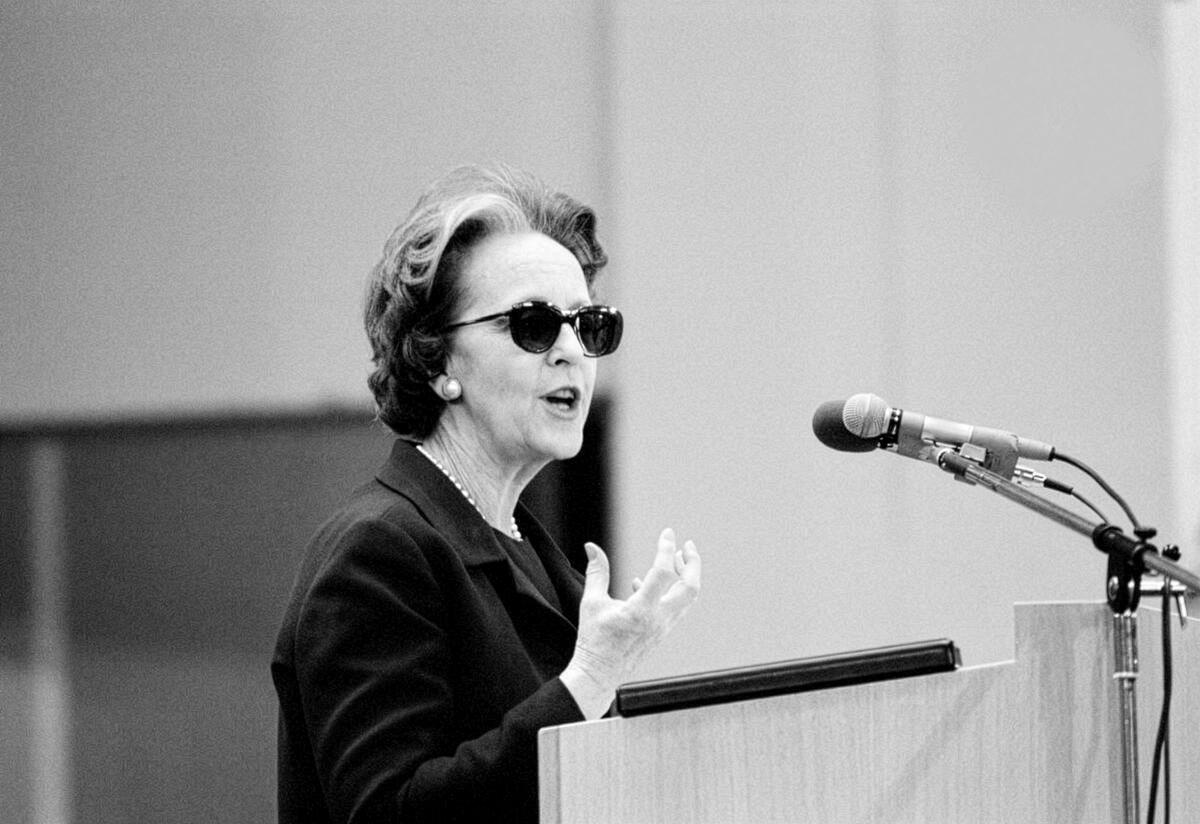
Barbara Ward speaking at a podium. She advised world leaders and the UN when few women held such roles.1 / 3
2/5Astral Codex Ten· Scott Alexander· Oct 10
A 1940 book by TV's inventors predicted Zoom calls and the end of privacy
An anonymous reviewer reads a 1940 essay collection by the people who built America's first TV stations. It explains how live, unrecorded early TV worked, and many of its predictions turned out accurate.
Why it matters · It's a rare inside record of a new medium at its birth, and it suggests "television" means seeing at a distance, which phones and the internet extended.
Know this first
Context from the editor, not the article · 28 sec
Most people's picture of "early TV" starts with I Love Lucy (1951). Lucy was shot on 35mm film, so it survived. Before that, nearly everything went out live and was never recorded. Regular US broadcasting began only in 1939, when NBC, then mainly a radio network owned by the electronics maker RCA, covered the New York World's Fair from a transmitter on top of the Empire State Building. Britain's BBC had started in 1936. Early sets showed black-and-white pictures on screens about the size of an index card. This review is an anonymous entry in the annual reader book-review contest run by the blog Astral Codex Ten.
Fink's 1940 diagram of the "complete television system," from camera to skyscraper transmitter to home set.1 / 3
3/5The Marginalian (Maria Popova)· Maria Popova· Oct 10
Maria Popova on memory, Kurosawa's Rashomon, and why truth slips
Maria Popova argues that memory keeps only fragments of what we noticed and then rebuilds the past from them. She uses Kurosawa's film Rashomon, in which four witnesses tell four different stories, as the image of that problem.
Why it matters · If memory rebuilds the past each time we recall it, then personal identity, history and courtroom testimony all sit on less solid ground than they appear to.
Know this first
Context from the editor, not the article · 28 sec
Rashomon (1950), directed by Akira Kurosawa, adapts Ryunosuke Akutagawa's story "In a Grove." A samurai is killed, and the witnesses give accounts that contradict one another. Each sounds believable, and the film never says which is true. Psychologists and lawyers later borrowed the title for the unreliability of eyewitness testimony.
Memory research generally splits remembering into three stages: encoding (taking an experience in), consolidation (making it stable in storage) and retrieval (calling it back). Experiments since the 1970s, notably Elizabeth Loftus's, show that recall can be changed by leading questions or by information picked up later. Remembering works more like reconstruction than like playing back a recording.
Cecilia Ruiz's illustration from The Book of Memory Gaps, inspired by Borges's 'pile of broken mirrors' line.
Maria Popova's essay is short. Its argument is that memory loses information twice, and that what we call truth is rebuilt from what's left.
Fragments of fragments
4/5Noema· Nathan Gardels· Oct 9
Humans already think alongside machines, so what should "human control" of AI mean?
Nathan Gardels draws on thinkers who say we already share our thinking with computers. His conclusion: keeping control of AI means building lived human experience into that partnership, not just putting limits on the machines.
Why it matters · The usual AI-control debate pictures humans and machines as separate sides. This essay asks what changes if that split was never real.
Know this first
Context from the editor, not the article · 32 sec
The Enlightenment gave the West a picture of the human as an autonomous individual who acts by "rational free will." Philosophers of mind have questioned it for decades. One rival idea, "distributed cognition," says thinking happens across people, tools and surroundings, not just inside one skull. Another strand of debate is the "Singularity": the prediction, made popular by Ray Kurzweil and others, that humans and intelligent machines will one day fully merge. Transhumanists push this further and imagine uploading a mind onto a non-biological substrate, meaning the physical material a mind runs on. Gardels edits Noema, the magazine of the Berggruen Institute. The essay is short and mostly brings together other people's arguments from podcasts and speeches before reaching its own conclusion.
Image: Noema
Gardels starts by asking what the word "human" means in the debate about controlling AI. He reaches for the Confucian idea of "rectification," which means calling things by their true names.
Already post-human
5/5The Marginalian (Maria Popova)· Maria Popova· Oct 9
David Byrne's new book asks why good ideas fall asleep for centuries
In Sleeping Beauties, musician David Byrne tells the stories of ideas ignored for decades or millennia before someone revived them. Maria Popova's review draws out his argument: our own assumptions about progress put good ideas to sleep.
Why it matters · It turns "why was this ignored?" into a question about how we think, and suggests we may be ignoring tomorrow's breakthroughs right now.
Know this first
Context from the editor, not the article · 29 sec
David Byrne co-founded the band Talking Heads and has long written books on music, cities and the brain. "Sleeping beauty" comes from bibliometrics, the statistical study of how scientific papers get cited. A 2004 paper (usually credited to Anthony van Raan) used it for papers that sit almost uncited for years and then suddenly attract heavy attention. The classic example is hand-washing. In the 1840s, Ignaz Semmelweis showed that doctors washing their hands cut deaths among new mothers, but colleagues dismissed him, and the practice only took hold decades later with germ theory. Maria Popova runs The Marginalian, a long-running one-person essay site. This piece is her review of Byrne's book.
Cover of David Byrne's Sleeping Beauties, the book under review.1 / 2
David Byrne's Sleeping Beauties: Why Good Ideas Go Dormant and How They Wake Up collects stories of discoveries, inventions and artworks that their own era ignored. Maria Popova's review is more appreciation than summary, but the outline of his argument comes through clearly.
Barbara Ward was famous in her lifetime. When she died in 1981, The Washington Post wrote that for 30 years it had "scarcely been possible to discuss development anywhere in the world without bringing in Barbara Ward." In an essay for Aeon, historian Or Rosenboim argues that she deserves a second look. Ward was among the first to argue that prosperity, environmental limits and global justice are a single political question.
From Accra to the Kennedy White House
Ward was one of the first women to graduate from Oxford in 1 (philosophy, politics and economics). She then wrote on foreign affairs for The Economist and lived for four years in the Gold Coast, the British colony that became Ghana. Her husband chaired planning for the 2 there, a major hydroelectric project. She advised Kwame Nkrumah, Ghana's first leader, as well as John F Kennedy, Lyndon B Johnson and Robert McNamara.
The poverty argument
Ward thought global inequality could only be undone by a deliberate "revolution" in development. Her model was the 3, the US aid programme that rebuilt postwar Europe. She argued that empire had left colonies with economies "unlikely to produce further growth of itself." Her remedies included:
training local experts
shipping food surpluses to poorer countries
a 1% tax on rich nations' national income, paid out as aid
trade rules that favoured non-Western economies
Rosenboim also names the flaw. Ward blamed the West for underdevelopment but still treated it as superior. She assumed former colonies wanted to copy Western industrialisation and needed Western guidance to do it. In the mid-1960s she claimed that only Christian ideas of human equality could hold a world community together.
4
The space race pushed Ward from global economics towards planetary politics. In her 1965 Columbia lectures, titled "Spaceship Earth" after a phrase coined by the inventor Buckminster Fuller, she described the planet as a capsule with limited resources. That was three years before the famous "5" photo taken from Apollo 8. She concluded that "our physical unity has gone far ahead of our moral unity." In her view, nationalism was as outdated as rule by dynasty.
Sustainable development
In the 1970s Ward adopted the term "6." It was her answer to a standoff. The 7's 1972 report The Limits to Growth urged rich societies to stop growing. Meanwhile, newly independent states needed growth to fund schools and hospitals. Ward held that both aims could be reconciled. For the 1972 Stockholm conference, she and the scientist René Dubos wrote Only One Earth, drawing on 152 experts from 58 countries.
Most of her proposals stayed on paper because member states would not give up sovereignty. By the late 1970s she said the planet was "not yet a centre of rational loyalty." Rosenboim notes that her later work dropped the Christian framing, accepted that development should follow local preferences, and grounded human unity in shared ecology instead. That change, she argues, is what keeps Ward relevant.
Remember
Ward proposed that rich nations give 1% of national income as aid, decades before global climate-finance debates.
Her 1965 "Spaceship Earth" lectures came three years before the Earthrise photograph made the planet's fragility a popular image.
Her thinking shifted from a Christian, Western-led world order to unity based on shared ecology and local self-determination.
We Present Television (1940) collects essays by the executives, engineers and actors running America's first TV stations. The reviewer rescued a copy from a library discard pile. They describe it as 90% sober technical primer and 10% futurist prophecy, and argue that the prophecy matters most.
Agreeing on a picture
The BBC, a monopoly funded by license fees, simply decreed its technical standards. In the US, broadcasters, set makers and the 1 (Federal Communications Commission, the broadcast regulator) all had to agree, with no subsidy. NBC's Alfred Morton compares the problem to railway gauges: lay the wrong width of track and no profitable train can run on it. NBC began in 1936 with 343 2 per picture, then moved to 441 because 343 lacked "entertainment value."
Engineer Donald Fink explains that pictures are "sent on the installment plan." In the 3 camera tube, an electron beam swept line by line across a mosaic of tiny light-sensitive silver 4. Spots that had been lit returned a stronger signal. The home set reversed the process, steering a beam across fluorescent dots. It did this 30 times a second, with about 200,000 points of light per frame. Roughly 10,000 sets existed in greater New York, at about $400 each.
A chimera of stage, film and radio
NBC had one live studio, one room for scanning film, and a 5: two buses carrying ten engineers and costing $125,000. Studio shows included cooking demonstrations, a spelling bee that was the ancestor of the game show, and the first serial, 6 (Los Angeles, 1938). Almost none were recorded. Good Hollywood films cost too much to air. The reviewer frames early TV as a hybrid: live like theater, visual like film, distant like radio. Viewers already rated programs from 0 to 3 by mail, and the low scorers were dropped.
Hits and misses
Some forecasts missed. Radio Daily writer Benn Hall doubted anyone could stand watching small screens for more than a few hours a day. By 2009, American households averaged almost nine. Smell-o-vision and 3D never arrived. Other calls landed. Writer Charles Butterfield predicted the most telegenic candidate might win. Hall foresaw subscription TV, and that viewers would resent paying for it. New York Times science editor Waldemar Kaempffert described twelve directors meeting through twelve screens, which is essentially a Zoom board meeting. Scenic designer Robert Edmond Jones wrote that "every human being can be immediately present to every other human being… Privacy is being abolished."
The reviewer's central argument is that Television, meaning viewing from a distance, is bigger than the TV set. On this view, the set and the station were limits imposed by 1930s hardware. The phone in your pocket fulfills NBC engineer O. B. Hanson's goal of carrying "electronic eyes to every site." The reviewer admits that predictions like color were easy to make, and that nobody foresaw TikTok.
Remember
America lagged Britain because competing firms had to agree on standards; NBC settled on 441 lines and 30 frames per second.
Pre-1950s TV is forgotten mainly because it was live and almost never recorded.
A 1940 essay described a video board meeting of twelve directors on twelve screens.
The first loss comes from attention. We take in only some of what happens around us and inside us. The second comes from memory, which keeps only some of what we paid attention to. When we remember something, Popova writes, we try to rebuild a whole scene from these "fragments of fragments." She quotes neuroscientist 1's remark that we often "use our minds not to discover facts, but to hide them."
She applies this at two scales:
Personal. Identity is a story we write by leaving most of our past out.
Cultural. History is a "collective selective memory" that leaves out far more than it keeps.
Her guiding image comes from 2, the Argentine writer: "we are our memory… that chimerical museum of shifting shapes, that pile of broken mirrors."
From Nietzsche to Kurosawa
Popova places Kurosawa's Rashomon in a line of thought that starts with Nietzsche. Nietzsche called truth "a movable host of metaphors, 3, and anthropomorphisms," meaning human language polished and repeated until it feels solid. Nearly a century later, Kurosawa turned the same doubt into a film. Four witnesses describe a samurai's murder, each version is "equally believable," and the viewer is left with nothing firm to stand on.
As memory research grew in the late 20th century, the film's name stuck to the well-documented unreliability of eyewitnesses. That is the 4. Popova then widens it with one line: "we only exist, after all, as eyewitnesses of our own lives." On this view the problem is not limited to crime scenes. It applies to the way each of us knows our own past.
Where the science comes in
Popova traces all of this back to the brain's "neurophysiological infrastructure" for forming and losing memories. The scientific explanation itself sits in two embedded 5 animated videos: one on the Rashomon effect, and one by biomedical scientist Catharine Young on how memories form. The text of the article doesn't summarise either of them. She also points to Oliver Sacks's writing on memory disorders, and to neuroscientist Suzanne Corkin's work on 6, the patient who lost the ability to form new memories after brain surgery.
The verdict
The piece works more as a linking essay than as a full argument. The philosophical thread from Borges to Nietzsche to Kurosawa is sharp and worth reading. The neuroscience, though, is handed off to the videos, so readers looking for the mechanism will have to watch them or go to the sources she recommends.
Remember
Memory loses information twice: attention catches only part of events, and memory keeps only part of what attention caught.
Popova argues that personal identity and history are both built by leaving most of the past out.
The Rashomon effect began as a point about eyewitness testimony and, in Popova's view, applies to everyone's memory of their own life.
His main source is N. Katherine Hayles, a literary and media theorist and author of Bacteria to AI. Hayles argues the Enlightenment's self-contained, rational human never existed. People have always been "woven in the web" of an 1, a term from biology for the world of signals an organism perceives and responds to. What we sense, how we interpret it and what we decide all come out of interactions with other things. Gut bacteria are the plainest case: we could not survive without them.
She argues that computing has made this dependence much deeper. Chips, routers and devices now control, process and spread the flow of information that modern life runs on. If they failed, food would stop moving, planes would be grounded and markets would stop trading. Hayles calls the result "2": systems where humans and machines share the work of thinking and deciding. In her view that is why we are already "post-human."
A 3 without an endpoint
Kevin Kelly co-founded Wired and worked on the Whole Earth Catalog. He goes further and says "we are already in the Singularity." By this he means the merging of humans and machines is happening gradually, not at one dramatic moment. We are "living inside the 4," so we will only see the full picture looking back. Kelly borrows the "5" from complexity scientist Stuart Kauffman: each new combination opens possibilities nobody could have predicted. So the Singularity never arrives as a fixed endpoint. In his words, it "is always near."
What machines lack
On consciousness, Hayles disagrees with the transhumanists. She says AI cannot become conscious because it has no "natural intelligence." That kind of intelligence came from millions of years of embodied creatures evolving to survive in their environments. The language that large language models learn from carries traces of that bodily experience, but the meaning does not carry over without the experience behind it. Gardels links this to neuroscientist Antonio Damasio, who traces emotion and self-awareness to 6, the body's constant work to keep itself alive. On this view, the danger is that AI gains power through "7," meaning AI systems improving their own design, with no lived experience to anchor that growth. Without that anchor, they lack the deep grounding that moral reasoning depends on.
Gardels backs this with Pope Leo XIV's argument that AIs "do not feel joy or pain" and "do not understand what they produce." The Pope says a person is "creature, relationship, mystery," not a set of algorithms.
The argument
Gardels concludes that "human control" can't just mean "disarming" AI agents, as the Pope has called for. It also has to mean "arming" the system we already live inside: deliberately building whole-person, relational human judgment into it. The essay doesn't say what that would look like in practice. It also never addresses an obvious tension: if cognition really is distributed, it's unclear what the "integral human" being defended actually is.
Remember
Hayles sees gut bacteria and power grids as the same kind of dependence: humans have never been self-contained.
For Kelly, the Singularity is gradual and has no endpoint, so we can only recognize it looking back.
Gardels says controlling AI means building human judgment into the system, not only restraining the machines.
Byrne roams widely. Some figures have only recently become well known. Vera Rubin's measurements of how galaxies rotate pointed to 1, invisible mass whose gravity holds galaxies together. Lynn Margulis argued that complex cells began as partnerships between simpler organisms. Other ideas are now so built into our picture of the world that their origins are forgotten. Marie Tharp's maps of the ocean floor helped establish 2. Peter Kropotkin argued that cooperation, which he called 3, drives evolution as much as competition does. Some ideas are practical (cement, perspective in painting, 4). Some are artistic: Caravaggio, the painter Beauford Delaney, Melville, Bach. And lichen is there purely because it delights him.
The dormant periods vary a lot. Solar panels slept for decades. Irrigation systems in South India were neglected for centuries. The atom, first proposed by ancient Greek thinkers, took millennia to come back.
Why ideas go to sleep
Byrne's main explanation is that we trust whatever model of the world works "most of the time, or for the time being." Success makes our assumptions feel like facts until they fail. A second trap is what he calls the 5: the habit of treating history as a story that "all led to us." That makes the past look too primitive to hold ideas better than ours. What we notice when we look back, Byrne writes, "is determined by how we see ourselves at present."
How they wake up
Revivals often depend on luck, and Byrne sorts the lucky accidents into three kinds:
someone finds an old idea while looking for something else
a researcher realizes forgotten work covers the same ground as their own
a random event brings a discarded idea back into view
Luck only counts, he argues, if the finder is open to it. The habits he recommends are reaching outside your own field, welcoming the counterintuitive, thinking by association rather than step-by-step analysis, and searching the neglected past on purpose.
Popova takes the argument further than Byrne does. She calls history a record of what the powerful chose to remember, and says those people have little interest in ideas that threaten the status quo.
What the review doesn't do
The review lists cases rather than retelling them. It doesn't explain how any single idea fell dormant or came back, or whether Byrne finds a common pattern across his examples. You'll need the book itself to judge whether his account explains these cases or mainly celebrates them.
Remember
Ideas can sleep for decades (solar panels), centuries (South Indian irrigation) or millennia (the atom).
Byrne sorts revivals into three lucky accidents, each of which only works if the finder is receptive.
The traps he names are trusting models that merely work for now, and assuming history leads to us.