Today's pieces take things usually filed as limits or failures, including unprovable truths, low motivation, stalled peat and a scattered self, and show how they actually work.
Picked from 30 new articles across 14 sources · arrow keys for other days
Today in 30 seconds
30s left
A University College London group, building on a 2005 Uppsala thesis, reads Gödel's incompleteness as describing how knowledge grows, not where reason stops. story 1 ↓
A review of 68 studies finds depression, schizophrenia and bipolar disorder each distort the brain's effort-versus-reward calculation in a different way. story 2 ↓
After 20 years of tracking plots in Saskatchewan, Merritt Turetsky finds drought may have stopped a bog that had been building peat for 8,000 years. story 3 ↓
Luke Burgis uses a 1960s family psychiatrist, desert monks and a 1936 photo to argue that screens reward a shape-shifting "pseudo self." story 4 ↓
Also worth reading: philosopher Ned Block argues today's AI isn't conscious, and asks whether computation alone could ever be enough.
1/4Aeon· Alexander V Gheorghiu· Oct 15
Gödel's limits on proof may describe growth in knowledge, not a ceiling
Gödel showed that no rulebook for arithmetic can prove all of its truths. Logician Alexander Gheorghiu argues that this shows our concepts can always be extended, not that some truths are closed to us.
Why it matters · It turns a famous "limit of reason" into a claim about how meaning works, linking logic, philosophy of language and even constitutional interpretation.
Know this first
Context from the editor, not the article · 26 sec
1 · Axioms and proof
An axiomatic system fixes starting assumptions (axioms) and rules of inference. A theorem is anything reachable by applying the rules. A system is consistent if no chain of such steps ever produces a contradiction.
2 · Hilbert's programme
In the early 1900s David Hilbert hoped to put all of mathematics on one fixed set of axioms. Every problem would then be solvable, and a finite proof would show that the system never contradicts itself.
3 · What Gödel proved
In 1930 Gödel showed that any consistent system rich enough for arithmetic contains true statements it cannot prove. One of them is the statement that the system itself is consistent.
2/4Psyche· Matthias Pillny· Oct 15
Low motivation in mental illness can come from a skewed effort calculation
Matthias Pillny and colleagues pooled 68 lab studies. People with schizophrenia, depression or bipolar disorder chose effortful, rewarded tasks less often. The cause differs by condition, so one fix won't suit everyone.
Why it matters · It recasts "laziness" as a measurable decision process with separate failure points, and that changes how you'd help someone, yourself included.
Know this first
Context from the editor, not the article · 25 sec
1 · Motivation as a calculation
Psychologists increasingly treat motivation as an ongoing weighing of three things, not a fuel tank of willpower: how much effort an action costs, how big the payoff is, and how likely the payoff is to arrive.
2 · What a meta-analysis does
A meta-analysis pools the results of many separate studies on one question. Because many small samples are combined, it can detect patterns more reliably than any single experiment.
3 · Motivation in mental illness
Apathy and loss of drive, which clinicians call "negative symptoms" in schizophrenia, are common in depression, bipolar disorder and schizophrenia. They often outlast the acute illness and respond poorly to existing treatments.
3/4Big Think· Merritt R. Turetsky· Oct 15
A bog's 8,000 years of peat hold a record, and drought is ending it
Peatland ecologist Merritt Turetsky explains how bogs build a layered record of the past from dead plants that never fully rot. At a remote Canadian bog she has watched for 20 years, drought now threatens that process.
Why it matters · It shows the land itself working as an archive, and that warming can disturb even wild places far from farms and cities.
Know this first
Context from the editor, not the article · 28 sec
1 · What peat is
Peat is partly decayed plant matter that builds up in waterlogged ground. It is made mostly of mosses and sedges. In some places, dried peat has long been burned as fuel.
2 · Bogs versus other wetlands
Marshes and swamps are wet, but in them dead plants mostly break down. Bogs are wetlands where dead plants pile up faster than they decay. They are typically fed by rain rather than groundwater and are acidic and low in nutrients.
3 · Why peatlands matter for climate
Peatlands cover only about 3% of Earth's land but hold roughly a third of its soil carbon. When they dry out or are drained, that carbon can escape back into the air as carbon dioxide.
4/4Big Think· Luke Burgis· Oct 16
Luke Burgis on keeping a self inside the crowd
In a long Big Think interview, writer Luke Burgis argues that finding a tribe is now easy. The hard part is belonging to one without dissolving into it. He uses psychiatrist Murray Bowen's split between a "solid self" and a "pseudo self" to explain how.
Why it matters · It recasts worries about phones and polarization as an old problem, how a person stays themselves inside a group, and it draws on psychiatry, theology and crowd theory to make the case.
Know this first
Context from the editor, not the article · 28 sec
1 · Mimetic desire
The French thinker René Girard argued that we mostly want things because other people want them. We copy desires without noticing. Burgis's earlier book, Wanting, applied this idea to everyday life.
2 · Bowen family systems theory
In the 1950s and 60s, psychiatrist Murray Bowen stopped treating patients as isolated individuals. He treated the whole family as one emotional system, in which anxiety moves between members and each person learns, more or less well, where they end and others begin.
3 · The format
This piece is an edited transcript of a video interview, not a written essay. The argument is sometimes loose, and the author doesn't cite sources for the studies and history he mentions.
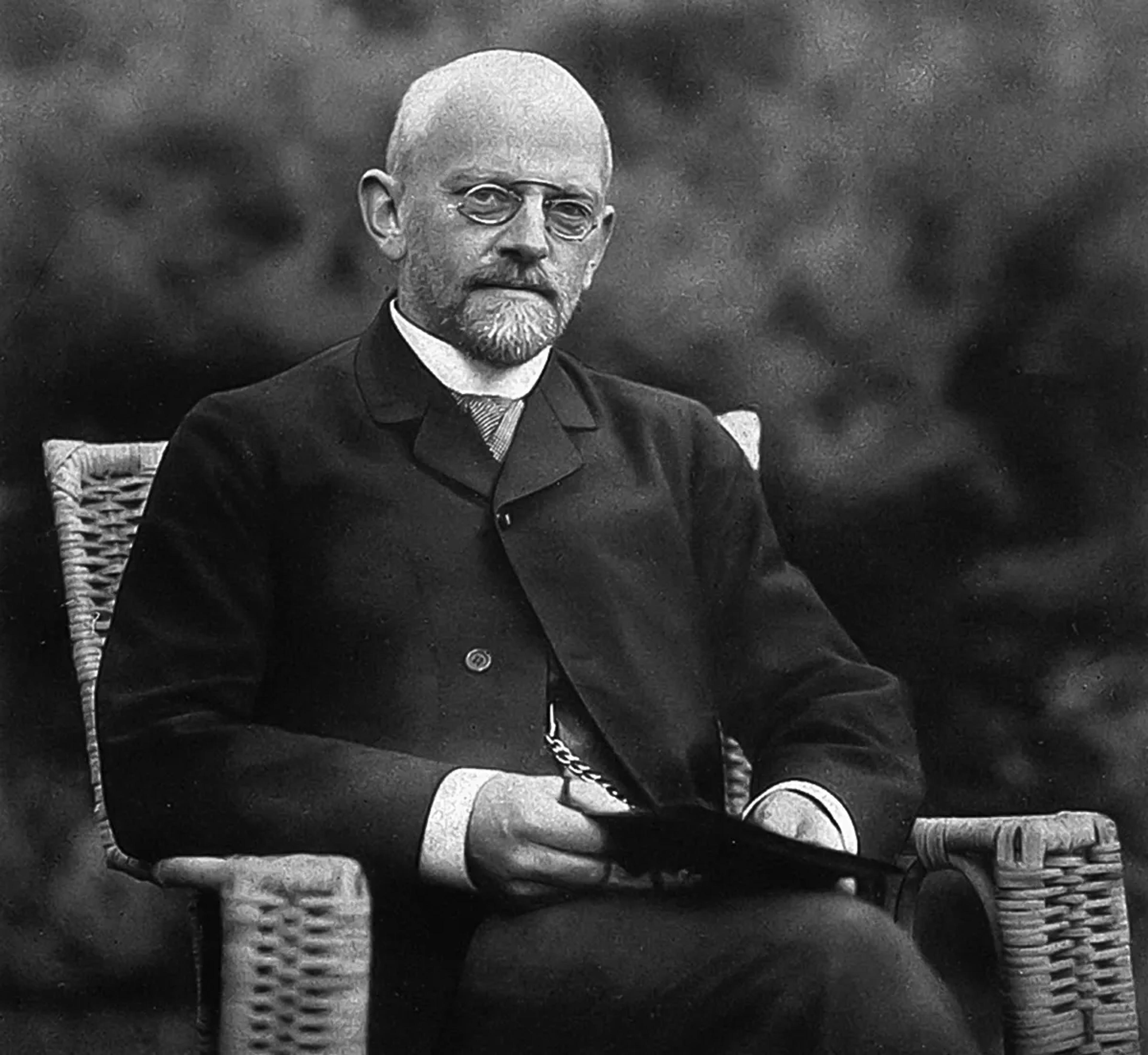
David Hilbert, who believed every mathematical problem could be solved from the right axioms.1 / 3
In September 1930, two events in Königsberg took place a day apart. On the 7th, 24-year-old Kurt Gödel told a small meeting that no reasonable rulebook for arithmetic can prove every arithmetic truth. On the 8th, David Hilbert, the most famous mathematician alive, ended a radio talk with "We must know. We shall know." Those words were later carved on his tombstone.
In an essay for Aeon, the logician Alexander V Gheorghiu retells the century-long search for the foundations of knowledge. He then argues that recent work in logic recasts Gödel's result: it shows our concepts can keep growing, not that knowledge has a ceiling.
Building the foundations
Kant answered David Hume's doubt about induction by arguing that the mind itself supplies structure, such as cause and effect. Mathematics was still a puzzle. Was proving a theorem just unpacking definitions, or building something in the mind? Gottlob Frege tried to reduce arithmetic to pure logic until Bertrand Russell found a contradiction in his system in 1902. Russell and Alfred North Whitehead rebuilt the project as 1 (1910–13). Then Wittgenstein's Tractatus and the Vienna Circle's 2 treated mathematics as 3: true by definition and adding nothing new. One piece was missing. Hilbert had asked for a proof that arithmetic is consistent, meaning it can never produce a contradiction.
Gödel's blow
Gödel wrote statements aboutPrincipia inside Principia itself. He used this to show the system contains true statements it cannot prove, including its own consistency. The argument applies to any reasonable system for arithmetic. The orthodox response kept truth and gave up proof: a realm of mathematical fact exists beyond every system. Gheorghiu argues that this realm is posited mainly to avoid two unwelcome alternatives, and avoiding two conclusions is no argument for a third.
Meaning as practice
The British philosopher Michael Dummett wanted to justify ordinary deduction without that realm. He held that meaning shows up in use: how we assert, justify and infer decides what logic is, and logic decides what counts as true. Dummett said what such a theory must achieve but never built one. In 2005 Tor Sandqvist, a doctoral student at Uppsala University, did: he gave a precise justification of ordinary mathematical deduction based on assertion alone. About ten years later, logicians at University College London took up his work and developed it into a framework on a par with the truth-based view.
An amendable constitution
Gheorghiu compares Principia to a constitution for arithmetic. Treating it as one already assumes it is consistent, so adding "Principia is consistent" as a new axiom only states what our practice already assumed. Gödel's theorem then applies to the enlarged system, and the process repeats without end. Dummett called this "4." Some amendments betray a constitution. Faithful ones unfold it.
On this view, Gödel's limit applies to each edition of the system, not to mathematics itself. The essay doesn't explain how Sandqvist's system works, or who decides which amendments are faithful.
On 7 September 1930, at a small academic meeting in Königsberg, a 24-year-old Austrian named Kurt Gödel announced a result nobody expected. The next evening, in the same city, David Hilbert, 68 years old, recently retired and the most celebrated mathematician alive, closed a radio address with the words Wir müssen wissen. Wir werden wissen. We must know. We shall know. Gödel had just shown that, for arithmetic at least, we can't and won't.
In an essay for Aeon, the logician Alexander V Gheorghiu retells the century of work that led to that collision. He then argues that recent work in logic changes what Gödel's result means. On his reading, the 1 do not mark the edge of knowledge. They show how our concepts keep extending.
Two centuries of foundations
The story begins with Kant, also of Königsberg. David Hume had asked what reason we have to expect the future to resemble the past, and he concluded that the expectation is only habit. Kant's answer, in the Critique of Pure Reason (1781), was that the mind supplies structure such as causation. We don't see a cat push a glass and then infer a cause. We see the push as causing the fall. That left mathematics. Hume thought arithmetic was just unpacking definitions, "like unpacking a suitcase to find an outfit." Kant objected that if it were only that, it could not support the sciences. On his view, we construct 12 from 7 and 5. Later the Dutch mathematician L E J Brouwer drew a radical conclusion from this: if mathematics is mental construction, we cannot assume that every statement is either true or false. Hilbert compared this to forbidding a boxer the use of his fists.
Gottlob Frege rejected the idea that arithmetic is psychological. Numbers exist whether anyone counts them or not. He spent two decades reducing arithmetic to pure logic, grounded in mind-independent True and False. In 1902, with his second volume at the printer, Bertrand Russell wrote to him pointing out a contradiction at the core of his system. Russell and Alfred North Whitehead then rebuilt the project as 2 (1910–13), which aimed to ground all of mathematics in logic.
Russell's student Ludwig Wittgenstein wrote the Tractatus in notebooks he kept while serving under fire in the First World War. In it the world is made of facts, a sentence pictures a fact, and whatever can be said can be said clearly. The book became the manifesto of the Vienna Circle and its 3, the view that a statement is meaningful only if there is some way to settle it. Analytic statements are settled by definitions ("all bachelors are unmarried"). Synthetic statements are settled by looking at the world. Mathematics, the Circle held, is 4: like plumbing, it moves information around without adding any. By 1929 the structure looked almost complete. One beam was missing: Hilbert's second problem, posed in 1900, which asked for a proof that arithmetic is consistent.
The beam that wouldn't go in
Gödel had come to logic through Moritz Schlick's seminar on Russell in Vienna. His 1929 PhD proved that 5 is complete: every logically valid statement can be derived. That was the result Hilbert wanted, but for logic rather than mathematics. When Gödel turned to arithmetic, he found the opposite. He encoded statements aboutPrincipia Mathematica inside the system itself, and used this to show that it contains true statements it cannot prove, among them "Principia Mathematica is consistent." The argument applied to any reasonable system for arithmetic. Russell's letter had brought down one system. Gödel's theorem brought down a whole programme.
Vienna reacted with disbelief. Rudolf Carnap struggled with the result for years. Wittgenstein dismissed it, but he was already abandoning the Tractatus for the view that meaning lies in how people use language in public. Hilbert never publicly conceded the point, and his tombstone in Göttingen bears his radio slogan.
The orthodox reading, which Gödel himself held most firmly, keeps truth and gives up proof. There is a realm of mathematical fact independent of us, and every axiom system reaches only part of it. Gheorghiu sees two problems with this. If mathematical truth is independent of the mind, Kant's old puzzle returns: how does it structure sciences that live in the mind? And the realm is mainly posited to avoid two unwelcome options, 6 (the view that maths is just mental) on one side and Brouwer's restrictions on the other. Avoiding two conclusions, he writes, "is not an argument for a third."
Meaning without a realm
In 1973 the British philosopher Michael Dummett called the justification of deduction, without assuming a realm of mathematical objects, perhaps "one of the most fundamental and intractable problems … in all philosophy." Dummett was the leading Frege scholar of his century. He thought Frege's one backward step was to anchor logic in mind-independent truth. Following the later Wittgenstein, Dummett held that "a theory of meaning is a theory of understanding," and that understanding must show itself in how a speaker uses language. A child learns "red" by being corrected and approved until her usage matches ours. There is no hidden further fact. On this view, our practices of asserting, justifying and inferring fix logic, and logic fixes what counts as true and real. Dummett set out what such a theory would have to do, but he never built one.
In 2005 Tor Sandqvist, a doctoral student at Uppsala University, did. His thesis gave a precise justification of deduction as mathematicians actually use it, grounded entirely in practices of assertion and with no appeal to truth. About ten years later, logicians in University College London's computer science department recognised what he had done and developed it into a framework that, Gheorghiu says, now stands equal to the truth-based account. The essay doesn't describe how the formal system works.
The constitution analogy
Gheorghiu's interpretation of Gödel uses an analogy with a constitution. Principia works as a constitution for arithmetic. To treat it as one is already to assume it is consistent, because otherwise it would be nonsense. So adding "Principia is consistent" as a new axiom doesn't change the subject. It states openly what the practice already assumed. Gödel's theorem then applies again to the enlarged system, which has its own unprovable consistency, and so on with no final amendment. Dummett's name for this is 7. To grasp arithmetic is to hold a rule for laying the next stretch of track, not a map of where the track ends.
The key word is faithful. Gödel apparently found a loophole by which the US Constitution could permit dictatorship, and he started explaining it at his 1947 citizenship hearing until the judge cut him off. Such an amendment would betray what the Constitution defines. Other amendments unfold it. Only the second kind count.
Gheorghiu concludes that Gödel's verdict applies to each edition of the constitution, never to mathematics itself. The reader should judge whether "truth goes exactly as far as we have built the rungs" escapes the orthodox realm or just moves the open-endedness somewhere else. The essay states the UCL result but does not show it. It also leaves the hardest practical question open: who decides which extensions are faithful?
Remember
Gödel's theorem first appeared a day before Hilbert's 'We shall know' broadcast, in the same city.
Dummett grounded logic in how we assert and infer, not in a realm of truths independent of us.
Gheorghiu reads each unprovable consistency claim as a faithful amendment that invites the next one.
Why can replying to a text feel impossible some days? The usual answer is a lack of willpower. In an essay for Psyche, Matthias Pillny argues for a different one: motivation is a running cost-benefit calculation, and several mental disorders throw it off in different ways.
The calculation
Researchers call it 1. Before acting, the brain weighs three things: how much effort the action costs, how rewarding the result is, and how likely that reward is. Usually this happens too fast to notice. When the weighing goes wrong, it looks from outside like laziness.
This matters because loss of drive in depression, bipolar disorder and schizophrenia is often the biggest long-term barrier to recovery. It tends to outlast acute episodes and responds poorly to treatment.
Measuring it
Lab tasks isolate the moment of choice. One option might be to press a button 30 times with your index finger for $1. The other is 100 presses with the little finger of your weaker hand for more money. Researchers vary the reward, the effort and the odds of payment (for example 12%, 50% or 88%) and watch when people choose the hard option.
Pillny and colleagues pooled 68 such studies in a 2, a study that combines results from many earlier studies. People with all three diagnoses chose effort less often. The drop was largest in schizophrenia and bipolar disorder, and smaller but still significant in depression. They also changed their choices less when rewards grew bigger or more certain.
Different breakdowns
3 means fitting mathematical models to each person's choices to see which explanation fits best. It suggests the same behaviour has different causes:
Schizophrenia: effort, reward and odds all count for less. The difficulty is combining them into one decision, which is linked to weaker 4 and slower processing.
Depression: effort weighs too heavily. The reward still appeals, but the route to it feels daunting.
Bipolar disorder: the evidence is thinner and depends on mood state. Depressive phases look like depression. Mania may bring a willingness to push hard even when the payoff and its odds are low.
Implications
Pillny argues the fixes should match the cause:
Weak reward: make it vivid and specific ("after 10 minutes of conversation, I usually feel a little less alone").
Heavy effort: break the task into small steps.
Integration problems: support with planning.
Existing therapies already use these techniques separately. He calls for combining them into one treatment tailored to each person, though the essay reports no trials of such a combination.
For everyone else, he suggests asking better questions than "just start": is the effort too great, the reward too distant, or the outcome too uncertain?
The finding
Small tasks like answering a message, showering or calling a friend back can sometimes feel almost impossible. The usual explanation is a lack of willpower. In an essay for Psyche, Matthias Pillny argues for a different one. Between intending to act and acting, he writes, the brain runs a cost-benefit calculation. In several mental disorders that calculation goes wrong, and it goes wrong in different ways.
His evidence comes from a 1 (a study that pools the results of many earlier studies) that he and colleagues ran on 68 studies of 2, the research term for how people decide whether an action is worth its cost. People diagnosed with schizophrenia, depression or bipolar disorder chose effortful options to earn rewards less often than people without these diagnoses. Computer modelling of their choices suggests that the breakdown happens at a different point in each condition.
Why this matters clinically
Pillny notes that the best-known symptoms of these conditions are sad mood in depression, mood swings in bipolar disorder, and delusions and hallucinations in schizophrenia. Yet the motivational problems are often the biggest long-term obstacle to wellbeing. They tend to last beyond acute episodes and are considered hard to treat. They can also feed on themselves. Missing appointments, letting friendships lapse or not applying for jobs leads to social and professional decline. That invites thoughts like "I'm a complete failure", which make motivation worse still.
The difficulty is that the calculation can't be seen. From outside, a skewed calculation looks the same as laziness or indifference.
How researchers make the calculation visible
The lab tasks are built to isolate the moment of choice. In a typical version, a participant picks between two options:
Easy: press a button 30 times with the index finger of the dominant hand to win a small reward, say $1.
Hard: press a button 100 times with the little finger of the non-dominant hand to win a larger reward.
Across many trials the researchers change the size of the hard-task reward. Some versions also change the chance of getting paid, for example 12%, 50% or 88%, or change the effort required. Before each choice, participants see the effort, the reward and the probability. The thing being measured is when someone decides the hard option is worth it.
People without these diagnoses usually choose the hard option more often as the reward grows or becomes more certain. In the pooled data, all three clinical groups chose effort less often overall. The reduction was largest in schizophrenia and bipolar disorder, and smaller but still statistically significant in depression. The clinical groups also adjusted less as rewards grew or became more likely. In Pillny's words, the calculation "seemed to have become unbalanced".
Pulling apart the reasons
The same behaviour, rarely choosing the hard task, can have several causes. The effort may feel especially heavy. The reward may have little pull. Or the person may struggle to combine effort, reward and probability into a single decision. 3 separates these. Researchers fit mathematical models of decision-making to each person's choices and check which explanation reproduces them best. As an illustration (not from the article): if someone's choices barely change when the payout jumps from $1 to $5 but change sharply when the button-press count changes, a model that gives effort extra weight will fit them better than one that weakens the value of reward.
Pillny's review of the modelling studies points to three different profiles:
Schizophrenia: effort, reward and probability all have less influence on choices. The problem seems to be integration, meaning holding several pieces of information in mind, updating them and comparing them. This fits the meta-analysis finding that weaker and slower processing speed are linked to altered effort choices in schizophrenia. Applying for a job means weighing the effort of a phone call, the benefits of the job and the odds of an offer. If those can't be combined, the decision feels overwhelming and gets put off.
What follows for treatment
If the causes differ, Pillny argues, the fixes should too. Each matches one of the failure points:
Weak reward signal: make rewards concrete, immediate and felt. "Seeing friends is good for me" becomes "After 10 minutes of conversation, I usually feel a little less alone."
Effort weighs too much: lower the felt cost by splitting tasks into smaller steps.
Integration problems: get help with planning and with laying out effort against reward clearly.
Existing therapies already address some of these. 6 trains people to anticipate and savour rewarding experiences. Cognitive behavioural social skills training includes problem-solving modules that break activities into steps. 7 programmes train attention and memory. Pillny's proposed next step is a combined treatment, tailored to the specific reason a given person finds activity unrewarding or hard. The essay does not report trial results for such a combination, so this is a direction for research, not a proven therapy.
Caveats and open questions
The essay leaves some things unsaid. It doesn't give effect sizes, only that the effects were significant and how they ranked. Button-pressing for small sums is a narrow stand-in for real choices like applying for a job, and the essay doesn't discuss how well lab behaviour predicts daily life. The bipolar findings are, by Pillny's own account, limited. The brain systems behind each profile are not covered.
A broader point
Pillny ends with a general claim. Motivation is not a fixed trait but a process that shifts with mood, context, cognition, tiredness, social support and expectations. Telling someone "you just have to start" treats the problem as a willpower deficit. Better questions find the failure point: is the effort too large, the reward too distant, the outcome too uncertain, or the task too complex to plan? That applies to the unread email and the trainers by the door as much as to any diagnosis. Inactivity, he writes, is sometimes "the visible result of an invisible calculation that has become unbalanced", and that calls for attention rather than criticism.
Remember
Across 68 studies, schizophrenia and bipolar disorder showed the biggest drop in choosing effort for reward; depression showed a smaller but significant one.
The same avoidance has different causes: weak integration in schizophrenia, effort that feels too heavy in depression, unchecked effort in mania.
Asking whether the effort, the reward or the uncertainty is the problem helps more than urging willpower.
Sphagnum moss carpet in an Alaskan bog. These mosses are the main material that builds peat.1 / 2
Merritt Turetsky, a peatland ecologist, has been visiting the same field plots in a remote bog in northern Saskatchewan for 20 years. This excerpt from her book Bogland begins with the hazards of getting there. Peat can swallow a walker to the thigh. She says the trick is not to fight it but to sway until the suction lets go. One field partner struggled instead and had to walk miles back to the car with one boot left in the bog.
What a bog actually is
Turetsky defines a bog as a place where at least 40 centimetres (about 16 inches) of 1 has built up. Peat forms when dead plants pile up faster than microbes can break them down. Constant waterlogging is what tips that balance. Water shuts out oxygen, so microbes have to switch to slower, less efficient chemical reactions. In marshes and swamps, death and decay stay roughly balanced, so peat never gets a chance to build up.
Peat also keeps itself going. It locks nitrogen and phosphorus inside undecayed plant tissue, so those nutrients never return to living plants. The result is a nutrient-poor, slow-decaying place, which is exactly the kind of place where more peat forms.
An archive underfoot
Each layer holds the moss, sedge and insect fragments that lived at the surface when it formed, along with the carbon those plants drew from the air. Under her Saskatchewan plots lie about 8,000 years of these layers. The deepest go back to a time when prairie and tundra still covered Canada, the boreal forest was only beginning to appear, and people were starting to farm.
Bogs normally change over thousands of years. As peat thickens, the surface rises above groundwater. Plants that need less water, such as 2 and bog rosemary, then move in.
What 20 years showed
Turetsky has seen change happen much faster than that. The site is warmer and drier than when she first marked out her plots. Crusty lichen is spreading. The surface peat is drier and denser, and the 3 moss looks bleached and unhealthy. She reads these as signs of drought and thinks peat may have stopped accumulating altogether. By her next visit, she writes, the moss could be dead.
Her point is that this bog is nowhere near a farm or a city. People have drained and destroyed bogs throughout modern history, but this site shows that even untouched peatlands are now changing quickly. The excerpt does not give measurements of how much carbon might be lost.
Merritt Turetsky, a peatland ecologist, has spent 20 years returning to the same marked plots in a remote bog in northern Saskatchewan. The corners are rusting metal pins with weather-frayed orange flags. This excerpt from her book Bogland does three things. It shows what walking a bog is like, explains how bogs become archives of the past, and reports that over her two decades of notes this one has started to fail.
Learning to stand still
The piece opens with Turetsky sunk to her shins. She has paused too long, and the 1 closed around her boots. She treats this as a lesson. Peat that looks harmless on the surface can take a walker to the ankles, knees or thighs. People who fight it push their arms down and open water-filled holes that run sideways and soak their clothes. Turetsky's advice is to give in. Shift your weight, point your toes and sway, and you open enough space around your legs to break the suction. One field partner lunged upward instead and slipped out of a hip-high boot. The two spent hours trying to dig it out before she walked miles back to the car without it.
The scene also sets up the book's main idea. In a bog, time and material pile up together, and the place rewards patience.
What makes a bog a bog
Turetsky's working definition is a place where at least 40 centimetres (about 16 inches) of peat has built up. Peat is what remains when dead plants accumulate faster than microbes can decompose them. She calls this an "over-abundance of death." Marshes and swamps, in her image, stay balanced "on the teeter-totter of life and death," so peat never forms "its own crypt."
Peat is not unique to bogs. Thin layers of it cover forests, shrublands and wetlands in every land 2, from the Arctic to the tropics. What causes it varies. In some places cold or wet soils hold microbes back. In others, tough tissue such as dense wood resists decay. In bogs, several of these forces act at once, and the most important is constant waterlogging. Water keeps out oxygen, which microbes need for fast decomposition. Without it they switch to slower, less efficient chemical pathways. Microbes stay alive but sluggish, and the peat thickens century by century.
A loop that sustains itself
Peat also changes the conditions around it. Plants spend energy pulling nitrogen and phosphorus from the soil. Normally decay returns those nutrients to the living system. In peat, decay stops partway, so the nutrients stay locked in what Turetsky calls an "organic vault." The ground becomes poorer in nutrients and decay slows further, which are the same conditions that let peat form. In her words, "peat gives rise to more peat."
As a bog grows, its surface rises. A young bog has only a thin layer of peat over the water table, so water-loving mosses do well. As peat thickens, the surface lifts above the 3, meaning the level of groundwater in the area. Plants then have to reach deeper for water, and drought-tolerant species take over. These include low woody shrubs such as delicate bog rosemary and the sturdier 4, which shade the peat surface. Normally this change takes thousands of years.
Reading the layers
Each layer of peat holds whatever lived at the surface when it formed: fragments of moss, sedge, microbes and insects that escaped decay. It also holds the carbon those plants pulled from the air by photosynthesis. Turetsky calls the layers "pages in the bog's own chronicle." When she pushes her arm into the moss up to the elbow, the material gets wetter and slimier with depth. Her hand comes out stained nearly black, and she can still pick out individual plant parts.
Under her Saskatchewan plots are about 8,000 years of these layers. At the bottom is a landscape that no longer exists. Open prairie and tundra covered Canada, the boreal forest was only starting to establish itself, and people in many parts of the world were moving from hunting and gathering to farming. Turetsky quotes literary scholar Maureen O'Connor and archaeologist Benjamin Gearey, who call bogs "recalcitrant landscapes that hold traces of past people and societies."
What 20 years of notes show
Here the excerpt shifts from timeless to urgent. Bogs change over millennia, yet Turetsky says she has seen striking change in two decades. Her site is warmer and drier than when she first staked it. More crusty lichen grows among the ground plants. The surface peat is drier and denser. The 5 moss is still there, but it looks dry, bleached and unhealthy. She reads all this as signs of drought. That drought may have stopped peat accumulation at the site altogether, which would end the archive's newest chapter. She expects that by her next visit, a few years from now, the moss may be entirely dead.
Her broader argument comes from where the site is. People have drained bogs for farming and destroyed them for other uses throughout modern history, and still do. This bog is far from any farm or city. If it is changing this fast, she argues, then even untouched peatlands are at risk of rapid change, whether from a warming climate or from drainage elsewhere.
What the excerpt leaves open
This is a narrative book chapter, not a research paper. Turetsky offers observations rather than data. She gives no measurements of moisture, temperature or peat growth, and she does not say how much carbon a drying bog might release. Her claim that accumulation may have stopped is framed as "perhaps." The obvious next question is whether a bog that stops building peat begins to lose it, decaying faster and returning stored carbon to the air. The excerpt raises that possibility but does not answer it.
Remember
Peat forms when dead plants pile up faster than microbes can decay them, because waterlogging keeps out oxygen.
Peat locks away nitrogen and phosphorus, which keeps decay slow and helps more peat form.
Turetsky sees drought signs, such as bleached moss, more lichen and denser peat, even at an untouched remote site.
The writer Luke Burgis, author of Wanting and The One in the 99, argues in a long Big Think interview that our problem isn't finding a tribe. The internet supplies tribes daily. The harder skill is belonging to one without losing yourself in it.
Two kinds of self
His framework comes from Murray Bowen, a Georgetown psychiatrist who in the 1960s began treating the family as one emotional system rather than treating the patient alone. In Bowen's account, anxiety travels through a family "like electricity through a circuit." Each of us learns there, more or less well, 1: knowing where our feelings and beliefs end and another person's begin.
Bowen split the self in two. The 2 renegotiates itself in every room. It takes on the group's mood and opinions to avoid friction, like nodding along to Uncle Jim's political rant at Thanksgiving. The 3 is formed on purpose and can say "I think" instead of "we think." Burgis notes that unhealthy groups talk only in "we." Differentiation is not cutting people off. Bowen meant staying in the relationship as yourself.
Tribes form cheaply. Burgis cites Henri Tajfel's 1970s experiments, in which students given random labels ("overestimators," "underestimators") favored their own group with money, even at a cost to themselves. Algorithms now do that sorting for us.
The man who didn't salute
Burgis's emblem is a 1936 photo of a Hamburg shipyard crowd saluting Hitler, with one man, identified as August Landmesser, standing with his arms folded. Landmesser loved a Jewish woman and later died in a penal battalion. He didn't know he was being photographed, so the gesture wasn't a performance. Burgis argues Landmesser was answering to something important in itself, his duty to her, rather than something merely socially important. (Some historians dispute who the man is.)
Three temptations of the screen
Burgis names three ways screens erode the solid self:
Thin rites of passage. Online rituals lack the separation, uncertainty and friction that build character.
4. Augustine's term for an aimless lust to know, which Burgis likens to rubbernecking at "a thousand car wrecks" an hour.
5. The desert monks' word for a restless wish to be anywhere but here. It is usually mistranslated as "sloth," and Burgis sees it in late-night scrolling.
The remedy
Drawing on the theologian Paul Tillich, Burgis calls for courage: to be present, to be part of a group, and to be oneself, all at once. He calls the result communion, distinct people bound together without dissolving. His test for any group: the weakest ones can't tolerate a differentiated member.
The interview is long on diagnosis and offers no data that screens actually weaken the self. The practical advice is small and concrete: question where your beliefs came from, stay out of the gossip, and invest in seven or eight close relationships.
Luke Burgis wrote Wanting, a book on 1 (René Girard's idea that we copy what other people want), and runs the Cluny Institute. In a long Big Think interview tied to his new book, The One in the 99, he starts from a reversal. Every year brings more books on how to "find your tribe." The internet hands us tribes daily, sometimes a new one each day to confirm whatever we already feel. Burgis argues the scarce skill now is staying a person inside a group. Learning to leave one matters less.
Two needs pulling against each other
Burgis describes two drives. We want to be known by name, not treated as a number. We also want communion, meaning not to be alone. He calls the pull between them a healthy tension. A person who runs from it falls into individualism, and a group that runs from it falls into collectivism. A mature adult holds both.
He points out how cheaply tribes form. He cites Henri Tajfel's "minimal group" experiments from the 1970s. Tajfel told students they were "overestimators" or "underestimators." The labels were in fact assigned at random. The students then favored their own group when handing out money, and some gave up their own gain just to widen the gap with the other side. Burgis's point is that algorithms now do this labeling for us, constantly, and we rarely notice.
Solid self and 2
The core framework comes from Murray Bowen, a psychiatrist at Georgetown. Around 1966, Bowen applied systems theory (the study of how parts of a whole affect one another) to the family. Instead of analyzing a patient alone, he asked about siblings, parents and grandparents. He came to see the family as an emotional unit and at first called it an "undifferentiated ego mass." In his account, anxiety moves through a family "like electricity through a circuit." It tends to settle on whichever member absorbs it most easily.
Bowen's key term is 3 of self: knowing where your emotions and beliefs end and someone else's begin. People learn it, to varying degrees, at home and carry that level out into work and politics. On this basis he split the self in two:
The pseudo self is negotiable in real time. You walk into a room and take on its ideas, mood and energy. It is a chameleon that looks for rapport with the least tension. Burgis's example is nodding along at Thanksgiving while Uncle Jim rants.
The 4 is formed on purpose. It can say "I think" rather than "we think." Burgis notes that unhealthy communities tend to speak only in "we" statements.
Everyone has both, and Bowen observed that the balance shifts with context. You can be solid at work and fold back into a pseudo self with high-school friends. Differentiation is also not 5, Bowen's term for simply severing ties, which Burgis links to the reported trend of young adults cutting off their parents. In Bowen's sense, real differentiation happens while you stay in the relationship.
Bowen gave students a practical exercise, the "belief paper." Each student traced how one of their strongest convictions came about. Most first wrote as if the belief had come from nowhere. Under questioning, they found its social roots: a teacher, a parent, a wish to be liked. Burgis offers a smaller daily test: decline to join in gossip, then sit with the awkwardness instead of saying "I was only joking."
The man who didn't salute
Burgis's central image is a 1936 photograph of a Hamburg shipyard crowd saluting Hitler, with one man, identified as August Landmesser, standing with his arms folded. Landmesser had joined the Nazi party for job prospects. He then fell in love with a Jewish woman, was threatened with jail, and was later sent to a penal battalion, where he was killed. What strikes Burgis is that the gesture wasn't a performance: Landmesser didn't know a propaganda photographer was there. (Some historians dispute who the man in the photo is. Burgis doesn't mention the debate.)
Burgis draws a contrast. Things can be socially important, mattering because others care about them, or important in themselves, mattering even if nobody else knew. He argues Landmesser was responding to the second kind: his duty to his fiancée, something outside the crowd.
He sets this beside Gustave Le Bon's 1895 study of crowds, which argued that the crowd itself had become the era's key technology. In a crowd, individuals become anonymous and give their will to the group. He adds Girard's observation that ancient scapegoat killings were carried out by the crowd, so no one person could be held responsible. Burgis's name for the modern version is the "hive conscience": asking which group a judgment will align you with before asking whether the thing is good or bad.
The three temptations of the screen
Burgis argues that Bowen found differentiation hard enough in a family without smartphones. Screens now add thousands of onlookers. He also reframes 6, anthropologist Robin Dunbar's estimate of about 150 stable relationships. In Burgis's reading, a thousand online "friends" is possible only as a pseudo self, and it skips the small circle of seven or eight close ties where a solid self is practiced. He names three temptations of the screen:
Thin rites of passage. Classic rites have three stages: separation, a liminal phase where identity is in flux, and reintegration at a higher maturity. Burgis argues that online substitutes remove the friction that makes these rites shape character.
7. This is Augustine of Hippo's term for a disordered lust to know, with no aim. Burgis's image is rubbernecking at a car crash, except that the feed shows "a thousand car wrecks" an hour. Its opposite, , is knowledge aimed at a real good.
He also borrows Thomas Aquinas's 9, all the senses (physical, intellectual and spiritual) working together to perceive reality. His example is Jacques Lusseyran, a French Resistance member blinded as a boy, who said he perceived people as hues of light. Burgis argues that screens scramble this unified perception.
Courage, and what's left open
His remedy draws on the theologian Paul Tillich's The Courage to Be: the courage simply to exist and stay present, the courage to be a part, and the courage to be oneself. Burgis frames a fourth as the synthesis: the courage to be in communion, which he defines as distinct people bound together without dissolving into each other. He argues the weakest groups are the ones that can't tolerate a differentiated member, and that this is the first thing to check before joining one.
The interview is long on diagnosis and short on evidence. Burgis offers no data on whether screens actually lower differentiation. His "demonic" framing of social contagion, built on the Gospel line "We are legion," will persuade some readers and lose others. His practical advice is modest: write your own belief paper, opt out of the gossip, and invest in your seven or eight.
Remember
Bowen's test of a mature self is staying in a relationship while holding your own views, not leaving it.
Burgis argues acedia, a restless wish to be elsewhere, is the root problem; aimless curiosity and hollow online rituals follow from it.
A quick check on any group: can it tolerate a member who openly disagrees?
Depression: effort carries extra weight. The reward can still be appealing, and the person may even expect to enjoy seeing a friend, but getting dressed, travelling and making conversation look like steep obstacles.
Bipolar disorder: the evidence is thinner, and the picture probably depends on the current mood state. In stable phases, people may weigh the factors fairly well. In depressive phases, the pattern looks like depression. In manic or 5 phases, the willingness to exert effort may become dysregulated, so that people push hard even when the reward and its odds are low. Pillny's example is someone who works through several nights on a business plan and sells belongings to fund it, because the payoff looks huge and the effort feels like nothing.
studiositas
8. The fourth-century monk Evagrius Ponticus named this restlessness among Egyptian desert hermits, who longed to be anywhere but where they were. It is usually mistranslated as "sloth." Burgis treats late-night scrolling and the inability to rest as its signs. He thinks acedia drives curiositas, which in turn produces the thin rites.