Cicero Sweats, Pop Loops, China Plans · Morning Gist
Saturday, October 175 stories · 16 min
Cicero Sweats, Pop Loops, China Plans
Today's essays look at things people assume are settled, like manhood, duty, identity and democracy's time horizon, and find each one still being argued over.
Picked from 23 new articles across 14 sources · arrow keys for other days
Today in 30 seconds
30s left
Catharine Edwards follows Cicero through triumph, exile and grief, and shows that Roman manliness had to be performed and defended over and over. story 1 ↓
An Astral Codex Ten finalist rates Jünger's Storm of Steel above All Quiet, then uses it to rethink duty beside his premature baby. story 2 ↓
Nathan Gardels uses a 2012 Chinese electric-car plan that everyone doubted to argue democracies plan too short-term. China now makes about 80% of the world's batteries. story 3 ↓
Ted Gioia says the four-chord loop explains why even 13-to-24-year-olds prefer songs older than themselves, and calls for real song structure. story 4 ↓
Brazilian hairdresser André Aram lived happily as a trans woman for two years, then reversed it because of fear of violence and the cost. story 5 ↓
New evidence suggests dogs also link sounds to shapes (the bouba/kiki effect), which raises the question of where that link comes from.
1/5Aeon· Catharine Edwards· Oct 16
Cicero shows Roman manhood was argued over, not settled
Catharine Edwards uses Cicero's life to answer influencers who hold Rome up as a time of simple, agreed manhood. Romans always praised masculinity, she argues, but fought over what it was and worked hard to perform it.
Why it matters · Rome is often held up as proof that manhood once had a fixed meaning. This essay shows that even Rome's own models of manhood were contested and performed.
Know this first
Context from the editor, not the article · 27 sec
1 · The late Roman Republic
From about 509 to 27 BCE Rome was ruled by elected magistrates and a senate of elite men. In its last century, generals with loyal armies, finally Julius Caesar, overpowered that system, and rule by emperors followed.
2 · Who Cicero was
Marcus Tullius Cicero (106–43 BCE) was a lawyer, senator and Rome's most celebrated orator. He came from outside the old aristocracy. His speeches, letters and philosophical works survive in unusual quantity.
3 · Virtus and vir
Latin vir means a man as opposed to a woman, and virtus (the root of 'virtue') literally means 'manliness'. At first it meant courage in battle. Later it came to mean moral excellence too.
2/5Astral Codex Ten· Scott Alexander· Oct 16
Reading Ernst Jünger's Storm of Steel beside a premature baby
An anonymous reviewer argues that Ernst Jünger's World War I memoir, Storm of Steel, is the best war book ever written. He then ties its theme of duty to the months his daughter, born at 24 weeks, spent in intensive care.
Why it matters · It defends a disputed author by reading him closely, and it tests an idea that history has tainted, duty, against an ordinary family crisis.
Know this first
Context from the editor, not the article · 31 sec
1 · Who Ernst Jünger was
A German officer who fought on the Western Front from 1915 to 1918 and was wounded 14 times. He later became a famous writer and an amateur entomologist. He is often described as a cold glorifier of war, and Hitler admired his early work.
2 · The book it's measured against
Erich Maria Remarque's All Quiet on the Western Front (1929) also follows a German infantryman. It is the canonical anti-war novel, has sold more than 20 million copies, and has been filmed three times, most recently in 2022.
3 · The review contest
The blog Astral Codex Ten runs a yearly contest of reader-written book reviews. Finalists are posted anonymously, about one a week, and readers vote for a winner. A 2023 entry reviewed Jünger's later novel On the Marble Cliffs.
3/5Noema· Nathan Gardels· Oct 16
Gardels argues democracies' short-term thinking hands China the future
Noema editor Nathan Gardels argues that elections, markets and culture in consumer democracies all reward the present. China's long-range planning took over green technology. He says democracies must find a lasting consensus on long-term goals or fall behind.
Why it matters · It turns an old argument about democracy's short time horizon into a concrete case, with numbers, and openly asks whether democracies can borrow from an autocracy without becoming one.
Know this first
Context from the editor, not the article · 27 sec
1 · Bell's cultural contradiction
In 1976 sociologist Daniel Bell argued that capitalism undermines itself. It needs thrift and delayed reward to build wealth, but that wealth breeds a consumer culture of instant gratification that wears those habits away.
2 · China's planned market economy
Since the reforms that began in 1978, China has combined markets and private firms with Communist Party five-year plans. The state picks priority industries and steers credit, subsidies and land toward them.
3 · Why grids need batteries
Solar and wind output rises and falls with the weather and the time of day. Large batteries store surplus power and release it later, so a grid can lean on renewables after sunset or during heatwaves.
4/5The Honest Broker (Ted Gioia)· Ted Gioia· Oct 16
Ted Gioia blames the four-chord loop for pop's turn to old songs
Critic Ted Gioia argues that hits built on a repeated four-chord loop have made new music boring. He links this to listeners, young ones included, turning to old songs, and calls for real song structure again.
Why it matters · It links a small technical choice in how songs are written to a large cultural shift: a whole society choosing its past over its present.
Know this first
Context from the editor, not the article · 27 sec
1 · The four-chord progression
Many pop hits cycle through the same four chords, usually I–V–vi–IV (in C major: C, G, A minor, F), and repeat them for the whole song. A repeating pattern like this is called a vamp.
2 · What "song form" means
Older popular songs were built from contrasting sections, such as the 32-bar AABA form of Tin Pan Alley standards, or verse, chorus and bridge. Each section brought new chords, so the song could build and surprise.
3 · Gioia's long-running argument
Ted Gioia, a jazz historian and critic, has argued for years in his newsletter The Honest Broker that old music is pushing out new music in streaming and sales. This essay offers one cause.
5/5Psyche· André Aram· Oct 16
A Brazilian hairdresser explains why he transitioned, then chose to reverse it
André Aram, a gay man from Brasília, transitioned to living as a woman, spent over $25,000 to 'pass', and reversed course after two years. He wasn't regretful. He decided the danger and cost were too high.
Why it matters · Most detransition stories get used as weapons in the culture war. This one doesn't fit either side. It shows a person weighing identity against a society's violence, without regret on either side of the decision.
Know this first
Context from the editor, not the article · 30 sec
1 · What detransition means
Detransition means stopping or reversing a gender transition: social changes, hormones or surgery. People do it for many reasons, including regret, health, money, family pressure, or the hostility they face. Public debate often treats every case as regret.
2 · Brazil and trans lives
Brazil is often described as the most dangerous country in the world for trans people. It also has a fast-growing evangelical Protestant population. Many trans women there are pushed into street sex work because they are shut out of other jobs.
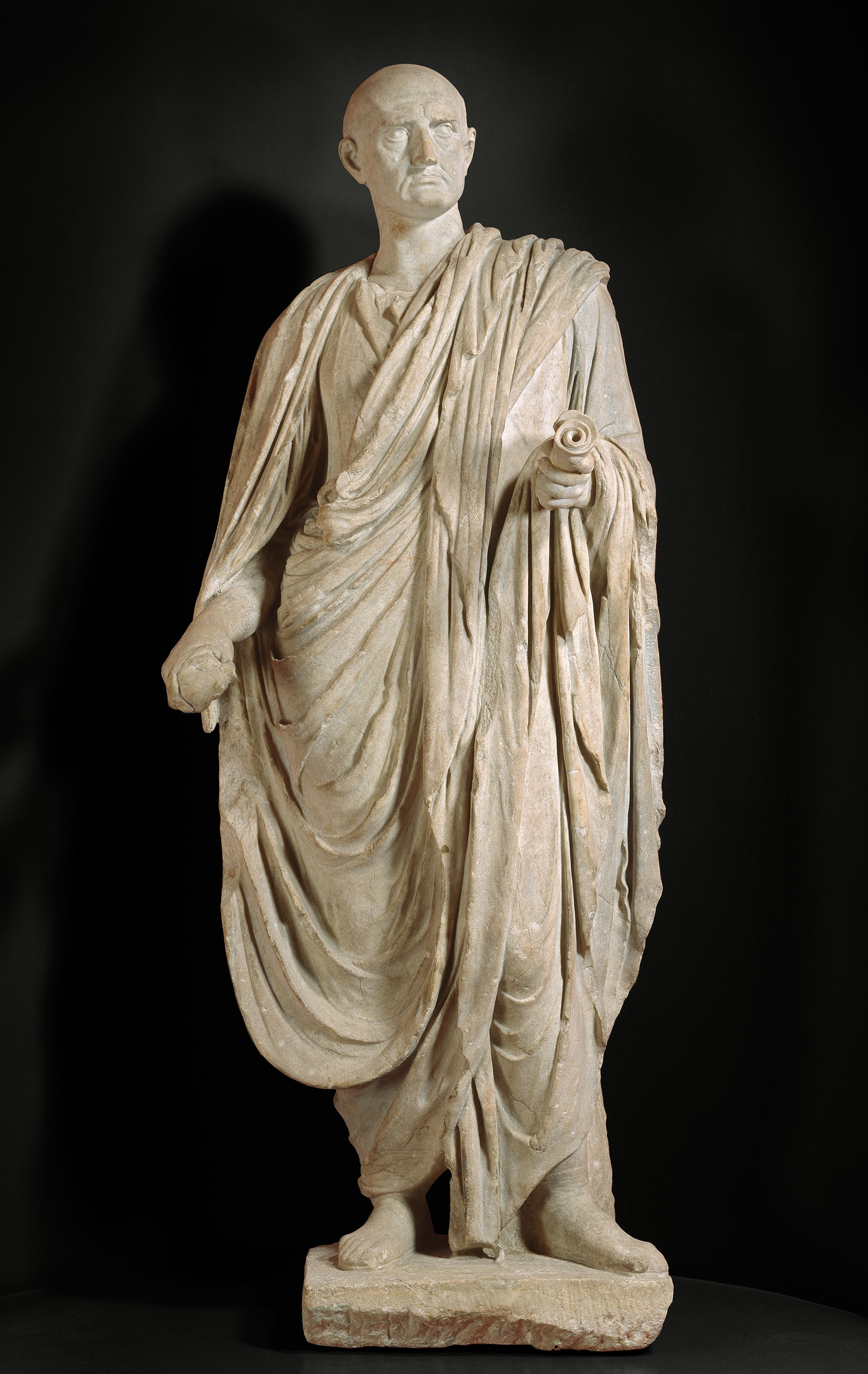
A Roman statue of Cicero in a toga, the civilian dress he claimed could win victories.1 / 2
Influencers who sell a model of manhood built on muscle, money and sexual conquest often point to ancient Rome as a time when everyone agreed on what a man was. The classicist Catharine Edwards tests that claim against the life of Cicero (106–43 BCE), the senator and orator who became the most eloquent voice of the late Roman Republic. She argues that Romans always treated masculinity as good and femininity as shameful, but fought constantly over what manliness actually was.
Sword or toga
The Latin 1 comes from vir, "man", and at first meant courage in war. Generals like Marius, a commoner elected 2 (one of Rome's two chief magistrates) year after year, embodied it: "Arms, not fine trappings, bring glory." Cicero offered a rival model. As consul in 63 BCE he exposed a conspiracy against the state led by the nobleman 3, and he did it by persuading the senate. He called it a victory won by "citizens in togas", equal to any general's.
Manhood as performance
Public speech was a closely policed test. Rivals mocked each other's voices, gestures, sex lives and even how they draped their togas. The ornate "4" style of eastern rhetoric schools was called effeminate, but too plain a style seemed coarse. Handbooks told orators to borrow gestures from wrestling, not the stage, because actors were thought unmanly. One handbook advised making everything "seem straight from the heart". Edwards sees the paradox here: authentic manliness had to be manufactured, and the effort showed.
Losing the stage
What happens to such a man without a platform? Exiled in 58 BCE, Cicero wrote: "I mourn… my very self. What am I now?" Critics wanted 5 calm. He replied that feeling nothing would be "brute insensibility rather than bravery". Later, Julius Caesar's dictatorship silenced the senate, and in 45 BCE Cicero's daughter Tullia died. Edwards argues that he felt the two losses as one, and as emasculating. He had already said he grieved for the state more than "any mother for her only child".
A new arena, an old weapon
He turned to philosophy, writing it in Latin as a public service. In it, virtus comes to mean moral virtue but keeps its gender: we must master pain and fear of death "if we wish to be men". After Caesar's assassination he returned to the senate with the 6, speeches attacking Mark Antony that included the charge that Antony had played the "passive" sexual role with another nobleman. The philosopher of self-control still exploited his audience's prejudices. In 43 BCE Antony and Octavian, Caesar's heir, had him killed.
Edwards's point to modern admirers: the Romans argued about manhood too, and their greatest orator admitted it took work.
The modern myth
Online influencers sell a model of manhood built on fast cars, sexual conquest and muscle. They often point to ancient Rome as a lost golden age, when everyone agreed on what a man was. The classicist Catharine Edwards tests that claim against the life of Cicero (106–43 BCE), the lawyer, senator and orator who became the most eloquent voice of the late Roman Republic. Her argument is that Romans did treat masculinity as plainly good and femininity as shameful. But they disagreed sharply about what manliness actually was, and producing it took visible, anxious effort.
Two kinds of 1
The Latin word virtus comes from vir, "man" as opposed to woman. When it first appears, in the mid-5th century BCE, it clearly means courage in war. In the 2nd and 1st centuries BCE, generals were held up as role models. One was Marius, who had no aristocratic ancestry. He won campaigns in Spain, North Africa and on Italy's northern frontier, and was elected 2, one of Rome's two chief magistrates, several years in a row. The historian Sallust imagines him brushing off charges of coarse manners: "elegance is becoming to women but toil to men… Arms, not fine trappings, bring glory."
Cicero offered a rival model. At 16, probably at the Liberalia festival in 90 BCE, he put on the toga of manhood, a garment of civilian life rather than military life. As consul in 63 BCE he exposed the conspiracy of 3, a nobleman plotting against the state, and his speeches persuaded the senate to act. He called this a victory won by "citizens in togas" and for the rest of his life compared it to the triumphs of Rome's greatest generals. Speech, he insisted, could conquer too.
Manliness as performance
If oratory tested a man, the test was closely watched. In the 4, the law courts and the senate, politicians traded insults about each other's voices, gestures, dress and sex lives. Quintilian, a teacher of rhetoric writing a century later, warned that too much care over toga, shoes and hair was as blameworthy as neglect. Throwing the toga's lower fold onto the right shoulder, he said, was "foppish and effeminate".
Speaking style carried the same charge. The ornate "5" manner, taught in the old rhetorical schools of the eastern Mediterranean, was routinely called effeminate. The plainer Athenian manner was preferred, but a style that was too plain seemed coarse. Moderation itself counted as masculine, so the line fell wherever an opponent chose to draw it. An anonymous handbook, To Herennius, warned that a sharp exclamation suited "feminine outcry" rather than "manly dignity". In Cicero's dialogue On the Orator, one speaker recommends gestures taken "not from the stage" but "from the parade ground or even from wrestling". Actors were thought effeminate, so an orator had to hide how much of his craft was theatre.
Quintilian pushed the point with a simile Edwards calls shocking. Rhetoric teachers who train students to show off, he wrote, are like slave dealers who castrate boys to make them more attractive: they soften "lean and vigorous" eloquence into smooth polish. For him, good speech displayed the body of the free, physically intact adult man.
Edwards finds the paradox in To Herennius's advice to "make everything seem straight from the heart." Authentic masculinity had to be manufactured, and the artifice showed. She reads this as a sign of the constant work needed to justify the "natural" superiority of men over women, and of free men over enslaved ones.
When the stage disappears
The rest of the essay asks what happened when a man whose manhood rested on public speech lost his platform. Cicero had Catiline's associates executed without trial, which was controversial. In 58 BCE his enemy Clodius had him exiled. For 16 months he wrote despairing letters to his friend Atticus: "I mourn the loss not only of the things and persons that were mine but of my very self. What am I now?" Critics said he should have shown 6 composure, the calm under suffering taught by that school of philosophy. After his return in 57 BCE he answered that feeling nothing would have been "brute insensibility rather than bravery [virtus]": a sacrifice only counts if it hurts.
Worse followed. Generals with huge armies, above all Julius Caesar, dominated the state. "The republic is an empty husk," Cicero wrote in 54 BCE. After the civil war of 49–45 BCE, Caesar ruled as dictator and no one in the senate dared oppose him. Then, in 45 BCE, Cicero's daughter Tullia died shortly after giving birth. His friend Servius Sulpicius Rufus wrote that at least she had been spared the republic's end. Cicero refused the comfort. Earlier statesmen, he replied, eased private grief through public life, and he no longer had one; Tullia had been his refuge. Edwards argues that the two losses cannot be separated, and that Cicero felt both as emasculating. Just before Tullia died, he had written that he grieved for the state "more deeply and longer than any mother for her only child."
Philosophy as a new arena
His answer was philosophy. In 46 BCE he wrote that, since his craft had no place left in the Senate House or the Forum, he had given all his time to it. In works such as the 7, which deals with grief and the fear of death, virtus moves toward "virtue" in the sense of moral excellence, but it keeps its gender: "the proper virtue of a man is above all courage… We must exercise these qualities if we wish to be virtuous, indeed if we wish to be men." In On Ends he defines self-control as avoiding what is parum virile, "unmanly". Writing philosophy in Latin, he claimed, was itself a public service.
The last performance
After Caesar's assassination in 44 BCE, Cicero came back to attack Mark Antony, Caesar's former deputy, in a series of speeches called the 8. In the second, he painted Antony as a slave to pleasure. He also revived an old story that Antony had taken the "passive" role in an affair with another nobleman, Curio, which for Romans was a shocking surrender of elite male status. Edwards notes that the philosopher of self-mastery was quite willing to exploit his audience's prejudices to win. It worked, but only for a while. In 43 BCE Antony joined forces with Octavian, Caesar's heir, and had Cicero killed. Cicero is said to have offered his neck to the soldiers.
What the essay leaves open
Edwards's conclusion is modest: Roman masculinity was always praised and always contested, within different limits from ours. She says Cicero's model of educated manhood shaped European elites for centuries but doesn't trace how. She also mentions women and enslaved people only in passing, as the groups these codes defined men against. Her answer to the influencers is still sharp: the Roman men they admire argued endlessly about what made a man, and Rome's most famous orator admitted that it took work.
Remember
Romans never questioned that masculinity was good, but they constantly disputed what counted as masculine.
Cicero claimed that winning by persuasion was as manly as winning a battle, which made manhood a matter of performance.
Cicero felt his grief, both personal and political, as emasculating, and rebuilt his manhood through philosophy instead.
An anonymous finalist in Astral Codex Ten's 2026 reader book review contest argues that Ernst Jünger's Storm of Steel is the best war book ever written. It is Jünger's diary of four years on the Western Front, first published in 1920. Halfway through, the review becomes something else: an account of the reviewer's daughter, born at 24 weeks.
Why not All Quiet?
The obvious rival is All Quiet on the Western Front, which also follows a German infantryman. The reviewer calls it "fiction with a thesis": it starts from an anti-war conclusion and builds scenes to reach it. Remarque spent about five weeks on frontline duty. Jünger fought from 1915 to 1918, rose from private to company commander, was wounded 14 times, and won the 1, Prussia's top officer's award. His book reports events with little commentary and lets readers draw their own conclusions, whether pro-war or anti-war.
Versions matter. Jünger kept revising the book until 1961. The 1924 text ends with a nationalist cry that Hitler admired. The 1961 text, written after Jünger had come to despise the Nazis, cuts that ending and adds remorse over a British boy he killed.
Death, and the missing sociopath
Jünger is often called a "sociopath." The reviewer disagrees. He counts 45 deaths Jünger witnesses on the page. In the worst scene, one shell cuts his company from 150 men to 64, and Jünger collapses sobbing. He is clinical but never gleeful. He respects the enemy and spares a British officer who shows him a family photograph.
What keeps a man in a shell hole when no officer is watching? A passage in the 1924 edition answers: "Duty and Honour." The reviewer argues Jünger never gave up this idea, even after the Nazis twisted it.
A 675-gram daughter
Then the reviewer tells his own story. His wife began bleeding at 24 weeks of pregnancy and had an emergency caesarean. Their daughter weighed 675 grams. The odds he found were one in three that she would die and another one in three of serious disability. In the neonatal intensive care unit (2) she faced lung damage, bleeding in the brain, and 3, in which the bowel dies. He learned how to perform an emergency baptism.
He was afraid to use her name in case she died. He decided that he owed her his full love anyway. That, he writes, is duty: what we owe others, kept up through fear.
She lived. She came home after about three and a half months and walked at around one. His conclusion, drawn from Jünger, is that love is "not a currency" but an obligation: "We don't get to choose when the storm arrives… but we can choose how we face it."
This review is one of the finalists in Astral Codex Ten's 2026 reader book review contest. Scott Alexander posts the entries anonymously until voting closes. The reviewer makes two arguments. The first is that Ernst Jünger's Storm of Steel, a World War I memoir first published in 1920, is the best war book ever written, better than the far more famous All Quiet on the Western Front. The second, which arrives without warning halfway through, is that the book's central virtue, duty, is what carried him through his own daughter's premature birth.
Fiction with a thesis versus a diary
The reviewer starts by comparing the two books. Both follow a German infantryman for years on the Western Front. Both mix horror with humour. Both even include a bug-collecting narrator who drinks oily water from a machine gun's cooling jacket during an attack. The reviewer notes the coincidence with a wink, since Remarque knew Jünger's book.
The difference, he argues, is honesty about where the material came from. Remarque spent about five weeks on frontline duty. A Süddeutsche Zeitung article cited by the reviewer describes his service as mostly construction work behind the lines. He was shelled, gassed and wounded, but probably never saw the sustained combat he describes. Jünger fought for four years. He rose from private to lieutenant commanding a company, and he was at the Somme, Arras, Cambrai, the Third Battle of Ypres and Germany's 1918 spring offensive, known as the 1. He was wounded 14 times and won the 2, Prussia's highest officer's decoration.
The reviewer compares All Quiet to Atlas Shrugged: it "starts with the conclusion and works its way backwards," building scenes to make the reader anti-war. Storm of Steel records what happened and leaves the conclusions to the reader. If you want heroism and comradeship, it has them. If you want futility and industrial slaughter, it has those too. He calls it the "standard" war novel done supremely well, and compares it to a famous chess game that uses the same pieces as any other.
He also catches All Quiet in small contradictions. The novel insists its soldiers are starving, then keeps showing them geese, suckling pigs and double rations.
Which version you read matters
Jünger revised the book throughout his life, and the final edition appeared in 1961. Basil Creighton's 1929 English translation of the 1924 edition is rawer and more nationalist. Its last lines promise that "Germany lives and Germany shall never go under!", and the reviewer can see why Hitler sent Jünger fan mail. Michael Hofmann's 2003 translation of the 1961 text drops that ending and stops at the medal. By then Jünger had lived through Weimar's collapse, hyperinflation, the Nazis (who disgusted him, and some of whose Jewish victims in occupied France he tried to help) and Germany's division. The reviewer recommends Hofmann.
The contrast is sharpest in one passage, where Jünger looks at a young British soldier he has shot. In 1924 he wrote only that it is "a strange feeling." In 1961 he added: "The state, which relieves us of our responsibility, cannot take away our remorse... Sorrow, regret, pursued me deep into my dreams."
Death as the theme, and the missing sociopath
The reviewer counted 45 explicit deaths that Jünger witnesses, plus many times that number reported as casualty totals. For comparison, he counts 14 on-page deaths in All Quiet and 114 in its 2022 film. He argues that films turn war into spectacle. The worst moment in Jünger's book comes when a single shell lands among his company in a crater and cuts it from 150 men to 64. Afterwards Jünger sees a boy who had been mocked for weeping under heavy ammunition boxes now carrying them unasked. He throws himself to the ground and sobs.
That scene is the core of the reviewer's case against the "serial killer" and "sociopath" labels. Jünger is clinical, with a naturalist's eye, but never gleeful. He respects the enemy, tries to take prisoners, and lowers his pistol when a British officer shows him a family photograph. War, in the reviewer's reading, is to Jünger something like a hurricane: something you survive, not something good.
So what keeps a man at his post? A passage cut from the 1961 edition answers: "Duty and Honour." Alone in a shell hole with no officer watching, you stay because otherwise you would be "a coward in my own eyes." The reviewer argues that Jünger never took this back. In 3 (1934) he praised the Roman soldier found at his post in Pompeii. In the same essay he wrote of manned Japanese torpedoes and men "sent off to war as cannon fodder," which the reviewer reads as a warning, not an endorsement. His image for Jünger is a man who built a tool the Nazis then stole.
The 4
Then the review turns personal. At 24 weeks of pregnancy (a normal pregnancy lasts 40), the reviewer's wife began bleeding. Within a day she had an emergency caesarean, described in unsparing surgical detail. Their daughter weighed 675 grams, against a typical US birth weight of about 3,400. The odds he found: a one-in-three chance she would die in hospital, and another one-in-three chance of moderate to severe disability.
He lists the threats in the neonatal intensive care unit (NICU): fragile lungs at risk of collapse or 5, a lung scarring disease; bleeding in a brain still smooth on the scans; fungal infection; and 6 (NEC), in which the bowel starts to die. A doctor agreed it was "probably a good idea" to find a priest. He learned how to perform an emergency baptism.
He was afraid even to use the name they had chosen, in case it was wasted. He decided he owed her his love regardless. That, he writes, is what duty is: what we owe others, kept up when fear says to hide.
What came after
She survived. After about three and a half months in hospital she came home before her due date. She walked at around one, and at two the paediatrician was pleased. Grief kept coming: his wife's repeated infections, the death of a beloved cat, and his stepmother's heart attack and stroke. He held her hand as she died.
His conclusion is that love "is not a currency, to be banked and withdrawn," but a duty you keep even at 3 AM. Jünger watched almost everything he served destroyed and kept going. "We don't get to choose when the storm arrives," the reviewer writes, "but we can choose how we face it."
The review leaves one question open. It separates Jünger's duty from "just following orders," but it never says what stops duty from being turned to evil, beyond the claim that love was what guided his own.
Remember
Remarque spent about five weeks at the front; Jünger spent four years and was wounded 14 times.
Jünger's 1961 revision cut the 1924 nationalist ending and added remorse over a British soldier he killed.
The reviewer separates duty from obedience: it is what we owe others, and for him love guides it.
Nathan Gardels, editor-in-chief of Noema, argues that consumer democracies have a structural blind spot. They have "precious little constituency for the future in the present." Elections, quarterly earnings reports and fast fashion all reward what the most influential people want right now.
The diagnosis
Gardels draws on the sociologist Daniel Bell, who argued in 1976 that capitalism's prosperity creates a consumer culture that undermines its own discipline. In Gardels' phrase, "the present ends up eating the future." Market economies are quick to condemn 1 policy, meaning state support for chosen strategic industries. Gardels argues that short-term consumerism is a failure of governance too, just one that gets far less attention.
China's alternative
His counterexample is China. It combines long-range Party planning with real market signals and targeted subsidies. In 1987 the Party's ideology chief, Hu Qili, told Gardels that "capitalism does not have the patent right over the market economy." Once the Party picks a goal, the state takes what Gardels calls a "2" approach. Subsidies, supply chains and factory capacity are all lined up behind it, and kept there for years.
He argues that each system's flaw comes from its strength. China holds its consensus together through repression. Democracies benefit from open competition, but a change of government can reverse policies that voters backed four years earlier.
The 2012 prediction
At a 2012 lunch for advisers to the 3, the forum of the largest economies, Chinese diplomat Wu Jianmin described Xi Jinping's coming push into electric vehicles and batteries. The room was polite but doubtful. China wasn't yet a carmaker of note, and the Chevy Volt was the world's most-produced EV.
Today, by Gardels' figures:
Nearly 70% of new cars sold in China are EVs.
Half of all EVs sold worldwide are Chinese-made.
China makes about 80% of the world's batteries and hosts half of global grid-scale battery storage.
China also built a national charging network and required new wind and solar projects to include storage.
California shows what this delivers and what it costs. Its grid battery capacity rose from 700 4 in 2019 to 21,000 MW in 2026. Gardels credits those batteries with preventing blackouts during heatwaves. But 90% of their cells and core components come from China.
What he proposes
Gardels doesn't call for a ban. He proposes an import quota, with 5 applying only above it, so foreign competition still pushes domestic industry to grow. He defends subsidies and regulation, noting that California's clean-energy standards created the market that made Tesla possible. He insists he isn't endorsing autocracy, only urging democracies to build "a governing consensus that sticks."
The essay doesn't say how they would do that. Its numbers are unsourced, and it doesn't weigh the costs of China's model beyond repression.
Nathan Gardels, editor-in-chief of Noema, has written an essay about time horizons. His claim is that consumer democracies have "precious little constituency for the future in the present." The feedback signals in politics, culture and markets all reward short-term gratification. Fast fashion, election cycles and quarterly earnings reports respond to whatever the most influential group of people wants, and they want it now.
The diagnosis
Gardels builds on Daniel Bell's 1976 book The Cultural Contradictions of Capitalism. Bell, a Harvard sociologist, argued that capitalism's success produces a consumer culture that eats away at the discipline capitalism needs. In Gardels' phrase, "the present ends up eating the future." He also points to a recent Noema essay by Simon Curtis and Ian Klaus, "Americans Are Losing The Long Game."
His central reframing is about which failures get noticed. Market economies readily criticize 1 policy, meaning state direction of the economy through support for chosen strategic industries, as rigid and wasteful. Gardels argues they don't treat the opposite rigidity, a consumerist mentality that can't look past the near term, as a failure of governance. "Unless societies prepare for, subsidize and invest in the kind of future they want," he writes, "they will never get there."
China's "modality"
His counterexample is post-Mao China. He says it has lifted hundreds of millions of people into prosperity while also coming to dominate the industries of a sustainable future, from green technology to artificial intelligence. His explanation is a mix of long-term planning, real market signals and targeted subsidies. He says the mix has "worked too well": China's overproduction is flooding world markets and threatening jobs elsewhere.
He traces the idea back decades. In 1987 Hu Qili, then the Communist Party's ideology chief, told Gardels in Beijing that "capitalism does not have the patent right over the market economy." Hu described a system "where the state regulates the market, and the market guides the enterprises."
Gardels describes how the machine works:
Consensus that lasts. The one-party system is designed to agree on long-term goals and keep them in place for many years. Leaders are not answerable to voters, but in his account they are held accountable for hitting the targets they set.
The "2." Once the Party picks a strategic goal, the state lines up start-up subsidies, sourcing, supply chains and production capacity from top to bottom. Gardels calls the result "one of the most powerful production ensembles in economic history."
He argues that each system's flaw grows out of its strength. China keeps its consensus intact through repression and control of freedom. Open societies gain from wide participation and electoral competition, but find it harder and harder to agree on long-term goals amid competing interests and shifting public opinion. When partisanship breaks consensus, a change of government can overturn policies voters backed four years earlier. He sets the US president, who "relishes dominating the memes of the moment" across every 24-hour news cycle, against China's leader, who has drawn up a roadmap for the next half-century.
The 2012 lunch: a worked example
The essay's most vivid evidence is an anecdote. In 2012 the 3, the forum of the world's largest economies, put climate change on its agenda for the first time. The 4 (the think tank that publishes Noema) ran a 21st Century Council of former heads of state, tech leaders and Nobel laureates, which advised the G-20 chair each year. That year the chair, Mexican president Felipe Calderón, hosted the council for lunch at Los Pinos, the presidential palace. There Wu Jianmin, a senior Chinese diplomat, said Xi Jinping's incoming leadership would make "5" a priority. He sketched a decisive shift to electric vehicles and heavy research spending on batteries for cars and for storing wind and solar power.
The room listened "respectfully, but doubtfully." China already led in solar panels, but it was not even in the car race. The Chevy Volt was the world's most-produced EV, and no country dominated battery production.
Gardels' figures for today:
Nearly 70% of new car sales in China are EVs, and half of all EVs sold worldwide are made in China.
China produces about 80% of the world's batteries and holds 70% of global battery patents. Some 70% of EV batteries worldwide come from China.
It hosts half of the world's large-scale battery storage capacity.
The "whole dragon" reached past the factories. China built a nationwide network of fast chargers. It also required developers to build or commission large-scale storage before new wind or solar projects could be approved, which tied storage to the grid by rule.
California shows both the benefit and the dependence. Its grid battery capacity grew from 700 6 in 2019 to 21,000 MW in 2026, and the target is 52,000 MW by 2045 to support a 100% clean grid. In May 2026, solar met 51% of the state's total energy demand. Gardels credits battery storage with preventing blackouts during recent heatwaves. But 90% of the cells and core components in those batteries come from China, even when they are assembled in California.
What he proposes
Gardels calls the spread of cheap Chinese green technology a net gain for the climate. He also says it creates a risky dependence on a country the West sees as a strategic adversary, and that it threatens whatever domestic industry exists. His answer is not a ban. He proposes a quota on Chinese imports, with 7 applying only above it. That would limit the damage while leaving enough foreign competition to push domestic producers to scale up.
He defends subsidies and regulation when "a livable biosphere is at stake." He notes that the US subsidized EV purchases with tax rebates until the Trump administration. He argues that California's fuel-efficiency and clean-energy standards created the market that made Tesla possible, an example of regulation creating markets rather than destroying them.
He ends by insisting he is not recommending autocracy. The lesson he draws is that democracies must find ways to "reach a governing consensus that sticks." He closes with a Chinese saying: "The stones from hills yonder can polish jade at home."
What stays open
The essay is a short argument, not a study. Its figures are headline numbers without sources, and it doesn't weigh the costs of China's approach beyond repression: overcapacity, debt and failed bets get no attention. The hardest question also goes unanswered. Gardels names the goal, a durable democratic consensus, but offers no mechanism for building one beyond quotas and the example of California's standards.
Remember
Gardels says short-termism is a failure of governance, as real as the state overreach market economies usually criticize.
In 2012 China wasn't yet a carmaker of note. Today half the EVs sold worldwide are Chinese-made.
His proposed fix is an import quota with tariffs above it, plus subsidies and regulation that create markets.
The biggest singles of 1964, when one top-forty station mixed rock, Sinatra, bossa nova and Motown.1 / 4
Paul McCartney recently mocked today's pop by making up a song on the spot, mid-interview, in the current four-chord style. That style is a short loop of four chords that repeats for the whole track. It would be easy to call him out of touch at 84, but his own album was topping Billboard's rock chart that same week. Ted Gioia, the music critic who writes The Honest Broker, uses the moment to make a larger claim. He argues that the four-chord song is a big reason audiences are leaving new music.
The drift toward old songs
Gioia has tracked this shift for years. He cites 1, a firm that measures music consumption, which reports that "consumers ages 13-24 are increasingly turning away from current music to engage with songs released before they were born." Young listeners still slightly prefer recent songs. But new music has lost more than 10% of its market share with them in four years. At that pace, Gioia says, old and new will be even before 2030. Billboard's current top 100 albums include Thriller, Rumours, Nevermind and greatest-hits collections from Journey, Queen and Tom Petty. Rubber Soul is selling strongly six decades after its release.
Formulas everywhere
Gioia blames an industry that rewards repetition. Radio plays the same kinds of songs it played 20 years ago. Playlists picked by algorithm can only copy the past they learned from. Record labels stick to proven recipes. Genres such as country, pop, hip-hop and jazz have barely changed since 2000. Compare 1964, when one top-forty station could play the Rolling Stones, Frank Sinatra, bossa nova, Louis Armstrong and the Supremes side by side.
Why four chords matter
His main target is the loss of 2. Older songs were built from contrasting sections, and the chords changed between them. When a song loops one four-chord pattern from start to finish, Gioia argues, songwriters can't develop ideas or set up the surprise and contrast their craft depends on. Data from the analyst 3 shows the turn to old music lining up with the rise of four-chord hits. The decades most popular today are the ones whose hits used the most chords. The pattern has now spread into country music, where Morgan Wallen's songs lean heavily on loops.
Gioia admits clever producers can do a lot with four chords, through rhythm, texture and dynamics. He calls Taylor Swift the style "at its peak." But he believes the style is worn out, the way the 4 and the Viennese waltz once were.
What he expects next
Gioia points out that popular music grew more complex in the 1920s and the 1960s, and sales went up both times. He predicts a gifted songwriter will soon break the formula, and says labels should go looking for that artist. All of this is his argument. The charts show the two trends happening together, not that one caused the other.
Paul McCartney recently made fun of current pop music by making up a song during an interview, written on the spot in today's four-chord style. That style is a short loop of four chords that repeats for the whole track. You could write him off as an 84-year-old who's lost touch, but his album was at the top of Billboard's rock chart the week he said it. Ted Gioia, a jazz historian and the critic behind the newsletter The Honest Broker, takes the moment further. He argues that the four-chord loop is a major reason listeners are leaving new music for old.
The evidence that audiences are moving backward
Gioia has followed this shift for several years. He claims nothing like it has happened since the medieval era. Now, he says, it's simply normal. His main source is 1, a company that tracks streaming and sales. It reports that "consumers ages 13-24 are increasingly turning away from current music to engage with songs released before they were born."
This matters because young people have always been the main market for new music. Luminate's numbers show they still slightly prefer recent songs. But new music has lost more than 10% of its market share among them in four years. If that rate continues, Gioia projects that old and new songs will be even among teens and young adults before 2030.
The album charts tell the same story. Billboard's current top 100 includes Journey's Greatest Hits, Michael Jackson's Thriller, Fleetwood Mac's Rumours, The Best of Sade, Creedence Clearwater Revival's Chronicle, Queen's Greatest Hits, Nirvana's Nevermind and Tom Petty's Greatest Hits. The Beatles' Rubber Soul is having a strong week more than 60 years after it came out. "Like a Vegas lounge singer," Gioia writes, "everybody is living off their old hits."
There's a personal edge here. Gioia recently complained that "Stairway to Heaven" was tired and overplayed after it showed up in a trailer for a new Narnia film. Fans pushed back so hard that he deleted the post. Even criticizing a 50-year-old song now draws a crowd.
Who keeps the formula in place
Gioia mostly listens to new music. His complaint is that the industry makes good new music harder to find, because it prefers formulas that have worked before. He names three gatekeepers:
Radio, which plays the same kinds of songs it played 20 years ago and won't add artists who stray from the formula.
Streaming playlists, especially those picked by algorithm. A recommendation system trained on past listening, he notes, only knows the past and keeps serving it.
Record labels, which stick to proven recipes even when sales are weak and fans are bored.
The result, he says, is that whole genres are stuck. Country, pop, hip-hop and even jazz have changed little since 2000. Before that, styles changed fast: pop in 1957 sounded nothing like pop in 1947, and 1967 changed it again. His example is the top singles of 1964. The Rolling Stones, Frank Sinatra, bossa nova, Louis Armstrong and the Supremes all played on the same top-forty stations. Today's formats don't mix styles, and they don't let any one style evolve either.
The mechanism: what four chords take away
Gioia's specific target is the loss of 2. Songs used to be built from sections that contrast with each other. The standard example is the 32-bar 3 form of 4, the songwriting industry behind the American popular songs of the early 1900s. A melody is stated, repeated, then a "bridge" moves to new chords and a new mood, and finally the opening returns. Verse-chorus-bridge songs work the same way. The new chords in each section create tension and release.
A four-chord song often skips all of this. A common version cycles 5, which in the key of C is C, G, A minor, F, and loops it under the verse, the chorus and everything else. This kind of repeating pattern is called a 6. In Gioia's view, it makes it "almost impossible" for songwriters to develop material or deliver the surprises and contrasts that are central to songwriting.
He supports this with data from 7, an analyst who studies culture through numbers. Dalla Riva's trend line shows the turn toward old music happening alongside the rise of four-chord songs. The decades that are most popular today are also the ones whose hits used the most chords. A second Dalla Riva chart breaks down four-chord songs by genre. It shows the pattern has spread beyond pop and electronic music. Gioia singles out country, long the last stronghold of song form, and points to Morgan Wallen's songs as evidence of how far loops have spread in Nashville.
The concessions
Gioia doesn't say every four-chord song is dull. Skilled producers find variety through dynamics, beats, texture, or "as a last resort" switching to a different four-chord pattern. He calls Taylor Swift the four-chord style "at its peak." His argument is about exhaustion. Any narrow formula wears out with time, he says, just as audiences eventually gave up on the 8 and the Viennese waltz.
His prediction
Gioia is optimistic. Popular music became more sophisticated in the 1920s, when songwriters absorbed jazz and blues, and again through the 1960s. Record sales rose sharply both times. He expects "a breakout superstar with a genius-level talent for songwriting" to break the formula, probably soon, and he tells labels to go find that person. If no one does, he warns, we'll be stuck with "Stairway to Heaven" for another 50 years.
What the argument leaves open
The essay is a polemic, an argument written to persuade, and its central link is a correlation. Fewer chords and more interest in old music rose together. That doesn't show one caused the other. Gioia doesn't consider other explanations. Streaming put entire back catalogs one tap away. TikTok and film trailers regularly bring old tracks back. And old songs that are still played today are the survivors, so they are being compared against all new releases, good and bad. Some of those forces may matter as much as harmony does. The essay also doesn't explain how Dalla Riva counted chords. Still, the idea is worth testing: a specific compositional habit could explain a broad change in what people listen to.
Remember
Luminate says new music lost more than 10% of its share among 13-to-24-year-olds in four years.
Gioia's main claim is structural: looping four chords leaves no room for contrast, development or surprise.
The four-chord link rests on a correlation; streaming's easy access to back catalogs is an alternative explanation he doesn't address.
Psyche is an online magazine about psychology and philosophy. Its 'Turning points' series publishes first-person essays about a single decision that changed the writer's life. This piece is one person's account, not reporting or research.
Image: Psyche
André Aram spent two years living as a trans woman in Brasília, Brazil's capital. In a first-person essay for Psyche, he writes that he was happy then and is happy now. He stopped because, in his words, "there wasn't a single day I wasn't afraid for my life."
Finding a family
Aram grew up gay, effeminate and mixed-race on the outskirts of Brasília. His uncles mocked him, and his mother said she wouldn't accept a "little faggot" for a son. A pastor at the evangelical church he attended told him the devil was preparing him for homosexuality, and another pastor tried to assault him. After he left the church he fell in with the trans women of the city's industrial zones and red-light districts. Most of them did sex work and paid pimps a daily fee to live in their houses. They shared food and wigs and protected him. That world, he writes, gave him the belonging his family hadn't.
He makes a distinction that matters to his argument. Some people feel 1, a distressing mismatch between body and felt gender, from childhood. Aram says he wasn't one of them. Being trans became thinkable to him only after years among trans women.
Two attempts
He first tried hormones at 19 and quit after three months. He didn't doubt his identity. He feared it would push him into sex work, which he saw bring violence and drug use to the women he knew. Ten years later, with savings from a job at an upmarket hair salon, he transitioned properly: counselling, supervised hormones, then breast implants. He says he felt euphoric.
The price
He estimates he spent more than $25,000 trying to "2", meaning to be read as a woman by strangers. That covered laser hair removal, surgery, clothes, and taxis to avoid harassment on buses. Friends stopped inviting him to barbecues. He was pelted with eggs. Three trans friends died: one vanished after getting into a client's car, one was stabbed, and one died from injected industrial silicone. Brazil has topped global counts of trans murders for 18 years running, with 80 documented killings last year.
Going back
Aram had his implants removed. He notes that undoing transition is also expensive, and that some people can't do it at all. One woman he knew had already had her jaw, nose and forehead reshaped. He rejects the idea that he converted, though in Brazil many people who detransition do so under religious pressure or in exchange for help. Ten years on, he calls it an experience he wanted to have. Aram argues that the price is high, and that some people are willing to pay it and some aren't.
André Aram, a hairdresser in Brasília, lived for two years as a trans woman and then reversed his transition. That was ten years ago. In a first-person essay for Psyche's "Turning points" series, he refuses both of the usual stories. He doesn't say transition was a mistake that hurt him, and he doesn't say his detransition was forced on him. He writes that he was happy as a woman and is happy now. What changed was his judgement of whether the life was worth its price in Brazil.
A boy without a place
Aram's account of his childhood explains why belonging matters so much to his argument. His parents divorced when he was four, and he grew up with his mother and four sisters. His uncles told him to deepen his voice and stop walking "like a girl." His mother had mental illness, including 1 (an obsessive preoccupation with perceived flaws in one's appearance). She rarely left the house and told him she wouldn't accept a gay son. By eight he was doing the family's shopping and banking alone. He describes being an effeminate, mixed-race, lower-middle-class boy on the city's outskirts, with "always a predator lurking."
At 13 he started attending an evangelical church. A pastor asked whether he was homosexual and told him to pray and fast because "the devil is preparing you." Another pastor came back from the bathroom in his underwear while they were alone. Aram fled and never returned.
The world of the travestis
He then began spending time with the trans women of Brasília, in the industrial zone of Taguatinga near the Coca-Cola factory and in the central red-light districts. He describes a world of contradictions. The women lived in houses owned by pimps and paid a daily fee to stay there and work the streets. There was loud laughter and fierce rivalry over looks. They also shared food and wigs freely, and when one came home beaten by a client, the others paid for her medicine and her fee. At 16 Aram left home to live with his boyfriend in the "gay ghettos." No one bothered him, he says, because everyone knew the trans women would defend him.
That background sets up a distinction he draws carefully. Some people feel 2 from early childhood: a persistent, distressing mismatch between their body and the gender they feel themselves to be. Aram puts himself in a different group. For him, being trans became a possibility only after years among trans women. He calls it something he could choose. The essay never says this applies to anyone else.
Two transitions
His first attempt, at 19, lasted three months on hormones. He says the reason he stopped had little to do with identity. In his circle, sex work was usually the only income open to trans women, and he saw what came with it: violence, trauma and drug use to cope. "I liked their world," he writes, "but I didn't like the situations they found themselves in."
Ten years later he tried again, deliberately. He had saved money from years at a salon specialising in hair extensions in an upper-middle-class neighbourhood. He started psychological counselling, then hormones under medical supervision. He was studying nursing, and he came back for the second semester looking like a different person. Classmates complimented him. One teacher kept using his 3 (the name a trans person used before transitioning). Some salon clients gave him earrings and lingerie, and others asked whether he would now turn to sex work. He says the breast implants made him euphoric, because he had felt he would be a woman "only after getting implants and wearing a dress." His mother cried when she saw them. He reads her tears as fear of the prejudice he would face, not rejection.
What it cost
Aram adds up the cost. He estimates he spent more than $25,000 trying to 4, meaning to be seen as a woman by strangers so that he would be treated with less hostility. That covered hair, nails, makeup, clothes, laser hair removal, hormones and surgery. There were hidden costs too: taxis when the bus felt unsafe, and having to choose carefully where to live.
The social cost was harder. Invitations to birthdays and barbecues stopped. One friend said she had left him out to "protect" him from her evangelical relatives. Women watched to see whether he would flirt with their boyfriends: "everything suddenly revolves around sexuality." He and a friend were pelted with eggs in the street. A man he kissed in a nightclub was told he was trans, said he was going to the bathroom, and never came back.
Then there was the violence. Aram cites figures that Brazil has topped global counts of trans murders for 18 consecutive years, with 80 documented homicides last year. He names friends who died. One, 22 and five feet tall, got into a client's car and was never seen again. Paula Maia survived an attempt on her life but was left quadriplegic, and she later died from the industrial silicone she had injected to reshape her body. Julia was stabbed by an older man who habitually humiliated trans sex workers, after she argued back. Aram says the man faced no consequences and still lives near his salon.
Undoing it
After two years, with counselling, Aram asked himself, "Why can't I go back?" Reactions split in unexpected ways. Some friends tried to talk him out of it or called him indecisive. His evangelical relatives welcomed it as "liberation." He says almost everyone agreed that life as a trans woman in Brazil is far riskier than life as a gay man.
He addresses a suspicion he heard often: that he had converted. He says this pattern is real in Brazil. People detransition after joining evangelical churches, or after drug use or homelessness, when help is offered only on condition that they stop being trans. He suggests religion often works as a cover, because it is hard to dismantle a self you built and say simply, "I don't want this anymore."
Reversal cost money too. He saved again to have his implants removed. He says others who want to detransition lack the money or job prospects to do it. Some have changes that are hard to undo, like a woman named Aline who had already had her jaw, nose and forehead altered.
What the essay leaves open
This is one person's testimony, not a study, and Aram doesn't claim otherwise. His case is shaped by things specific to him: no early dysphoria, a community where sex work was the default path, and a country with extreme anti-trans violence. The essay leaves open how many detransitions in places like Brazil are really about safety rather than identity. It also leaves open what his choice would have looked like somewhere safer. His own conclusion is modest: the price is high, "some are willing to pay it, while others are not."
Remember
Aram presents detransition as a weighing of risk and cost, not as regret about who he was.
He found it easy to deepen his voice and stop walking like a girl.
He says many Brazilian detransitions happen under religious pressure, often when help is conditional on stopping, which he rejects as his reason.