In Praise of Friction and Misunderstanding · Morning Gist
Saturday, October 245 stories · 15 min
In Praise of Friction and Misunderstanding
Five essays on resistance, imperfect understanding and shaky evidence, each arguing that the thing we try to get rid of is often the thing doing the work.
Picked from 22 new articles across 14 sources · arrow keys for other days
Today in 30 seconds
30s left
Tribologist Jennifer Vail argues friction drives progress, from greased Roman axles to dark matter around black holes, and challenges the 'frictionless' ideal. story 1 ↓
Philosopher Víctor Verdejo argues people often understand each other by thinking different thoughts, and weighs two rival accounts of how that works. story 2 ↓
A concussed reviewer reads Clark Elliott's ten-year recovery memoir and argues the usual ranking of medical evidence fails for conditions like his. story 3 ↓
A former supplement evangelist explains how confirmation bias and weak nutrition studies broke his rigorous-looking three-part test. story 4 ↓
Maria Popova revisits Pema Chödrön's 1997 book, which says healing starts when you stop hoping for solid ground and stay with fear. story 5 ↓
1/5Aeon· Jennifer R Vail· Oct 23
A friction scientist argues resistance is what lets us move forward
Jennifer Vail, a scientist who studies friction, argues in Aeon that our push for a "frictionless" world misses the point. Friction lets wheels grip and brakes stop, and each new technology runs into new resistance.
Why it matters · "Frictionless" is now a design goal everywhere from apps to shopping. This essay comes from someone who has measured friction for a living, and it pushes back on that goal.
Know this first
Context from the editor, not the article · 20 sec
1 · What friction is
Friction is any force that resists motion between things in contact, whether solid, liquid or gas. Static friction resists the start of motion. Dynamic friction acts once things are moving. Drag is friction from moving through a fluid.
2 · Tribology as a field
Tribology is the science of surfaces moving against each other: friction, wear and lubrication. It was named and set up as a discipline in Britain in the 1960s. Its researchers use instruments called tribometers to measure friction under controlled conditions.
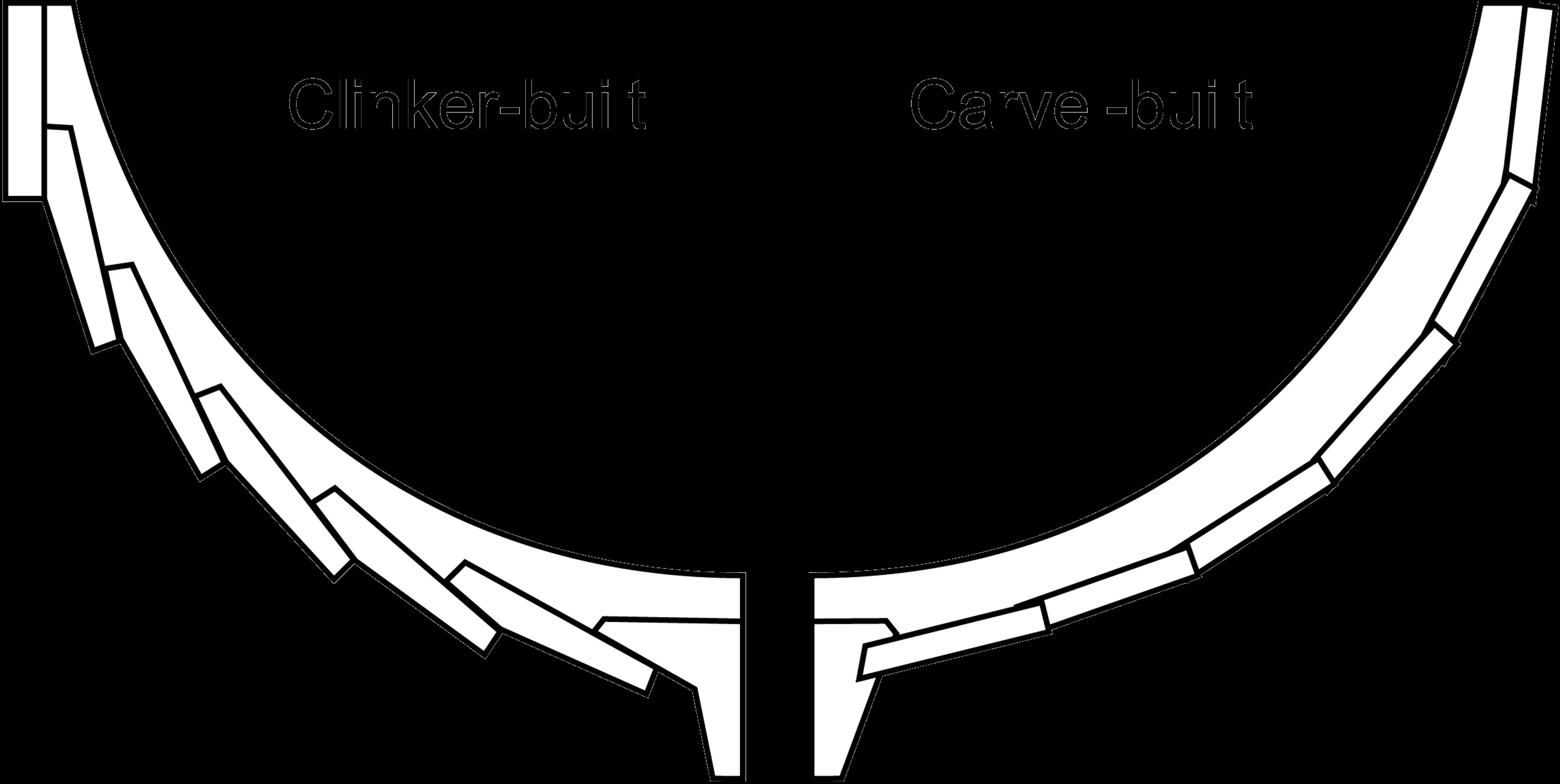
Clinker hulls (overlapping planks) next to carvel hulls (flush planks): Viking ships gave up some smoothness for flexibility.1 / 2
2/5Psyche· Víctor Verdejo· Oct 23
Do people who understand each other share the same thought?
Philosopher Víctor Verdejo challenges the old idea, running from Locke onwards, that understanding means passing an identical thought from one mind to another. Communication works through a shared core, or through coordinated thoughts, while perspectives stay different.
Why it matters · It reframes an everyday frustration: when someone doesn't fully "get it", that may be how understanding works, not a failure of it.
Know this first
Context from the editor, not the article · 18 sec
1 · The transfer picture
For centuries, philosophers treated language as a pipe: a speaker has an idea, encodes it in words, and the hearer decodes the same idea. Everyday phrases like "get my thoughts across" reflect this model.
2 · Indexical thoughts
Some thoughts depend on who is thinking them. Words like "I", "here" and "now" pick out different things for different speakers, so the same sentence can amount to a different belief in each mind.
Image: Psyche
Our language assumes we can hand thoughts to one another. We "think the same", "know what's on someone's mind", "get our thoughts across". In an essay for Psyche, the philosopher Víctor Verdejo argues that this picture misleads us. Understanding someone often means thinking from them.
3/5Astral Codex Ten· Scott Alexander· Oct 23
A concussion memoir, odd prism glasses, and where medical evidence fails
An anonymous reader's review of Clark Elliott's memoir of a decade-long brain injury asks why he recovered through fringe-sounding treatments. Her answer: maybe the lenses helped, but the theory behind them is wrong.
Why it matters · The review uses one strange recovery to ask a general question: how should we judge evidence when every patient's illness is different and nobody yet understands the mechanism?
Know this first
Context from the editor, not the article · 30 sec
1 · Post-concussion syndrome
Most concussions clear up within weeks. A minority leave lasting symptoms such as fatigue, problems with vision and attention, and trouble starting actions. Standard CT and MRI scans usually look normal, so diagnosis is slow and there is no settled treatment.
2 · The evidence hierarchy
Medicine ranks evidence. Randomized controlled trials, which assign patients to a treatment or a control by chance, sit near the top. Single case reports and testimonials sit near the bottom because chance, placebo and natural recovery can explain them.
3 · The ACX review contest
4/5Works in Progress· Oct 23
A former supplement evangelist explains why he stopped taking them
A Works in Progress writer who once recommended vitamin K2, glycine and fish oil to friends now takes nothing. He argues that his careful method mostly confirmed what he already wanted to believe, and that most nutrition studies can't be trusted.
Why it matters · The essay shows how a sensible-looking way of judging evidence can fail when the person using it wants an answer and the studies they rely on are weak.
Know this first
Context from the editor, not the article · 26 sec
1 · Why supplements feel necessary
Diseases like scurvy (vitamin C), rickets (vitamin D), beriberi (thiamine) and pellagra (niacin) were once common. They showed that missing one nutrient can be devastating. That history makes 'more might be better' feel intuitive.
2 · Deficiency versus optimum
Official intakes mostly aim to prevent deficiency. Supplement enthusiasts argue that the best intake for health may be higher than that floor. It's a reasonable guess that is hard to test.
3 · Nutrition science's evidence problem
Much nutrition research is observational: it compares people who eat more of something with people who eat less. Those groups differ in many other ways. Analytic flexibility can also produce false positive results.
5/5The Marginalian (Maria Popova)· Maria Popova· Oct 23
Pema Chödrön's case for staying with fear instead of fixing it
Maria Popova revisits Pema Chödrön's book When Things Fall Apart. Chödrön, a Buddhist nun, argues that in a crisis we should stay with fear and loss instead of escaping them. Healing, she says, comes from giving up hope of rescue.
Why it matters · The book reverses the usual self-help instruction to fix your pain, and the reversal has echoes in Camus, Rollo May and Simone de Beauvoir.
Know this first
Context from the editor, not the article · 28 sec
1 · Who Pema Chödrön is
An American-born Tibetan Buddhist nun and teacher, now in her late eighties, trained in the Shambhala lineage founded by Chögyam Trungpa. When Things Fall Apart (1997) is her best-known book, written plainly for readers in crisis.
2 · The Buddhist premise
Buddhism holds that everything is impermanent and that suffering comes largely from clinging: to pleasant states, to fixed identities, to the hope that things will settle. Meditation trains attention to stay with experience without grasping or pushing away.
3 · The Western foils
Popova sets Chödrön beside Western writers on despair: Albert Camus, Rollo May (an existential psychologist who argued despair can be constructive), Alan Watts (a popularizer of Zen) and Simone de Beauvoir on atheism and hope.
"Frictionless" has become a compliment for workplaces, checkouts and apps. Jennifer Vail has spent her career as a 1, a scientist who studies friction, wear and lubrication, and she thinks the ideal gets something wrong. In an Aeon essay she argues that friction, the force that resists motion, is also what has moved human technology forward. She reads that history in three stages.
Working around it
The wheel cut friction because rolling involves far fewer surface contacts than sliding. But a wheel also needs friction. Static friction between tyre and ground stops it spinning in place, as anyone who has driven on ice knows. Fixing one friction problem tends to create another. Roman chariot axles got hot enough to glow, a detail the poet Horace mentions. Builders greased them with animal fat, then had to splash water on the wheels when the grease threatened to catch fire.
Viking boatbuilders made trade-offs too. Longships were slim to cut 2, the drag that comes from a hull's shape. Cargo ships were wide, giving up speed for stability. Their "3" hulls of overlapping, riveted planks added drag but could twist and flex in a storm.
Measuring it
In the 20th century friction became something engineers could measure. In the 1920s Chrysler sent an engineer to consult Orville Wright about wind tunnels. The result, the teardrop-shaped 1930s Chrysler Airflow, sold poorly, but wind-tunnel testing became standard practice. Today 4 measure friction from the scale of a train wheel down to single atoms.
Using it
Vail argues that friction is now a tool as well as an obstacle. Her examples:
Viruses: a 2023 study found that packing viral DNA a certain way raises friction as the DNA leaves the virus's protein shell. That slows its release, which can decide whether an infection becomes active.
Dark matter: astrophysicist Subrahmanyan Chandrasekhar described 5, a drag caused by gravity on objects moving through space. In 2024, researchers in Hong Kong found that two stars orbiting black holes only matched predictions once they added drag from surrounding dark matter.
The larger claim
Vail's broader point is that resistance shows up because of progress. Her own field of solid lubricants exists because jet engines run too hot for grease. "A wheel spinning in place" is her image for a world without friction: motion that goes nowhere. The essay is strongest when it sticks to engineering. The move from physics to life lessons is a metaphor, not an argument she proves.
Jennifer Vail is a 1, a scientist who studies friction, wear and lubrication. In an essay for Aeon she pushes back on an ideal that has spread from software design to grocery shopping: the frictionless. She has spent most of her career trying to reduce friction, in jet engines and in car emissions. She has also worked on increasing it, to scrub plaque off teeth. Her argument is that friction, the force that resists motion, is necessary and often useful. She suggests that human technology can be read as a story about learning to live with it.
What friction is, and why it's slippery
Vail defines friction broadly. Anything that moves, by sliding or rolling, through solid, liquid or gas, meets resistance. That makes friction hard to pin down, because its size depends on conditions: speed, load, temperature and surroundings. Temperature is especially awkward because friction generates heat, which then changes the friction. Tribology was set up as its own discipline only in the 1960s. Its main instrument is the tribometer, a rig that rubs surfaces together under controlled conditions and measures the resistance. Vail's PhD lab at the University of Florida had 2 covering three orders of magnitude of force. She has also worked in a lab that tested a real train wheel against a rail.
Stage one: working around friction
The wheel is the obvious starting point. Rolling reduces friction because a rolling object touches the surface at far fewer points than a sliding one. But Vail stresses that the wheel also depends on friction. When you push a wheel, static friction between it and the ground stops it from spinning freely. Once it is moving, dynamic friction does the same job. Ice shows what happens when there is too little of either.
Solving one friction problem tends to expose another. Roman chariot racers dealt with axles that heated up through wheel-on-axle friction. Horace's Odes describe chariot wheels glowing during races, which is motion turned into heat. Builders greased the joint with axungia, animal fat. This drew on a lesson the Sumerians already knew: fats and oils lubricate better than water. But hot grease can catch fire, so crews threw water on the wheels to cool them. Vail compares this to a modern pit stop.
Viking shipwrights faced drag, the friction of moving through a fluid. Vail separates skin drag, from water rubbing along the hull's surface, from 3, which comes from the hull's shape. Cargo ships had wide hulls that added form drag but kept loads stable. Longships were long and slim so they could move fast. The Vikings also built "4" hulls of overlapping planks fastened with rivets. These were rougher, and so had more drag, than a smooth hull. They were also light, so they rode high in the water, and flexible enough to twist in heavy seas instead of breaking apart. Each design picked a different point on the trade-off between speed and survival.
Stage two: measuring friction
In Vail's account, the 20th century was when friction became something engineers could measure and design around. In the 1920s Chrysler's head of engineering, Carl Breer, wondered why cars couldn't move through air the way planes did. He sent engineer William Earnshaw to consult Orville Wright on wind-tunnel testing. The result was the teardrop-shaped Chrysler Airflow of the 1930s. It sold badly because buyers found it too strange. Vail argues that it still changed car design, since wind-tunnel testing became standard. Tribology labs now operate across the car, medical and food industries, measuring friction from large machines down to the atomic scale.
The extremes have pushed new materials. Vail's own specialty is solid lubricants for jet engines and cars, where grease would burn. In some of her tests, the steel rubbing against her samples heated up enough to change colour.
Stage three: using friction
Vail is most interested in the 21st century, when she says researchers began using friction as a tool and not only fighting it. Her examples cover very different fields:
Virology. How fast a virus pushes its DNA out of its protein shell, the , can decide whether an infection becomes active or stays dormant. That matters for using viruses against bacteria or other viruses. In 2023, researchers found that packing the coiled DNA in certain ways raised friction during ejection and slowed it down.
The argument underneath
Vail's broader claim is that resistance shows up because of progress. The solid-lubricant industry exists because people built turbine engines, which exist because people learned to fly. She applies this to her own work: if she is stuck, it is because she has reached a point where that particular resistance appears. She quotes William James on life being built "in the self-governing resistance of the ego to the world." She ends with the image of a wheel spinning in place: ease with no resistance is motion that goes nowhere.
What to make of it
The engineering history is solid and full of good detail. The trade-off examples are the strongest part, because they show that "reduce friction" is never the whole design brief. The step from physics to "resistance is your reward for progress" is a metaphor, and Vail doesn't really defend it against the obvious reply. Much of the friction people want out of checkouts or paperwork is pointless delay, not traction. Her case would be sharper if she said which kinds of friction are worth keeping.
Remember
Wheels reduce friction but depend on it too. Static friction is what stops them spinning in place.
Good friction design is about trade-offs: Viking clinker hulls accepted extra drag in exchange for flexing through storms.
Dynamical friction from dark matter explained two stars' unexpected orbital periods around black holes in a 2024 study.
The thought-transfer model is ancient. Augustine described signs as a way to "transmit to another's mind what is in the mind" of the speaker. John Locke, in 1689, said words fail when they don't "excite in the hearer the same idea" the speaker has in mind. Versions of this survive in modern philosophy of language: 1's shareable "common stock" of thoughts, and Robert Stalnaker's "2", the information that people in a conversation share.
Why it doesn't hold
Verdejo's point is that thoughts diverge even when communication works. You say, "I had an awful day at work"; he says, "I see." He understands, but he doesn't take on your frustration or the details, and he couldn't fully. It's your job and your feeling.
A sharper case comes from the philosopher John Perry. A bear approaches your hiking partner, who shouts, "A bear is about to attack me!" You run for help while they curl into a ball. Had you shared their exact thought, a threat to oneself, you would have curled up too. Understanding worked because your thought was different. Effective communication, Verdejo writes, "may even require" differences in thought. We aren't a 3 like Star Trek's Borg.
Two rival repairs
4, the view Verdejo favours. A shared thought has an identical core, with outer layers that reflect each person's perspective. This keeps a useful distinction: misunderstanding someone is different from understanding them and disagreeing.
5, first championed by the philosopher Kit Fine. Communication doesn't need identical thoughts, only coordinated ones. If we both act as though our thoughts concern the same deadlines and the same unkind boss, the conversation does its job.
The debate is unsettled. Both sides, though, reject the idea of a perfect match between minds.
The practical upshot
Verdejo argues that expecting complete thought-sharing sets us up for frustration. Knowing its limits could make us more patient and more willing to restate things to build a "shared kernel", and more accepting when someone doesn't fully get it. The essay is brief. It doesn't say how big that shared core must be, or how relationism tells disagreement apart from misunderstanding.
The feeling is familiar. A friend describes their day and you nod. A stranger on a platform shares a weary glance as the train pulls away without you both. In moments like these, it seems as though two minds are holding one thought. Our language says so: we "think the same", "know what's on someone's mind", "get our thoughts across".
In an essay for Psyche, the philosopher Víctor Verdejo argues that this picture is old, powerful and misleading. Understanding someone, he suggests, often involves thinking differently from them, and seeing why changes what we should expect from conversation.
A long tradition of thought-sharing
The idea that communication moves thoughts from one mind to another goes back a long way. Plato placed the ideas behind our knowledge and speech in a separate realm of unchanging, perfect forms, a foundation everyone draws on. Augustine of Hippo, writing in De doctrina Christiana (397–426), described signs as tools to "transmit to another's mind what is in the mind of the person who gives the sign."
The version that shapes our intuitions today, Verdejo says, comes from John Locke. In An Essay Concerning Human Understanding (1689), Locke held that the point of language is to be understood, and that words fail "when any word does not excite in the hearer the same idea which it stands for in the mind of the speaker."
The model survived into modern philosophy of language. 1, the German logician who laid the foundations of modern logic, described thoughts as a shareable "common stock" that logic and science rely on. H. P. Grice, who analysed how speakers' intentions shape meaning, also fits the tradition. So does Robert Stalnaker, whose influential account of conversation rests on a "2": the information speakers in a conversation share and keep adding to.
Where the picture breaks
Verdejo isn't mainly interested in plain miscommunication. His point is that even when communication succeeds, the thoughts on each side often fail to match.
His first example: you tell him irritably, "I had an awful day at work," and he replies, "I see." In one sense he understands you perfectly. But your thought is rich, full of frustration and the details of everything that went wrong, and the exchange doesn't require him to take all of that on. Even if you told him every detail, something would stay yours: it's your job and your frustration. Sympathy doesn't make it affect him the way it affects you.
The second example, which Verdejo takes from the philosopher John Perry, is sharper. You and a hiking partner are in the mountains when a bear approaches them. They shout, "A bear is about to attack me!" You understand at once and run for help, while your partner curls into a defensive ball. If you had literally shared their thought, including its sense of an imminent threat to oneself, you would have curled up too. Your understanding worked because your thought was different: theirs was "I am in danger", yours was "they are in danger, and I can help."
Verdejo concludes that effective communication "is consistent with – and may even require – differences in thought." Beliefs, backgrounds and sensibilities shape what each of us actually thinks, and these never fully match from one person to the next. As a contrast he offers the science-fiction 3, such as Star Trek's Borg or the virus-made collective consciousness in the 2025 TV show Pluribus, where every member literally shares every thought. Human communication isn't like that, even if our metaphors suggest it is.
Two ways to rebuild the idea
Verdejo describes two current responses in philosophy.
Layered thought-sharing. This is the view Verdejo himself favours. It keeps the idea that two people can share a thought but treats each person's version as layered. Some core content or mental state has to be identical for the thought to count as shared, while other layers differ to reflect each person's point of view. In the bear case, the shared core might be roughly a bear is about to attack this hiker; the perspective layer (me versus them) differs. Verdejo argues this keeps something useful. It lets us tell apart misunderstanding someone ("getting the wrong idea") from understanding them and disagreeing ("getting the idea" and rejecting it). That distinction needs something both parties have grasped. As he puts it, sharing thoughts is complex because thoughts are complex.
4. The rival approach, first championed by the philosopher Kit Fine, drops identity altogether. On this view, communication is a matter of coordination between thoughts. What counts is not whether two thoughts have the same intrinsic content but how they relate. Take the bad-day example again. You mention deadlines, an unkind boss and feeling overwhelmed, and Verdejo responds with sympathy. You both act as if your thoughts concern the same things, even though the thoughts themselves differ, and that is enough for the conversation to do its job. On this account, tracking what you think matters more than duplicating it.
An analogy may help (it is ours, not the essay's). Two dancers don't need to make identical moves. They need moves that fit together. The layered view says some steps must be the same; relationism says fitting together is all there is.
Verdejo notes that the debate between these camps is unresolved. Both, though, reject what he calls the tempting assumption of a perfect match between minds.
Why it matters outside the seminar room
Verdejo ends on a practical note. Mutual understanding is real and makes a common world possible, beyond our private experience. But difference is part of it too, so we shouldn't expect understanding to produce one single, shared experience. Knowing this, he suggests, could head off frustration and overoptimism. It might also bring more patience, more readiness to restate and elaborate "in order to build the shared kernel of our differing thoughts," and some acceptance when someone doesn't quite get it. Sharing anything beyond superficial or abstract thoughts takes time and effort, and sharing everything is impossible. "But that is exactly as it should be," he writes.
What stays open
The essay is short and doesn't settle the hard questions. It doesn't say how large the "core" must be on the layered view, or how anyone could tell whether two cores are identical. It also doesn't say how relationism explains the difference between disagreement and misunderstanding without some shared content, which is the very point Verdejo uses to favour his own view. Readers who want the technical arguments will need to go to Fine, Perry and Stalnaker directly.
Remember
In Perry's bear case, understanding works because the listener's thought differs from the speaker's.
The layered view keeps a key distinction: misunderstanding someone versus understanding them and disagreeing.
Relationism says coordinated thoughts are enough, so understanding needs no identical mental content.
Every year Astral Codex Ten, Scott Alexander's blog, runs a book review contest. Readers send in reviews, and the finalists are posted without author names until voting ends. This review is one of the 2026 finalists.
A grainy photo of the Z-bell test: an examiner rings a bell while the patient, eyes closed, reaches for it.
In 1999 a stranger rear-ended Clark Elliott, a professor of artificial intelligence at DePaul University, at a stoplight. The concussion shaped the next decade of his life. The Ghost in My Brain, his memoir written from notes he kept while injured, is reviewed by an anonymous finalist in Astral Codex Ten's 2026 book review contest. The reviewer had a serious concussion of her own and read the book hoping for a fix.
What broke
Elliott stayed verbal, employed and intelligent, but his abilities came apart in strange ways. He could write but not read. He could climb stairs but not go down them. He could teach a seminar and then fail to recognize his own house. One night he took more than an hour to cross a parking lot, then stood by his car another hour and a half because he had "lost the concept of center" and couldn't aim his key at the lock. Once he spent two days unable to decide whether to eat salami or an apple first. Worse, the faculties that would notice these failures were offline too. He handed his license to the other driver twice without remembering the first time.
Ordinary scans miss the microscopic nerve-fibre damage involved, and in the 1990s doctors mostly dismissed him.
The odd recovery
Ten years in, he saw two specialists. Donalee Markus gave him geometric puzzles of rising difficulty. Deborah Zelinsky, a 1, used her "2": with the patient's eyes closed, the patient reaches for a ringing bell while she swaps prism lenses in front of the closed eyes. Within a year he had largely recovered. The reviewer finds the closed-eye claim baffling, because eyelids pass only a few percent of light, as a diffuse glow. The only study is a small, unfinished 2019 conference paper whose first author is Elliott himself.
The reviewer's argument
She suspects the lenses help even if the theory is wrong. Concussion often disrupts the eyes' close-up focusing system, and prisms or magnifiers ease that strain. Magnifiers worked for her when prisms didn't. The bell ritual may be a roundabout route to a useful prescription.
Her larger point concerns evidence. Post-concussion syndrome varies so much between patients that randomized trials, which measure average effects, may not tell any one patient what will work. Patient forums generate many ideas but have no reliable way to separate good ones from bad. She points to a Long COVID patient group whose 2021 survey of 3,762 people produced findings that later research confirmed. Her proposal: build structured patient registries first, then run trials on what they turn up.
As a guide, she finds the book frustrating. As an account of what a broken brain feels like from inside, she rates it excellent.
In 1999 a stranger rear-ended Clark Elliott, a professor of artificial intelligence at DePaul University, at a stoplight. He drove to work thinking he was fine. He was not, and the injury shaped the next ten years of his life. The Ghost in My Brain is the memoir he built from notes he took while concussed. An anonymous finalist in the 2026 Astral Codex Ten book review contest reviews it. The reviewer had a serious concussion of her own about a year and a half earlier, and she admits she read the book hoping for a cheap fix. What she found instead was what she calls "the weird borderlands of modern medicine."
A broken mind that can't see its own breaks
Elliott's symptoms are hard to picture. After a long workday he needed more than an hour to cross a parking lot, then stood by his car for another hour and a half because he had "lost the concept of center" and couldn't guide his key into the lock. He got home at 3:30 a.m. He could write but not read. He could climb stairs but not go down them. He could teach a graduate seminar and then fail to recognize his own house on the walk home. One day he could not choose between eating a piece of salami and an apple first. He walked between the kitchen and the living room ten times, and two days passed before a friend on the phone told him: salami, then apple.
The reviewer stresses one point: the faculties that would notice these failures were themselves offline. After the crash, Elliott handed his license to the other driver twice and had no memory of the first time. In his words, lost capabilities are "so fully gone that the concussive does not miss them."
One standard model of severe concussion is 1. Sudden acceleration and deceleration stretch axons, the long fibres that carry signals between neurons, causing tiny tears and disrupting the cells' metabolism. Ordinary scans miss this damage. The figures the reviewer cites: 1.6 to 3.8 million US concussions a year, many unreported, with 15 to 30% of adults still reporting symptoms three to six months later. Elliott was also injured early. The CDC's first major report on mild traumatic brain injury came in 2003. Until 2013, persistent post-concussive symptoms appeared in psychiatry's diagnostic manual only in an appendix of proposed criteria. A neurologist gave Elliott a 30-minute test, declared him fine, and shouted at him when he pushed back.
The recovery
Ten years in, with a talkative two-year-old pushing him toward what he called "partial death," Elliott spent his emergency savings on two specialists. Donalee Markus, a "cognitive restructuring specialist," gave him geometric puzzles of steadily rising difficulty: trapezoids and three-dimensional dot exercises that he had to turn into equations, and finally solve in his head. Deborah Zelinsky, a 2, used her patented "3." With the patient's eyes closed, the examiner rings a bell at different points in space and the patient reaches for it. Zelinsky then tries different prism lenses in front of the still-closed eyes, repeats the test, and prescribes whichever lenses improve the reaching.
The reviewer is openly baffled by that last step. Zelinsky's claim is that faint light through the eyelids still stimulates the retina, and the lenses change how it spreads. But eyelids pass well under 1% of blue-green light and only about 5–6% of red light, which is diffuse glow, nowhere near enough to locate a bell. Even so, within a year Elliott had largely recovered. When he lost his glasses for 33 hours he slid back into exhaustion, worse handwriting and visual problems, and he recovered once he found them. Fifteen years after the crash the recovery had held.
Weighing the evidence
The scientific case is thin. A 2016 meta-analysis of 14 studies found a small benefit from cognitive training after brain injury in general, but Markus's own method has only a 2007 "how I do it" write-up behind it. The one study of the Z-bell method is a 2019 conference paper whose first author is Clark Elliott. It reports 14 of 41 recruited participants. The therapeutic lenses beat clear lenses by a small margin but did no better than an "impaired lens" meant to make performance worse, and the full study was never published. The reviewer also lays out the skeptic's case: Elliott was desperate, he finally had attentive clinicians, his treatment was adjusted gradually over years, and some chronic cases recover on their own.
Her own view is in between. She thinks the lenses may well work even if Zelinsky's explanation is wrong. The 4, the eye's coordinated machinery for focusing up close, often breaks down after concussion. One study of 116 adolescents found that about 60% had trouble converging their eyes on near objects. Prisms shift the image so the eyes don't have to converge as hard, and magnifiers reduce the focusing effort. The bell routine may simply be an elaborate way of landing on a useful prescription. That would account for both the glowing testimonials and the missing trials, since patients the lenses fail don't post reviews. Her own experience fits: prisms did nothing for her, magnifying lenses nearly erased her symptoms right away, though the symptoms later returned.
Where averages fail
The bigger argument is about method. In one study of patients sick enough to reach specialty care, fewer than a third had recovered, and those still ill had had symptoms for an average of 4.5 years. Specialists recognize roughly six clinical subtypes of post-concussion syndrome, but patients differ even within a subtype. The reviewer calls the condition less a single disease than a "family resemblance" category. She draws on the philosopher Nancy Cartwright's argument that a 5 tells you a treatment's average effect in the trial population, not whether it will work for you.
For a comparison she turns to Fiji. In 2010 Joseph and Natalie Henrich found that food taboos on Yasawa Island, which bar pregnant and breastfeeding women from certain reef fish, map onto the species most likely to carry 6. Communities can arrive at working answers without knowing the mechanism. But the taboo worked because there was a reliable filter: poisoned people visibly got sick. Online patient forums have no such filter, so a treatment can spread because it's dramatic or because someone is selling it, like hyperbaric oxygen at $200 a session. Culture also copies the ritual along with whatever actually works, so the bells get passed on with the lenses.
Her proposed fix is the model pioneered by 7, a Long COVID support group. Its 2021 survey of 3,762 patients in 56 countries described symptoms across many organ systems and long recovery times, findings later research confirmed. She argues that structured patient registries should come first, to sort out which ideas deserve a trial, and that randomized trials should come after. She notes, for example, that she can find no trials of prism glasses for patients with convergence problems. She also notes the obvious obstacle: many people with post-concussion syndrome can't look at screens.
Her verdict on the book: frustrating as a roadmap, since Elliott accepts his clinicians' explanations too readily and treats his own path as more general than it is, but excellent as a first-person account of what it feels like when a brain breaks.
Remember
Brain injury can disable the faculties that would notice the injury, so patients may not miss what they've lost.
A treatment can work even when its stated mechanism is wrong; passing on the ritual can hide the part that works.
Average-effect trials suit well-understood diseases; for varied conditions, registries of patient cases might be the better first step.
Five years ago, the author of a new 1 essay had a long list of supplements he recommended to ordinary people, and many of them followed his advice. He took 2, 3 (an amino acid said to improve sleep), wheat germ and carefully chosen fish oil. Now he takes nothing. He argues that few people have a good reason to take supplements without a specific justification, such as blood test results or a doctor's advice.
The method
His starting point sounded reasonable. Normal diets probably don't supply the best amount of every nutrient, and the ideal amount might be well above the level that prevents deficiency. He judged a supplement worth taking if three conditions held:
Humans evolved eating more of it than modern diets supply.
There is a plausible, undisputed explanation of how it works in the body.
Studies link it to better health, and ideally good trials show it causes better health.
Vitamin K2 passed all three. Modern diets contain less of its traditional sources, such as liver, alpine cheese and grass-fed butter. K2 is thought to keep calcium out of artery walls. People with more K2 tend to be healthier.
Why it collapsed
He identifies two failures.
He wanted particular answers. He describes himself as a metacontrarian who enjoys holding rare opinions, and as lifelong food-obsessed, cycling through diets "like I am constantly switching religions." Supplements came with a lot of detailed backstory, much like a hobby such as Warhammer. When he caught himself defending the fringe ideas of the late 4 just for fun, he saw that he had valued the obscure knowledge more than the evidence. Much of his research had been 5. It's easy to make up an evolutionary story, find a mechanism and turn up supportive studies for almost anything.
The evidence itself is weak. His colleagues, including the science writer Stuart Ritchie, had long warned that much research is junk. A blog post by Milky Eggs finally convinced him. It argues that nutrition papers suffer so much from fraud and 6 that whole bodies of research can get the direction of an effect wrong. Researchers pile onto fashionable findings, so dozens of papers can support a false conclusion. Counting papers doesn't fix that. He now estimates that roughly 90 percent of research is "nearly valueless."
What's left
He doesn't claim no supplement ever helps. His claim is that his own method couldn't tell which ones do. The essay offers no new data, only a candid account of how a smart, motivated reader fooled himself. It ends by conceding the argument to Ritchie's blunt summary of supplements: "You just piss it oot."
The author of a new 1 essay was, by his own account, a supplement evangelist. Five years ago he kept a long, constantly changing list of pills he recommended to ordinary people, and many of them followed his advice. Today he takes nothing. He now thinks nobody has a particularly good reason to take supplements unless something specific justifies it, such as abnormal blood test results or a doctor's advice. His friend Stuart Ritchie, a psychologist who writes about bad science, summed up the opposing view all along: "You just piss it oot."
The essay is less about any single supplement than about how a careful person persuaded himself of something.
The original argument
The starting idea was reasonable. There's no special reason to expect a normal diet to supply the best amount of every micronutrient (vitamins and minerals) and every phytonutrient (beneficial compounds from plants). The ideal amount might sit well above the level that merely prevents deficiency. With good enough evidence, he thought, it was worth taking a punt on:
Choline, a nutrient involved in cell membranes and the nervous system.
Vitamin K2, specifically the forms 2 and menaquinone-7.
Omega-3 fatty acids from fish oil, "prepared in the right way."
Wheat germ, which he took for compounds called spermine and spermidine.
Glycine, a slightly sweet amino acid found mostly in skin and bone rather than muscle meat. People online claim it improves sleep.
He also held detailed opinions about which supplements were dangerous (copper), which were pointless (most B vitamins except B12, and creatine for people who eat meat), and which were essential.
The three-part test
He judged a supplement worth taking if three conditions held:
An evolutionary story. Humans evolved eating more of the nutrient than modern diets supply.
A mechanism. There is a logical, not obviously disputed explanation of how it works in the body.
Evidence. Higher intake at least correlates with better health. Ideally, well-designed trials show that it causes better health.
Vitamin K2 shows how this worked in practice. The evolutionary story: modern diets contain less liver, alpine cheese and grass-fed butter, which are traditional sources of K2. The mechanism: K2 is thought to help keep calcium out of artery walls, and the worry was that high-calcium diets would otherwise cause arteries to calcify. The evidence: adults with more K2 tend to be healthier, and some academic studies report benefits. All three conditions seemed to hold, so he bought a specific brand chosen for what he judged the right ratio of the rarer menaquinone-4 to the more common menaquinone-7.
Why it fell apart
He says the method was bad and that he applied it badly.
Problem one: he wanted particular answers. He describes a trait he calls 3, a pleasure in holding rare, original opinions and a resulting investment in proving them right. He combines it with a lifelong food obsession. As a child he was extremely fussy. As a teenager he avoided all artificial colourings. He has spent years eating only between 2pm and 8pm, and has gone through phases of counting calories and cutting carbs. Today he eats a lot of fibre. "I follow dietary fads like I am constantly switching religions," he writes.
Supplements suited this temperament because they come with a lot of detail and backstory. He compares the hobby to following Warhammer or baseball statistics. The extreme case was his interest in the late 4, an alternative-health writer whose views are obscure enough that even his followers disagree about them. Peat recommended sugar, for example as ice cream or orange juice, to "speed up the metabolism," and even dried beef thyroid. The author admits that defending Peat at dinner parties was "pure affectation." That admission helped him see that he hadn't really believed in many of his supplements. He had valued the obscure knowledge, "like a kind of modern-day druid," and that had hidden how much of his research was 5: seeking out evidence that supported what he already thought.
The three-part test made this easy. An evolutionary story can be invented for almost anything. Plausible mechanisms are easy to find. Supportive studies exist for most claims if you go looking for them.
Problem two: most of the evidence is weak. Ritchie and his colleague Saloni Dattani had long told him that science is "overloaded with complete nonsense." He agreed with them in principle but still assumed that a big enough pile of papers would point the right way. He now believes "something like 90 percent of research is nearly valueless."
A blog post by the pseudonymous writer Milky Eggs pushed him over. It argues that the average nutrition paper is so flawed, through problems ranging from outright fraud to 6, that an entire body of literature can get not only the size of an effect wrong but its direction. Researchers follow each other onto fashionable findings, so dozens of papers can pile up behind a false conclusion. If that's true, counting papers doesn't help. It can make you more confident in something false.
He uses 7 as an example. The proposed way glycine extends life is that it blocks the effect of another amino acid, 8, on a particular signalling pathway, a chain of molecular signals that controls cell behaviour. With evidence this weak and inconsistent, he asks, how could anyone know that a supplemented amino acid isn't actually behaving like methionine, the thing it is meant to counteract? In other words, even the mechanism step of his test rests on shaky ground.
What the essay doesn't settle
The author says plainly that ordinary meat-eaters may sometimes benefit from a supplement. His claim is narrower: his own method couldn't reliably tell which ones. The essay gives no new data. It doesn't re-examine the trials on K2, fish oil or glycine, and it doesn't say how to tell the roughly 10 percent of useful research from the rest. It is an account of changing one's mind, and it ends by conceding the argument to Ritchie.
Remember
Evolutionary story, mechanism and correlation can be found for almost anything, so passing all three proves little.
If a whole research field is biased, many papers can agree on an effect in the wrong direction.
The author's turning point came from noticing his own motives, not from new evidence.
Cover of Pema Chödrön's When Things Fall Apart, the 1997 book the essay examines.
Maria Popova's latest essay at The Marginalian revisits When Things Fall Apart (1997), a book by 1, an American-born Tibetan Buddhist nun. The essay is mostly a close reading. Popova lets Chödrön speak and links her to Western writers on despair. The argument is Chödrön's, and it cuts against standard advice: when your life breaks, don't hurry to repair it.
Fear as information
Chödrön starts by making fear ordinary. Even a sea anemone closes when touched. Fear, she writes, is "a natural reaction to moving closer to the truth." In her account bravery isn't the absence of fear but intimacy with it: "Things become very clear when there is nowhere to escape." She calls this "the courage to die continually," meaning the repeated letting go of how we think things ought to be.
Nothing gets solved
Her central claim is about how life is structured. "Things don't really get solved. They come together and they fall apart." Healing, then, means making room for grief, relief, misery and joy as each one arrives. She calls the unsettled, "in-between" state ideal, because nothing in it has hardened. The practice is to catch yourself, "gently and compassionately," every time you harden into resentment or even into relief. She calls this the "2."
Two Buddhist tools
3 is loving-kindness toward oneself. Chödrön contrasts it directly with self-help: "We are not striving to make pain go away or to become a better person."
4 is Tibetan for "totally fed up," a state of complete hopelessness. Chödrön calls it "the beginning of the beginning." While we hope there's a better place to be or a better self to become, we can't settle into the present.
Theism, redefined
The most surprising move is how she redefines theism. For Chödrön it isn't belief in God. It is the conviction "that there's some hand to hold," that "there's always going to be a babysitter available." 5 means relaxing into uncertainty "without reaching for anything to protect ourselves." On this definition an atheist who waits for a job or a partner to rescue them is a theist. Popova says this puts Buddhism closer to secular philosophy, and she links it to Simone de Beauvoir and Albert Camus.
What to weigh
This is an appreciation, not a critique. Popova doesn't set Chödrön against modern acceptance-based therapies, which make a similar case. She also doesn't ask how "begin with hopelessness" lands for someone who is clinically depressed rather than grieving. In the book, "hopelessness" means giving up the hope of escape, not despair about living. The essay depends on readers keeping that distinction.
Maria Popova's latest essay at The Marginalian is a close reading of When Things Fall Apart: Heart Advice for Difficult Times, a 1997 book by 1, an American-born Tibetan Buddhist nun. Popova doesn't put forward a thesis of her own. Most of the essay is Chödrön's words, with Popova linking them to Western thinkers who worked through similar ground. The argument is Chödrön's, and it runs against most of what Western culture says about coping. When your life is coming apart, she says, don't try to put it back together. Stay where you are.
The problem: what to do when the ground goes
Popova starts from an experience most people have at some point: losses "beyond our control" that leave us "bereft of solid ground." The usual responses are to fix the problem, to distract ourselves, or to find something solid to hold on to. Chödrön's book drew on her own personal crisis. Popova doesn't describe that crisis, though it is widely known to have been the end of her marriage. The book's claim is that all three responses get in the way of what a crisis can teach.
Popova puts this beside two earlier lines. Kafka told a young friend that "in art, one must throw one's life away in order to gain it." Camus wrote that "there is no love of life without despair of life." Chödrön, in Popova's reading, takes the same idea out of literature and into practice.
Step one: fear is not the enemy
Chödrön starts by making fear ordinary. "Even the smallest insect feels it," she writes. Touch a sea anemone in a tide pool and it closes. Fear, she says, is "a natural reaction to moving closer to the truth." It is not a sign that something has gone wrong.
From there she redefines bravery. Bravery isn't the absence of fear. It is intimacy with fear, and that intimacy is the tool: "If we commit ourselves to staying right where we are, then our experience becomes very vivid. Things become very clear when there is nowhere to escape." She expects this to keep humbling us, because it strips away "the arrogance that holding on to ideals can bring." Her phrase for it is "the courage to die continually," meaning the repeated letting go of how we think things should be. The line Popova uses as her epigraph sums it up: "Only to the extent that we expose ourselves over and over to annihilation can that which is indestructible be found in us."
Step two: nothing gets solved
The second move is a claim about how life is structured. "We think that the point is to pass the test or to overcome the problem, but the truth is that things don't really get solved. They come together and they fall apart." On this view healing isn't the point where trouble ends. It is "letting there be room" for grief, relief, misery and joy, all of them, as they come and go.
Chödrön calls this unsettled condition "the off-center, in-between state" and treats it as ideal, because nothing in it hardens. The practice she describes is catching yourself as you start to harden: into resentment, into righteous indignation, and also, she adds, into relief or inspiration. Any fixed position counts. She calls this catching, done "gently and compassionately… one zillion times," the "2." The term comes from the Shambhala tradition she trained in, where a warrior is someone brave enough to face their own mind, not someone who fights.
The tools: maitri and ye tang che
Two Buddhist terms carry the argument.
3 is loving-kindness directed at oneself. Chödrön sets it explicitly against therapy and self-help: "We are not trying to solve a problem. We are not striving to make pain go away or to become a better person." The aim is to give up control and let thoughts, moods and memories pass, with the sense that "basic nowness is always here." Popova links this to Alan Watts, who introduced many Westerners to Eastern ideas and taught presence as a cure for anxiety.
4 is a Tibetan phrase. Ye means "totally, completely" and the rest means "exhausted," so the whole means "totally fed up." It names complete hopelessness, and Chödrön treats that as "the beginning of the beginning." Her reasoning is this: as long as we hope there is a better place to be or a better person to become, we can't relax with where and who we are. "Suffering begins to dissolve when we can question the belief or the hope that there's anywhere to hide." Popova ties this to Rollo May, the existential psychologist who argued that despair can be constructive.
Theism without God
The most surprising section changes what "theism" means. Chödrön says the real difference between theism and nontheism has nothing to do with belief in God. Theism, in her sense, is "a deep-seated conviction that there's some hand to hold," the belief that "there's always going to be a babysitter available when we need one." 5 is "relaxing with the ambiguity and uncertainty of the present moment without reaching for anything to protect ourselves." By that definition a committed atheist can be a theist, someone waiting to be rescued by a career, a partner or a plan. Popova reads this as making Buddhism nearer to secular philosophy than to religious escapism, and points to Simone de Beauvoir's writing on atheism and hope.
Chödrön's instruction follows from it: "Begin the journey without hope of getting ground under your feet. Begin with hopelessness."
From self to others
The essay ends by turning outward. Self-compassion toward one's own darkness, Chödrön suggests, is what makes real care for others possible: "We don't set out to save the world; we set out to wonder how other people are doing and to reflect on how our actions affect other people's hearts."
What to weigh
The essay is a guided tour of one book, not a critique, and readers should take it that way. Popova doesn't test Chödrön's claims against other views. That includes therapeutic traditions such as acceptance-based therapies, which also ask people to make room for pain instead of fighting it. She also doesn't ask whether "begin with hopelessness" is safe advice for someone in clinical depression, as opposed to someone going through grief or upheaval. The word "hopelessness" is doing specialized work in the book. It means dropping the hope of escape, not despair about life, and the essay depends on readers keeping those two apart. Its real value is the reframing. It treats being unsettled as the main place where clarity can happen, not as a detour from a good life.
Remember
Chödrön defines bravery as intimacy with fear, not its absence.
Her 'theism' is any belief in a rescuer, so secular people can be theists too.
'Hopelessness' here means giving up the hope of escape, not despair about life.
6: Vail cites it as friction put to use. In fact these systems use the electric motor as a generator, so they rely less on friction brakes rather than capturing their heat.
5
Astrophysics. Vail tells the story of Subrahmanyan Chandrasekhar, whose ideas were mocked by senior scientists early in his career. While working out how often stars collide, he found his numbers were off. He traced the problem to a resistance no one had described: 6, a drag caused by gravity on a body moving through a field of other masses. In 2024, researchers in Hong Kong studied two stars thought to orbit black holes and found the orbital periods didn't match predictions. When they added dynamical friction from dark matter around the black holes, the numbers matched. Friction became indirect evidence for something invisible.
Cars. Vail cites regenerative braking in electric and hybrid vehicles as using the heat of braking friction to make electricity. That isn't quite how it works. Regenerative systems run the electric motor as a generator to slow the car, turning motion directly into stored charge. Their benefit is that they lean less on friction brakes. The example fits her theme loosely at best.