Long Roads, Flat Earths, Shared Houses · Morning Gist
Friday, October 234 stories · 13 min
Long Roads, Flat Earths, Shared Houses
Four long reads on how people live, believe and lead: a shared household, Rome's hidden roads, a flat-earth showman and a shipwreck tyrant.
Picked from 28 new articles across 14 sources · arrow keys for other days
Today in 30 seconds
30s left
For six years, Elizabeth Oldfield's household of non-relatives has pooled money and committed in five-year stretches. The hardest obstacles were personal, not legal. story 1 ↓
The Itiner-e atlas maps nearly 300,000 km of Roman roads, 59% more than earlier maps, but only 2.7% of that length is certain. story 2 ↓
Writing as "Parallax" in 1865, Samuel Rowbotham founded modern flat-earth belief and won debates. His opponents doubted he believed a word of it. story 3 ↓
Clive Boddy argues Jeronimus Cornelisz, who had over 100 Batavia survivors killed in 1629, matched every trait in a workplace-psychopathy framework. story 4 ↓
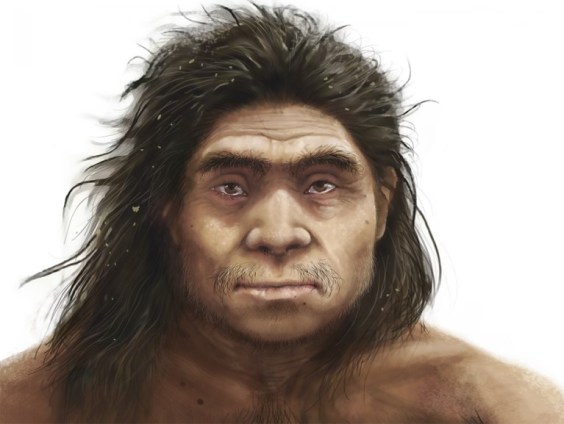
Also: an analysis of Denisovan skulls gives the first real picture of what these archaic human cousins looked like.
1/4Aeon· Elizabeth Oldfield· Oct 22
Six years sharing a house with non-relatives, and what it changed
Writer Elizabeth Oldfield has spent nearly six years co-owning a London house with unrelated families. She argues that being seen at your worst changes you, and that such a household needs a purpose beyond itself to last.
Why it matters · It treats the home as a tool for shaping character and backs the idea with monastic practice and developmental neuroscience. It also says plainly why the experiment is hard.
Know this first
Context from the editor, not the article · 28 sec
1 · The individualism critique
Many thinkers argue that modern Western life swaps belonging for autonomy. We gain privacy, choice and market services, and we lose thick, reciprocal ties. They link the trade to loneliness, falling trust and weakened civic life.
2 · Charles Taylor's 'buffered self'
The Canadian philosopher Charles Taylor argues that pre-modern people felt porous, open to each other, to nature and to the divine. Modern people see themselves as sealed-off individuals, and Taylor ties that shift to secularisation.
3 · Intentional communities
These are households or settlements chosen by people who are not family and who share space, money or a mission. Examples run from religious orders and kibbutzim to modern co-housing. Many fall apart within a few years.
2/4Big Think· Frank Jacobs· Oct 22
New atlas finds Roman road network was 59% longer than mapped
Researchers on the Itiner-e project mapped about 186,000 miles of Roman roads, 59% more than the previous reference atlas. Most of the gain is minor local roads, and each segment is marked by how certain it is.
Why it matters · The project changes how Rome's empire is pictured, from a few grand highways to a dense web of local roads. It also shows a map that is honest about what it doesn't know.
Know this first
Context from the editor, not the article · 27 sec
1 · Rome at its largest
In the 2nd century AD the Roman Empire stretched from Hadrian's Wall in northern England to the Persian Gulf. Roads were first built to move armies, then carried trade, taxes, officials and ideas.
2 · Finding vanished roads
Buried roads change the soil and the drainage above them. From the air they can show up as lines in crops, differences in vegetation or faint ridges in the land, even where nothing is visible on the ground.
3 · Geographic information systems
A GIS is software that stores map features as data. Each road segment can be a line with extra information attached, such as its sources and how confident scholars are that it existed.
3/4The Public Domain Review· Oct 22
How a Victorian lecturer won debates by arguing the Earth was flat
In 1865 Samuel Rowbotham, writing as "Parallax", published Zetetic Astronomy, which claimed the Earth is a flat, motionless disc ringed by ice. He won converts mainly by beating credentialed experts in public debate.
Why it matters · The book suggests that fringe beliefs can spread through performance and the pleasure of seeing experts humbled as much as through sincere conviction.
Know this first
Context from the editor, not the article · 30 sec
1 · The round Earth was settled
Educated people have known the Earth is a sphere since ancient Greece. Eratosthenes even estimated its size around 240 BCE. Victorian flat-earthism was not leftover medieval ignorance. It was a new, deliberate challenge to an accepted fact.
2 · Curvature over a flat canal
On a sphere the size of Earth, the surface drops below a straight sightline by about 8 inches times the distance in miles, squared. Over six miles that is roughly 24 feet. A boat that far away should be hidden from a low viewer.
3 · The Victorian lecture circuit
Mid-19th-century Britain had a large public appetite for paid science lectures and open debates in town halls. Amateurs and professionals argued in front of audiences who judged the winner by how each side performed.
4/4Nautilus· Jake Currie· Oct 22
A 1629 shipwreck tyrant fits a modern profile of the "corporate psychopath"
Business ethicist Clive Boddy checked the 1629 Batavia shipwreck's mutineer leader against a modern checklist for psychopaths in management. He found every trait. A rival leader on a nearby island kept his group alive.
Why it matters · It treats a famous atrocity as a test case for a modern idea about bad leadership. That raises an old question: do institutions create these leaders, or only give them room to act?
Know this first
Context from the editor, not the article · 32 sec
1 · The Dutch East India Company
The Dutch East India Company, known by its Dutch initials VOC, was founded in 1602 and is often called the first multinational corporation. Its ships carried merchants, soldiers and families to its Asian trading base at Batavia, now Jakarta, on Java.
2 · Psychopathy, briefly
Psychopathy is a personality pattern marked by shallow emotion, lack of guilt or empathy, manipulativeness and impulsive, self-serving behaviour. Clinicians usually assess it with checklists of traits, not a single test. It is distinct from psychosis, which involves losing touch with reality.
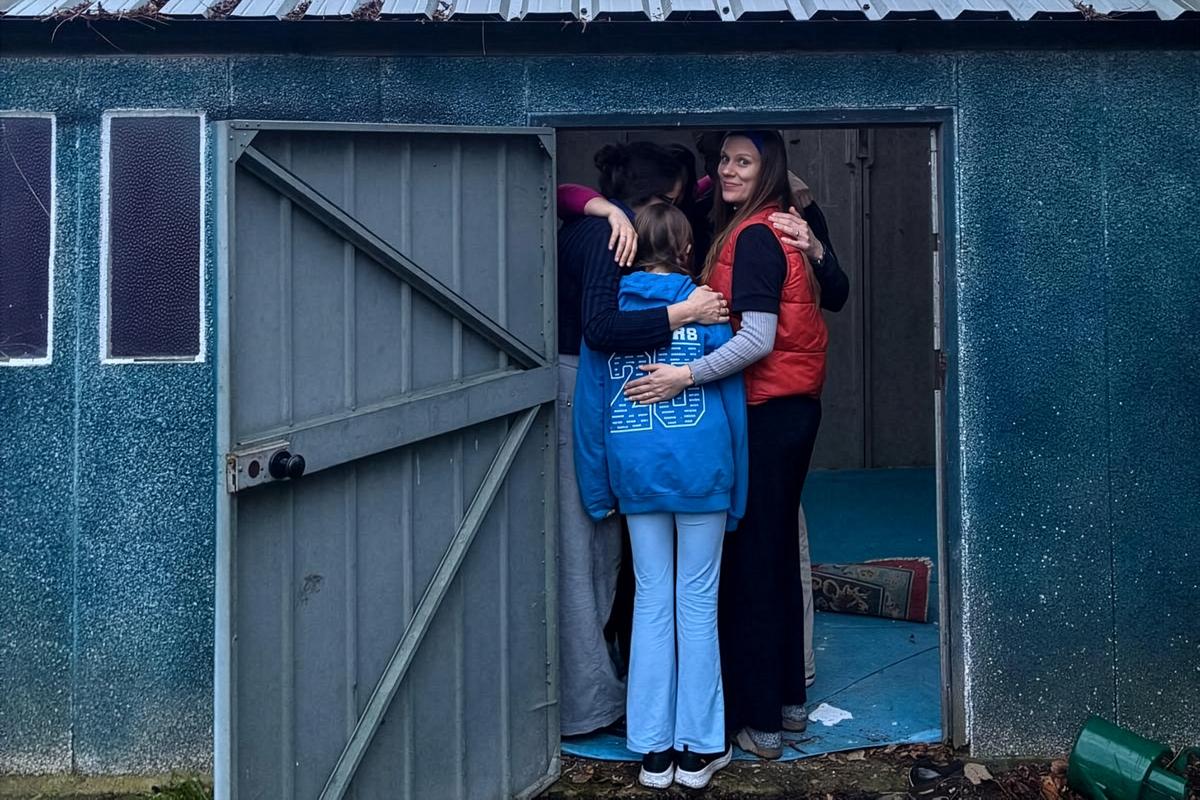
Members of Oldfield's household in a group hug at a shed doorway.1 / 3
Earlier this year, a woman gave birth in the living room of Elizabeth Oldfield's London terraced house. The woman isn't a relative. She is one of the people Oldfield has shared a home with for nearly six years. In an essay for Aeon, Oldfield, a 42-year-old former BBC journalist and think-tank director, argues that this kind of close living is a powerful way to change who you are. She adds a warning: it falls apart unless it serves something larger than itself.
Leaving the script
Oldfield describes the middle-class script she grew up with: more space, privacy and control are the marks of adulthood, and house-sharing is for students. At her think tank, problems as different as loneliness, falling trust, the care crisis, housing and climate kept coming back to one root, disconnection. She saw liberal individualism as a trade: you get autonomy and choice, and you also get "existential weightlessness." Fear made the final decision. After her first child was born, the climate crisis made her doubt that hard work and saving could keep a family safe.
How it works in practice
It took years. Interested friends dropped out, and the partners they ended up with weren't friends to begin with. The families rented together first, largely during lockdown, and argued through noise, mess, money and childhood baggage. Their joint house purchase collapsed on the day contracts were due to be exchanged, and they spent months on other people's sofas. Now they jointly own a house and share every room except the bedrooms. They pool most of their money, cook and pray together, and host hundreds of guests a year. They commit in five-year terms.
The argument
Oldfield draws on monastic orders, which treat being seen at your worst as the route to growth. She calls it a "1," the philosopher Michel Foucault's phrase for a practice people use to remake themselves. Neuroscience points the same way. The psychiatrist Dan Siegel argues that relationships shape the brain structures we use to make sense of reality, throughout life and not only in infancy. If we remain open systems, then choosing housemates means choosing who shapes you. Isolation, by contrast, lets illusions grow: "Living in community is where illusions about the self go to die."
The caveat
She tells would-be imitators that "community for the sake of community doesn't work." Lasting groups look outward to some shared vision of the good. Hers is Christian, though she doesn't claim it has to be. Without a strong reason to stay, she says, the daily friction wins.
One morning earlier this year, Elizabeth Oldfield woke to loud singing and then groaning coming through her bedroom ceiling. A housemate was in labour. The rest of the day mixed school runs, emails and booking the car's 1 (Britain's annual roadworthiness test) with letting in midwives and laying towels around a birth pool in the living room. By evening the terraced London house held nine medical professionals, seven housemates, two grandparents, a cat and a newborn, the household's eighth member. "It didn't even feel that full," Oldfield writes.
Oldfield is 42 and used to work at the BBC and run a think tank. In this Aeon essay she explains why her family gave up the standard middle-class home. She argues that living closely with people you aren't related to is a rare and powerful way to change yourself. She also says it only lasts when it serves something bigger than itself.
The script and its cost
Oldfield describes an unspoken script: more space, more privacy and more control are what being a grown-up looks like. Sharing a house with people "you are neither shagging nor parenting" is something students do. She pictures a tide that pulls young adults into city house-shares and then out again in couples to the suburbs, in search of bigger kitchens and more storage, until everyone is further apart.
Her think-tank work kept pointing to the same root. Overconsumption, falling trust, loneliness, the care crisis, climate and housing all came back to disconnection, to "our inability to bear each other, to share." She saw liberal individualism as a trade. You get autonomy, choice and the option of buying from the market what other people used to provide, and you also get "existential weightlessness." She wanted something between this atomised life, which she links to Charles Taylor's "2," and the hierarchical communities offered by conservative communitarianism, which she couldn't accept because of how they treat women and outsiders. Fear made the final decision. After her first child was born, climate change stopped being a policy topic and became a physical dread. She stopped believing that hard work and saving could keep her daughter safe.
How they actually did it
"This sounds much, much simpler and easier than it is," she writes. It took years of deliberate conversations. Several people were keen at first and then dropped out. Her eventual partners were not already friends. The two families rented together first, mostly during the COVID-19 lockdowns. They worked through sex noises (soundproofing and background music help), bathroom smells, kitchen storage, and different standards of spending and cleanliness. Those arguments brought up childhood patterns that everyone had to face. They also practised "rupture and repair," which means falling out and then mending things without anyone walking away.
The joint house purchase was, in her word, "labyrinthically complex." It collapsed on the day contracts were due to be exchanged, just as their rental notice ran out. For months they slept on friends' sofas. Her youngest son began having nightmares and asked at 4am why they couldn't have stayed "in our flat, just us." They kept going.
Today they share a jointly mortgaged house and every room except the bedrooms. They pool most of their money, cook, shop and pray together, and host hundreds of guests a year. They commit in five-year blocks, not for life as monks and nuns do, and they talk openly about how each of them might leave.
Why being witnessed changes you
Oldfield says she knew from policy work that rules keep people apart: mortgage terms, monetary policy, and the regulation of 3 (houses in multiple occupation, a UK licensing category for shared homes). What she hadn't expected was how much of the difficulty was inside her. Communal life needs emotional skill, character and the ability to keep commitments, and she says an individualist upbringing gave her little of any of them. Living with others showed her "how much of me is still a child," quick to say "it's not fair."
The usual self-improvement advice points inward: therapy or Stoicism for the mind, a fitness regime for the body, and firm personal boundaries. Monastic orders take the opposite view. Being seen at your worst and giving up your preferences is how you grow. Oldfield borrows the philosopher Michel Foucault's phrase "4," meaning a practice people use to remake themselves. She says this one also shows up in group therapy and recovery programmes but is rare in ordinary life. Change starts with being honest about who you are now, and other people make that honesty hard to avoid. "Living in community is where illusions about the self go to die."
She supports this with developmental science. Dan Siegel, a psychiatrist who founded 5 (the study of how relationships shape the brain), argues that early relationships "shape the very neural structures" through which we build a picture of reality. He says relationships keep shaping memory, self-story and purpose for the rest of our lives. The neuropsychologist Allan Schore calls an infant an "6." Oldfield's argument is that adults stay open systems too. If other people's gaze keeps shaping us, then choosing whom to live with means choosing who forms you. She also cites the social theorist Sarah Stein Lubrano, who argues that more time alone makes us more prone to delusion. Oldfield compares people to bats echolocating, getting a fix on reality from the voices and faces that bounce back. That puts her at odds with René Descartes, who withdrew from society to find certainty. "Respectfully, he was wrong."
The caveat: a reason bigger than the house
Oldfield doesn't offer this as an advertisement. These experiments can hurt people badly when done poorly, and they are painful even when done well. When others ask her how to start one, she tells them that "community for the sake of community doesn't work." Groups designed mainly for self-formation tend to fall apart. The ones that last look outward, toward a political, ecological, philosophical or religious idea of the good.
Her household's reason is Christian. She reads Jesus's double command, to love God and to "love your neighbour as yourself," as making relationship the centre of things. She wonders how much work the word "as" is doing, "even when they have left beard clippings all over the sink." She uses Martin Luther's phrase 7, humanity curved in on itself, as a working definition of sin. She also notes that the New Testament records the squabbles of early Christians who tried to share their lives and possessions. She doesn't claim the motive must be religious, only that it has to be strong and go beyond self-interest.
The essay leaves real questions open. It gives no evidence beyond one household, offers no model for scaling up, and doesn't settle whether secular groups can find a strong enough "why." She admits the five-year terms may be an attempt to have it both ways. Her own verdict is that the period has been the most meaningful and the most fun of her life, and has freed time she would otherwise spend on household admin. Whether it has made her less petty, she says, "is a question you would have to ask my housemates."
Remember
Oldfield found the hardest barriers to shared living were inside her, not in mortgages or housing law.
She argues adults stay 'open systems', so choosing whom you live with means choosing who forms you.
Communities built only for their members' growth tend to collapse; lasting ones serve an outward purpose.
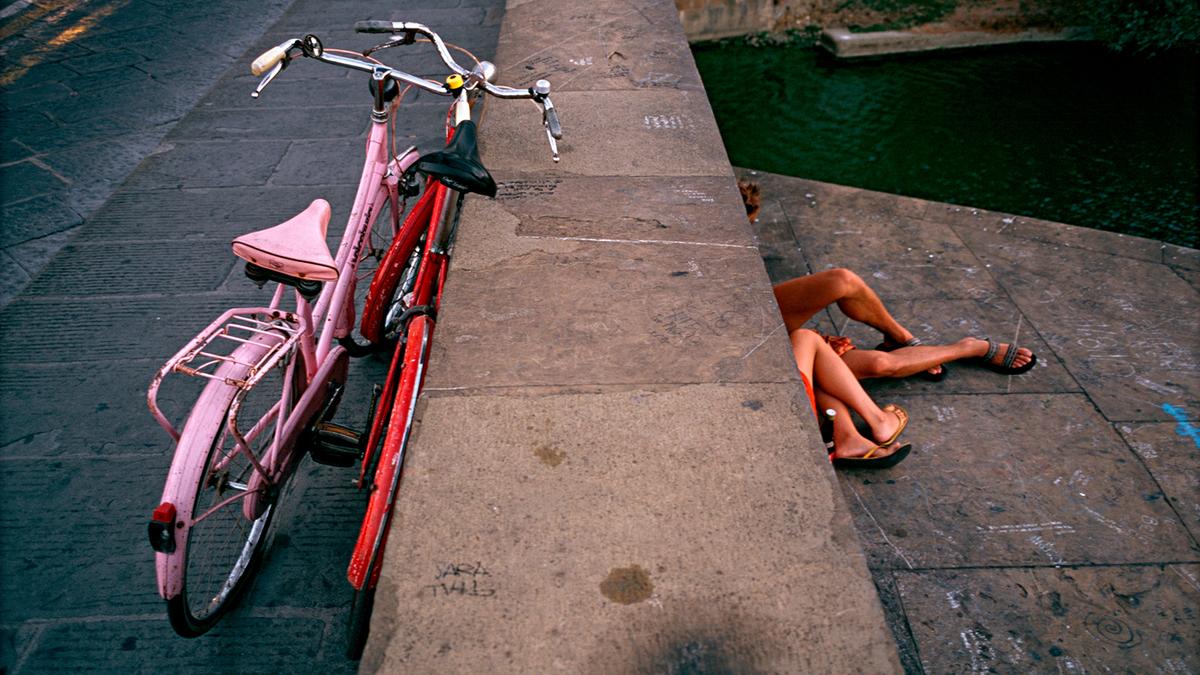
Itiner-e adds many roads in northern France (top) but far fewer in southern Turkey (bottom).1 / 4
The Roman Empire had far more roads than standard maps show. 1 is an international project whose contributors include the universities of Barcelona and Aarhus. In late 2025 it published a digital atlas mapping about 186,000 miles (nearly 300,000 km) of roads across the empire at its 2nd-century peak, from Hadrian's Wall to the Persian Gulf. The previous reference dataset, Harvard's 2, counted about 117,100 miles. The new total is 59% longer.
Not a lost highway
The extra mileage is not a hidden imperial road. It is the minor network. Earlier maps favored famous trunk routes such as the 3 from Rome to Brindisi. They paid less attention to the local roads that carried produce to market and tax collectors to villages. In Itiner-e, only about 34.6% of the mileage counts as main roads. The other two-thirds are secondary routes or smaller.
How it was built
The team first gathered written evidence of where roads should be: ancient texts, inscriptions, excavation reports and older atlases. They then checked it against satellite and aerial imagery and topographic maps. The imagery included Cold War spy-satellite photos, in which buried Roman roads show up as lines in fields or changes in vegetation. Finally, they digitized each segment into a 4, mapping software that stores roads as data.
Honest about uncertainty
Every segment carries its sources and a confidence label. Only 2.7% of the network is certain, meaning a Roman road surface survives. Nearly 90% is conjectured, inferred from written references and the lie of the land. Another 7.4% is hypothetical. Writing in his Strange Maps column, Frank Jacobs argues this is the atlas's real strength. Most Roman maps draw best guesses as solid lines, while this one lets later researchers see which assumptions to challenge.
From scroll to database
The atlas's distant ancestor is the 5, a 12th-century copy of a Roman route map. It is 6.75 meters long and lists more than 550 cities. Like the London Underground map, it twists geography so that connections are easy to read.
Why density matters
Roads carried more than soldiers. They brought an altar to the Persian god 6 to Scotland, and they let official couriers of the 7 cover about 74 km a day using relay horses. Jacobs argues that if small settlements were linked in by local roads, the empire was more connected than historians assumed. One caveat: almost all of the added mileage is conjecture, not confirmed road.
The Roman Empire had far more roads than standard maps show. 1 is an international project whose contributors include the universities of Barcelona and Aarhus. In late 2025 it published a digital atlas of the empire's roads in Scientific Data, a journal from the Nature group. The atlas maps about 186,000 miles (just under 300,000 km) of road across the empire at its 2nd-century peak, from Hadrian's Wall to the western shore of the Persian Gulf.
The previous reference was the 2, a Harvard-based dataset now called Mapping Past Societies. It counted about 117,100 miles (188,500 km). The new total is 59% higher. Frank Jacobs, writing in his Strange Maps column, argues that the extra mileage matters less as a number than for what it suggests about daily life in the empire.
No lost highway, just the bits in between
Itiner-e did not find a hidden imperial superhighway. Jacobs calls the explanation "less Indiana Jones, more Beancounter Bob." Earlier compilations concentrated on famous, well-documented routes such as the 3, which ran from Rome to Brindisi, and the Via Egnatia, from the Albanian coast to Byzantium. They gave less attention to the minor roads that connected those trunks to everything else: the routes that took produce to market, villagers to town, soldiers to frontiers and tax collectors to doorsteps.
The final dataset shows how lopsided the earlier picture was. Only about 34.6% of Itiner-e's mileage counts as main arteries. The other two-thirds are secondary roads or smaller. Rome's network looked much like a modern one, with a few highways, more regional roads and a great many rural lanes.
How the atlas was built
The team worked in three stages.
Where roads should be. They combed literary sources, inscriptions, gazetteers (historical place-name indexes), excavation reports and earlier atlases for evidence that a road linked two places.
Where roads plausibly ran. They checked those leads against satellite imagery, aerial photographs and topographic maps. The imagery included Cold War spy-satellite photos, taken to find 20th-century military installations and now used to find much older ones. Long after a Roman road has vanished at ground level, it can still show from above as a line in a field, a change in vegetation or a slight ridge in the terrain.
Digitizing. Each segment was drawn into a 4, mapping software that stores features as data with attributes attached.
A map that grades itself
The atlas's most useful feature, Jacobs suggests, is that it does not claim to be definitive. Each segment is labeled by confidence:
Certain: 2.7% of total length. These are stretches where an actual Roman road surface survives.
Conjectured: nearly 90%. These are inferred from a web of written references, the logic of the terrain and pattern-matching.
Hypothetical: 7.4%. These are plausible but weakly supported.
Every segment also carries its sources. To see why this matters, picture two towns that an ancient itinerary lists as neighbors, with a valley between them. A conventional map draws a confident line along the valley floor. Itiner-e draws the same line but tags it as "conjectured" and cites the itinerary and the terrain reasoning behind it. A later researcher who finds pavement on a ridge instead can see exactly which assumption failed and fix that segment. (The example is illustrative, not taken from the dataset.)
Jacobs argues that most Roman road maps hide this problem: a clean line on a screen looks more certain than the evidence behind it, and "scholarly best guesses" end up "dressed up as solid roads." In his reading, stating uncertainty openly makes the map more precise, not less. He calls this a basic scientific principle that is too often ignored, in Roman studies and elsewhere.
The ancestor: a 6.75-meter scroll
The oldest surviving map of Rome's roads is the 5. It is a 12th-century parchment copy, now in Austria's National Library in Vienna, of a mapping tradition that goes back to the emperor Augustus. Because it is a medieval copy, it is only indirect evidence of how Romans mapped their roads. It measures 6.75 meters long and 34 centimeters high, and it works as a route diagram more than a map. It squashes north–south distances, stretches coastlines and moves geography around so that routes and distances are easy to read.
The Tabula shows more than 550 cities and 3,500 other place names, with way stations and the distances between them. It reaches as far as India, beyond anything Rome controlled. One section is missing, so Britain is incomplete. It has no sea monsters or religious decoration of the kind found on later medieval maps. Jacobs compares it to Harry Beck's London Underground map, another diagram that put connections ahead of geographic accuracy, drawn about 1,900 years later. Both maps, he argues, show that mapping a road network means deciding what counts as a road, and that decision depends on what the map is for.
What denser roads change
The roads carried more than legions. A 2nd-century altar to the Persian god 6, found near Edinburgh in 2010 north of Hadrian's Wall, reached Scotland along them. Christianity was spreading into Gaul by the same routes at about the same time. The state ran an official courier service, the 7. It kept stations every 12 to 23 miles with fresh horses. By changing mounts, a courier typically covered about 50 Roman miles (around 74 km) a day. The 6th-century historian Procopius claimed that couriers could cover ten days' ordinary travel in one.
A finer-grained network gives historians a better model for questions like these. How fast did news and troops move? How did regional supply chains fit together? How did ideas and diseases spread? If small settlements off the highways were tied in by local roads, Jacobs reasons, their contact with the wider world was more direct than assumed, and the empire's economy may have been more connected and fast-moving than historians thought.
What stays open
Almost all of the new mileage is conjecture, so the 59% figure is an estimate of plausible roads, not of roads that have been confirmed. The article does not say how the confidence categories were assigned in borderline cases, or how much the result depends on regional coverage: the team's own examples show big gains in northern France and smaller ones in southern Turkey. Jacobs does not treat the atlas as proof that the Romans were even more impressive than believed. His point is that the empire relied on its minor lanes as well as its famous highways.
Remember
About two-thirds of Rome's mapped road mileage was secondary or local roads, not the famous highways.
Only 2.7% of the network survives as physical road; nearly 90% is reasoned inference.
Attaching sources and confidence labels to every segment means later researchers can check and correct the map.
A printed page from Parallax's case for zetetic astronomy, showing the confident tone of his public campaign.
The Public Domain Review has published a digitised copy of 1. Earth Not a Globe! (1865). Its author, Samuel Birley Rowbotham, wrote as "2", and the book became the founding text of modern flat-earth belief. The unsigned essay that comes with it asks an odd question: did he believe a word of it?
The modern echo
The essay opens with a 3 forum user called "Saddam Hussein". Since 2007 he has posted 35,188 times, always some form of one claim: NASA hides the ice wall at the world's edge and lies about penguins. "If I look out the window, I see flatness." The essay says he is obviously joking, yet nineteen years of skeptics still get furious with him. The picture of the world he defends comes straight from Rowbotham.
The book
Rowbotham was born in 1816 to a wealthy Stockport merchant family and had tried utopian socialism and quack medicine before turning to the shape of the Earth. "Zetetic", from the Greek for "seeking", meant reasoning from first principles instead of accepted theory. His conclusion was that the Earth is a flat, motionless disc. The Sun and Moon move above it, and a wall of ice around the edge holds the seas in.
His main evidence came from the 4, a straight, still canal in the Cambridgeshire fens. With his eye eight inches above the water, he watched a boat with a flag three feet high sail six miles away and said it stayed fully visible. On a globe, standard geometry says it should have dropped out of sight after about three miles. Later investigators blamed 5: air just above water bends light so distant objects stay visible. He had answers for the other proofs too. Pendulum differences came from temperature, lunar eclipses from an unseen satellite, and ships disappearing hull-first from perspective. He also presented the book as a defence of the Bible against "Atheism and every other form of Infidelity".
Why it worked
The historian Christine Garwood calls him "astoundingly successful". He stayed polite, never got rattled, and left quickly when a debate went badly, and he beat mathematicians in public. One newspaper in 1862 said his critics "held their weapons by the blade and fought with the handle." He reprinted that line in his 1873 edition, which also selectively edited hostile press coverage.
Contemporaries doubted his sincerity. In 1867 a Gloucester wine merchant wrote to the 6: "I do not for one moment believe that he believes his own theory." He added that Rowbotham was nonetheless winning converts in Leeds, "amongst people one would least expect." The essay's point is that his audiences cared less about his faith than about seeing self-important experts humbled.
The Public Domain Review has published a digitised copy of 1. Earth Not a Globe! (1865), the book by Samuel Birley Rowbotham under the pen name "2". The full title promises to prove the Earth is "a Plane, Without Axial or Orbital Motion; and the Only Material World in the Universe!" The accompanying essay is unsigned. Its question is less "how could anyone believe this?" than "did its author, or its loudest modern defender, believe it at all?"
A modern troll
The essay starts in the present. In November 2007 a user calling himself "Saddam Hussein" posted on the 3 forum: "Everything you know is a lie… We do not live on a blue ball hurtling through the cosmos but upon the back of a great disk, thousands of miles wide." Critics gave him the expected list of people who would all have to be in on it: every navigator, every pilot, every mapmaker, every weather forecaster, everyone at NASA. He answered: "If I look out the window, I see flatness. I see no curvature."
By 28 September 2026 he had posted 35,188 times, always some version of one claim: NASA lies about penguins and hides the ice wall at the world's edge. His profile picture shows the former Iraqi dictator with a photoshopped noose. The essay says he is "obviously" joking, and that the skeptics who have argued with him for nineteen years are still infuriated. That is the essay's opening point. Sincerity and influence can come apart, and the cosmology he defends came out of Rowbotham's book about 150 years earlier.
Who Parallax was
Rowbotham was born in 1816 into a wealthy merchant family in Stockport. Before flattening the world he dabbled in utopian socialism and medical quackery. He was not the first Briton to attack the round Earth. A pamphlet called The Anti-Newtonian had caused a minor stir in 1819. His public debates made him the most famous, though, and his book became the foundational text of modern flat-earth thought.
"Zetetic" comes from the Greek for "seeking". Rowbotham used it to mean an astronomy built from first principles and direct observation rather than received ideas. His conclusion: the Earth is a wide, flat, immobile disc. The Sun and Moon move above it, and an ice wall around the edge holds the oceans in and keeps people from falling off.
The canal experiment
His best-known evidence came from the 4, a straight artificial river more than twenty miles long in the Cambridgeshire fens. Its water is nearly still and has no locks. A boat carrying a flag three feet above the water sailed six miles from Welney Bridge to Welche's Dam. Rowbotham watched through a telescope while standing in the water like a bather, his eye no more than eight inches above the surface. He reported that the flag "and the boat down to the water's edge were clearly visible throughout the whole distance!"
The essay doesn't spell out why this seemed decisive, so here is the standard geometry (not from the article). On a globe of Earth's size, an eye 8 inches up sees a horizon about a mile away. A 3-foot flag stops being visible beyond about two more miles. At six miles the whole boat should be hidden. Later investigators put the apparent result down mainly to 5: air just above cool water bends light downward, so objects past the horizon can stay in view. The experiment was repeated in later decades with different results.
Explaining away the other proofs
Rowbotham also went after the classic evidence for a round Earth:
Pendulums swing at slightly different rates at the equator than farther north. He blamed temperature.
Lunar eclipses, where Earth's curved shadow crosses the Moon, he credited to some other, unseen satellite.
Ships vanishing hull-first over the horizon he called an effect of perspective, not curvature.
Then came the religious stakes. In his account, Newtonian-Copernican astronomy had left Christian and Jewish congregations in "smouldering scepticism". Once those theories were shown false, he wrote, they "can no longer be weilded as weapons against religion… Atheism and every other form of Infidelity are thus rendered helpless."
Why he won
The historian of science Christine Garwood, whom the essay draws on, says Rowbotham was "astoundingly successful", to his critics' embarrassment. Angry amateur scientists came to his lectures and lost to him one after another. He stayed polite and calm, and he was willing to leave quickly when a debate turned against him. In May 1862 the Greenwich Free Press wrote that mathematicians who challenged him "held their weapons by the blade and fought with the handle", handing him the advantage "to their own utter discomfiture and chagrin." Rowbotham reprinted that report in his 1873 second edition. The essay notes that this edition did some clever editing of skeptical press coverage.
Did he mean it?
Garwood thinks his early socialism sits awkwardly with the book's religious revivalism. People at the time weren't sure either. In 1867 George Scott, a Gloucester wine merchant, wrote to the 6, George Biddell Airy, for help: "I do not for one moment believe that he believes his own theory." Scott added that "in Leeds he has got many converts — and amongst people one would least expect."
The essay's argument rests on that letter. Rowbotham's personal faith mattered less to his audiences than watching him make pompous experts look foolish. The forum troll and the Victorian lecturer are alike in this: both offered a contest, not just a cosmology.
What's left open
The essay is short and doesn't say how many converts Rowbotham won, how the Bedford experiment was later disputed, or whether Airy replied to Scott. It also leaves its own question unanswered. Sincerity can't be settled from the outside, and the essay's point is that for building a following it may not matter.
Remember
Rowbotham's 1865 canal test is still the founding experiment of flat-earth belief 160 years later.
He won followers through calm debating skill and humbling experts, not through the strength of his evidence.
Even in 1867, critics suspected he didn't believe his own theory. It didn't slow his converts.
Researchers including Clive Boddy argue that some psychopaths do well in organisations, where charm and ruthlessness can look like leadership. They estimate these people make up a few percent of managers and do outsized damage to colleagues and firms.
Image: Nautilus
In 1629 the Batavia, a ship of the Dutch East India Company (the 1, a trading firm often called the first multinational corporation), ran aground on the 2 off Western Australia. It was bound for Java. About 200 people survived the wreck, but the islands had little food or fresh water. The ship's officers then left in a small boat to get help in Java, and no one was left in charge.
Jeronimus Cornelisz filled the gap. He was a junior merchant on his first voyage, and he had abandoned his wife and child. In a new case study in the Asian Journal of Business Ethics, Clive Boddy argues that Cornelisz may be the earliest documented case of a "3."
The checklist
Psychopaths make up about 1% of the general population. Conservative estimates put them at 3–4% in business. Boddy's framework lists the behaviours that mark one out at work:
using surface charm to win trust
surrounding themselves with loyalists
creating a climate of fear
setting rivals against each other
getting rid of challengers
dodging blame
putting power, money and control above everything
Boddy says Cornelisz did all of these. He had been planning a mutiny before the wreck. He named himself "Captain-General," replaced the remaining lawful officials with his own mutineers, made his lieutenants swear loyalty oaths, and let his men hoard supplies.
To get rid of a possible rival, he sent a soldier named Wiebbe Hayes and 20 other soldiers to search nearby islands for water. He seems to have expected them to fail. Meanwhile he had more than 100 people killed and forced the remaining women into sexual slavery. The killings were presented as a way to save supplies. Boddy argues they also spread fear and made his followers complicit, so they were "bound together by being beyond redemption and the law."
The other island
Hayes found two water sources, organised hunts, and gathered enough food to feed everyone. No one answered his smoke signals. When survivors of the massacres reached him, he made weapons from wreckage and built a small fort on a hill. From there his group drove off at least three attacks by Cornelisz's men. Cornelisz was captured, then tortured and executed when the officers came back from Java.
Boddy calls this "effectively a 4 in leadership": the same disaster under two leaders, with opposite results.
A caution
That framing is neat, but it has limits. This is a diagnosis made nearly 400 years later from historical accounts, and the case is a single one. It doesn't show that the framework predicts anything. Still, a VOC employee using company titles and company supplies to run a reign of terror does make Boddy's point about how familiar this behaviour is.
A new historical case study in the Asian Journal of Business Ethics revisits one of the darkest episodes in maritime history. The author, Clive Boddy, argues that Jeronimus Cornelisz, who led a massacre of shipwreck survivors in 1629, may be the first documented "1." Boddy researches psychopathy in management.
The wreck
The Batavia belonged to the Dutch East India Company, or 2 (from its Dutch name), a chartered trading firm often called the world's first multinational corporation. In 1629 the ship was sailing to Java in the East Indies when it ran aground on the 3, a chain of small, low islands off Western Australia's coast. About 200 people survived. They soon found the islands had little food or fresh water.
The ship's officers then left in a sailing boat and headed for Java to fetch help. That left a crowd of hungry, frightened people on bare islands with no one formally in command.
Cornelisz was a junior merchant on his first voyage, and he had abandoned his wife and child to make it. He took charge. According to Boddy, he had already been planning a mutiny before the ship struck.
The framework
4 is a personality pattern defined by shallow emotion, lack of guilt and empathy, and manipulative, self-serving behaviour. Clinicians assess it with trait checklists. It is different from psychosis. The article puts psychopaths at about 1% of the general population. In business, conservative estimates put the share at 3–4%. Researchers like Boddy say the higher rate makes sense because corporate settings can reward charm, risk-taking and ruthlessness.
Boddy's model of the corporate psychopath is a list of observable behaviours, not a clinical test. It includes:
using surface charm to gain trust
surrounding oneself with loyalists
creating a climate of fear
setting rivals against each other
removing challengers
avoiding blame
pursuing power, money and control above all else
Cornelisz against the list
Boddy says Cornelisz showed all of these traits, quickly. He named himself "Captain-General," replaced any remaining lawful officials with his own mutineers, and made his new lieutenants swear loyalty oaths. His followers began hoarding food and water.
Next he split up anyone who might oppose him. He sent Wiebbe Hayes, a Dutch soldier and a possible rival, to lead 20 other soldiers to nearby islands to search for fresh water. Cornelisz appears to have expected them to fail, which would get them out of the way without a fight.
With them gone, he had anyone he saw as a threat killed. More than 100 people died, and the remaining women were forced into sexual slavery. The official reason for the killings was to save scarce supplies. Boddy argues they did two other jobs. They made everyone afraid, and they implicated Cornelisz's men in his crimes. Once his men had committed murder, they were "bound together by being beyond redemption and the law," so they had no way back to the other side. A modern comparison would be a manager who makes subordinates share responsibility for misconduct, so that none of them can safely report it.
"When we analyzed Cornelisz using a modern management psychopathy framework, he displayed every major characteristic associated with corporate psychopaths," Boddy said in a statement. "The same playbook we see in toxic workplaces today appears in this case from 1629."
The other leader
Hayes's mission was supposed to fail, but it succeeded. His group found two water sources, organised hunts, and gathered enough food to feed all the survivors. He sent smoke signals to the main island, and no one answered.
Survivors who escaped the killings eventually reached Hayes and told him what was happening. His men made weapons out of ship wreckage and built a small fort on a hilltop. From there they drove off at least three attacks by Cornelisz's forces. Cornelisz was captured. When the ship's officers came back from Java with a rescue vessel, he was tortured and executed.
Boddy makes this contrast the centre of his argument. "Another leader facing the same circumstances achieved completely different outcomes," he said. "This was effectively a 5 in leadership. One group prospered while the other descended into murder and abuse."
How much weight it bears
The story is vivid, and the comparison between the two islands is the most interesting part. Some caveats apply, and the short Nautilus write-up doesn't discuss them.
First, any psychopathy diagnosis made nearly 400 years later rests on historical testimony. Much of that testimony comes from the trials and confessions that followed. Those were conducted under torture, and the people giving them had strong reasons to blame one man.
Second, calling it a "natural experiment" is a stretch. The two groups were not alike. Hayes led armed soldiers who had been sent off together. Cornelisz ruled a mixed crowd of civilians and mutineers. Hayes's island also turned out to have water. So leadership was not the only thing that differed.
Third, matching a known villain to a checklist is not the same as testing the checklist. Someone who rose to power through violence will probably show "eliminates challengers" and "creates fear" whatever his inner psychology was. The case shows that the framework can describe Cornelisz. It does not show that the framework predicts who will turn out this way.
There is also a question about the word "corporate." Cornelisz was a company man: a VOC merchant using VOC supplies on a VOC ship. But what he did on the islands looks less like office politics than like what happens anywhere authority collapses. That is perhaps the uncomfortable point. Whether you call it a workplace or a warlord's island, the behaviours look the same, and so does what protects against them: someone with the competence and courage to build something better nearby.
The article doesn't say how Boddy sourced the historical record, or whether the study scores Cornelisz formally or reads his behaviour qualitatively against the list.
Remember
Boddy lists seven behaviours of a corporate psychopath, including cultivating loyalists, spreading fear, removing rivals and avoiding blame.
Cornelisz used mass killing to make his followers complicit, so none of them could turn back.
The rival leader Hayes found water and food, then held off at least three attacks from a hilltop fort.