Today's reads ask how much of a mind is its owner's doing: involuntary recall, a young Plath's inherited torment, and Marcus Aurelius on bearing hardship.
Picked from 53 new articles across 14 sources · arrow keys for other days
Today in 30 seconds
30s left
A survey of unbidden memories put one 16-year-old "off the charts," after twenty years of lab tests found little different about super-rememberers. story 1 ↓
That result suggests some exceptional memory may happen to a person rather than being a skill, and that a new measure can reopen a stalled puzzle. story 1 ↓
At 22, Sylvia Plath asked her mother whether their self-torment was hereditary; Maria Popova uses the letter to argue suicide is not a failure at life. story 2 ↓
Popova reads a Meditations passage that moves luck from what happened to you onto how you bore it, aimed at competitive trauma culture. story 3 ↓
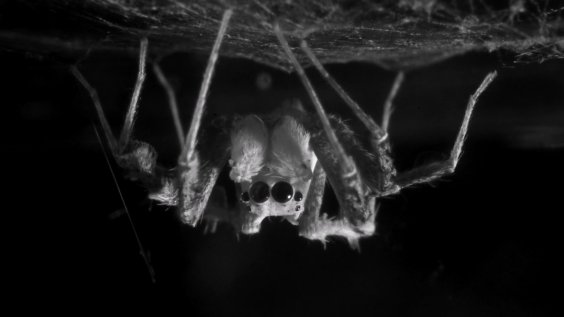
Jumping spiders appear to cycle through wakefulness and REM much as we do, a surprising parallel in a very distant animal.
1/3Nautilus· Kristen French· Oct 27
A teenager's near-total recall hints that some super-memory is involuntary
Psychologist Anne Cleary studied a 16-year-old who can recall ordinary days in detail. The girl reported extremely frequent unbidden memories, suggesting repeated, automatic recollection may strengthen them, though one case proves little.
Why it matters · It reframes an exceptional memory as something that may happen to a person, not a skill, and shows how choosing a different measure can reopen a stalled scientific puzzle.
Know this first
Context from the editor, not the article · 28 sec
1 · What HSAM is
Highly Superior Autobiographical Memory is unusually detailed, effortless recall of one's own past. It is rare and differs from a trained memory: the strength lies in personal experience rather than in general information.
2 · Two routes to recollection
Voluntary memory is a deliberate search, as when you try to recall a colleague's name. Involuntary memory arrives unasked, as when a smell brings back a holiday. Both are normal, and researchers still debate how far their mechanisms overlap.
3 · How memories stabilize
Memories are not fixed the moment they form. Through consolidation, they become more stable over time, and bringing an experience back to mind is widely thought to help. Rarely revisited experiences tend to fade.
2/3The Marginalian (Maria Popova)· Maria Popova· Oct 27
Maria Popova reads a young Sylvia Plath letter as a survivor's document
In a short birthday essay, Maria Popova uses a letter Plath wrote her mother at 22 to argue that living with severe mental illness is an achievement, and dying from it no personal failure.
Why it matters · It challenges a common way of reading Plath, in which her death casts its verdict over her life, and asks what we owe minds we cannot know from inside.
Know this first
Context from the editor, not the article · 24 sec
1 · Who Sylvia Plath was
An American poet (1932–1963), best known for the novel The Bell Jar and the poems of Ariel. She survived a suicide attempt in 1953 and died by suicide in 1963, aged 30.
2 · The source of the letter
Letters Home, published in 1975, was edited by Plath's mother, Aurelia, who chose what readers saw. Scholars treat it as a selective portrait; a fuller edition of the letters appeared in 2017–18.
3 · Nature versus nurture in the 1950s
Watson and Crick published DNA's double-helix structure in 1953, raising hopes of explaining inheritance physically. Brain science was still young, and how far genes shape temperament remained largely unanswered.
3/3The Marginalian (Maria Popova)· Maria Popova· Oct 27
Maria Popova turns to Marcus Aurelius against a culture of competitive trauma
Essayist Maria Popova argues that people now build identity on what has hurt them. Her alternative is Marcus Aurelius's reframing: the misfortune could strike anyone, so the real luck is having borne it well.
Why it matters · It offers a precise, testable way to retell your own hardships, and it raises a live question: where does self-respect end and denial of real pain begin?
Know this first
Context from the editor, not the article · 19 sec
1 · What Stoicism claims
Stoicism, a Greek school of philosophy that later flourished in Rome, held that character is the only true good. Events such as illness, loss or poverty lie outside our control, and our judgment of them lies within it.
2 · What the Meditations are
Marcus Aurelius, Roman emperor from 161 to 180, kept private notebooks in Greek, partly during frontier wars and a devastating plague. They were not written for publication and were later titled the Meditations.
Marcus Aurelius, the Roman emperor whose private notebooks became the Meditations.1 / 2
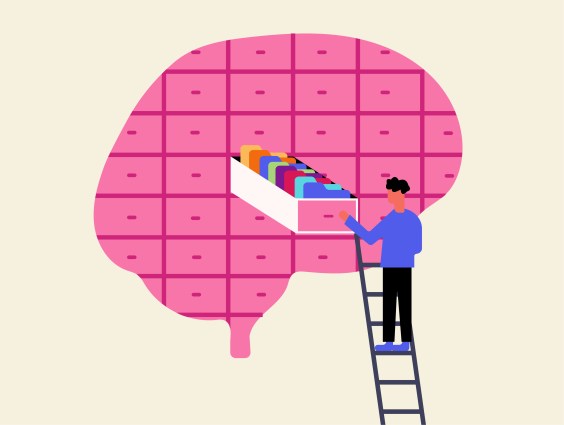
A case study published this year in the journal 1 describes a 16-year-old from Atlanta, known as EE, who can recall ordinary days of her life in fine detail. Its authors suspect the secret may lie less in how well she retrieves memories than in how often they come to her unbidden.
EE appears to have 2 (HSAM), exceptional recall of one's own life. The first clinical case was identified in 2006, and some experts propose that about 100 people at most have it.
The test
No good standardized test exists, so Anne Cleary, a psychology researcher at Colorado State University, gave EE a set of dates in summer 2024 and checked what could be verified. Given November 5, 2021, EE immediately said it was a Friday, with no school because of a parade for the Atlanta Braves. She described her outfit, a sleepover, pizza, a movie and a beautiful sunset. Cleary later found an online photo of a striking sunset that day in Marietta, Georgia, where the sleepover took place.
A new question
Cleary told Nautilus that 20 years of laboratory work had failed to pinpoint what makes these people different. On standard tasks such as learning lists, they perform like ordinary control participants. Only their personal past seems impossible to forget.
Case reports offered a clue: people with HSAM often say they aren't trying, unlike 3, competitive memorizers who use deliberate strategies. So the team gave EE the 4, a 2015 survey of how often personal memories pop into mind for no apparent reason. Cleary says she was "off the charts," though the interview gives no figure.
The hypothesis is that memories which keep surfacing get 5, or stabilized in long-term storage, better. Each unbidden return would act like a rehearsal nobody chose to do. That could also explain the narrow advantage, since a lab word list doesn't keep popping up in daily life.
A European group soon reported a similar result in another 16-year-old, who also scored above a 6 on a boring task designed to catch the mind wandering.
What doesn't fit yet
Researchers had made opposite predictions about déjà vu, expecting EE to have it unusually often or never. She reported an average one to two episodes a year.
EE says her memory sharpened around age 12, during COVID-19, but Cleary doesn't attribute it to the pandemic: others with HSAM also noticed a difference around that age. And this evidence comes from a handful of cases and self-report surveys. It also can't rule out that durable memories cause frequent recollection, rather than the reverse.
EE shows no apparent distress. Her family can ask how many times they've eaten at a restaurant, and she'll list each visit.
A case study published this year in the journal 1 describes a 16-year-old from Atlanta, identified only as EE, who can summon the details of ordinary days from her life. In an interview with Nautilus, co-author Anne Cleary, a psychology researcher at Colorado State University, explains why her team thinks the key to such memory may be something other than unusual skill at retrieving the past: memories that keep arriving without being asked for.
A puzzle that had stalled
EE appears to have 2 (HSAM), exceptional recall of the mundane details of one's own life. The first clinical case was identified in 2006, and some experts propose that no more than about 100 people on Earth have the condition.
Cleary says that in the two decades since, researchers have tried neuropsychological assessments and laboratory tasks without pinning down what sets these people apart. Given standard memory tests, they perform much like the college students who typically take part in such studies, or like other comparable control participants. Give them a list of items to learn, and they forget at about the same rate as everyone else. They also don't appear to differ on measures of creativity. What they seem unable to forget is their own lives. Cleary suggests the field may have been "going at it wrong" by using tests that don't touch that kind of memory.
Testing a memory that has no standard test
There is no good standardized test for HSAM. Cleary borrowed the method used by one of the authors of the 2006 report: give someone a set of dates, record what they recall, then check whatever can be verified, such as the weather or the day's news.
EE's parents had noticed her memory, read about HSAM online, and wanted to make sure it wouldn't harm her wellbeing. A colleague at Emory University put them in touch with Cleary, who travelled to Atlanta in summer 2024. The news check turned out to be of limited use, since EE never watched the news. So some of Cleary's dates came from noteworthy events suggested by a colleague's teenager of about the same age.
The first date was November 5, 2021. EE answered without hesitating: it was a Friday, and school was off because of a local parade for the Atlanta Braves and the World Series. She then described what she wore, a sleepover at a friend's house, the pizza, the movie, and a beautiful sunset. Checking later, Cleary came across a photo online of a striking sunset that day in Marietta, Georgia, where the sleepover had been. She recalls getting chills "from head to toe."
A different question
Cleary also studies déjà vu, the eerie sense of having lived through something before, and that work led her group to think about memory that simply happens to you. Case reports add a clue, at least anecdotally: people with HSAM often say they aren't trying. That separates them from 3, competitive memorizers who use elaborate, deliberate strategies.
So the team gave EE the 4 (IAMI), a survey published in 2015 that measures how often personal memories pop into someone's mind for no apparent reason. Everyone has these moments, as when a vacation surfaces while you're typing an email. EE's score, Cleary says, was "off the charts." The interview doesn't give the figure.
The proposed mechanism
The team's hypothesis is that memories which come to mind repeatedly over time get 5, or stabilized in long-term storage, better. As an illustration of the logic (not an example from the study), imagine two people who have the same pizza-and-movie sleepover. One rarely thinks of it again. For the other, it surfaces unbidden a few times over the following months, and each return works as a small rehearsal the person never chose to do. Years later, the second person can still retrieve it. The analogy is a footpath: the more often it is walked, the longer it stays visible.
This would also explain why the advantage is so narrow. A word list learned in a lab doesn't keep resurfacing during daily life, so there is no extra rehearsal and no extra benefit.
Evidence from elsewhere, and a déjà vu surprise
A few weeks after Cleary's report, a European group published a case on another 16-year-old, who Cleary believes is from Poland. That teenager also scored above average on involuntary memory. The group added a behavioral task: a boring activity that encourages daydreaming, interrupted by probes asking what the person's mind was doing just then. Again, the teen ranked above the 6. Cleary calls this converging evidence.
Déjà vu offered a sharper test, because the predictions conflicted. Some European researchers argue that déjà vu and autobiographical memory are linked, with déjà vu as a feeling of familiarity followed by retrieval of a past experience. That led Cleary's team to predict EE would have more déjà vu than average. Other colleagues predicted she would never have it, because her retrieval is too good to leave that in-between feeling. On the 7 (IDEA), a questionnaire dating to about 1994, EE landed squarely in the average range, at one to two episodes a year. Neither prediction held, though one person can't settle it.
What remains open
Timing is one unknown. EE says her memory became clearer around age 12, which coincided with the COVID-19 pandemic. Cleary doesn't claim the pandemic played a role, noting that others with HSAM, including in the 2006 report, also first noticed their advantage around that age. Whether something critical happens in development then is unanswered. Newly identified teenagers, including one of about 13 in Italy, may help, but researchers would ideally want to know what these people's memory was like before adolescence.
The evidence also has limits Cleary's framing doesn't fully resolve. The condition is rare enough that large studies are hard to run, and the central finding rests on self-report surveys from a handful of cases. The correlation could also, in principle, run the other way: an unusually durable memory might produce more unbidden recollections rather than result from them. The interview doesn't address that possibility.
EE herself seems to be doing fine. Her parents' fear that the memory might eventually interfere with her life has not materialized so far, and Cleary reports no apparent distress. Friends ask her what happened on a given day. At restaurants, her family asks how many times they have eaten there, and she runs through each visit.
Remember
People with this memory condition forget word lists normally; the advantage seems confined to their own lived experience.
A question about how often memories arrive uninvited revealed what two decades of performance testing had missed.
Déjà vu did not track EE's extraordinary recall, undercutting predictions that she would have it very often or never.
Portrait of Sylvia Plath by photographer Rollie McKenna, held by the Smithsonian National Portrait Gallery.1 / 2
Maria Popova, who writes the essay site 1 single-handedly, marked Sylvia Plath's October 27 birthday with a brief essay built around one letter. Plath was 22 when she wrote it to her mother on a bleak January day. Both women, Popova says, were struggling.
What the letter says
It appears in 2, a posthumous collection of Plath's correspondence. It begins with a question about inheritance: "I don't know whether it is an hereditary characteristic, but our little family is altogether too prone to lie awake at nights hating ourselves for stupidities." Cruel remarks, she adds, fester "until they blossom in something like ulcer attacks."
Then she turns to advice:
But beyond a point, fighting only wears one out and one has to shut off that nagging part of the mind and go on without it with bravo and philosophy… Your present life is the important thing.
Why the timing matters
Popova sets this against the science of the day. DNA's helix had just been discovered, and neuroscience was "an infant science — it still is." Researchers were beginning to ask how much of a self is biological inheritance and how much is shaped by experience. Plath's aside asks the same question about her own household, and leaves it open.
The argument
Popova's thesis is that it is "a dangerous fallacy" to believe people who die by suicide after living with mental illness have failed at life. She reasons in steps. No mind can truly know another, which is partly why we make art. That gap is widest between an ordinary brain and one with "ceaselessly misfiring 3," the chemical messengers between nerve cells. Her comparison is a tumor pressing on the 4, a brain region involved in fear and emotion, at every hour.
If surviving one such day is a feat, she argues, then surviving for decades while writing lasting poems is "a rare triumph of the spirit." The usual reading of Plath runs backward from her death. Popova reads forward, and asks how she lasted so long and made so much.
Where it strains
These cautions are this digest's, not the essay's. Popova uses biology to lift blame, then credits Plath's spirit for surviving, and she doesn't address that tension. "Misfiring neurotransmitters" is a metaphor, and chemical accounts of depression remain disputed, though her ethical point rests more on the limits of knowing another mind. Letters Home was also edited by Plath's mother, so it is a selective record.
The essay offers no new archival finding. What it offers is a change of frame.
Maria Popova, who writes the essay site 1 single-handedly, marked Sylvia Plath's October 27 birthday with a brief essay built around one letter. It is a small piece with a large claim: that surviving a mind like Plath's for as long as she did should be counted as an achievement, and that her death should not be read as a failure.
A letter from a bad January
Plath was 22 when she wrote to her mother on what Popova calls a bleak January day. Both women, Popova says, were "wading through a darkness of the soul," though the essay does not explain what the mother's trouble was. The letter is collected in 2, a posthumous volume of Plath's correspondence from 1950 to 1963.
The letter opens with a question about inheritance:
I don't know whether it is an hereditary characteristic, but our little family is altogether too prone to lie awake at nights hating ourselves for stupidities — technical or verbal or whatever — and to let careless, cruel remarks fester until they blossom in something like ulcer attacks — I know that during these last days I've been fighting an enormous battle with myself.
Then it turns:
But beyond a point, fighting only wears one out and one has to shut off that nagging part of the mind and go on without it with bravo and philosophy… Your present life is the important thing.
The second passage is the more surprising. A young writer whom posterity tends to file under anguish is offering practical counsel: some inner fights cannot be won, so stop fighting them and get on with living. She is also consoling her mother as much as herself.
Why Popova sets it beside the double helix
Popova frames the letter against the science of its moment. The "helix of heredity" had only just been discovered, and neuroscience was, in her words, "an infant science — it still is." Researchers were starting to ask how much of what we experience as self, soul or spirit comes from the biochemistry of a particular body, and how much is what she calls "an ongoing composition continually revised by the confluence of chance and choice."
Plath's aside about "our little family" asks the same question at household scale. Is this nightly self-punishment something we inherited, or something we learned from each other? She doesn't answer it, and neither, the essay implies, has anyone fully since.
Popova also places the letter in Plath's development. As a teenager she had been mapping her own consciousness, writing about the joy of living and free will. Two years after this letter she wrote "3," a poem Popova reads as shading in "an all-consuming darkness." The poem addresses the speaker's mother, which gives the pairing an extra edge.
The argument about suicide
The essay's real thesis arrives near the end. Popova calls it "a dangerous fallacy — a biological falsehood, a feebleness of empathy, an ethical failing" to hold that people who die by suicide after living with mental illness have failed at life. Her reasoning has three steps:
No mind can fully know another. Art exists partly because of this gap: we make poems and songs to show each other what being alive is like.
The gap is widest across differences in illness. Someone with ordinary brain chemistry cannot grasp life with "ceaselessly misfiring 4," the chemical messengers between nerve cells. Her comparison is a tumor pressing against the 5, a brain region involved in fear and emotion, every hour of every day.
Her reversal is the useful part. The usual reading of Plath runs backward from the end, treating every line as a step toward it. Popova reads forward, and asks how she lasted so long and made so much.
Where the argument strains
Three cautions are worth adding; these are this digest's, not the essay's.
The tension within the case. Popova argues from biology to remove blame, then praises Plath's "presence of mind" and "triumph of spirit." If survival earns credit for the spirit, it is hard to say why death earns no debit. The essay doesn't resolve this, though one consistent answer would be that the burden differs, so effort cannot be judged from its outcome.
The contested science. "Misfiring neurotransmitters" is a metaphor, and chemical-imbalance accounts of depression are disputed among researchers. The tumor is a comparison that makes the point vivid, not a description of Plath's condition, which the essay does not try to diagnose. The ethical argument would survive without the neurology, since it really rests on the limits of knowing another mind.
The source and a small number. Aurelia Plath edited Letters Home herself, so the volume is a mother's selection, and a daughter's letters to a mother may be performing steadiness as well as reporting it. Popova also credits Plath with surviving "thirty-one years," though by the dates she gives, Plath died at 30, in her thirty-first year.
Popova's essay is short and more meditation than scholarship, with no new archival finding. What it offers is a shift in framing, and two sentences from a 22-year-old that still hold up as advice.
Remember
Plath's advice at 22 was not to win the inner fight but to stop fighting and keep living.
Popova's strongest ground is philosophical: we cannot judge from outside a mind we cannot inhabit.
Crediting spirit for survival while refusing to blame it for death is the essay's unresolved tension.
In a short essay on 1, her one-woman site about reading and ideas, Maria Popova criticizes what she calls a "culture of competitive trauma." Her remedy is one passage from the Meditations, the private notebooks of the Roman emperor and 2 philosopher Marcus Aurelius, newly translated by the classics scholar 3.
The complaint
Popova doesn't dismiss pain. Most people, she writes, carry more suffering than anyone around them can see, and wanting it recognized is "touching." Her objection is to what that wish has become. In memoirs, reality shows and social feeds, she argues, misfortune is now "the currency of attention and identification," so that "personhoods are staked on the cards dealt and not the hands played." She offers this as an observation, without evidence.
The reframing
Marcus's passage opens with an image: "Be like a 4," a point of land that stands fast while waves beat against it. He then argues with himself. "It's my rotten luck that this has happened to me" becomes "It's my good luck that, although this has happened to me, I still feel no distress."
The logic has three steps. The event is common: it "could have happened to anyone." The response is not: "not everyone could have carried on." So if anything deserves to be called luck, it is the response.
He ends with a test. Can what happened stop you from being fair, honest, moderate and self-reliant? If not, nothing essential has been damaged. His rule: "this is not bad luck, but bearing it valiantly is good luck."
Here is an illustration of my own, not from the essay. Two people lose their jobs in the same layoffs. One stays honest and fair to former colleagues, and the other doesn't. By Marcus's accounting, the layoff tells us little about either of them, and the conduct is the story.
Why an emperor gets a hearing
Popova anticipates the objection that an emperor knows nothing of hardship. Marcus had it easy later, she says, but hard earlier, as "a fatherless child and a queer teenager." She gives no source for the second description. Such readings usually rest on his affectionate letters to his tutor 5, whose meaning historians dispute.
Where it strains
Two tensions go unaddressed, in this editor's view. Popova promises not to turn away from the "magnitude of suffering," yet Marcus's bar is "no distress" at all, which is closer to denying a wound than to honoring recovery from one.
And these were notes to himself. Said to your own disappointment, "this is not bad luck" can steady you. Said to someone else in pain, it may sound like dismissal. The essay doesn't say where recognition should end and reframing begin.
In a short essay on 1, her long-running one-woman site about reading and ideas, Maria Popova names something she considers a peculiarly modern problem: a "culture of competitive trauma." Her answer is about two thousand years old. It is a single passage from the Meditations of Marcus Aurelius, the Roman emperor and 2 philosopher, in a new annotated translation by the British classics scholar 3.
The piece is brief and consists largely of that passage and Popova's framing of it. Its value lies in one clean idea and the question of how far it can be pushed.
The complaint
Popova begins with a concession. Most people, she writes, carry far more suffering than even an attentive onlooker can see, and this has always been so. Nor does she mock the wish for sympathy, calling the longing to have pain recognized "touching."
What she objects to is the distortion of that longing into "broadcast-suffering and comparative validity." In memoirs, reality shows and social media feeds, she argues, unlucky events have become "the currency of attention and identification." Her sharpest line is that "personhoods are staked on the cards dealt and not the hands played, as if we evolved the opposable thumbs of our agency for nothing."
This is an observation about culture, and the essay offers no evidence for it beyond the reader's likely recognition. The stakes she assigns it are high, because she treats personal narrative as the "neuropsychological pillar of identity." If the story you tell about yourself helps make you who you are, then choosing what that story honors is not cosmetic.
The alternative she proposes
Popova wants a way to keep looking at suffering honestly while changing what earns admiration. The thing to esteem, she says, is not how unlucky someone was. It is "the luckiness that, despite it, we have become the people we are," through an unwillingness to stay in "that small dark place." She calls this a willingness "to be larger than our hurt selves."
She says many ancient traditions share the idea, but that Marcus put it most clearly.
The 4 argument
The passage opens with an image: "Be like a headland: the waves beat against it continuously, but it stands fast and around it the boiling water dies down." A headland is a point of land jutting into the sea. Marcus then stages an argument with himself. One voice says, "It's my rotten luck that this has happened to me." The reply replaces it with: "It's my good luck that, although this has happened to me, I still feel no distress."
The reasoning runs in three steps:
The event is common. "What happened could have happened to anyone." It says nothing distinctive about you.
The response is not. "Not everyone could have carried on without letting it distress him."
So the label moves. If anything here deserves the word luck, it is the rarer thing, the response.
Marcus then asks a pair of rhetorical questions: do you call a person unlucky "when his nature worked well," or count it a malfunction when that nature gets what it wanted? These make sense against Stoic background. For the Stoics, a human being's nature is to act with reason and virtue. A precise analogy of my own, not Marcus's: nobody calls a knife unlucky for having met something tough and cut it, because cutting is what it is for.
He closes with a test. Can what happened stop you from being "fair, high-minded, moderate, conscientious, unhasty, honest, moral, self-reliant"? If it can't, then what makes you fully human is intact. Hence the principle he tells himself to remember: "this is not bad luck, but bearing it valiantly is good luck."
An illustrative case, not from the essay: two people lose their jobs in the same round of layoffs. The layoff is the common part, and it tells us little about either. One stays honest and fair to former colleagues while looking for work, and the other doesn't. On Marcus's accounting, the first person's story is about that conduct, while the layoff is just the occasion for it.
Why she chooses Marcus
Popova anticipates the obvious objection: what can an emperor know about hardship? Because "the modern mind calculates validity of vantage point" by comparing suffering, she notes that Marcus had it easier than most later in life and harder than most earlier on, as "a fatherless child and a queer teenager in Roman antiquity." The essay gives no source for the second description. Such readings usually rest on his affectionate youthful letters to his tutor 5, whose meaning historians dispute.
There is some irony in the move, and it may be deliberate. To clear Marcus for the conversation, she has to run the very comparison she criticizes.
She also stresses that these were private notes, calling them "the original self-help," written while he was learning to live with "agency, equanimity, and even joy" in a violently unpredictable world.
What the essay leaves open
Two tensions go unaddressed, in this editor's reading.
The first is the gap between Popova and her source. She promises a method that doesn't turn away from "the reality and magnitude of suffering." Marcus's standard is stricter: "no distress," "unbruised by the present." Her version honors recovery from a wound, while his comes close to denying that a wound occurred. The essay's gentler reading is arguably more usable, but it is not quite what the passage says.
The second concerns who is speaking. Marcus's words are a note to himself. Addressed to your own disappointment, "this is not bad luck" can be bracing. Addressed to someone else in pain, it could sound like a dismissal, which is hardly the sympathy Popova began by defending. The essay doesn't say where recognizing pain should stop and the reframing should begin, and that is the question a reader would most need answered.
There is also a puzzle in the word "luck." If bearing things well is a matter of character and effort, why call it luck at all? The passage doesn't resolve this, though the word does useful work: it takes a complainer's own vocabulary and turns it around.
Remember
Marcus's move depends on rarity: events can befall anyone, so only the response says something distinctive about the person.
Stoic "nature" means acting with reason and virtue, so a person who does this under pressure hasn't been harmed in the Stoic sense.
A reframing written as self-counsel can turn cruel when aimed at someone else's pain.
So the measure should change. One may mourn the loss and regret the help that wasn't available, but not "fault the faulty instrument itself." If each day is a feat, then years of survival, and poems made during them, are what Popova calls "a rare triumph of the spirit."