Lamarck's Eulogy and a Dinosaur Courtship · Morning Gist
Tuesday, November 35 stories · 16 min
Lamarck's Eulogy and a Dinosaur Courtship
How ideas get buried, oversold or hard-won, from Lamarck's dismissed evolution and psychology's empty self to Beethoven's long road and the limits of agreement.
Picked from 19 new articles across 14 sources · arrow keys for other days
Today in 30 seconds
30s left
Lamarck coined "biology" and drew the first known evolutionary tree, yet a Napoleon-backed rival's eulogy dismissed his theory as poetry. story 1 ↓
Klein and Swann argue situation studies wrongly implied no stable self; one social-priming replication effort confirmed just 17 per cent of findings. story 2 ↓
Buckland found the illustrator for Megalosaurus, the first named dinosaur, on his coach, reading the same book; he later married her. story 3 ↓
"Ode to Joy" grew from a failed poem; Beethoven, arrested as a tramp midway, conducted it deaf, players told to ignore him. story 4 ↓
Lisa Feldman Barrett argues agreement helps make money and the color red real, while biology and physical patterns set hard limits. story 5 ↓
A fruit-eating "hell chicken" with jaws built for mashing suggests dinosaurs may have helped drive flowering plant evolution.
1/5Aeon· Jessica Riskin· Nov 2
How science buried Lamarck's idea that organisms shape their own evolution
Jessica Riskin argues Lamarck, mocked for his giraffe, founded biology on the idea that organisms remake themselves and their world; neo-Darwinists erased it, and recent research is reviving it.
Why it matters · It shows how a scientific picture of life can carry political and theological baggage, and asks what changes if organisms are authors of evolution, not merely its raw material.
Know this first
Context from the editor, not the article · 30 sec
1 · Inheriting acquired traits
The idea that changes an organism undergoes during its life, such as muscles built by use, can pass to its offspring. Standard biology teaching long rejected it, and it became the idea most associated with Lamarck's name.
2 · Darwin and neo-Darwinism
Natural selection means heritable variants that survive and reproduce better become more common. Darwin combined it with other causes. Neo-Darwinism, from the late 1800s, kept selection and later framed variation as random genetic change, excluding inherited effects of an organism's life.
3 · What epigenetics is
Cells carry chemical marks and structures on or around DNA that switch genes up or down without changing the DNA sequence. Environment can alter them. Whether and how long such changes pass between generations is the live question.
2/5Psyche· Jack W Klein & William B Swann· Nov 2
Psychology's famous situation studies wrongly implied people have no stable self
Two psychologists argue that classic experiments portrayed people as blank vessels steered by their surroundings. As those findings fail to replicate, they say, evidence points to stable selves that interact with situations.
Why it matters · If stable character matters as much as circumstance, it changes how we should judge responsibility, design public policy and read the counterintuitive psychology findings that fill popular books.
Know this first
Context from the editor, not the article · 28 sec
1 · Person versus situation
Social psychology studies how the presence of others and surrounding circumstances shape behaviour; personality psychology studies the traits that persist across circumstances. The two fields have long disagreed over which explains more of what people do.
2 · The replication crisis
Since the early 2010s, psychologists have rerun famous experiments and found that many effects shrink or vanish. Small samples, flexible statistical analysis and journals' preference for surprising results are the usual explanations.
3 · Two famous experiments
3/5The Marginalian (Maria Popova)· Maria Popova· Nov 2
The Illustrator Who Drew the First Named Dinosaur and Married Its Namer
Maria Popova retells how geologist William Buckland met Mary Morland, a self-taught scientific illustrator, on a coach. She drew his Megalosaurus, married him within a year, and kept doing science until her death.
Why it matters · It shows how scientific credit can hide inside a marriage: a founding moment of paleontology rested partly on an expert remembered mainly as a wife and illustrator.
Know this first
Context from the editor, not the article · 27 sec
1 · Cuvier and extinction
Georges Cuvier, a French anatomist working around 1800, showed that fossil bones could belong to vanished species. Comparing anatomy became the way to reconstruct lost animals, which made accurate drawings of specimens valuable working tools.
2 · Before the word dinosaur
Richard Owen coined the word "dinosaur" in 1842. When Megalosaurus was named in 1824, the category did not exist, so naturalists were interpreting strange bones with no agreed picture of what the animals had been.
3 · Women in 1820s science
Women in Britain were shut out of universities and learned societies such as the Royal Society, which did not admit female fellows until 1945. They usually took part through collecting, illustration, translation or family collaboration.
4/5The Marginalian (Maria Popova)· Maria Popova· Nov 2
How a Failed Poem and Decades of Sorrow Became "Ode to Joy"
Maria Popova traces how Beethoven carried a poem its own author considered a failure through war, illness and deafness, then made it the sung finale of his Ninth Symphony, premiered in Vienna in 1824.
Why it matters · It treats a piece everyone has heard as a hard-won argument about political hope, showing what it took to keep an ideal alive after history seemed to refute it.
Know this first
Context from the editor, not the article · 30 sec
1 · What a symphony was
By Beethoven's day a symphony was a large orchestral work, usually in four movements and purely instrumental. Mozart and Haydn had set the model. Choirs and sung poetry belonged to other forms, such as opera, oratorio and the mass.
2 · Vienna and its patrons
Vienna was Europe's musical capital, and composers there depended on aristocrats, court theaters and commissions. Haydn and Mozart had built their reputations in the city. A premiere there was a public test of standing as well as a concert.
3 · Revolution and its aftermath
The French Revolution of 1789 raised hopes across Europe for liberty and equality. The executions of the Terror and the Napoleonic Wars, which ended in 1815, soured many of those hopes. Conservative governments then watched public life closely.
5/5Big Think· Lisa Feldman Barrett· Nov 2
Lisa Feldman Barrett argues reality depends partly on human agreement
Psychologist Lisa Feldman Barrett argues that color, money and presidencies exist partly because people learn and share their meanings. Agreement can create or destroy value, she says, but it cannot make crushed glass food.
Why it matters · It offers a way to sort what agreement can change from what it can't, a distinction that shapes how we think about institutions, markets and truth.
Know this first
Context from the editor, not the article · 31 sec
1 · How color vision works
Light itself has wavelength, not color. Three types of cone cell in the retina respond to different wavelength ranges, and the brain turns their signals into experience. Languages also divide the spectrum differently, so color has both physical and learned sides.
2 · Social facts
Philosophers and sociologists have long argued that some things exist because people treat them as existing. In the 1995 book The Construction of Social Reality, philosopher John Searle used money and government offices as central examples.
3 · Who Barrett is
Lisa Feldman Barrett is a psychologist best known for the theory of constructed emotion, which holds that the brain builds emotions from bodily signals and learned concepts. Her view of reality applies a similar logic of learned meaning more broadly.
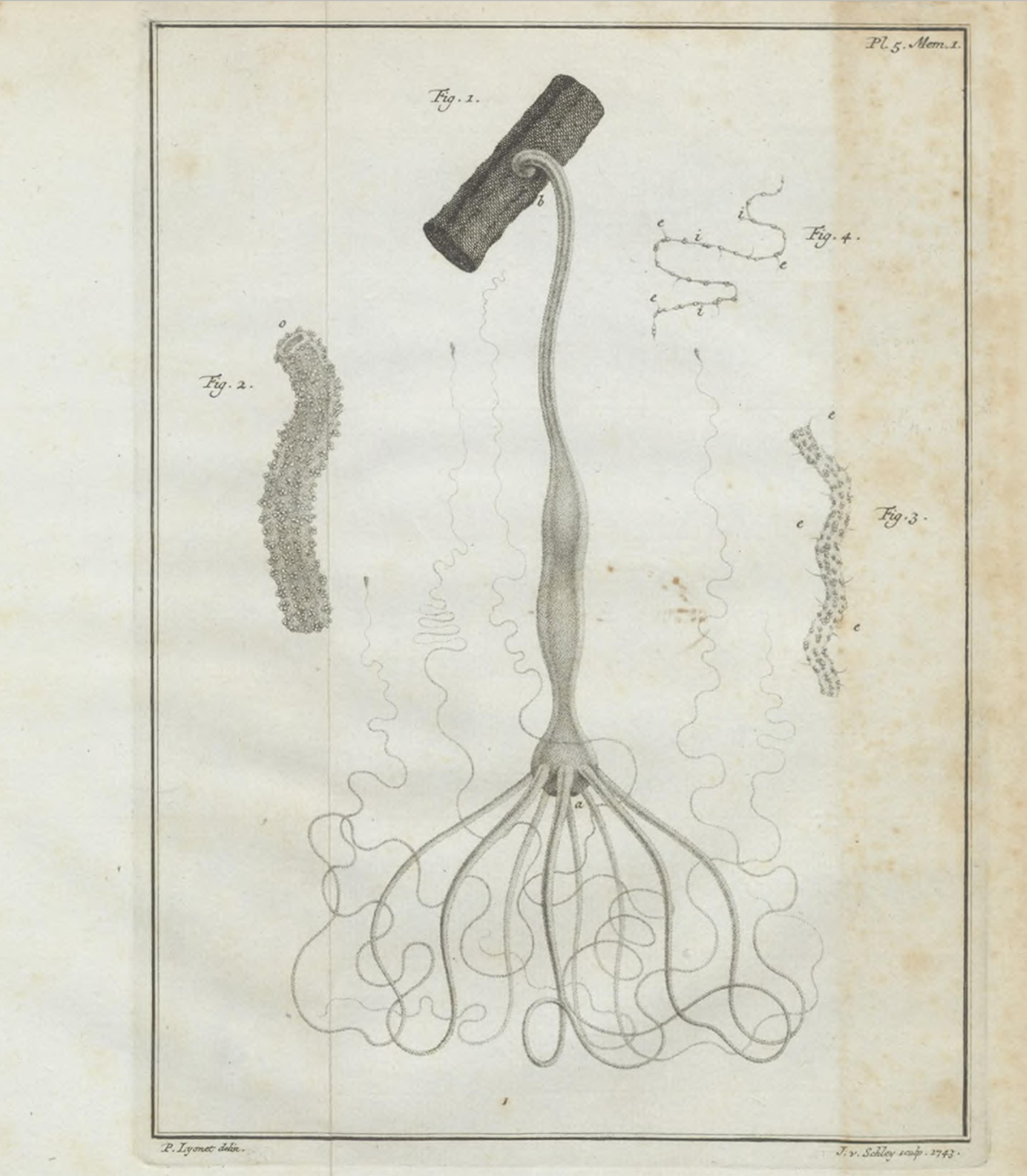
Trembley's 1744 polyp study: the regenerating animals that shaped Lamarck's view of life as generative power.1 / 4
Jean-Baptiste Lamarck is remembered for one mistake: the giraffe that stretched its neck and passed the extra length to its offspring. In an Aeon essay, Jessica Riskin argues that this joke buried a founder of biology and his central idea, that living things actively shape their bodies and their world. The burial, she says, was as political as it was scientific.
What Lamarck said
Lamarck coined the word "biology" in 1802, named the category "invertebrates" and identified more than 6,000 species. His Philosophie zoologique (1809) set out what Riskin calls the first theory of evolution. It held that an animal's habits, formed in response to its circumstances, shape its body, not the other way round. A seal's hind limbs, used both for paddling and for seizing prey, became something between fin and hand. The giraffe was only a passing mention.
Much of his evidence came from a job he didn't want. In 1793 he was made Professor of Insects and Worms, the lowliest chair in zoology. There he dwelt on polyps that regrow from fragments and corals that build mountain chains. Life, he concluded, was the power to create against nature's forces of destruction.
Why he lost
His rival Georges Cuvier, a palaeontologist favoured by Napoleon, held that species were fixed and that extinctions were followed by fresh creation. Riskin reads this as science fit for autocracy: change imposed from outside, under a single authority. Napoleon publicly humiliated Lamarck in 1809, and Cuvier later wrote a eulogy dismissing his theory as poetry.
Darwin kept "the inherited effects of use and disuse", but warned privately that association with Lamarck would be "very injurious". After his death came 1, which explained evolution through random variation and external selection alone. August Weismann argued that changes in body cells can never reach reproductive cells, a rule called the 2. He cut the tails off generations of mice to make the point, while admitting the experiment had no real bearing on Lamarck's theory. Riskin ties this passive view of organisms to eugenics, quoting Francis Crick in 1963, and to treating nature as raw material.
The return
She points to epigenetic inheritance, heritable changes in gene activity without changes to the DNA sequence: a reef fish, the spiny chromis, appears to pass on metabolic responses to warmer water. Anole lizards that moved up to 3,000 metres coped with cold by basking, then evolved bodies suited to rock crevices. 3 theory treats nests and dams as environments organisms build for themselves, and which then select them.
What to weigh
Outside the essay, many biologists dispute how long epigenetic marks last. The politics are also messier than Riskin's closing line about autocrats: Stalin's USSR backed the Lamarck-flavoured agronomy of 4 and persecuted geneticists. Her causal link from passivity to eugenics is argued more than shown.
Jean-Baptiste Lamarck's name survives mainly as a punchline: the giraffe that stretched for high leaves and handed a slightly longer neck to its offspring. In an Aeon essay, Jessica Riskin argues that the joke hides two things. Lamarck laid foundations for modern biology, and his central idea, that living beings actively make themselves and their surroundings, was pushed out of science for reasons that were partly theological and political. She also argues that biologists are now turning back toward it.
The science he named
Lamarck coined the word "biology" in 1802 because no science covered all living things and only living things. Natural history also took in rocks and rivers, while botany and zoology covered only portions of life. He worked at the Garden of Plants in Paris from 1788 until his death at 85 in 1829, outlasting the Revolution, the Terror and Napoleon. He identified more than 6,000 species and spent his last decade blind, still working with help from his daughter Rosalie.
His main treatise, Philosophie zoologique (1809), set out what Riskin calls the first theory of evolution, though he simply called it "change". Life began by 1, as heat and electricity acted on inert matter to produce single-celled organisms. A built-in tendency to grow more complex, "the power of life", then took over. As organisms became complex, a second cause joined it: responsiveness to circumstances. This was mere irritability in the simplest creatures but rose to "acts of will" in birds and mammals, which formed habits that directed inner fluids toward the organs they used most.
So behaviour shapes body, not the reverse. When a seal arrived at the museum menagerie in June 1809, Lamarck noted that it paddled with its hind limbs but also seized prey with them, and read the limbs' in-between form, part paddle and part hand, as the product of those two uses. The giraffe, by contrast, was a passing mention in a huge body of writing.
A demotion that became a theory
In 1793, as the royal garden became a republican museum, Lamarck the botanist was handed the lowliest chair in zoology: Professor of Insects and Worms. He consoled himself that these creatures made up nine-tenths of the animal world and might reveal the foundation of animal life. He coined the category "invertebrates" and found in them a staggering power of generation. Abraham Trembley had shown that a chopped-up freshwater polyp regrows a whole animal from each piece. Sea stars regrow rays, snails regrow heads, and coral polyps build limestone mountain ranges and "completely transform the coastlines".
From this he concluded that living things hold a monopoly on creative agency. Plants build themselves from sunlight, air and water: he described hanging a hollowed turnip in a window, keeping the hollow filled with water, and watching it grow a flowering plant. Animals elaborate those compounds further. Creation was also collective. In 1798 he watched 10 or 12 swallows rebuild a destroyed nest overnight, a job he said normally takes eight to 12 days.
This overturned the 2, Aristotle's fixed ranking of beings from simple to complex. In Lamarck's picture, organisms kept remaking the order of life themselves, in many directions at once.
Cuvier and Napoleon
His nemesis was Georges Cuvier, a palaeontologist, devout Lutheran and favourite of Napoleon. Cuvier held species to be fixed. His principle of 3 claimed that any one part of an animal implied all the others by rational necessity, and that behaviour followed from structure. He helped establish that extinction was real, but explained it as catastrophe followed by fresh creation.
Riskin's reading is that this suited Napoleon perfectly: revolutionary change imposed from outside, with the authority of religion translated into science and guaranteed by the emperor's own experts. In November 1809, when Lamarck presented his book at the Tuileries, Napoleon took it only "out of consideration for your white hair" and passed it unread to an aide, leaving Lamarck in tears. After Lamarck died, Cuvier wrote his official eulogy, dismissing the theory as poetry rather than science.
Scrubbing the record
Darwin drew on Lamarck and kept "the inherited effects of use and disuse". In 1868 he even proposed "4", particles thrown off by the body that could carry modifications to offspring. But he told Charles Lyell in 1863 that association with Lamarckism would be "very injurious".
After Darwin's death, the neo-Darwinists, who explained evolution by random variation and external selection alone, made eradicating Lamarck their defining project. August Weismann, in the 1880s, separated body cells from reproductive cells and held that nothing happening in the former could reach the latter, now called the 5. He cut the tails off several generations of mice to show that their offspring had healthy tails. He admitted the result had no bearing on Lamarck, who never claimed amputations were inherited, but expected it to defeat popular belief. He also insisted that his biology demanded a divine "Final Cause". Riskin's point is that organisms ended up as passive as under Cuvier's creator. In the 1950s Francis Crick restated the barrier as the 6 of molecular biology, under which information runs from DNA through RNA to protein, never back.
Riskin argues this passivity had consequences. She sees a eugenic logic in it, quoting Crick in 1963 musing about sterilising a population through the food supply, reversible only for those "licensed to bear children". She also links it to treating nature as raw material. Lamarck himself warned that man seemed "destined to exterminate himself after making the globe uninhabitable".
The return
Riskin gathers several lines of current work:
What to weigh
This is an argument, and some points outside the essay complicate it. Many biologists still dispute how many generations epigenetic marks persist and how much they matter for long-term evolution, and the essay gives no durations. Niche construction and basking lizards also sit comfortably within selection-based accounts, so they revise 10's emphasis more than they overthrow it. Crick's dogma, strictly, barred information flowing from protein back to nucleic acid; reverse transcription from RNA to DNA was later found. Politically, the alignment is less tidy than Riskin's closing line about autocrats suggests: some eugenicists were Lamarckians, and Stalin's USSR backed 11's Lamarck-flavoured agronomy while persecuting geneticists. Riskin's history of the suppression is vivid, but whether ideas about organisms' passivity actually caused eugenics or environmental damage is a claim she asserts more than demonstrates.
Remember
Weismann conceded his mouse-tail experiment didn't test Lamarck's claim, yet it still appears in biology textbooks as rhetoric.
Neo-Darwinism's denial of organismal agency sat comfortably with theology: Weismann said his biology demanded a divine 'Final Cause'.
Anole lizards show behaviour can come first: basking spared them evolving cold tolerance, while crevice-hiding drove shorter legs and flatter skulls.
In Milgram's 1960s obedience studies, volunteers were told to give escalating electric shocks, which were fake, to an actor. In the 1971 Stanford prison experiment, students played guards and prisoners in a mock jail. Both became textbook demonstrations of situational power.
Image: Psyche
Imagine a species just like us but with no lasting inner self. Psychologists Jack W Klein and William B Swann call it 1. It feels warmer towards people while holding a hot coffee, and its views on abortion shift after washing its hands. Marrying one means marrying a stranger.
Each of these oddities, they point out, comes from claims published about real humans. They call the shared assumption the 2: people contain little that the passing situation can't overwrite.
Where it came from
The authors trace the idea to the 3 of the early 20th century, who studied responses to the environment and treated the mind as an unknowable "black box". Social psychology inherited that focus. Later scholars argued that people infer their beliefs from their own behaviour, or that personality effectively doesn't exist.
The idea lives on, they say, in 4, the study of how trivial cues steer behaviour. In one example, students seemed to walk more slowly after seeing words related to old age.
Why it is failing
The 5, the discovery that many psychological findings could not be independently reproduced, hit this work hard. In one report, only 17 per cent of social priming findings held up when rerun. The authors' own research found that studies built on the empty-self premise were far less likely to survive than others.
The classics look weaker too. In Stanley Milgram's obedience studies, people gave what they believed were electric shocks on an experimenter's orders. Later research found that traits linked to diligence and helpfulness predicted who kept going, which the authors read as willing collaboration with "science" rather than mindless obedience. The Stanford prison experiment, where students cast as guards turned belligerent, probably overrecruited people with authoritarian leanings.
Meanwhile, personality research shows stable traits that predict life outcomes. These include the 6: openness, conscientiousness, extraversion, agreeableness and neuroticism. Research also suggests that personality and situations have similar average effects on behaviour.
Why it appealed, and what comes next
Hidden causes make good stories, and social priming earned a full chapter in Daniel Kahneman's bestseller Thinking, Fast and Slow. The view also suits an agenda the authors call admirable: if hardship comes from social conditions, change the conditions and blame no one.
Their replacement is 7, the view that person and situation jointly shape behaviour. 8, which changes how choices are presented, shows the shift. Early results were lacklustre, but recent research suggests that nudges tailored to individuals might work better than generic ones.
One caution of my own: "similar effects" still leaves situations powerful. Failed priming studies discredit trivial cues, not the influence of larger forces such as poverty. The essay's evidence supports a self that isn't empty better than it supports any precise balance between person and circumstance.
Psychologists Jack W Klein and William B Swann argue that a strand of their own discipline has spent a century describing a creature that does not exist. They call it 1: a being just like us, except that it has no lasting inner self. Its beliefs, preferences and character are supplied by whatever situation it happens to be in.
Life as H vacuus would be strange. It would feel warmer towards other people while holding a hot cappuccino and colder while clasping an iced latte. More of its kind would turn out to vote if they were called "voters" rather than people who vote. Its views on abortion or pornography could shift depending on whether it had just washed its hands, which would leave it feeling cleansed and ready to judge others. Predicting its behaviour beyond the present moment would be hopeless, and marrying one would mean marrying a stranger. It could also dodge all blame by saying "I was just responding to the situation", leaving religious, ethical and legal systems largely irrelevant.
The twist is that each of these oddities comes from claims made about real humans. Klein and Swann name the assumption behind them the 2: look inside a person and you find little that the random influences of the moment could not change. Its attraction is hopeful, since it implies that human failings can be fixed by rearranging the social environment. The authors call that view 3, after Voltaire's relentlessly optimistic Dr Pangloss, and want it replaced.
A century of looking outward
The authors trace the idea, arguably, to the 4 of the early 20th century, who studied observable responses to the environment and refused to speculate about the "black box" of the mind. Founding social psychologists absorbed that emphasis, defining their field as the study of how thoughts, feelings and behaviour are influenced by the actual, imagined or implied presence of others.
The theme then recurred in several forms:
5, in the 1970s, held that situations cause behaviour and that people infer their beliefs by watching what they do, reversing the commonsense order.
Situationism has faded, but the authors say its assumption lives on in 8, the study of how seemingly trivial cues change behaviour. In two examples, students seemed to walk more slowly after seeing words related to old age, and plotting dots far apart on paper appeared to make people feel more distant from their families.
Why the evidence gave way
The main blow was the 9, the discovery that a surprising number of psychological findings could not be independently reproduced. Many were probably 10, results that look real but arise from chance, encouraged by slanted statistical choices and other questionable practices.
A sum shows how this can happen, using illustrative numbers rather than figures from the essay. Under the usual threshold, a nonexistent effect has a 5 per cent chance of looking real in any one test. Try 20 independent analyses and the chance that at least one "works" climbs to about 64 per cent. Report only that one, and noise becomes a finding.
In one report the authors cite, only 17 per cent of social priming findings were successfully replicated when the studies were rerun. A much smaller share of this style of research was dismissed as fraudulent, including the celebrated claim that people fill out forms more honestly if they sign at the top rather than the bottom. Klein and Swann's own research compared studies that did and did not rest on the empty-self premise, and found that those that did were far less likely to hold up.
The older classics have weakened too. In Stanley Milgram's obedience studies, participants were told to deliver what they believed were electric shocks until the victim seemed unconscious or dead. These became evidence that authority can override individual will. But later research found that traits associated with diligence and helpfulness predicted greater willingness to continue. The authors read this as often wilful collaboration: participants believed they were helping an experimenter serve science.
The Stanford prison experiment, in which students cast as guards appeared to turn belligerent, suffers from design flaws. These include a selection bias that probably overrepresented people with authoritarian dispositions. The recruitment advert mentioned prison life, and a later study found that such adverts attract more authoritarian volunteers.
The case for a self that persists
The authors argue the fickle-mind idea should always have drawn more scepticism, because it clashes with personality psychology. The 11 traits (openness to experience, conscientiousness, extraversion, agreeableness and neuroticism) are remarkably stable and predict both behaviour and long-term life outcomes. Self-esteem stays largely steady across the lifespan, and failed attempts to break habits show how personal tendencies resist change. Research also suggests that personality and situations have similar average effects on behaviour.
Why the idea survived
Hidden causes make good stories, which the authors say helps explain why social priming got a full chapter in Daniel Kahneman's Thinking, Fast and Slow (2011), why mentalists like Derren Brown draw large TV audiences, and why top journals publish counterintuitive results. Kahneman later conceded, in a point the essay does not mention, that he had put too much faith in those underpowered studies.
There is also a moral appeal, which the authors call admirable. If hardship comes mainly from social conditions, the remedy is to change those conditions, and nobody need blame the victim.
What replaces it
Their alternative is 12, the view that person and situation jointly shape behaviour. 13, which alters how choices are presented (such as making fruit and vegetables more conspicuous), offers the test case. Governments set up "nudge units", but early results were lacklustre. Second-generation nudges tailor the intervention to individual beliefs and preferences, and recent research suggests that personalised nudges towards healthier food purchases might beat generic ones. The authors want social movements to work the same way, assuming that people will respond to the same policy or message according to their own perspectives.
What the essay leaves open
The empty self is, by the authors' own description, an implicit assumption, so few of the researchers they criticise would necessarily sign up to it in full. Their evidence is also gentler than their rhetoric. If personality and situations carry similar average weight, situations remain powerful, and failed priming studies say little about larger forces such as poverty. The essay gives no effect sizes for tailored nudges, and its hedged "might" is warranted. Nor does it say how far a stable self restores the moral responsibility that H vacuus lacked.
Remember
A striking result about a hidden cause deserves extra suspicion: empty-self studies replicated markedly worse than other research.
Milgram's obedient participants may show conscientious people volunteering their help, which makes obedience look less like a loss of self.
Moral appeal can protect weak science: the wish to avoid victim-blaming helped make situational explanations attractive.
Morland's 1822 watercolor of a hyena jaw, showing the kind of precise specimen work that drew Buckland to her.1 / 4
Maria Popova's new portrait on The Marginalian turns on a coach ride across Devonshire in the 1820s, and on a coincidence that sounds almost too good to be true.
The problem
The geologist and theologian William Buckland had been studying large fossil bones from a quarry near Oxford, long assumed to be an elephant's. A fragment of lower jaw convinced him otherwise: this was a huge carnivorous reptile unlike anything known. In 1824 he named it 1, "great lizard," the first dinosaur ever named.
Since nobody knew what such an animal looked like, Buckland needed an illustrator with both exact technique and imagination. Impressed by a drawing of an extinct hyena's jaw, he got a letter of introduction to the artist and set off to find her.
The coach
He packed a new book by 2, the French anatomist often called a founder of paleontology. Another passenger took out the same volume. She was the artist, Mary Morland, and Cuvier had sent her the copy himself to thank her for her contribution.
How she got there
Morland lost her mother in infancy, which Popova suggests may explain her pull toward 3, the vast span of Earth's history, and toward fossils. That link is Popova's speculation. The career is firmer ground. Morland read Cuvier as a teenager, taught herself to draw and sent him her specimen illustrations, which he published alongside his studies. More commissions followed, including leather models of rare specimens. She also collected minerals and became a fossil geologist herself.
Popova argues that this income changed what marriage meant for her. Most women of her time married to survive; she could earn a living, so she would marry only for love.
The partnership
They started on the dinosaur work immediately and married within a year. Their home had candle-holders made from 4 vertebrae (the ichthyosaur was a dolphin-shaped marine reptile), frogs and snakes in the dining room, and guinea pigs running across the table.
The main evidence for her intellectual role comes from one of their children, who wrote that her "great mental powers" and "excellent judgment" gave William's studies "a polish which added not a little to their merit." Mary outlived William by just over a year, studying coral-like sea creatures called 5 with her daughter. She was at her microscope hours before she died.
What's missing
This is a brief elegy, not a work of history. Popova doesn't source the coach story, and she can't say how much of William's science was really Mary's. "Polish" might mean tidying or might mean correction. That uncertainty is the most thought-provoking thing the essay leaves behind.
In a short new portrait on The Marginalian, Maria Popova tells the story of Mary Morland and William Buckland as both a chapter in the history of paleontology and a love story. Its most memorable scene depends on a coincidence so neat it could be fiction.
A jaw that didn't fit
Popova begins with Buckland, an English theologian and geologist, studying large fossil bones from a quarry near Oxford. The bones had been taken for an elephant's. The fragment of lower jaw told him otherwise: this was a huge meat-eating reptile, unlike any known animal, living or fossil. In 1824 he named it 1, "great lizard," now recognized as the first dinosaur to receive a scientific name. The word "dinosaur" itself came 18 years later, coined by the anatomist Richard Owen.
Naming the animal left a practical problem. Nobody knew what such a creature looked like, so Buckland needed an illustrator who could combine exact drawing with disciplined imagination. A drawing of an extinct hyena's jaw caught his eye. He obtained a letter of introduction to its artist and set off by coach across Devonshire.
The coach
For the journey he brought a new volume by 2, the French anatomist often called a founder of paleontology, summarizing Cuvier's research on the fossil bones of four-legged animals. Then another passenger opened the same heavy book. She was the artist he was on his way to meet, and Cuvier had sent her the copy himself, in thanks for her contribution to it.
How she got there
Mary Morland lost her mother in infancy. Popova speculates that this loss may explain her early fascination with 3, the immense span of Earth's history, and with fossils as permanent records of perishable flesh. That link is the author's interpretation; the article offers no evidence for it.
The route Popova describes is more concrete. Morland read Cuvier as a teenager, taught herself draughtsmanship and mailed her specimen drawings to him. He published them alongside his own studies. Other commissions followed: she illustrated more books and made leather models of rare specimens. She also built a substantial mineral collection and became a fossil geologist in her own right.
This income is central to Popova's argument. Marriage was the standard route to subsistence for women of Morland's time, but she could support herself, so marriage became a choice she would make only for love. By the time of the coach ride she was in her late twenties, an "old maid" by the standards of the day, and among the most respected scientific illustrators of the era.
The household
The two began the Megalosaurus work at once, and she appears in the record through it: a surviving 1824 4, a print made from a drawing on stone, reproduces the jaw after her original. Within a year they had married. Popova's description of their home is the essay's delight: candle-holders made from the vertebrae of an 5, a dolphin-shaped marine reptile; fossils on every sideboard; frogs and snakes in the dining room; guinea pigs crossing the table; now and then a pony with a laughing child on its back.
The evidence of her intellectual role comes from one of their children, who recalled that she did more than illustrate. With her "great mental powers, habits of perseverance and order, tempered by excellent judgment," she "gave to them a polish which added not a little to their merit." A silhouette from an 1894 book on William's life shows the couple at a worktable while their small son plays with a fossil underneath.
Although she was about fourteen years younger, Mary outlived William by only just over a year. She spent that time studying 6, tiny coral-like marine animals, with her daughter, and was still at her microscope hours before she died.
What the essay leaves open
Popova's conclusion is a line about love as "the mutual belonging of our passions and our bones," and an image of the couple buried side by side, their remains awaiting some future paleontologist. It works as an elegy more than as a historical argument, and readers should take it that way.
Several questions go unanswered. The article doesn't source the coach story, and an anecdote this tidy deserves some caution. It also doesn't establish how much of William's published reasoning was Mary's. "Polish" could mean anything from copy-editing to substantive correction, and the witness was a loving child. Nor does the piece say whether she was credited at the time beyond the illustrations, or what became of her bryozoan work.
Its opening framing also claims more than its images show. Popova says Buckland needed someone to "enflesh the bones," but the one Megalosaurus image reproduced is a careful drawing of a jaw, not a living animal. That may be the more interesting point. The first dinosaur entered science through one fragment, recorded closely by someone who knew what she was looking at.
Remember
The word "dinosaur" did not exist until 1842, eighteen years after Megalosaurus was named from bones including a jaw fragment.
Morland entered science by mailing her drawings directly to Cuvier, a self-made route that bypassed the institutions closed to women.
Testimony about a collaborator's role can be vague: "polish" might describe anything from tidying prose to correcting the science.
Karoline Unger, the young contralto who pressed Beethoven to stay in Vienna and turned him toward the applause.1 / 2
Maria Popova's essay in The Marginalian argues that "Ode to Joy" draws its force from how it was made: a teenager's political hope, carried through decades of loss, then forced into a form nobody had tried.
A poem its author gave up on
Young Beethoven treasured Friedrich Schiller's poem, written when he was fifteen. Popova reads it as an ode to freedom in the spirit of the 1, the movement that centered reason, liberty and human happiness. It promised a "kiss for the whole world."
Then the 2, the French Revolution's mass executions, curdled that optimism. Schiller died thinking the poem had served perhaps a few people "but not for the world."
Beethoven kept it. When Napoleon's armies occupied Vienna, he was almost entirely deaf and surrounded by "drums, cannons, and human misery." Six bad years followed: Haydn's death just before them, a brother's death, a legal fight over his nephew, a year in bed with fever.
The tramp on the Danube
In autumn 1822, lost in thought on a walk, he wandered far into the countryside. Police jailed him as "a tramp" and laughed when he claimed to be Beethoven. A local musical director, woken near midnight, identified him.
The poem had distracted him. He wanted it as the sung finale of his Ninth Symphony, though he hadn't written a symphony in a decade and had written little choral music. Popova says no composer had ever put words in a symphony. That is slightly overstated, since a few minor precedents exist, but nothing on this scale.
Nearly undone
He announced a Berlin premiere, offending Vienna. Karoline Unger, his nineteen-year-old 3 (the lowest female voice), scolded him in his 4, the notebooks people wrote in to speak with him: "O Obstinacy!" Thirty admirers signed an open letter, and he relented.
He then switched theaters, cancelled the concert, and reinstated it a month later. He also insisted on conducting. The regular conductor stayed onstage and told the performers to "pay no attention whatever to Beethoven's beating of the time." After two disastrous rehearsals, one soloist quit.
May 7, 1824
The royal box sat empty, so he played to ordinary Viennese. When the music ended, Beethoven was still beating time until Unger turned him around to see the crowd. After four bursts of applause, the Police Commissioner shouted "Silence!" over the fifth.
What Popova makes of it
Her thesis is that Beethoven held on to Schiller's ideal because tyrants fall while the commitment to freedom survives, if constantly renewed. She offers it as a suspicion, supported by the work's later life, from Pinochet's Chile to Tiananmen Square. The essay is devotional rather than analytical: it cites no sources for its anecdotes and says little about the music itself.
Maria Popova's essay in The Marginalian, her one-person site on art and ideas, tells the making of Beethoven's "Ode to Joy" as one long argument: the piece has lasted because of what it cost. Her claim concerns endurance more than harmony or form. A young man's political hope survived decades of war, illness and deafness, then had to be forced into a musical shape nobody had built.
A dream its author abandoned
As a teenager at the University of Bonn, Popova writes, Beethoven fell under the spell of 1, Immanuel Kant's philosophy of how the mind shapes experience. He was also drawn to the 2, the movement that placed reason, liberty and human happiness at the center of public life. A volume of Friedrich Schiller's poetry became his most cherished book.
Schiller wrote his "Ode to Joy" when Beethoven was fifteen. Popova reads it as really an ode to freedom: a manifesto holding that if freedom, justice and happiness became life's first devotion, peace and kindness would follow as a consequence. Its image was a "kiss for the whole world."
Within a decade, the 3, the French Revolution's campaign of mass execution, had sent Marie Antoinette and some ten thousand others to the guillotine. Schiller died considering the poem a failure, perhaps useful to a handful of people "but not for the world." Beethoven was one of that handful.
The long middle
As his hearing began to fail, Beethoven wrote to a boyhood friend that he was approaching "the goal which I apprehend but cannot describe." A year later, in a letter to his brothers now known as the 4, he asked how he could "quit the world before bringing forth all that I felt it was my vocation to produce." Popova dates the work's long gestation to that year.
Then history closed in. When Napoleon's armies occupied Vienna, Beethoven, thirty-nine and almost entirely deaf, sheltered with relatives in the city while most of the wealthy fled. He described "nothing but drums, cannons, and human misery in every form" and produced "very little coherent work." Haydn, his hero, died that spring.
Six hard years followed. His love went unreturned. One brother died and he became estranged from the other. He fought an endless legal battle over guardianship of his young nephew and spent a year bedridden with what he called "an inflammatory fever." In Popova's account, composing itself became the lever that lifted him out.
Arrested on the Danube
One autumn day in 1822, the fifty-two-year-old went out in a moth-eaten coat for a short walk. Walking was his main method for working through musical problems. Hatless and absorbed, he wandered along the Danube until afternoon found him disoriented, far into the countryside.
Local police arrested him for "behaving in a suspicious manner," jailed him as "a tramp" with no papers, and mocked his claim to be Beethoven. Near midnight, an officer woke a local musical director, who recognized him at once. The town's mayor drove him back to Vienna the next morning in his own carriage.
What had absorbed him was Schiller's poem, on which he had finally begun working in earnest.
A problem without precedent
Beethoven had decided the poem must be the 5 of a symphony, meaning its closing movement would be sung by soloists and choir. He had not written a symphony in a decade and had written little choral music. Popova says no composer, including Bach, Mozart and Haydn, had put words into a symphony. That overstates things slightly: Peter von Winter's 1814 Battle Symphony used a chorus, though no earlier work attempted anything like this.
To live while he worked, he secured a meager £50 commission from a London music society. For more than a year he struggled, chiefly over how to bring words into the last movement and which voices should carry them.
Near collapse before the premiere
Vienna heard rumors of the work and theaters competed for it. Then Beethoven announced, without explanation, that it would premiere in Berlin. Viennese musicians took it as an insult.
Karoline Unger, the nineteen-year-old 6 (the lowest female voice) he had already chosen as a soloist, objected in his 7, the notebooks people wrote in to speak with him. She told him he had "too little self-confidence" in the Viennese public, adding: "O Obstinacy!" Within a month, thirty prominent admirers signed an open letter begging him to complete the Austrian line of Mozart and Haydn. "It's very beautiful, it makes me very happy!" he said, and agreed.
Then he nearly destroyed it himself. He committed to one theater, switched to another, and cancelled the concert altogether. After a month of paralysis, with the season running out, he reinstated it at a theater he had originally rejected. He assembled an unusually large force: two dozen violins, two dozen winds, a dozen cellos and basses, ten violas, plus percussion.
He also demanded to conduct. The theater conceded, fearing another reversal, but kept the regular conductor onstage, and that man told the performers to "pay no attention whatever to Beethoven's beating of the time." The huge ensemble managed only two rehearsals, both disastrous. Unger called him a "tyrant over all the vocal organs." One male soloist quit and was replaced by a chorister who had memorized the part.
May 7, 1824
The royal box was empty. The Emperor and Empress had left for the country along with most of the aristocracy, so Beethoven played to ordinary Viennese, the people Schiller had hoped to reach.
When the last chord ended, the hall erupted. Beethoven, still facing the orchestra and beating time to music only he could hear, noticed nothing until Unger took his arm and turned him around. Four bursts of applause followed, and the Police Commissioner shouted "Silence!" over the fifth. Popova reads this as a sign of how dangerous such art seemed.
The afterlife, and what remains open
Popova's list of later uses runs from Chilean protesters against Pinochet to students in Tiananmen Square, and to Leonard Bernstein's concert after the Berlin Wall fell. Helen Keller "heard" it with her hand on a radio speaker. Popova herself sang it at thirteen in post-communist Sofia, in a Bulgarian that has no direct word for "joy," only rough equivalents like "felicity" or "mirth."
From this she draws her thesis: Beethoven's point was that tyrants, "the Napoleons and Putins," rise and fall, while commitment to freedom persists if it is constantly renewed. She offers no evidence that he intended this; she says she suspects it. The essay is devotional and doesn't analyze the music. It also cites no sources for its anecdotes, and early Beethoven lore needs care, since his biographer Anton Schindler is known to have forged Conversation Book entries.
Remember
Schiller came to consider the poem a failure; its fame comes largely from a reader who refused to agree.
The premiere's chaos was mostly Beethoven's own making: he moved the venue, cancelled the concert, and insisted on conducting while deaf.
The Police Commissioner's "Silence!" shows that, in 1824 Vienna, even an ecstatic audience could look like a public-order problem.
Lisa Feldman Barrett, a psychologist at Northeastern University, starts a Big Think video interview from three questions: What is the color red? What separates a mountain from a hill? What is a president?
She argues that they share an answer. Each depends, at least partly, on people collectively assigning meaning to physical signals. The theory is called 1: many features we assume are objective emerge from the relationship between what exists in the world and what exists within us.
Color as a relationship
On this view, red is not simply a property of an object. It is a property of the relationship between light hitting your 2, the light-sensitive tissue in the eye, and the signals your brain processes. A burgundy chair sends no light labeled "burgundy." You recognize the color using patterns you learned, and other people helped teach you.
Barrett calls this 3: others, through their words and actions, wire your brain with the past you use to interpret the present. The result is what the series calls your 4, the invisible store of experiences and concepts through which you make sense of the world.
When agreement makes something real
A group that assigns meaning to something lacking it intrinsically creates 5. Money is the classic example. Every time you hand over paper for food, Barrett says, you are "manifesting the existence of money." The more people who agree, the firmer its value. If enough people stopped accepting it, that money would lose its power.
She reads the 2008 financial crisis this way, as a moment "where a group of guys in suits withdrew their consent that mortgages had a certain value."
Where agreement stops
Barrett rejects the idea that consensus alone makes something true. "You can't just make up any bullshit, get consensus for it, and then it counts as true," she says. A crowd could agree that crushed glass is food, but biology would still say otherwise. Shared meaning is one signal among others, and physical patterns "matter a great deal."
What remains unsettled
The source is a short companion to a video, so it sketches the argument rather than defending it. Two claims deserve some caution.
Calling the existence of color a form of social reality is a stronger claim than saying color categories are learned, because color vision also rests on inherited biology. And "withdrew their consent" compresses 2008, when falling house prices and rising loan defaults also drove the collapse. That arguably supports her own caveat: consensus was constrained by events outside it.
Her conclusion is about agency. Voting, whom you follow and what you eat all help determine "which signal patterns count as reality."
Lisa Feldman Barrett, a University Distinguished Professor of Psychology at Northeastern University, begins from questions that seem to have nothing in common. What is the color red? What counts as a mountain rather than a hill? What is a president, and what powers does one have?
In an interview for a Big Think video series, she argues that the answers share a feature: each depends, at least in part, on people collectively assigning meaning to physical signals. "What you do, what you don't do, what you say, what you don't say — your daily actions help to constitute reality," she says.
The source is a short companion to the video, so it sketches the argument more than it defends it. The sketch is still worth working through, because its most useful part is where Barrett says agreement stops working.
Red as a relationship
The theory is called 1. It holds that many features we assume are objective emerge from the relationship between what exists in the world and what exists within us.
Color is her main case. On this view, red is not simply a property of an object. It is a property of the relationship between the wavelengths of light striking your 2, the light-sensitive tissue at the back of the eye, and the signals your brain processes.
Barrett adds a further step: your brain had to learn what those signals mean, and other people helped teach it. Her example is a burgundy chair. The light reaching your eye carries no label saying "burgundy." You identify the color using patterns learned in the past.
She calls this learning 3: other people, through their words and actions, "wire your brain with the remembered past that you now use to create the relational present." The accumulated result is what the series calls your 4, an invisible mental container of the experiences and concepts you use to make sense of the world.
From learned meaning to 5
When a group collectively assigns a meaning that something doesn't carry on its own, it creates social reality, which depends on some degree of shared understanding. Barrett goes further than many people would by including perception here. Because signals outside the head get their meaning by relation to signals inside it, and that relation rests on collective agreement, she says "even something like the existence of color is a form of social reality."
Money is the easier example. "Every time you trade little pieces of paper for something that you can eat or that you can use, you are not just agreeing to the existence of money, you are manifesting the existence of money," she says. Each transaction helps sustain the thing it relies on. The more people who agree, the more solid the value becomes, and if enough withdrew their agreement, that money would lose its economic power.
Her example of such a collapse is 2008, which she describes as a moment "where a group of guys in suits withdrew their consent that mortgages had a certain value." The world, she says, "was plunged into an economic crisis as a result."
Where agreement runs out
Barrett rejects the relativist reading outright. "You can't just make up any bullshit, get consensus for it, and then it counts as true," she says. "We could get a bunch of people to agree that [crushed] glass is food, but that would not make it true." Shared meaning is never the only signal that matters. Biology helps determine what counts as food, and the patterns emerging from physical signals "matter a great deal."
Her examples suggest a spectrum, though the sorting here is this digest's reading rather than hers:
Mostly agreement: A banknote's paper has little value apart from what people accept it for. A president's powers likewise exist through shared rules.
Physical signal plus convention: Elevation can be measured, but where a hill becomes a mountain is a matter of convention. Wavelength is physical, while the boundary around "burgundy" is learned.
Strongly constrained by biology: Crushed glass will injure you whatever anyone believes.
What the piece leaves open
The hardest question is how far the color argument reaches. Learning the word and category "burgundy" clearly depends on culture. It is less obvious that the existence of color itself rests on consensus, since color vision also depends on inherited biology: a person's 6 work as they do without anyone teaching them. The article doesn't say how Barrett divides the contribution of biology from that of learning here.
The 2008 example also compresses a lot. Standard accounts of the crisis include falling house prices, rising defaults and the collapse of securities built from mortgages. Those events fit her view only in part. Confidence did evaporate, but it did so partly in response to borrowers failing to pay. That looks like her own caveat at work, with physical and economic patterns constraining what consensus could sustain, though "withdrew their consent" makes it sound more voluntary than that.
The piece also doesn't say how to tell, in a disputed case, whether consensus or some underlying constraint is doing the work. That test is what a reader would most need in order to apply the theory.
Barrett's practical conclusion concerns individual agency. Voting or not, following an influencer or not, and choosing what to eat all help manifest the reality we then have to deal with. "You have more power for which signal patterns count as reality and which ones do not," she says. The article offers no way to measure that power, and one person's share of a collective agreement can be small. Still, her money example shows the mechanism: social realities last only as long as people keep acting on them.
Remember
Barrett treats color as a relationship between light, brain and learned concepts, not a simple property of objects.
Using money is not just agreeing that it exists; on Barrett's account, each transaction helps sustain it.
The argument's key limit: consensus can assign meaning, but biology and physical patterns restrict what that meaning can make true.
7, heritable changes in gene expression outside the DNA sequence. A 2015 study found that the spiny chromis, a reef damselfish, inherits metabolic changes from warmer water. Similar findings cover reef coral, wild guinea pigs and baboons.
Behaviour steering selection. Martha Muñoz at Yale studies anole lizards in the Dominican Republic that climbed to 3,000 metres. They coped with cold by basking on boulders rather than evolving greater cold tolerance, then rapidly evolved shorter legs and flatter skulls suited to hiding in rock crevices.
8, the theory that organisms build the environments that then select them, as with beaver dams and termite mounds.
The 9, a movement to widen the theory to include behaviour and culture, such as humpback hunting methods that differ between communities and pass to offspring.
Others argued that personalities effectively do not exist.
The 6 was coined as a label for the allegedly flawed habit of explaining someone's actions by their personality.
Impression management research and the dramaturgical movement, including work in sociology, treated people as actors playing whatever character suits the scene.
The 7 explicitly ranked the situation far above any internal motivation.