Homeowners with low credit scores keep the most uninsured disaster risk
A NY Fed model built from millions of policies finds deductibles and limits leave households holding 29% of expected losses.
Why it matters · Your homeowner's policy probably covers less than you think. This study measures how big that gap is and shows that it is widest for households and places least able to absorb a large loss.
In an earlier post, NY Fed economist Hyeyoon Jung and NYU Stern's Jaehoon (Kyle) Jung showed that insured homeowners are still "on the hook" for part of their losses because of deductibles and coverage limits. This follow-up puts numbers on that exposure and identifies who carries the most of it.
The mechanism: moral hazard and skin in the game
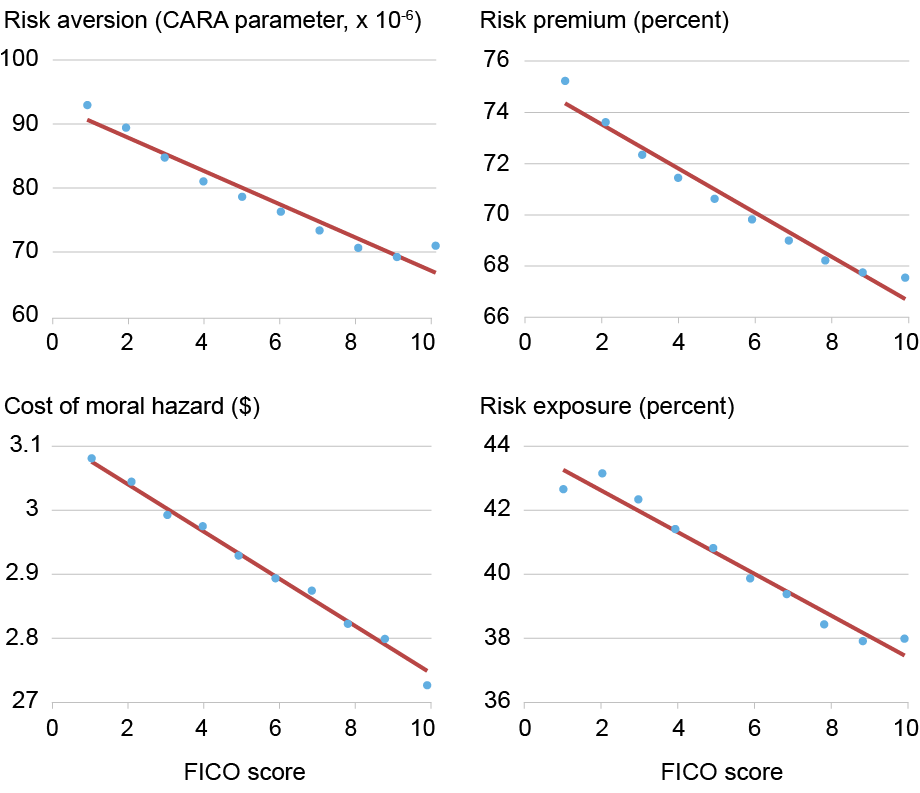
Insurers can't see how well a homeowner maintains or protects a property. This is the classic moral hazard problem. Deductibles and coverage limits handle it by making policyholders absorb part of any loss, which keeps them motivated to prevent damage. The authors built a contract-design model based on Holmström's moral-hazard framework. They estimated it on millions of policies matched to property-level disaster risk and borrower data from the McDash and CoreLogic datasets. That combination let them separate a home's underlying risk from the incentives its contract creates.
Their headline finding is a lopsided trade-off. Moral hazard costs insurers relatively little, because contract terms keep it in check. But those same terms leave households exposed to 29% of expected losses. Households would pay a lot to shed risk, and how much they'd pay rises with both their risk aversion and how risky their property is.