Old Mars, Jet-Lagged Birds, Rewired Brains · Morning Gist
Friday, October 305 stories · 16 min
Old Mars, Jet-Lagged Birds, Rewired Brains
The oldest piece of Mars yet found, the Event Horizon Telescope's plan for black-hole movies, and scientists who can now add or remove synapses in living brains.
Picked from 51 new articles across 10 sources · arrow keys for other days
Today in 30 seconds
30s left
Zircons in Teghaza 001, a meteorite found in the Sahara, date it to 4.1 billion years ago. That makes it the oldest known piece of Mars. story 1 ↓
Funding for a new Event Horizon Telescope dish in the Canary Islands is in place. Movies of black holes could follow by the early 2030s. story 2 ↓
Twenty years of GPS tracks from 1,045 Manx shearwaters show jet lag throws their sun compass off by up to 15 degrees. story 3 ↓
Researchers can now add and delete synapses in living worms and mice. In one study, pruning synapses improved memory. story 4 ↓
The Rubin Observatory found 2026 ED138, a large icy object that may be a dwarf planet. The bright Milky Way had hidden it. story 5 ↓
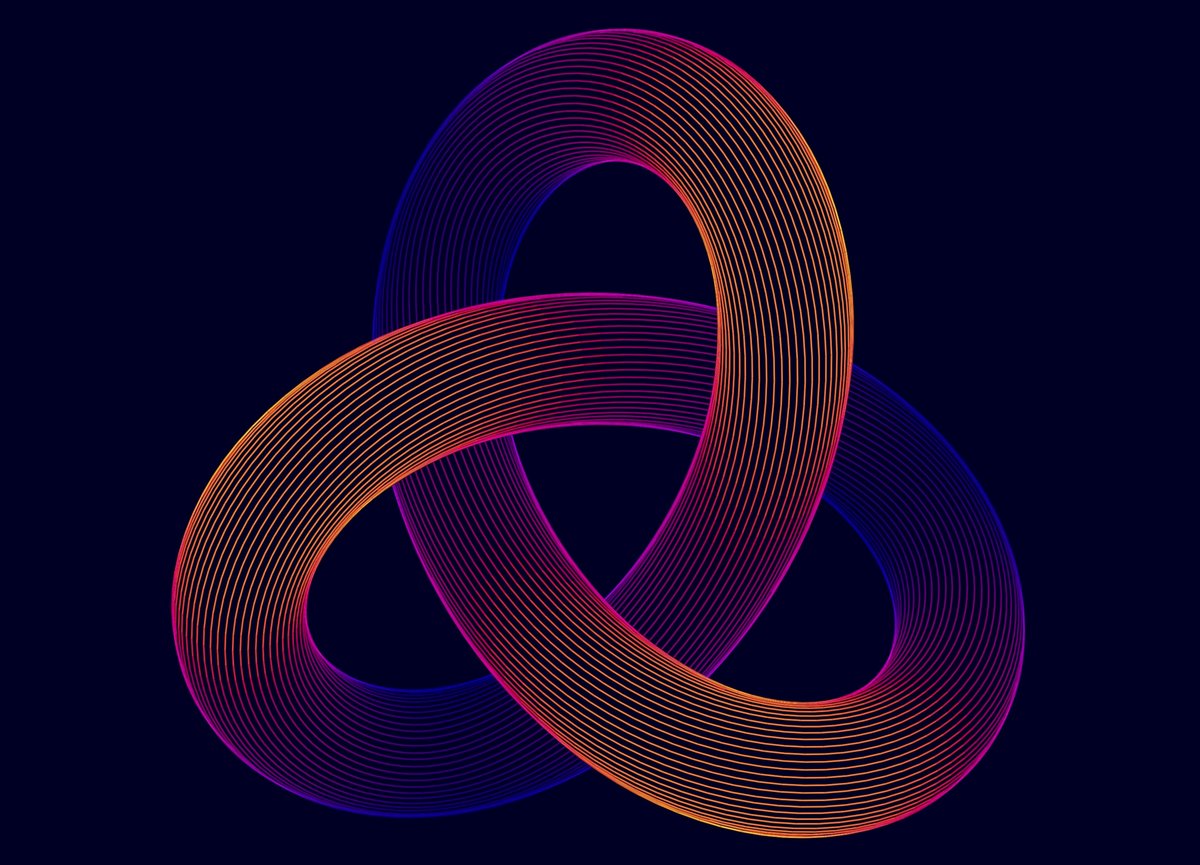
Mathematicians used knot theory to produce infinitely many Ramanujan-style formulas, revealing a hidden structure behind his equations.
1/5Scientific American· Oct 29
Saharan meteorite is the oldest known piece of Mars, at 4.1 billion years
Researchers dated tiny zircon crystals in Teghaza 001, a meteorite found in the Sahara in 2022. It is a piece of Martian crust at least 4.1 billion years old, the oldest Mars sample known.
Why it matters · Earth has recycled almost all of its earliest crust, so ancient Martian rock is one of the few direct records of how rocky planets, including our own, began.
Know this first
Context from the editor, not the article · 26 sec
1 · How Mars rocks reach Earth
Large asteroid impacts on Mars sometimes blast rock fragments fast enough to escape the planet. A few eventually fall on Earth. Several hundred are known, and most formed within the last roughly 600 million years.
2 · Dating rocks with zircon
Zircon crystals take in uranium as they form but almost no lead. Uranium decays to lead at a known, steady rate, so measuring the lead-to-uranium ratio in a zircon gives the time since it crystallized.
3 · Early Mars was wetter
Dry river valleys and water-formed minerals show Mars once had liquid water and a thicker atmosphere. It later lost most of that air and became the cold, dry planet seen today.
2/5Quanta Magazine· Janna Levin and Steven Strogatz· Oct 29
How the Event Horizon Telescope imaged black holes, and its plan for movies
In a Quanta podcast, astrophysicist Shep Doeleman explains how linking radio dishes worldwide produced the first black hole images, which matched Einstein's predicted size. He says adding dishes should make movies possible by the early 2030s.
Why it matters · The images confirmed general relativity's predicted shadow size. Movies could measure how fast a black hole spins, which still images can barely do, and could help rule out objects that only imitate black holes.
Know this first
Context from the editor, not the article · 24 sec
1 · What a black hole 'image' shows
Light can't escape the event horizon, so the image shows something else: hot gas just outside the horizon, whose light gravity bends into a bright ring around a dark central shadow.
2 · Resolution and telescope size
A telescope's finest resolvable angle is roughly the wavelength divided by the dish's diameter. To see tiny, distant objects, you need shorter wavelengths, a bigger dish, or both.
3 · Interferometry
Separate radio dishes record the same incoming waves, each stamped with a precise time. Comparing the recordings afterward lets the dishes act as one virtual telescope roughly as wide as the distance between them.
3/5Science News· Anirban Mukhopadhyay· Oct 29
Seabirds get jet lag on fast east-west flights, putting them slightly off course
Oxford researchers tracked Manx shearwaters by GPS for 20 years. Fast east-west flights left the birds' body clocks out of step with local sun time, and they drifted up to 15 degrees off course, as the clock mismatch predicted.
Why it matters · Biologists have predicted for decades that jet lag would distort birds' sun compasses but couldn't test it in the wild. This study confirms it and shows birds combine conflicting cues rather than following just one.
Know this first
Context from the editor, not the article · 29 sec
1 · How a sun compass works
The sun crosses the sky by about 15 degrees an hour on average. To use it for direction, an animal has to know the time of day, so it relies on its internal circadian clock to correct for that movement.
2 · Clock-shift experiments
Earlier lab and release studies, mostly with homing pigeons, shifted birds' clocks with artificial light schedules. The birds then flew off in the wrong direction by roughly the angle the sun moves in the shifted time.
3 · Solar time and longitude
Local sun time changes by one hour for every 15 degrees of longitude. Fly east or west fast enough and local noon shifts before your body clock can catch up. That lag is jet lag.
4/5Scientific American· Oct 29
Scientists can now add and delete synapses in living animal brains
Researchers have built genetic tools that add artificial connections between neurons, or remove existing ones, in worms and mice. These edits changed the animals' behavior and memory. Using them in humans is still far off.
Why it matters · Optogenetics lets scientists switch existing circuits on and off. Editing the wiring itself is a step further, and it could show which connections cause particular behaviors and disorders.
Know this first
Context from the editor, not the article · 28 sec
1 · Synapses and circuits
Neurons pass signals at junctions called synapses. Chemical synapses release molecules called neurotransmitters. Electrical synapses let charged particles flow straight from one cell to the next through protein channels. Chains of these connections make up the circuits behind behavior.
2 · Optogenetics, the earlier tool
Optogenetics was developed about 20 years ago. It puts light-sensitive proteins into neurons so that light can switch them on or off. It controls activity in circuits that already exist but cannot change how those circuits are wired.
3 · Getting genes into neurons
5/5Live Science· Damien Pine · Oct 29
Rubin Observatory spots a large icy object that may be a dwarf planet
The new Vera C. Rubin Observatory has found 2026 ED138, an icy body beyond Neptune estimated at 600–1,500 km wide. If follow-up shows it is round, it could become the sixth officially recognized dwarf planet.
Why it matters · It is an early test of whether Rubin's sky survey can find the large outer-solar-system bodies that older surveys missed. How many such bodies exist bears on how the planets formed.
Know this first
Context from the editor, not the article · 30 sec
1 · What makes a dwarf planet
Under the International Astronomical Union's 2006 rules, a dwarf planet orbits the Sun, has enough gravity to pull itself round, and has not cleared other bodies from its orbit. Only five are officially recognized: Pluto, Ceres, Eris, Haumea and Makemake.
2 · The Kuiper Belt
The Kuiper Belt is a ring of icy bodies beyond Neptune, about 30 to 50 times Earth's distance from the Sun. Its members are leftovers from when the planets formed, and most known dwarf planets live there.
3 · Rubin's sky survey
The Vera C. Rubin Observatory in Chile photographs the whole southern sky every few nights with the largest digital camera ever built. It began a 10-year survey in July and flags anything that has moved or changed brightness.
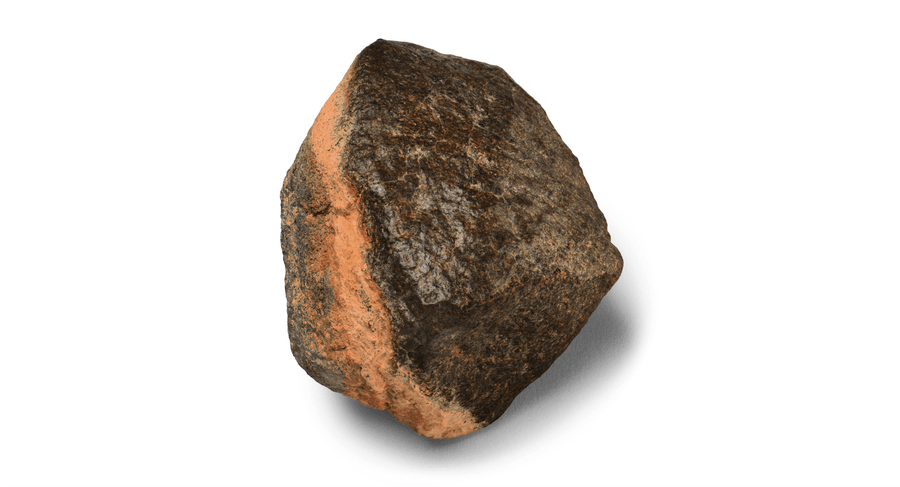
The Teghaza 001 meteorite. Tiny scraps of it held zircons that dated it to at least 4.1 billion years.
Nomadic meteorite hunters found a strange stone in the Sahara in 2022. Experts identified it as a meteorite from Mars and named it 1. A study published this week in Science shows it is a piece of Martian crust at least 4.1 billion years old, the oldest Mars sample ever identified. Mars itself is about 4.5 billion years old.
Why age is hard to find
Martian meteorites reach Earth after giant impacts blast fragments off the planet. Several hundred are known, but most are young and record only the last 600 million years or so. The only other intact ancient sample is an Antarctic meteorite found in the 1980s, and it is about 10 million years younger than Teghaza.
How the team dated it
Yang Liu, a planetary scientist at NASA's 2 at Caltech, first received a fragment to study its manganese, an element that shows whether a rock was exposed to water and oxidation. Then she spotted 3 in it. These are tough crystals that survive for billions of years and contain radioactive uranium, which decays into lead at a known rate. Measuring how much lead has built up gives a very precise crystallization age.
Her team separated zircons and other minerals from small scraps of the rock, measured its chemistry and dated it. Teghaza is an 4 rock: it formed from magma that cooled slowly as part of the crust. The team compared its element ratios with orbiter measurements of the Martian surface. The closest matches were in the heavily cratered 5, among the planet's oldest terrain.
What it says about water
Earlier work by the same group found minerals in the rock that water had altered, a sign that liquid water once moved through Mars's ancient crust and mantle. Hydrogen trapped in the rock suggests that even 4.1 billion years ago, Mars was already losing most of its atmosphere and heading toward its cold, dry state. Liu says this points to a Martian mantle that is more varied and complex than many scientists assumed.
Why it matters beyond Mars
Earth's plate tectonics keep burying and melting its crust, so almost nothing survives from its earliest years. Mars went geologically quiet long ago and kept its old rocks. One reviewer called Teghaza "the 6 of Mars."
The limits
No one knows exactly which crater launched the rock. The highlands match is a best fit, not a precise location. Anya Udry of the University of Nevada, Las Vegas, who was not involved, argues this is exactly why samples collected from known sites on Mars need to be brought back. Liu says her team has "only scratched the surface."
A stone that nomadic meteorite hunters picked up in the Sahara in 2022 has turned out to be the oldest known piece of Mars. A paper published this week in Science finds that the meteorite, 1, is a fragment of Martian crust at least 4.1 billion years old. It formed when Mars, now about 4.5 billion years old, was warmer, wetter and more like Earth.
"We're holding a piece of a rock that's dated even before the oldest Earth rock," says lead author Yang Liu, a planetary scientist at NASA's 2, which Caltech manages. For comparison, from general knowledge: the oldest intact rocks on Earth are about 4 billion years old, although single zircon grains from Western Australia are older.
The problem: Mars samples are mostly young
Scientists have only a handful of ways to hold Mars rock in their hands, and meteorites are the main one. A large asteroid strike on Mars can throw debris fast enough to escape the planet's gravity. A tiny share of that debris drifts for millions of years and then lands on Earth. Several hundred Martian meteorites are now known.
Most are young, though. Each gives a snapshot from roughly the last 600 million years, about the most recent eighth of the planet's history. The period that interests planetary scientists most, when Mars had liquid water and possibly conditions suitable for life, is barely represented. Before Teghaza, the only intact ancient sample was a meteorite found in Antarctica in the 1980s, which is about 10 million years younger.
How the age was measured
Liu got a fragment from the University of New Mexico team that first analyzed the meteorite. Her original job was to measure its manganese, which helps show whether an ancient rock was exposed to water and oxidation. Then she noticed it contained 3.
Zircons are durable crystals that can survive in rock for billions of years. They also work as natural clocks. Here is the general method, explained from standard geochemistry rather than the paper's specific numbers. When a zircon crystallizes, its structure takes in uranium but almost no lead. Uranium-238 then decays into lead-206 with a half-life of about 4.5 billion years, and uranium-235 decays into lead-207 with a half-life of about 0.7 billion years. Suppose a zircon is measured and nearly half of its original uranium-238 has become lead. That crystal is close to one half-life, about 4 billion years, old. Having two separate decay chains lets geologists check the age against itself, which is why the article calls zircon dating "ultraprecise."
Her team isolated zircons and other minerals from small scraps of the sample, measured the rock's chemical composition and dated its components to Mars's early history. The article does not give error bars or describe the instruments used.
What kind of rock, and from where
The analysis shows Teghaza is 4. It formed from magma that cooled slowly and was once part of the planet's crust. To work out where it came from, the team compared ratios of certain elements in the meteorite with ratios that orbiting spacecraft have measured over large areas of the Martian surface. The best matches were in the rugged, crater-covered 5, which are thought to be among the planet's oldest terrain. Heavy cratering is a rough age indicator: the longer a surface has existed, the more impacts it has collected.
This is a regional match, not a launch site. The specific crater that sent Teghaza toward Earth is still unknown.
What it says about water and air
Earlier this year Liu's team published work showing that some minerals in the meteorite are 6, meaning water has chemically changed them. That is evidence that liquid water once seeped through Mars's ancient mantle and crust.
The team also analyzed hydrogen still trapped inside the rock. The results suggest that even when Teghaza formed, more than 4.1 billion years ago, Mars was already well on its way to losing most of its atmosphere and becoming cold and dry. The article does not describe the hydrogen measurement. Planetary scientists commonly use the ratio of heavy hydrogen (deuterium) to ordinary hydrogen for this, because escaping atmospheres lose the lighter form more easily and leave the heavy form behind. So the timeline may have started earlier than the picture of a long, wet early Mars implies: water still circulated through the rock while the atmosphere was already thinning.
Liu says that, taken together, the findings support the idea that the Martian mantle is more 7, or chemically varied from place to place, and more complex than many planetary scientists have long assumed.
Why Mars helps explain Earth
Mars and Earth formed in similar ways. Each began with a global magma ocean that separated as it cooled into a core, a mantle and a crust. On Earth, plate tectonics keep burying, melting and recycling crust, so the surface preserves few if any rocks from the planet's earliest period. Mars's geological activity died down long ago, so its oldest crust survived. That is why one reviewer of the paper called Teghaza "the 8 of Mars." Like the original stone, it could help interpret a record that is otherwise lost, including the early history of rocky planets generally. "We're hoping to start using Mars to compare and contrast and to understand what makes a planet habitable for life," Liu says.
Caveats and open questions
Unknown origin. Without a known launch site, the rock's geological setting can only be inferred. Anya Udry, a planetary scientist at the University of Nevada, Las Vegas, who was not involved, argues that this is "another example of why we need to bring back samples." Rocks taken from mapped locations on Mars can be placed in context in a way meteorites cannot. As background, NASA's Perseverance rover has been sealing rock cores for a possible future return mission, but that mission's plans and funding have been uncertain.
A single rock. Conclusions about a heterogeneous mantle or the timing of atmospheric loss currently depend largely on one sample, together with orbital data.
Work in progress. Liu says her team "has only scratched the surface" of what the meteorite can reveal, and more results are coming.
The age itself rests on peer-reviewed zircon dating, which is one of geology's most trusted methods. The broader story of early Mars that the rock supports is still developing.
Remember
Zircon crystals, natural uranium-lead clocks, are what made dating the meteorite so precise and rare.
The rock shows water altering Mars's crust while the planet was already losing its atmosphere 4.1 billion years ago.
Nobody knows which crater launched it, which strengthens the argument for returning samples from known sites on Mars.
In an episode of Quanta Magazine's Joy of Why podcast, Shep Doeleman, founding director of the 1 (EHT), explains how his 250-person collaboration made the only images of black holes so far. He also lays out the next goal: movies of black holes by the early 2030s. This is an interview, not a new paper. The published results he describes are peer-reviewed; the plans are his projections.
The problem
General relativity, Einstein's theory of gravity, predicts that light from hot gas behind a black hole bends into a bright ring around a dark shadow. The ring's size depends only on the black hole's mass. But the targets are tiny on the sky. The shadow of 2 (Sgr A*), our galaxy's 4-million-solar-mass black hole, spans about 50 3. Doeleman compares that to spotting a tangerine on the Moon. Resolution scales with wavelength divided by telescope size, so the job needed a telescope as wide as Earth.
How it works
The EHT uses 4. Dishes in Chile, Hawai'i, Spain, the South Pole and elsewhere record radio waves at about 230 gigahertz, a frequency high enough to see through gas and dust. Each recording carries time stamps from 5 clocks, which drift only about one second in 10 million years. Afterward the recordings are lined up crest to crest, so the dishes act as one planet-sized lens. The dishes already existed; the EHT talked observatories into letting it bolt in recording equipment.
Checking the result
To avoid seeing what they hoped to see, the researchers split into four isolated teams using different imaging algorithms. In July 2018 all four produced rings. The teams then spent six months trying to make the rings disappear, using algorithms tuned to favor other shapes, and failed. 6, the black hole in the galaxy M87, came first because it barely changes overnight, while gas circling Sgr A* completes an orbit in about half an hour. In both black holes, the ring size matched Einstein's prediction within the measurement uncertainty.
Why movies
Still images barely reveal 7: a black hole spinning at the maximum possible rate has a ring only about 4% smaller than one that doesn't spin. Orbit timing is far more sensitive. Near Sgr A*, matter circles in about 30 minutes if the hole doesn't spin and about 4 minutes at maximum spin. Capturing that motion needs more dishes. Doeleman says the funding for a Canary Islands dish is secured, and other planned sites include Chile, Mexico, Wyoming and possibly Mount Kilimanjaro, which still needs Tanzanian community approval. Combined with infrared observations, EHT data are also starting to rule out objects that only imitate black holes.
This is a Quanta Magazine Joy of Why podcast episode, not a new paper. Janna Levin, a theoretical physicist and co-host, interviews Shep Doeleman of Harvard and the Smithsonian Astrophysical Observatory. Doeleman was the founding director of the 1 (EHT), the global network of radio dishes that made the only images of black holes so far. He explains how roughly 250 researchers made those images and what the images showed. He also describes the next phase, which he calls next-generation EHT, aimed at movies of black holes by the early 2030s. The published results he describes are peer-reviewed. The future plans are his own projections.
Why seeing mattered
Before the EHT, the evidence for black holes was indirect. Stellar-mass black holes, left behind when massive stars die, showed up as X-ray sources like Cygnus X-1 that flickered very fast. A fast flicker means a small object, because nothing can vary faster than light can cross it. Supermassive black holes, millions to billions of times the Sun's mass at the centers of galaxies, were inferred from radio jets reaching across whole galaxies and from stars moving fast near galactic cores. Watching stars orbit our own galaxy's center for years later earned a Nobel Prize.
General relativity, Einstein's theory of gravity, makes a sharper prediction. Hot gas near a black hole glows, and gravity bends light from behind the hole into a ring around a dark shadow. Anyone viewing from any direction sees the same ring. Its diameter is about 2√27·GM/c² (G is Newton's constant, M the mass, c the speed of light). The mass is the only free quantity in that formula. So measuring the ring tests the theory directly and weighs the black hole at the same time.
Why it's hard
The targets are tiny on the sky. 2 (Sgr A*), our galaxy's central black hole, has about 4 million solar masses and sits about 27,000 light-years away. Its lensed shadow spans about 50 3. Doeleman's comparisons: from New York you could read the date on a quarter in Los Angeles, or spot a tangerine on the Moon. 4, in the galaxy M87, is about 2,000 times more massive and 2,000 times farther away. Because ring size grows with mass, it looks about the same size.
A telescope's resolution is roughly wavelength divided by aperture. Getting this sharp took an Earth-sized aperture and a radio frequency of about 230 gigahertz (wavelength about 1.3 mm). That was high enough to see through gas and dust, and high enough to strain what radio interferometry could do. Doeleman says pushing the method that far took about 20 years.
How the planet-sized telescope works
The method is 5 (VLBI). Each dish, say one in Chile and one in Hawai'i, records the incoming radio waves and stamps them with a 6 clock. These atomic clocks drift about one second in 10 million years. Afterward, the recordings are played back together and lined up crest to crest, as if one giant dish had caught them. If a clock jitters, the waves never line up. On one Mexican mountaintop the team heated a maser's wooden enclosure with light bulbs to hold it at the right temperature.
The team didn't build new telescopes. It persuaded existing observatories to let EHT bolt in recording equipment and run their dishes in unfamiliar ways. The sites were the South Pole, Chile (two), Mexico, Hawai'i (two), Arizona, Spain and France. Every observing night, the weather had to be good at all of them at once.
How they knew the ring was real
The first sign wasn't a picture. It was a graph of signal strength against the distance between pairs of dishes. A ring-shaped source produces a characteristic "bounce" in that curve. Doeleman says he checked where the bounces fell and found the ring size matched prediction.
To guard against groupthink, the collaboration split into four separate teams. Each used different imaging algorithms that had been tested on noisy simulated black holes. In July 2018 the four teams met at Harvard and all showed rings. They then spent six months trying to make the rings go away. They trained algorithms to favor double sources or filled disks, and the data still produced a ring.
M87* came first, although most astronomers expected Sgr A*. The reason is speed. Gas orbits Sgr A* in about half an hour, so its appearance changes during one night of observing. M87* is about 1,500 times heavier and essentially doesn't change overnight. That let the team combine a full night of data as Earth's rotation swept the baselines across it. Sgr A* came later, after new algorithms for a changing source. For both black holes, the ring size matched Einstein's prediction within the measurement uncertainty.
What movies would add
A black hole is largely described by its mass, its 7 and possibly its charge. Mass is now measured. Spin is hard to get from a still image: a black hole spinning at the maximum possible rate has a ring only about 4% smaller than one that doesn't spin. Orbital timing is far more sensitive. Near Sgr A*, gas orbits in about 30 minutes if the hole doesn't spin and about 4 minutes at maximum spin. A movie could read off spin directly. Spin carries a record of how the black hole grew, and it drives the twisting of spacetime that probably powers jets. Polarized light in the movies would map magnetic fields. Levin argues those fields could leave a spinning black hole with some charge, and Doeleman agrees to "just measure it."
Movies need many more dishes. The number of dish pairs grows roughly with the square of the number of dishes. For illustration, 10 dishes make 45 pairs and 11 make 55. More sites also keep enough dishes on target as Earth turns to build each frame. Doeleman names Chile, Mexico, Wyoming, the Canary Islands and Mount Kilimanjaro in Tanzania as key additions. He says funding for the Canary Islands dish is secured. He has climbed Kilimanjaro twice to scout sites and has worked with The Open University of Tanzania and others for over three years. He says "no is an acceptable answer" if local communities object. He expects new images within days, not the two years the first one took.
Open questions
The EHT is also starting to test "8," compact objects slightly larger than a horizon that have a real surface. Such a surface should glow in infrared light, and infrared observations combined with EHT data are already putting limits on these objects. The array also studies how quasar jets form and stay narrow, and radio masers around dying giant stars. The new sites aren't built yet, and Kilimanjaro still needs both technical and community approval. The early-2030s date for movies is Doeleman's forecast, not a commitment.
Remember
Shadow size depends only on mass. Both imaged black holes matched Einstein's predicted size within the measurement uncertainty.
Four isolated teams used different algorithms, then tried for six months to make the rings disappear, and couldn't.
Spin changes ring size by only about 4%, but it changes orbit times near Sgr A* from 30 minutes to 4.
A Manx shearwater in flight. GPS tracks from 1,045 of these birds revealed jet-lag steering errors.
1, seabirds that breed on islands around the United Kingdom, get jet lag. It throws their navigation slightly off, a team including Oxford biologist Tim Guilford reports October 29 in the peer-reviewed journal Science.
Why a compass needs a clock
Birds crossing open ocean can steer by the sun. But the sun moves across the sky, about 15 degrees an hour on average, so a bird has to know the time to work out direction from it. Birds get that time from their 2, the internal clock that normally runs in step with local sun time.
Fast east-west travel breaks that link. Local 3 changes by an hour for every 15 degrees of longitude, and a bird flying quickly can outrun its own clock. Scientists have long predicted this would skew birds' 4. Lab experiments with homing pigeons whose clocks were shifted artificially showed the effect. Testing it on wild birds, Guilford says, "has seemed impossible until now."
How they tested it
Over 20 years, the team fitted 1,045 breeding shearwaters with miniature GPS trackers. The birds logged thousands of foraging trips to feeding grounds up to 1,000 kilometers from their colonies. The researchers kept 1,837 continuous homeward flights, where the destination is known.
They assumed each bird's clock matched local time at sunrise. From each track they calculated how far local sun time had drifted from that clock and what heading error that should cause. Then they compared those predictions with what the GPS recorded.
What they found
The birds veered as predicted, by up to 15 degrees. The cost was small, a few extra kilometers, and every bird still got home.
The surprise came near the coast. Even within sight of presumably familiar land, the birds kept drifting nearer the shore or farther out to sea in line with their predicted sun-compass error. They didn't simply follow the coastline. That suggests they combine the sun compass with landmarks even when the two disagree.
Sangeeta Rani, a 5 (a scientist who studies biological clocks) at India's University of Lucknow who wasn't involved, argues this flexibility could help the birds as climate change and human activity reshape familiar landscapes.
Caveats
The predictions depend on the assumption about when the birds' clocks were set. The article doesn't say how quickly shearwater clocks actually adjust, how the birds weigh their different cues, or whether the effect matters on their much longer annual migrations.
1, ocean-going seabirds that breed on islands around the United Kingdom, fly fast enough to get jet lag. That jet lag measurably bends their course, researchers report October 29 in Science. The team behind the work includes Tim Guilford, a biologist at the University of Oxford. Their 20-year GPS dataset showed that after rapid east-west flights the birds' internal clocks fell out of step with local time. The birds then misread where the sun should be and veered by as much as 15 degrees.
The problem: a compass that needs a clock
Out over open ocean there are few landmarks, and the sun is one of the most useful direction cues. But it doesn't hold still. It rises in the east, swings south (as seen from the Northern Hemisphere) and sets in the west. The sun alone doesn't tell you which way is north. You also need to know what time it is, so you know where the sun ought to be. Birds get that time from their 2, the roughly 24-hour internal clock that normally stays synchronized with local sun time.
Travel breaks that synchronization. Local 3 shifts by an hour for every 15 degrees of longitude. Fly east or west quickly and the sun's schedule changes faster than the body clock can reset. Experiments with homing pigeons whose clocks were shifted artificially showed long ago that a wrong clock gives a wrong heading. Whether natural jet lag does the same thing to wild birds was a different question. Testing it "has seemed impossible until now," Guilford says. You would need many precise tracks of birds making fast, long east-west flights, plus a way to separate clock error from wind, choice of route and every other source of wobble.
What the team did
Over two decades, Guilford and colleagues fitted 1,045 breeding Manx shearwaters with miniature GPS trackers. The birds made thousands of foraging trips from UK colonies to feeding grounds up to 1,000 kilometers away. The researchers looked only at return journeys and picked out 1,837 continuous homeward flights. On these the birds' goal is known: get back to the colony.
The test worked like this. Assume each bird's internal clock was synchronized with local time at sunrise. Then follow its track to work out how far local sun time had drifted from that clock by each point on the trip. That drift gives a predicted sun-compass error. Finally, compare the predicted errors with the headings the GPS actually recorded.
Illustrative example (not from the paper): at about 52 degrees north, roughly the UK's latitude, one degree of longitude spans about 69 kilometers. A bird that covers 500 kilometers east or west has shifted local solar time by about half an hour. If the sun moves around 15 degrees an hour, a clock that hasn't adjusted would point the bird something like 7 degrees off its intended heading. The real rate of the sun's movement varies with time of day and season, so the paper's models would be more detailed than this.
What they found
The birds veered the way the clock mismatch predicted, by up to 15 degrees from their intended direction. The cost was small: the errors added only a few kilometers to the trip, and the birds still got home.
What surprised the team came near the end of the trips. "What really surprised us is that the small orientation errors … continue to be visible even when the birds were in sight of presumably familiar land," Guilford says. A bird following a coastline could, in principle, steer by the shore alone. Instead the shearwaters drifted closer to shore or farther out to sea, matching their predicted sun-compass errors. The researchers read this as the birds using the 4 alongside coastal cues, even when the two disagree, rather than switching to the landmark completely.
Why that's interesting
Sangeeta Rani, a 5 (a scientist who studies biological clocks) at the University of Lucknow in India, wasn't part of the study. She sees the tug-of-war as a sign of flexibility. The birds appear to combine several navigation cues instead of relying blindly on one. She argues this could help them as climate change and human activity alter familiar landscapes. "If I have marked a path for myself in the woods, my innate ability is not to mindlessly follow the markings," she says. "It is to find out what's missing and still find my way back."
What stays open
The article leaves several questions unanswered:
The clock assumption. The predictions depend on assuming each bird's clock matched local time at sunrise. The article doesn't say how sensitive the results are to that assumption, or how quickly shearwater clocks actually reset.
How cues are weighted. It isn't clear how the birds balance sun, coastline and any other cues, such as magnetic or smell-based ones. The article doesn't discuss these.
Longer migrations. These were foraging trips of up to 1,000 kilometers. Manx shearwaters also migrate to South America each year, and the article doesn't say whether jet lag matters on those far longer flights.
The study is peer-reviewed and published in Science. The article gives no effect sizes beyond the 15-degree maximum and the "few kilometers" of extra distance.
Remember
Body-clock mismatch predicted the birds' heading errors closely, up to 15 degrees, across 1,837 GPS-tracked flights home.
The errors cost only a few kilometers, so jet lag nudges the birds off course but doesn't strand them.
Near familiar coastlines, the birds still followed their sun compass partly, combining it with landmarks rather than switching cues.
Most of these tools rely on engineered viruses that deliver new genes into specific cells. The cells then make the proteins those genes encode, such as channel proteins that form a synapse.
Image: Scientific American
Optogenetics uses light to switch neurons on and off. According to Scientific American, it won the 2026 Nobel Prize in Physiology or Medicine. But it only changes activity in circuits that already exist. Sangkyu Lee of South Korea's Institute for Basic Science compares it to controlling the traffic on roads that are already built. A newer set of tools rebuilds the roads instead: researchers can now add synapses, the junctions between neurons, or delete them in living animals.
Adding connections
The first experiments used the worm C. elegans, which has only about 300 neurons. In 2014 Ithai Rabinowitch's team at the Hebrew University of Jerusalem used a virus to insert genes for mouse 1 proteins into the worms. An electrical synapse is a channel that lets charged particles pass directly from one cell to another. The new links did not interfere with the worms' own synapses, and they rewired a smell circuit so the worms avoided an odor they used to like. Another team trained worms to prefer a particular temperature, then used an artificial synapse to bypass that memory, which sent the worms toward warmer spots instead.
Mammals are harder. In a brain with billions of neurons, an engineered protein that links up with the wrong partner could cause serious damage, even death. In a study published in May, Kafui Dzirasa (Duke) and Daniel Colón-Ramos (Yale) designed synapse proteins that join only to a specially engineered partner protein. They do not pair with each other or with proteins the mouse already makes. Connecting chosen cell types in two mouse circuits changed the animals' behavior. In a 2, so not yet peer-reviewed, the same group added bypass synapses in mice with a mutation that causes repetitive, OCD-like grooming, and the grooming decreased.
Deleting connections
Removing synapses is less precise so far. Don Arnold's group at the University of Southern California breaks down proteins that hold synapses together. Their newest toolkit can target only excitatory or only inhibitory synapses, triggered by light or chemicals. In April, Lee's team reported 3, which uses matching "lock" and "key" proteins to direct 4, cells that naturally prune synapses. They removed less than a third of the synapses of particular cell types in the mouse 5. The remaining connections grew stronger, and the edited mice did better on memory tests than unedited ones.
Far from the clinic
Possible targets include post-traumatic stress disorder (PTSD), schizophrenia, OCD and dementia. But no one yet has a reliable way to get the genes across the 6 into human neurons, and the tools' safety is unknown. Optogenetics itself has only just been shown safe in human trials. For now, the researchers say, the main value is learning how circuits work.
Scientific American reports that 1 won three scientists the 2026 Nobel Prize in Physiology or Medicine. The technique is about 20 years old and uses light to switch neurons on and off. It made it possible to watch brain circuits at work, but it only adjusts activity in circuits that already exist. Sangkyu Lee, a neurobiologist at South Korea's Institute for Basic Science, compares it to "controlling the volume of traffic on a road network that's already built." The better option, he says, would be to change the roads. That is now possible in animals: researchers can add new synapses between neurons or delete existing ones, and the edits change behavior and memory.
Why the wiring matters
The human brain has about 86 billion neurons joined by hundreds of trillions of synapses, and those connections shift as we learn and form habits. Many psychiatric conditions may involve connections that are wrong: missing, extra, or in the wrong place. If scientists can edit specific connections, they can test which ones produce which behaviors, and perhaps one day fix faulty ones.
Kafui Dzirasa, a psychiatrist at Duke University, came to the field through brain-machine interfaces. In that approach, electrodes record activity in one brain region and a computer uses the signal to stimulate another region, which in effect wires the two together. As a treatment for mental illness it was impractical. "We realized that's what a synapse does," he says, "so we thought, 'Why don't we just create a synapse?'"
How you build a synapse
The approach was first worked out in the nematode worm Caenorhabditis elegans, which has only about 300 neurons. In 2014 Ithai Rabinowitch's team at the Hebrew University of Jerusalem made an 2. This kind of synapse is a set of protein channels joining two cells, through which charged particles pass directly from one to the other. A specially programmed virus inserted the genes for these channel proteins into chosen neurons. The team used mouse synapse proteins, which did not interfere with the worms' own synapses. They rewired a smell circuit, and the worms began avoiding an odor they had previously found attractive.
The technique has since been used to study worm circuits for everything from defecation to learning. In one study, led by Daniel Colón-Ramos at the Yale School of Medicine, worms were trained to prefer a certain temperature. An artificial synapse then bypassed the trained memory, and the worms moved toward warmer temperatures instead. Colón-Ramos calls it an "inception experiment," meaning a memory planted by an artificial connection.
The mammal problem
Mammals are much harder. In a brain with billions of neurons, an engineered protein that pairs with the wrong partner could create unintended connections, and those can be devastating, even fatal. The challenge is precision. In a study published in May, Dzirasa, Colón-Ramos and colleagues designed synapse proteins that connect only to a specially engineered partner. They do not join with copies of themselves or with synapse proteins the mouse already makes. A rough analogy: a plug that fits only one custom socket and none of the standard outlets in the house. With the partners placed in different cell types in two brain circuits, the researchers changed the mice's behavior.
A further result is preliminary. In a 3 posted to bioRxiv in March, which has not been peer-reviewed, Dzirasa's group tested the tool in mice whose genetic mutation causes repetitive grooming that resembles obsessive-compulsive disorder (OCD). Adding synapses that routed around the disrupted circuit reduced the grooming. Dzirasa calls it "a clear demonstration of the potential power of this in thinking about human diseases."
Deleting connections
Sometimes the problem may be a connection that should not be there. In post-traumatic stress disorder (PTSD), harmless sights or sounds can trigger anxiety. Those reactions may come from links between sensory neurons and "negative emotion" cells in the amygdala. "It's tantalizing to think, if you could wipe those synapses out, maybe you'd get rid of this," says Don Arnold of the University of Southern California.
Deletion tools are less precise than addition tools so far. Arnold's group found a way to break down the proteins that hold synapses together, which removes synapses from neurons wholesale. Last year they expanded this into a toolkit that can remove only excitatory synapses (which make a neuron more likely to fire) or only inhibitory ones (which make it less likely). It can be triggered by light or chemicals.
In April, Lee's team described a somewhat more precise tool, Synthetic Trogocytosis (4). It recruits 5, star-shaped support cells that prune synapses in the normal course of things. Matching "lock" and "key" proteins mark which synapses the astrocytes should remove. In two parts of the mouse 6, a region central to memory, the team removed less than a third of the synapses of particular cell types. The connections that remained became stronger, and the edited mice did better on memory tests than unedited ones. The article says this hints at uses in conditions with abnormal connectivity, such as schizophrenia, and in conditions of memory loss, such as dementia. Those are possibilities, not findings.
"You have a gas pedal, but now you also have brakes," Colón-Ramos says of having both kinds of tool.
Big ambitions, big gaps
Rabinowitch imagines designing 7, the complete wiring diagrams of brains, on a computer. The software would output a list of genes to introduce, and the result would be an animal built for specific tasks, or even artificial life. That is a long-range vision, not current work.
Human use is far off. Optogenetics took 20 years just to be shown safe in human trials. To edit human circuits, the genes would have to cross the 8, the tightly sealed blood vessel lining that keeps most substances out of brain tissue, and then enter the right neurons. "That's a barrier nobody's really solved yet," Arnold says. Safety is unknown, and Dzirasa says his team is only beginning to test whether human tissue tolerates the tools.
The deepest gap may be knowledge. Researchers need a much better understanding of how human circuits work before intervening would help. Colón-Ramos argues that these tools are the way to get that understanding: "If you don't know how something works, you cannot fix it."
Remember
The key advance in mice was making engineered synapse proteins that pair only with a designed partner, never with native proteins.
Removing under a third of certain hippocampal synapses strengthened the remaining connections and improved mouse memory.
The OCD-like grooming result is from a preprint and has not been peer-reviewed; human use requires solving delivery across the blood-brain barrier.
ED138's tilted orbit shown alongside the five dwarf planets the IAU officially recognizes.
A new candidate beyond Neptune
The 1 in Chile began its 10-year sky survey in July. It has already found 2026 ED138, an icy body that the team calls one of the largest and brightest objects ever found beyond Neptune. If follow-up work confirms it, ED138 would become the sixth dwarf planet officially recognized by the 2 (IAU), astronomy's naming authority. The news came in a team statement, and the article mentions no peer-reviewed paper, so the result is preliminary.
Why it stayed hidden
ED138 orbits about 46 3 (AU) from the Sun, where one AU is the Earth–Sun distance. That places it in the 4, the band of icy leftovers from planet formation that lies 30 to 50 AU out. Its orbit is tilted 25 degrees from the plane the planets share. That tilt currently puts it in front of the bulge at the Milky Way's centre, where millions of stars crowd every image and a faint moving dot is easy to miss.
How it was found
Rubin photographs the whole southern sky every few nights and sends out millions of alerts each night for anything that moved or changed brightness. The hard part is deciding which dots, from different nights, are one object on one orbit. Matthew Holman of the Smithsonian Astrophysical Observatory and Kevin Napier wrote software that compares billions of observations to make those links, and ED138 stood out. Holman says he first assumed he or the code had made a mistake. The team then found the object in older Rubin data and in archival images from the 5 on Chile's Blanco telescope. That traced its orbit back about 10 years.
The size question
Estimates put ED138 at 600 to 1,500 km across. Pluto is 2,377 km and Ceres, the smallest official dwarf planet, is 958 km. The range is wide because size is inferred from brightness, and brightness depends on both size and 6, the fraction of sunlight a surface reflects. A small shiny object can look the same as a large dark one.
What comes next
To qualify as a dwarf planet, an object must be massive enough that its own gravity has made it round. Better measurements of ED138's diameter and density will show whether it is. "Sixth" refers only to the IAU's list. Many astronomers already count at least nine dwarf planets, and estimates of the total run from a handful to hundreds. Holman argues that Rubin's repeated scans will find others hiding where earlier surveys didn't look.
A candidate from Rubin's first months
The 1 in Chile started its 10-year survey of the southern sky in July. Within months it turned up 2026 ED138, an icy body beyond Neptune that the team calls one of the largest and brightest objects ever found out there. If follow-up observations confirm it is a dwarf planet, it would bring the official count to six. The announcement came in a team statement. The Live Science article doesn't mention a peer-reviewed paper, so treat the claim as preliminary. The object is real and its orbit is known. What it actually is has not been settled.
Where it is, and why nobody saw it
ED138 orbits at about 46 2 (AU). One AU is the Earth–Sun distance, so that puts it in the outer 3, the band of icy leftovers beyond Neptune that runs from about 30 to 50 AU. Its orbit is tilted 25 degrees from the plane the planets share.
The researchers say that tilt is why earlier surveys missed it. Right now the object sits in front of the bulge at the centre of the Milky Way, where millions of stars crowd every image. Spotting one faint, slow-moving point in that field is like noticing one pedestrian drifting slowly through a packed stadium crowd. Many telescopes and surveys either struggle with such fields or avoid them.
How Rubin found it
Rubin's advantage is how often it looks. It photographs the whole southern sky every few nights and sends out millions of alerts each night for anything that has moved or changed brightness. That makes it good at catching moving objects, from nearby asteroids to distant Kuiper Belt bodies, as well as one-off events like supernovae.
An alert is only a dot, though. The hard part is the 4: working out which dots, scattered across different nights, are the same object travelling along one orbit. Kuiper Belt objects make this harder because they move very slowly against the stars. Matthew Holman of the Smithsonian Astrophysical Observatory and his colleague Kevin Napier wrote software that sifts billions of Rubin observations to find detections that fit a single orbit. The article doesn't name the algorithm or explain how it works internally. Running Rubin's data through it made ED138 stand out.
Holman says his "first reaction was one of excited disbelief," and that because such objects are so rare, he immediately checked whether he or the code had made a mistake. The team then searched older images for the object, a technique called 5. They used earlier Rubin data and archival frames from the 6 on the 4-metre Victor M. Blanco Telescope at Cerro Tololo, also in Chile. That let them trace ED138's orbit back about 10 years, and a longer record pins an orbit down far more tightly than a few weeks of data.
How big is it? The 7 problem
The size range is wide: 600 to 1,500 km across. For comparison, Pluto is 2,377 km and Ceres, the smallest official dwarf planet, is 958 km. The upper estimate is a bit over half of Pluto's diameter. The lower estimate is smaller than Ceres.
The range is wide because size is inferred, not measured. Astronomers know how bright ED138 looks and how far away it is. Brightness, though, depends on both size and albedo, the fraction of sunlight a surface reflects. A small, bright, icy object and a large, dark one can look exactly the same.
A rough worked example from general physics (the article doesn't give this): reflected light scales with surface area, which goes as diameter squared. So if one object reflects six times as much light per square metre as another, it needs only about 2.5 times less diameter (the square root of six) to look equally bright. The 600–1,500 km range is a factor of 2.5, which suggests a spread of assumed albedos of roughly that size. Dwarf planet candidates tend to be bright and at least about 600–800 km across. ED138 clears that bar at its upper estimate and only just reaches it at the lower one.
What confirmation would take
To count as a dwarf planet under the 8's (IAU) rules, an object must be massive enough that its own gravity has pulled it round. It must also be too small to have cleared other bodies from its orbit, which a Kuiper Belt object almost certainly is. The open question for ED138 is whether it is round. The article says only that future observations will give better values for diameter and density. In general, astronomers get those by measuring the heat the object gives off, which separates size from albedo; by timing how long it blocks a background star (a 9); or, if they are lucky, by finding a moon, whose orbit gives the object's mass.
Five, nine or hundreds
"Sixth dwarf planet" refers to the IAU's official list. Many researchers already count at least nine, adding bodies such as Quaoar, Gonggong, Sedna and Orcus. Estimates of the total run from a handful to hundreds. Distant objects are hard to pin down because they are dim and slow. That uncertainty matters to science: Kuiper Belt objects are largely unchanged since the solar system formed, so how many large ones exist, and how tilted their orbits are, constrains models of how the planets formed and migrated.
What's still open
The biggest unknowns are ED138's real size, its albedo and its shape. There is also a broader question. If a large object could hide for years just because it sat in front of the galactic centre, how many more are sitting in the parts of the sky earlier surveys skipped? Holman argues that Rubin's repeated scans over the coming decade will reach them. ED138 is an early sign that he may be right, but only one object so far, and not yet a confirmed one.
Remember
ED138's 600–1,500 km size range comes from not knowing how reflective its surface is, not from bad measurements.
Its 25-degree orbital tilt hid it against the star-crowded centre of the Milky Way.
Ten years of archival images pinned down its orbit, but whether it is round is still unknown.