Sticky Spider Silk and Too-Violent Comets · Morning Gist
Thursday, October 295 stories · 15 min
Sticky Spider Silk and Too-Violent Comets
How spiders spin silk, a bias-corrected estimate of CTE in NFL players, comets that likely couldn't seed life, Denisovan skulls and a changing Southern Ocean.
Picked from 47 new articles across 10 sources · arrow keys for other days
Today in 30 seconds
30s left
Black widow silk forms from gel-like droplets held together by arginine and tyrosine 'stickers'. Chemists tracked them in isotope-fed spiders. story 1 ↓
93.5% of nearly 400 donated NFL brains showed CTE. After correcting for which families donate, the estimate is about 75%. story 2 ↓
Simulations suggest comet impacts destroyed hydrogen cyanide. Only about one comet per billion years would have delivered it intact, and only by hitting land. story 3 ↓
Proteins identify 20 Xujiayao fossils, 138,000 to 199,000 years old, as Denisovan. They give the first clear picture of Denisovan skull shape. story 4 ↓
Antarctic sea-ice loss since 2016 is already shifting the upper Southern Ocean. Effects may arrive within years to decades, not centuries. story 5 ↓
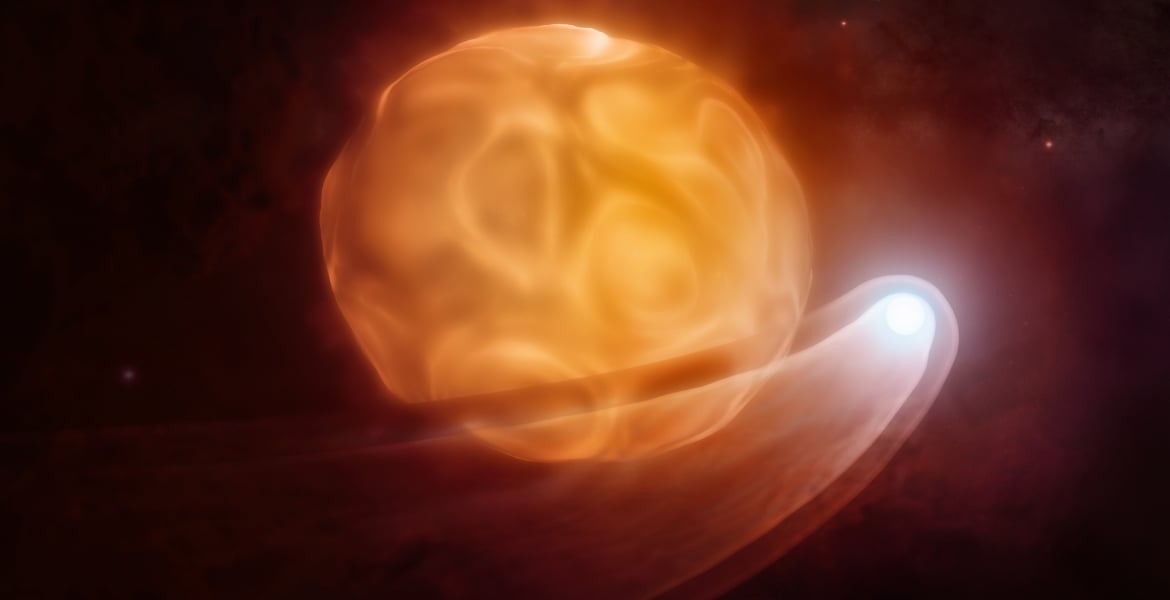
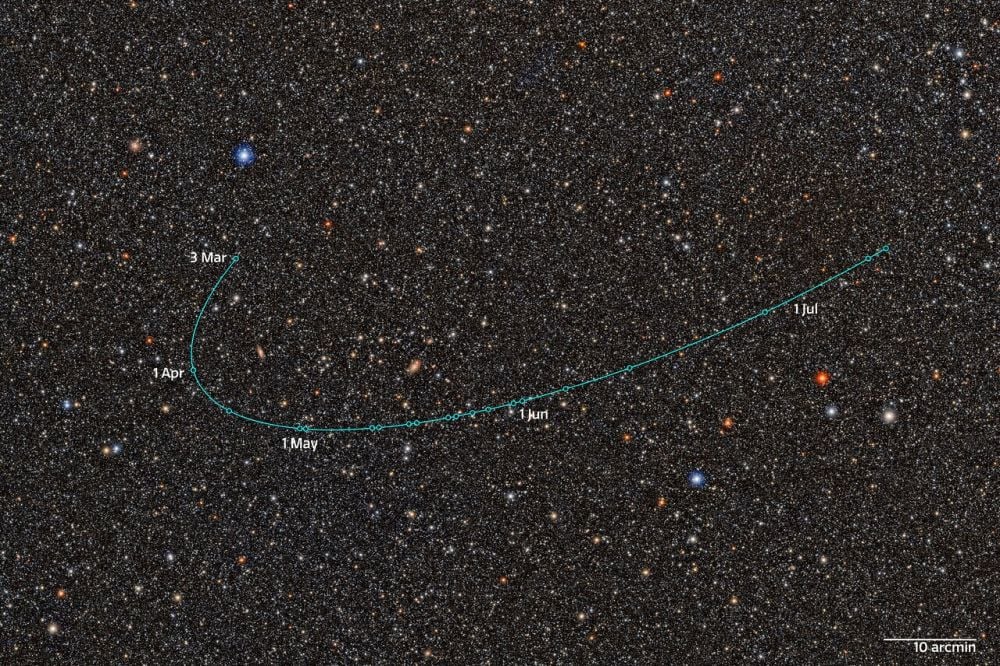
Before its main survey starts, the Rubin Observatory has spotted 2026 ED138, a candidate dwarf planet beyond Neptune up to 1,500 km across.
1/5Quanta Magazine· Yasemin Saplakoglu· Oct 28
Black widow silk forms through gel-like droplets held by "molecular stickers"
Chemists at San Diego State University watched black widow silk proteins at the atomic level. Once phosphate is added, two amino acids pull the floppy proteins into gel-like droplets, and that grip survives into the solid thread.
Why it matters · Lab-made spider silk still falls short of the natural thread. This study measures a key spinning step directly in real spiders, not synthetic proteins.
Know this first
Context from the editor, not the article · 29 sec
1 · Spider silk's raw material
Silk starts as "dope", a liquid mix of proteins called spidroins, water and salt, stored in the spider's silk glands. The finished fiber gets its strength from stacked flat protein structures called beta sheets set in a looser matrix.
2 · Proteins without a fixed shape
Most proteins fold into one stable shape. Spidroins have long intrinsically disordered regions that keep flexing and changing shape. The puzzle is how such floppy molecules end up as an ordered, tough fiber in milliseconds.
3 · Condensates
Condensates are dense liquid or gel-like droplets that separate out of a solution when molecules start making weak, reversible contacts. Cells use them to organize DNA and proteins. Mussels and squid use them to build tough materials.
2/5Scientific American· Oct 28
Study estimates three in four former NFL players died with CTE
Boston University researchers studied 2,362 former NFL players who died between 2008 and 2023. After correcting for the fact that brain donors tend to be sicker, they estimate about 75 percent had the degenerative brain disease CTE.
Why it matters · It shows how researchers try to correct a biased sample, and it is the strongest population-wide estimate yet of a brain disease that can only be confirmed after death.
Know this first
Context from the editor, not the article · 29 sec
1 · What CTE is
Chronic traumatic encephalopathy is a degenerative brain disease linked to repeated blows to the head. It is associated with mood changes, memory loss and dementia. It can be confirmed only by examining brain tissue after death.
2 · How CTE is spotted
Pathologists look for clumps of tau, a protein that also builds up in Alzheimer's disease, in a distinctive pattern. They also look for shrinkage of brain tissue. No reliable test exists for diagnosing it in living people.
3 · The brain bank problem
Earlier brain bank studies reported CTE in nearly every NFL brain examined, including 110 of 111 in a 2017 study. But families usually donate because they saw worrying symptoms, so donated brains are not a fair sample of all players.
3/5Science News· Skyler Ware· Oct 28
Comet impacts were probably too violent to seed Earth with life's chemicals
Simulations published in Scientific Reports suggest most comets hit the early Earth too fast and too steeply for hydrogen cyanide, a key starting chemical for life, to survive. That weakens a long-popular origin story.
Why it matters · If comets didn't supply life's raw ingredients, the search for where they came from shifts toward carbon-rich asteroids, volcanoes and hydrothermal vents, and possibly makes Mars look more favorable.
Know this first
Context from the editor, not the article · 30 sec
1 · Prebiotic chemistry
Before life there had to be simple carbon- and nitrogen-bearing molecules that could react into sugars, amino acids and the parts of DNA. Where early Earth got enough of them, in the right places, is still unresolved.
2 · Comets as delivery trucks
Comets are icy leftovers from the solar system's birth. Telescopes and spacecraft have found them rich in organic molecules. Earth was heavily bombarded in its first billion years, so comets have long been proposed as the source of these ingredients.
3 · Why hydrogen cyanide matters
Hydrogen cyanide (HCN) is one carbon, one nitrogen and one hydrogen. In lab experiments since the 1960s it has served as a starting material for amino acids and nucleobases, which makes it central to many origin-of-life scenarios.
4/5Live Science· Kristina Killgrove · Oct 28
Proteins show 20 Chinese fossils are Denisovan, revealing their skull shape
Ancient proteins from 20 fossils at Xujiayao in northern China show they all belonged to Denisovans, an extinct human group. The skulls show what Denisovans looked like and suggest several proposed "species" were really one lineage.
Why it matters · Denisovans have been known mostly from DNA, with almost no bones. A well-identified set of skulls finally lets scientists recognize them from their anatomy.
Know this first
Context from the editor, not the article · 30 sec
1 · Who the Denisovans were
An extinct human group that lived across Asia and vanished around 30,000 years ago. They were first identified in 2010 from DNA in a finger bone found in Siberia's Denisova Cave. Some living people, especially in Oceania, carry their DNA.
2 · A genome without a face
For years Denisovans were known almost entirely from DNA, plus a few teeth and bone scraps. Without a confirmed skull, nobody could say which Asian fossils belonged to them. Some of those fossils were given separate species names.
3 · Reading proteins in bone
DNA breaks down quickly, but some proteins in teeth and bone last much longer. A protein's sequence of amino acids is set by genes, so particular protein variants can show which human group a fossil came from.
5/5Ars Technica Science·
Bob Berwyn, Inside Climate News
· Oct 28
Antarctic sea-ice loss since 2016 is already changing the Southern Ocean
New research finds that the steep fall in Antarctic sea ice since 2016 is already changing the properties and circulation of the ocean around Antarctica. These changes could spread through the world's oceans and climate.
Why it matters · The Southern Ocean turns old water into new and absorbs much of humanity's carbon dioxide, so changes there spread into everyone's climate.
Know this first
Context from the editor, not the article · 32 sec
1 · Antarctica's sea-ice drop
Antarctic sea ice held steady or grew slightly for decades, unlike the Arctic's. Around 2016 it fell sharply, and in 2023 it hit record lows. That abrupt switch is what researchers are now trying to explain and trace.
2 · Why sea ice moves water
Sea ice keeps the ocean from losing heat to the air. When seawater freezes, it pushes salt out, which leaves cold, dense water that sinks. This sinking drives the ocean's deep circulation and helps decide where heat and carbon end up.
3 · The Southern Ocean's role
The Southern Ocean rings Antarctica and links the Atlantic, Pacific and Indian oceans. Deep water rises to the surface there, trades heat and gases with the air, and sinks again. It takes up a large share of the carbon dioxide and heat the oceans absorb.
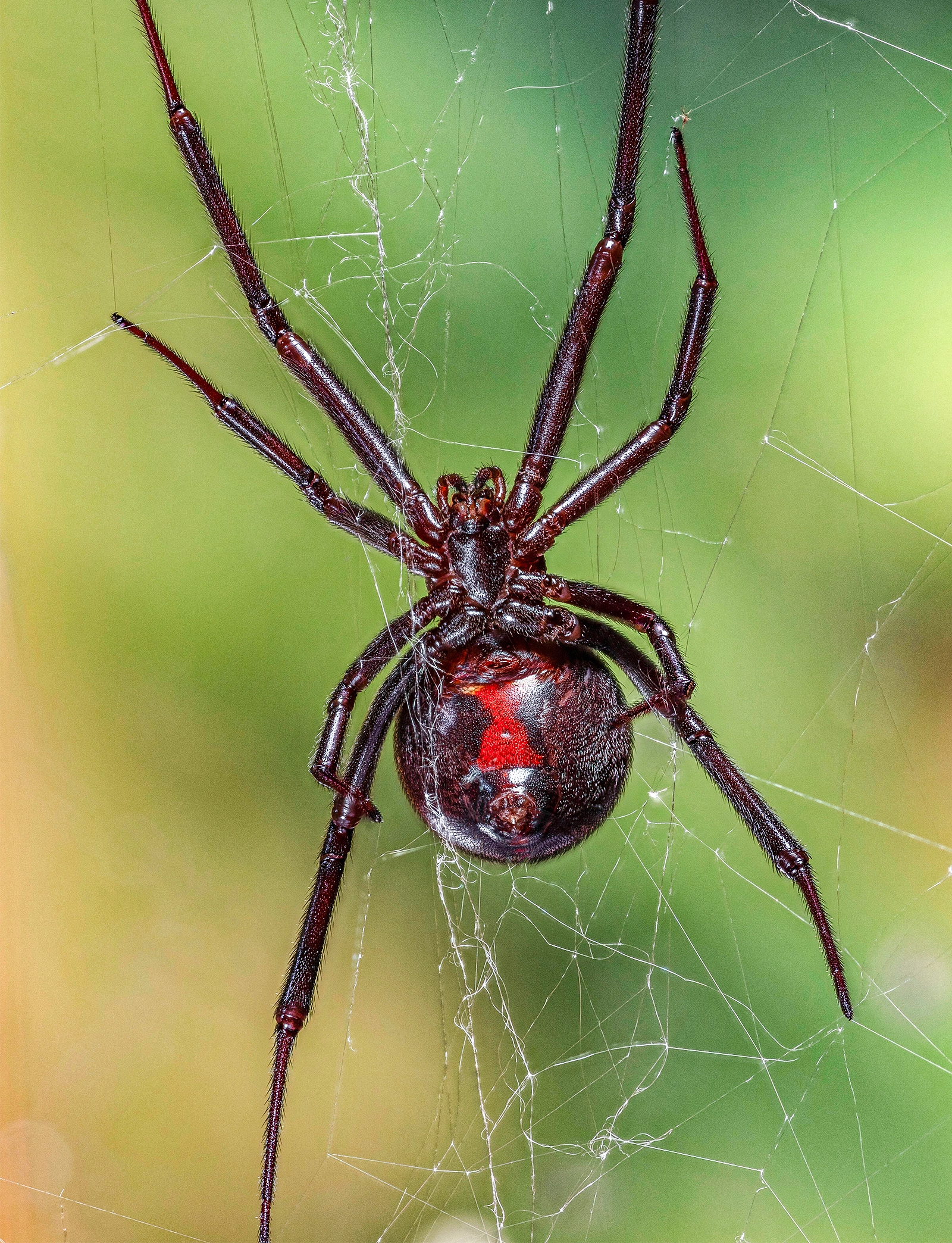
A female black widow, the species studied, chosen for its well-characterized dragline silk proteins.1 / 3
The finding
Spider 1, the thread spiders use to anchor webs and stop a fall, is tougher than Kevlar and stronger than steel. Nobody can yet make it properly in the lab. Lab-made silk proteins built from the exact natural sequence still give a weaker thread. The missing knowledge is how a spider turns "silk dope", a liquid of proteins, water and salt, into a solid fiber in milliseconds.
A team led by chemist Gregory Holland at San Diego State University has now watched one stage of that process at the atomic level, in real black widow spiders. The article doesn't name the journal.
Why it's puzzling
Silk proteins, called 2, are largely 3: long stretches with no fixed shape. The finished fiber is highly ordered, with strong flat 4 set in a looser matrix. In 2020, Keiji Numata of Kyoto University proposed that the dope passes through 5 along the way. These are dense, gel-like droplets that form when molecules start making weak, reversible bonds. Phosphate in the 6, the middle section of the silk gland, might be the trigger. No one had shown what holds the droplets together.
How they did it
The team fed black widows amino acids labeled with isotopes, then pulled silk from the unconscious spiders' spinnerets. The isotopes show up in 7 spectroscopy, which uses radio waves to read out where specific atoms sit. Graduate student Hannah Johnson used it to analyze the liquid dope and droplets taken from the gland. A postdoc, Kevin Chalek, mapped the solid fiber.
What they found
After Johnson added phosphate, two amino acids, arginine and tyrosine, began to grip each other weakly. Those contacts squeezed out water and pulled the floppy proteins into a gel-like condensate. The same contacts were still there in the finished fiber, so the team calls them "molecular stickers". Simulations using 8, an AI tool that predicts protein structure, put these amino acids at the bends of the beta sheets. That suggests they help steer the final fold.
Daiwen Yang of the National University of Singapore, who wasn't involved, called it "direct evidence" that condensates form from native silk.
Open questions
Holland thinks older theories may also be right. 9 (small protein spheres) and liquid-crystal alignment could happen alongside condensates rather than in a strict order. Other important amino acid contacts, and triggers besides phosphate, are still unmapped. It is also unclear why synthetic silk is weaker. Chalek suspects structure beyond the beta sheets, or parts of the protein that synthetic recipes leave out.
The finding
A spider can turn a liquid soup of proteins into a solid lifeline within milliseconds. A team led by chemist and spectroscopist Gregory Holland at San Diego State University has now tracked one stage of that change at the level of individual atoms. In black widow spiders, the liquid "silk dope" first gathers into semiliquid droplets called 1, and only then becomes fiber. Two amino acids, arginine and tyrosine, act as what the team calls "molecular stickers" that drive the step. The Quanta article doesn't say which journal published the work.
Why this has been hard
Spider 2, the thread spiders use to anchor webs and catch themselves when they fall, is tougher than Kevlar and stronger than steel. It is also flexible and compatible with the human body. That makes it attractive for seat belts, helmets, naval materials and even scaffolds for repairing brain cells. Copying it has failed so far. When scientists build 3 (the silk proteins) from the exact natural amino acid sequence, the thread they spin is weaker than the real thing.
The core puzzle is the starting material. In the early 2000s researchers found that spidroins in solution lack the fixed folded shapes most proteins have. Large parts of them are 4 regions that keep forming and re-forming shapes. Yet the finished fiber is highly ordered: flat 5 set in a less organized matrix. Several explanations have been proposed for how the spider gets from one to the other:
Liquid crystals: the proteins line up with each other like a crystal while still flowing.
6: the proteins pack into small spheres, as in silkworm silk, which are then compressed into fiber. Holland had earlier shown micelles in native spider silk.
Condensates: lab-made spidroins were seen forming liquid-like globs in 2007. In 2020 Keiji Numata of Kyoto University proposed that silk passes through a condensate phase, perhaps triggered by phosphate in the 7, the middle section of the silk gland.
Condensates form by liquid-liquid phase separation. A stimulus such as a change in pH, a chemical, or temperature makes molecules start bonding to each other weakly and briefly. They then gather into a dense droplet that stays fluid instead of locking into a solid. Matthew Harrington of McGill University, who wasn't involved, points out that because condensates are fluid, biology can shape them into almost anything. Before this study, nobody had described at the atomic level what drives condensates to form in spider silk.
How the experiment worked
Throughout 2023 and 2024, female black widows were shipped to the lab every few months. The species was chosen because its dragline spidroins are among the best characterized of any spider, and it is available year-round. Graduate student Hannah Johnson and colleagues "silked" the spiders six times over two weeks. The spiders were knocked out with carbon dioxide. The team then pulled a strand from the spinnerets with tweezers and wound it onto a vial turned by a motor.
The key trick was the spiders' diet. Throughout the collection period they were fed amino acid "protein shakes" enriched with particular isotopes. Nuclear magnetic resonance (NMR) spectroscopy uses radio waves to disturb atomic nuclei and reads back signals that reveal which atoms sit where. The added isotopes are visible to NMR, so the team could follow specific parts of the protein made inside a living spider.
Johnson ran NMR on the liquid dope and on condensates taken from the spiders' ampullae. Kevin Chalek, then a postdoc in the lab, mapped the atomic structure of the solid fiber. Chalek says the aim was to explain how the same protein can look so different inside and outside the spider.
What they saw
When Johnson added phosphate to the liquid dope, the side groups of arginine and tyrosine in the disordered regions began to interact weakly with each other. Those contacts pushed water out and pulled the floppy proteins into a denser, gel-like condensate. The same arginine–tyrosine contacts were still there in the solid fiber. That suggests they aren't just a passing phase but help guide the proteins all the way to their final form.
An analogy (ours, not the researchers'): picture loose strands of Velcro tape drifting in water. Adding phosphate makes the hooks start catching. The strands bunch together and squeeze out the water, but they can still slide and rearrange. In the finished thread, the same hooks are still attached.
Other team members used 8, an AI tool that predicts protein structures, together with molecular dynamics simulations, which model how atoms move over time. In the simulated fiber, arginine and tyrosine sat right at the bends of the beta sheets, the structures that give silk its strength. That fits the idea that the stickers help steer the folding.
Outside researchers were positive. Chris Holland of the University of Sheffield (no relation to Gregory Holland) praised the use of real spiders instead of synthetic silk. Daiwen Yang of the National University of Singapore called the results "direct evidence" that condensates form from native silk.
Rival theories, reconciled?
The result doesn't knock out the older ideas. Gregory Holland suggests that micelles, condensates and liquid crystals could all be parts of one phase transition. In his account, micelles keep the disordered proteins from tangling in the stored dope. The proteins can then pre-assemble into condensates or line up like liquid crystals before leaving the spinneret. He expects the real process is "more dynamic and heterogenous" than a neat sequence, with several structures present in the mix at once. Harrington agrees that the ideas are not mutually exclusive.
What's still unknown
The team hasn't mapped other amino acid interactions that likely matter.
Phosphate is one trigger. Chris Holland says there could be other switches nobody has found yet.
It remains unclear why lab-made silk is weaker. Chalek suspects the extra strength comes from structure beyond the beta sheets, or from parts of the spidroin that synthetic recipes often leave out.
The stakes are practical. Farming spiders doesn't work: a silk shirt would take roughly a million of them, and because they are cannibals, each one needs its own container. Kevlar, meanwhile, needs very high temperatures and acid to process. Spiders, as Harrington puts it, make a better material in plain air at ordinary temperatures. Learning how they do it could let manufacturers do the same.
Remember
Feeding spiders isotope-labeled amino acids let researchers track specific atoms from liquid dope to finished fiber with NMR.
The arginine–tyrosine contacts that form the droplets are still present in the solid fiber.
Synthetic spidroins with the natural sequence still make weaker silk, so key structural ingredients remain unknown.
A study in 1 estimates that about three in four former National Football League players who died between 2008 and 2023 had 2. CTE is a degenerative brain disease linked to repeated head impacts and to symptoms such as mood swings and dementia.
The problem with donated brains
CTE can be diagnosed only after death, by examining brain tissue for shrinkage and for clumps of 3, a protein also involved in Alzheimer's disease. That means the evidence comes from brains that families choose to donate, and those families are not typical. People who donate tend to have had more severe behavioral symptoms, says senior author Yorghos Tripodis, a biostatistician at Boston University. The result is 4: CTE rates calculated from donated brains will tend to be too high.
The correction
The team gathered records on 2,362 former players, who had spent an average of five years in the league. Almost 400 had donated their brains, and 93.5 percent of those brains showed CTE. The researchers then compared medical records of donors and nondonors. Players with cognitive symptoms were about five times more likely to donate. After adjusting for that overrepresentation, the estimated rate across all 2,362 players dropped to about 75 percent.
For comparison, fewer than 1 percent of brains in 5, which draw on the general population, show CTE. "No other environmental or occupational exposure ever studied is known to have increased dementia risk at death by that amount," Tripodis says.
What it doesn't show
Russell Lonser, an Ohio State University neurosurgeon who was not involved, calls the work "the best attempt so far to correct for selection bias." He also stresses that the figure is "an estimate from a model." He raises two main limits:
The study has no matched group of men who never played contact sports, so it can't say how much of the brain damage or dementia comes from football itself.
The 75 percent counts any CTE pathology, including early changes that may never have caused symptoms.
The records are also imperfect. Dementia may not appear on death certificates, and when it does, it can have several causes. The study covers only players who have died, and the NFL has since changed its rules to reduce head injuries, so the figure doesn't directly describe risk for today's players.
Lonser says a definitive answer would require following players over time, examining their brains after death, and comparing them with people who never had head impacts. Tripodis argues that the existing evidence already points one way: more head blows mean more CTE, so reducing exposure reduces risk.
A new study in 1 estimates that about 75 percent of former National Football League players who died between 2008 and 2023 had 2, a degenerative brain disease tied to repeated head impacts. The senior author is Yorghos Tripodis, a biostatistician at Boston University. The study's main contribution is less the headline number than its attempt to fix a long-standing flaw in CTE research: the brains scientists get to examine are not typical.
Why the question is hard
CTE can be confirmed only after death. A pathologist looks at brain tissue for signs such as atrophy (tissue wasting) and clusters of 3 protein, the same protein that accumulates in Alzheimer's disease. No validated test exists for living people, so the only direct evidence comes from donated brains.
Families choose to donate, and that choice is not random. People who donate brains to science tend to have had more severe behavioral symptoms, Tripodis says. A family that watched a former player develop mood swings or memory loss has a strong reason to want answers. A family whose relative aged without problems has less reason. So a collection of donated brains will over-represent people who were ill, and any CTE rate calculated from it will probably be too high. Statisticians call this 4.
What the team did
The researchers assembled records on 2,362 former NFL players who died between 2008 and 2023. On average, these players had spent five years in the league. Almost 400 of them had donated their brains. Among those donors, 93.5 percent had CTE.
To estimate the rate across all 2,362 players, the team compared medical records of donors and nondonors. They found that players with cognitive symptoms were about five times more likely to donate their brains. Using that difference, they recalculated the rate for the full group and arrived at roughly three in four.
The article does not describe the statistical model in detail. The general logic works like this, using made-up numbers rather than the study's:
Imagine 1,000 players. 400 had cognitive symptoms and 600 did not.
Symptomatic players donate at 25 percent and the rest at 5 percent, a fivefold gap. That gives 100 symptomatic donors and 30 symptom-free donors.
Suppose 98 percent of symptomatic brains and 60 percent of symptom-free brains show CTE. Among the 130 donated brains, 116 have CTE, or 89 percent.
But symptomatic players make up 77 percent of donors and only 40 percent of all players. Weighting each group by its true share gives 0.4 × 98% + 0.6 × 60%, which is about 75 percent.
The raw rate was inflated because the sickest people were the most likely to be counted. Correcting for who donates pulls it down. It does not erase it.
How big is 75 percent?
For comparison, fewer than 1 percent of brains in 5 show signs of CTE, Tripodis says. Those banks collect brains from the general population rather than from athletes. "No other environmental or occupational exposure ever studied is known to have increased dementia risk at death by that amount," he says.
Tripodis says CTE is preventable. "We find, in study after study, that the more blows to the head over your lifetime, the higher the risk of CTE," he says. "If you reduce exposure to repetitive head impacts, then you reduce the risk of CTE."
The caveats
Russell Lonser, a neurosurgeon at Ohio State University who was not involved, calls the study "the best attempt so far to correct for selection bias in CTE brain bank data." He adds that "it is an estimate from a model and should be read that way." His concerns, together with ones Tripodis raises himself, fall into four groups.
No unexposed comparison group. "Without similar men who never played contact sports, we can't tell how much of the pathology or dementia comes from football," Lonser says. The under-1-percent community figure is a rough benchmark, not a matched control group.
Pathology is not the same as illness. "The 75 percent includes any CTE pathology, even early changes that may never have caused symptoms," Lonser says. Having CTE at death does not mean CTE caused a player's problems.
Imperfect records. The correction depends on medical and death records, which may be incomplete. Tripodis notes that dementia may not appear on death records at all. When it does, it can have other causes, or several at once. If records miss symptoms in nondonors, the correction itself could be off.
Today's players may differ. The study covers only players who have already died, many of whom played decades ago. The NFL has since taken steps to reduce head injuries, so Tripodis says it is hard to translate the figure into risk for current players.
What remains open
Lonser describes the study that would settle the question. It would follow players with and without symptoms over many years, examine their brains after death, and include a comparison group with no exposure to head impacts. "Until that work is done, we won't know how common CTE really is or what, specifically, it means for players," he says.
A better estimate does not replace that kind of study. The new figure is lower than earlier brain bank results that found CTE in nearly every NFL brain examined. It still suggests that the pathology is common among former professional players and far more common than in the general population. Tripodis hopes the results will help families affected by CTE and inform current and future players about the risks of the sport.
Remember
93.5% of donated NFL brains had CTE, but symptomatic players were about five times likelier to donate.
Correcting for that donation bias lowers the estimate to about 75%, compared with under 1% in general-population brain banks.
Without an unexposed comparison group, the study can't say how much of the brain damage or dementia football caused.
Comet McNaught over Australia in 2007. The study says few comets hit Earth gently enough to deliver intact organics.
Comets probably didn't deliver the chemical ingredients for life to the early Earth. That is the conclusion of simulations published October 28 in 1, a peer-reviewed journal, by planetary scientist Richard Anslow of the 2 (the UK's weather service) and colleagues. Most comets, they argue, struck too fast and too steeply for those molecules to survive.
The old idea
Comets are icy leftovers from the birth of the solar system, and they carry carbon- and nitrogen-bearing molecules that can react to form sugars and parts of DNA. Earth was heavily bombarded in its first billion years, so comets have long been suspected of seeding the planet. Anslow says that seeing these molecules in comets "in really high concentrations" doesn't mean they arrived intact on Earth's surface.
The test
The team modeled whether 3 would survive a comet's fall through the atmosphere and its impact with the ground. HCN is a useful starting chemical: the strong bond between its carbon and nitrogen atoms stores energy that can drive later reactions. The same bond also makes it unusually stable. Anslow calls it "probably one of the more robust molecules to surviving impacts," so if HCN doesn't survive, more fragile molecules like sugars probably fare worse.
The models used today's atmosphere. Early Earth's atmosphere was probably denser and would have destroyed even more.
The results
For HCN to survive, a comet had to meet all three conditions:
larger than 100 meters across
slow-moving
arriving at a shallow angle, not steeply
On average, the simulations found only one impact in more than a billion years that would deliver a meaningful amount of HCN. That comet also had to hit land. In the ocean, any HCN that survived would dilute too quickly to start useful chemistry.
Mars did slightly better. Its thinner atmosphere and smaller size mean comets hit it at lower speeds, so more molecules could survive, though delivery was still unlikely.
What it means
Gordon Osinski, a planetary geologist at Western University in Canada who was not involved, says the study "will make people think twice." Other possible sources include 4 (carbon-rich asteroids), volcanoes and 5. He wants the results reproduced and the same test run on those asteroids.
Keep in mind that this is a modeling result built around one molecule, and the article gives few details about the model's assumptions. The authors say it makes comet delivery unlikely, not impossible.
The news
A long-popular idea about life's origins says comets crashing into the young Earth delivered the carbon- and nitrogen-rich molecules that later chemistry turned into sugars, amino acids and DNA. A new study says this probably didn't happen, at least not often enough to matter. Writing October 28 in 1, a peer-reviewed journal, planetary scientist Richard Anslow of the 2 (the UK's national weather service) and colleagues report computer simulations suggesting that most comets would have hit Earth too fast and at too steep an angle for these molecules to survive.
The authors don't claim to have ruled comets out. They conclude that a useful delivery would have been extremely rare.
Why comets looked like a good bet
Comets are frozen leftovers from the formation of the solar system, and observations show they hold organic molecules in high concentrations. In its first billion years Earth was struck repeatedly by debris, comets included. Putting those two facts together gave a simple story: comets carried the ingredients, and impacts dropped them off.
Anslow says the step from the first fact to the second is not straightforward. A comet can be full of the right molecules, but those molecules still have to survive the trip through the atmosphere and the impact itself, then end up somewhere they can react. Nicolle Zellner, a physicist at Albion College in Michigan who was not involved, says ideas like this are worth revisiting as knowledge of comets and the early solar system improves.
What the team simulated
The researchers followed a single molecule, 3, and asked how likely it was to survive a comet's passage through the atmosphere and its collision with the ground. They chose HCN for two reasons:
It is chemically useful. The strong bond between its carbon and nitrogen atoms stores energy that can drive later reactions on the way to biology.
It is tough. The same bond makes it more stable than most carbon-based molecules. Anslow calls it "probably one of the more robust molecules to surviving impacts."
That makes HCN a best-case test. If the hardiest useful molecule can't get through, larger and more fragile molecules such as sugars or amino acids are likely to fare worse.
The simulations used Earth's present atmosphere. The early Earth's atmosphere was probably much denser, and the authors say it would have been even more destructive. If anything, that makes the results generous to the comet hypothesis.
The results
Survival turned out to need a narrow set of conditions. To deliver HCN intact, a comet had to be:
Larger than 100 meters across
Slow-moving by comet standards
Coming in at an 4, not steeply
Most comets fail at least one of these tests. As general background not taken from the article: comets usually reach Earth much faster than typical asteroids because many fall in from the far outer solar system. Long-period comets can hit at tens of kilometers per second. Faster and more head-on impacts concentrate more energy into shock heating, which breaks molecules apart.
Added up over the whole period, the simulations put the expected number of comet impacts that deliver a meaningful amount of HCN at about one in more than a billion years.
There was a further condition. A comet that met all three requirements also had to hit land. Any HCN that survived an ocean impact would spread out too quickly to reach the concentrations needed to start useful reactions. Since much of Earth's surface was likely water, that cuts the odds again.
Mars does a bit better
The same simulations found comets were somewhat more likely, though still unlikely, to deliver carbon-based molecules to Mars. Mars is smaller and has a much thinner atmosphere, so comets would hit it at lower speeds, and more of their chemistry could survive. This doesn't show that life started on Mars. It only means the comet-delivery route works better there than on Earth.
If not comets, then what?
Gordon Osinski, a planetary geologist at Western University in Ontario who was not involved, points to other possible sources:
Carbonaceous chondrites: carbon-rich asteroids, known from meteorites that contain organic compounds. Asteroids generally hit more slowly than comets, which could help.
Volcanoes and 5: sources on Earth that could have made organic molecules in place, with nothing needing to survive an impact.
Osinski says the study "definitely will make people think twice about comets being the originator for the delivery of organics." He wants other groups to try to reproduce the results and to run a similar analysis for 6.
How solid is this?
The study is peer-reviewed, but it rests on simulations, not on physical evidence from early Earth, so the conclusions depend on what the models assume. The article doesn't describe the model's internals, such as the assumed comet speeds and sizes or how molecule destruction was calculated, so readers can't judge those choices from this report. The test covers one molecule. Using HCN as a best case is reasonable, but it is still an inference that more complex molecules fare worse. Some questions stay open. Did comets supply other things, such as water or energy, even without intact organics? Can asteroid delivery pass the same test? Was a single lucky impact on land ever enough? Independent replication, which Osinski asks for, is the obvious next step.
Remember
Hydrogen cyanide was a best-case test: one of the toughest useful molecules, so more fragile ones should fare worse.
Survival needed a comet over 100 meters across, slow, shallow-angled and hitting land, not ocean.
Mars's thinner atmosphere and smaller size make comet delivery somewhat likelier there than on Earth.
A study published October 21 in Nature reports that 20 fossil bones and teeth from Xujiayao, a site in northern China, all belong to 1. Denisovans were an extinct group of ancient humans who lived across Asia and vanished about 30,000 years ago. The result gives scientists their clearest look yet at Denisovan skulls.
Why this was hard
Denisovans were first identified in 2010 from DNA in a finger bone from a Siberian cave. Since then, genetics has told us a lot about them, but the bones have been scarce. Without a confirmed Denisovan skull, nobody could say which of East Asia's many puzzling archaic fossils were Denisovan.
The Xujiayao remains show the problem. They were dug up in the late 1970s and are 138,000 to 199,000 years old. Based on their shape and age, they were first labeled Neanderthal or archaic Homo sapiens.
How they were identified
DNA rarely survives that long, so the team used 2, the analysis of ancient proteins that persist in bone and teeth. Genes set each protein's sequence, so a gene variant found only in Denisovans leaves a matching mark in the protein. Every one of the 20 specimens carried Denisovan variants. That turns the site into a reference collection: skulls whose identity is known.
What they looked like
The skulls mix features from several lineages:
Like 3, an older human species: a low, wide braincase and thick skull bones.
Like Neanderthals and modern humans: the shape of the premolar teeth.
Found only in Denisovans: a back of the skull that is more vertical and less rounded.
The team also produced a new reconstruction of a Denisovan man. It shows a massive brow ridge and dark hair swept back over the low braincase, and draws on earlier DNA evidence for dark skin, brown hair and brown eyes. The face is partly informed guesswork, as any reconstruction is.
One lineage, not several species
Comparing Xujiayao with other East Asian fossils that some experts have named as separate species, 4 and 5, the authors found similarities that "may" rule out splitting them off. They argue that Denisovans were a single lineage that adapted to varied environments across Asia over hundreds of thousands of years.
Caveats
The protein identification is the strong part of the study. The lumping of species is a judgment based on anatomy. Co-author Qiaomei Fu, of the Chinese Academy of Sciences, says other human lineages may still have lived in the region at the same time. Chris Stringer of London's Natural History Museum, who was not involved, notes that DNA shows Denisovans split early into separate populations. As more fossils turn up, he says, their anatomy could turn out to vary more than expected.
The news
A study published on October 21 in Nature examined skull bones and teeth from Xujiayao, an archaeological site in northern China. It concludes that all 20 remains tested there came from 1, an extinct group of ancient humans. With the identity settled, the team could describe Denisovan skull shape in detail and commission a new reconstruction of a Denisovan man's face. They also argue that several East Asian fossils that others have placed in separate species probably belong to the same Denisovan lineage. Kristina Killgrove reported the study for Live Science.
The problem: a people known from their genes
Denisovans were discovered backwards. Most extinct human relatives were first known from bones and only later from DNA. Denisovans were first recognized in 2010 from DNA in a finger bone from a cave in Siberia. Genetics then showed that they lived across Asia, that they interbred with modern humans, and that they disappeared about 30,000 years ago. What they looked like stayed largely unknown, because no complete, securely identified skeleton existed.
That gap mattered for the fossil record. East Asia has many archaic human skulls from the 2, the period running up to about 130,000 years ago, that do not fit neatly into any known group. Without a reliable Denisovan skull to compare against, researchers could not say which of those fossils were Denisovan. Some fossils were given their own species names instead. The article mentions two of these, 3 and 4.
Xujiayao is a clear example of the confusion. Its bones and teeth were excavated in the late 1970s, decades before anyone knew Denisovans existed. Because of their shape and their age, 138,000 to 199,000 years, they were first classified as either Neanderthals or archaic Homo sapiens.
How the fossils were identified
DNA rarely survives that long in most environments. The team turned to 5, the study of ancient proteins preserved in bone and tooth, which last much longer than DNA. The method works because genes set the sequence of building blocks in a protein. If Denisovans carried a gene variant that Neanderthals and modern humans lack, the matching protein carries a telltale difference too. Finding those Denisovan-specific variants in a fossil's protein identifies it, even when no DNA survives.
An analogy, offered only as illustration: it is like identifying a book's edition from a typo found only in that printing, without needing the cover.
The researchers ran this analysis on 20 Xujiayao specimens, and all 20 came out as Denisovan. That is the key step. It turns a set of ambiguous skulls into a reference collection with a known identity, so the anatomy can now be tied to the genetics.
What the skulls show
The Xujiayao skulls combine features from several lineages:
Like 6, an older and more primitive human species: a low, wide braincase and thick skull bones.
Like Neanderthals and modern humans: the bicuspids (the premolar teeth between the canines and molars) look more like theirs.
Found only in Denisovans: the back of the skull is more vertical and less rounded than in Neanderthals or modern humans.
The authors wrote that this "unique combination of morphological traits, distinct from H. erectus, modern humans and Neanderthal-lineage hominins," supports classifying most East Asian archaic humans from the late Middle Pleistocene as Denisovans.
Lumping the "species" together
The team then compared the Xujiayao skulls with other East Asian remains that some experts have assigned to H. juluensis or H. longi. They found shared features that, in their view, may rule out splitting Denisovans into several species. Their interpretation is that Denisovans were one lineage that spread across Asia's varied environments over hundreds of thousands of years, adapting as it went.
The new face
A previous DNA study suggested that Denisovans probably had dark skin, brown hair and brown eyes. The new reconstruction combines those inferences with the skull anatomy. It shows a man with a massive brow ridge and dark hair swept back over a low, wide braincase. He resembles both Neanderthals and modern humans but has a face of his own. Keep in mind that a reconstruction is an informed illustration, not a measurement. Soft tissue such as hair, skin and the shape of the nose is always partly guesswork.
Caveats and open questions
Other lineages are still possible. Co-author Qiaomei Fu, who directs the Ancient DNA Laboratory at the Chinese Academy of Sciences' Institute of Vertebrate Paleontology and Paleoanthropology, told Live Science that other human lineages may have lived in East Asia at the same time as Denisovans.
Variation may be larger than one site shows. Chris Stringer of the Natural History Museum in London, who was not involved in the study, noted that DNA shows Denisovans were genetically varied and split early into separate populations. Those populations "could have developed a lot of morphological variation, which may well surprise us as the sample of fossils grows." In other words, a skull that looks different from Xujiayao's would not automatically belong to a different species.
Lumping is an argument, not a settled fact. The finding that the fossils are Denisovan rests on protein evidence. The claim that H. juluensis and H. longi should be folded into Denisovans rests on anatomical similarity, and the authors say these similarities "may" preclude a split. Researchers who named those species may not agree.
Details are thin in the coverage. The article does not say which proteins were sequenced, how many diagnostic variants each specimen produced, or how the 138,000 to 199,000-year dates were obtained.
Even so, the study adds a sizable, protein-confirmed set of Denisovan fossils, and anatomists can now use it as a reference when deciding whether other skulls are Denisovan.
Remember
All 20 Xujiayao fossils tested carried protein variants found only in Denisovans, which makes them a reference collection of known identity.
The skulls mix Homo erectus-like braincases with Neanderthal- and modern human-like premolars, plus a uniquely vertical back of the skull.
Merging proposed species like Homo longi into the Denisovans rests on anatomy and is still debatable.
Slow movement of cold, dense water through the deepest ocean basins, driven by differences in temperature and saltiness.
Antarctic sea ice, whose steep decline since 2016 is now changing the surrounding ocean.
The text we received starts partway through the original story, so it leaves out the new study's authors, methods and figures.
What's new
New research finds that the sharp fall in Antarctic sea ice since 2016 is already changing the properties and circulation of the surrounding ocean. Michael Meredith, an oceanographer with the 1 (the UK's polar research institute), says this matters well beyond Antarctica. "The 2 is the key juncture for all the world's oceans," he said. "It's the major site where old waters are reprocessed into new."
How sea ice moves the ocean
Sea ice acts as a lid on the ocean. It limits how much heat escapes to the air. When it forms, it pushes salt out and leaves dense water that sinks. When that ice cover shrinks, the temperature, saltiness and density of the surface water change, and so does the way water moves. The Southern Ocean also takes up a large share of humanity's carbon dioxide. Meredith calls its role "massive" in slowing the warming people feel.
Why the upper ocean is the worry
Earlier work found that the Southern Ocean's deep circulation has slowed. That kind of change plays out over centuries. Meredith says the new study shows the upper ocean responding quickly to the ice loss. "The 3 can affect our climate within years to decades, not centuries," he said.
Supporting evidence
A 2024 study linked sea-ice loss to more frequent storms and more heat escaping from the ocean.
A major review earlier this year concluded that Antarctic sea ice influences how heat and moisture spread through the global atmosphere. It said the "speed and persistence" of the decline suggest the ocean may be moving into a new state.
Caveats
Meredith says it is too early to know whether the shift is permanent, because the record covers only about a decade. Climate models used for policy still fail to reproduce the recent ice losses. "Our 4 need to catch up," he said. If the low-ice state lasts, he expects the changes to keep spreading through the world's oceans and ecosystems.
Note: the text we received starts partway through the original Inside Climate News story. It leaves out the new study's authors, journal, methods and numbers. This write-up sticks to what the surviving text supports.
The news
New research finds that the steep loss of Antarctic sea ice since 2016 is already changing the properties and circulation of the ocean around Antarctica. Michael Meredith, an oceanographer with the 1 (BAS, the UK's national polar research institute), commented on the study. He says the effects are not stuck near the pole. "The 2 is the key juncture for all the world's oceans," he said. "It's the major site where old waters are reprocessed into new, so this could have global consequences."
Why the Southern Ocean matters so much
The Southern Ocean works like a junction box for the world's oceans. Deep water that has been out of contact with the air for centuries rises to the surface there. At the surface it gives off or takes up heat, trades gases with the atmosphere, and then sinks or flows north as a new water mass. Sea ice is involved at every step. It acts as a lid that limits how much heat the ocean loses to the air. When it forms, it pushes salt out and leaves dense, salty water behind. When it melts, it adds fresh water to the surface. Take away a large area of ice and you change the temperature, saltiness and density of the surface ocean. Those changes then affect how water moves.
Meredith also points to carbon. He says the Southern Ocean plays a "massive role" in drawing down human carbon dioxide emissions, which slows the warming people actually feel. Anything that disrupts these ocean cycles "demands our attention," he said.
What the new work adds
Earlier research found that the deep circulation in the Southern Ocean has slowed, so fresh, cold water reaches the deepest basins more slowly. Deep circulation changes over centuries. According to Meredith, the new study shows that the upper part of the ocean is changing quickly in response to the loss of sea ice. "That matters," he said, "because the 3 can affect our climate within years to decades, not centuries."
The surviving text doesn't say which properties changed, by how much, or how the researchers measured them.
The wider evidence
The article places the study among other findings:
A 2024 study found that sea-ice loss led to more frequent storms and more heat escaping from the ocean to the atmosphere.
A major scientific review earlier this year concluded that changes in Antarctic sea ice "influence the global distribution of atmospheric heat and moisture, as well as atmospheric variability." The review said the "speed and persistence" of the decline suggest the ocean around Antarctica may be moving into a new state. That would affect Antarctic ecosystems and also the global climate system.
Caveats
Meredith says it is not yet clear whether the shift is permanent, because the observational record is short. Antarctic sea ice has only been low for about a decade. That is a short time to tell a lasting change of state from a long natural swing.
He also notes that the global 4 used to guide policy still struggle to reproduce the recent sea-ice losses. "Our climate models need to catch up," he said. If the models can't reproduce the cause, their predictions of the knock-on effects deserve some caution, and more monitoring is needed.
His conditional warning: "if the low sea-ice state persists, these changes will keep spreading through the world's oceans, and the effects will ripple out across our climate and ecosystems."
Open questions
Is the post-2016 low a new normal or a long dip that will reverse?
Why do models miss it? Possible gaps include ocean warming beneath the surface, changes in winds, or how the ocean's layers mix. The article doesn't say.
How fast will changes in the upper ocean show up in weather and carbon uptake far from Antarctica?
Remember
Antarctic sea ice fell abruptly around 2016 after decades of stability, and it hasn't recovered.
Changes in the upper ocean can affect climate within years to decades, much faster than deep circulation changes.
Policy-grade climate models still fail to reproduce the recent Antarctic ice loss.