Mice Lose a Hippocampus, Keep the Route · Morning Gist
Thursday, November 55 stories · 16 min
Mice Lose a Hippocampus, Keep the Route
New work tests what brains, telescopes and AI models can really do, though several of the boldest claims remain preprints, hypotheses or contested interpretations.
Picked from 43 new articles across 10 sources · arrow keys for other days
Today in 30 seconds
30s left
Mice lacking a hippocampus and most cortex recalled a nine-turn route weeks later; both studies behind the finding are unreviewed preprints. story 1 ↓
FLIP software simulates Webb's wobbles, beating standard glare removal two- to 15-fold across three star systems and recovering planet 51 Eridani b. story 2 ↓
Stimulating the prefrontal cortex improved letter memory, then reduced willingness for hard tasks; a PNAS study ties mental fatigue to glutamate buildup. story 3 ↓
Claude named planted concepts in 20% of trials with no false alarms, but follow-ups suggest only detection reflects anything inward-looking. story 4 ↓
An orbiter caught hydrogen chloride appearing out of season around Mars's Alba Mons; a magma source remains the authors' hypothesis. story 5 ↓
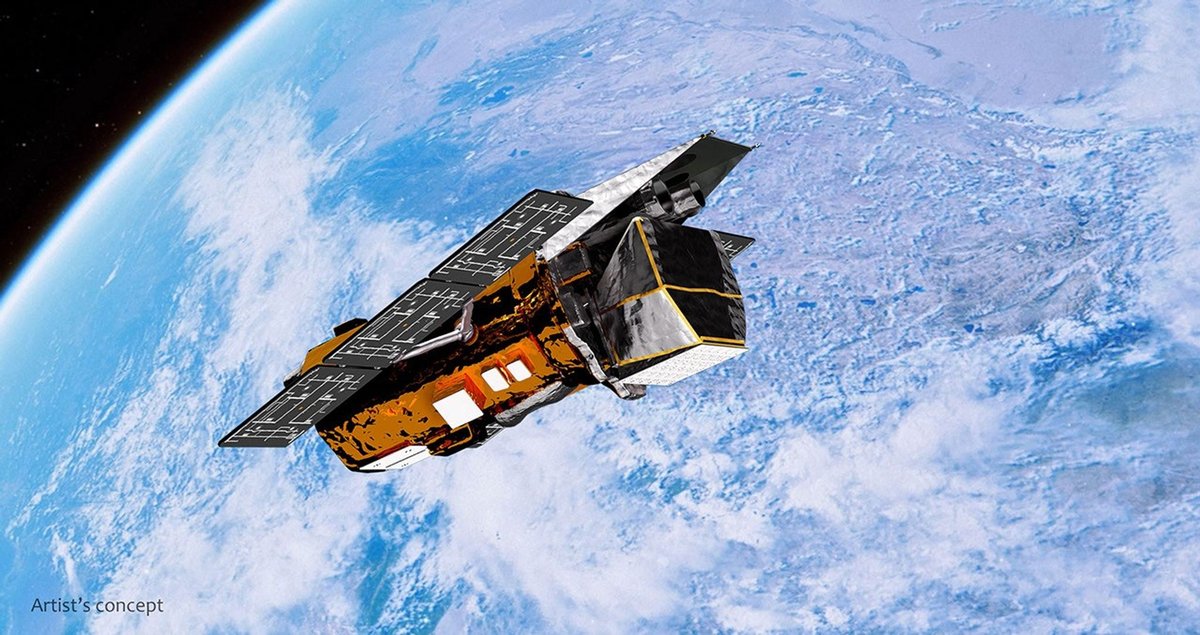
NASA's Swift observatory reentered Earth's atmosphere after decades studying cosmic explosions and an unsuccessful rescue attempt earlier this year.
1/5The Transmitter· Natalia Mesa· Nov 5
Mice learn mazes without a hippocampus, and location signals span the brain
Two preprints challenge the hippocampus's special role in navigation: some mice born without it still learned and remembered a maze, and typical mice carried location signals in every brain region recorded. Whether healthy brains use those signals is unknown.
Why it matters · These studies test a textbook link between a brain structure and a function, and show how removal and recording experiments can each leave that link unsettled.
Know this first
Context from the editor, not the article · 31 sec
1 · The hippocampus and navigation
The hippocampus is a curved structure deep in the brain. It contains place cells, neurons that fire at particular locations, and damaging it impairs spatial memory in rodents. That evidence made it the leading candidate for the brain's navigation center.
2 · Cortex and older circuits
The neocortex is the layered outer sheet of the mammalian brain. Beneath it lie evolutionarily older subcortical structures, such as the basal ganglia and superior colliculus, which help control movement and action. Vertebrates with little cortex-like tissue can still navigate.
3 · What decoding shows
2/5Scientific American· Nov 4
Software that simulates Webb's wobbles helps it spot much fainter planets
Astronomers built software that simulates the James Webb Space Telescope's tiny instabilities to subtract starlight from its images, making it two to 15 times more sensitive to faint planets, especially those orbiting close to their stars.
Why it matters · Better software could relax the extreme stability demands on the next flagship telescope, a major obstacle to photographing Earth-like planets around other stars.
Know this first
Context from the editor, not the article · 18 sec
1 · Seeing planets directly
Most known exoplanets were inferred from their effects on their star, such as dimming as they pass in front. Direct imaging captures the planet's own light, which is hardest close to the star, where glare is strongest.
2 · The James Webb Space Telescope
JWST is an infrared observatory launched in 2021, with a 6.5-meter mirror made of 18 segments. Infrared helps with planet imaging because young giant planets still glow with heat from their formation.
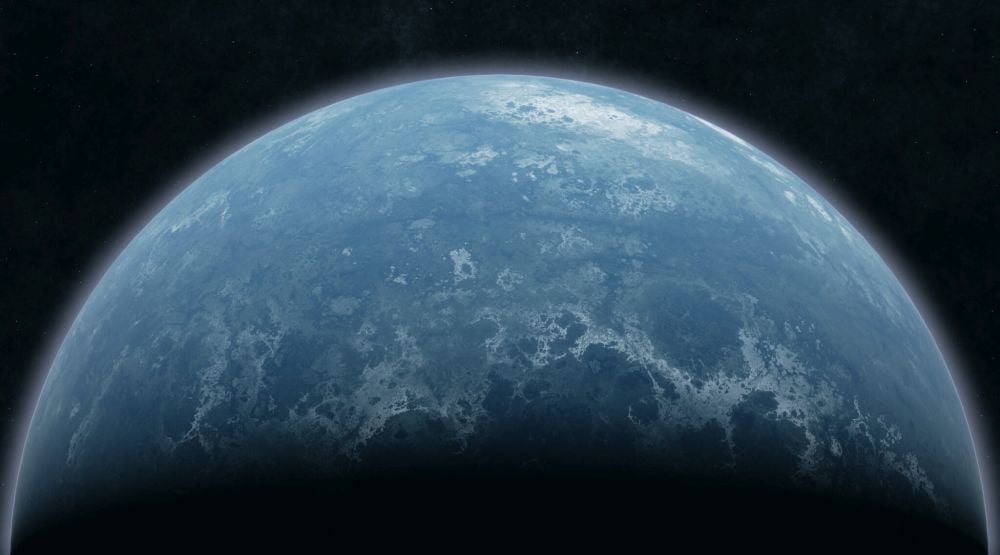
51 Eridani b in JWST data: usual processing, FLIP processing, and a simulation showing where the planet should be.
3/5Scientific American· Nov 4
Brain stimulation study ties mental fatigue to glutamate buildup
Munich researchers electrically stimulated a brain region during a memory task. Performance improved, but participants later avoided hard mental work, and a statistical analysis tied that reluctance to rising levels of the neurotransmitter glutamate.
Why it matters · It moves a long-running question from correlation toward cause, testing whether feeling mentally drained reflects a physical change in the brain rather than only shifting priorities.
Know this first
Context from the editor, not the article · 28 sec
1 · Glutamate's double role
Glutamate is the brain's main excitatory chemical messenger, used constantly when neurons signal to each other. Support cells normally clear it quickly, because excess glutamate overstimulates neurons and can injure them, a process called excitotoxicity.
2 · The prefrontal cortex
The prefrontal cortex, at the front of the brain, supports planning, self-control and holding information in mind. Its outer side, the lateral prefrontal cortex, includes the dorsolateral region, which is closely linked to working memory.
3 · How fatigue gets measured
Fatigue is a feeling, so researchers often measure it through behavior. A common approach offers people choices between harder and easier tasks: a growing preference for less effort is taken as a sign of mental fatigue.
4/5Quanta Magazine· Ben Brubaker· Nov 4
AI Models Can Detect Injected "Thoughts," but Is That Introspection?
An Anthropic researcher planted concepts inside AI models, and they sometimes reported them. Follow-up work suggests naming the concept is a side effect, but sensing the tampering holds up. Whether that counts as introspection remains contested.
Why it matters · It turns an old philosophical question into experiments with controls, and shows how a striking AI result can shrink, yet partly survive, when skeptics try to explain it away.
Know this first
Context from the editor, not the article · 28 sec
1 · Why asking doesn't work
Chatbots learn from huge amounts of human writing, and people often describe their feelings and thoughts. A model saying what it "thinks" may therefore be imitation, so self-reports alone reveal little about what is happening inside it.
2 · Reading a model's internals
A language model computes with millions of simple numerical units called neurons. Interpretability research looks for activity patterns across these units that correspond to concepts, much as brain scientists look for activity linked to particular thoughts.
3 · The human debate
5/5Live Science· Elizabeth Howell · Nov 4
Gas puffs near Mars's largest volcano hint at magma below the surface
Europe's Trace Gas Orbiter repeatedly detected short-lived hydrogen chloride gas near Mars's Alba Mons volcano. Researchers suspect underground magma is releasing it, but the link is unconfirmed, and any implications for life are speculative.
Why it matters · It shows how planetary scientists build a case from sparse signals, and whether Mars is still volcanically active bears directly on where, if anywhere, habitable niches could persist today.
Know this first
Context from the editor, not the article · 29 sec
1 · Why volcanic gas matters
Mars has huge volcanoes but no observed eruptions. On Earth, magma releases gases including hydrogen chloride and sulfur compounds, even between eruptions, so detecting them in Mars's air could reveal underground activity that surface images cannot show.
2 · Reading gases from orbit
Spacecraft often identify trace gases by spectroscopy: each gas absorbs particular wavelengths of light, leaving a fingerprint. Very low concentrations fall below an instrument's detection threshold, so a gas can seem to vanish when it merely thins out.
Researchers can train a computer model to predict a variable, such as an animal's position, from recorded neural activity. Success shows the information is present in those neurons. It does not show that the brain reads or uses it.
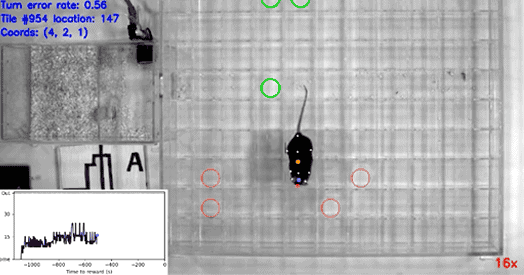
Image: The Transmitter
Two preprints posted on 1 in September, and not yet peer reviewed, question how much navigation depends on the 2, the deep brain structure long tied to spatial memory. One finds that some mice born without it can still learn a complex maze. The other finds location signals throughout the brains of typical mice.
Mice without a hippocampus
A team at the California Institute of Technology studied mice lacking a gene called 3 in the cells that build the hippocampus and most of the 4, the brain's layered outer sheet. Without the gene, these structures never form.
The researchers tested the mice in the 5, a grid-like arena with water rewards at certain spots. At first the mice appeared anxious and took two to three times as long as controls to collect their first few rewards. After that, they largely matched controls. Both groups found an efficient route within 10 successful attempts, remembered a nine-turn route three to four weeks later, and started faster on a reconfigured maze.
Some of the mice never learned the task, and most of those never explored the whole maze.
Location signals everywhere
A separate team, including researchers at University College London, recorded more than 20,000 neurons across cortical areas, the 6, the 7, thalamus and midbrain. 8 mice, whose heads were held still, ran on a wheel through a virtual corridor whose two halves looked identical, so sensory cues couldn't reveal which half they were in. Neurons that still responded differently between the halves, after accounting for running speed and reward, counted as spatial.
Every region contained such neurons, and a computer model could predict the mouse's position from each one. The hippocampal formation had about the same share of spatial cells as other areas and encoded position less precisely than the visual cortex.
Why the hippocampus isn't dethroned
Each result has a clear limit. Mice that develop without a hippocampus may rewire, giving other areas abilities they would not normally have, says Trinity College Dublin's Kevin Mitchell, who worked on neither study. Stanford's Lisa Giocomo suggests the 9, an olfactory region with similar layering, could compensate. She remains skeptical that the hippocampus isn't the primary navigation center, especially for demanding tasks.
The recording setup may also undersell the hippocampus. The track is one-dimensional and the fixed head produces no 10, the brain's sense of motion and balance. And decoding location doesn't prove the brain uses that signal, Mitchell notes; the hippocampus could simply be broadcasting it to other regions.
Investigators on both preprints name the same next step: temporarily silence the hippocampus in typical mice. That avoids developmental rewiring and tests whether other regions hold spatial memories themselves or merely receive them.
Some mice born without a 1 and without most of their 2 can still learn a complex maze and remember the route weeks later, according to a preprint from Markus Meister's lab at the California Institute of Technology. A second preprint, from an independent team that includes Matteo Carandini and Enny van Beest at University College London, reports that typical mice carry information about their location in every brain region the researchers recorded, not only in the hippocampus, the structure long tied to navigation. Both papers went up in September on 3, a public server for manuscripts, so neither has been through peer review.
Kevin Mitchell, a geneticist and neuroscientist at Trinity College Dublin who worked on neither study, says the findings "challenge our preconceptions" about both the importance of the hippocampus and cortex and how specialized brain regions are in general. He and others are also clear about what the findings do not yet show.
Why this is hard to settle
Each way of linking a function to a brain region has a blind spot. Damage an adult animal's hippocampus and you see what is lost, but decades of such experiments have produced deficits that some researchers now read as less absolute than their reputation. Raise an animal without the structure and you see what the rest of the brain can manage, but not what it normally does. Record from neurons and you see where information exists, but not whether anything uses it. The two preprints rely on the second and third approaches, and they inherit those limits.
Navigating with no hippocampus
The Caltech team used mice lacking 4, a gene, in the cells that give rise to the hippocampus and most of the cortex. Without it, those structures do not form. The researchers call these animals acortical. They tested them in the 5, a grid-like arena where mice get a small sip of water at certain locations.
At first the acortical mice struggled. They appeared anxious, scanned their surroundings repetitively and took about two to three times as long as controls to collect their first few rewards, says study investigator Jieyu Zheng, a graduate student in Meister's lab.
After that stage, their performance was largely similar to that of controls on three measures:
Learning: both groups found a highly efficient route to the reward within 10 successful attempts.
Memory: both remembered a nine-turn route three to four weeks later.
Generalization: when the maze was reconfigured, both groups started much faster than they had on their first maze.
"Obviously there is a system for learning and generalization that exists outside of cortex and hippocampus," Meister says.
Not every animal succeeded. Some acortical mice never learned the task, and most of those never explored the full maze. Zheng suggests the hippocampus may help kick off exploration. The article does not report how many mice fell into this group, so the size of that caveat is unclear.
The team argues the result is less at odds with the older literature than it looks, because adult hippocampal lesions tend to delay learning rather than abolish it. "If you really look at that literature, it's not as clear that these mice can't navigate as it seems," Zheng says.
Location signals everywhere
The London-based study asked a different question: where in a normal brain does spatial information appear? The team recorded from more than 20,000 neurons in the visual, motor and somatosensory (touch and body-sense) cortices, the 6, 7, thalamus and midbrain. The mice were head-fixed, meaning their heads were held still, and ran on a wheel through a virtual corridor. Water arrived in only one part of the corridor on most trials.
The key design choice is that the corridor's two halves looked exactly alike, so a mouse could not use sensory cues to tell them apart. As an illustration, a neuron that responds in one half but not the other, despite an identical view, must be tracking something beyond the current scene. The team labeled neurons spatial if they responded differently across the halves after accounting for running speed and reward.
Spatial neurons appeared in every region, and a computational model could predict the mouse's position from each one. The hippocampal formation had roughly the same proportion of spatial cells as each other area. It covered the corridor slightly more uniformly, but encoded position less precisely than the visual cortex did.
This fits a broader trend. Earlier studies found that decision-making engages neurons brain-wide and that visual and olfactory cortices contain spatial signals. "Now navigation is everywhere; decision-making is everywhere," van Beest says. She asks which of these networks serve which kinds of memory, and whether they overlap.
The case for caution
The first objection to the acortical result is development. Growing up without these structures could substantially rewire the brain, so other areas might acquire hippocampus-like traits they would not normally have, Mitchell says. Lisa Giocomo, a Stanford neurobiologist not involved in the work, points to the 8, an olfactory region. It shares the hippocampus's "laminar structure," or layered organization, and is known for olfactory place coding. She remains skeptical that the hippocampus isn't the primary locus of navigation, especially in demanding tasks, and wants to see these mice attempt 9, in which animals learn to fear a particular place, a task thought to depend "very critically" on the hippocampus.
Zheng and Meister counter that the mice grew up in standard cages and were tested within hours of first meeting the maze, leaving little time to adapt to the task itself. Mitchell adds an evolutionary point: subcortical circuits guided animals long before the cortex expanded. A lamprey has little pallium, the forebrain tissue that gives rise to the cortex in mammals, yet "it can learn," he says.
The recording study has two separate limits. Carandini says the setup may shortchange the hippocampus: the track is one-dimensional and the fixed head produces no 10, the brain's sense of motion and balance. "If we had a two-dimensional environment, it's very likely that the hippocampus would have been special," he says.
More fundamentally, being able to decode location does not mean the brain uses it. Mitchell notes that the activity may not count as a representation of space unless another area reads it that way. The hippocampus could simply be broadcasting the information to everywhere else.
What would settle it
The acortical mice rule out that broadcast explanation for their own case, since they have no hippocampus to broadcast. Meister says recording from them could reveal where their spatial information originates, naming the 11, basal ganglia and cerebellum as candidates. He also says it "would be surprising if two entirely different brain systems were able to solve the same problem in the same way," but whether typical mice use these subcortical routes remains open.
Investigators on both preprints name the same next step: silence the hippocampus temporarily in typical mice. That avoids developmental rewiring and tests directly whether other regions can hold spatial memories, or merely receive them from the hippocampus.
Remember
Adult lesions and developmental absence answer different questions: what a brain normally relies on versus what it can manage.
A signal a computer can decode is not necessarily one the brain reads; location could be broadcast from the hippocampus.
Experimental design can bias comparisons: a one-dimensional track with a fixed head may understate what the hippocampus does.
Astronomers have built software that removes starlight from James Webb Space Telescope (JWST) images by simulating the telescope itself. In a Nature study, it was two to 15 times more sensitive than standard processing on observations of three star systems. It also picked out a known giant planet, 1, that had not previously been visible at the wavelengths JWST detects.
The glare problem
Even the biggest planets can be more than 10,000 times fainter than their stars. JWST handles this in two steps. First, a 2, a mask inside the telescope, blocks most of the star's light. Lead author Rodrigo Ferrer-Chavez of Northwestern University calls it "something like an artificial eclipse."
Some glare still leaks through, so astronomers also image a similar "3" and subtract its glare from the target image.
The weakness is that this template comes from a different moment, and the telescope has changed since. Stars sit slightly off-center, temperatures shift and the 6.5-meter mirror flexes. The mismatches leave smudges of starlight that can hide a planet.
As a result, JWST is limited to worlds of roughly Saturn's size orbiting farther out than Pluto orbits the sun. Imaging Earth-sized planets would take a telescope 100 to 1,000 times more stable, Ferrer-Chavez says, which hasn't been achieved even in a lab.
Simulating the telescope
4 (Physics-Based Learning for Imaging Planets) computes the template instead of borrowing it. It models how the telescope and mirrors work, instabilities included, and simulates how the target star's own light passes through this virtual telescope. The team tunes the simulation to match real observations, then uses it to remove the glare.
The gains were biggest close to stars, where planets like Earth tend to orbit. Dimitri Mawet of NASA's Jet Propulsion Laboratory, who was not involved, calls it "a significant result." Model-based glare removal has been discussed for more than a decade, he says, but until now it couldn't beat methods based on measuring reference stars.
What it could change
The long-term target is NASA's 5 (HWO), JWST's planned successor, due to launch in the 2040s. If software removes more glare, the hardware can wobble a bit more. Mawet says this "could plausibly ease part of HWO's stability 6," the limit on how much instability the design can tolerate.
It won't remove the challenge. Earth-like planets are some 10 billion times fainter than their stars, and HWO's optics must still hold steady to within a trillionth of a meter.
So far, FLIP has recovered a known planet, not found a new one, and it has been tested on only three systems. Proving that a new signal is real, rather than a flaw in the model, is the next test.
Astronomers have built software that removes starlight from James Webb Space Telescope (JWST) images by simulating the telescope itself, wobbles included. In a study published in Nature, the method proved two to 15 times more sensitive than standard processing on observations of three star systems. It also picked out a known giant planet, 1, that had not previously been visible at the wavelengths JWST detects.
Why planets get lost
Directly spotting a planet around another star is like trying to see the constellations at noon. Even the biggest planets can be more than 10,000 times fainter than their stars, and their light drowns in the glare.
JWST attacks this problem in two stages. The first is hardware: a 2, a mask inside the telescope, blocks most of the star's light. "It is something like an artificial eclipse," says lead author Rodrigo Ferrer-Chavez, an astronomer at Northwestern University.
The second stage is subtraction. Some glare still leaks past the mask, so astronomers also image one or more similar "3," measure the leftover glare there and subtract it from the target image. An analogy: to find a faint mark on a photo, you could subtract a second photo of the same scene without the mark. That works only if nothing else changed between the two shots.
For JWST, something always changes. The template comes from a different moment, and a telescope is never in the same state twice. Stars sit slightly off-center, temperatures shift and the 6.5-meter mirror flexes. These tiny mismatches leave smudges of starlight that can hide a faint planet, so the telescope's stability limits how small a world it can see.
The current limit is roughly Saturn-sized planets orbiting farther from their stars than Pluto is from the sun. Directly imaging Earth-sized worlds would take a telescope 100 to 1,000 times more stable than JWST, Ferrer-Chavez says, a level not yet achieved even in lab conditions.
Computing the glare instead of borrowing it
The new software, 4 (Physics-Based Learning for Imaging Planets), changes where the template comes from. It encodes a detailed physical understanding of how the telescope and its mirrors work, then simulates how the target star's own light travels through this virtual telescope, instabilities and all.
The researchers tune the simulation until it matches real observations, then use the simulated glare to clean the image. Because the model describes the target star during the observation itself, it avoids relying on a measurement of a different star taken at a different time. A video released with the work shows FLIP being applied iteratively, with 51 Eridani b emerging from the glare. The article doesn't detail the tuning procedure or the role of the "learning" in FLIP's name.
What the tests showed
The team applied FLIP to JWST observations of three star systems. The two-to-15-fold gain over standard techniques was largest close to the stars, which is where the glare is worst and where planets like Earth tend to orbit.
In one system, the software captured 51 Eridani b. The planet itself isn't a new discovery: ground-based telescopes first imaged this young Jupiter-like world in 2015. Its appearance in JWST data shows that the method can extract a real signal that the usual processing missed.
Dimitri Mawet, a senior research scientist at NASA's Jet Propulsion Laboratory who was not involved, calls it "a significant result." Model-based glare removal has been discussed for more than a decade, he says, but until now it could not beat methods based on physically measuring reference stars. "Ferrer-Chavez and colleagues show that it can."
The next telescope
Ferrer-Chavez's ultimate target is NASA's 5 (HWO), the planned successor to JWST, due to launch in the 2040s. The logic is a trade-off: if software can clean up more glare, the hardware can be allowed to wobble a bit more.
"Physics-based postprocessing like this could plausibly ease part of HWO's stability 6, and that alone would matter," Mawet says. An error budget is the limit on how much each source of instability may contribute.
The requirement remains severe. Earth-like planets are some 10 billion times fainter than their stars, and HWO's optics will still need to hold steady to within a trillionth of a meter to photograph them. Ferrer-Chavez's own summary is modest: "If our approach works, building this new observatory may be really hard but not really, really, really hard."
What remains open
The headline promise of new worlds is still a promise. The article reports better sensitivity and the recovery of a known planet, not the discovery of a new one. A known planet is also a more forgiving test, since astronomers already know where it should appear. The harder test, in this editor's judgment, will be a previously unknown signal: astronomers will need to show that it is a planet and not an imperfection in the model.
The sample is small too, at three star systems, and the article doesn't say how the gain varies among them. Nor does it quantify how much stability HWO's designers could actually give up. Mawet's "plausibly" is the right level of confidence for now.
Remember
Reference-star subtraction fails partly because the telescope changes between exposures; FLIP models the target star's light through a simulated telescope instead.
Model-based glare removal had been discussed for over a decade but, according to Mawet, had never beaten measured reference stars.
Even with better software, the Habitable Worlds Observatory's optics must stay steady to within a trillionth of a meter.
Why does hard thinking leave you drained? A study published on Monday in the Proceedings of the National Academy of Sciences, a peer-reviewed journal, points to 1, a common 2 (a molecule neurons use to signal to one another). Outside experts call it the strongest evidence yet for this link.
The open question
In 2022 a team in Paris reported that sustained mental effort made glutamate accumulate in the 3, a region responsible for cognitive control. But a chemical rising during hard work might only be a side effect of it. Testing whether it plays a causal role means altering the brain directly and seeing what follows.
The experiment
Hongmei Xia, a Ph.D. student at Ludwig Maximilian University of Munich, and her colleagues used electrodes to stimulate the 4, a part of the prefrontal cortex tied to 5, as participants tried to remember letters flashed on a screen.
The stimulation improved their performance. Afterward, though, they were less willing than unstimulated participants to take on other demanding tasks, which the team reads as greater mental fatigue. A statistical analysis indicated that increasing glutamate could account for this.
Why it might feel bad
In large enough concentrations, glutamate can damage brain cells. Xia suggests the struggle to stay focused may be "a safety signal to tell you, 'Okay, you should take a break,'" prompted when the molecule piles up faster than the brain can clear it. That is an interpretation, not something the experiment is reported to have tested.
Biology versus psychology
Scientists have long debated whether mental fatigue is neurobiological or psychological. Some psychologists argue that it is an alert to abandon a low-value task for something more rewarding. Mathias Pessiglione of the Paris Brain Institute, senior author of the 2022 paper, argues that the new study rules out a purely psychological account, since neurobiological changes alone induced fatigue. He still expects motivations and beliefs to matter.
Reasons for caution
Clay Holroyd of Ghent University, who was not involved, calls it "a causal study." Still, as described, the researchers manipulated the stimulation rather than glutamate itself, so the glutamate link rests on statistics. The Scientific American report also omits the sample size, effect sizes and how glutamate was measured.
Other factors may be involved too. Holroyd's lab is studying 6, an important energy source for the brain, and the 7, a region involved in attention and decision-making.
Xia hopes the work eventually helps people especially prone to fatigue, such as those with depression or schizophrenia. For now, her advice is to switch to easier tasks and "give some time to your brain."
A study published on Monday in the Proceedings of the National Academy of Sciences, a peer-reviewed journal, offers what outside experts call the strongest evidence yet for a chemical cause of mental fatigue. Hongmei Xia, a Ph.D. student in cognitive neuroscience at Ludwig Maximilian University of Munich, and her colleagues point to 1, a common 2 (a molecule neurons use to signal to one another). Their results suggest it builds up in parts of the brain during demanding mental work and that, as it does, motivation drops, even when persevering could pay off handsomely.
The problem with earlier evidence
For decades, scientists did not understand what happens in the brain to produce cognitive exhaustion. Glutamate had already emerged as a suspect. In 2022 a team in Paris reported that sustained mental effort led glutamate to accumulate in the 3, a region responsible for cognitive control. That study relied on 4, a scanner-based method for estimating chemical concentrations in living tissue.
Showing that glutamate rises during hard work leaves a basic question open, though. Glutamate could cause the fatigue, or it could simply rise alongside it as a side effect of busy neurons. Long stretches of effort also bring boredom and shifting priorities, which could explain a drop in motivation on their own. Testing cause requires changing the brain's state directly and seeing what follows.
What the Munich team did
The researchers used electrodes to stimulate the 5, a part of the prefrontal cortex tied to 6, while participants tried to remember letters flashed on a screen.
The stimulation had two effects that pull in opposite directions:
During the task: performance improved.
Afterward: stimulated participants were less willing than unstimulated participants to engage in other cognitively demanding tasks. The researchers read this as higher mental fatigue.
A statistical analysis then indicated that increasing glutamate levels could account for that fatigue. The proposed chain runs from stimulation to more glutamate to less willingness to exert effort.
As an analogy, not a model from the paper, picture a sink with the tap running harder than the drain can handle. Pushing the region to work harder gets more done in the short term, but the water level keeps rising, and at some point you have to turn the tap down.
Why fatigue might feel bad
The findings could also help explain why mental fatigue is unpleasant. In large enough concentrations, glutamate can damage brain cells. Xia suggests the struggle to stay focused may be "a safety signal to tell you, 'Okay, you should take a break.'" If the mind runs at full throttle without pause, potentially harmful molecules might accumulate faster than the brain can dispose of them. This is a hypothesis about what the results might mean; the reported experiment measured neither cell damage nor the purpose of the feeling.
Biology or psychology?
Scientists have long argued over whether mental fatigue is a neurobiological or a psychological process. Some in the psychology camp argue that fatigue appears when we fixate on a relatively unimportant task at the expense of more rewarding activities. On that view, exhaustion is an alert to drop what we are doing and redirect our mental resources to something more worthwhile.
Mathias Pessiglione, a cognitive neuroscientist at the Paris Brain Institute and senior author of the 2022 paper, argues that the new study rules out a purely psychological explanation, because it shows neurobiological changes alone can induce fatigue. He does not dismiss psychology, though. He suspects motivations and beliefs also play a key role: "A comprehensive account should articulate the two levels."
Clay Holroyd, a cognitive neuroscientist at Ghent University in Belgium who was not involved, calls it "a causal study" and "a very nice piece to this overall puzzle."
What to be cautious about
The causal claim deserves a closer reading. Based on the article's description, the researchers directly manipulated the stimulation, not glutamate itself. The link from glutamate to fatigue comes from a statistical analysis, which is a weaker form of evidence than changing glutamate alone and watching the result. Stimulation may also alter other things in the brain, and the people who received it had also performed better, so their later reluctance could have other contributors.
The Scientific American report does not give the number of participants, the size of the effects, the type of electrical stimulation or how glutamate was measured. Those details matter for judging how strong the result is, and they would have to come from the paper itself.
Glutamate may also not act alone. Holroyd's lab is investigating both glutamate and 7, an important energy source for the brain, along with the 8, a region involved in attention and decision-making.
What comes next
Xia hopes the work will eventually lead to treatments for people especially prone to mental fatigue, such as those with depression or schizophrenia. That remains a long-term hope, with no therapy yet in hand. Her advice for now is simple: switch to easier tasks and let your brain recover. "Give some time to your brain," she says.
Remember
Stimulation was the direct intervention; the step from glutamate to fatigue rests on statistical analysis.
The idea that fatigue is a protective warning remains a hypothesis, not a demonstrated result.
Better performance may carry a delayed cost: the stimulation that improved memory preceded less willingness to exert effort.
Introspection means awareness of your own mental processes. It has been studied for over a century, yet researchers still disagree on its definition. Some tie it closely to consciousness, while others consider it an elaborate illusion.
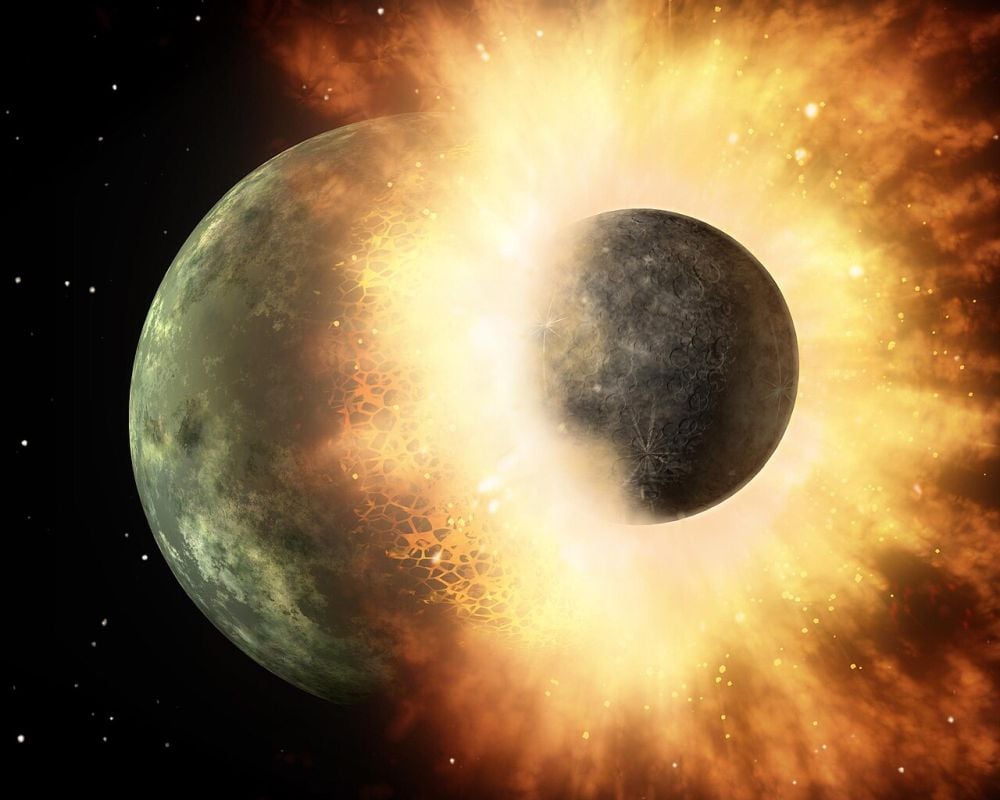
Image: Quanta Magazine
In 2025, Jack Lindsey of the AI company Anthropic reported that 1, the systems behind chatbots, could sometimes detect "thoughts" planted inside them. A year of follow-up work has narrowed that claim, and left a smaller effect nobody has explained away.
The test
Asking a model about its inner life proves little. It learned from human text, and humans describe their inner lives constantly. A real test must be one the model can't pass by imitation.
Lindsey's team could already find patterns of activity across a model's "neurons," its numerical computing units, that encode specific concepts. Dialing a pattern up pushes the model toward that concept, a technique called 2. In one 2024 demo, Anthropic's model 3, steered toward the Golden Gate Bridge, kept bringing it up unprompted.
For the experiment, Lindsey injected concepts such as denim or vegetables into half of many copies of a model. The rest, a 4, got nothing. All were asked: "Do you detect an injected thought? If so, what is the injected thought about?" Because the model must answer at once, it can't first produce odd text and then notice its own strangeness.
The newest Claude flagged the injection and named the concept in 20% of trials. Control copies never claimed an injection. With zero 5, the hits weren't lucky guesses.
The skeptics' test
Kyle Mahowald and Harvey Lederman, then both at the University of Texas at Austin, tested the two parts of the question separately on large 6 models. They suspected that naming was just steering at work: nudge a model toward vegetables and it will mention vegetables anyway.
The evidence backed them. When models detected an injection but failed to name it, their guesses weren't even related. "Bizarrely, they say 'apple' all the time," Lederman says. The pair could also degrade naming without hurting detection, so the two seem to be separate processes.
Detection, however, resisted their attempts to explain it away. They concluded that models can sense that something unusual is happening internally, without knowing what, and called this 7. It is surprising because training never tampers with a model's neural activity, so nothing obvious should teach this skill. A follow-up from Lindsey's team reached a similar conclusion. Simpler explanations are still being pursued, and the article doesn't say which papers have been peer reviewed.
Is it introspection?
That remains contested. Noticing tampering may be closer to a reflex. Shauli Ravfogel of New York University and his colleagues add that nearly everything a model does is processing internal states, so defining introspection as sensing those states makes the term "kind of meaningless." They argue tests should draw on theories of human introspection, though the distinction those theories rely on, between a thought and a thought about that thought, is proving hard to pin down.
A year after a striking experiment at the AI company Anthropic, researchers have a clearer and more modest picture of what it showed. Large language models, the systems behind chatbots, can apparently sense when their internal activity has been tampered with. But their vivid descriptions of what was tampered with may not reflect any self-awareness at all. Whether the surviving ability counts as introspection, meaning awareness of one's own mental processes, is still disputed.
The original paper made no claim that models are conscious or have first-person experience. It asked something narrower: can a model report on its own internal state?
Why this is hard to test
These models are neural networks, mathematical systems of many interconnected units, trained on vast amounts of human text. "They are trained to talk like humans, and humans talk about their inner life all the time," says Shauli Ravfogel of New York University. A model that describes its thoughts may simply be imitating that writing. A useful test has to be one the model can't pass using outside information, only by access to its current internal state.
From a bridge to a controlled experiment
Jack Lindsey, a former computational neuroscience student who joined Anthropic in 2024, and his colleagues had developed methods for finding patterns of activity across a model's "neurons" that encode specific concepts, from the Golden Gate Bridge to inner conflict. Artificially dialing up a pattern pushes the model's output toward that concept, a technique called 1.
In May 2024, Anthropic let users try a version of its model 2 steered toward the bridge for a day. Asked about a McDonald's meal, it claimed the highest-calorie food at the Golden Gate Bridge was the bridge itself. One exchange posted on Reddit stuck with Lindsey. Asked for an apple pie recipe without bridges, the model held out until the end, mentioned the bridge coming into view after baking, then wrote, "Whoops, let me start over…"
That looked like self-recognition, but Lindsey saw the flaw: the model could simply have read its own odd text and noticed it was strange. So the test needed a report made before any odd text appeared.
His 2025 design worked like a psychology experiment. In half of many copies of a model, he injected a "thought" by dialing up a pattern for a concept such as denim, secrecy or vegetables. The other half served as a 3, receiving no injection. All copies got the same prompt: an overview of the experiment, then "Do you detect an injected thought? If so, what is the injected thought about?" Because the model must answer the first part immediately, it has no stray text about, say, broccoli to read beforehand.
Lindsey doubted it would work. With the newest and most powerful version of Claude, though, the model correctly flagged the injection and described the concept in 20% of trials. After he stimulated a pattern tied to words in capital letters, one reply read, "I notice what appears to be an injected thought related to the word 'LOUD' or 'SHOUTING.'" Control copies never reported an injection. Zero 4 meant the hits weren't lucky guesses, and Lindsey took this as strong evidence of real, if unreliable, introspection.
Pulling the result apart
Kyle Mahowald, a computational linguist at the University of Texas at Austin, and his colleague there, the philosopher Harvey Lederman, noticed that Lindsey's success criterion combined two questions: did the model detect an injection, and could it name the concept? (Lederman has since moved to NYU and Anthropic, but had no connection to the company then.) They studied the two separately, using large 5 models, whose internals outside researchers can freely work with.
Their suspicion fell on the naming step. Steering exists to shape what models say. Lindsey's was much gentler than the Golden Gate demo, but even a nudge might get a model talking about vegetables whatever the prompt. If so, "the thought is about vegetables" could be the steering talking, not self-observation.
Two findings supported this:
Misses weren't near-misses. When models correctly flagged an injection but failed to name it, you might expect related guesses, such as "shirts" for denim. Instead the answers were unrelated. "Bizarrely, they say 'apple' all the time," Lederman says.
The two abilities came apart. The pair could degrade naming without making detection any worse.
So either models have two unrelated forms of introspection, or one of the abilities isn't introspection. Since steering alone can produce the concept talk, the pair favored the second reading: the descriptions probably weren't introspective.
What wouldn't go away
They expected detection to have a mundane origin too. After a battery of tests, simpler explanations couldn't fully account for it. The article doesn't detail those tests. Their conclusion is that models can tell something unusual is happening in their processing, without access to the details. They call this 6.
The surprise is that training never involves tampering with neural activity, so nothing obvious should have taught a model to notice it. "The fact that it can notice the anomaly is insane," says Lederman, who calls it robust to the pair's controls.
Lindsey's team ran a follow-up study on how anomaly detection works and reached a similar conclusion. Others are still pursuing "7" explanations, meaning simpler accounts that require no self-monitoring, using smaller models. Jacob Andreas of MIT allows that such an explanation may exist: "But if there is, I don't think we've actually identified it yet." The article doesn't say which of these papers have passed peer review, so treat the picture as provisional. Note too that the key experiments and one follow-up come from a company studying its own products, though outside skeptics reproduced the core detection effect in other models.
Does it count?
Anomaly detection can look more like a reflex than a reflection. Lederman illustrates the problem: noticing a cut on your arm isn't introspection, but "if your only organ is the brain, and I cut you there and you notice, it's unclear."
A spring 2026 paper by Ravfogel and his NYU colleagues Shashwat Singh and Tal Linzen pushes further. After a model reads its input, everything it does is processing of internal states. Define introspection as sensing those states, Ravfogel says, and the term becomes "kind of meaningless." They argue tests should draw on leading theories of human introspection. One prominent theory separates a first-order representation ("apples") from a 8 one about your own thought ("I'm thinking about apples"). Yet that line is hard to draw in models. Steve Fleming, a University College London neuroscientist, suspects it may be fuzzy in humans too: "Cognitive scientists were in this illusory comfort zone."
Lederman sees models as a possible "sandbox" for studying what pressures might give rise to introspection. Andreas urges caution. Copies of a model are identical to a degree no humans are, which muddies even the distinction between self and other. "I think identity is at the heart of introspection," he says, and many tempting analogies "just don't hold."
Remember
Testing parts separately changed the result: naming the concept and detecting tampering behaved as independent processes.
Asking for an immediate answer was the key design move, denying models the chance to read their own odd output.
Nobody has fully explained detection, but an unexplained ability isn't automatically introspection; the definition itself is under dispute.
Hydrothermal vents are places where geologically heated water emerges, supplying chemical energy and minerals. They host thriving ecosystems on Earth and are a leading, though unproven, candidate for where life began, which makes possible Martian analogues interesting.
Mars centered on Tharsis, the vast volcanic region whose northern edge hosts Alba Mons, the study's focus.
A study published Nov. 4 in Science Advances reports a possible signal of hydrogen chloride gas entering the Martian atmosphere from rifts around Alba Mons, the planet's largest volcano by surface area. The authors think the gas comes from hot magma below the 1, the loose rock and dust covering Mars. They also suggest, more speculatively, that the area could resemble Earth's 2, where geologically heated water emerges.
First author Alexander Trokhimovskiy, of Russia's Space Research Institute, calls this the strongest evidence yet of gas release from dormant Martian volcanoes. Co-author Kevin Olson of the University of Oxford adds that "the link remains a hypothesis."
Why scientists first hesitated
The 3, a European-led spacecraft studying Mars's atmosphere, first detected hydrogen chloride in 2021. Scientists hesitated to blame volcanoes for three reasons: the gas seemed tied to southern spring and summer, it wasn't concentrated over any volcanic region, and other volcanic gases such as sulfur compounds were absent.
The clue that changed the picture
Olson then noticed a few readings from the start of northern winter, outside the expected season and hemisphere: two in the mission's first Mars year, and one the next. (A Mars year lasts nearly two Earth years.) They fell close together in place and time both years.
That let the team test the pattern. They ran targeted measurements at that place and season for two Mars years, roughly four Earth years. The unseasonal signal showed up again: a "distinct and pronounced" rise that then faded below the instrument's 4.
A regular atmospheric process should behave predictably. This looks, Olson says, "more suggestive of a puff of gas." Over four Mars years, he says, it has appeared locally and nowhere else.
Co-author Daniel Mège, a planetary geologist at the Polish Academy of Sciences, identified 5 where the gas may be escaping. He argues that the case gains weight from NASA's 6 lander, whose seismic data and modeling pointed to magma on Mars in an analysis earlier this year. One line of evidence comes from the crust, the other from the air.
Life is a much longer stretch
Magma is not a sign of life. Mège's point is that hydrothermal zones, a leading but unproven candidate for life's origin on Earth, combine materials and energy in a way these sites might too. Conditions would have to stay favorable for at least millions of years, however, and he says that kind of local stability "is not obvious."
What's still missing
The authors say the emissions still need confirming. The article doesn't say whether the missing sulfur has been explained, and it gives no gas concentrations or statistical confidence. Timing and location now fit a volcanic source better, but this is not yet proof of active magma, and the case for habitability rests on further inference.
A study published Nov. 4 in the journal Science Advances reports a possible signal of hydrogen chloride gas entering the Martian atmosphere from rifts around Alba Mons, the largest volcano on Mars by surface area. (Olympus Mons is the tallest.) The authors interpret the gas as coming from hot magma beneath the 1, the loose rock and dust covering the planet. They add a more speculative idea: the area might host an environment resembling Earth's 2, places where geologically heated water emerges.
First author Alexander Trokhimovskiy, of Russia's Space Research Institute, calls it the strongest evidence yet of gases being released by dormant Martian volcanoes. That is the team's own assessment, and co-author Kevin Olson, a visiting researcher at the University of Oxford, says plainly that "the link remains a hypothesis."
Why scientists first hesitated
The 3, a European-led spacecraft that studies Mars's atmosphere from orbit, first detected hydrogen chloride in 2021. Scientists were reluctant to credit volcanoes, Olson says, for three reasons:
Timing: the gas seemed seasonal, showing up in the warmer spring and summer of the southern hemisphere. A regular yearly cycle points toward atmospheric processes rather than underground sources.
Location: it was not concentrated over any possible volcanic region.
Missing companions: other volcanic gases, such as sulfur compounds, were absent.
The out-of-season clue
Later work complicated the seasonal picture. Olson noticed two observations from the start of northern winter in the mission's first Mars year, and one more the following year. A Mars year lasts nearly two Earth years. These readings fell outside the expected season and hemisphere. They also sat close together in both place and time from one year to the next, which he calls "rather surprising."
So the team tested the pattern. They designed a campaign of targeted measurements at that location and season, then ran it for two Mars years, roughly four Earth years. This is the strongest part of the work's logic: an anomaly spotted in passing became a prediction about where and when to look, and the prediction held.
The campaign confirmed the unseasonal signal. The researchers found what Olson describes as a "distinct and pronounced signal" that then weakens and drops below the spacecraft's 4. That rise and fade matters to the argument. "This inconsistency is more suggestive of a puff of gas entering the atmosphere than of regular atmospheric chemistry," he says. As an analogy of ours, not the authors', a steady background process behaves like a tide, while this looks more like smoke drifting from one chimney and then dispersing.
Olson says the gas has now appeared "locally, and nowhere else" over four Mars years of observations. Since hydrogen chloride also appears in the south in season, this presumably refers to the out-of-season northern signal, though the article does not spell that out.
Tying the gas to the ground
Co-author Daniel Mège, a planetary geologist at the Polish Academy of Sciences, identified 5 in the Alba Mons region where the gas may be emerging. The article describes this as a possible source, not a direct observation of gas leaving a crack.
The team also leans on a second line of evidence. Analysis earlier this year using NASA's 6 lander, which recorded marsquakes on the surface, interpreted seismic data and modeling as indicating magma on Mars. Mège argues the combination adds weight: InSight saw activity in the crust, while TGO saw possible emissions in the air. Trokhimovskiy calls the atmospheric data a "complementary and potentially independent line of evidence."
What this does and doesn't say about life
Magma is not a sign of life. Mège's argument is about conditions. He notes that hydrothermal zones, where Earth's first life-forms are thought to have emerged, combine materials and energy in a way the potential Martian vents might too. A hydrothermal origin for Earth's life is a leading hypothesis but remains unproven.
Mège's own caution is substantial. Conditions would need to remain favorable for at least millions of years for life to form. "If these requirements are met at local scale, at the scale of the seepage structures, then living organisms might wait for us to discover them," he says. "But maintaining stable conditions over such a long period at a very local scale is not obvious."
The article reports no direct detection of liquid water, elevated heat or organisms at the site. The habitability idea is an inference stacked on another inference: first that the gas comes from magma, then that the magma sustains a stable, vent-like environment.
What remains open
The authors say more research is needed to confirm the emissions. The account leaves several gaps:
Sulfur: its absence was one of the original objections, and the article does not say whether the new work resolves it.
Numbers: the article gives no gas concentrations, total count of detections or statistical confidence, so the strength of the signal cannot be judged from this report alone.
Alternatives: the authors say a puff fits better than regular atmospheric chemistry, but the article does not describe which non-volcanic explanations were tested or how they were excluded.
Scale: the article does not say how much magma would be needed, or how active the system would have to be, to produce these puffs.
The revised picture answers two of the three original objections, timing and location, while leaving the third unaddressed in this account. That makes it a real advance on the 2021 detection, but not yet proof of active Martian magma.
Remember
The key evidence is a repeat test: an accidental out-of-season reading predicted where and when to look, and it recurred.
A signal that spikes and fades fits a local release better than a regular atmospheric cycle, according to the authors.
Missing sulfur, one of the original objections to a volcanic source, goes unexplained in this account.