Old Sewers, New Rain, Sharp Letters · Morning Gist
Tuesday, October 135 stories · 15 min
Old Sewers, New Rain, Sharp Letters
California's infrastructure meets El Niño, data center anger spreads to solar, and the SEC puts big asset managers on notice over Exxon.
Picked from 31 new articles across 13 sources · arrow keys for other days
Today in 30 seconds
30s left
California cities brace for a record El Niño. One modeler puts flood losses near $3 billion, and San Diego's sewer fix alone costs $3.3 billion. story 1 ↓
A Michigan Republican ties data center backlash to solar and battery opposition. New Mexico's AG is fighting a pipeline built only for an Oracle data center. story 2 ↓
The SEC found no violations by BlackRock and Vanguard over the 2021 Exxon board fight but still voiced "serious concerns" publicly. Its enforcement chief, a former Exxon lawyer, recused himself. story 3 ↓
An Aspen Institute survey finds only about half of U.S. teens know what causes climate change. Those taught about it by teachers answered more accurately. story 4 ↓
Regulators are pushing utilities to turn inspection photos into wildfire risk data. The source is a vendor-sponsored piece with few independent numbers. story 5 ↓
1/5Heatmap· Jeva Lange· Oct 12
California cities race to prepare for a record-strength El Niño winter
A very strong El Niño expected to peak in December is already sending damaging swells onto California's coast. Cities have only weeks to prepare, and how ready they are depends on decades of earlier investment.
Why it matters · It shows that climate adaptation depends on infrastructure built years before a disaster, and that emergency declarations and last-minute fixes can only do so much.
Know this first
Context from the editor, not the article · 30 sec
1 · What El Niño is
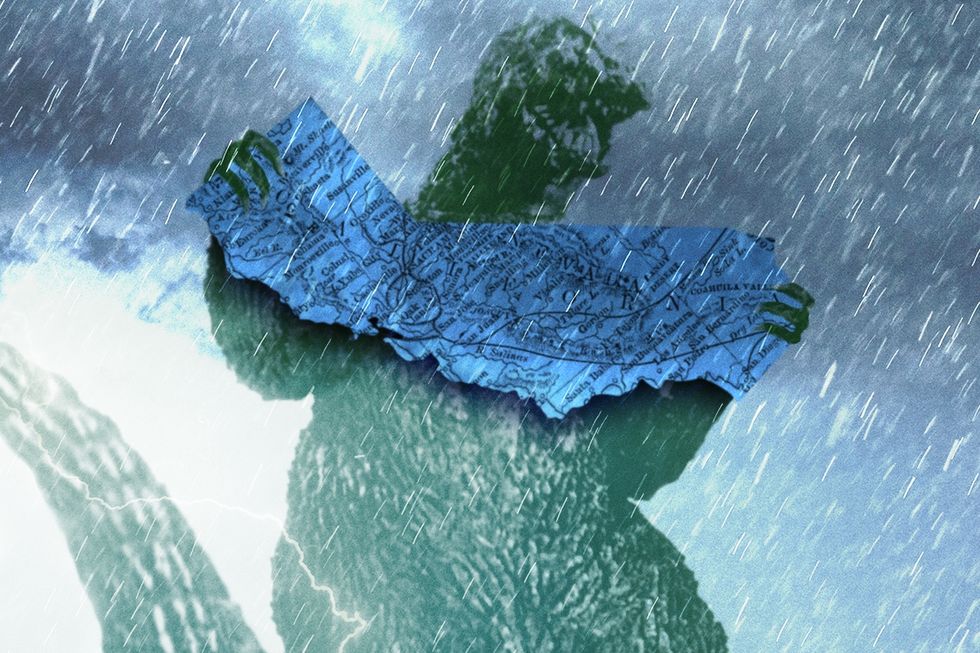
El Niño is a recurring warming of the surface waters of the eastern and central tropical Pacific. It shifts winds and the jet stream worldwide. Strong events are informally called "super" El Niños, and the 2015–16 event was nicknamed "Godzilla."
2 · Why California gets hit
In winter, El Niño tends to push the jet stream south. That steers Pacific storms into California and the southern U.S., while the northern U.S. stays drier and milder. Atlantic hurricanes also tend to be weaker in El Niño years.
3 · Warming raises the baseline
Higher sea levels raise the starting point for tides and storm surge. Warmer air also holds more moisture, about 7% more per degree Celsius, so storms of the same strength can drop more rain.
2/5Heatmap· Jael Holzman· Oct 9
Michigan Republican links data center backlash to solar and battery opposition
In a Michigan congressional debate, Rep. Tom Barrett tied local anger at data centers to anger at solar farms and batteries. Heatmap reads it as a warning for renewables, alongside three other local siting fights.
Why it matters · If anger at data centers turns into anger at the solar and storage that would power them, clean energy projects get harder to approve right as electricity demand jumps.
Know this first
Context from the editor, not the article · 30 sec
1 · The data center backlash
AI-driven data centers need huge amounts of power and land. Local opposition over noise, water, electricity rates and tax breaks has become a political issue, and some candidates now back pauses or moratoriums on new facilities.
2 · Michigan's siting law
A 2023 Michigan law lets the state Public Service Commission approve large solar, wind and battery projects when local governments block them. Critics call this taking away local control. Supporters say it stops one township from vetoing projects the state needs.
3 · NEPA reviews
The National Environmental Policy Act (NEPA) requires federal agencies to study the environmental effects of projects they approve. An environmental assessment is the shorter version of that study. Opponents often sue on the grounds that it was inadequate.
3/5Inside Climate News· By Nicholas Kusnetz· Oct 9
SEC warns BlackRock, Vanguard and others over 2021 Exxon board fight
The US Securities and Exchange Commission (SEC) investigated big investors' role in the 2021 ExxonMobil board shake-up. It found no violations, but it published a letter warning them anyway. Critics call it intimidation.
Why it matters · Shareholder pressure is one of the few private-sector levers on how oil majors handle climate risk, and this letter makes the biggest shareholders less likely to use it.
Know this first
Context from the editor, not the article · 30 sec
1 · Proxy fights and big funds
Shareholders elect company directors. In a proxy fight, a dissident investor nominates rival candidates. Index giants like BlackRock, Vanguard and State Street hold large stakes in nearly every big company, so their votes often decide who wins.
2 · Passive versus activist reporting
Under SEC rules, an investor holding more than 5% of a company who aims to influence it must file a detailed disclosure. Passive holders file a lighter form. Investors who coordinate their votes can be treated as a single group.
3 · Climate Action 100+
Climate Action 100+ is an investor coalition launched in 2017 to press the largest corporate emitters on climate. The sustainability nonprofit Ceres helps coordinate it. Members have included pension funds and, for a time, BlackRock and State Street.
4/5Yale Climate Connections· YCC Team· Oct 9
Survey: only about half of U.S. teens know what causes climate change
An Aspen Institute survey of U.S. teens found that only about half know climate change is mainly caused by human carbon pollution. Fewer know scientists agree on this. Teens taught about it in school scored better.
Why it matters · Worry about climate change is widespread among U.S. teens, but many of them can't name its cause, and that gap is something schools can address directly.
Know this first
Context from the editor, not the article · 25 sec
1 · What causes warming
Burning coal, oil and gas releases carbon dioxide, which traps heat in the atmosphere. Major scientific assessments, including the IPCC's, conclude that human activity is the main driver of warming since the mid-1900s.
2 · The scientific consensus
Several independent studies of published research put agreement among climate scientists that humans cause recent warming at roughly 97% or higher. Public awareness of that consensus has long lagged behind it.
3 · Climate in U.S. schools
U.S. states and districts set their own curricula, so climate change gets taught unevenly. Some states require it in science standards. In other places it gets little or no class time.
5/5Utility Dive· Donald McPhail· Oct 12
Regulators push utilities to turn inspection photos into wildfire risk data
State regulators now expect utilities to feed inspection results into wildfire risk models. A vendor argues that pooling scattered inspection photos and defect records into one searchable store makes this possible, citing two utility examples.
Why it matters · Wildfire liability is reshaping utility spending, and whether inspection data actually guides grid hardening decides how well that money cuts ignition risk.
Know this first
Context from the editor, not the article · 26 sec
1 · Wildfire mitigation plans
Utilities in fire-prone states file wildfire mitigation plans (WMPs) with regulators. The plans describe how they will cut ignition risk through inspections, vegetation clearing, equipment upgrades and power shutoffs, and how they will rank that spending.
2 · Utility asset inspections
Utilities inspect poles, crossarms, hardware and underground vaults on fixed multi-year cycles, increasingly with drones and cameras. Historically the main output was proof of compliance: the asset was checked and defects were logged for repair.
3 · Who owns the grid
Large investor-owned utilities (IOUs) such as Evergy serve millions of customers. Municipal utilities are city-owned and much smaller, with far fewer engineers and smaller budgets for analytics and inspection programs.
A very strong El Niño, nicknamed "Godzilla," is already hitting California. Last weekend, swells from a storm briefly named Hurricane Rachel battered beachfront homes in Long Beach, flooded streets and tore up parts of the boardwalk. El Niño is expected to peak in December. One disaster modeler estimates the state could see up to $3 billion in flood and mudslide losses this winter, not counting coastal erosion. Governor Gavin Newsom declared a statewide emergency in late September.
Why it hits California so hard
El Niño pushes the winter jet stream south, which steers storms into Southern California. Those storms arrive as 1, narrow bands of concentrated water vapour that can drop days of heavy rain on hillsides prone to landslides. Offshore, 2, bulges of warm water that cross the Pacific, can raise coastal sea level by up to 18 inches. Climate change adds to both: 3 (the year's highest tides) and storm surge now start from a higher sea level, and warmer air holds more water, so rainfall could run "perhaps 200% above normal."
Readiness was decided decades ago
Heatmap's Jeva Lange finds that how prepared a city is depends mostly on what it built years ago.
Los Angeles and San Diego have aging wastewater systems. San Diego's upgrade would cost about $3.3 billion, and there isn't time for it, so crews are clearing drains of debris and brush.
Roseville, near Sacramento, spent $39 million with 4 (the federal disaster agency) after deadly 1986 storms. The money went to wider streams, levees and bypass channels. Less than 7% of the city is now in a floodplain, and this year's preparation amounts to routine creek clearing.
Long Beach is starting an $11.4 million project to add 415,000 cubic yards of sand to its beach. Officials concede the waves will keep removing it, so crews will have to move sand back every day until permanent fixes can be permitted.
What emergency declarations can and can't do
San Diego declared an emergency preemptively because it cuts permitting time from weeks or months. The statewide declaration mostly helps state agencies get into position. Santa Cruz, still recovering from earlier storms, won't declare until it runs out of resources. Its emergency manager, Meredith Albert, says El Niño "turns up the volume" on hazards the city already plans for.
No declaration can replace a century-old sewer before January. Albert's advice is to plan for 72 hours without outside help and to get to know your neighbours now, especially those likely to miss official alerts.
The coast is already taking damage
California has about 3,400 miles of Pacific shoreline, and the ocean off it is unusually warm and rough this autumn. Last weekend, swells from a storm that was briefly named Hurricane Rachel hit Long Beach. They battered beachfront homes, flooded streets and tore off pieces of the boardwalk. One resident who has lived there 64 years told the New York Post it had "never happened like this before."
The worst is probably still ahead. A disaster modeler quoted by Heatmap's Jeva Lange puts possible flooding and mudslide losses this winter at as much as $3 billion. That figure leaves out coastal erosion, 1 (the highest tides of the year) and storm swell. Governor Gavin Newsom declared a statewide emergency at the end of September, and San Diego and other cities have declared their own. El Niño is expected to peak in December, which gives local governments a few weeks to finish their preparations. "Based on what I am seeing now, I am officially concerned," said Daniel Swain, a climate scientist at University of California Agriculture and Natural Resources.
How El Niño turns into floods
El Niño is declared when surface temperatures in a key stretch of the tropical Pacific run at least 0.5°C above the average of the previous 30 years. Lange notes signs that climate change is making these natural swings less predictable. It also clearly makes their effects worse, because every hazard now starts from a higher sea level and a wetter atmosphere.
The article describes several ways the hazard reaches California:
The jet stream moves south. In winter, El Niño pushes the storm track toward the southern U.S. Southern California sits right in its path.
Atmospheric rivers. These are long, narrow bands of concentrated water vapour that can drop days of heavy rain. Hitting a landscape prone to landslides and flash floods, they could bring rainfall "perhaps 200% above normal," in the article's words.
2. These are large bulges of warm water that travel east across the Pacific. On arrival they can raise coastal sea level by as much as 18 inches.
Three cities, three levels of readiness
The core of Lange's reporting is that how ready a city is now depends on choices it made long ago.
Los Angeles and San Diego: old pipes. LA's sanitation department, 3, has told the City Council it is worried that aging wastewater pipes and treatment plants won't cope with heavy rain. San Diego needs about $3.3 billion to upgrade a wastewater system that is a century old in places. With no time for that, its emergency managers are clearing debris and brush that could clog drains. In both cities, a system-wide repair would take far longer than the time left before the storms. A San Diego official, Rezende (the article does not give a title), said inland flooding affects more residents and businesses there than coastal flooding, because most of the population lives back from the shore.
Roseville: paid off decades ago. In 1986, back-to-back storms killed 13 people in this city northeast of Sacramento and caused $400 million in damage. Afterward, the city and 4 (the Federal Emergency Management Agency) spent $39 million widening streams and building levees and stormwater bypass channels. Better floodplain maps kept new construction on higher ground. Today less than 7% of the city lies in a floodplain. The city has 160 miles of creek shoreline, and its El Niño preparation looks like routine maintenance: clearing dense vegetation and fallen trees from key creeks.
Long Beach: in between. Swells from Hurricanes Marie and Polo hit the city in September, and it quickly drafted a seven-point plan for its peninsula. This fall it begins an $11.4 million dredging project that will place 415,000 cubic yards of sand on the beach as a buffer. Illustrative arithmetic: that works out to roughly $27 per cubic yard. City spokesperson Laath Martin acknowledged the limits. Waves will keep pulling sand away, so "5," trucking sand from where it piles up back to where it eroded, will have to continue "each day" until permanent solutions can be "identified, permitted and implemented."
What emergency declarations actually do
Officials described the declarations as mostly procedural tools. San Diego declared preemptively because it shortens permitting. Without one, Rezende said, getting projects moving could take "many weeks or many months." Rezende and Santa Cruz emergency manager Meredith Albert both said the statewide declaration mainly helps state agencies position themselves for a faster response and affects higher-level permits. That matters because jurisdiction is split. In Carlsbad, which has seven miles of badly eroding beach, the city controls only one mile and State Parks manages the other six. The state has also signed up 6, a company whose radar satellites can image flooding at night and through cloud.
Santa Cruz has not declared an emergency and won't until it "run[s] out of resources," Albert said. The county is still dealing with earlier damage: the 2016 El Niño caused about $9 million in losses there, and the nearby community of Pajaro has not fully recovered from the 2023 atmospheric-river floods. Albert's team plans for floods, earthquakes, landslides and wildfires together, not one at a time. "El Niño turns up the volume a little bit, but it doesn't necessarily change our hazard landscape," she said.
The limits and the human layer
As Lange puts it, no declaration can replace a century-old sewer by Christmas or re-engineer a beach before January's storms arrive. Albert's answer is social. Santa Cruz expects to be cut off for at least a couple of days in a major disaster, as it was after the 1989 Loma Prieta earthquake knocked out power, communications and supply lines. She urges residents to be ready to manage alone for 72 hours and to get to know their neighbours now, especially elderly or unhoused people and non-English speakers who might not receive or understand official alerts. "We can't build those relationships during the disaster," she said.
What's left open
The article is a preparedness snapshot, not a forecast. It doesn't say who produced the $3 billion loss estimate or how, how strong this El Niño is in degrees, or what the base period is for the "200% above normal" rainfall figure. It also doesn't show whether San Diego's and LA's stopgap drain clearing will be enough. Its clearest evidence is the contrast between Roseville and the others: a $39 million investment made after the 1986 storms is what lets Roseville treat a Godzilla winter as routine maintenance.
Remember
Roseville's $39 million in flood works after 1986 means this year's El Niño preparation is routine creek maintenance.
Emergency declarations mainly speed up permitting. They can't fast-track rebuilding a $3.3 billion sewer system.
Sea-level rise and a wetter atmosphere make every El Niño-driven tide, surge and storm worse than the same event would once have been.
Heatmap's Jael Holzman tracks local fights over energy projects. Her latest roundup opens with a debate exchange she calls a warning sign for renewables.
Michigan: data centers and solar in one breath
Rep. Tom Barrett, a Republican, faces Will Lawrence, a cofounder of the youth climate group 1, in a close race for Michigan's 7th congressional district. Lawrence supports a federal moratorium on new data centers, and that stance has made the race a national test of data center politics.
At their debate, moderators played a recorded question from Paula Caltrider, a resident of Mason. Instead of asking a question, she said opponents of data centers must also "renounce the large solar farms and dangerous battery storage facilities that power these data centers." Barrett agreed. He went after the "2 agenda in Lansing," meaning Michigan's 2023 law that lets state regulators approve large solar, wind and battery projects over local objections.
Lawrence didn't criticize renewables. He accused Barrett of once backing tax breaks for data centers and then reversing himself. Holzman calls the move to bundle the two fights the "3." She says this is its first appearance on a prominent debate stage, and she expects it again at Wisconsin's governor debate on Oct. 21.
New Mexico: a pipeline "that connects to nothing"
New Mexico Attorney General Raúl Torrez has challenged the environmental review for a Transwestern gas pipeline, known as Green Chile, that would fuel Oracle's Project Jupiter data center. The 4, which approves interstate gas pipelines, assessed the pipeline as if it were separate from the data center. Torrez argues that is illegal under the 5, the law requiring federal environmental reviews.
His filing says the review pretends Transwestern is building a pipeline "large enough to supply a city that connects to nothing." It also objects that FERC justified the pipeline by pointing to Trump's AI policies instead of benefits to New Mexicans. Holzman reads the filing as a prelude to a lawsuit. She says it is the first major challenge to a gas pipeline review based entirely on its link to a data center.
Arizona and Tennessee
Arizona: The Arizona Corporation Commission, the state's utility regulator, scheduled a vote on the transmission line for Repsol's Lava Run wind and solar project, then pulled it from the agenda without explanation. This followed many complaints from neighbors. Repsol only confirmed that the item was removed.
Nashville: A federal judge dismissed developer DC Blox's lawsuit against the city's pause on its data center project near a zoo. DC Blox says it will refile. Holzman doubts the pressure will work.
Jael Holzman's weekly Heatmap roundup of local energy fights covers four places this time: Michigan, New Mexico, Arizona and Tennessee. The common thread is data centers and the power they need. The item she treats as most alarming for clean energy is a single exchange in a congressional debate.
Michigan's 7th district: the "1"
Rep. Tom Barrett, the Republican incumbent, is in a close race with Will Lawrence, a cofounder of the 2, a youth climate activist group. Holzman has called the race a must-watch for two reasons: control of the U.S. House, and the political future of the data center industry. Lawrence supports a federal moratorium on new data centers, which has made him a national test of whether opposing data centers wins votes.
At what is probably their only debate, moderators played recorded remarks from Paula Caltrider, a resident of Mason. Holzman notes that Caltrider has appeared in national coverage of the data center backlash. She was billed as asking a question but made a statement instead: "You can't be a part of this no data center movement without renouncing the large solar farms and dangerous battery storage facilities that power these data centers."
Barrett picked it up. He thanked her for "linking these together" and attacked "the stripping away of local control that took place in pursuit of this 3 agenda in Lansing." That refers to Michigan's 2023 siting law, which Holzman calls the state's "primacy law." It lets the Michigan Public Service Commission approve large solar, wind and battery storage projects when local governments block or overly restrict them. Other Michigan Republican candidates also oppose it.
Lawrence didn't take the bait and didn't criticize renewables. The exchange turned into an argument over whether Barrett had once backed tax breaks for data centers. "He stuck his finger up into the wind, saw which way it was blowing, did a complete 180," Lawrence said. Then came a muddled dispute over whether the 4, the 2022 federal climate and clean energy law, was a giveaway to data centers.
Holzman's name for this tactic is the "Data Center Trojan Horse": using public anger at data centers to carry opposition to the solar farms and batteries that would supply them. Why this worries the renewables sector is an inference, but a simple one. Data centers are driving much of the new demand for electricity. If voters come to see solar and storage as part of the data center problem, those projects become harder to permit just as they are most needed. Holzman says this is the first time she has seen the argument on a prominent debate stage. She expects more, and points to Wisconsin's governor debate on Oct. 21.
Doña Ana County, New Mexico: reviewing a pipeline as if it stood alone
Oracle's Project Jupiter is a large data center planned in southern New Mexico. To fuel it, the pipeline company Transwestern wants to build a gas pipeline called Green Chile. Interstate gas pipelines need approval from the 5. Under the 6, FERC must study a project's environmental effects. For this pipeline it prepared an 7, the shorter form of NEPA review.
On Monday, New Mexico Attorney General Raúl Torrez filed comments saying the EA is illegal and inadequate. His central argument is that the pipeline and the data center are one project:
"Project Jupiter is both the client and the catalyst for the pipeline… this pipeline has no reason to exist other than to provide fuel for Project Jupiter. Yet FERC's EA seeks to treat the pipeline as if it were wholly independent from Project Jupiter, asking us to pretend that Transwestern is building a pipeline large enough to supply a city that connects to nothing, merely terminating in the desert."
This matters for the legal fight. A review that looks only at the pipe can leave out the effects of the facility it serves, such as burning the gas and the land and water the data center uses. Torrez also argues that FERC wrongly found the pipeline to be a public necessity by citing President Trump's pro-AI policies, without weighing any benefit to New Mexicans.
Holzman says the filing reads like the start of a lawsuit. She calls it the first major challenge to a large gas pipeline's environmental review based entirely on its tie to a data center. Its timing adds to its weight: Congress is debating changes to NEPA and how much power outside groups should have to challenge these reviews in court. The article gives no details on the pipeline's size or capacity, or on the data center's power demand.
Phoenix, Arizona: a vote that disappeared
The 8, the state's elected utility regulator, scheduled a vote this week on the transmission line for Lava Run. That is a wind and solar project in Apache County being developed by the Spanish energy company Repsol. Then the vote was pulled from the agenda without public explanation. Holzman asked whether the delay was meant to avoid a decision before the midterm elections. Repsol sent questions to the commission and would only confirm the item was removed. The ACC didn't respond.
Holzman has reported before that opposition to Lava Run is fierce enough that state legislators have discussed pausing new wind projects altogether. She notes that the vote was pulled after many neighbors and affected landowners filed comments against approval. That is timing, not proof of a cause.
Data center developer DC Blox sued Nashville over the city's attempt to pause its projects. The dispute centered on a site near a zoo, and country singer Brad Paisley was among the people involved in the fight. DC Blox argued the pause was unconstitutional. A federal judge dismissed the suit on Wednesday. According to local reports, the main reason was that many of the claims would create conflicts between federal and state court jurisdiction, and the judge found the constitutional argument meritless.
DC Blox says it will file an amended complaint. Holzman is skeptical. In her view, this kind of legal pressure works mainly when a community can't afford to keep fighting. She cites Hill County, Texas, as an example of that, though the article doesn't describe what happened there.
What's unresolved
The roundup is a set of field notes, not data. It doesn't show whether linking data centers to renewables actually moves voters. Lawrence's race will be one early test. The New Mexico challenge is so far only a comment filing, not a lawsuit. Lava Run's delay remains unexplained.
Remember
Holzman says Michigan's 7th district debate was the first time she'd seen data center opposition tied to renewables on a prominent debate stage.
New Mexico's attorney general argues that a pipeline built only to fuel a data center must be reviewed together with that data center.
Arizona regulators quietly pulled a vote on the Lava Run power line after neighbors filed objections, weeks before the midterms.
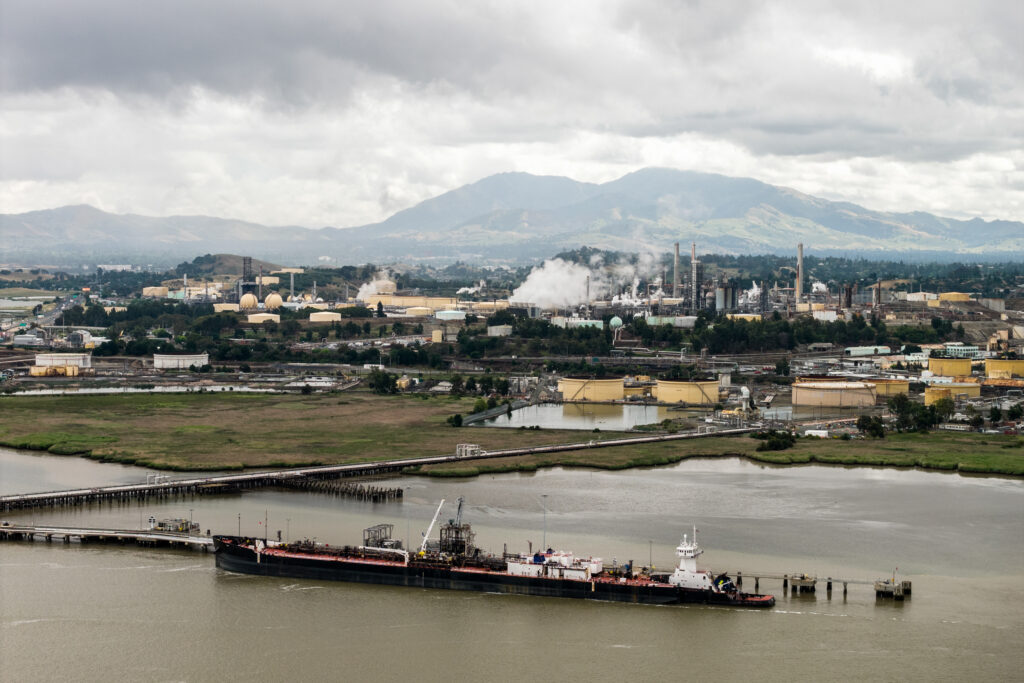
ExxonMobil's Baton Rouge refinery. Exxon's lagging stock gave Engine No. 1 its financial case in 2021.1 / 2
The US 1, which regulates securities markets, published a letter this week about the 2021 campaign that replaced three ExxonMobil directors. It was aimed at the investors who took part. The agency said it had closed its probe and found no evidence of violations. It still voiced "serious concerns" about their conduct and named BlackRock, State Street and Vanguard, the three largest asset managers.
What was investigated
The probe looked at how those firms communicated with 2, an investor coalition that presses big emitters on climate. Two large public pension funds were also examined: California's 3 and the New York State Common Retirement Fund. The SEC traced what it called a Climate Action 100+ effort, starting in 2019, to change Exxon's board.
In 2021 a small activist firm, 4, nominated rival directors. Its pitch was about money, not climate. Exxon's stock had lagged badly, and the company had been dropped from the Dow Jones Industrial Average in 2020. Engine No. 1 won three seats, largely because BlackRock and other big managers voted for its nominees. The SEC noted that Engine No. 1 had talked with some coalition members and with 5, the nonprofit that helps run the coalition.
The legal question
Big index funds count as 6. That exempts them from the heavier disclosures that SEC rules require of activists trying to influence a company. The SEC asked whether coordinated voting should have triggered those disclosures. Securities lawyers say a finding of violation would have been serious. The agency found no such evidence. It said it found nothing showing that BlackRock or State Street agreed on votes or shared their voting plans with the coalition. It published a report anyway. Jim Moloney, who heads the SEC's corporation finance division, said the report "reminds" investors of their responsibilities in organized efforts like this one.
Why critics see a chill
Mika Morse was climate-risk counsel to Gary Gensler, the SEC chair under President Biden. She says the agency is closing off every route investors use to raise climate risk, from filing shareholder resolutions to meeting with companies. She says some investors stayed silent during public comment on the SEC's plan to repeal its climate disclosure rule because they feared retribution.
There are signs the pressure is working. BlackRock left Climate Action 100+ in 2024. According to the nonprofit As You Sow, BlackRock once backed nearly half the proposals the group supported. Last year it backed hardly any.
Some context:
The SEC's enforcement director, David Woodcock, was an Exxon lawyer during the 2021 fight. The agency says he recused himself.
The commission normally has five members. It has two, both Republicans, and last week it ruled that a single commissioner can form a quorum.
Exxon did not comment.
The US 1, the federal regulator of securities markets, published an unusual public letter this week. It concerns the 2021 shareholder campaign that put three new directors on ExxonMobil's board. The letter says the SEC has closed an investigation into several of the country's largest investors and found no evidence that they broke the law. It nonetheless sets out the commission's "serious concerns" about what they did. It names BlackRock, State Street and Vanguard, the three asset managers whose index funds own large slices of almost every big US company.
Investor advocates and some former SEC staff read the letter as a warning shot. In their view, it tells big asset managers to stay away from climate change entirely when dealing with company boards.
Who was investigated, and for what
The probe looked at communications between the three asset managers, two large public pension funds and 2. The pension funds are the California Public Employees' Retirement System (3) and the New York State Common Retirement Fund. Climate Action 100+ is an investor coalition that pushes the biggest corporate emitters to act on climate. 4, a sustainable-business nonprofit, helps coordinate it. The California and New York funds were active members. BlackRock and State Street joined in 2020.
The SEC's report describes a Climate Action 100+ effort, starting in 2019, to change Exxon's board over its inaction on global warming. Then, in 2021, a small activist firm called 5 launched a 6, a contest in which a dissident shareholder nominates its own board candidates and asks other shareholders to vote for them. Engine No. 1 made a financial case, not a climate one. Exxon's share price had lagged so badly that the company was removed from the Dow Jones Industrial Average in 2020. The SEC letter says Engine No. 1 communicated with some coalition members and with Ceres.
Engine No. 1 won three seats, in large part because BlackRock and other large managers voted for its nominees. The timing helped. Oil profits had collapsed during the COVID-19 pandemic, some analysts were calling the peak in oil demand, major investors were describing climate risk as systemic, and Joe Biden had just won the presidency on a pledge to move away from fossil fuels.
The legal hook: passive or activist?
The investigation turned on a technical but consequential distinction. SEC rules require investors who campaign to influence a company to file detailed public disclosures, so the market can see who is pushing for what. Firms like BlackRock are exempt from that heavier reporting even though they hold big stakes, because they are classed as 7. As general background, not something the article details: under these rules, investors who agree to act together can be treated as a single "group", and their holdings are then combined. That is how coordination among several passive holders could, in theory, turn them into a reportable activist bloc.
So the SEC asked two questions. Did coalition members coordinate their Exxon votes? And should the asset managers therefore have reported as activists? Securities law experts quoted in the article say a finding of violation could have had serious implications. The commission found no evidence for any of these claims. On BlackRock and State Street specifically, the report says the investigation "did not develop evidence" that they agreed to vote in particular ways or shared their voting intentions with people tied to Climate Action 100+.
The SEC released the report anyway. Jim Moloney, director of its Division of Corporation Finance, said it "reminds asset managers and investors of their responsibilities with respect to shareholder engagement, especially in the context of organized efforts that follow a playbook similar to that of Climate Action 100+."
The conflict question
David Woodcock became the SEC's enforcement director in May. According to his LinkedIn profile, he was an attorney at Exxon during the 2021 campaign. An SEC spokesperson said the investigation began last year and that Woodcock recused himself.
The commission itself is unusually thin. It is normally meant to have five commissioners, with at least two from each party. It currently has two, and President Trump has appointed no Democrats. Last week it issued a rule saying a single commissioner can make a quorum.
What the critics argue
Mika Morse was policy counsel on climate risk to Gary Gensler, the SEC chair under President Biden. She argues that many investors see climate change as a material portfolio risk and feel a 8, the legal obligation to act in their clients' financial interest, to raise it with companies. She says they now hesitate for fear of becoming targets. "This type of harassment is really effective, unfortunately," she said.
In Morse's account, the SEC has mapped every channel investors use on climate risk and is closing them one by one, from limiting shareholder resolutions to making it harder to meet with companies. She says that when the commission proposed rescinding its climate-disclosure rule, many investors and corporate staff who disagreed told her they would not file public comments because they feared retribution.
Danielle Fugere, president of As You Sow, a shareholder advocacy nonprofit in Climate Action 100+, called the probe part of a pressure campaign "to ensure that the financial system doesn't take climate into account." Andrew Behar, its chief executive, argues the Exxon campaign was about reversing poor financial performance and succeeded. He points to a sustained rise in Exxon's value after the new directors arrived. The article doesn't quantify that rise or separate it from the post-2021 rebound in oil prices. Ceres's general counsel, Michael Boudett, said the coalition has always operated within securities law and that each investor makes its own voting decisions.
Is it working?
The behavioural evidence suggests the pressure is having an effect, though this letter is one part of a longer push. In 2022, House Republicans opened an antitrust probe of some of the same groups, accusing them of acting like a "cartel". More than a dozen Republican state attorneys general launched their own investigations. BlackRock left Climate Action 100+ in 2024. Behar says BlackRock once voted for nearly half the proposals As You Sow supported, which cover many social and environmental topics. Last year it backed hardly any.
BlackRock and State Street declined to comment beyond pointing to the report's exculpatory line, and Exxon did not respond. The article leaves several things open. It doesn't say whether Vanguard or the pension funds responded, how much coordination the SEC thinks would cross the line, or whether the letter carries any legal weight beyond deterrence. Since no violation was found, its main effect is likely to be on how cautiously large investors approach the next climate vote.
Remember
The SEC found no violations but published its concerns anyway, so the main effect of the report is deterrence, not a penalty.
The legal issue was whether coordinated voting would turn passive index funds into activists who must make heavier disclosures.
BlackRock left Climate Action 100+ in 2024 and now backs hardly any environmental or social shareholder proposals.
A survey of U.S. teenagers commissioned by the 1, a Washington-based policy nonprofit, found that only about half of them knew climate change is mostly caused by 2 from human activities like burning fossil fuels. Even fewer knew that nearly all climate scientists agree humans are causing it. Independent reviews of the research put that agreement at roughly 97% or higher.
Laura Schifter, who works on climate education at the institute, described the results in a 3 radio segment.
Worried but unsure why
According to the segment, more than 80% of young people in the U.S. say they are worried about climate change. Schifter points to how it already shapes their lives, from playing outside in extreme heat to the jobs that will be open to them. Worry is common, then, but an accurate understanding of the cause is held by only about half of teens. Without knowing that fossil fuels drive warming, it's hard to judge which solutions actually deal with the cause.
Teachers made a difference
Teens who said they had heard "some or a lot" about climate change from teachers were more likely to answer correctly than teens who hadn't. Schifter sees potential in this for correcting misunderstandings through school lessons and conversations at home. Her group offers resources to help school districts add climate education to their curricula.
Caveats
The segment is short and thin on detail. It gives no sample size, age range, survey dates or question wording, and it offers only "about half" and "even fewer" rather than exact figures.
The link with teachers is a correlation. Students who get climate lessons may differ in other ways, such as their state, their school or their family, and those differences could explain part of the gap.
The survey was also commissioned by a group that runs a climate-education program. That doesn't make the results wrong, but it's worth knowing when you read its conclusion that schools should teach more about climate.
What the survey found
The 1, a Washington-based policy nonprofit, commissioned a survey of U.S. teenagers on climate change. Laura Schifter, who works on climate education there, described the results in a short 2 radio segment. The headline result is that only about half of the teens surveyed knew climate change is mostly caused by 3 from human activities such as burning fossil fuels.
Even fewer teens knew that nearly all climate scientists have concluded humans are causing climate change. That consensus is well documented: several independent reviews of the research literature put agreement at roughly 97% or higher.
Concern without understanding
The gap stands out because the segment also says more than 80% of young people in the U.S. are worried about climate change. Schifter describes how it already reaches into their lives: "Whether it's going outside to play in extreme heat, or if it's about the jobs that they're going to be able to access in the future, the world that they are living in is being shaped by our changing climate."
So most teens are worried, but only about half can name the cause. That matters for any response to the problem. Someone who doesn't know warming comes mainly from fossil fuel combustion has no basis for judging whether a policy, product or career path deals with the cause.
The teacher effect
The most useful finding concerns where teens get their information. Teens who said they had heard "some or a lot" about climate change from their teachers were more likely to answer the knowledge questions correctly than teens who had not.
Schifter takes this as grounds for optimism: "I think that also shows a lot of potential around how we can address these misunderstandings by teaching about it in school and having conversations with our kids at home." The Aspen Institute offers resources to help school districts add climate education to their curricula, and to help parents and teachers talk with kids about it.
What to be careful about
The segment is a two-minute radio piece, and it leaves out much of what a reader would need to judge the survey:
No methodology. It gives no sample size, age range, polling firm, survey dates or exact question wording. Wording matters a lot here. "Mostly caused by humans" with a list of options can produce very different results from an open-ended question.
No exact figures. "About half" and "even fewer" are all it gives. We don't know how far below half the consensus figure falls.
Correlation, not proof. The link with teachers is suggestive, but it doesn't show that teaching causes the better answers. Students who get climate lessons may differ in other ways: their state, their school's resources, their families, or their own interest. Any of these could account for part of the gap.
Who commissioned it. The survey came from an organization that runs a climate-education program. That doesn't make the findings wrong, but it's worth knowing when reading the conclusion that schools should teach more about climate.
What it leaves open
The open questions are the practical ones. How large is the knowledge gap between teens who were taught about climate and teens who weren't? Does it differ by state, given that U.S. curricula are set locally? And does better knowledge change anything downstream, such as support for particular policies or interest in clean-energy careers? The full survey report, if Aspen publishes one, would be the place to check.
Remember
More than 80% of U.S. young people worry about climate change, but only about half know what causes it.
Even fewer teens know that nearly all climate scientists agree humans are causing it.
Teens taught about climate change did better, though that's a correlation and the survey's methods weren't reported.
Vendor graphic placed beside the finding that about 7% of inspected cotter pins were installed upside down.1 / 3
This piece in Utility Dive is sponsored content by Donald McPhail of eSmart Systems, which sells an inspection-data platform called Grid Vision. Read it as a vendor's argument. It still points at a real policy shift.
What regulators want
McPhail says state commissions now expect inspections to do more than prove they happened. Hawaii has updated its 1 (WMPs, the filings where utilities set out how they will reduce ignition risk). Texas has issued new WMP filing guidance. Both push utilities to feed inspection findings into risk and ignition models that decide spending and repair priorities.
The bottleneck
Field inspections have improved. McPhail argues the hard part comes afterwards. Photos, defect notes, 2 maps (geographic information systems showing where each asset sits), work orders and contractor reports sit in separate systems and go unused once a report is filed. His fix is a single searchable store of asset condition data.
Two examples
Evergy, a Missouri and Kansas utility, began photographing manholes in 2016 on an eight-year cycle. Each inspection needed three people, one of them underground. The images were often too blurry, so crews had to go back. In 2019 it switched to high-resolution cameras that don't need anyone to go underground, which removed 3 and rescue standby. In early 2026 the images moved into Grid Vision. Design teams now check underground infrastructure on screen instead of sending a truck.
Coldwater Board of Public Utilities, a small Michigan municipal utility, grew from a two-circuit pilot to about 16,000 assets without hiring.
Neither example comes with cost or safety figures.
Small parts, big risk
At one unnamed Mountain West utility, about 7% of the 4 observed in an inspection cycle were installed upside down. Cotter pins are small split pins that lock other hardware in place. McPhail says the flaw can raise the chance of conductor movement or arcing in high wind and fire weather. The article doesn't give a sample size or say how much the risk rises.
Re-scanning old photos
The strongest idea is to treat old imagery as a database you can query again. When a new defect type turns up, a team trains a detector for it and runs it across years of past photos. That shows where the defect exists and how it has worsened, without waiting for the next inspection. eSmart claims this cuts weeks to months of work to about 30 minutes, but gives no accuracy data.
Caveats
There is no independent evidence here that centralized data changed investment decisions or reduced ignitions, and that is exactly what regulators are asking utilities to show.
The news
Utility Dive ran a piece titled "Beyond the checklist," and it is sponsored content. The author, Donald McPhail, is vice president of market development at eSmart Systems, which sells Grid Vision, an inspection-data platform. Read it as a vendor's case, not as reporting. Underneath the pitch is a real policy trend and a few concrete examples.
The regulatory shift
McPhail says state utility commissions are converging on one expectation: an inspection should produce more than a record that it happened. He cites two examples. Hawaii has updated its 1 (WMPs, the filings where utilities explain how they will reduce ignition risk). Texas has issued new WMP filing guidance. In both, regulators want inspection findings fed into risk and ignition models, so that equipment condition drives where money goes and which repairs come first.
The article does not quote the Hawaii or Texas documents or say what they require in detail.
Why this is hard
McPhail argues that most utilities have improved field inspection, with better cameras, drones and more frequent cycles. The weak point is what happens to the data afterwards. Images, defect notes, 2 records (geographic information systems, the maps of where each asset sits), work orders and contractor reports sit in separate systems owned by separate departments. Once a report is filed, that data is rarely used again. A risk model can't use photos it can't find or link to a specific pole.
His proposed fix is a central, searchable "asset condition hub."
Example 1: Evergy's manholes
Evergy, an investor-owned utility in Missouri and Kansas, gives the most detailed case:
2016: Missouri crews began photographing manholes and vaults on an eight-year cycle. Each inspection needed a three-person qualified electrical crew: one person went underground with a camera, and two stayed on the surface to handle rescue equipment, air monitoring and traffic. The images were often too pixelated for engineers to judge a defect, so crews often had to go back.
2019: Evergy switched to a non-entry method that captures high-resolution images without anyone going underground. That removed the need for 3 and rescue standby, and reduced the need for third-party traffic control.
The safety and truck-roll savings are plausible. The article puts no numbers on them: no crew-hours, no cost, no count of avoided site visits.
Example 2: a small municipal utility
Coldwater Board of Public Utilities, a Michigan municipal utility, went from a two-feeder pilot (a 4 is one distribution circuit leaving a substation) to about 16,000 assets without adding staff. McPhail says this matches the inspection capability of much larger investor-owned utilities. No cost or outcome data is given.
The wildfire angle: 5
At one unnamed Mountain West utility, about 7% of the cotter pins observed in an inspection cycle were installed upside down. A cotter pin is a small split pin that locks other hardware in place. McPhail says this defect can raise the chance of conductor movement or arcing in high wind and high fire danger, which could start a fire. The article does not say how many pins were inspected or how much the defect raises ignition risk.
The example shows that tiny, common defects can be found at scale in imagery. It also shows the limit of counting defects without a model that converts them into risk.
McPhail also cites the Smart Electric Power Alliance (6), an industry nonprofit. SEPA's recent wildfire technology framework treats asset condition data as an input at every stage, from pre-season planning to post-fire recovery.
Re-scanning old imagery
The most interesting claim is about reusing archives. Once imagery is centralized, a utility that discovers a new defect type can train a detector for it and run it across years of past photos. That shows where the defective part is installed and how it has degraded over time, without waiting for the next field cycle. eSmart calls this "7." It claims the process cuts "weeks of model development work, months of field investigations and days of human review" to about 30 minutes.
The idea is sound. A photo archive works like a database you can query again when new questions come up. The 30-minute figure is the vendor's own and comes without a benchmark: no detector accuracy, false-positive rate, or count of images processed.
What's missing
No independent numbers on cost savings, defects found, or ignitions avoided.
No evidence that the centralized data improved risk-model outputs or changed investment decisions, which is the point regulators care about.
No comparison with other approaches, such as building the same capability on a utility's existing GIS or asset-management systems.
The article closes with three questions it suggests utilities ask themselves: where inspection data lives today, who can act on it, and which risk, maintenance or wildfire decisions are still made without it.
The trend is real: regulators increasingly want proof that inspection data shapes spending, not just that inspections happened. Whether a given platform delivers that is not shown here.
Remember
Regulators in Hawaii and Texas now want inspection findings fed into ignition risk models, not just logged as completed.
Re-scanning archived inspection photos for newly found defect types is the most useful idea, but the article gives no accuracy data.
The source is vendor-sponsored and has no independent figures on savings or ignitions avoided.
Stacking. King tides, Kelvin waves and storm surge all add on top of the higher sea level, so the same storm now causes more coastal flooding and erosion than it once would have.
Early 2026: The imagery moved into Grid Vision. Design and construction teams, who previously had little access to it, can now check underground infrastructure on screen before a project instead of sending a truck to look.