The Southern Ocean is changing faster than models expect, AI's gas plants are showing cracks, and closer looks at heat pumps, hydrogen and UK aid complicate familiar claims.
Picked from 38 new articles across 13 sources · arrow keys for other days
Today in 30 seconds
30s left
Antarctic sea ice loss since 2016 is turning a 700–1,200 m ocean layer saltier, reversing decades of freshening faster than models expect. story 1 ↓
RMI estimates heat pumps using spare winter grid capacity could cut electricity rates 13% across 24 states and D.C., 27% in Michigan. story 2 ↓
China can build 35 GW of electrolyzers yearly but needs under 2 GW; Beijing is now trying to create domestic green-hydrogen demand. story 3 ↓
Planned on-site gas for data centers jumped from 20 to 110 GW in about a year; xAI's Memphis turbines have cracked. story 4 ↓
The UK hit its £11.6bn climate-finance pledge only by relabelling £2.1bn; under pre-2023 rules it would have fallen £924m short. story 5 ↓
DOE conditionally committed $10.1bn in loans to Constellation and Alliant for 3.7 GW, mostly uprates at existing plants.
1/5Inside Climate News· By Bob Berwyn· Oct 28
Antarctic sea ice loss is making a mid-depth ocean layer saltier
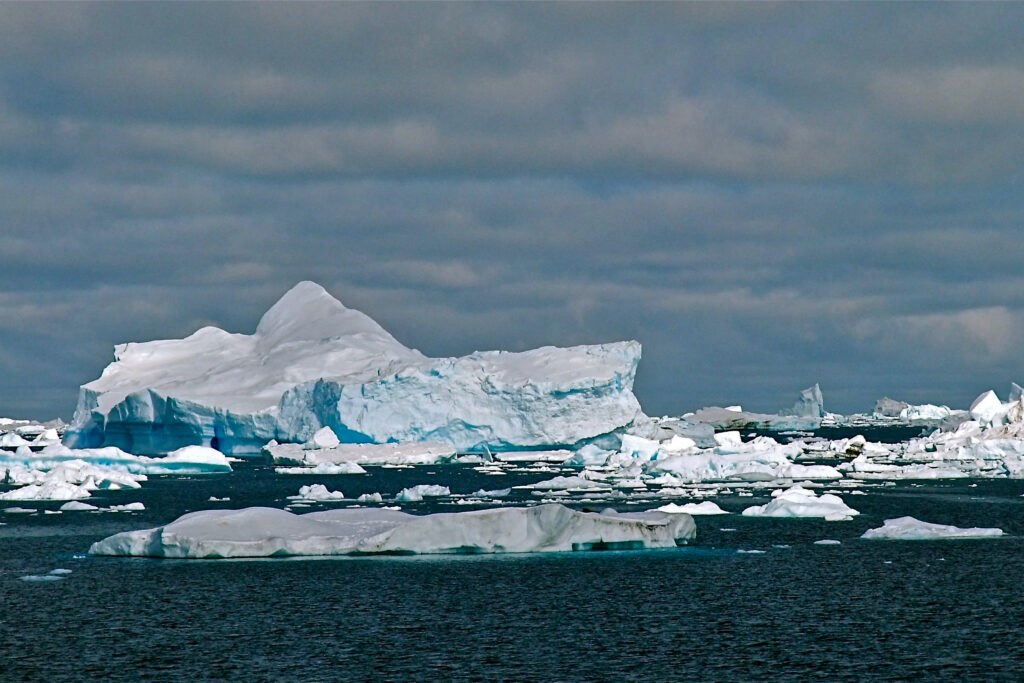
Researchers combined six ocean datasets covering 2004–2024. They found that a water layer circling Antarctica has turned sharply saltier as sea ice has shrunk since 2016. That layer carries heat and carbon toward the tropics.
Why it matters · The Southern Ocean absorbs much of humanity's heat and carbon, and this change works on a scale of years to decades rather than centuries, faster than current climate models capture.
Know this first
Context from the editor, not the article · 31 sec
1 · Antarctic sea ice's sudden drop
Antarctic sea ice grew slightly for decades and hit a record high in 2014. It then fell to a record low in 2016 and hit another low in 2023. Most climate models did not foresee the collapse.
2 · Salt, density and layering
Seawater density depends on salt and temperature. Fresher water is lighter and floats as a cap. Saltier water is denser. Changing salinity at depth changes how easily heat and carbon mix between the surface and the deep ocean.
3 · Argo floats
Argo is a global fleet of a few thousand robotic floats. Each one drifts, dives to set depths to measure temperature and salinity, then surfaces and sends its readings by satellite. Since the mid-2000s it has given near-global coverage of the upper 2,000 meters.
2/5Canary Media· Alison F. Takemura· Oct 28
Heat pumps could lower electricity rates in states with spare winter capacity
A study by RMI, a clean energy think tank, finds that about half of US states have spare grid capacity in winter. Filling it with heat pumps spreads fixed grid costs over more electricity sales and could lower everyone's rates.
Why it matters · It challenges the common claim that electrifying home heating will overload the grid and drive up costs. It also shows that hybrid heat pumps, backed up by an existing gas furnace, may be the practical path for now.
Know this first
Context from the editor, not the article · 34 sec
1 · What a heat pump does
A heat pump moves heat instead of making it. In winter it pulls heat from outdoor air into the home, and in summer it runs in reverse as an air conditioner. That usually makes it several times more efficient than a furnace or plain electric heaters.
2 · Grids are sized for peaks
Utilities build wires, transformers and power plants to cover the single highest hour of demand each year. In most of the US that hour falls on a hot summer afternoon, so much of the grid sits partly idle the rest of the year.
3 · Rates versus bills
3/5Heatmap· Katie Brigham· Oct 28
China builds most of the world's electrolyzers, but that may not win it exports
China holds nearly 70% of global electrolyzer factory capacity and sells stacks about 60% cheaper than Western rivals. The stack is under a tenth of what clean hydrogen costs, though, and Western tariffs blunt the export advantage.
Why it matters · Whether clean hydrogen goes the way of solar and batteries depends on whole-project costs, demand and trade policy. Factory scale alone won't settle it.
Know this first
Context from the editor, not the article · 31 sec
1 · What an electrolyzer does
An electrolyzer runs electricity through water and splits it into hydrogen and oxygen. Powered by renewables, it makes "green hydrogen", a clean substitute for the fossil-made hydrogen used in fertilizer, refining and chemicals.
2 · Alkaline versus PEM
Alkaline electrolyzers use a liquid alkaline solution. They are mature and cheap, and China makes most of them. PEM (proton exchange membrane) units use a solid polymer membrane. They cost more but ramp up and down faster, so they pair better with wind and solar output that keeps changing.
3 · The solar precedent
Western labs invented solar cells and lithium-ion batteries. In the 2010s China scaled up manufacturing so hard that prices collapsed and most Western producers were squeezed out. People now ask whether electrolyzers will follow the same path.
4/5Latitude Media· Catherine Boudreau· Oct 28
Gas turbines built on-site for AI data centers are breaking down
Data center developers are building their own gas plants to skip slow grid connections. Turbines have cracked or failed at several sites, and fuel-price risk is growing. Few builders have the skills to run these plants.
Why it matters · On-site gas is becoming the default way to power AI. If those plants are unreliable or exposed to fuel prices, that shapes gas demand, emissions and the case for storage and renewables.
Know this first
Context from the editor, not the article · 26 sec
1 · Behind-the-meter power
A "behind-the-meter" plant sits on the customer's own site and feeds it directly, with little or no use of the public grid. Data centers use this to avoid waiting years for a grid connection.
2 · Why AI loads are spiky
Training a large AI model runs thousands of chips in lockstep. They compute together, then pause together to exchange data, so a whole campus's power draw can rise and fall by megawatts almost at once.
3 · Turbines prefer steady loads
Gas turbines are built to run at fairly stable output. Fast, repeated load changes cause mechanical and thermal stress. Grid-connected plants rarely see this, because the grid averages out many customers' demand.
5/5Carbon Brief· Josh Gabbatiss· Oct 28
UK met its £11.6bn climate-aid pledge only by relabelling £2.1bn of spending
The UK says it beat its £11.6bn climate-aid goal for 2021–2026. Carbon Brief found that £2.1bn of that total was existing aid relabelled as climate finance. Without it, the UK would have missed by about £0.9bn.
Why it matters · Climate-finance pledges are central to UN climate talks. If donors can hit targets by relabelling old money, the headline numbers say little about how much new money developing countries actually get.
Know this first
Context from the editor, not the article · 29 sec
1 · What climate finance is
Under UN climate treaties, rich countries promise to fund poorer countries' efforts to cut emissions and adapt to climate change. That money is supposed to be "new and additional", meaning on top of existing aid. Each donor largely decides for itself what counts.
2 · The global targets
Developed countries pledged to mobilise $100bn a year in climate finance through 2025, and at least $300bn a year by 2035. Each country sets its own contribution. For 2021–2026, the UK's was £11.6bn.
3 · Shrinking UK aid budget
Since 2020, successive UK governments have cut overseas aid, citing economic pressure and then higher defence spending. UK climate finance is paid out of that same aid budget, so every cut squeezes the climate pledge.
A study published Wednesday found that a large water layer encircling Antarctica has turned sharply saltier in recent years. That reverses decades of freshening. The researchers link the change to the collapse of Antarctic sea ice since 2016.
The layer and why it matters
The layer is 1, which sits roughly 2,300 to 4,000 feet (about 700 to 1,200 meters) below the surface. It flows north into the Indian, Pacific and Atlantic oceans and sometimes crosses the equator. Along the way it carries heat, carbon, oxygen and nutrients toward the tropics, says co-author Bishakhdatta Gayen of the University of Melbourne and the Centre for Atmospheric and Oceanic Sciences in Bengaluru.
What changed
Antarctic sea ice reached its largest recorded extent in 2014 and fell to a record low just two years later. In 2023 it was about 1 million square miles below its 1981–2010 average, an area about four times the size of Texas. When sea ice melts in summer, it releases freshwater into the ocean. Less ice means less freshwater, so the water that sinks to form this layer ends up saltier.
The team combined six independent datasets covering 2004 to 2024. Much of the data came from 2, robots that dive to measure salinity and density and then surface to transmit their readings. A 2025 study had already found surface waters getting saltier as the ice declined.
Shifts like this usually come with climate changes that unfold over millennia. This one took a few years.
Possible effects
A change in the layer's density, thickness and salinity changes how heat moves between the surface and deeper water. Gayen warns that effects could be "knocking on your door" within five years. He cites a 2024 study that linked sea ice loss to more frequent storms and more heat escaping from the ocean.
Michael Meredith of the 3 calls the 4 "the key juncture for all the world's oceans." Old water is reworked into new water there, and it absorbs a large share of human carbon dioxide emissions. Earlier research found the Southern Ocean's deepest circulation slowing, which matters on century timescales. This upper layer, he says, can affect climate "within years to decades."
What's uncertain
The record covers only 20 years, so Meredith says it is not yet clear whether the shift is permanent. He also notes that the climate models used to guide policy still fail to reproduce the recent ice losses. "Our climate models need to catch up," he says. The article gives no figures for how large the salinity increase is.
A study published Wednesday reports a sharp rise in salinity across a vast water layer that encircles Antarctica. The change reverses decades of freshening, and the authors tie it to the rapid loss of Antarctic sea ice since 2016. The layer feeds water into all three major ocean basins, so the effects may not stay in the 1.
The layer in question
The layer is 2, which lies roughly 2,300 to 4,000 feet (about 700 to 1,200 meters) deep. It forms near Antarctica and spreads north into the Indian, Pacific and Atlantic oceans, and sometimes across the equator. According to co-author Bishakhdatta Gayen, who works at the University of Melbourne and at the Centre for Atmospheric and Oceanic Sciences in Bengaluru, India, it carries heat, carbon, oxygen and nutrients toward the tropics.
For most of the observational record this layer was getting fresher. The new paper finds that trend has flipped. The article describes the switch as resembling ocean changes normally associated with major climate shifts that take millennia, except this one happened within a few years.
What drove it: a sea ice collapse
For decades Antarctic sea ice behaved differently from Arctic ice. It held steady or grew slightly, and it hit its largest extent in the satellite record in 2014. Two years later it fell to a record low. It has stayed well below 2014 levels since. In 2023 it hit another low, about 1 million square miles (roughly 2.6 million square kilometers) below the 1981–2010 average. That missing ice covers about four times the area of Texas.
The link to salinity is a freshwater budget. Sea ice is mostly fresh. When it melts each summer, it puts a layer of freshwater into the surface ocean. Some of that surface water sinks and spreads to become Antarctic Intermediate Water, so a fresher surface makes a fresher intermediate layer.
A simple way to picture it (an analogy, not the paper's model): think of the ice as a seasonal tap of freshwater over a salty tank. Shrink the ice and the tap delivers less each summer. Then the water drawn off the top to fill the middle of the tank comes out saltier. A 2025 study had already detected surface salinity rising alongside the ice decline. The new work shows the signal has carried down into the intermediate layer.
How they measured it
Gayen says the team combined six independent datasets covering 2004 to 2024. A major source was 3, a global fleet of robotic floats. Each float drifts with the currents, dives on a schedule to measure properties such as salinity and density at different depths, then surfaces and sends the data by satellite. Using several independent datasets helps rule out the possibility that the trend is an artifact of one instrument or one gridding method.
The article does not give the size of the salinity increase, its uncertainty range, or details of how the authors attribute the change to sea ice rather than to winds or other factors. Readers wanting those numbers will need the paper itself.
Why salinity at depth matters
Salinity, along with temperature, sets seawater density. Density sets how the ocean stacks itself into layers and how easily those layers mix. Gayen says changes in the layer's density, thickness and salinity affect how heat moves between the surface and deeper water, which "could affect how the ocean stores and redistributes heat."
He argues the consequences could be "knocking on your door" within five years. He points to a 2024 study that linked sea ice decline to more frequent storms and greater heat loss from the ocean. A broad scientific review published earlier this year reached a similar conclusion. It found that Antarctic sea ice cover influences the global distribution of atmospheric heat and moisture. It also found that the "speed and persistence" of the decline suggests the Southern Ocean may be moving into a new state, with effects on Antarctic ecosystems and the wider climate system.
Why the Southern Ocean is a big deal
Michael Meredith, an oceanographer at the 4 (the UK's national polar research institute), was not quoted as an author of the paper. He says the work shows the sea ice loss is already changing the properties and circulation of deep ocean waters. "The Southern Ocean is the key juncture for all the world's oceans," he says. "It's the major site where old waters are reprocessed into new." Water masses from the world's oceans meet and mix around Antarctica before being sent back out. A change there spreads outward.
The region also plays what Meredith calls a "massive role" in absorbing human carbon dioxide emissions, which slows warming where people live. The article does not say whether the salinity shift has changed that carbon uptake yet. Meredith's point is that anything disturbing these cycles deserves attention.
He also places the finding alongside earlier work. Previous studies found that the deepest Southern Ocean circulation, the sinking of very dense water that fills and cools the abyss, has slowed. That process works over centuries. The new study shows the upper part of the system changing quickly in response to sea ice. "That matters," Meredith says, "because the upper circulation can affect our climate within years to decades, not centuries."
What remains open
Permanence. The record covers only 20 years. Meredith says it is not yet clear whether the shift is permanent or whether sea ice could recover and reverse it.
Model fidelity. The global climate models used to guide policy still struggle to reproduce the recent sea ice losses. "Our climate models need to catch up," Meredith says. If the models miss the ice loss, they will also miss the salinity change that follows from it.
Magnitude and downstream effects. The article gives no quantitative estimate of how much heat or carbon transport has changed, or how soon effects would reach the tropics. The five-year timeline is Gayen's judgment, not a modeled result reported in the article.
Monitoring. Both scientists call for more observation. Meredith's conditional sums up the stakes: "if the low sea-ice state persists, these changes will keep spreading through the world's oceans."
Remember
Antarctic sea ice went from a record high in 2014 to a record low in 2016, and stayed low.
Less summer meltwater means a saltier intermediate layer that carries heat and carbon toward the tropics.
Only 20 years of data exist, and policy climate models don't yet reproduce the ice loss.
A rate is the price per kilowatt-hour, which includes the power itself, the fixed cost of grid equipment and the utility's regulated profit. A bill is the rate times how much you use, so a lower rate doesn't guarantee a lower bill.
A technician installs a minisplit heat pump, a ductless unit that both heats and cools a home.
A common argument against 1 is that the US grid can't handle millions of them. A new study from 2, a clean energy think tank, finds the opposite in much of the country. In states with spare winter capacity, adding heat pumps could lower electricity rates for every customer.
Why the grid has room
In most states, demand peaks on hot summer afternoons, when air conditioners all run at once. The grid's wires, transformers and power plants are built for those hours. Winter demand is usually lower, so the equipment has slack. RMI found roughly half of states have plenty of winter 3 for heat pumps.
Summer isn't a problem either. Heat pumps also work as air conditioners, and they mostly replace older, less efficient units. They wouldn't raise the summer peak.
How that lowers rates
Rates cover the power itself plus the large fixed cost of the grid's equipment and the utility's regulated profit. Ryan Shea, an RMI co-author, compares the grid to a toll bridge with too few cars. The bridge costs the same whatever the traffic, so more drivers means a smaller toll for each.
Here is an illustrative example, not from the study. $100 million of 4 spread over 1 billion kilowatt-hours adds 10 cents to each. Add 250 million winter kilowatt-hours from heat pumps on the same equipment, and that drops to 8 cents.
Across the 24 states plus Washington, D.C., with the most headroom, RMI estimates rates could be 13% lower on average than inflation would otherwise make them. That is about $200 a year per customer. Michigan stands out: 3.6 million heat pumps could cut residential rates by up to 27%. Shea calls these directional estimates, not forecasts, because RMI lacked utility-specific data.
The catch: rates aren't bills
Parth Vaishnav of the University of Michigan calls the study sound but notes that a lower price per kilowatt-hour doesn't guarantee a lower bill for a household that switches. That household buys much more electricity. In cold states where power is far pricier than gas, his 2024 study found some switchers paying more than $1,000 a year extra. RMI didn't model household bills.
Hybrids stretch the headroom
On the coldest nights, heat pumps often lean on 5, simple backup heaters that draw heavily on the grid. In Illinois, the grid could absorb all-electric heat pumps in only 30% of homes. RMI's best mix there is 79% hybrid (a heat pump plus the existing gas furnace as backup) and 21% all-electric. According to the study, that mix cuts emissions more than fewer all-electric installs would.
Vaishnav suggests requiring heat pumps whenever central air conditioners are replaced, or phasing out one-way air conditioners entirely. Cheaper winter rates for heat-pump homes are another lever. Massachusetts saved those customers at least $37 million last winter.
A new study from 1, a clean energy think tank, argues against a common objection to electrifying home heating: that the US grid can't handle the extra load. RMI found that roughly half of states have plenty of unused grid capacity in winter. In the 24 states plus Washington, D.C., with the most of that winter 2, adding 3 could lower residential electricity rates for every customer, not only for the households that switch. Canary Media's Alison F. Takemura reported the study.
Why the grid has winter slack
Heat pumps are very efficient electric heaters and air conditioners. They move heat rather than burning fuel to make it. The worry is that millions of them would push electricity demand past what the grid can carry and force expensive upgrades.
The answer depends on when the grid is busiest. In most of the country, demand peaks on the hottest summer afternoons, when everyone runs air conditioning at once. The poles, wires, transformers and power plants are sized for those hours. Winter demand is usually lower, so the same equipment has room to spare.
The study makes two points about this:
Winter: in about half of states, extra heating load from heat pumps fits inside existing capacity.
Summer: heat pumps wouldn't raise the summer peak, because they mostly replace older, less efficient air conditioners. A new heat pump cooling a house in July may use less power than the unit it replaced.
So in those states, many heat pumps could be added without triggering costly grid buildouts.
How more use lowers rates
An electricity rate covers two kinds of cost. One is the energy itself. The other is the large fixed cost of the grid's equipment, plus the utility's regulated profit. Because the grid is built for occasional peaks, it is often underused.
Ryan Shea, a study co-author and manager on RMI's carbon-free buildings team, compares it to a toll bridge with too few cars. The bridge has to be paid for whether 100 or 10,000 cars cross it. With little traffic, each driver's toll stays high. More traffic lowers everyone's share.
Here is an illustrative example, not from the study. Say a utility must recover $100 million a year in 4 and sells 1 billion kilowatt-hours. Fixed costs add 10 cents to each kilowatt-hour. If heat pumps add 250 million winter kilowatt-hours without new equipment, the same $100 million is spread over 1.25 billion kilowatt-hours, or 8 cents each. Every customer pays less per unit, including those who never bought a heat pump.
The numbers
According to the study, adding as many heat pumps as the grid can absorb without new buildout over the coming years could cut residential rates by 13% on average, compared with where inflation would otherwise take them. That works out to about a $200 annual discount per customer.
Results vary a lot by state. Michigan has an unusually large winter margin. It could install 3.6 million home heat pumps and lower residential rates by as much as 27%. RMI suggests policymakers could treat heat pump incentives as a tool for keeping electricity affordable.
Shea stresses that these are directional estimates, not forecasts. They show where rates could fall most. RMI did not have utility-specific data, which would sharpen the results.
Rates are not bills
Parth Vaishnav, an assistant professor of sustainable systems at the University of Michigan, called the work sensible and well done, with an important caveat. A lower price per kilowatt-hour doesn't mean a lower total bill for a household that switches from gas to a heat pump. That household now buys far more electricity. Where electricity costs much more than gas, as in many of the coldest states, switching can raise bills. A 2024 Michigan study Vaishnav co-authored found that, at fuel prices then, some households would pay more than $1,000 a year extra after replacing a gas furnace with a heat pump.
RMI did not estimate bill changes for switchers. Whether a household saves depends on what it is replacing, how well the home is insulated, how efficient the heat pump is, and the price of electricity relative to its heating fuel. Shea's position is that bigger rate cuts make savings more likely: "the larger the reduction in electricity rates, the higher likelihood that someone's energy bill will decrease with a heat pump."
The case for hybrids
The study's second main finding is that the grid can take far more heat pumps if some households keep their existing gas furnace or boiler for the coldest hours.
Illinois shows why. If heat pumps were the only heating system, the grid could handle them in just 30% of households. The limit is the coldest hours. Some heat pumps work below −20°F, but many are installed with electric-resistance backup strips. These are simple heaters that switch on when the heat pump can't keep up, and they use much more grid capacity. RMI's best mix for Illinois, the one that uses the most headroom and cuts rates the most, is 79% of households with a 5 (heat pump plus existing fossil-fuel backup) and 21% fully electric.
According to the study, more heat pumps with gas backup cut emissions more than fewer all-electric ones. Shea calls hybrids "a bridge solution" for today's grid. Vaishnav agrees, arguing that furnaces and heat pumps "can work in tandem" and that emissions cuts, bill savings and headroom use all improve with a hybrid approach.
Policy levers
Vaishnav suggests two regulatory routes:
Require that central air conditioners be replaced with heat pumps while leaving existing fossil-fuel heaters in place.
Push manufacturers to stop making one-way air conditioners and make two-way heat pumps instead.
A third lever is pricing. Heat-pump households often pay more than their share of fixed grid costs, because their extra winter use falls in hours when the grid has slack. Regulators can set lower winter rates for them. Massachusetts did this, and it saved heat-pump customers at least $37 million last winter. RMI argues that customers without heat pumps benefit too. Cheaper winter power encourages more switching, and more winter use spreads fixed costs further.
What stays open
The study says nothing about the other half of states, the ones without much winter headroom. That likely includes regions that already heat heavily with electricity and peak in winter. Its estimates also lack utility-level detail, so actual rate effects in any one service territory are uncertain. The study also leaves the switcher's bill question unanswered, and that is the number a household actually decides on. Shea hopes all-electric systems will get cheaper over time. For now, the evidence supports hybrids in cold states.
Remember
Most US grids peak in summer, so winter heating load can often use existing capacity without new spending.
Lower per-kilowatt-hour rates don't guarantee lower bills for households switching from cheap gas.
In cold states, keeping gas furnaces as backup lets far more homes get heat pumps and cuts emissions more.
China has nearly 70% of the world's capacity to manufacture 1, the machines that split water into hydrogen and oxygen. It makes about 35 2 (GW) of them a year, against domestic demand of under 2 GW. The overcapacity has pushed some makers to sell below cost, much like Chinese solar in the early 2010s. Heatmap's Katie Brigham asks whether China will dominate electrolyzers as it did solar panels and batteries. The analysts she interviewed aren't sure.
The 3 is a small slice of the bill
Chinese electrolyzer stacks, the piles of cells where water actually splits, cost about 60% less than Western ones. But the stack is only 6% to 9% of the 4 of clean hydrogen, the full lifetime cost per kilogram. Most of the cost is clean electricity, other equipment and labor. As a rough illustration: a 60% cut on 7.5% of the cost saves about 4.5% overall. Some cheap designs also give up efficiency, operating life or warranty coverage.
Thomas Koller of the consultancy 5 says that across a whole project the gap between Chinese and Western technology narrows a lot. Chinese firms are now trying to compete on full-system integration, not just the stack.
Beijing manufactures demand
China already makes and uses more hydrogen than any other country, almost all of it from fossil fuels. Its March 6 pushes green hydrogen into transport, industry, ammonia, methanol and sustainable aviation fuel. The target is 2 million metric tons a year by 2030, eight times today's roughly 0.25 million. Five city clusters can each receive up to about $240 million over four years. China has also relied on the Strait of Hormuz, disrupted by the Iran war, for up to half its crude imports, which strengthens the energy-security case.
Western projects, by contrast, are stalling. Buyers won't pay a green premium, U.S. 7 incentives have been rolled back, and Europe has missed deadlines for its hydrogen mandates.
Exports meet protectionism
Hydrogen investor Rinaldo Brutoco argues that buyers will take savings of 5% to 10%. He also says China's alkaline units, historically slower than Western 8 (proton exchange membrane) systems at following variable wind and solar, are now good enough. Koller expects European and Asia-Pacific projects to consider Chinese equipment.
Amy Ouyang of the Clean Air Task Force says the solar-style narrative has faded. Tariffs, bonuses for domestic content and subsidy limits now favor local makers. The catch is that the West has little hydrogen industry to protect. Koller's advice is to skip the price war and compete on performance, integration, service and lower lifecycle emissions.
China now holds nearly 70% of the world's capacity to manufacture 1, the machines that split water into hydrogen and oxygen. Its factories turn out about 35 2 (GW) of equipment a year. Domestic demand is under 2 GW. The glut has pushed some makers to sell below cost, much as Chinese solar makers did in the early 2010s. Heatmap's Katie Brigham asks whether this means China will dominate electrolyzers the way it dominates solar panels and batteries. The analysts she spoke to don't think the answer is obvious.
Cheap 3, not cheap hydrogen
The stack is the core of an electrolyzer: the pile of cells where the water actually splits. Chinese stacks, mostly alkaline designs, cost about 60% less than Western equivalents. But the stack makes up only about 6% to 9% of the 4 of clean hydrogen, which is the full lifetime cost of producing each kilogram. Most of the money goes elsewhere: electrical and process equipment, labor, and above all the clean electricity.
An illustrative calculation, not from the article: if the stack is 7.5% of the cost per kilogram and a Chinese stack is 60% cheaper, the hydrogen comes out about 4.5% cheaper. That is a real saving but a modest one. Some cheap designs also give up efficiency, operating life or warranty coverage, which can eat into it.
"When the project as a whole is considered, there's a lot less deviation between the Chinese technology and the rest of the world's," says Thomas Koller, regional hydrogen lead at 5, a Norwegian energy and maritime consultancy. He adds that Chinese makers know this. They now want to compete on how the stack fits into the wider system, not just on the stack's price. If they get there, they move much closer to global dominance. DNV calculates that meeting the Paris Agreement's targets would require clean hydrogen to supply about 15% of global energy demand by 2050, and that equipment has to come from somewhere.
Beijing builds its own demand
Meanwhile, China is trying to soak up its surplus at home. It is already the world's largest producer and user of hydrogen, but almost all of that hydrogen is made from fossil fuels. The 6 released in March, available only in unofficial translation, calls for hydrogen in transport, electricity and industry. It also calls for better renewable hydrogen production equipment and for hydrogen-derived products: green ammonia, methanol and sustainable aviation fuel (SAF). Koller reads the main shift as moving from production to demand.
The concrete targets:
2 million metric tons of renewable hydrogen a year by 2030, up from about 0.25 million today. That is an eightfold increase.
Five city clusters named as green hydrogen demonstration zones. Each can receive up to about $240 million over four years for uses such as transport, metallurgy, and ammonia and methanol production, plus pipelines.
Hydrogen investor Rinaldo Brutoco also points to plans for national hydrogen pipelines and "very hard targets" for green hydrogen sales. Energy security adds another motive. China has relied on the Strait of Hormuz for up to half its crude oil imports, and the Iran war has disrupted traffic through it. Koller says the plan leaves China well placed to cut its dependence on imported oil.
The West stalls
Western markets are moving the other way, with projects delayed or cancelled. Clean hydrogen still costs far more than fossil hydrogen, and buyers won't pay the premium. In the U.S., the rollback of 7 incentives has weakened the economics. In Europe, regulatory delays and missed deadlines for hydrogen mandates have added uncertainty. Anne-Sophie Corbeau of Columbia University's Center on Global Energy Policy says the full electrolyzer system turned out to cost "much higher than what we thought at the beginning." Meanwhile batteries and industrial heat pumps have taken over some jobs once pencilled in for hydrogen, narrowing where it makes sense.
Will China export its way out?
Brutoco argues China needs export markets now that its housing boom has gone bust, and he calls electrolyzers "low-hanging fruit." He rejects the argument that stack savings are too small to matter: "Did you ever know a business person that would like to shave 5% to 10%?" He also argues that alkaline systems, historically slower than 8 (proton exchange membrane) units at following variable renewable output, have improved enough for utility-scale projects where sun or wind is fairly steady. Koller expects every electrolyzer-driven European project to consider Chinese equipment among others. He has seen Chinese technology considered in all the Asia-Pacific projects he can recall, a region that includes India, Japan, South Korea and Australia.
Trade politics push the other way. Western governments are using tariffs, bonuses for domestic content and limits on subsidy eligibility to favor local makers. Amy Ouyang of the Clean Air Task Force says "the narrative has shifted." Three years ago, analysts expected electrolyzers to follow solar. Now she sees "a lot more willingness" to shield domestic industry, partly from regret that China scaled solar and batteries after the West invented them. Corbeau adds that energy shocks, from Russia's invasion of Ukraine to the Iran war, have raised food security as a concern too: about a third of globally traded fertilizer passes through Hormuz. That makes producing ammonia at home from local hydro, geothermal or renewables look more attractive.
What's unresolved
The weakness in the protectionist case is that the West has little clean hydrogen industry to protect. Building one requires demand, which means incentives and buyers willing to sign contracts. With U.S. wholesale power prices rising and the Trump administration dismantling renewable energy legislation, major American manufacturing investment looks unlikely soon.
Koller advises Western makers to give up the price war from the start. A Western stack "would probably struggle to match China's lowest bid." He thinks they should compete on performance, system integration, service and lower lifecycle emissions. The article leaves several questions open:
whether China can close its system-level cost gap;
whether its 2030 target creates enough demand to absorb a 35 GW factory base;
whether any country can show what a scaled clean hydrogen economy looks like, physically or economically. None has yet.
Remember
China can build 35 GW of electrolyzers a year but uses under 2 GW, the same overcapacity pattern as early-2010s solar.
A stack 60% cheaper cuts the total cost of clean hydrogen by only a few percent, because electricity dominates.
China targets 2 million tons of renewable hydrogen by 2030, eight times today's output, while Western projects stall.
Power generated on the customer's own site and used directly, mostly or entirely bypassing the public grid.
Image: Latitude Media
AI data center developers are building their own gas power plants faster than they can learn to run them. Latitude Media's Catherine Boudreau reports cracked turbines and day-long outages. She also notes that Anthropic's new IPO filing flags fuel-supply risk.
The rush
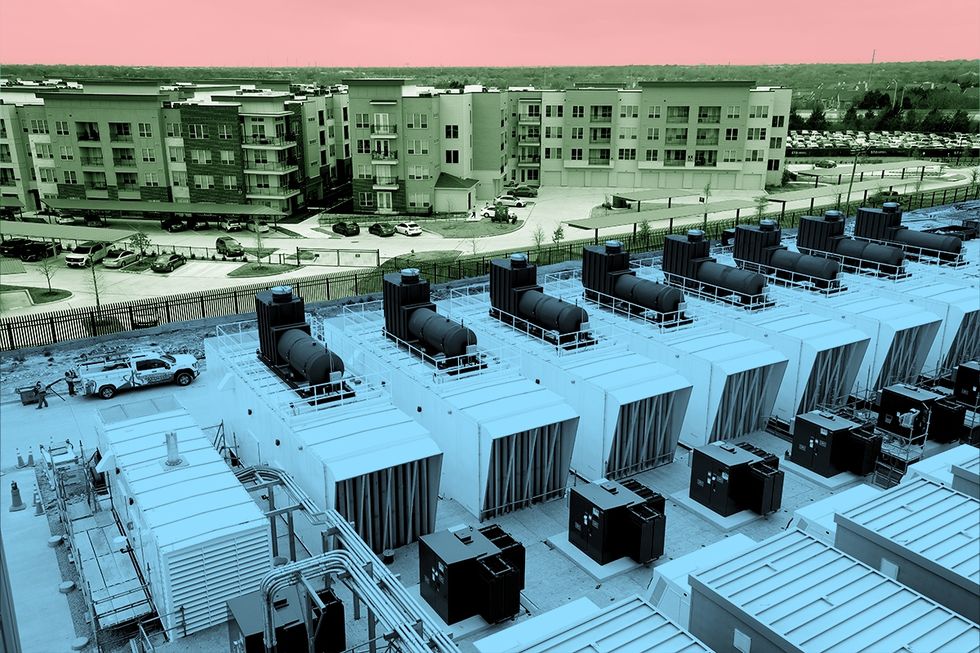
Getting a gigawatt-scale data center connected to the grid can take years, and 1 (the largest cloud and AI companies) want their roughly trillion-dollar buildout earning money now. Their workaround is "behind-the-meter" power: a gas plant on the data center's own site, with little or no grid connection. The tracker Cleanview counts 110 gigawatts (GW) of on-site gas projects underway, up from 20 GW last summer.
Why the plants struggle
AI workloads can move power demand by megawatts within milliseconds. The cause is thousands of chips computing and pausing in lockstep. On the wider grid, swings like this get spread across many generators. An isolated turbine takes each one directly, and the repeated stress damages equipment. Developers are adding batteries and 2 (uninterruptible power supply) systems to smooth the swings. Making all of these work together takes skills few teams have.
Incidents reported this year:
xAI's Colossus campus in Memphis: turbines cracked, as did some at smaller UK projects. xAI brought in Tesla batteries to absorb the swings.
3 in Abilene, Texas, built by Crusoe: problems with backup turbines and cooling.
Vantage VA2 in Loudoun County, Virginia: an on-site turbine failure put the site on diesel generators for nearly 24 hours, and residents complained about noise and fumes.
Large engineering and construction firms are reportedly getting calls from developers who need help fixing turbines they damaged.
Fuel risk
Anthropic is moving from leasing computing capacity to building its own data centers, including $50 billion in Texas and New York. Its IPO filing warns of fuel price shocks and pipeline limits, at a time when export demand for U.S. gas is high because of the war with Iran. It says renewables, storage, nuclear and geothermal may not arrive in the quantities or on the timelines it needs, or may cost more.
Who can deliver
Sheldon Kimber, whose developer Intersect was bought by Google in late 2025, calls the project pipeline "largely trash." He says he's flooded with pitches from people who have a patch of Texas land with gas access, which he notes describes "half of Texas." Google and Intersect design each data center and its power plant together. Their two Texas projects run mostly on solar, wind and batteries, with gas as backup. SpaceX, which now owns xAI, will cast its own turbine blades. Elon Musk says that puts it 12 to 18 months ahead of rivals on turbine supply and will support at least 10 GW of new computing capacity in 2027.
The piece doesn't say what caused the failures or how much of the 110 GW will actually get built.
AI data center developers are building their own gas power plants at a rapid pace, and some of those plants are breaking. Catherine Boudreau, writing in Latitude Media's AI-Energy Nexus newsletter, collects reports of cracked turbines, a day-long power failure, and developers calling engineering and construction firms to fix equipment they can't maintain themselves. Separately, Anthropic's IPO filing names fuel prices and pipeline capacity as risks to the whole strategy.
Why developers build their own plants
Hyperscalers, the largest cloud and AI companies, are spending on the order of a trillion dollars on infrastructure and want it earning money quickly. Getting a gigawatt-scale load connected to the grid often takes years. The workaround is "behind-the-meter" generation: a power plant on the data center's own site, with a small grid connection or none at all.
The market tracker Cleanview estimated this month that 110 gigawatts (GW) of on-site gas projects are underway, up from 20 GW last summer. That is more than a fivefold increase in roughly a year. The article doesn't say how many of those projects are firm and how many are speculative. Kimber's comments below suggest a lot of the total is the latter.
Why it's hard
An on-site plant serving a data center has to be more reliable than a typical power plant. The load runs 24 hours a day, and often there is no grid behind it to cover an outage. The load also behaves unusually. According to industry research and power developers cited in the article, AI workloads can shift demand by megawatts within milliseconds.
As general background (not from the article): training runs keep thousands of chips in step. They compute at the same moment, then stop at the same moment to exchange results, so the whole campus's draw swings with them. On the public grid, swings like this get absorbed among many generators and customers. On an isolated site, the turbine takes the full swing every time.
To manage this, developers are adding layers:
Batteries next to the gas plant, which can absorb or supply power faster than a turbine can ramp.
1 (uninterruptible power supply) systems inside the building, which shield the computers from voltage dips and spikes.
Little or no grid connection, so the site has to balance itself.
Getting turbines, batteries, UPS and cooling to work together takes experience that few developers have. Running the site afterward takes dedicated operations and maintenance (2) crews.
The failures so far
The article lists several incidents this year, each from another outlet's reporting:
xAI's Colossus campus, Memphis: gas turbines cracked, as did turbines at smaller UK projects (Bloomberg). xAI added Tesla batteries to absorb large power swings.
3, Abilene, Texas: the OpenAI-linked campus built by Crusoe has had technical problems with backup gas turbines and cooling equipment (The Information).
Vantage VA2, Loudoun County, Virginia: a "critical power failure" at its on-site turbine plant this summer forced the site onto diesel generators for nearly 24 hours (WUSA9). Residents complained about noise and air pollution.
Boudreau also reports hearing that large power providers and 4 (engineering, procurement and construction firms) are getting more calls from developers who have damaged turbines and lack the in-house expertise to repair them.
Jon Parella, CEO of flow-battery maker TerraFlow Energy, points to labor. He asks whether there are enough electricians and HVAC technicians to build these campuses, and then enough mechanics to service gas engines every year. He sells storage, which is worth keeping in mind when reading his comments.
Fuel risk
Anthropic is moving from leasing computing capacity to building its own data centers, including a $50 billion investment in Texas and New York. Its IPO filing warns that relying on behind-the-meter gas exposes it to fuel price shocks and pipeline constraints. Every new on-site plant competes for firm gas supply and pipeline space. Demand for U.S. gas exports is already high, which the article attributes to the U.S. war with Iran and bottlenecks in the Strait of Hormuz. The filing mentions solar, wind, storage, nuclear and geothermal only briefly, saying they "may not be available in the quantities or on the timelines we require, or may be available only at higher cost."
Who can actually deliver
Sheldon Kimber founded Intersect, a developer Google bought in late 2025. He calls the number of inexperienced teams "absolutely absurd" and says the project pipeline is crowded "largely with trash." He describes getting a steady stream of pitches along the lines of "a patch of dirt in Texas with gas" plus some talks with turbine sellers. "Congratulations. That's like half of Texas," he says. He argues that these teams turning up at town meetings make things harder for developers like Intersect, which has spent a decade negotiating community benefits for behind-the-meter renewable-plus-gas plants.
The two most capable players are responding by owning more of the supply chain:
Google and Intersect design each data center and its power plant together, tuned to Google's own AI models and hardware. Kimber says this improves efficiency and reliability and lowers cost. Their two announced Texas projects run mostly on solar, wind and batteries, with some gas backup. Their sizes haven't been disclosed.
SpaceX, which acquired xAI this year, plans to cast its own turbine blades and vanes. Elon Musk said on a third-quarter earnings call that this could secure turbine supply 12 to 18 months faster than competitors, supporting at least 10 GW of new computing capacity in 2027. He presented it as a way to get power sooner, not as a fix for reliability. He also mentioned solar, wind and small factory-built "5" data centers spread around the world.
What's still unclear
The article is a short newsletter piece. It doesn't say how many turbines have failed, what caused each failure, or whether the cracks came from rapid load swings, manufacturing defects or poor operation. It doesn't estimate how much of the 110 GW will actually get built. It also doesn't compare costs between gas, gas plus batteries, and the mostly renewable designs Google is pursuing. The overall pattern is clear, though: the building boom continues, and the engineering skill and fuel supply needed to run these plants reliably haven't kept up.
Remember
Planned on-site gas for data centers grew more than fivefold in about a year, from 20 GW to 110 GW.
AI demand can swing by megawatts within milliseconds, which stresses isolated turbines. Batteries are the usual fix.
The best-placed players, Google with Intersect and SpaceX, are designing their power plants in-house or making their own turbine parts.
Cumulative UK climate finance with and without the 2023 accounting changes, against the £11.6bn target.1 / 2
The UK government says it beat its pledge to give developing countries £11.6bn in climate finance between 2021-22 and 2025-26. A Carbon Brief analysis, built from several months of 1 requests, finds that about £2.1bn of that total was not new spending. It was existing aid relabelled as climate finance. Without the relabelling, the UK would have fallen £924m short.
The numbers
The FOI data shows total UK climate finance over the five years reached £12.8bn, including a record £4bn in the final year. The government had not published this total. Take out the effect of accounting changes the government made in 2023 and the total falls to about £10.7bn. The £2.1bn of relabelled money is almost a fifth of the total. It is also more than the £1.7bn that the 2, the UK's official aid watchdog, forecast in 2024.
Why the rules changed
Aid budgets kept shrinking, but the £11.6bn pledge comes out of aid. So in 2023 the Conservative government widened its definition of "climate" spending. The current Labour government has kept the broader definition.
Where the £2.1bn came from
The government says its methods match "internationally agreed ways" that other donors use. Experts note that the UK used to be seen as stricter than most. Sarah Champion, who chairs Parliament's 7, says the government is "cutting corners" to protect headline commitments.
What comes next
The UK has pledged £6bn of climate finance over the next three years. That averages £2bn a year, half the 2025-26 level. Earlier Carbon Brief analysis estimates that the same accounting methods will make up about a third of it. Carbon Brief also warns that UK climate-finance figures are often revised and could change again.
The UK government says it has "hit, and exceeded" its third international climate-finance target: £11.6bn for developing countries between 2021-22 and 2025-26. A Carbon Brief analysis by Josh Gabbatiss finds that about £2.1bn of the amount counted was not new climate spending. It was existing aid that the government reclassified as climate finance after loosening its rules in 2023. Without that reclassification, cumulative UK climate finance would have reached about £10.7bn, a shortfall of £924m.
The government has said the target was met. It has not published how it was met, or even the five-year total. Carbon Brief rebuilt the figures over several months of 1 requests.
The pledge and the squeeze
Under UN climate treaties, developed countries must provide "new and additional" climate finance to developing countries. This is usually read as money on top of existing aid. There are also collective goals: mobilising $100bn a year through 2025, and at least $300bn a year by 2035. In 2019 the Conservative government set the UK's share at £11.6bn over five financial years, double its previous five-year target.
The money comes from the UK aid budget, which successive governments have cut, citing economic strain and later defence needs. That left two choices: spend a larger share of a shrinking budget on climate, or change what counts as climate. In 2023 the government chose the second. The current Labour government has kept the wider definitions while planning further aid cuts. Campaigners, MPs and the 2, the UK's official aid watchdog, have called this "creative accounting" and "moving the goalposts".
How the numbers were reconstructed
Carbon Brief obtained the full climate-finance datasets for 2021-22 to 2025-26 through FOI requests. It also asked the Foreign, Commonwealth and Development Office (FCDO), the department that runs most UK aid, what spending would have totalled under the pre-2023 rules for 2021-22 to 2024-25. It then estimated the effect of the changes in 2025-26 and combined the figures.
The results:
Total reported climate finance: £12.8bn, including a record £4bn in 2025-26.
Attributable to the accounting changes: about £2.1bn, nearly a fifth of the total.
Total under the old rules: about £10.7bn, which is £924m below the £11.6bn target.
The £2.1bn is above the £1.7bn of reclassified finance that ICAI forecast in 2024.
The three main changes
1. Core funding for development banks (£1.1bn). Multilateral development banks (MDBs) are lenders owned by many governments, such as the World Bank and the African Development Bank. They lend to and fund developing countries. Governments give them "core" contributions that are not earmarked for any project. The UK now counts a share of these as climate finance, on the grounds that the banks have targets for climate-relevant lending. This is the largest single change, mostly through the World Bank and African Development Bank.
There are three problems with it. MDBs have been criticised for poor transparency about climate finance. They rely mostly on loans, whereas nearly all UK climate finance so far has been grants. And the US has been pressing MDBs to drop climate plans: the Trump administration has already pushed the World Bank to abandon its target of putting 45% of its funds into climate. Jon Sward of the Bretton Woods Project, an NGO that monitors the World Bank and IMF, says losing the target makes future climate flows less predictable. So the share of UK core funding that actually goes to climate could shrink while the UK goes on counting it.
2. A flat 30% of humanitarian aid (nearly £600m). If humanitarian aid goes to a country judged highly vulnerable to climate change, 30% of it now counts automatically as climate finance. These countries include Afghanistan, Sudan and the Democratic Republic of the Congo. The rule applies whether or not the project has anything to do with climate. Carbon Brief cites aid to conflict-affected people in Yemen and to orphans in Zimbabwe.
An illustrative example (not from the article): under this rule, a £10m food-aid programme in Sudan would add £3m to the climate total. The 3 (CGD), a think tank, calls the rule "arbitrary", because every UK aid project is already screened for climate-relevant parts.
3. British International Investment (about £266m).4 is the UK's publicly owned, for-profit development investor. It invests in businesses in developing countries and receives injections of aid money. The UK used to count a fixed 30% of its BII funding as climate finance. It now uses BII's actual climate-related investments. FOI data shows £133m of extra BII funding labelled as climate finance over the first four years. The government's BII records are inconsistent, though, so Carbon Brief used an internal government forecast of £266m over the full five years. BII reported more than £1bn of "climate investments" in 2025. It has also been criticised for legacy fossil-fuel holdings and for channelling aid money to "billionaires".
Smaller items include £99m of spending on the 5 climate summit, which the UK hosted in 2021, counted as climate aid after the fact.
The government's defence and the counterargument
The government says its methods are "consistent" with "internationally agreed ways of calculating ICF" (international climate finance), the methods other major donors use. That is largely true, and it reflects how loosely climate finance is regulated. Experts note that the UK was traditionally seen as more rigorous than its peers. Its changes bring it closer to common practice, not further below it.
Parliament's 6 (IDC) concluded that, together with aid cuts, the changes have "eroded" the "7 and credibility" of UK climate finance. Additionality means whether the money is genuinely extra. The committee's chair, Sarah Champion, says the new data suggests the government is "cutting corners to maintain headline climate-spending commitments". Shruti Agarwal of Save the Children UK calls for timely, detailed publication of the data and an end to retrospective relabelling.
What it means for the next target
The UK has pledged £6bn of climate finance over the next three years. That makes it one of the few major donors with a post-2025 target at all. But £6bn over three years averages £2bn a year, half the £4bn of 2025-26. Earlier Carbon Brief analysis estimates that the same accounting methods will make up about a third of the new target. That would leave closer to £1.3bn a year of climate finance as it was defined before 2023 (a rough inference, not a figure Carbon Brief gives).
Caveats
UK climate-finance figures are revised regularly, and departments may change these numbers again. The BII figure is a forecast, not a measured total. The article also counts finance by money spent, not by results achieved. It does not assess whether the reclassified spending delivers any climate benefit, which is the question that matters most to the countries receiving it.
Remember
The largest relabelled item, £1.1bn of general funding to development banks, depends on climate-lending targets the US is pushing those banks to drop.
A flat 30% of humanitarian aid to climate-vulnerable countries now counts as climate finance, even when the project has no climate link.
The UK's new £6bn three-year pledge halves its annual level, and roughly a third of it may come from the same accounting methods.
£1.1bn: development banks. The UK started counting a share of its general, un-earmarked contributions to 3, such as the World Bank and African Development Bank, as climate finance. Its justification is that these banks have climate-lending targets. But under US pressure, the World Bank has dropped its target of putting 45% of its funds into climate.
Nearly £600m: humanitarian aid. 30% of humanitarian aid to the most climate-vulnerable countries now counts automatically, even with no link to climate. Examples include aid to people caught up in conflict in Yemen and to orphans in Zimbabwe. The 4, a think tank, calls this "arbitrary".
About £266m: 5. BII is the UK's state-owned development investor. The climate share of its funding is now based on its actual investments, not a fixed 30%. This figure comes from an internal government forecast, because the government's own BII records are inconsistent.
£99m: hosting the 6 climate summit, counted after the fact.