Today's edition covers a flawed promise of permit certainty and ancient corals showing El Niño changing, plus thawing ground, green-cement financing and Xcel's $70 billion bet.
Picked from 28 new articles across 13 sources · arrow keys for other days
Today in 30 seconds
30s left
Lawyers say the Senate permitting bill's 'Project Certainty' clause could freeze pollution rules and leave taxpayers paying 50–100% of a project's cost. story 1 ↓
Galápagos coral records going back more than 1,000 years show recent El Niños are stronger than anything natural before fossil fuel use. story 2 ↓
A 1995 Canadian wildfire slowly warmed permafrost until two landslides moved 30 million cubic yards of earth two decades later. story 3 ↓
Meta is buying certificates for about 200,000 tons of Fortera's low-carbon cement, helping finance a $150 million Missouri plant due in 2028. story 4 ↓
Xcel's $70 billion five-year plan adds 9.2 GW of wind and solar, 2.3 GW of storage and 3.3 GW of gas. story 5 ↓
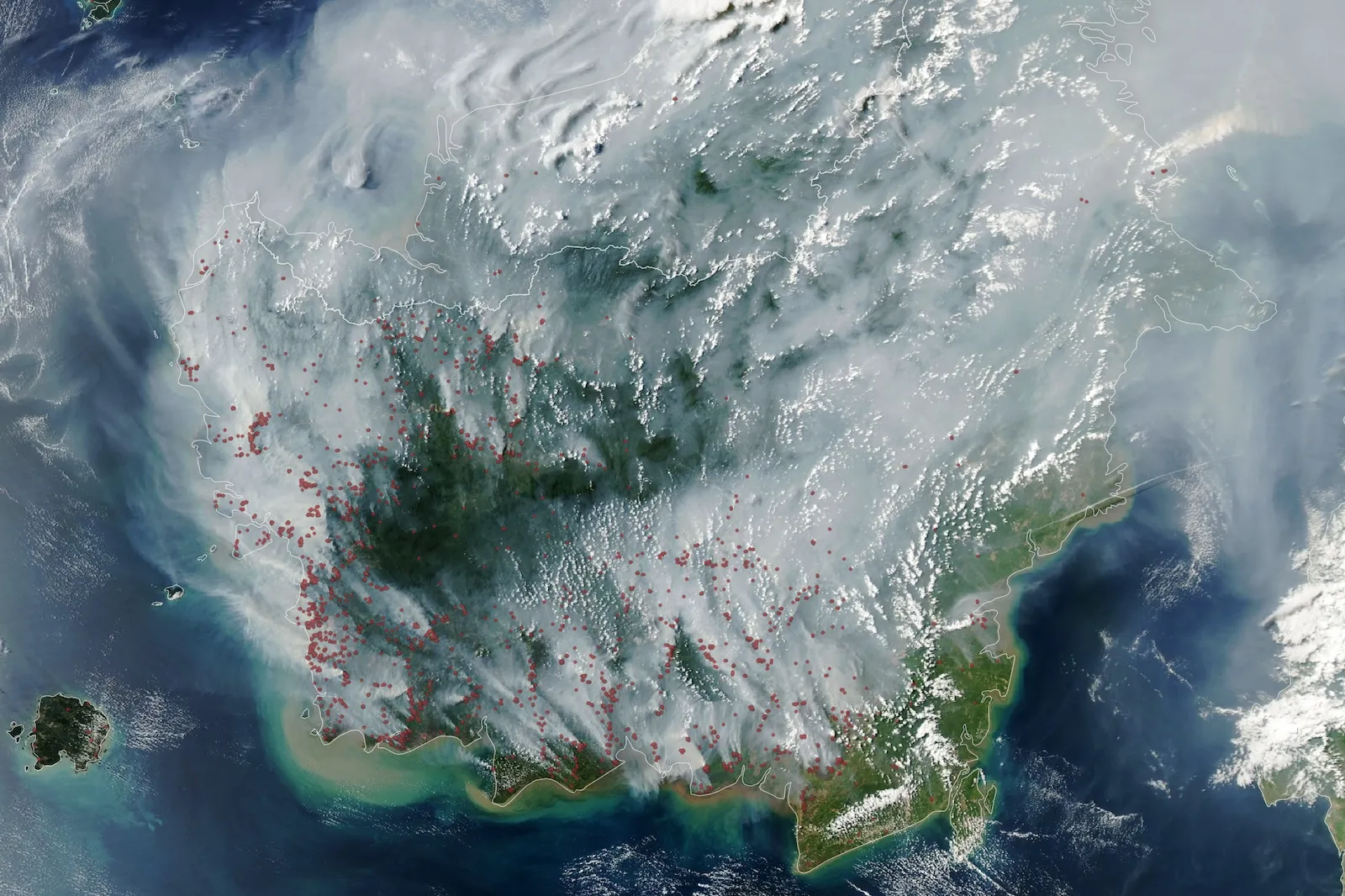
Indonesia is having its worst wildfire season in a decade, as burning peat covers the country in smoke.
1/5Heatmap· Emily Pontecorvo· Oct 30
Lawyers find serious flaws in the Senate permitting bill's 'Project Certainty' section
The Senate's bipartisan permitting bill tries to stop presidents from blocking projects they dislike. Lawyers say its wording could freeze pollution rules and reward developers who provoke delays. The Senate votes November 9.
Why it matters · Whether wind, solar and gas projects can count on federal permits across changes of administration affects financing and build-out, and this clause sets the legal rules for that.
Know this first
Context from the editor, not the article · 28 sec
1 · Why permitting reform exists
Big US energy projects need federal approvals, and environmental reviews and lawsuits can add years. Congress has spent about four years on bipartisan deals that speed up permits for both clean energy and fossil fuels.
2 · Trump versus wind
The Trump administration revoked the Lava Ridge wind farm's land rights, ordered work to stop on five offshore wind farms already under construction, added extra reviews for wind and solar, and stopped issuing military clearances for wind farms.
3 · How permits get challenged
Opponents usually sue under the Administrative Procedure Act, which lets courts throw out unlawful agency decisions. They often add claims under the National Environmental Policy Act, which requires agencies to study environmental impacts first.
2/5Yale Climate Connections· YCC Team· Oct 30
Galápagos corals show recent El Niños exceed their natural range
University of Michigan climate scientist Julia Cole read ocean temperatures from the yearly growth bands of Galápagos corals, some over 1,000 years old. Her team found that recent strong El Niños go beyond the natural range.
Why it matters · El Niño drives droughts, floods and global temperature spikes. If warming is making strong events stronger, planners can't treat the 20th-century record as a reliable guide to the worst case.
Know this first
Context from the editor, not the article · 28 sec
1 · What El Niño is
El Niño is a natural swing in which the eastern and central tropical Pacific warms well above normal every two to seven years. It shifts rainfall and storm tracks worldwide and temporarily raises global average temperature.
2 · The short-record problem
Reliable instrument records of Pacific sea temperatures go back less than a century. That covers only a dozen or so strong El Niños, too few to know the natural range of the system or spot a change in it.
3 · Corals as thermometers
Reef-building corals grow skeletons in yearly layers, like tree rings. The chemistry of each layer depends on the water temperature when it formed, so cores drilled from old corals give year-by-year ocean temperature records.
3/5Grist· Matt Simon· Oct 30
A wildfire set up giant permafrost landslides in Canada two decades later
Researchers have described a new kind of landslide, the "permafrost detachment slide." In Canada, a 1995 wildfire slowly warmed frozen ground until two hillsides collapsed in 2017 and 2018, together moving 30 million cubic yards of earth.
Why it matters · Permafrost carbon is one of the least-quantified climate feedbacks, and the paper adds a large, abrupt way for thaw to happen that current estimates don't yet include.
Know this first
Context from the editor, not the article · 28 sec
1 · What permafrost is
Permafrost is ground that stays frozen for at least two years running, a mix of ice, soil, rock and dead plant matter. Across the Northern Hemisphere it covers about two and a half times the area of the continental US.
2 · Why thaw matters for climate
Frozen organic matter has locked up carbon for centuries. When it thaws, microbes break it down and release carbon dioxide and methane. That can drive a feedback loop: more warming, more thaw, more emissions.
3 · Gradual versus abrupt thaw
Most climate models treat permafrost as thawing slowly, from the top down. Abrupt thaw, where ice-rich ground collapses into pits and slumps (called thermokarst), can expose deep carbon within months or years instead of decades.
4/5Canary Media· Maria Gallucci· Oct 30
Meta buys certificates to help finance Fortera's low-carbon cement plant in Missouri
Meta will buy certificates for the climate benefit of about 200,000 tons of cement from Fortera's planned Missouri plant. Fortera stores captured CO2 inside cement. The commitment should help the startup raise $150 million to build the plant.
Why it matters · Heavy industry can't finance first-of-a-kind plants without customers. Certificate deals are becoming a common way for tech firms with big data-center build-outs to supply that demand.
Know this first
Context from the editor, not the article · 29 sec
1 · Why cement is so dirty
Making cement means heating limestone (calcium carbonate) in kilns until it releases CO2 and leaves calcium oxide. Emissions come from that chemistry and from the fuel. The industry produces roughly 8% of global emissions.
2 · Book-and-claim certificates
A buyer pays for the environmental benefit of a product without taking the physical goods, which are sold locally. Renewable energy certificates work this way. The buyer claims the low-carbon attribute while someone else uses the material.
3 · The first-plant financing problem
5/5Utility Dive· Emma Penrod· Oct 30
Xcel Energy raises five-year spending plan to $70 billion, mostly renewables
Xcel Energy, a utility serving eight US states, raised its five-year capital plan 17% to $70 billion. The money pays for wind, solar, batteries, some gas plants and transmission, driven largely by data-center demand.
Why it matters · Utility capital plans show whether data-center demand ends up served by new renewables or by new gas. In Xcel's plan it is mostly renewables, though new gas is part of it.
Know this first
Context from the editor, not the article · 26 sec
1 · How regulated utilities earn
Utilities like Xcel earn a regulator-approved return on the assets they build, called the rate base. More capital spending generally means more earnings, but state commissions must approve the rate increases that pay for it.
2 · Rate cases
A rate case is a formal request to a state utility commission to change customer prices. The commission reviews costs and sets an allowed revenue, often phased in as annual percentage increases.
3 · The Smokehouse Creek Fire
In February 2024, Texas's largest recorded wildfire burned more than 1 million acres in the Panhandle. Xcel acknowledged that its equipment appeared to have started it, which left the company facing lawsuits.
A small wording change that corrects a drafting error without reopening the bill's negotiated substance.
Image: Heatmap
Senators wrote the 1 (BAAJA), the Senate's new permitting reform package, to speed up federal approvals for both clean energy and fossil fuel projects. Since the text came out, lawyers have focused on one section, "Project Certainty." It is meant to stop presidents from targeting energy types they dislike, as Trump has done to wind. Critics say it is drafted so broadly that it could backfire. Negotiators now have until the November 9 vote to decide what they can fix without breaking the deal.
Protecting permits already granted
The first part bars agencies from any action "to interfere with or prevent the construction or operation at full capacity" of a project that holds all its federal approvals. Liz Zeleda of the Southern Environmental Law Center points out that this could also block future rules requiring existing plants to cut pollution. Almost everyone agrees that needs a fix.
The section does let agencies revoke permits in some cases: a court order, a developer breaking the permit's terms, false statements in the application, or new imminent harms. One exception is missing: a permit that was issued unlawfully. Former Biden adviser John Podesta warned this would make a rushed "permit gorge" under Trump irreversible. Ben Schifman, a former Justice Department lawyer, says outside groups could still sue to overturn such permits, except in rare cases that rest only on environmental-review law. Earthjustice replies that it can't afford to challenge every permit, and a future administration can't sue itself. Schifman agrees that gap could be closed with a few words.
Suing over unfair treatment
The second part lets developers sue if their project type, say wind farms, faces a "substantial increase" in delays or denials compared with the prior five years. The court may consider only the developer's evidence, the project's own file and raw approval statistics. The developer doesn't have to prove bad faith, and the court can't weigh the government's reasons. A winner collects 50–100% of total project costs plus damages and legal fees.
Former Justice Department official Matthew Littleton notes that for the next few years, the five-year baseline will be mostly Trump-era obstruction. A later administration that lawfully rejected more gas plants could be sued. Law professor Justin Pidot warns that the payouts could push agencies to approve projects they consider unsafe, or tempt developers to provoke delays. A developer keeps the award only if it finishes the project, though, and nothing forces the agency to issue the permit.
What happens next
Suggested fixes include requiring evidence of intentional targeting, limiting claims to delays, and capping awards at actual losses. Littleton thinks the section needs a full rethink. Ray Long, head of the American Council on Renewable Energy, a clean energy trade group, says Congress should pass the bill now and correct it later.
The Senate's bipartisan permitting package is the 1, or BAAJA. Its Democratic authors are Senators Sheldon Whitehouse of Rhode Island and Martin Heinrich of New Mexico. The bill is meant to speed federal approvals for energy projects, and it includes benefits for oil and gas as well as clean energy. Supporters describe it as a delicate, all-or-nothing compromise. Since the text came out, though, lawyers have found drafting problems in one section in particular, titled "Project Certainty." Negotiators have until the November 9 vote to decide which problems they can fix by amendment without the whole deal coming apart.
Getting politics out of permitting was a core demand for the Democratic authors. Under Trump, the Interior Department revoked the Lava Ridge wind farm's 2, issued 3 on five offshore wind farms that were already being built, put wind and solar applications through extra reviews, and the Pentagon stopped issuing clearances for wind farms. Project Certainty is meant to make all of that illegal. The difficulty is writing protections that a hostile president can't get around without also tying the hands of every future administration.
Part one: permits already granted
The first component protects projects that hold all their federal approvals. The text doesn't only ban revoking permits. It bars agencies from taking any action "to interfere with or prevent the construction or operation at full capacity of a project."
Liz Zeleda, federal regulatory director at the Southern Environmental Law Center, says the "operation at full capacity" wording appears to block any future rule requiring existing facilities to modernize or cut pollution. As written, the bill would also exempt fully permitted projects from future regulations. Critics broadly agree this is an accident. "Nobody, I think, wanted to negotiate some kind of regulatory freeze here," says Jane Flegal of the Searchlight Institute, who expects negotiators to fix it.
A harder question is what happens to permits issued illegally. The bill lists the cases in which an agency may revoke a permit: a court order, a developer violating the permit or another law, a permit obtained under false pretenses, or a need to prevent imminent harms the original review missed. "The government's authorization violates the law" is not on the list. John Podesta, Biden's former senior climate adviser, warned of a Trump "permit gorge" that this bill would make irreversible.
Ben Schifman of the Institute for Progress, a former Justice Department lawyer, reads it more narrowly. A harmed party could still argue that a permit violated the 4 (APA), the law that lets courts set aside unlawful agency actions, and ask a court to 5 it. The only exception he sees is a case where the sole violation falls under the 6 (NEPA), which requires environmental reviews, or the National Historic Preservation Act. In that case the bill would bar vacatur. He says that in 10 years at the Justice Department he can hardly recall a case that rested on a NEPA claim alone.
Sambhav Sankar of Earthjustice responds that this assumes outside groups can afford to challenge every suspect permit. "We don't have anywhere near the resources required," he writes, and the bill is designed to make such suits harder. A new administration also can't sue itself to get the court order the exceptions require. Schifman suggests the agency might sue the permit holder instead, but he calls the point ambiguous and "a good candidate for a few-word technical amendment."
Part two: projects still seeking permits
The second component creates a new kind of lawsuit. A developer can sue over a delay or denial by showing a "pattern of 7." That means its project type has seen a "substantial increase" in delays or denials compared with the previous five years. Evidence of bias, such as officials' statements, is optional.
The court may review only three things: the developer's evidence, the administrative record for that one project, and raw government statistics comparing the past year's approvals, denials and delays for that project type with the prior five years. Here is an illustrative example that is not taken from the bill: if wind denials averaged two a year and then jumped to ten, those numbers alone could carry the case. Matthew Littleton, a former deputy assistant attorney general in the Justice Department's environment division, reads the text to mean the developer doesn't have to prove bad faith, and the court can't consider a well-reasoned government explanation. Schifman mostly agrees, though he notes that the project's record might happen to contain that explanation.
The baseline cuts both ways. Once the law takes effect, the prior five years will be dominated by Trump-era obstruction, so the clause gives wind and solar little near-term help. And if a Democrat elected in 2029 lawfully rejected more gas plants than Trump did, perhaps because of a newly recognized risk, gas developers could sue.
The remedy raises the stakes. A winning developer receives 50% to 100% of the project's total costs, plus attorney fees and damages. Justin Pidot, a University of Arizona law professor and former general counsel at Biden's Council on Environmental Quality, says this puts "handcuffs on the government." Scholars at Columbia's Center on Global Energy Policy warn that agencies "may approve projects they would otherwise reject, potentially including projects they consider unsafe." Pidot adds that a developer "would be wise to try to figure out how to get the government to delay approving their projects" so it could sue. The payout also has a catch. The developer keeps it only if it completes the project, and nothing requires the government to grant the permit. An administration could keep delaying until the developer's financing runs out. "If you have to abandon the project before you can build it, you don't get anything," Littleton says.
Fix it, rethink it, or pass it
Proposed changes include:
Environmental Protection Network, a group of former EPA staff: add revocation exceptions, such as agency enforcement of federal law; add a clause preserving the Clean Air and Clean Water Acts; limit remedies to actual damages and court costs, to protect taxpayers from what it calls potentially hundreds of billions of dollars in payouts.
Natural Resources Defense Council (NRDC): require "credible evidence of intentional targeting," let courts review the full record, change the five-year baseline, and drop the "disproportionate" awards.
Columbia scholars: limit claims to delays, which have clear deadlines, because "courts can already overturn unlawful denials," and tie awards to actual losses while keeping some penalty to deter abuse.
Each fix has costs. More revocation exceptions give a hostile administration more room to pull permits. Littleton says such changes would "curb some of the worst excesses" but that the provisions "need to be rethought." Nat Keohane of the Center for Climate and Energy Solutions, which supports the bill, separates unintended readings, which can be fixed, from choices that were part of the negotiated bargain. Ray Long, CEO of the American Council on Renewable Energy (ACORE), argues that Congress has worked on this for four years, should "stop trying to make this bill perfect," and can pass a corrections bill later. The authors did not answer questions about revisions, but sources say work on corrections is under way.
Critics and supporters agree on one thing: no statute can fully stop a president determined to hurt an industry. The open question is whether this attempt does more good than harm.
Remember
The phrase 'operation at full capacity' could accidentally freeze pollution rules for permitted projects, and nearly everyone wants it fixed.
Developers can win disparate-treatment suits on raw statistics alone, and the court can't weigh the government's reasons.
Payouts of 50–100% of project costs depend on finishing the project, which a hostile agency can still prevent.
Sea surface over a coral reef. Yearly growth bands in coral skeletons record past ocean temperatures.
Scientists studying ancient corals in the Galápagos Islands have concluded that 1 events have become more extreme since the 2 began. They attribute the change to human-caused climate change.
The work is led by Julia Cole of the University of Michigan. It was described in a short Yale Climate Connections radio segment, which doesn't name the journal or give numerical results.
The problem: a record too short to judge
El Niño is a natural cycle. In Cole's words, it "every few years causes the tropical Pacific to become warmer than usual," and that warming shifts weather around the world. Several recent El Niños have been very strong, and the segment says this year's is the strongest on record.
But "on record" means less than a century of instrument measurements. That's only a handful of strong events. With so few, it's hard to tell whether a record-breaking El Niño is unusual in absolute terms or just unusual for a short window. You need a much longer baseline to know what the system does naturally.
How the corals help
Corals provide that baseline. As Cole puts it, "Corals lay down 3 similar to the rings of a tree." The chemical makeup of each band depends on how warm the surrounding water was when it formed. Drilling a core from a coral skeleton and analyzing it band by band gives a year-by-year record of ocean temperature. The Galápagos sit in the eastern Pacific, where El Niño warming is strong, so each event leaves a clear mark in the coral.
Cole's team studied coral skeletons, some more than 1,000 years old. That let them map how strong El Niños got over many centuries before fossil fuels.
The finding
Comparing that long record with recent decades, the team concluded that El Niños have grown more extreme since the industrial era. "These very strong events have gone beyond what we know now is a natural range for El Niño," Cole says. She reads this as evidence that human-caused warming is intensifying El Niño.
What we don't know from this piece
The segment is about 200 words. It doesn't say how much stronger recent events are, how many coral records were used, or how the team separated a warming trend from natural swings that last centuries. It also doesn't address whether El Niños are becoming more frequent as well as stronger, or what climate models project. Those details would be in the underlying paper, which the segment doesn't cite.
Climate scientists working with ancient corals from the Galápagos Islands say 1 events have become more extreme since the start of the 2. They argue the change comes from human-caused climate change. Julia Cole of the University of Michigan leads the work. It was covered in a brief Yale Climate Connections radio segment that doesn't cite a paper or give figures, so this account is necessarily short.
What El Niño is and why it matters
El Niño is one phase of the 3, a natural seesaw of ocean temperatures and winds across the tropical Pacific. Cole describes it as "a natural phenomenon that every few years causes the tropical Pacific to become warmer than usual." That warming moves the atmosphere's major rain-making regions. In general terms, that can bring drought to parts of Australia, Indonesia and southern Africa, heavy rain to coastal Peru and Ecuador, and changes to winter weather in North America. Strong El Niños also add heat to the global average temperature for a year or so, which is why record-hot years tend to follow them.
The segment notes that several recent El Niños have been very strong. It says this year's event is the strongest on record.
Why "on record" isn't enough
The difficulty is the length of the record. Reliable instrument measurements of tropical Pacific temperatures go back less than a century. A big El Niño comes along perhaps once or twice a decade, so the record holds only a handful of very strong events. A sample that small can't answer the key question: are recent extremes outside what ENSO does naturally, or does the system sometimes produce events like these over centuries anyway? ENSO is also known to vary in strength over decades and centuries, which makes the question harder.
To answer it, you need a record long enough to show the natural range before industrial greenhouse gas emissions.
How corals record ocean temperature
That's where the corals come in. "Corals lay down 4 similar to the rings of a tree," Cole says. Reef-building corals add skeleton continuously, and seasonal changes in growth leave visible yearly layers. The chemistry of each layer reflects conditions in the water when it formed, including temperature. Scientists drill a core through a coral head, count the bands to date them, and measure the chemistry of each one. That gives a year-by-year temperature history going back as long as the coral has been alive. Fossil corals, dated separately, can add older segments.
The article doesn't say which chemical signals Cole's team measured. In this field, the ratio of 5 and the ratio of strontium to calcium in the skeleton are common temperature indicators. The Galápagos location matters too. The islands sit in the eastern equatorial Pacific, where El Niño warming is especially strong. A strong event shows up there as a distinct warm spike in that year's band.
Cole's team analyzed coral skeletons, some more than 1,000 years old. That gives a pre-industrial baseline many times longer than the instrument record.
The result
By comparing the coral-derived history with recent decades, the team concluded that El Niños have grown more extreme since the industrial era began. "These very strong events have gone beyond what we know now is a natural range for El Niño," Cole says. From this she infers that human-caused climate change is making El Niños more intense.
Put simply, the reasoning goes like this. If a thousand years of natural variability never produced events as strong as recent ones, the best explanation for the new extremes is the new factor in the system: rising greenhouse gases.
What the segment leaves open
It's a roughly 200-word radio script, so it leaves out most of what a careful reader would want:
Size of the change. No figures for how much stronger recent events are than the strongest pre-industrial ones.
Data coverage. It says "some" corals are over 1,000 years old but doesn't say how continuous the record is. Coral archives are often patchy, with gaps between dated fossil pieces.
Local versus basin-wide. A Galápagos coral records local temperature. The segment doesn't explain how the team links that to Pacific-wide El Niño strength, or rules out local changes.
Frequency versus intensity. The claim is about extremes. The segment doesn't say whether El Niños have also become more or less frequent.
Fit with models. Climate models have long disagreed on how ENSO will respond to warming. The segment doesn't say whether this result supports any particular projection.
The headline conclusion is a meaningful data point in a long-running scientific debate, because it rests on direct physical evidence rather than models. But the evidence behind it has to be checked in the underlying study, which this piece doesn't identify.
Remember
The instrument record for El Niño is under a century long, too short on its own to show its natural range.
Coral growth bands give yearly ocean temperatures; Cole's Galápagos records reach back more than 1,000 years.
The radio segment gives no numbers or paper, so how big the shift is remains unverified here.
A permafrost detachment slide scar in the Northwest Territories, with forested hills beyond.1 / 2
Scientists have described a new kind of Arctic landslide. They call it a 1: frozen ground weakens from underneath until a whole hillside gives way, often within hours or days. A recent paper, led by geoscientist Joseph Young while he was at the University of Alberta, documents two of these slides in Canada's Northwest Territories. The first came to light almost ten years ago, when a helicopter pilot saw a slide that had dammed a river and formed a lake.
Two slides, one fire
One slide, on the Johnson River in 2017, ran about three-quarters of a mile. The other, on the Redstone River in 2018, ran about 2 miles. Between them they moved 30 million cubic yards of earth, roughly 23 million cubic meters. Both trace back to a wildfire in 1995.
The fire burned off the vegetation that shades 2 (ground frozen for two or more years) during the long northern summer. With that shade gone, extra heat crept slowly downward. After about 20 years, Young says, a small warming signal had reached the bottom of the permafrost.
Failure from the bottom up
As the base warmed, cracks spread through the frozen mix of soil, ice and organic matter. Relatively warm water pooled at the surface and seeped into the cracks, which weakened the ground further. The mass crept downhill a few feet a year, then sped up to perhaps 80 feet a year, and finally let go all at once. Vladimir Romanovsky of the University of Alaska Fairbanks compares this to a 3: friction and cracking at the base can release energy that speeds up the slide.
The evidence that the ground failed from below is in the debris. The slides contain intact frozen blocks up to 650 feet long. Ground that had thawed from the top down would have left mostly mud.
Collapse also exposes new walls of permafrost to the sun. "You've opened up more potential for failure," Young says.
What isn't known
These slides belong to 4, the pits and collapses that form when ice-rich ground thaws. David Olefeldt, a University of Alberta soil scientist who wasn't involved, calls them a type that "hasn't really been observed before." Young says they have only appeared in the last 10 to 15 years.
Nobody has measured how much greenhouse gas they release. Microbes that break down newly exposed organic matter emit carbon, but Young says the amount is unknown because the slides haven't been characterized yet. He adds that given their size, it "could be quite severe." The story doesn't say how many such slides exist or how common the fire-then-collapse sequence is.
Other changes could add to the risk. Shrubs spreading north trap snow, which insulates the ground in winter. They also add fuel for fires.
Scientists have identified a type of landslide that, as far as they know, didn't exist until recently. It's called a 1. Frozen ground degrades from underneath until a whole hillside fails at once, over hours or days. A recent paper led by geoscientist Joseph Young, who did the work at the University of Alberta, describes two of these slides in Canada's Northwest Territories. Both were triggered by a wildfire that burned more than two decades before either one collapsed.
The first sign came almost ten years ago. A helicopter pilot noticed a slide so large it had blocked a river and formed a lake. The Grist story doesn't give the journal or the paper's title.
The two events
Johnson River, 2017: a slide about three-quarters of a mile long (roughly 1.2 km).
Redstone River, 2018: a slide about 2 miles long (roughly 3.2 km).
Together they moved about 30 million cubic yards of earth, or roughly 23 million cubic meters. When researchers walked the debris, they found frozen chunks up to 650 feet (about 200 m) long still inside it.
That sets these slides apart from ordinary landslides. A typical slide is a rush of rainwater, mud and rock down a slope. A detachment slide is frozen ground losing its strength and giving way, often moving in huge intact pieces.
"They've only started happening in the last 10, 15 years," Young said. He called them "a very dramatic manifestation of the changing climate."
Why 2 is a wild card
Permafrost is ground that stays frozen for two years or longer. It holds ice and dead plant matter mixed with soil, rock or sand. Permafrost zones cover about two and a half times the area of the continental US. The Arctic is warming about four times faster than the global average.
When ice-rich permafrost thaws, the ground can sink and collapse into pits, slumps and gullies. This is called 3. Each collapse exposes organic matter that has been frozen for a long time. Microbes then break it down and release carbon dioxide and methane. David Olefeldt, a University of Alberta soil scientist who wasn't involved, calls the detachment slide a new type of thermokarst, "a type of land collapse due to permafrost thaw which hasn't really been observed before." What sets it apart is size: one event is far larger than the usual thermokarst features.
How a 1995 fire caused a 2017 collapse
The process takes decades. Here are the steps as the article describes them.
The shade disappears (1995). A wildfire burned off the forest and ground cover. In a northern summer the sun is up for most of the day, and that vegetation had kept the permafrost cool. Without it, the ground took in more heat.
Heat travels down slowly (about 1995–2015). Heat moves through soil slowly. Young says it took about 20 years for the warming signal from the burned forest to reach the base of the permafrost. "It's slight, but it's there."
The base weakens. Even slight warming at the bottom of the frozen layer was enough for tension cracks to spread up through the mix of soil, ice and organic matter.
Water speeds things up. Pools of relatively warm water formed at the surface and soaked down through the cracks. Water carries heat into the ground much better than air does, so the frozen mass weakened faster.
Creep, then sudden failure. The mass slid downhill at first by a few feet a year, then by perhaps 80 feet (about 24 m) a year. Then it let go all at once.
Vladimir Romanovsky, a permafrost geophysicist emeritus at the University of Alaska Fairbanks who wasn't involved, says this kind of movement "can create its own release of energy because of friction and cracking on the bottom." He compares it to a 4, when a slowly creeping ice sheet suddenly speeds up.
An analogy (ours, not the article's): picture a frozen slab on a sloped table. Warm the slab's underside slightly and it starts to slide. The sliding produces heat at the contact surface, which makes it slide faster.
How they know it failed from below
The intact frozen blocks, up to 650 feet long, are the main evidence. Ground that had thawed slowly from the surface down would have turned to mush and left mostly mud. Large frozen pieces mean the base gave way while most of the mass above was still frozen.
It doesn't stop at the collapse
When that much material leaves, it leaves exposed walls of permafrost along both sides of the slide. The sun now heats those walls directly. "Just because you have this large detachment failure, that doesn't mean it's over," Young said. "Actually, it means you've opened up more potential for failure."
Feedbacks that point the same way
The article describes several processes that could make these slides more likely:
The carbon feedback. Thaw releases carbon, the carbon causes warming, and the warming causes more thaw. Miriam Jones of the US Geological Survey calls this "a major global concern."
5. Plants are spreading north by miles per decade. Shrubs trap snow, and snow insulates the ground from winter cold, so permafrost refreezes less each winter. More vegetation also means more fuel for the fires that start detachment slides.
What's still unknown
The biggest gap is emissions. "We don't know how much, because we haven't characterized and classified it," Young said. He added that given the size of the slides, "it could be quite severe." Earlier research found that much smaller abrupt-thaw features already produce significant carbon emissions. That makes larger slides plausibly important, but it isn't a measurement.
The article also leaves several questions open:
How common are these slides? It describes two events in detail and doesn't say how many others are known.
Can they be predicted? The fire-then-collapse sequence suggests burned, ice-rich slopes could be watched in the years and decades after a fire. The article doesn't say whether anyone is doing this.
What does the river damming mean for people? The first slide dammed a river and formed a lake, but the article doesn't cover effects on rivers, infrastructure or nearby communities.
Olefeldt expects "more of these types of surprises" as other regions cross similar thresholds. For now, the paper establishes a mechanism, with two well-documented cases and no emissions figure yet.
Remember
The trigger came long before the collapse: a fire took about 20 years to warm the permafrost base enough for it to fail.
Intact frozen blocks up to 650 feet long show the ground failed from below rather than thawing from the top.
No one has measured the carbon these slides release, so they aren't counted in permafrost emission estimates.
Lenders rarely fund a novel industrial plant unless it has long-term buyers lined up. A startup with only a pilot plant has little product to sell, so early buyer commitments do much of the work of getting it financed.
Workers pour concrete made with Fortera's pilot-plant cement at Simpson University in Redding, California, early 2025.
The deal
Meta will buy 1 from Fortera, a cement startup based in San Jose, California. An environmental attribute certificate is a tradable claim to a product's climate benefit, sold separately from the product itself. These ones cover about 200,000 tons of cement from Fortera's first commercial plant, planned for Ste. Genevieve, Missouri. Neither company disclosed the price. Microsoft, which invested in Fortera last year, also plans to buy certificates.
Why certificates
Tech companies say they want low-carbon materials for their data centers. Very little clean cement is made in the U.S., and cement rarely travels far from where it's made. With certificates, Meta can claim the green benefit wherever it builds. The physical cement goes to nearby customers at normal market prices, and Meta's payment covers the extra cost of making it cleaner.
The main purpose is financing. Lenders want long-term buyers before they back a first-of-its-kind plant. "A multiyear commitment is what gets a cement plant financed," said Devon Lake, Meta's head of net-zero strategy.
How the cement works
Making cement means heating limestone in kilns, which gives off CO2. Fortera builds next to existing kilns, pipes their CO2 into its own reactors, and bonds it to "reactive carbonates" made by a proprietary process. The CO2 stays locked in the finished product, 2. Fortera says it cuts emissions 70% compared with 3, the industry standard.
A pilot plant in Redding, California, has run for about 2.5 years. It makes about 15,000 tons a year and has supplied Caltrans and the cities of Berkeley and Santa Cruz.
The Missouri plant
Capacity: 300,000 tons a year. A standard cement plant makes about 1 million.
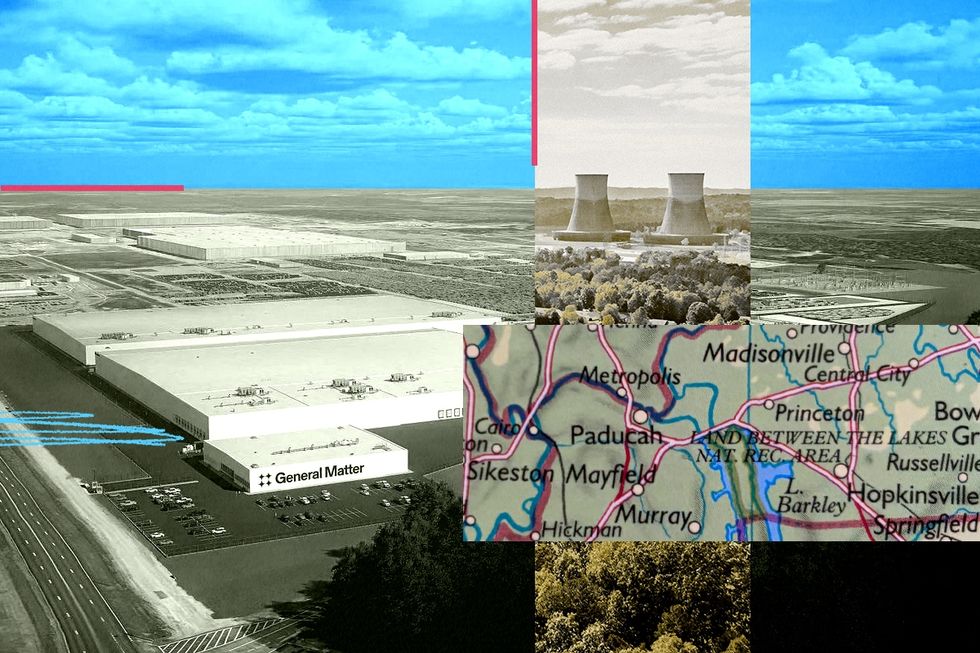
CO2 source: waste CO2 from a neighboring 4 plant run by MLC.
Cost: about $150 million.
Target start: 2028.
Physical buyer: building-materials company Ozinga, for projects across the Midwest.
A growing tactic
Google and Microsoft buy certificates from 5, which is building a steel mill in Sweden that will run on hydrogen made with renewable power. Producers of alternative jet fuel and low-carbon ammonia issue them too. Groups such as the 6 are working on shared standards.
Caveats
Cement causes about 8% of global emissions, and the world uses more than 4 billion tons a year. The new plant would make a tiny fraction of that. What it offers is proof the process works at scale. The plant still needs debt and more customers before it gets built. The 70% figure comes from Fortera, and the article doesn't explain how it is verified or how double counting of the climate benefit is prevented.
The deal
Meta has agreed to buy 1 from Fortera, a startup based in San Jose, California. The certificates represent about 200,000 tons of cement from a plant Fortera wants to build in Ste. Genevieve, Missouri. An environmental attribute certificate is a tradable claim to the climate benefit of a product, separate from the product itself. Neither company disclosed the price or how many years the 200,000 tons are spread over. Meta said only that it is a multiyear commitment.
Fortera also plans to sell certificates to Microsoft, which invested in the company last year.
The problem the deal addresses
Tech companies say they want low-carbon steel and concrete for their data centers. Very little clean cement or green steel is made in the U.S. today, and what exists comes from a handful of sites. Cement makes the problem worse because it rarely travels far from where it is produced. A plant in Missouri can't easily supply a data center in Arizona or Ohio.
The certificates handle both problems. Meta gets a green claim that doesn't depend on where it builds. The physical cement is sold to customers near the plant at ordinary market prices, and they pay none of the extra cost of cleaner production. In effect, Meta's payment covers that extra cost, often called the 2.
The bigger goal is financing. "A multiyear commitment is what gets a cement plant financed," said Devon Lake, Meta's head of net-zero strategy. Fortera CEO Ryan Gilliam compared the plant to a row of dominoes that all have to fall: "corporate funding, project finance and debt, and anchor customers." He called Meta "one of those dominoes."
How Fortera's process works
Fortera builds its plants next to existing kilns, which heat limestone to make calcium oxide and release CO2 in the process. Instead of venting that CO2, Fortera pipes it into its own reactors. There it bonds chemically to what the company calls "reactive carbonates," made by a proprietary method. After more refining, the CO2-loaded material becomes 3, and the CO2 stays locked inside it. Fortera says ReAct has 70% lower emissions than 4, the industry standard. The article doesn't give independent verification of that figure or explain the chemistry beyond this outline.
Illustrative analogy: the setup is like a brewery next door to a soda bottler that catches the brewery's spare CO2 and puts it into drinks. The difference is that cement keeps the CO2 locked in, while soda lets it out when opened.
Fortera has run this setup for about 2.5 years at a pilot plant in Redding, California, next to a cement plant owned by its partner CalPortland. The pilot can make about 15,000 tons a year. It has supplied the cities of Berkeley and Santa Cruz, the California Department of Transportation, and Simpson University, which used it for an academic building.
The Missouri plant
The commercial plant would sit next to a large facility run by MLC, which turns limestone into 5 (calcium oxide) in eastern Missouri. It would use MLC's waste CO2. The numbers:
Capacity: 300,000 tons of cement a year, 20 times the pilot. A standard cement plant makes about 1 million tons.
Cost: about $150 million, according to Gilliam.
Target start: 2028.
Physical buyers: building-materials company Ozinga plans to use the cement across the Midwest.
Gilliam calls the plant "a fundamentally different proof point" from the pilot and "the template for the plants that come after it." Fortera's long-term aim is for Meta and other certificate holders to buy physical cement for their own projects. Where that demand shows up will help decide where Fortera builds next.
Part of a wider pattern
Certificates are still a niche tool, but more heavy-industry firms are using them to raise money before they have much product to sell:
6, a Swedish company building a multibillion-dollar steel mill that will run on hydrogen made with renewable power, has certificate deals with Google and Microsoft.
World Energy, which makes alternative jet fuel, and Envision Energy, which makes low-carbon ammonia, also issue certificates.
Fortera has competitors. Other U.S. cement startups include Brimstone, CarbonBuilt and Sublime Systems, all trying to break into an industry that uses more than 4 billion tons of cement a year.
What to weigh
Scale. At full output, the Missouri plant would make about 0.0075% of global cement demand. Even 200,000 tons of certificates is small next to the industry. The plant matters as a proof that the process works at commercial size, not for the emissions it cuts on its own.
Claim integrity. Book-and-claim systems depend on careful accounting. Each ton's benefit has to be counted once, and the 70% figure has to hold up. The CO2 comes from a lime kiln that runs either way, so the climate benefit depends on how capture and the avoided Portland cement are counted. The article doesn't go into these questions. That gap is why the standards groups exist.
Execution risk. The plant isn't financed or built yet. Meta's commitment is one piece. Debt, project finance and more buyers still have to come through before a 2028 start.
Missing terms. Without a price, readers can't judge how big Fortera's green premium is or how much of the $150 million Meta's money underwrites.
Open questions
The article doesn't say how long the 200,000 tons run, what Meta pays per ton, or how ReAct's emissions are verified. It also doesn't say whether the certificate model will survive once buyers start asking for physical delivery near their own sites.
Remember
Meta isn't buying physical cement. It pays for the climate claim, and local buyers get the material at market prices.
Fortera's Missouri plant would make 300,000 tons a year, 20 times its pilot but under a third of a standard plant.
The 70% emissions cut comes from Fortera and isn't independently verified in the article. Neither is the certificate accounting.
A wind farm in Genoa, Colorado. Xcel plans to spend about $21.7 billion adding 9.2 GW of renewables.
Xcel Energy, a utility serving customers in eight states, mainly Minnesota and Colorado, announced a $70 billion five-year capital plan on its Oct. 29 earnings call. That is 17% more than its previous $60 billion plan. Most of the new generation in it is renewable.
What gets built
9.2 1 of wind and solar, at about $21.7 billion, or roughly $2,360 per kilowatt
2.3 GW of energy storage
3.3 GW of natural gas generation
2,400 miles of new transmission and $4 billion for wildfire mitigation
Leaving storage aside, renewables make up about three-quarters of the new generation.
Why now
Demand is rising. 2, which strip out the effect of unusually hot or cold months, are up 2.5% so far this year, fast growth for a US utility. Data centers are a major driver. About $7 billion of the plan serves data centers already under contract. Xcel expects to sign another 4 GW of data-center agreements by the end of 2027, and its pipeline of new generation projects totals 25 GW.
CEO Bob Frenzel said up to $10 billion more could be added. It would cover more than 15 GW in pending requests for proposals (3, competitive bids for new supply), high-voltage transmission, and infrastructure for those new data centers. He argues Xcel's clean-energy record will attract more data centers, and says "existing customers should not subsidize new large loads." The article doesn't explain how contracts would enforce that.
Paying for it
Xcel plans $26 billion in new debt and $8 billion in new equity, about 40% of it already contracted. That covers roughly half the plan, and the article doesn't say how the rest is funded. Xcel is also selling its small Michigan business, about 15,000 customers valued at $150 million.
Third-quarter net income rose 83% to $960 million, helped by weather, sales growth and recent rate increases. Minnesota regulators approved a 2.9% annual increase worth $211 million over two years, and Xcel has proposed freezing rates at that level through 2028. Colorado approved a 1.7% annual increase worth $184 million. Regulated utilities earn a return on what they build, so customers ultimately pay for this plan through future rate requests.
The wildfire risk
Xcel still can't estimate its total liability for the 2024 4, which burned more than 1 million acres in the Texas Panhandle. It has settled 358 claims for $410 million. Claims from 141 plaintiffs remain open, and a lawsuit by the Texas Attorney General will continue into 2027. In its filing with the Securities and Exchange Commission, Xcel says total costs could exceed its $525 million insurance policy.
Xcel Energy, an investor-owned utility serving customers in eight states, mainly Minnesota and Colorado, unveiled a $70 billion five-year capital plan on its third-quarter earnings call on Oct. 29, 2026. That is 17% more than its previous $60 billion plan. The plan relies mostly on renewables, adds some gas, and is driven largely by demand from data centers.
What gets built
The plan includes three kinds of new resources:
9.2 1 of renewable generation (wind and solar), at an estimated cost of about $21.7 billion
2.3 GW of energy storage
3.3 GW of natural gas generation
Outside generation, it includes 2,400 miles of new transmission and $4 billion for wildfire mitigation.
Utility Dive reports that renewables make up "nearly three-fourths" of new generation. The math works if storage is left out: batteries move energy around in time rather than producing it, and 9.2 GW divided by 12.5 GW of renewables plus gas is about 74%. Counted against all 14.8 GW, including storage, renewables come to about 62%.
The renewable figure also gives a rough unit cost. $21.7 billion for 9.2 GW works out to about $2,360 per kilowatt. That is plausible for a mix of wind and solar that may include interconnection or other costs. The article doesn't break it down, so treat the number as a back-of-envelope figure.
Why Xcel is spending more
Demand is growing. 2 are up 2.5% so far this year. Weather adjustment strips out the effect of unusually hot or cold months, so the figure reflects underlying demand. For a utility, that is fast growth after roughly two decades of flat US electricity demand.
Data centers drive much of the increase. About $7 billion of the $70 billion goes to data-center projects already under contract. Xcel expects to sign service agreements for another 4 GW of data centers by the end of 2027. Its pipeline of new generation projects totals 25 GW.
CEO Bob Frenzel said a further $10 billion could be added on top of the plan. It would cover more than 15 GW in pending requests for proposals (3, competitive solicitations in which developers bid to supply power or build projects), high-voltage transmission, and infrastructure for the 4 GW of expected data-center load. Frenzel argues that Xcel's clean-energy commitment will itself attract more data centers, since many large tech buyers have their own emissions targets.
Frenzel also stated a principle that is becoming common among utilities: "existing customers should not subsidize new large loads." The worry is that grid upgrades built for a few very large customers could end up spread across everyone's bills. Saying so on an earnings call is not the same as writing it into a tariff. The article doesn't describe how Xcel's data-center contracts enforce it.
How it gets paid for
CFO Brian Van Abel said Xcel will take on $26 billion in new debt and issue $8 billion in new equity. About 40% of the equity is already contracted. That totals $34 billion, roughly half the plan. The article doesn't say where the rest comes from. Utilities typically fund the remainder from operating cash flow, which includes depreciation recovered through rates.
Xcel is also selling some assets. Earlier in October it agreed to sell its Michigan business, about 9,000 electric and 6,000 gas customers valued at $150 million, to Upper Peninsula Power Co. and SEMCO Energy Gas Co. The sale should close by the end of 2027. The price was not disclosed. Compared with $70 billion, this is a small cleanup of the company's footprint rather than a funding source.
Earnings and rates
Third-quarter net income rose 83%, from $524 million a year earlier to $960 million. Van Abel credited favorable weather, higher electric sales and a "heavy 4 calendar." Rate cases are formal requests to state commissions to raise customer prices, and several approvals landed this year:
Minnesota: In July, the Public Utilities Commission approved a 2.9% annual increase worth $211 million over two years. On Oct. 9, Xcel proposed a "rate stability plan" that would freeze rates at that level through 2027 and 2028, in place of the rate case it would otherwise file in 2027.
Colorado: In September, the Colorado Public Utilities Commission (5) approved a 1.7% annual increase bringing in $184 million.
New Mexico: A final decision is expected by year-end.
This is where Frenzel's claim that the investments will "keep customer bills low" gets tested. Under regulated-utility economics, Xcel earns a return on what it builds, and customers pay for it through approved rates. The coming rounds of rate requests will show whether a 17% larger plan stays consistent with modest annual increases like these.
The wildfire liability
The plan's $4 billion for wildfire mitigation partly reflects the 6 of 2024, which burned more than 1 million acres in the Texas Panhandle. According to Xcel's quarterly filing with the Securities and Exchange Commission (7):
Xcel has settled 358 claims for $410 million.
Claims from 141 plaintiffs remain unresolved.
Litigation brought by the Texas Attorney General is expected to continue into 2027.
Xcel cannot yet estimate its total liability, which could exceed its $525 million insurance policy.
The company has already paid out $410 million against $525 million of insurance, and many claims remain open, so going over the insurance limit looks like a real possibility. Western utilities have learned that wildfire liability can change their financial picture quickly.
What remains open
The article leaves several questions unanswered:
Gas plants. It doesn't say what the 3.3 GW of gas is for: peaking capacity, replacing retiring coal, or firm supply for data centers.
The renewables split. It doesn't say how the 9.2 GW divides between wind and solar, or across states.
Storage duration. It doesn't say how many hours the 2.3 GW of storage can run.
Data-center protections. It doesn't explain how contracts will keep the costs of serving data centers off other customers.
Plan size. The plan could grow by another $10 billion if pending RFPs and data-center deals go through, so the $70 billion may be a floor rather than a ceiling.
Remember
Renewables cost Xcel roughly $2,360 per kilowatt in this plan: $21.7 billion for 9.2 GW.
Data centers drive the growth: $7 billion in this plan, plus up to $10 billion more possible.
Wildfire liability could exceed Xcel's $525 million insurance, with $410 million already paid in settlements.
Peat and "6." Northern fires often burn into 7, carbon-rich material built up over centuries. These fires can smolder underground through winter, even under snow, and flare up again in spring. They release carbon of their own and remove more of the ground's insulating layer.
The 7 and the Center for Green Market Activation are writing shared standards and more formal systems for these tools.