Today's news is about who builds, owns, supplies and gets onto the power grid: Congress, utilities, equipment makers and Texas courts.
Picked from 63 new articles across 13 sources · arrow keys for other days
Today in 30 seconds
30s left
Watchdog David Pomerantz says the Senate permitting bill's grid provisions hurt utilities, and he expects them to regroup if it fails. story 1 ↓
The first Senate vote on the permitting bill is under two weeks away. Some senators are setting conditions, and green groups are pushing back harder.
UK climate aid totalled £12.8bn since 2021, helped by relabelling existing aid, with a record £4bn in 2025-26. Annual spending will now be roughly halved. story 2 ↓
FirstEnergy's data center pipeline hits 26 GW, 7.9 GW of it contracted. It plans a $2.7bn gas-and-solar plant and a bigger transmission budget. story 3 ↓
GE Vernova will buy grid-equipment maker Trench Group for $9 billion, a bet that grid hardware stays scarce. The deal closes late 2027. story 4 ↓
The 5th Circuit ruled Texas can block a Chinese-linked solar developer from its grid, despite separate federal foreign-investment review. story 5 ↓
1/5Heatmap· Robinson Meyer· Oct 29
Senate permitting bill's power-grid provisions draw praise, and utilities may fight back
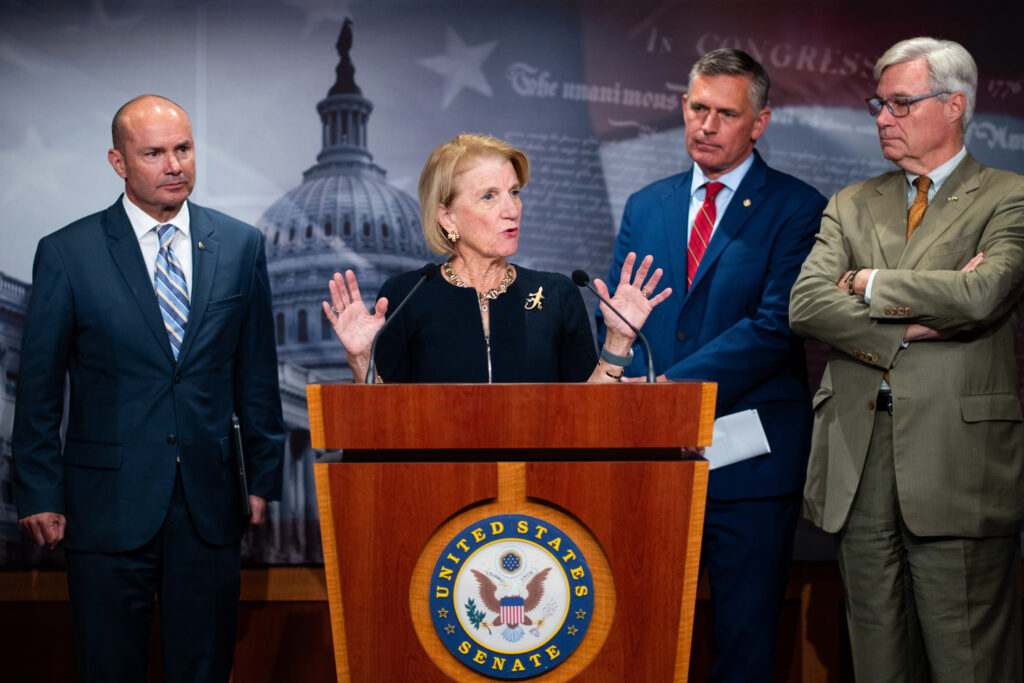
Climate groups disagree about the Senate's bipartisan permitting bill, but most like its electricity and transmission sections. On a podcast, utility watchdog David Pomerantz said utilities' incentive to keep spending pushes bills up.
Why it matters · If the bill's grid sections become law, they could change how transmission gets built and how much power utilities hold, two of the biggest obstacles to cleaning up the grid.
Know this first
Context from the editor, not the article · 19 sec
1 · What permitting reform means
In the US, big energy projects, especially long-distance transmission lines, can spend years in environmental review, court fights and approvals spread across several states. Permitting reform bills try to shorten that process and make it more predictable.
2 · How utilities make money
Investor-owned utilities are regulated monopolies. Regulators let them earn a set rate of return on capital they invest, such as new lines and plants, and recover that from customers' bills. Critics say this rewards spending over saving.
Image: Heatmap
2/5Carbon Brief· Josh Gabbatiss· Oct 28
UK spent £12.8bn on climate aid since 2021, helped by relabelling
Carbon Brief used freedom-of-information requests to show the UK spent £12.8bn on climate aid in five years, beating its £11.6bn pledge. It only got there by relabelling £2.2bn of existing aid, and annual spending is now set to halve.
Why it matters · Rich-country climate finance is a core promise of UN climate deals, and this is a rare full look at whether one big donor's money was actually new.
Know this first
Context from the editor, not the article · 27 sec
1 · What climate finance is
Under UN climate treaties, rich countries agreed to help developing countries pay to cut emissions and adapt to climate impacts. They set a collective goal of mobilising $100bn a year from 2020 to 2025.
2 · The UK's £11.6bn pledge
In 2019 the UK pledged to spend £11.6bn of its foreign-aid budget as climate finance over five financial years, 2021-22 to 2025-26. That pledge was its share of the $100bn goal.
3 · Why labelling matters
Donors decide which aid spending counts as 'climate'. If they change the counting rules, the reported total can rise even when no extra money is spent. That makes the accounting method as important as the headline number.
3/5Utility Dive· Ethan Howland· Oct 29
FirstEnergy's data center pipeline reaches 26 GW, 7.9 GW of it contracted
FirstEnergy says potential data center demand on its six-state system grew to 26 gigawatts, and contracted demand rose to 7.9 gigawatts. To serve it, the utility is planning new gas plants, temporary "bridge" power and more transmission spending.
Why it matters · This shows how data center demand turns into regulated spending on gas plants and power lines, with figures on what a gigawatt of new load costs.
Know this first
Context from the editor, not the article · 27 sec
1 · Pipeline versus contracted load
Utilities report a "pipeline" of possible large customers, which includes inquiries and early-stage projects that may never be built. "Contracted" load means customers that have signed agreements, so it is the firmer number.
2 · How utilities earn money
A regulated utility earns an allowed return on its rate base, the value of the grid and plants it has built. Building more transmission and generation therefore grows its profits, which regulators must approve.
3 · Gas turbine bottleneck
Demand for large gas turbines has jumped with data center growth, and only a few manufacturers make them. Utilities now reserve production slots years ahead, so new plants are often scheduled around turbine delivery dates.
4/5Heatmap· Alexander C. Kaufman· Oct 29
GE Vernova agrees to buy grid-equipment maker Trench Group for $9 billion
GE Vernova, the energy company spun out of General Electric, will pay $9 billion for Trench Group, which makes high-voltage transmission equipment. It is a bet that demand for grid hardware will keep climbing.
Why it matters · Grid hardware, not power plants, is now a main bottleneck for connecting new demand and renewables, and a $9 billion bet shows where companies expect that bottleneck to stay.
Know this first
Context from the editor, not the article · 24 sec
1 · Who GE Vernova is
GE Vernova was split off from General Electric in 2024. It holds GE's energy businesses: gas turbines, wind turbines, grid equipment, and a nuclear venture with Hitachi.
2 · The grid hardware squeeze
Building transmission takes heavy equipment such as transformers, switchgear and reactors. Demand from data centers, renewables and old equipment needing replacement has pushed waits for large transformers to several years.
3 · Why permitting matters
In the US, big energy projects need environmental reviews and permits that can take years. 'Permitting reform' bills aim to shorten those timelines. Critics say they also weaken the ways communities can challenge a project.
5/5Utility Dive· Meris Lutz· Oct 29
Appeals court lets Texas block a Chinese-linked solar developer from its grid
A federal appeals court ruled against GH America Energy, a Texas subsidiary of a Chinese company. Texas cancelled its grid connection under a state security law, and the court held that federal law doesn't override that state law.
Why it matters · States are writing more foreign-ownership rules for energy infrastructure. This ruling suggests those rules can survive court challenges, which adds a screening step that developers and investors have to plan for.
Know this first
Context from the editor, not the article · 33 sec
1 · Interconnection applications
A new power plant can't sell electricity until the grid operator approves its interconnection request, after studies of whether the grid can absorb its output. In most of Texas the grid operator is ERCOT, and losing an application can kill a project.
2 · What CFIUS does
The Committee on Foreign Investment in the United States is a federal interagency panel chaired by the Treasury. It reviews certain foreign acquisitions of US businesses and assets for national-security risk, and it can impose conditions or recommend that the president block a deal.
Climate and environmental advocates are split over the Senate's bipartisan 1 proposal, the 2. According to Heatmap's Robinson Meyer, most of them agree that the bill's changes to electricity and transmission law are very good, and in some ways better than expected. He argues that because those sections aren't controversial, they have had little coverage.
Meyer gave an episode of Heatmap's Shift Key podcast to that part of the bill. His guest was David Pomerantz, who runs the 3, a group that investigates utilities. They discussed how the bill would rewrite electricity law and why it is bad for utilities.
The published page is show notes and a short excerpt. It doesn't say which grid provisions are in the bill or how they work. Those details are in the full transcript.
The case against utilities
Investor-owned utilities generally earn a return set by regulators on the capital they invest, and customers repay it through their bills. Pomerantz argues this makes them focus on "maxing 4" (capital expenditure) for quarterly returns instead of cutting costs. He says they could lower bills, as some publicly owned utilities do, but won't because "their incentives are too perverse."
He grants that some spending is needed: "the grid is aging." His complaint is that utilities aren't saving money where they could.
Will their political power keep fading?
Meyer asked whether utilities' political influence is declining, and what happens if BAAJA fails. Pomerantz gave a two-part answer:
It may last. Utilities will probably keep asking for rate increases and keep getting into political trouble over them, a trend he expects to hold for at least a couple of years.
They will regroup. Utilities have used the same tactics since the 1930s: propaganda, money routed through trade associations, and recruiting allies such as organized labor to lobby politicians. They also have what he calls "a publicly subsidized pool of 5 money to spend on politics," which almost no other industry has.
"Counting them out is probably a mistake," he said. In his view, the bill is a chance to weaken utility power that may not come again.
What's missing
The page gives no numbers and no details of the provisions: nothing on transmission planning, cost allocation or bill impacts. It shows how one informed critic reads the politics, not how the policy works.
The news
The US Senate has a bipartisan 1 proposal, the 2. Climate and environmental advocates are sharply split on the bill as a whole. According to Heatmap's Robinson Meyer, though, most of them agree on one part: the changes to electricity and transmission law are very good, and in some ways better than expected.
Meyer argues that because the grid sections aren't controversial, they have had little media coverage. He gave an episode of Heatmap's podcast Shift Key to them. His guest was David Pomerantz, executive director of the 3, a group that investigates utilities, and a former Greenpeace campaigner. They covered how the bill would rewrite electricity law, why it is bad for utilities, and why Pomerantz sees utilities as a major obstacle to decarbonization.
One caveat comes first. The published page is show notes plus a short excerpt. It does not say which electricity and transmission provisions are in the bill or how they would work. That detail is in the episode, its full transcript, and Heatmap's earlier explainers. This write-up covers only what the page supports.
Why utilities are central to the fight
Most Americans get power from investor-owned utilities. These are regulated monopolies, and in general they earn a return set by regulators on the capital they invest. Each new substation or line goes into the "4," and customers pay it back with a profit added. The model has long been criticized for rewarding spending more than efficiency. That is the background to Pomerantz's argument.
He says utilities are "looking at their next quarterly returns and just sort of maxing 5," meaning capital expenditure. He thinks they could bring bills down and won't, because "their incentives are too perverse." As evidence that lower costs are possible, he points to publicly owned utilities such as municipal systems and cooperatives. The excerpt doesn't give figures for that comparison.
He doesn't claim all the spending is waste. "The grid is aging, and they do need to spend money," he says. His complaint is that utilities aren't saving money where they could, which leaves them "in a pickle" when real investment needs collide with rising bills.
Is utility political power fading?
Meyer asked whether utilities' political influence is declining, and whether they would close ranks for good if BAAJA fails. Pomerantz called it "the million-dollar political question" and gave a two-part answer.
Why the decline may last. He expects utilities to keep asking for rate increases, which will keep causing them political trouble. He calls the trend "somewhat secular," meaning structural rather than temporary, at least for the next couple of years.
Why it may not. Utilities have been around for more than 100 years. Pomerantz says their political tactics haven't changed since the fights of the 1930s:
spending on propaganda
routing money through trade associations
recruiting other groups, such as organized labor, to lobby politicians who depend on those groups
He also points to something he says almost no other industry has: "a publicly subsidized pool of 6 money to spend on politics." Money customers pay for electricity ends up, directly or through trade groups, paying for political activity. Exposing and limiting that is a core part of EPI's work. His conclusion: "I think they will regroup. Counting them out is probably a mistake."
What this means for the bill
Taken together, his view is that the current political moment is unusual. High bills have made utilities unpopular, and a bill that weakens their position has a chance. If BAAJA fails, he does not expect that chance to last, because utilities have a long record of recovering.
Meyer's framing makes the same point. The bill's least controversial section may also be its most important for the grid, and its fate depends on the larger, divisive bill it sits in. Heatmap's related coverage, listed with the episode, also explores a data-center provision Meyer calls a "double tap."
What the page leaves open
The provisions themselves. The page doesn't say what the electricity and transmission sections do, such as changes to how lines are planned, approved or paid for.
Why it's bad for utilities. The page says the bill hurts utilities but not through which mechanism.
Numbers. The excerpt gives no estimates of cost savings, transmission miles or bill impacts.
The opposition. The parts of the bill that split climate advocates aren't described here.
Readers who want the mechanics should go to the full transcript or Heatmap's explainer on the Senate deal. This page gives one well-informed critic's view of the politics around the bill.
Remember
Even climate groups that dislike the Senate permitting bill largely back its electricity and transmission sections.
Pomerantz says regulated returns on capital push utilities to spend more, not to cut customers' bills.
Utilities can spend money from customers' bills on politics, so Pomerantz expects them to recover if the bill fails.
UK climate aid by year: a record £4bn in 2025-26, set to roughly halve under the new pledge.1 / 3
The UK spent £12.8bn of aid on 1 for developing countries between 2021-22 and 2025-26. That beats its 2019 pledge of £11.6bn. Carbon Brief got the figures through 2 requests and has published them in full for the first time. The government reports climate finance to the UN only two years late and not by financial year, so until now nobody outside could check progress against the pledge.
Met on paper
A companion Carbon Brief analysis finds the UK hit the target only by reclassifying £2.2bn of existing aid as climate finance, without spending more. Take that out and the total is about £10.6bn, short of the pledge.
Spending peaked at a record £4bn in 2025-26. In cash terms, before inflation, that is ten times the 2011-12 level. Now it is falling. In March 2026 the government committed to "around £6bn" over three years, about £2bn a year, or half the latest level. It also promised £6.7bn from outside the aid budget, in private investments, 3 and guarantees to development banks. The UK did not previously count this kind of finance towards its climate targets.
Where it went
At least 493 projects and institutions received money. Examples:
£45m to cut Ukraine's fossil-fuel dependence
£40m in drought cash transfers in Kenya
£198m to a World Bank-backed carbon-offset programme
More than 80% went "4", through funds and institutions working across many countries. The top recipient was the 5, the UN's flagship climate fund, at £1.5bn. Next was 6, a state-owned, for-profit company that invests in businesses in developing countries, at almost £1.4bn. Multilateral development banks also rank high, because the UK began counting its general "core" funding to them as climate finance.
The Afghanistan effect
Only £2.1bn (17%) went to projects in named countries. The biggest recipient was Afghanistan, at £256m, ahead of long-time leader Ethiopia at £226m. This was not new climate work. The UK now automatically labels 30% of its humanitarian aid to Afghanistan as climate finance. The money goes through partners such as UN agencies, not the Taliban. The same rule pushed Somalia (£139m), Sudan (£136m) and Yemen (£130m) up the list.
Caveats
Departments revise these figures often, so even the "final" numbers may change. The data shows money labelled and sent, not emissions cut or resilience built. The UK's aid watchdog, MPs and experts have criticised the accounting changes.
The UK spent £12.8bn of its aid budget on 1 for developing countries between 2021-22 and 2025-26. That beats the £11.6bn it promised in 2019. The figures come from 2 requests by Carbon Brief, which has now published the project-level data in full for the first time. They show a record year in 2025-26, about 500 recipients, and a target that was met mostly through accounting. A companion Carbon Brief analysis finds £2.2bn of existing aid was reclassified as climate finance without any extra money being spent. Take that £2.2bn out of the £12.8bn and the total is about £10.6bn, below the pledge.
Why the data had to be pried out
The UK's climate-finance pledge sits at the centre of its international climate policy, yet the government does not routinely publish its progress. It reports climate finance to the UN, as the treaties require, but two years late and not broken down by UK financial year. The pledge is defined in financial years, so outsiders could not tell how close the government was to meeting it. Campaigners and MPs have criticised this lack of transparency. Carbon Brief has tracked the figures through FOI requests since 2017, and calls this release the most complete attempt so far.
The money comes from the aid budgets of four departments:
The Foreign, Commonwealth and Development Office (FCDO) provides three-quarters of it.
The Department for Energy Security and Net Zero (DESNZ) provides most of the rest.
The environment department (Defra) and the business and trade department (BIST) provide small amounts.
The figures are revised often. Even these "final" numbers could still change.
What the money paid for
At least 493 projects, funds and institutions received UK climate finance over the five years. Country-specific examples include:
£45m to help Ukraine cut its reliance on fossil fuels
£40m in cash transfers to Kenyans hit by drought
£30m for flood resilience in Nepal
The bigger cheques went to multi-country schemes. Many of these aim to "mobilise" private capital, meaning they use public money to attract private investment. The UK put £198m into a World Bank-backed project to help Colombia, Cambodia and others create and sell "high-integrity" carbon offsets. It gave £229m to a group that uses aid to draw private investors into projects in mostly low-income countries, such as a solar farm in Uganda and a "sustainable aviation fuel" project in Pakistan.
Record spending, then a steep drop
Climate aid reached £4bn in 2025-26. In cash terms, before adjusting for inflation, that is ten times the 2011-12 level, when the UK began providing climate finance. The record came even as the UK, like the US, made deep cuts to its overall aid budget.
The record is ending. In March 2026 the Labour government dropped the five-year format and committed to "around £6bn" of climate aid over three years. That averages £2bn a year, roughly half the 2025-26 level. Carbon Brief says the cut is larger than it looks once inflation and the new counting rules are factored in. The government has also promised £6.7bn from outside the aid budget to "drive climate and nature outcomes". This would come as private investments, 3 and guarantees to development banks rather than grants. The UK already provides finance of this kind but has not counted it towards climate targets before. Counting it now would make future totals look bigger without changing what is actually spent.
How relabelling changed the recipient list
More than 80% of the money went out "4", through funds and institutions working across many countries. It is recorded as going to "developing countries" or whole regions such as "Africa". The other £2.1bn (17%) went "5", to projects in named countries. About two-thirds of that went to countries the UN classifies as "least developed", mostly in east Africa and south Asia.
Ethiopia has long been the top bilateral recipient, thanks to long-running ecosystem-restoration and drought-resilience programmes. Over this period Afghanistan overtook it, £256m to £226m. That was not because of new climate projects. The UK began automatically labelling 30% of all humanitarian aid to Afghanistan as climate finance. The money goes through partners such as UN agencies, not the Taliban.
Here is how the rule works. Suppose (an illustrative figure) the UK spends £100m on food aid in a country covered by the rule. £30m of it would now count as climate finance. The money, the food and the recipients stay the same; only the label changes. The same rule moved other war-torn, climate-vulnerable countries up the list: Somalia (£139m), Sudan (£136m) and Yemen (£130m).
Large sums to middle-income countries look different. They mostly aim to draw in private money rather than meet humanitarian needs. Examples are £83m to Brazil's Amazon Fund, which Carbon Brief describes as a carbon-offsetting initiative, and £43m to boost UK investment in India's low-carbon infrastructure.
Who got the most
The single largest recipient was the 6, the UN's flagship climate fund, at £1.5bn. That is despite the UK cutting its 2024-27 contribution. Next was 7, a publicly owned, for-profit company that invests in businesses in developing countries and is partly funded from aid. It received almost £1.4bn. The UK has leaned on BII more and more to meet its targets, partly because BII now prioritises clean energy over fossil fuels.
8 were also major recipients, especially arms of the World Bank and the African Development Bank. These are lenders owned by many governments that finance projects in poorer countries. They rank high because the UK started counting its "core" funding to these banks as climate finance. That funding is general money for the bank, not tied to particular projects. The UK's aid watchdog, MPs and experts have criticised this change and the others described above.
What remains unclear
The article does not say how much of the £12.8bn went to cutting emissions and how much to adaptation. It also does not show how much private money the "mobilisation" schemes actually attracted, or what the projects achieved. The figures measure money labelled and sent, not results. The open question is how future totals will be judged now that loans, guarantees and export credit can be counted alongside grants.
Remember
Without the £2.2bn reclassification, UK climate aid would have totalled about £10.6bn, short of the £11.6bn pledge.
A rule labelling 30% of humanitarian aid as climate finance made Afghanistan the top single-country recipient.
Annual UK climate aid is set to fall from £4bn to about £2bn, while loans and guarantees start being counted.
FirstEnergy, a utility company serving about 6 million customers across six states from New Jersey to Ohio, says its pipeline of potential data center demand grew 4.8% last quarter to 26 GW. The firmer number rose faster: load under signed contracts through 2036 went from 6.4 GW to 7.9 GW, about 23% in one quarter. Roughly 30% of the pipeline is now contracted.
Timing and location
CEO Brian Tierney said the first data centers should connect around 2030. He said 1, the largest cloud operators, are planning well beyond that date, in Maryland, Ohio, Pennsylvania and West Virginia. West Virginia grew the most, from 4.3 GW to 6 GW in three months.
A gas plant in West Virginia
Two FirstEnergy utilities have asked the West Virginia 2, the state utility regulator, to approve the Maidsville Energy Center. The roughly $2.7 billion project combines a 1,200 MW gas plant with 70 MW of solar. FirstEnergy has reserved Siemens Energy turbines for delivery in 2030 and expects approval this quarter. It is also seeking bids for another 3 GW of 3 turbines for more data center plants in the state. Combined-cycle plants use a gas turbine's waste heat to run a second, steam turbine.
Bridge power
Developers want power before big plants and transmission lines are ready. Tierney said a customer planning a 1 GW campus often wants to start with a building of about 100 MW. FirstEnergy is studying "bridge" generation that can go in quickly: 4 (large gas-burning piston engines), fuel cells and batteries. These would later be moved to other projects. The article doesn't say who would pay for them.
Transmission costs
FirstEnergy estimates each gigawatt of data center load needs about $250 million in transmission upgrades. It expects its $19 billion transmission plan to grow by at least 25%, or $4.75 billion. At $250 million per GW, that covers about 19 GW of load, well above the 7.9 GW under contract. So the forecast appears to assume much of the uncontracted pipeline gets built (this is my arithmetic, not the company's).
What the numbers show today
5 sales, which remove the effect of unusual weather, rose only 1.2% this quarter. The CFO credited metals, oil and gas, and chemicals manufacturing as well as data centers. The growth is still mostly in the future. Meanwhile, 6 rose to 9.5% from 8.8% in a 2023 comparison period, and the 7 grew to $29.8 billion. Quarterly net income rose 26% to $557 million, partly because of tax benefits.
Questions the article leaves open: how speculative the pipeline is, how costs are split if load arrives late, and what the heavy reliance on gas means for emissions.
FirstEnergy, a utility holding company that serves about 6 million customers in Ohio, Pennsylvania, New Jersey, West Virginia, Maryland and New York, said in its third-quarter earnings presentation that its long-term pipeline of data center load reached 26 GW. That is up 4.8% from the second quarter, or roughly 1.2 GW added in three months. The pipeline counts both contracted load and other potential load.
The firmer number rose faster. Contracted load through 2036 grew to 7.9 GW from 6.4 GW, a jump of about 23% in one quarter. On those figures, about 30% of the pipeline is now under contract. For scale, 7.9 GW running around the clock would use roughly 69 million MWh a year. That is my arithmetic, not a company figure, and it assumes full, constant use. FirstEnergy's entire system sold 148.6 million MWh over the past 12 months, so the contracted load alone would be close to half of today's sales.
When it arrives, and where
CEO Brian Tierney said the first wave of data centers should come online around 2030. He added that "the 1, the legitimate developers" (hyperscalers are the largest cloud operators) are planning well past that date, and across the whole service territory: Maryland, Ohio, Pennsylvania and West Virginia.
West Virginia moved most. Its share of the pipeline went from 4.3 GW to 6 GW in one quarter, a 40% increase.
Maidsville: a gas plant built for data centers
Two FirstEnergy utilities, Monongahela Power and Potomac Edison, have asked the West Virginia 2 (PSC, the state utility regulator) to approve the Maidsville Energy Center. The project would cost about $2.7 billion and include a 1,200 MW gas-fired plant and three solar projects totaling 70 MW. Spread across the full 1,270 MW, that comes to roughly $2,100 per kilowatt (my calculation). Most of the money is for the gas plant, and the solar adds little firm capacity. Tierney expects the PSC to grant a certificate this quarter.
FirstEnergy has already handled the scarcest input. Its quarterly filing with the Securities and Exchange Commission says the utilities signed a reservation agreement with Siemens Energy for turbines, with delivery in 2030. They have also issued a request for proposals for 3 GW of 3 turbines for more data center plants in the state. A combined-cycle plant runs a gas turbine and then uses its waste heat to drive a steam turbine, which raises efficiency.
Tierney said other major contracts will be signed "shortly after" a commission order. He called Maidsville "the first of a broader set of opportunities in West Virginia." This matters because West Virginia's regulated utilities can still own power plants. In much of the region, power plants are owned by competing independent companies instead.
Bridge power: start small, then move it
A timing problem drives much of this. Data center developers want power sooner than big plants and transmission lines can be built. Tierney said a customer planning a 1 GW campus often wants to start with a single building of about 100 MW.
FirstEnergy is looking at "bridge" generation that can be installed quickly: 4 (large piston engines, usually burning gas), fuel cells and batteries. Once the permanent supply is ready, the plan is to move these units to the next large-load project. The article does not say who would pay for the bridge units, how they would be regulated, or what emissions limits would apply.
Transmission: about $250 million per gigawatt
FirstEnergy estimates that each gigawatt of data center load needs roughly $250 million in transmission upgrades. It expects data center demand to raise its current $19 billion transmission plan by at least 25%, or $4.75 billion. Dividing that by $250 million per GW gives about 19 GW of load. That is more than double the contracted 7.9 GW and close to three-quarters of the full pipeline. This is my back-of-envelope check, but it suggests the transmission forecast assumes much of the uncontracted pipeline gets built.
What the current numbers show
Data centers barely show up in today's sales. 5 electricity sales, which remove the effect of unusually hot or cold weather, rose 1.2% to 40.1 million MWh in the quarter. Sales over the trailing 12 months rose 1% to 148.6 million MWh. CFO Jon Taylor credited "broad strength in manufacturing activity, including metals, oil and gas, and chemical sectors," along with growing data center demand. Most of the data center growth is still in the future.
The financial results show why the build-out appeals to a regulated utility. Over the past 12 months, FirstEnergy's utilities earned a 9.5% 6 on a $29.8 billion 7, with equity making up 53% of their capital. A comparable 2023 period showed 8.8% on $26.3 billion with 52% equity. Third-quarter net income was $557 million on $4.5 billion of revenue, up from $441 million on $4.1 billion a year earlier. The company said income tax benefits were part of that increase, along with higher demand.
What's open
How solid the pipeline is. The article doesn't say how FirstEnergy screens potential load. Pipelines across the industry include duplicate requests and speculative projects.
Who pays. Customers fund new plants and transmission through rates. The article doesn't cover how costs would be split between data centers and households if expected load arrives late or not at all.
Fuel mix. Maidsville is about 94% gas by capacity, and the 3 GW turbine request points the same way. The bridge options also include gas engines. The article gives no figures on emissions.
Timing. Turbines arrive in 2030, which matches the first wave of data centers. Any delay in permitting, equipment or construction would make the company more reliant on bridge power.
Remember
Contracted data center load grew about 23% in one quarter, much faster than the 4.8% growth in the overall pipeline.
FirstEnergy estimates each gigawatt of data center load needs about $250 million in new transmission.
Weather-adjusted electricity sales rose only about 1%, so most data center demand hasn't shown up yet.
1, the energy company General Electric spun off in 2024, announced Wednesday that it will pay $9 billion for 2, a global manufacturer of high-voltage transmission equipment and grid components. The deal is expected to close at the end of next year. CEO Scott Strazik said Trench's technology is key to the grid "required to keep pace with the electricity supercycle."
Heatmap covers the deal as one item in its morning newsletter. It gives no detail on Trench's products, revenue or the price multiple, so there's no way to judge here whether $9 billion is a good price.
Why buy grid hardware
GE Vernova's gas turbine business is booming because data centers need new generators. Its nuclear venture with Hitachi is building orders for the 3, a 300-megawatt 4. But every new plant or data center also has to connect through substations full of high-voltage equipment: 5, which change voltage, plus related components. That equipment has been scarce, and waits for large transformers have stretched to years. Owning a supplier gives GE Vernova more control over a constrained part of the supply chain.
Others are making the same bet. Hitachi put $1 billion into a US transformer factory last year. Heron Power, a startup founded by a former Tesla executive, plans transformers built to connect data centers and renewables. The Department of Energy has recently put billions into US grid upgrades.
The lines still need permits
Equipment only helps if lines get approved. In the same newsletter, more than 40 clean-tech startups, including Fervo Energy, Heirloom and Commonwealth Fusion Systems, signed a letter urging Congress to pass the 6, a permitting reform bill. They say it lets projects reach construction "on predictable timelines." The NAACP says it would "lock in dirty energy for decades," and former Biden climate adviser John Podesta warned it could hand Trump "a loaded Howitzer." The article doesn't say how the bill treats transmission.
Borrowing costs
The Federal Reserve held its target rate at 3.75% to 4%, keeping last month's quarter-point hike in place. For capital-heavy clean energy projects, a hold beats a hike, but a cut would have been better.
Also noted
Meta will buy 200,000 tons of low-carbon cement from Fortera. Cement causes roughly 8% of global CO₂ emissions.
Advocates proposed a New York City 7, a public clean-energy lender, modeled on Connecticut's. Connecticut's has directed over $3 billion.
Alaska approved Nova Minerals' 8 project, backed by nearly $45 million from the Pentagon. Antimony is used in solar glass and batteries.
The deal
On Wednesday, 1 announced it will pay $9 billion for 2. Heatmap describes Trench as a global manufacturer of high-voltage transmission equipment and grid components. GE Vernova is the energy company General Electric spun off in 2024. The deal is expected to close at the end of next year. CEO Scott Strazik said in the press release that Trench's "differentiated high-voltage grid technology, strong execution, and deep customer relationships are key enablers of the modernized, resilient grid required to keep pace with the electricity supercycle."
That is the whole account. Heatmap's write-up is one item in its morning newsletter, so it gives no product breakdown for Trench, no revenue or profit figures, no price multiple, and no mention of regulatory approvals. Judging whether $9 billion is a good price isn't possible from this source.
Why a turbine maker wants grid hardware
The rest of GE Vernova's business is doing well. According to Heatmap, its gas turbine unit is "going gangbusters" because data centers need new generators. Its nuclear joint venture with Hitachi is building up orders for the 3, a 300-megawatt 4 (a smaller, factory-built nuclear unit meant to be cheaper and faster to deploy than conventional plants).
Generation alone doesn't deliver power. Every new plant, wind farm or data center has to connect through substations full of high-voltage gear. Transformers step voltage up or down. Bushings carry conductors through grounded enclosures. Reactors manage current and voltage stability. Utilities have struggled to get this equipment for years. Waits for large power 5 have stretched to several years as demand from new load, renewables and aging-asset replacement all arrive at once. Buying an established maker of these components gives GE Vernova more control over a constrained part of the supply chain. It also lets the company sell generation and grid connection as a package.
It is not alone
Heatmap lists several other bets on the same bottleneck:
Hitachi announced a $1 billion investment in a US transformer factory last year.
Heron Power, a startup launched by a former Tesla executive, plans to build transformers designed to connect more data centers and renewables to the grid.
The Department of Energy has put billions of dollars into US grid upgrades in recent weeks, according to the newsletter.
The article treats this as a crowded field, not a contrarian move: "There's plenty of money to go around."
Building the lines still needs permits
Factories and acquisitions only matter if transmission lines get approved and built. The same newsletter reports that more than 40 clean-tech startups signed a letter urging both parties in Congress to pass the 6, a permitting reform bill, before the session ends. Signers include geothermal companies Fervo Energy, Quaise and Zanskar, carbon-removal firm Heirloom, and fusion developers Commonwealth Fusion Systems and Realta. They argue the bill "restores confidence that American projects can move from concept to construction on predictable timelines."
The opposition is serious. The NAACP warned the bill would "lock in dirty energy for decades" and make it "harder for people to show they are harmed by pollution." John Podesta, the Biden White House's senior climate adviser, reportedly said the bill could hand President Trump "a loaded Howitzer," meaning broad new powers to fast-track projects the administration favors. The article doesn't say which provisions of BAAJA drive these concerns or how the bill treats transmission specifically.
The cost of money
Capital-heavy grid and clean-energy projects are sensitive to interest rates. The Federal Reserve held its target range at 3.75% to 4% on Wednesday. That keeps last month's quarter-point hike in place, and the Fed noted that "inflation remains elevated." Heatmap's assessment is that for developers, a hold beats a hike, but a cut would have been better.
Other items in the same newsletter
Low-carbon cement: Meta agreed to buy 200,000 tons of low-carbon cement from San Jose-based Fortera. Cement causes roughly 8% of global CO₂ emissions, which Heatmap puts at four times aviation's share. Fortera's CEO said long-term deals like this are what "unlock financing."
A New York City 7: A green bank is a public lender that finances clean-energy projects private markets skip. Three left-leaning advocacy groups proposed one for New York City, modeled on Connecticut's, the nation's first, created in 2011. Connecticut's has directed more than $3 billion so far, including solar and storage on public housing.
What's still unknown
The open questions are the ones the article can't answer. How much new grid-equipment capacity does the deal actually add, as opposed to moving ownership of existing factories? Will GE Vernova expand Trench's output, and where? And will permitting reform pass in a form that speeds up transmission lines, the projects this hardware is meant for?
Remember
Grid equipment such as transformers, not generation, is where companies like GE Vernova and Hitachi are putting billions.
The $9 billion Trench deal won't close until the end of 2027, so it adds no capacity soon.
Permitting reform has backing from clean-tech startups and opposition from the NAACP and some prominent Democrats.
Under the Constitution, federal law can override state law. In "field preemption", courts find that Congress meant to occupy an entire subject area, so states can't regulate in it at all, even with rules that don't conflict with federal ones.
A solar farm in Ector County, Texas, on the ERCOT grid at the center of the case.
On Oct. 16, the U.S. Court of Appeals for the 5th Circuit ruled that Texas has a "free lane" to keep foreign-owned companies off its electric grid. The court upheld a lower court's dismissal of a lawsuit brought by GH America Energy, a Texas LLC owned by a Chinese company.
What happened
GH America had applied to connect its Blue Star Solar Project in Val Verde County to the grid run by 1 (the Electric Reliability Council of Texas, which operates most of the state's power system). ERCOT cancelled the pending application on the grounds that the company did not comply with the 2 (3). The 2021 state law bars critical-infrastructure operators from deals that would give companies tied to China, Russia, Iran or North Korea access to, or control of, those systems.
GH America sued ERCOT officials in 2024. It said the denial also forced it to sell two other Texas renewable projects at a substantial loss.
The legal argument
The company argued that LSIPA was 4, meaning overridden, by federal law. Its case was that Congress gave foreign-investment screening to 5, the Committee on Foreign Investment in the United States, a federal interagency panel that reviews foreign deals for national-security risk. If Congress meant CFIUS to cover that whole field, states couldn't add their own screens.
The court disagreed. It said CFIUS "wields limited authority" that doesn't show Congress wanted exclusive control over all foreign-investment screening. It compared grid security to environmental and health-and-safety rules, which states set routinely, and concluded that states "can protect their energy grids from data theft and computer viruses."
Why lawyers are paying attention
Daniel Skees, an energy partner at the law firm Morgan Lewis, calls it "a big deal." States are passing more foreign-ownership rules for critical infrastructure, he says, and many lawyers had assumed CFIUS would eventually preempt them. The opinion gives states considering similar laws more confidence that they will survive in court. GH America could still appeal to the U.S. Supreme Court.
Skees also notes that the ruling arrives as federal restrictions on foreign-made grid equipment are emerging. Developers and investors now face both state and federal screening, and he advises checking compliance early.
The industry is not fighting the law. Mark Stover of the Texas Solar+Storage Association called LSIPA "an important grid security tool" and said members are working on compliance. GH America could not be reached for comment.
On Oct. 16, the U.S. Court of Appeals for the 5th Circuit upheld the dismissal of a lawsuit brought by GH America Energy, a Texas LLC that is a subsidiary of a Chinese company. Texas had cut off the company's attempt to connect a solar farm to the state grid. The court ruled that the state has a "free lane" to restrict foreign-owned companies' access to its electric grid. The 5th Circuit covers Texas, Louisiana and Mississippi.
The project and the law
GH America was developing several renewable projects in Texas. One of them, the Blue Star Solar Project in Val Verde County, had a pending 1 with 2, the Electric Reliability Council of Texas, which operates the grid serving most of the state. An interconnection application is the request a generator must have approved before it can plug into the grid and sell power. Without one, a project is effectively stranded.
ERCOT notified the company that it was cancelling the application because the company did not comply with the 3 of 2021 (4). In broad terms, the law bars operators of critical infrastructure, including the electric grid, from agreements that would give companies owned by or tied to China, Russia, Iran or North Korea access to, or control of, those systems. GH America said the law took effect while it was in the middle of developing projects. It also said the denial forced it to sell two other projects at a substantial loss. It sued ERCOT officials in 2024.
The preemption argument
The company's main claim was preemption. Under the Constitution, valid federal law overrides conflicting state law. A stronger version, "5", applies when Congress is found to have occupied an entire subject area, so states can't legislate in it at all.
GH America pointed to 6, the Committee on Foreign Investment in the United States. This federal interagency panel, chaired by the Treasury, reviews certain foreign acquisitions and investments for national-security risk. The company argued that by making CFIUS the federal body for screening foreign-linked transactions, Congress had claimed the whole field of foreign-investment screening. On that view, a state law that screens grid participants by nationality intrudes on federal territory.
The 5th Circuit rejected this. It wrote that CFIUS "wields limited authority — and that limited authority does not reflect a Congressional desire to exclusively control all foreign-investment screening." The court reasoned by analogy. States routinely impose their own environmental and health-and-safety standards across areas of economic regulation without triggering field preemption. "It follows," the court said, "that they can protect their energy grids from data theft and computer viruses." In short, the court treated LSIPA as a grid-security rule, not a foreign-investment review that competes with CFIUS.
Why it reaches beyond Texas
LSIPA itself is unique to Texas. Even so, Daniel Skees, an energy and infrastructure partner at the law firm Morgan Lewis, told Utility Dive the decision matters elsewhere. "We're seeing a lot more action at the state level dealing with issues related to foreign ownership in critical infrastructure sectors," he said. "There had been a feeling for a while that ultimately this stuff might be 7 by CFIUS review." He called the opinion a "nice, clear" run through a basic CFIUS preemption analysis that concludes the state law "is aimed at something different."
Skees expects the ruling to reassure states weighing similar foreign-entity restrictions that their laws could survive a legal challenge. He also noted that the case could still go to the U.S. Supreme Court. Until then, the ruling binds federal courts only within the 5th Circuit. Elsewhere it is persuasive but not binding.
In an analysis he co-authored, Skees adds a second layer. The ruling comes as federal restrictions on foreign-made grid equipment are emerging. Developers, utilities and investors therefore face foreign-ownership checks at the state level and foreign-equipment checks at the federal level. He argues they should coordinate regulatory and foreign-investment due diligence early, before a project is deep in an interconnection queue.
Industry reaction
The Texas solar industry isn't opposing the law. Mark Stover, executive director of the Texas Solar+Storage Association, said the group shares the legislature's goal of protecting the grid from foreign interference. He called LSIPA "an important grid security tool" and said "it is the responsibility of industry to follow the law." Members are working on compliance, he added, and the association supports open communication among industry, the state and the federal government. GH America could not be reached for comment.
What's left open
The article doesn't describe the specific security risk Texas identified in the Blue Star project. It doesn't give the project's size, how far along it was in the queue, or the dollar losses GH America claims on the two projects it sold. It also doesn't say whether GH America will petition the Supreme Court. For developers, the practical point is that ownership structure can now decide whether a project gets connected, alongside the grid studies and costs of interconnection. That risk shows up as a cancelled application, not as a slower review.
Remember
The court treated Texas's law as a grid-security rule, not a foreign-investment review competing with the federal one.
The ruling binds only courts in the 5th Circuit, and the case could still reach the Supreme Court.
Texas's own solar trade group backs the law and says its members are working to comply.
Antimony: Antimony is a metalloid used in solar panel glass and batteries, and the US imports most of it from China and Tajikistan. Alaska gave final approvals to Nova Minerals' 8 project, which has nearly $45 million in Department of Defense funding and aims to begin production next year.