What actually gets energy built: a 20-year wind saga, a state-federal pipeline fight, sold-out turbines and midterm-eve data center politics, plus EPA's disappearing web archive.
Picked from 35 new articles across 13 sources · arrow keys for other days
Today in 30 seconds
30s left
SunZia's 900-plus New Mexico turbines now reach California via a 550-mile line, after 20 years; a 2015 federal permit didn't trigger construction. story 1 ↓
Industry poll disputes the "data center election" label, but a Digital Realty executive shares no figures and admits speaking up too late. story 2 ↓
EPA shuts its public web archive December 31, announced by banner alone; it cost about $2 million a year in 2022. story 3 ↓
Energy Department offers $42 million for the Constitution pipeline New York rejected; it may hinge on federal regulators waiving a state permit. story 4 ↓
Gas turbines sold out past 2030 at roughly quadruple prices; analyst expects up to 132 GW of 2026 orders, easing around 2028. story 5 ↓
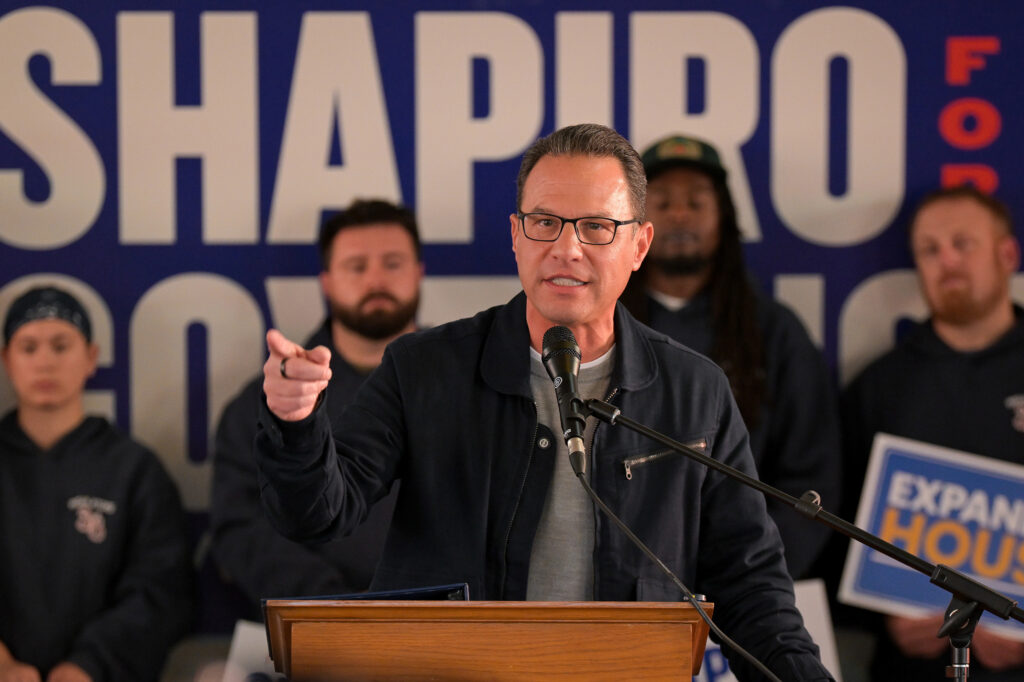
Pennsylvania Gov. Josh Shapiro went from fast-tracking hyperscale data centers to removing them from the permitting program in about 20 months.
1/5Grist· Sara Herschander, Vox· Nov 1
America's biggest wind project took 20 years, and permits were only part of it
SunZia, proposed in 2006, now sends New Mexico wind power across the Southwest to over 1 million homes. A 2015 permit didn't get it built; rising demand, a new route and $11 billion did.
Why it matters · SunZia is a leading exhibit in the US permitting-reform debate, and its history suggests faster approvals alone won't deliver megaprojects without financing, demand and local agreement.
Know this first
Context from the editor, not the article · 28 sec
1 · Why long power lines matter
The best wind and solar sites are often far from big cities. Connecting them takes high-voltage lines running hundreds of miles, which must secure land rights across public, private and tribal areas and several jurisdictions.
2 · Who approves interstate lines
No single US agency has the final word on most interstate power lines. Federal agencies rule on federal land, while states generally decide siting within their borders, so a project can win in Washington and still stall locally.
3 · The value of night wind
California produces abundant solar power by day, but output collapses at sunset while demand continues into the evening. Clean power that arrives after dark therefore fills a gap that more solar panels alone cannot.
2/5Heatmap· Jael Holzman· Oct 30
Data center industry poll disputes that midterms are a "data center election"
An industry group's poll says most voters won't pick national officials over data centers. Digital Realty's Kevin Gundersen defended it to Heatmap, conceding the industry was slow to respond, but offered anecdotes rather than data.
Why it matters · Local acceptance helps determine where large new electricity loads get built, so it matters whether the backlash is a campaign-season theme or a lasting political constraint.
Know this first
Context from the editor, not the article · 26 sec
1 · Why data centers became political
Lawrence Berkeley National Laboratory estimated data centers used 4.4% of US electricity in 2023 and could reach 6.7–12% by 2028. Rapid growth has raised public concerns about power bills, water, land and AI itself.
2 · Local approval decides projects
Data centers typically need local land-use approval, often from a city or county board. A project can therefore be blocked locally, or by a temporary ban, whatever voters decide in national races.
3 · Opposition versus vote-moving
Pollsters separate how people feel about an issue from whether it decides their vote. Voters can dislike something intensely in one place while it ranks low nationally, so one finding does not settle the other.
3/5Grist· Rachel Santarsiero, Mother Jones· Oct 31
EPA sets December 31 shutdown for its public web archive
The Environmental Protection Agency says it will take its online archive offline on December 31, 2026, removing tens of thousands of documents. It points users to three snapshots, whose completeness is unclear.
Why it matters · Past rules, reports and contamination records underpin climate research and regulatory oversight; losing easy access makes it harder to check what the agency did and said.
Know this first
Context from the editor, not the article · 18 sec
1 · What agency web archives do
Government websites change as policies and administrations change. A web archive keeps older pages and documents online after they leave the live site, so people can see what an agency previously published, measured or proposed.
2 · Freedom of Information Act
FOIA is the US law that lets anyone request federal agency records. It is a fallback when documents are not published, but requests can be slow, and agency offices handling them often carry backlogs.
The EPA's online archive homepage, where the agency posted its notice about the archive's retirement.
The Environmental Protection Agency (EPA) plans to decommission its online web archive on December 31, 2026. The date appeared a few weeks ago in a banner on the archive's page, and the agency did not respond to a request for comment, so its reasoning is unknown.
4/5Inside Climate News· By Lauren Dalban· Oct 29
Energy Department Offers $42 Million to Revive a Pipeline New York Rejected
The Trump administration is backing a 125-mile gas pipeline that New York blocked in 2016. Its developer wants federal regulators to waive the state's permit, testing New York's climate commitments during a governor's race.
Why it matters · This tests how much power a state keeps over gas infrastructure when Washington pushes back, and how far affordability concerns can bend a major state's climate policy.
Know this first
Context from the editor, not the article · 32 sec
1 · States' say over pipelines
The Federal Energy Regulatory Commission approves interstate gas pipelines, but Section 401 of the Clean Water Act lets states grant or deny water quality certification. A denial can stop a federally approved project unless the state is found to have waived that right.
2 · New York's climate law
New York's 2019 climate law set economy-wide emissions cuts of 40 percent below 1990 levels by 2030 and 85 percent by 2050. Meeting them means displacing gas from buildings and power, which puts new gas infrastructure in tension with the law.
3 · The Northeast gas bottleneck
5/5Latitude Media· Maeve Allsup· Oct 29
Gas turbines sold out past 2030, and prices have roughly quadrupled
The big three gas turbine makers are sold out into the 2030s, driven by data center demand. Prices have reached $2,500/kW. Analyst Tony Brough rates which newcomers can fill the gap, and predicts prices will fall.
Why it matters · Turbine scarcity now shapes how quickly data centers can get power, what firm gas capacity costs, and which stopgap technologies get built, possibly leaving stranded orders if demand slows.
Know this first
Context from the editor, not the article · 29 sec
1 · Why data centers want gas
New large loads can wait years in the queue to connect to the grid. Some developers therefore build their own on-site gas generation, called behind-the-meter power, because speed to operation matters more than the cost of the electricity.
2 · Turbines versus engines
A gas turbine burns gas in a continuous flow to spin a shaft. A reciprocating engine uses pistons, like a car engine, and comes in smaller units. Aeroderivative turbines are power-plant machines adapted from jet engine designs.
3 · Reading the capacity numbers
Turbine makers quote factory output in gigawatts of equipment per year. Data center forecasts usually quote total load by a future date. One is an annual flow and the other a cumulative total, so they compare only loosely.
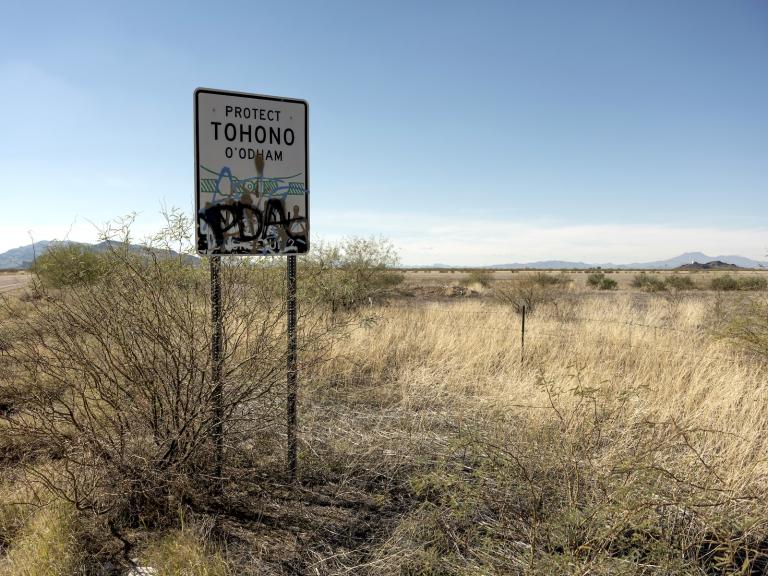
A graffitied sign reading "protect Tohono O'odham" reflects tribal opposition; the nation's lawsuit over the route remains pending.1 / 2
SunZia, the largest wind farm in the Americas, came online this year, about two decades after it was first proposed. More than 900 turbines are scattered across a patch of central New Mexico roughly the size of Chicago, feeding a 550-mile transmission line across the Southwest. The project powers over 1 million homes, some as far away as California, and generates more than the Hoover Dam.
It set records for wind power in California's supply as soon as it started, because this New Mexico wind picks up after sunset, when solar output fades. Its developer, 1, says it will have avoided about 9 million metric tons of carbon dioxide by next summer. The article doesn't explain that calculation, and gives no capacity or price figures.
Permits, or money?
SunZia was proposed in 2006, when US electricity demand was nearly flat, and went 17 years without breaking ground. It has become a poster child for 2, the push to speed up infrastructure approvals. Senator Martin Heinrich of New Mexico cites it as a reason for co-sponsoring a Senate plan to coordinate federal and state reviews of interstate lines, so one state can't stall them. New Mexico did reject the first route in 2018.
But SunZia had its federal permit by 2015. "And then nothing happens," says David Hayes, a senior Interior Department official under President Obama, who argues financing was the bigger obstacle. The states weren't fully on board, and the permit required burying parts of the line near the 3, a military testing area, which raised costs. Pattern's CEO, Hunter Armistead, adds that there simply wasn't enough market need then.
The two explanations overlap, since a permit condition drove up the cost. Still, a federal permit alone didn't produce a project.
What changed
Pattern, first responsible only for the wind farm, took over the line in 2022. A revised federal permit that avoided the missile range came in under two years. Demand forecasts also jumped, to 25 percent growth by 2030 and 78 percent by 2050, and $11 billion in financing followed.
Where compromise worked, and where it didn't
The original route ran through a crowded 4, a corridor used by migrating birds such as sandhill cranes. Pattern moved lines north, placed some beside existing infrastructure and added markers to make wires visible. That helped win unanimous approval from New Mexico's regulators in 2022, after their earlier rejection.
Arizona's route didn't change. It crosses the San Pedro Valley, sacred to the Tohono O'odham Nation and San Carlos Apache Tribe, whose lawsuit is still pending. Armistead says that segment was already settled under the original permit.
Advocates now point to the 5, a 280-mile line due to start construction next year, as a less contentious model. It has won praise even from a longtime SunZia opponent, but it remains unbuilt and unproven.
SunZia, the largest wind farm in the Americas, came online this year, about two decades after it was first proposed. More than 900 turbines, each as tall as the Statue of Liberty, are scattered across a patch of central New Mexico roughly the size of Chicago. They feed a 550-mile transmission line across the Southwest, and the project now powers over 1 million homes, some as far away as California.
The project generates more electricity than the Hoover Dam, and it set records for wind power in California's supply as soon as it started up. The reason is timing: the wind in this part of New Mexico picks up after sunset, just as California's solar output fades. 1, the developer, says SunZia will have kept about 9 million metric tons of carbon dioxide out of the atmosphere by next summer. That is the company's own figure, and the article doesn't explain how it was calculated.
The Vox story, republished by Grist, also gives no capacity in gigawatts, price per megawatt-hour or list of buyers, so the project's economics can't be judged from it.
The problem: a project ahead of its market
When SunZia was proposed in 2006, coal was still America's most important source of electricity and demand had been nearly flat for years. The project then went 17 years without breaking ground. It spanned five presidential administrations, an ownership change, a major reroute, a standoff with a military base and lawsuits from tribes and environmental advocates, some still pending.
Megaprojects like this are hard for a structural reason. They need huge areas and very particular conditions, such as wind that blows at night. Getting the power to cities then means crossing long corridors of open land, which in the Southwest often means running up against places sacred to tribal communities.
Was permitting really the bottleneck?
SunZia has become, in the article's words, a poster child for 2, the push to speed up approvals for energy infrastructure. Senator Martin Heinrich of New Mexico cites it as a key reason he co-sponsored the Senate's new plan. That plan would make it easier for the federal government to coordinate approvals for interstate lines, so they run concurrently and one state can't drag its heels. There is real evidence for this reading: New Mexico rejected the initial route in 2018.
David Hayes, deputy secretary of the Interior under President Obama, argues that financing held the project back even more than red tape. His main evidence is chronology. After the Obama administration put SunZia on a "fast track," it received its federal permit in 2015. "And then nothing happens," Hayes said.
The article gives three reasons for that stall:
State resistance. The two states on the route, New Mexico and Arizona, were not fully on board.
Cost. The federal approval required burying parts of the line near the 3, a military testing area, which added to an already large bill.
Demand. Hunter Armistead, Pattern's CEO, says that even with perfect permitting it might have been impossible to build then, because "we really didn't have the market need for it."
These explanations overlap. The costly undergrounding was a permit condition, and state holdouts are themselves a permitting problem, so red tape helped create the financing problem. The sequence still matters for the reform debate: a federal permit alone did not produce a project, and investors weren't willing to fund one on the promise of a clean-energy future.
What changed around 2022
Three things moved together.
First, ownership. Pattern, originally responsible only for the wind farm, took over the transmission line in 2022, placing both under one developer.
Second, the route. SunZia applied for a revised federal permit that avoided the missile range, and had it in under two years. That is quick by federal standards, though the article doesn't say what made it so.
Third, the market. US electricity demand is now projected to rise 25 percent by the end of this decade and 78 percent by 2050. Then came $11 billion in financing from global financial institutions, pension funds and clean energy investors, followed by a few years of construction. The article doesn't discuss whether the expanded federal clean-energy tax credits passed in 2022 played a part, a notable gap given the timing.
The compromise that worked
The clearest success came in New Mexico, over birds. The original route crossed one of the country's most congested 4 corridors, the paths migrating birds follow. That worried advocates for species such as the sandhill crane, which winters in the region and has already come close to extinction once, partly because early 20th-century dam building dried out local wetlands. Collisions with power lines are believed to kill millions of birds a year nationwide.
Sarah Rose of the National Audubon Society, a bird conservation nonprofit, says the original developer, Southwestern Power Group, was largely unmoved by these concerns, while Pattern engaged in good faith. Under the new plan, lines were moved north, built beside existing infrastructure, or fitted with visual warning systems and 5, markers that make wires easier to see. Those changes helped persuade the 6, which had rejected the project partly over these concerns, to approve it unanimously in 2022.
The compromise that didn't
Arizona is a different story, because the route there stayed the same. It passes through the San Pedro Valley, sacred to Indigenous communities including the Tohono O'odham Nation and the San Carlos Apache Tribe. Local environmentalist Peter Else, who has fought the project in court for years, compares the new lines to "an ecological homicide." He wanted them placed beside existing lines, as was done in parts of New Mexico.
Armistead says that wasn't possible, because the Arizona segment "was already put to bed" and the original federal permit had judged the valley "the least impactful and best route." A lawsuit from the two tribes, accusing SunZia and the Interior Department of failing to protect the valley, remains pending. So the project's collaborative reputation holds only "at least in some places," as the article itself concedes.
What it leaves open
The authors argue that climate change threatens these landscapes more than any single power line, pointing to tens of thousands of US deaths from extreme heat over the past two decades and a Southwest megadrought unseen in 1,200 years. They conclude the country will need many more such projects, some with hard tradeoffs.
Their next test case is the 7, a 280-mile high-voltage line through Arizona and New Mexico due to start construction next year. It has worked so deliberately to limit ecological and cultural harm that even Else calls it a good idea. But it has not yet been built, and one critic's approval doesn't show that early compromise makes projects faster or cheaper. SunZia offers one case with several causes tangled together, not a tested blueprint.
Remember
A federal permit in 2015 didn't start construction; building began only after ownership, route and market demand changed.
Early compromise over bird routes helped reverse a state rejection, but Arizona's unchanged route still faces a tribal lawsuit.
The 9-million-ton carbon figure comes from the developer, and the article gives no capacity, price or methodology to check it.
Days before the November 3 US midterm elections, a data center industry group has released a poll arguing this is not a "data center election." Heatmap's Jael Holzman pressed one of the people behind the release on whether that holds up.
The claim
1, a data center developer, released the poll as part of 2, a pro-data center group that also includes developers 3, 4 and 5. Heatmap reports that it found most voters aren't expected to choose national officials based on a politician's data center stance.
The article gives no percentages, sample size or pollster, so the result can't be judged from this piece. The sponsors also have an obvious stake in the conclusion.
Gundersen's case
Kevin Gundersen, Digital Realty's head of public affairs, argues the backlash is new and partly about something else. Data centers long clustered in places such as Northern Virginia and Santa Clara, California, and drew little attention. Now a "historic build-out" is reaching communities that have never hosted one, and "Data centers have become a physical manifestation of people's fears about AI." As he puts it, "It's hard to stop ChatGPT," but a building can be a target.
He says "some polls," which he doesn't name, put the issue outside voters' top five. And he says projects "are going to go on regardless of the election," because demand for digital services keeps rising.
What he concedes
Gundersen admits the industry "wasn't quick enough to talk about the benefits." It will now have to spend "lots of time and energy and resources" catching up, he says. He accepts that some communities will say no, and says he could better judge electoral effects after the vote.
Where the evidence is thin
Holzman cites TV ads attacking candidates for supporting data centers. Gundersen himself puts that spending at "tens of millions of dollars." His counterevidence is mostly communities he has visited and long-standing acceptance in places like Santa Clara, which says little about the new areas he identifies as the flashpoint.
He points skeptics to unions such as the 6, whose members benefit from the construction work. He offers no job counts or tax figures, and electricity prices, grid capacity and water never come up.
How to read it
These positions can coexist. Data centers could rank low as a national voting issue while still sinking projects at county boards or shaping particular races, and a poll about national officials addresses only the first. That is this digest's reading, not the article's. Election results will offer a partial test of how much the issue moved voters.
Days before the November 3 US midterm elections, a data center industry group has released a poll arguing that this is not a "data center election." Heatmap's Jael Holzman pressed one of the people behind the release on whether that claim holds up. The answers reveal more about how the industry sees its position than about voters.
The poll and who is behind it
1, a data center developer, released the poll on Wednesday, October 28, as part of 2, a pro-data center organization. IFA also includes the developers 3, 4 and 5. According to Heatmap, the poll found that most voters are not expected to choose their national elected officials based on a politician's stance on data centers.
That is all the article reports about the results. It gives no percentages, sample size, wording, pollster or margin of error, so the claim can't be assessed from this piece. The poll's sponsors also have a direct commercial interest in its conclusion, a point Holzman raises in the interview.
Gundersen's argument
Kevin Gundersen, Digital Realty's head of public affairs, answers Holzman's opening question with a flat "No." His case has three parts.
The backlash is new, and it is partly about something else. For most of the industry's history, he says, data centers clustered in Northern Virginia, Santa Clara in California, and big urban markets such as New York and Chicago, and few people paid attention. Now a "historic build-out" is reaching communities and states that have never hosted one. He argues that "Data centers have become a physical manifestation of people's fears about AI." As he puts it, "It's hard to stop ChatGPT," but a building can be a target.
Local experience differs from the national story. He says he has sat in communities that want these projects, including places that have lacked new revenue sources for decades. He also says that, according to "some polls" he doesn't name, data centers aren't among the top five issues on people's minds day to day.
Demand will carry the projects regardless. "These developments are going to go on regardless of the election," he says. His slogan is "we have the truth and physics on our side," by which he means that use of digital services keeps rising, from phones to Ring cameras and Oura rings.
What he concedes
The more useful material is in the admissions. Gundersen says the industry "wasn't quick enough to talk about the benefits" and that people were caught by surprise by polling on AI earlier this year. "Perhaps we should've been doing this sooner," he says, adding that the industry will have to spend "lots of time and energy and resources" to recover ground.
He also accepts that people's concerns are real in places new to data centers, and that some communities will decide against them. Asked whether he has seen any electoral effects, he says Digital Realty hasn't seen any tied to its own developments locally "yet," and that he could answer better after the election.
Where the evidence runs thin
Holzman points to the obvious counterexample: television advertising that attacks candidates for past support of data centers. Gundersen himself says elected officials are spending "tens of millions of dollars" on ads against the industry, though he gives no breakdown. Campaigns rarely pay for messages they expect to fail, although the article has no evidence on whether these ads work.
Asked for his evidence, Gundersen offers communities he has visited and a history of acceptance, citing Santa Clara. By his own account, though, the conflict is centered on places that have never hosted data centers, so a long-established tech hub says little about them.
Asked why a skeptic should believe a developer, he points to unions such as the 6 (IBEW), and says, "Don't take my word for it." The IBEW's members stand to gain from construction work, so it is an ally rather than a neutral witness. He then acknowledges that his answer "might sound like a cliché."
He cites hard-hat jobs and small businesses such as food trucks, but the interview contains no job counts, tax receipts or duration of employment. Construction jobs and permanent operating jobs can differ greatly in number, and that distinction matters for any host community weighing a project. The article doesn't address it.
Also absent are electricity prices, grid capacity and water use. Those topics don't come up in the interview at all, though they are central to the wider data center debate.
How to read it
The claims aren't necessarily in conflict. Data centers could rank low as a national voting issue while still decisively sinking projects at county boards or shaping particular races. A poll about national officials speaks only to the first question. That is this digest's reading rather than a finding in the article, but it means the poll doesn't show that local opposition is minor.
Gundersen predicts "some kind of level set on both sides of the aisle" after the election. He says governors of both parties have largely avoided 7 (temporary bans on new projects) because they see the benefits, and that officials acknowledge those benefits privately. Those claims are unverified here, but the coming weeks offer a partial test: whether candidates who ran against data centers win, and whether officials keep up that position once in office.
Remember
Low national salience and fierce local opposition can both be true; a national poll can't settle siting fights.
Gundersen's acceptance example is a long-established hub, while he places the current conflict in communities new to data centers.
An industry spokesperson admitting it responded too late is the interview's firmest signal, more telling than the undisclosed poll.
The archive holds tens of thousands of documents dating back to the 1990s: fact sheets, environmental reports, policy changes and regulatory actions. It stopped being updated years ago and has dead links and weak search, but the reporting by Rachel Santarsiero for Mother Jones says much of it is not available elsewhere.
Its uses have been practical. When Donald Trump's first administration deleted most of the EPA's climate change web pages, the archive kept them public. It also held records of the long investigation into contamination at Marine Corps Base Camp Lejeune in North Carolina, which the EPA added in 1989 to its 1, the federal roster of the most serious contaminated sites. Those records helped residents and service members evaluate chemical exposures.
This has happened before
The first shutdown plan came from President Biden's EPA in January 2022, which cited upkeep costs. A 2 (FOIA) request, the legal route for obtaining federal records, put the cost at roughly $2 million a year. It was filed by Gretchen Gehrke, co-founder of the 3, a group that tracks changes to federal environmental data.
Environmental groups, historians and librarians objected. After five months, the EPA pushed retirement back a year to July 2023. In March 2023 it dropped the end date altogether, and the archive stayed online until the new deadline appeared.
Will anything survive?
The EPA says historical information remains in its "4," copies of its website frozen at particular moments. Gehrke argues that "three discrete snapshots" are no substitute and that the information would be "lost forever." The logic is straightforward: anything posted and removed between capture dates would be missed.
Lauren Harper of the Freedom of the Press Foundation raises a separate cost. She says researchers and lawmakers would have to "flood an already underwater FOIA office" to see records that were once public.
What remains unknown
The article relies on critics of the closure, without an EPA response. It does not say what the snapshots contain, how much of the archive they cover, or whether the files will move elsewhere. It also does not address independent copies, such as those held by the Internet Archive's 5, whose coverage tends to be uneven. "Lost forever" is therefore a warning, not an established result. The last reversal took about 14 months of pressure; this deadline is about two months away.
The Environmental Protection Agency (EPA) has updated a banner on its online web archive to say the archive will be decommissioned on December 31, 2026. The change, made a few weeks ago, drew little notice. Rachel Santarsiero, reporting for Mother Jones in a piece published by Grist, contrasts that with the public way EPA Administrator Lee Zeldin has attacked the agency's power plant pollution standards and federal methane rules.
The EPA did not respond to her request for comment, so the article gives no agency rationale for the new date.
What would go
The archive holds tens of thousands of EPA documents going back to the 1990s, including fact sheets, environmental reports, policy changes and regulatory actions. It has not been updated for years, and it is not an elegant tool: researchers report dead links and limited search. Its value is that much of the material is, according to the article, not available anywhere else.
The article gives three examples of how it has been used:
Tracking policy shifts. Readers can follow fights over power plant pollution through George W. Bush's 2003 1 and Barack Obama's 2015 2, two efforts to overhaul the standards for those plants.
Preserving removed material. During Donald Trump's first term, the administration deleted most of the EPA's climate change web resources. The archive kept those defunct pages publicly accessible.
Supporting people at contaminated sites. In 1989, after an investigation found military operations had contaminated soil, sediment, surface water and groundwater at Marine Corps Base Camp Lejeune and a neighboring air station in North Carolina, the EPA added the base to its 3, the federal roster of the country's most serious contaminated sites. Records of the decades-long investigation stayed on the archive. The article says they helped residents and service members evaluate chemical exposures and overcome doubts about the agency's effectiveness.
A closure attempted before
This shutdown was first proposed under a different administration. In late January 2022, President Biden's EPA said it would discontinue the archive because upkeep was too costly. A 4 (FOIA) request by Gretchen Gehrke put the cost at roughly $2 million a year. Gehrke co-founded the 5 (EDGI), a group that tracks changes to federal environmental data, and has followed such changes for a decade.
Environmental groups, historians and librarians objected. EDGI and the American Society for Environmental History called the plan "alarming" and warned of a "tremendous gap" in the historical record. The retreat then came in stages:
Date
What the EPA did
January 2022
Announced it would discontinue the archive
About five months later
Delayed retirement by one year, to July 2023
March 2023
Changed the notice to say "retiring," with no end date
Autumn 2026
Set expiration for December 31, 2026
For scale, and not from the article: the EPA's annual budget has recently been on the order of $9 billion, so $2 million is about 0.02%. The cost figure dates from 2022, and the article gives no current number.
The dispute over snapshots
The EPA's page says historical information can still be found in its "6," frozen copies of its website taken at particular moments. That is the crux of the disagreement, and the article cannot settle it.
Gehrke says the archive's information is "irreplaceable" and would be "lost forever." She argues that the EPA should "expand and systematize the archive, not throw it away and expect that three discrete snapshots will suffice." Her objection follows from how snapshots work: a page that was added and removed between capture dates would not appear in any of them. Santarsiero writes that, given the administration's cuts to federal programs and staff, it is hard to know whether all or even a fraction of the contents will survive.
Lauren Harper, who holds the Daniel Ellsberg chair on government secrecy at the Freedom of the Press Foundation, points to a second cost. Even where records survive, she says, researchers and lawmakers would have to "flood an already underwater FOIA office" to see documents that were once public. A click would become a records request.
What the article leaves open
The critical voices are all from one side, and the EPA's silence means its reasoning is untested. The article does not say which three snapshots exist, how much of the archive they cover, or whether the documents will be transferred elsewhere, such as to the National Archives.
It also does not address independent copies. Crawlers such as the Internet Archive's 7 capture many government pages, though that coverage is generally uneven, particularly for documents buried deep in a site. So "lost forever" is the advocates' warning rather than an established outcome. No one has published a page-by-page comparison, at least not in this account, that would show how much is unique to the archive.
The earlier reversal offers some precedent: public pressure moved the agency's position over about 14 months, with no end date from March 2023 until this autumn. This time there are about two months before the deadline.
Remember
The closure plan is bipartisan in origin: Biden's EPA proposed it first in 2022, citing costs of about $2 million yearly.
Snapshots capture moments, not continuity, so material posted and removed between captures may disappear.
Even surviving records may cost more to reach if access shifts to backlogged public-records requests.
Pennsylvania's shale fields produce abundant gas, but pipeline capacity into New York and New England is limited. In cold weather, when heating demand peaks, those bottlenecks can push up regional prices. That is the main economic argument for new lines.
Map of the proposed Constitution and Northeast Supply Enhancement pipelines in the New York region.
The US Department of Energy plans to direct up to $42 million to the 1, a proposed 125-mile natural gas line from Pennsylvania to upstate New York. The money would come through the 2, a 1950 law that lets Washington support private production for national security, and would help cover permitting development costs.
The project had looked dead. New York rejected its water quality permit in 2016, and courts upheld that decision.
Can it bypass New York?
The developer, energy infrastructure company Williams Cos., withdrew its state applications late last year after regulators found three of them incomplete. A spokesperson for Gov. Kathy Hochul says no proposal is currently before the state, though Williams says it is still pursuing permits.
Public records show Williams has also asked the 3 (FERC), which regulates interstate gas pipelines, to reinstate the project's 2014 construction approval and waive the New York permit requirement. Environmental groups and state regulators question whether that route is lawful. The article doesn't give a timeline for a decision.
A precedent next door
Williams's other regional project, the 4 (NESE) pipeline, shows that a rejection isn't always final. New York twice rejected it over water quality. It resurfaced last year after the Trump administration briefly halted 5, an offshore wind farm near New York City, and then won New York and New Jersey permits. An appeals court later cancelled New Jersey's approval.
Trump claims Hochul agreed to allow pipelines in exchange for federal support for offshore wind. Her spokesperson denies any deal and says she is open to gas projects that meet state rules.
The election
Hochul's "all of the above" policy combines gas, at least one gigawatt of new nuclear and clean energy funding. She also delayed by a decade the deadline for cutting emissions to 40 percent below 1990 levels, while raising the eventual target to 60 percent, saying the original timetable would have driven up energy costs. Environmental groups say these moves undermine the state's progress.
Republican challenger Bruce Blakeman argues more gas infrastructure would lower bills and has floated repealing New York's 2014 ban on 6, the high-pressure injection of fluid to release gas from rock. Hochul says she won't allow fracking. The ban also faces an April lawsuit from landowners seeking to have it declared unconstitutional. A recent Quinnipiac poll has Hochul ahead by 14 points.
What's missing
Williams says its projects would deliver affordable energy and support emissions reductions. Critics cite damage to wetlands and streams, plus leaks of 7, a potent greenhouse gas. The article gives no figures for pipeline capacity, bill savings or emissions, so neither side's claims can be tested from this reporting.
The US Department of Energy has announced plans to direct up to $42 million to the 1, a proposed 125-mile natural gas line from Pennsylvania to upstate New York. The money would come through the 2, a 1950 law that lets the federal government support private-sector production in the interest of national security. According to the article, it would help the developer, Williams Cos., an energy infrastructure company, pay permitting development costs.
The project had looked finished. New York rejected its water quality permit application in 2016, and courts upheld the decision. Tanja Konwinski, whose husband bought 82 acres in Schoharie County in 2023, knew Williams held an 3 on the land but assumed the line would never be built. She and her husband had planned community agriculture programs there. Those plans have stalled, and she says she now focuses on opposing the pipeline.
The legal problem
The central question is whether the pipeline can proceed without New York's approval, and the paper trail is tangled.
The state side. Late last year, Williams withdrew its state permit applications after New York's Department of Environmental Conservation found three of them incomplete. A spokesperson for Gov. Kathy Hochul says no Constitution proposal is currently before the state. Williams says it is still pursuing state permits.
The federal side. Public records show Williams has asked the 4 (FERC), which regulates interstate gas pipelines, to do two things: reinstate the project's 2014 construction approval and waive the requirement for a New York permit.
Environmental groups and state regulators question whether the project can lawfully go ahead on that route. The article doesn't lay out the legal basis for a waiver or say when FERC might rule.
Federal money doesn't settle that question. Using the Defense Production Act for energy isn't new: President Joe Biden invoked it to strengthen domestic renewable energy supply chains, notes Joshua Sewell of the budget watchdog Taxpayers for Common Sense. Sewell nonetheless sees the current use as part of a broader effort to bypass established safeguards.
The second pipeline, and a disputed deal
Williams is also pursuing the 5 (NESE) pipeline, which would run through New Jersey into New York Harbor. Its history shows how a rejection can be reversed. New York turned down NESE's permit applications twice over water quality concerns. The project resurfaced last year after the Trump administration briefly halted construction on 6, an offshore wind farm near New York City. A few months later, NESE received permits from both New York and New Jersey, though an appeals court later cancelled New Jersey's approval.
President Trump has claimed Hochul agreed to let pipelines proceed in exchange for federal support for offshore wind. At a June press conference he said she was now "holding up" Constitution. Her spokesperson denies any such deal and says she is open to gas projects that meet state regulations. The article can't resolve that dispute, but the sequence of events is why the claim gets attention.
Williams argues the two projects would ease regional gas supply constraints and deliver reliable, affordable energy "while supporting economic growth and emissions reductions." The article gives no figures for pipeline capacity, expected effects on bills or lifecycle emissions, so that claim can't be tested from this reporting. Critics point to wetland and stream damage during construction, and to leaks of 7, a potent greenhouse gas, once a line is operating.
The governor's race
Hochul describes her policy as "all of the above," combining gas and nuclear with investment in renewables. She has directed the state power authority to develop at least one gigawatt of nuclear power and pledged state funding for clean energy.
She has also pushed back by a decade the deadline for cutting greenhouse gas emissions to 40 percent below 1990 levels, while raising the eventual reduction target to 60 percent. Her stated reason is that the original timetable would have driven up energy costs. Environmental groups say the delay and the pipeline approvals are undermining the state's progress.
Her Republican challenger, Nassau County Executive Bruce Blakeman, argues that more gas infrastructure would increase supply and lower utility bills, and he has floated repealing the state's 8 ban. A recent Quinnipiac University poll has Hochul ahead by 14 points. That lead suggests the more immediate question may be how far Hochul herself moves, which is what worries advocates even if she wins.
The fracking ban
Hydraulic fracturing, or fracking, injects fluid at high pressure to crack rock and release gas. New York prohibited it in 2014 after years of organizing over contaminated water and the effects of drilling on nearby communities. Hochul says she will not allow it.
The ban faces pressure on two fronts:
Politics. Blakeman wants it repealed, and Lee Zeldin, the Environmental Protection Agency administrator and former Long Island congressman, has also called for lifting it. Sandra Steingraber of the Science and Environmental Health Network calls the idea "laughable," arguing that candidates underestimate public opposition.
Courts. In an April lawsuit, Thomas and Madison Woodward, who say they bought upstate land in 2011 intending to frack it, seek a ruling that the ban is unconstitutional and an order barring the state from enforcing it against them. Their attorney, Tyler Fry of the Pacific Legal Foundation, a law firm focused on individual freedom and property rights, says they "made a reasonable investment" and now bear the cost of the ban.
On health, the article reports that studies have linked fracking pollution to respiratory illness and birth defects, and that the process can expose workers and nearby residents to carcinogens such as benzene and formaldehyde. It doesn't cite specific studies or effect sizes.
What remains open
The biggest gap is the one the campaign turns on: how much any of this would change what New Yorkers pay. The article quotes claims about bills from both camps but offers no estimate. One reason for caution about the fracking argument, beyond this reporting, is that neighbouring Pennsylvania already produces large volumes of gas. If the regional constraint is delivery capacity, in-state drilling wouldn't by itself remove it.
Two decisions will shape Constitution's future: whether FERC reinstates the 2014 approval and waives the New York permit, and whether any such ruling survives a court challenge. The article reports no timeline for either.
Remember
Federal money doesn't remove the legal obstacle: Constitution still needs New York's permit unless FERC's waiver route succeeds and holds up.
NESE's reversal after two rejections shows that state water quality denials can be undone when politics shift.
New York's climate retreat is already happening under Hochul, whatever the election's outcome: a 40 percent target delayed a decade.
The three dominant gas turbine makers, GE Vernova, Siemens Energy and Mitsubishi Power, are sold out into the next decade. On the Catalyst podcast, Tony Brough, president of Dora Partners & Company, which tracks the turbine market, set out what that shortage is doing to prices and who might fill the gap. The numbers are his estimates.
The squeeze
Brough expects 126–132 gigawatts (GW) of orders in 2026, up from his earlier forecast of about 101 GW. GE Vernova holds about 53 GW of firm orders plus 63 GW of 1, where customers pay to hold a production place. Siemens Energy has about 70 GW of backlog and Mitsubishi about 35 GW. New reservations deliver in 2030–2032.
Factories are growing cautiously because, Brough says, makers fear an AI bubble. By 2030, each of the three should make 23–30 GW a year, about 75 GW combined for the whole world by host Shayle Kann's rough sum. Everyone else stays at 5 GW or less. Brough puts North American data center demand alone at 150–160 GW by 2030, though many sources will help meet it.
The price
Units of 20–35 megawatts (MW) now cost $1,900–$2,500 per kilowatt, up from about $400–$500. Makers now earn more on new units than on the 2, meaning parts and servicing, a first for the industry. Brough expects prices to settle around $800–$900.
Who fills the gap
Developers want generation 3, on their own site, because it is faster than waiting for a grid connection. Brough sorts the alternatives this way:
The outlook
Brough expects orders to decline from about 2028, partly because renewables remain the cheapest power and solar additions far outpace gas. Even his worst case, ten years out, tops 2023 orders. It is one analyst's forecast, without published data, and it leaves open how firm reservations would prove in a downturn.
The three companies that dominate gas turbines, GE Vernova, Siemens Energy and Mitsubishi Power, are sold out into the next decade, and a crowd of less conventional suppliers is rushing into the gap. On the Catalyst podcast, host Shayle Kann, who leads early-stage investing at Energy Impact Partners, went through that field with Tony Brough, president of Dora Partners & Company, who tracks and forecasts the turbine market. The figures below are Brough's estimates, given in conversation, and the opinions are his unless noted.
How full the order books are
Brough expects 126–132 gigawatts (GW) of turbine orders in 2026. His earlier forecast was about 101 GW, and the market is now running at or above his upside scenario of roughly 126 GW.
His backlog count is:
GE Vernova: about 53 GW of firm orders plus about 63 GW of 1, where a customer pays money to hold a place on the production line. Brough says GE is the only maker that reports the two separately.
Siemens Energy: about 70 GW.
Mitsubishi: about 35 GW.
That sums to roughly 220 GW. A reservation placed today delivers in 2030, 2031 or 2032, and some manufacturers told Brough that certain product lines cannot take another order for five years.
Why the makers aren't simply building more
Factories are expanding, but cautiously. Brough has GE Vernova going from about 20 GW a year to 30 GW by 2030, Siemens Energy from about 16 GW to 23 GW, and Mitsubishi nearly doubling. Baker Hughes is about doubling and Solar Turbines nearly so, but everyone outside the top three stays at 5 GW a year or less. Brough says the big makers remain wary of an AI bubble and don't want to overbuild.
Kann's rough total for the big three in 2030 is 75 GW a year, serving every customer worldwide, whether on the grid or 2 (generating on site rather than drawing from the grid). Brough puts North American data center demand alone at 150–160 GW by 2030.
Those numbers aren't directly comparable. One is yearly output and the other appears to be a cumulative total, and Brough stresses that many sources are filling the hole. But as a rough check of our own, today's 220 GW backlog equals about three years of output even at the higher 2030 rate.
What scarcity has done to price
Units in the 20–35 megawatt (MW) range now sell for $1,900–$2,500 per kilowatt (kW), against about $400–$500 not long ago. For an illustrative 30 MW unit, that means $57–$75 million rather than $12–$15 million. The article doesn't say exactly what those prices include, such as installation.
The rise has changed how the business makes money. Makers historically struggled to earn a profit on new units and relied on the 3, meaning parts and servicing. Brough says the largest now earn more on new units than on the aftermarket, for the first time in the industry's history. He expects prices to settle around $800–$900/kW, which he says is still about double what makers in this size range expected five years ago.
The challengers, ranked by Brough's skepticism
Scale matters here. Data centers mostly buy turbines of 7–100 MW, with the 14–17 MW class especially popular, followed by 4 (power-plant machines derived from jet engines) at 25–35 MW and larger units above 40 MW. Elon Musk's 300-plus MW orders are the outliers.
Small engines: useful now, first to go. Companies like Cummins and Generac sell 5, or piston-driven, generators, typically under 3 MW here. Brough describes site plans with hundreds of units, up to about 800. Kann's counterargument concerns 6, the on-site generation that carries a site until its grid connection arrives. Small units make 7 reliability, having one spare beyond what the load needs, cheaper to achieve.
An illustrative example: for a 100 MW site, 40 units of 2.5 MW need one spare, adding 2.5% extra capacity. Two 50 MW turbines also need one spare, adding 50%.
Brough accepts this for today's market. He still calls synchronizing and maintaining hundreds of machines a "logistics nightmare" and expects these orders to vanish first in any downturn.
New turbine designers: doubtful. Boom Supersonic is adapting its supersonic jet engine work, and Parallax, recently out of stealth, is designing a 10 MW turbine from scratch. Brough quotes a former GE colleague's description of a gas turbine as "a symphony in metal" and says a first-time design could take 10 to 20 years. He notes Boom "basically lost" its largest order, without giving details.
8: plausible but small. These systems use carbon dioxide held under heat and pressure as the working fluid. Brough sees the technical leap as much smaller than a new gas turbine because it draws on something close to steam turbine technology. He expects a small market impact.
Converted jet engines: the favorite. FTAI, Nova Power and at least one to three unannounced companies are turning retired aircraft engines into stationary generators. Brough sees two main engineering problems. The front fan, built for thrust, must be replaced by a way to deliver torque to a generator. The combustion system must also change, because customers don't want to burn the liquid fuel these engines were designed for. He says tens of thousands of engines could become available over the next 5–10 years.
ProEnergy takes a variant approach, keeping only the outer casing and using internal parts it designed and makes itself.
Linear generators and fuel cells: viable but small. Mainspring Energy's 9, which convert fuel to electricity without a rotating shaft, are strung in sets of 10 to give 2.5 MW. Brough says one set takes about 6,000 square feet, a footprint that could hold 30–100 MW of gas turbines. He calls scaling this "a bit of a reach". Kann also placed fuel cells such as Bloom's in this bucket, but Brough gave no separate numbers for them. Mainspring's response isn't part of the conversation.
What 2030 might look like
Brough expects orders to start declining in 2028 or after. That doesn't conflict with sold-out factories, since orders placed now fill delivery slots years ahead. Even in his worst case, annual megawatts ordered ten years from now exceed 2023 levels.
He ties the eventual decline partly to renewables. Solar capacity additions are, he says, an order of magnitude above gas turbine additions each year, and renewables are the lowest-cost electricity source globally, including in the US.
What remains open
This is one analyst's view, offered without published data. Some questions go unanswered:
How much of the 2030 data center demand will actually need gas turbines?
How firm are slot reservations if demand falls, and how much of the deposits could customers recover?
How much of this generation stays useful once grid connections arrive?
The article also doesn't test Brough's $800–$900 price forecast or give emissions or fuel cost figures.
Remember
Scarcity has reversed turbine economics: Brough says top makers now earn more from new units than servicing, a historic first.
Brough considers converted jet engines far more viable than clean-sheet turbines because the core machine already exists.
Sold-out factories and falling orders can coexist: Brough expects orders to decline from 2028 while deliveries stay booked for years.
Small 4 (piston) generators, under 3 MW: Some sites plan for hundreds. Kann notes that small units make it easier to keep spare capacity while running as 5 before a grid connection arrives. Brough agrees for now, but calls running so many a "logistics nightmare" and expects these orders to go first in a downturn.
New turbine designers, like Boom Supersonic and Parallax: Doubtful. He says designing a first turbine could take 10–20 years.
6 systems, which use pressurized carbon dioxide instead of steam: A plausible but small niche.
Converted jet engines, from FTAI, Nova Power and ProEnergy: His favorite. The fan must be replaced to deliver torque, and the combustor reworked for gas. He says tens of thousands of engines could become available in 5–10 years.
Linear generators from Mainspring Energy: A 2.5 MW set takes about 6,000 square feet, room for 30–100 MW of turbines, by his count.