Who Funded This, and Who Gets Screened · Morning Gist
Wednesday, October 145 stories · 16 min
Who Funded This, and Who Gets Screened
Today's stories ask who pays for the evidence and who it leaves out, with stops at peptides, nicotine pouches, diet soda, never-smokers' lung cancer and centenarians' microbes.
Picked from 25 new articles across 12 sources · arrow keys for other days
Today in 30 seconds
30s left
Nicotine pouch use among US adults rose from 3.4% to 5.9% in a year. An addiction doctor ranks pouches, vapes and cigarettes by harm and explains why pouches don't count as nicotine replacement therapy. story 1 ↓
FDA advisers, some with ties to the peptide industry, voted against agency scientists to make untested peptides easier to get. Users report migraines and lasting numbness. story 2 ↓
Pope Leo XIV's lung cancer points to rising cases in never-smokers. US screening rules skip them, so their tumors are usually found by chance. story 3 ↓
The trial finding diet drinks as good as water was funded by the soda industry's trade group, which also reviewed the manuscript. It's now being used against WHO advice on sweeteners. story 4 ↓
A review of 41 studies found that Akkermansia, Alistipes and Parabacteroides are consistently more common in centenarians. That's an association, not proof that these microbes extend life. story 5 ↓
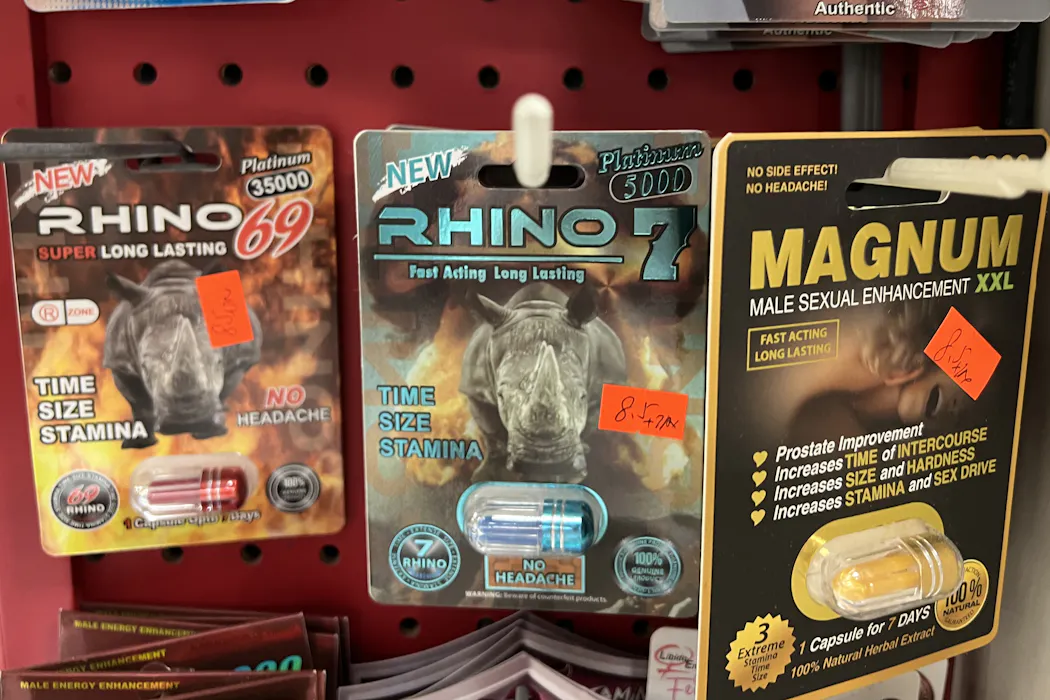
Also: gas-station 'sexual enhancement' pills often contain hidden sildenafil-like drugs that can interact dangerously with heart medications.
1/5The Conversation: Health· Emma Fenske, Assistant Professor of Medicine, Addiction Medicine, University of Colorado Anschutz; Oregon Health & Science University· Oct 13
Pouches, vapes or cigarettes: an addiction doctor ranks nicotine products by harm
Addiction physician Emma Fenske argues that burning tobacco, not nicotine itself, causes most smoking harm. Pouches and vapes probably carry less risk than cigarettes, but they aren't approved quit aids, and their long-term effects are unknown.
Why it matters · Pouch use is rising fast. Many users think pouches count as medical nicotine replacement, and that mistake can lead smokers away from treatments proven to help them quit.
Know this first
Context from the editor, not the article · 23 sec
1 · Nicotine vs. smoke
Nicotine causes addiction and raises heart rate and blood pressure. The cancers and lung disease linked to smoking come mainly from the thousands of chemicals released when tobacco burns.
2 · Nicotine replacement therapy
Patches, gum, lozenges, nasal sprays and inhalers deliver low, controlled doses of nicotine with no tobacco. The FDA approves them as medicines because trials show they help people quit smoking.
3 · Authorized isn't approved
2/5KFF Health News· Amy Maxmen· Oct 13
FDA advisers back easier access to unproven peptides as users report harms
An FDA advisory panel, newly stocked with people who profit from peptides, voted to let pharmacies make six untested peptides, including BPC-157. FDA scientists found no proof of benefit and warned of liver risks.
Why it matters · If the FDA accepts the vote, drugs never tested in humans could be prescribed through regular pharmacies, and companies would have little reason to fund the trials that could settle whether they work.
Know this first
Context from the editor, not the article · 24 sec
1 · What peptides are
Peptides are short chains of amino acids, smaller than proteins. Some are FDA-approved drugs, such as insulin and GLP-1 weight-loss medicines. Others, like BPC-157, have never finished human clinical trials.
2 · Compounding and the 503A list
Compounding pharmacies normally make custom versions of approved drugs, such as a liquid form of a pill. The FDA's 503A bulks list names the ingredients they may use, which can include some unapproved substances.
3 · The 'research use' route
Today, unapproved peptides are sold online labelled "for laboratory research" and "not for human consumption". Buyers inject or inhale them anyway, with no checks on quality or dose.
3/5The Conversation: Health· Estelamari Rodriguez, Associate Director of Community Outreach in Thoracic Oncology, University of Miami· Oct 14
Pope Leo XIV's lung cancer highlights rising cases in people who never smoked
Pope Leo XIV, reportedly a nonsmoker, had an early lung tumor removed. A thoracic oncologist says lung cancer is shifting toward women, younger people and never-smokers, who current screening rules leave out.
Why it matters · If you've never smoked, no guideline will offer you a lung scan, so knowing the other risk factors and symptoms is how early cases get caught.
Know this first
Context from the editor, not the article · 25 sec
1 · Who gets screened now
US lung screening uses a yearly low-dose CT scan. It is offered only to people aged 50 to 80 with a heavy smoking history. Never-smokers are not eligible, however high their other risks.
2 · Pack-years
Smoking exposure is measured in pack-years: packs per day times years smoked. One pack a day for 20 years equals 20 pack-years, the current US cutoff for screening.
3 · Stage drives survival
Lung cancer found early, as a small nodule, can often be cured with surgery. Most cases are found late, after symptoms appear, which is why it kills more people than any other cancer.
4/5Food Politics (Marion Nestle)· Marion· Oct 13
Soda trade group funded the trial finding diet drinks as good as water
A trial funded by the American Beverage Association found diet drinks matched water for weight loss and weight maintenance. Nutrition scholar Marion Nestle argues that the funding and the industry's involvement make it marketing, not science.
Why it matters · The study is being used to push back on WHO advice against sweeteners for weight control, so who paid for it matters when you weigh it.
Know this first
Context from the editor, not the article · 27 sec
1 · WHO's sweetener advice
In 2023 the World Health Organization issued a conditional recommendation against using non-sugar sweeteners to control weight. It relied mostly on observational studies, which can show links but cannot prove that sweeteners cause anything.
2 · Funding and study conclusions
Reviews of nutrition research have repeatedly found that industry-funded studies reach conclusions favourable to the funder more often than independent ones. That doesn't prove any single study wrong. It is a reason to read such studies closely.
3 · Who Marion Nestle is
Nestle is a nutrition and public-health professor emerita at NYU. For years she has written about how the food industry shapes nutrition science, including a regular "industry-funded study of the week" feature.
5/5Fight Aging!· Reason· Oct 13
Review of 41 studies finds gut bacteria that recur in centenarians
A systematic review of 41 human studies compared gut microbes across young, old and very long-lived people. Three bacterial groups kept turning up more often in centenarians. Whether they help people live longer is unknown.
Why it matters · Gut microbes are a proposed target for slowing aging, and this review is a map of which ones might matter. It is not evidence that changing them helps.
Know this first
Context from the editor, not the article · 25 sec
1 · What the gut microbiome does
Trillions of bacteria, fungi, viruses and archaea live in the large intestine. They help digest fiber, train the immune system, fend off pathogens and make compounds like vitamins and short-chain fatty acids.
2 · Hallmarks of aging
A widely cited framework, first published in 2013, that lists the core biological processes driving aging. A 2023 update added three hallmarks, including dysbiosis, an unhealthy shift in gut microbes.
3 · How microbes get counted
Most studies sequence DNA from stool. Cheaper methods identify roughly which bacterial groups are present. Fuller methods also reveal species and the genes they carry, which hints at what the microbes are doing.
The FDA also regulates consumer tobacco products such as vapes and pouches. Permission to sell one is not the same as approving it as a safe or proven quit-smoking treatment.
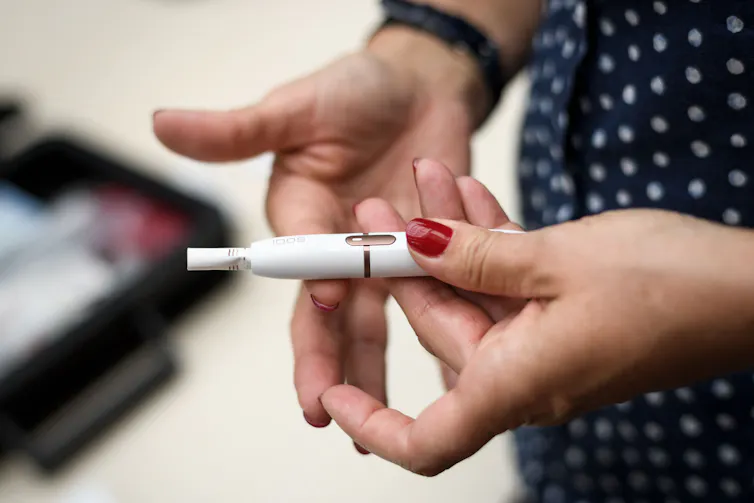
A heated tobacco device: it warms tobacco instead of burning it, which lowers toxin exposure without removing it.
A patient told addiction physician Emma Fenske that he no longer smoked because he used 1 nicotine pouches. When she suggested 2, he asked whether he wasn't using it already. In a piece for The Conversation, Fenske, of the University of Colorado Anschutz and Oregon Health & Science University, uses that exchange to explain how nicotine products compare on harm. This is an expert explainer, not a new study.
The harm is mostly in the burning
Fenske's main point is to separate nicotine from the way it is delivered. Nicotine is what makes people dependent. The toxic mix produced by burning tobacco is what makes cigarettes so deadly. Tobacco smoke is linked to about 2.5 million cancer deaths a year worldwide, along with 3 (chronic obstructive pulmonary disease) and heart disease.
Nicotine still has risks of its own. Studies have linked it to changes in heart rate, blood pressure and blood-vessel function, so products without combustion are less harmful, not harmless.
How the products compare
Vapes generally contain fewer toxic chemicals, and at lower levels, than cigarette smoke. Their aerosol contains 4, which the FDA rates "generally safe" to eat. That rating says nothing about breathing it in for years, and the effects of long-term inhalation are not well understood.
Why the distinction matters
US smoking fell from 42.4% of adults in 1965 to 11.6% in 2022. Meanwhile 6.5% of adults vaped in 2023, and past-year pouch use rose from 3.4% to 5.9% between 2023 and 2024.
Nicotine replacement therapy is FDA-approved and has strong evidence that it helps people quit. Vapes are not approved quit aids, though some evidence suggests they help some smokers. Evidence for pouches as a quit aid is limited.
Fenske says the risk of a product depends on who uses it and what it replaces. A smoker who switches to a vape cuts their exposure. A teenager or other nonsmoker who starts using pouches only adds risk.
Her advice: if you don't use nicotine, don't start. If you smoke, quitting is best. If you can't quit yet, moving away from burned tobacco probably reduces harm.
Emma Fenske, an addiction medicine physician at the University of Colorado Anschutz and Oregon Health & Science University, asked a patient whether he smoked. "Not anymore, I use 1 pouches now," he said. When she offered 2, he asked whether he wasn't already on it. In a piece for The Conversation, Fenske says that question changed how she talks to patients. She uses it to explain where pouches, vapes, heated tobacco and cigarettes sit on a scale of harm.
This is a clinician's synthesis, not a new study. It cites population figures and summarizes current understanding, but it reports no trial results or effect sizes comparing the products head to head. Read it as a careful framing of what is known and what isn't.
Two things that get confused
Nicotine replacement therapy (NRT) means patches, gum, lozenges, nasal sprays and inhalers. They deliver low, controlled doses of nicotine with none of the carcinogens in tobacco smoke. The FDA approves them as medicines, and strong evidence shows they help people quit. Zyn and other pouches are commercial tobacco products. The FDA regulates them, but it has not approved them as cessation medications. Fenske says her patient's confusion is common: a pouch delivers nicotine without smoke, but that does not make it a treatment.
Separating nicotine from its delivery
Fenske's main distinction is between harm from nicotine and harm from how it is delivered. Nicotine drives dependence. Burning tobacco leaves produces thousands of chemicals, many of them carcinogenic, and that mixture is what makes cigarettes "so extraordinarily harmful." She cites about 2.5 million cancer deaths a year worldwide, along with frequent hospital admissions for 3 (chronic obstructive pulmonary disease) and cardiovascular disease.
Nicotine on its own is not harmless. Studies have raised concerns about its effects on heart rate, blood pressure and blood-vessel function. That is why Fenske rejects a "safe versus dangerous" framing. The useful comparison is "more harmful versus less harmful."
The products, one by one
Cigarettes sit at the harmful end because they involve combustion.
E-cigarettes (vapes) heat a liquid into an aerosol. They generally contain fewer toxic chemicals, and at lower levels, than cigarette smoke. The aerosol does contain substances such as 4, which is also found in medicines, cosmetics and food. Fenske notes that the FDA's "generally recognized as safe" label applies to eating it, not inhaling it. The lungs handle substances differently from the gut, and the effects of years of inhaling propylene glycol are "incompletely understood."
Heated tobacco products ("5") come as tobacco sticks, loose-leaf chambers, capsules, pods or carbon-tipped pods. They heat real tobacco to temperatures below the point of burning, which can lower exposure to harmful substances compared with cigarettes. The 6 (Centers for Disease Control and Prevention) still considers any tobacco product harmful, because these products still deliver tobacco-derived nicotine and other toxins.
Nicotine pouches contain nicotine, flavorings and other ingredients but no tobacco leaf, which sets them apart from traditional smokeless tobacco. Users place one between the upper lip and gum, and nicotine is absorbed through the lining of the mouth. Without smoke or aerosol, exposure to many toxicants is lower. The dose can still be high: depending on the brand, one pouch may contain several milligrams of nicotine, comparable to or more than a cigarette delivers. Pouches are addictive, and their long-term health effects are "not yet well established." US pouch sales have grown sharply, especially since 2023.
The numbers behind the concern
US adult smoking fell from 42.4% in 1965 to 11.6% in 2022. Fenske attributes the drop to many measures together: accumulating evidence, education campaigns, warning labels, advertising limits, smoke-free laws, higher taxes and changing social norms. Over the same period, products that don't burn tobacco spread. In 2023, 6.5% of US adults reported vaping. Past-year pouch use rose from 3.4% in 2023 to 5.9% in 2024, an increase of about 70% in one year. That growth is why Fenske thinks the public needs a clearer idea of relative harm.
Context decides the risk
Fenske argues that a product's health effect depends on who uses it, how, and what it replaces. A current smoker who switches completely to a vape is cutting exposure. A nonsmoker who starts vaping is adding risk from zero. The same applies to pouches. Lower toxicant exposure does not make them risk-free, and adolescents who have never used nicotine have the most to lose.
On quitting, the evidence is uneven:
NRT is FDA-approved and strongly supported.
Vapes are not FDA-approved cessation treatments, though there is evidence they help some people quit.
Pouches have limited evidence as a quit aid and no approval for that purpose.
Access to help also differs by country. The UK builds quit-smoking services into the National Health Service. Australia runs state-based Quit lines and allows regulated access to some nicotine vapes through pharmacies. Many countries have little or no comprehensive cessation support, and access to NRT is uneven.
What the piece leaves open
The article gives no numbers comparing the products against each other, such as biomarker levels, disease rates or quit rates, so it supports a ranking of harm but not its size. The long-term data gap is largest for pouches, which became popular only in the last few years. The article also doesn't address dual use, where people keep smoking while also using a vape or pouch. That pattern is common in practice and could cancel out much of the benefit of switching.
Fenske's bottom line: nonsmokers have little reason to start. For smokers, quitting is best. If that isn't possible yet, moving away from burned tobacco may reduce harm, as a step toward eventually ending nicotine dependence.
Remember
Most smoking harm comes from burned tobacco; nicotine drives addiction and may affect the heart and blood vessels.
A single pouch can contain as much nicotine as a cigarette delivers, or more, and pouches have no long-term safety data yet.
Switching cuts a smoker's exposure, but a nonsmoker who takes up pouches or vapes only adds risk.
A wellness clinic advertises peptides alongside weight-loss injections, hormone therapy and Botox, showing how openly they are sold.
In July, an advisory panel to the Food and Drug Administration (FDA) voted to loosen the rules on six experimental peptides, including the popular 1, TB-500 and 2. Health secretary Robert F. Kennedy Jr.'s department had recently added doctors with financial stakes in the peptide industry to the panel. The FDA has not yet made a final decision. An investigation by Amy Maxmen of KFF Health News sets the vote against the accounts of people who say these drugs hurt them.
What the vote would change
Peptides are short chains of amino acids. Some, such as insulin, are approved drugs. These six have never been through clinical trials. Right now they are sold online as "research chemicals, not for human consumption." The panel recommended adding them to the 3, the FDA's list of ingredients that 4 may use. That would let doctors prescribe them as pharmacy-made medicines for people.
Kennedy and others in the 5 movement present this as medical freedom. Supporters say contaminated products, not the peptides themselves, cause the harms people report, so regulated pharmacies would make use safer.
What the evidence shows
FDA scientists told the panel there wasn't enough evidence that any of the six helped any condition. They pointed to possible liver damage and allergic reactions, and to a 2020 study that found signs of liver toxicity in rats and dogs given BPC-157. The case for benefit rests on animal studies, such as rats with spinal injuries regaining tail movement. On average, fewer than 1 in 10 substances that look promising in animals turn out to work in human trials.
Use is growing. An analysis of electronic health records, not yet peer-reviewed, found that more than 1,000 people have told doctors since 2020 that they used BPC-157. Most were white men.
The harms reported
The harm reports are anecdotes and unverified, but they are worrying:
A weightlifter had months of fatigue, anxiety and twitching after using BPC-157. He then had a year of spells of feeling "zero emotions."
A software engineer had two months of migraines and facial numbness after combining BPC-157 with 6.
The FDA's voluntary adverse-event reports include two people hospitalized after taking BPC-157.
At a Las Vegas anti-aging conference, two women were intubated after peptide injections.
Industry figures say hundreds of thousands of patients have had no major problems. They have not published any data to back this up.
The catch
Critics, including Scripps Research's Eric Topol, warn that if peptides can be sold without approval, nobody will pay for trials. Then nobody will learn whether they work. USC liver specialist Brian Lee voted no, noting that liver damage and cancer can take years to show up.
An advisory panel to the Food and Drug Administration (FDA) voted in July to ease restrictions on six experimental peptides, among them 1, TB-500 and 2. These compounds are promoted on wellness and longevity podcasts for muscle repair, gut problems and more. Shortly before the vote, health secretary Robert F. Kennedy Jr.'s Department of Health and Human Services (HHS) had appointed doctors with financial stakes in the peptide industry to the panel. The FDA has not issued a final decision. An investigation by Amy Maxmen of KFF Health News puts the vote alongside a group of users who say the drugs harmed them, and whose accounts are drowned out in the policy debate.
The regulatory question
"Peptide" means a molecule built from amino acids but smaller than a protein. Dozens of peptide drugs are FDA-approved, including insulin and GLP-1 weight-loss medicines. BPC-157 and the others in this story are not, because they have never completed clinical trials.
Today they are sold through a gap in the rules. Online vendors label them "solely for laboratory research" and "not intended for human consumption," and customers use them anyway. One user in the article, a school worker, bought BPC-157 and retatrutide (another unapproved peptide) from a lab that clearly labelled it not for human use. She injected it in her kitchen.
The panel recommended adding the six peptides to the 3. This is the list of ingredients that 4 may use to make drugs for patients. Compounding pharmacies usually make variants of approved drugs, such as a liquid version of a drug sold only as pills. Being on the list would let doctors prescribe these peptides as pharmacy-made medicines, with no FDA approval and no research-only warning.
Kennedy has openly supported this. On Joe Rogan's podcast he called himself a "big fan" of peptides. Elsewhere he said the FDA should assess science but "not tell physicians what they can and cannot prescribe." Leaders of the 5 movement frame this as medical freedom. They also argue that contaminated gray-market products, not the peptides themselves, cause the harms, so regulated pharmacy production would protect people. HHS says all panel members meet FDA ethics rules and that "FDA — not podcasts or politics" decides the list.
What FDA scientists presented
The vote went against the FDA's own scientists. They concluded there wasn't enough evidence that any of the six improved any condition. They highlighted possible liver damage, allergic reactions and other serious effects. They cited a 2020 study that found signs of liver toxicity in rats and dogs injected with BPC-157. They also presented reports from the FDA's adverse-event database. These reports are brief, voluntary and unverified, so they cannot prove that a drug caused harm, but they flag problems worth checking. In one, a 36-year-old woman was hospitalized in December after taking BPC-157 for weight control and a skin condition. In another, a 48-year-old man was hospitalized with a "life-threatening" condition.
The evidence for benefit comes from animals: rats with spinal injuries regained tail movement after BPC-157, and old mice given MOTS-c could run longer. The article notes that on average fewer than 10% of substances that look promising in animal studies prove effective in human trials. "You've got to show clinical benefit in humans: Does it work?" said Peter Lurie, a former FDA official who now leads the Center for Science in the Public Interest. He also argues that the listing would distort the purpose of 503A and mislead buyers into thinking trials back these drugs. He adds that oversight of compounding pharmacies is often lax, and they have been cited for contamination.
What users report
Use is spreading. An unpublished, not yet peer-reviewed analysis of millions of de-identified electronic health records found that more than 1,000 people have told doctors since 2020 that they used BPC-157, mostly white men. That counts only people who mentioned it to a doctor.
The harm accounts are anecdotes, and the article presents them that way:
Dylan Meetze, a weightlifter, started BPC-157 nasal spray after hearing neuroscientist Andrew Huberman discuss it. By day three he felt "underwater." He had months of fatigue, anxiety and eye and muscle twitching. A year later he still had spells of feeling "zero emotions," which users call 6.
Dominik E., 46, took the "Wolverine Stack," BPC-157 plus 7, named after the fast-healing Marvel character. Within days he had an excruciating migraine and numbness on the left side of his face. The migraines lasted two months.
Promoters cite much larger numbers in the other direction. MAHA influencer Gary Brecka said "twenty million people" had taken peptides without adverse events. Brigham Buhler, who owns a compounding pharmacy and clinic that sell peptides, says hundreds of thousands of patients have had no major adverse event. Neither offered data that could be checked. "If influencers and companies really believe these peptides are helping people," Topol said, "they should put their profits back into rigorous research." On Reddit, people who report harms are often told the cause was contamination, a preexisting condition or misuse. Several moved to a private Discord group instead.
The trade-offs
The strongest scientific worry is about incentives. Drugmakers spend millions on trials because approval is the only legal way to sell a drug. If compounding provides a legal market without approval, "the chances of clinical trials getting done now are diminished," says Eric Topol of Scripps Research. The panel's minority made a related point about slow-developing harms. USC liver specialist Brian Lee said liver damage and cancer might not show up for years without proper studies.
Cancer is a plausible concern given how these peptides are thought to work. Deepak Srivastava of the Gladstone Institutes designed a trial of TB-4 for heart-attack repair that screened volunteers for early cancer, because TB-4 triggers blood-vessel growth and cell migration. Both processes could feed a tumor. Huberman has said the same on air, advising users to watch for "tumor growth."
Not every researcher opposes the change. Pinchas Cohen of USC, who is trying to bring MOTS-c to market, thinks the attention might draw investors to fund trials. He calls it "the new reality."
The article leaves several questions open. It does not say when the FDA will rule, how common harms really are, or whether contamination or the molecules themselves explain the reported cases. Without trials, nobody can answer those questions.
Remember
FDA scientists found no evidence that the six peptides help any condition; the advisory panel voted for wider access anyway.
Claims of 'no adverse events' among hundreds of thousands of patients come with no published data.
Fewer than 10% of compounds that look promising in animals turn out to work in human trials.
Drugs that block specific genetic changes driving a tumor, such as EGFR or ALK alterations.
Low-dose CT scan showing a lung tumor as a white nodule, the kind of finding screening aims to catch.
The news
On Oct. 13, 2026, the Vatican's disclosure that Pope Leo XIV has lung cancer drew attention to a group people rarely link with the disease. The pope reportedly doesn't smoke. His tumor was found early, as a small lung nodule, and removed with surgery. Estelamari Rodriguez, a lung cancer specialist at the University of Miami, uses the case to argue that lung cancer patients increasingly look like him rather than the stereotypical older male smoker.
This is expert commentary, updated from a 2023 piece. It reports no new study, and some of its figures may be dated.
The numbers
Lung cancer kills more women each year than breast, ovarian and colorectal cancer combined.
Over 44 years, rates rose 79% in women and fell 43% in men (American Lung Association).
About 20% of women with lung cancer never smoked, a higher share than among men.
Younger women are now diagnosed more often than younger men. The article doesn't say what age range counts as "younger."
Why
Part of the shift is timing: women started smoking later than men, so their cancer peak came later. Women also smoked filtered cigarettes. Filtered smoke reaches deeper into the lung and is linked to 1, a cancer of the gland cells and now the most common type. Some studies suggest women are more vulnerable to tobacco carcinogens, but that is not settled.
For people who have never smoked, the risks the article names are:
secondhand smoke
2, a radioactive gas that can build up in homes
asbestos
air pollution
workplace chemicals such as silica and nickel
family history
Families with many cases point to inherited risk, but no specific gene has been identified yet.
The screening gap
US screening uses a yearly 3, a chest scan using a fraction of the usual radiation. Since 2021, the 4 (the panel that sets screening recommendations) has advised it for adults aged 50 to 80 with at least 20 "5," for example a pack a day for 20 years, who still smoke or quit within 15 years. That change was expected to make 40% more women eligible. But fewer than 6% of eligible people get screened, compared with over 70% for mammograms. Never-smokers aren't eligible at all, so their tumors are usually found by chance.
Treatment and delay
Caught early, lung cancer can be cured with surgery. Later on, targeted drugs (which block a tumor's specific genetic drivers) and immunotherapy have improved outlook. Never-smoking women often do relatively well. The problem is delay. Cough, breathlessness, fatigue and back or shoulder pain are easy to dismiss in a young nonsmoker, by the patient and by the doctor.
Rodriguez calls for earlier recognition of symptoms, wider screening and genetic testing of tumors. The article doesn't say how screening for never-smokers would choose who gets scanned.
The news
On Oct. 13, 2026, the Vatican's disclosure that Pope Leo XIV has lung cancer drew attention to a group many people don't link with the disease. The pope is reportedly not a smoker. His tumor was found as a small lung nodule and removed surgically. Estelamari Rodriguez, a thoracic oncologist at the University of Miami, uses the case to make a broader point. Over the past 15 years, she writes, lung cancer has increasingly struck women, younger adults and people who have never smoked. The screening system was not built to find them.
A caveat first: this is an expert commentary, an updated version of a piece published in February 2023. It reports no new study. The figures are population statistics, mostly from the American Lung Association, and the article does not always cite their sources. Some may predate the update.
The shifting picture
The headline numbers:
Lung cancer is the leading cause of cancer death in women. It kills more women each year than breast, ovarian and colorectal cancer.
Over the past 44 years, lung cancer rates rose 79% in women and fell 43% in men, according to the American Lung Association.
For the first time, more young women than young men are being diagnosed. The article doesn't define "young" or cite the study behind this.
About 20% of women with lung cancer have never smoked, a higher share than among men.
Most people diagnosed today are not active smokers. That group includes former smokers as well as never-smokers.
Why women's rates rose
Rodriguez gives several explanations, which differ in how strong the evidence is.
Timing. Women took up smoking in large numbers later than men did. Their peak in smoking-related cancers therefore arrived later. This is the best-established factor.
Filters. Women's smoking rose when filtered cigarettes were standard. Filtered smoke tends to be inhaled more deeply and reaches the outer parts of the lung. That is linked to more 1, a cancer of the mucus-producing gland cells, and today the most common type of lung cancer.
Susceptibility. "Some studies suggest" women are more vulnerable to carcinogens in tobacco smoke, including secondhand smoke, and may develop cancer after fewer years of smoking. The hedge matters. This is a debated idea, not a settled one.
Risk beyond cigarettes
For never-smokers, the article lists:
secondhand smoke
2, a radioactive gas that seeps from the ground into homes
asbestos
air pollution
workplace inhalants such as arsenic, beryllium, cadmium, silica and nickel
family history
The risks from vaping and marijuana smoke are "still under study."
On genetics, Rodriguez is careful. Studies of families with many lung cancer cases have pointed to possible susceptibility genes. She compares them to 3, the inherited genes that raise breast and ovarian cancer risk. But researchers "have yet to identify specific mutations" that predispose people to lung cancer. The hope is that this work will produce 4, measurable signals in blood or tissue, that could flag high-risk people for early testing. That does not exist yet.
The screening gap
Screening means a yearly 5. A CT scan builds a 3D image of the chest from X-rays, and the low-dose version uses a fraction of the usual radiation. The 6 (USPSTF), the panel whose recommendations shape what insurers cover, widened eligibility in 2021. It now covers adults aged 50 to 80 with at least 20 7 of smoking (for example, one pack a day for 20 years) who still smoke or quit within the past 15 years. Researchers estimated the change would increase the number of eligible women by 40%, because it reaches younger people with less smoking exposure.
Two problems remain. First, uptake is very low. Over 70% of eligible women get breast cancer screening, but under 6% of eligible smokers get lung screening. The article doesn't say what year that figure is from. Second, the criteria are built entirely on smoking. A never-smoker with radon exposure or a strong family history has no route in. Their tumors, Rodriguez writes, "are often only found by chance," as an incidental finding on a scan done for some other reason.
For context the article doesn't give: some countries are testing broader criteria. Taiwan, where many lung cancers occur in never-smokers, has trialed screening based on family history and other risks. Whether this works in lower-risk Western populations, without causing too many false positives and unnecessary biopsies, is an open question. That cost is why guidelines limit screening to people with a high enough risk.
Diagnosis and treatment
Early-stage disease like the pope's can be cured with surgery, whether or not the patient smoked. For advanced disease, Rodriguez points to two classes of drugs that have improved outlook:
Targeted therapies, which block the specific genetic changes driving a tumor
Immunotherapies, which help the immune system attack cancer
Women tend to fare better than men, she says, especially never-smokers whose tumors carry treatable molecular changes. From general knowledge, these are often mutations in genes such as EGFR or ALK, which are more common in never-smokers. That is why testing tumors for genetic markers before choosing treatment is now standard.
Delay is the main problem. Lung cancer symptoms are easy to mistake for other conditions:
a persistent cough
shortness of breath
overwhelming fatigue
pain in the back, chest or shoulder
Rodriguez says younger patients may put up with symptoms longer, and doctors may not think of lung cancer in a young person who never smoked. She reports this from her own clinic. It is an observation, not measured data.
What's left open
Rodriguez proposes three steps:
recognizing symptoms earlier
widening screening eligibility
routine biomarker testing to choose treatment
The article doesn't say how a never-smoker screening program would decide who qualifies. It doesn't measure how much of the rise in never-smokers is real and how much reflects more incidental findings on CT scans. And it doesn't put numbers on the absolute risk for a never-smoker. That risk is still far below a heavy smoker's, which is the main reason guidelines haven't changed. The story of rising cases is persuasive, but the evidence on how best to respond is still thin.
Remember
About 20% of women with lung cancer never smoked; US screening rules exclude never-smokers entirely.
Under 6% of eligible people get lung screening, versus over 70% uptake for mammograms.
No specific inherited lung cancer gene has been found yet, so genetic risk testing isn't available.
The University of Leeds recently announced a "major trial" called SWITCH, published in the British Journal of Nutrition. It found that diet drinks sweetened with aspartame, 1 and 2 worked as well as water for losing weight and keeping it off. The release says the results "do not support concerns" that these drinks disturb appetite or cause long-term metabolic harm. Marion Nestle, a nutrition scholar at NYU, picked it as her "industry-funded study of the week." The 3 (ABA), the US soft-drink industry's trade group, paid for it.
Why the timing matters
In 2023 the 4 (WHO) advised against using non-sugar sweeteners for weight control. That advice rested largely on 5, which track what people consume but can't prove cause and effect. The Leeds press release says outright that SWITCH, a long, 6, "can be used to inform global guidelines." Nestle's point is that the people who most want that advice overturned are the people who paid for the evidence against it.
How involved the funder was
The press release disclosed the funder, and Nestle gives it credit for that. The paper's own funding statement goes further. It says the ABA had no role in designing or running the trial, analysing the data or interpreting the results. But it also says:
An ABA representative was given the chance to review the manuscript before it was published.
A 7 paid by the ABA helped write the paper, "under the direction of the authors."
An outside firm, 8, audited the data at the clinical site.
Every listed author reports ABA funding for this study, paid to the University of Liverpool. Several also report other industry ties outside this work. One holds a Coca-Cola-funded PhD studentship. Others report honoraria from the International Sweeteners Association and Mars, and consultancy or grants from Novo Nordisk, AstraZeneca and others. Nestle's verdict: "an industry study through and through… marketing, not science."
Reading it fairly
Nestle's post is about who paid for the study and how it was written up. It is not a critique of the methods. She doesn't report the weight changes, the number of participants or how long the trial ran, and she doesn't point to any flaw in the design or analysis. A randomised trial is a stronger design than the observational studies behind the WHO advice, and the independent data audit counts for something. Even so, industry money and a funder-paid writer are good reasons to read the full paper yourself before treating it as the answer on sweeteners. Also note what the trial compared: diet drinks against water, not against sugary drinks.
The University of Leeds recently put out a press release about a "major trial" called SWITCH, now published in the British Journal of Nutrition. The release says the trial gives long-term clinical evidence that non-nutritive-sweetener (NNS) drinks work as well as water for weight loss and long-term weight maintenance. NNS drinks are sweetened with low- or no-calorie compounds; the ones tested contained aspartame, 1 (acesulfame K) and 2. The release's conclusion: "Overall, the results do not support concerns that NNS beverages disrupt appetite regulation or have long term metabolic harm."
Marion Nestle is an NYU nutrition scholar who has written for years about food-industry influence on research. A doctoral student in her department, Earlene Cruz, sent her the release, and Nestle made it her "industry-funded study of the week." The 3 (ABA), the trade group for US soft-drink makers, paid for the trial.
The policy target
The press release says plainly what the results are for. In 2023 the 4 (WHO) advised against using non-sugar sweeteners for weight control, citing uncertainty in the 5 the advice drew on. Observational studies follow what people already consume, so they can show associations but can't separate the effect of sweeteners from everything else that differs between people who drink diet soda and people who don't. The release calls SWITCH "long-duration, randomised controlled evidence which can be used to inform global guidelines." In a 6, participants are assigned to groups by chance, which is a stronger way to test cause and effect.
Nestle's reply is short: "Isn't it handy that the results can be used to argue against the WHO's advisory." Her broader argument is that this is why beverage companies and their trade groups pay for research. The industry most wants to undo a WHO warning on sweeteners, so it pays for a trial that might do the job.
What the disclosures say
Nestle credits the press release for naming the funder. She says reading the paper itself was worth it, because its funding statement shows the funder was more involved than a one-line acknowledgement would suggest:
Stated independence. The ABA "was not involved in the design, conduct, analysis of data or interpretation of this trial," and the authors made the final decisions on content.
Manuscript review. A representative of the ABA "was provided with the opportunity to review the manuscript."
Funded writing. The paper "was developed with the assistance of a 7, funded by the American Beverage Association, under the direction of the authors."
The competing-interests section is long. Every listed author reports ABA funding for this study, paid to the University of Liverpool. Several report other industry links outside this study:
One author, Cristina Radu, holds a Coca-Cola-funded PhD studentship, supervised by co-author Charlotte Hardman.
Hardman also reports honoraria from the International Sweeteners Association, the International Food Information Council and Mars's nutrition advisory council.
Jason Halford, who is at Leeds, reports consultancy fees from Boehringer Ingelheim, DuPont and Mars, honoraria from Novo Nordisk, and an advisory-board role with DuPont. He is also treasurer of the World Obesity Federation.
Another author, Daniel Cuthbertson, reports research and consultancy funding from Novo Nordisk and AstraZeneca.
Several authors also hold public grants, including from the European Commission's SWEET project, which studies sweeteners and sweetness enhancers. One reports funding from the WHO itself.
Nestle concludes: "This is an industry study through and through. I consider it marketing, not science."
How much weight to give it
Two things are tangled together here, and it helps to pull them apart.
The design. A long randomised trial is a stronger test of whether diet drinks affect weight than the observational studies behind the WHO advice. An outside audit of the trial data is a real safeguard. Nestle doesn't claim the data were manipulated or the analysis was wrong, and her post doesn't critique the methods. It also doesn't report the results: no weight changes, no participant numbers, no exact trial length. Readers can't judge the size or precision of the "equivalence" from her post. They would need the paper for that.
The influence. Concern about industry funding is not just a matter of taste. Reviews of nutrition research have repeatedly found that industry-funded studies reach conclusions favourable to the sponsor more often than independent studies. That bias can enter in ways a data audit won't catch: which question gets asked, what the comparison group is, which outcomes are reported up front, and how the conclusions are worded. A funder who reviews the manuscript and pays the medical writer has a say in that last step, however the arrangement is described.
The comparison group also limits what the trial can show. SWITCH compared diet drinks against water. "As good as water" for weight is a narrower claim than "diet drinks are harmless." It says nothing directly about health outcomes other than weight and appetite, such as cardiometabolic disease over many years. The WHO's uncertainty was partly about those longer-term risks.
What's left open
Nestle's post is a short opinion piece. It gives no answer to the questions that would settle how much the trial counts: how many people took part, who they were, how long they were followed, what the effect sizes and confidence intervals were, and whether the results hold up against independent trials. Until then, the fair reading is this: SWITCH is a randomised trial, funded and partly shaped by the industry it favours, and it's being used directly to push back on WHO guidance. Both facts belong in any judgement of it.
Remember
Every SWITCH author reports ABA funding; the funder also reviewed the manuscript and paid the medical writer.
The press release openly pitches the trial as evidence against the WHO's 2023 advice on non-sugar sweeteners.
Nestle criticises the funding, not the methods; she reports no effect sizes or design flaws.
Measuring the proteins a microbial community actually produces, which is closer to its real activity.
Image: Fight Aging!
A new 1 pulled together 41 human studies that compared gut microbes across age groups, including people who lived to 100 or older. Three bacterial genera kept turning up more often in centenarians: Akkermansia, Alistipes and Parabacteroides. The open-access paper was highlighted by Reason at Fight Aging!, a blog that argues for treating aging as a medical problem.
The problem
The gut microbiome is the community of microbes in the large intestine. It helps digest food, regulates immunity, and makes vitamins and 2 (SCFAs), compounds produced from fiber that support the gut lining. With age, microbes that drive inflammation tend to replace those that make beneficial compounds. In 2023 this shift, called 3, was added to the "4," a widely used list of the core processes behind biological aging. Reason notes that studies suggest the shift may begin in the mid-30s. It is still unclear what drives it.
The review's authors stress that findings are inconsistent. The size and even the direction of age-related changes vary with health, diet, lifestyle, medications and the population studied.
What the review found
Most of the 41 studies (24, or 58.5%) used 5 sequencing. This reads one marker gene and roughly identifies which bacteria are present. Thirteen (31.7%) used 6, which reads all the DNA in a sample and shows what genes the microbes carry. Three used both methods, and one measured microbial proteins directly. Some studies sampled known longevity hotspots, but geographic coverage was limited.
Apart from the three genera enriched in centenarians, older adults and long-lived people each showed their own patterns. Studies that looked at functions found differences in:
amino acid breakdown
vitamin production
pathways possibly tied to immune regulation, inflammation and the gut barrier
The excerpt gives no effect sizes, such as how much more abundant these bacteria were or how consistently they appeared.
Caveats
These are observational comparisons. Centenarians may carry these bacteria because they are healthy, or because of their diet or fewer medications, rather than the other way round. Most of the data is coarse 16S sequencing, and the populations studied were narrow.
What's next
Reason sees this kind of data as a starting map for reshaping the microbiome to slow aging. Today's tools involve a trade-off. Probiotics give some control over which microbes are added, but their effect fades. 7, which moves a donor's stool into a recipient, can change the community permanently but gives little control over the result. He hopes future methods will combine both. The review itself tests no treatment.
A new open-access 1, Gut microbiome and healthy ageing: a systematic review of literature, pulls together human studies that compared gut microbes between age groups, including people who lived to 100 or beyond. It was covered by Reason at Fight Aging!, a blog that argues for treating aging as a medical problem. The review included 41 studies. Across them, three bacterial genera kept turning up more often in centenarians: Akkermansia, Alistipes and Parabacteroides.
The problem: a slow shift with many suspects
The gut microbiota is the community of bacteria, archaea, viruses, fungi and parasites living in the large intestine. These microbes help digest food, regulate immune responses, keep out pathogens, and make neurotransmitters and other useful compounds. These include vitamins, amino acids, secondary bile acids (bile acids that gut bacteria have chemically modified), and 2 (SCFAs). SCFAs are produced when bacteria ferment fiber, and they help feed and maintain the gut lining.
With age, the community tends to shift in an unhelpful direction. Reason summarizes it this way: microbes that provoke inflammation and tissue dysfunction become more common and displace those that produce beneficial metabolites. In 2023, researchers updated the "3" framework, a widely used list of the core processes behind biological aging, and added three new hallmarks. One was gut 4, defined as lower microbial diversity plus more pro-inflammatory species.
It is hard to tell which of many possible causes drives this shift. Reason notes that studies suggest meaningful change begins as early as the mid-30s. At that age, little is known about which mechanisms of aging dominate. The review's authors add that the size and even the direction of age-related changes vary widely between studies. Diversity, for example, does not move consistently. The changes depend on health status, diet, lifestyle, medications and which population was studied. In healthy agers, the microbiome tends to stay relatively stable.
What the review did
The authors searched the literature for human studies reporting specific compositional differences between age groups, and 41 met their criteria. Some sampled recognized longevity hotspots, but the authors say geographic coverage was still limited.
The studies measured microbes in different ways, which matters for how far their results can be compared:
5 gene sequencing (24 studies, 58.5%) reads a single marker gene that all bacteria carry. It is cheap and identifies bacteria roughly to genus level, but it says little about what they do.
Shotgun metagenomics (13 studies, 31.7%) sequences all the DNA in a sample. It resolves species and shows which genes, and therefore which possible functions, are present.
Both methods were used in 3 studies (7.4%).
Metaproteomics (1 study, 2.4%) measures the proteins microbes actually produce. That is closer to real activity than gene content is.
Because most studies used 16S sequencing, most of the evidence describes who is there at a coarse level rather than what they are doing.
What came out
The review's Table 2 lists taxa (bacterial groups at any level of classification) found increased or decreased with age or in long-lived groups. Reason says "some commonalities emerge." The most consistent finding was that centenarians had more Akkermansia, Alistipes and Parabacteroides. Older adults and long-lived people each showed their own distinct patterns as well.
Studies that looked at functions found differences in pathways for breaking down amino acids and for making vitamins. They also found differences in pathways that may relate to immune regulation, inflammation and maintaining the gut barrier.
The excerpt gives no effect sizes, such as how much more abundant these genera were or how consistent the differences were across studies. Nor does it give how many of the 41 studies reported each taxon. Those details would be in the paper's tables.
How much weight to put on it
This is a synthesis of observational comparisons, and several limits follow from that:
Association, not cause. Centenarians may carry these bacteria because they are healthy, eat differently, or take fewer drugs, rather than living long because of the bacteria. Reverse causation and confounding by diet and medication are real possibilities, and the authors list those same factors as drivers of variation.
Mixed methods. Results from 16S and shotgun sequencing are not directly interchangeable. Most of the functional findings rest on the minority of studies that used shotgun or protein methods.
Narrow populations. Limited geographic coverage matters because the microbiome varies strongly with diet and region.
Inconsistency. The authors themselves stress that the direction of change varies between studies. A few recurring genera is a modest signal.
Where this could lead
Reason sees data like this as groundwork for deliberately reshaping the microbiome to slow aging. He describes current tools as a trade-off. Probiotics give some control over which microbes are added, but their effect is temporary. 6, in which stool from a healthy donor is transferred into a recipient's gut, can change the community permanently but gives little control over the result. He hopes future methods will make durable changes from a single treatment while allowing precise control over the resulting mix.
That is his view of where the field could go. The review itself does not test any intervention. The questions it leaves open are whether these bacteria help people stay healthy or simply mark people who already are, and whether adding them to an older person's gut would change anything that matters clinically.
Remember
Akkermansia, Alistipes and Parabacteroides were the most consistently enriched bacteria in centenarians across 41 studies.
Most studies used coarse 16S sequencing, so claims about what the microbes do rest on few studies.
The data show association only; longevity could shape the microbiome rather than result from it.
Heated tobacco ("5") warms tobacco instead of burning it, which lowers exposure. The 6 still treats every tobacco product as harmful.
Nicotine pouches contain no tobacco leaf and are tucked between lip and gum. Toxic exposure is low, but one pouch can hold several milligrams of nicotine, as much as a cigarette delivers or more. They are addictive, and their long-term effects are not yet established.
At a Las Vegas anti-aging conference, two women were intubated after being injected with peptides and vitamins. Nevada's pharmacy board cited the doctor running the booth and colleagues for prescribing without a state license.
Data audit. A third-party company, 8, audited data at the clinical site for accuracy and integrity.