Kestrels, Skulls and Brazil's Underrated Kitchens · Morning Gist
Monday, October 194 stories · 13 min
Kestrels, Skulls and Brazil's Underrated Kitchens
Four pieces about paying attention: to a country's cooking, a kestrel overhead, the words you were given, and the dead behind a museum's skulls.
Picked from 27 new articles across 14 sources · arrow keys for other days
Today in 30 seconds
30s left
After seven trips, Tyler Cowen calls Brazil's food underrated, crediting productive farming and immigration, and names one regional cuisine as overrated. story 1 ↓
Iris Murdoch's 1970 The Sovereignty of Good treats seeing a kestrel as a moral event: beauty in nature and art trains self-forgetting. story 2 ↓
The Marginalian turns 20; Maria Popova rearranged words from her book Figuring into twenty lessons, set in ceramic bowls raffled for donations. story 3 ↓
Grieving a mother's murder, Daniel Barnum writes from among the Mütter Museum's skulls, including a shepherd's engraved with his survived suicide attempt. story 4 ↓
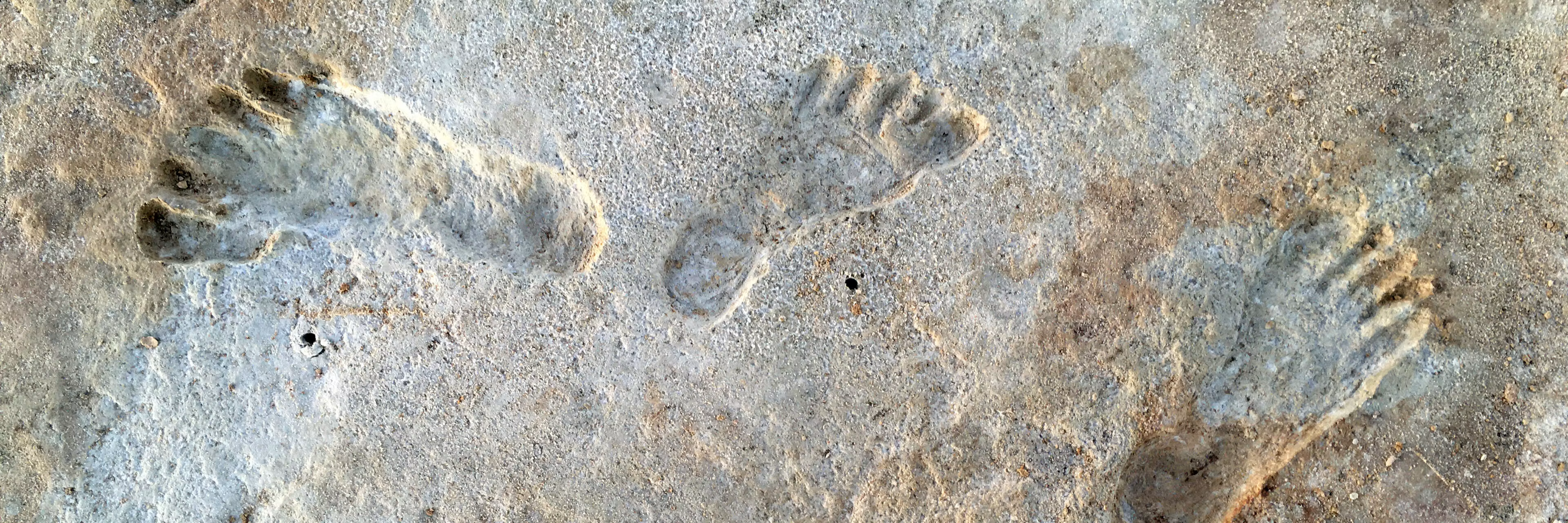
White Sands footprints from the last ice age's peak show early Americans lived through wild climate swings.
1/4Works in Progress· Oct 19
Tyler Cowen argues Brazil is one of the world's most underrated places to eat
The economist Tyler Cowen argues that Brazil has some of the best food anywhere. He credits productive farms, short supply chains and large Japanese and Italian immigrant communities. Few foreign tourists means restaurants cook for locals.
Why it matters · It treats a country's cuisine as an economic result, shaped by farm productivity, migration and who the customers are, and that way of looking works for any place you visit.
Know this first
Context from the editor, not the article · 29 sec
1 · Who Tyler Cowen is
Cowen is an economist at George Mason University. He co-writes the Marginal Revolution blog and has long written about food through economics, including the book An Economist Gets Lunch. He looks for good meals by asking how incentives shape them.
2 · Brazil's farm boom
Brazil became one of the world's biggest farm exporters over the past fifty years. It is a leader in soy and beef. Much of this came from research that made the poor soils of its central savanna, the Cerrado, productive.
3 · Brazil's immigrant communities
From the late 1800s onward, millions of Italians and, after 1908, many Japanese came to Brazil, mostly to work on coffee plantations in the southeast. São Paulo became the center of both communities.
2/4The Marginalian (Maria Popova)· Maria Popova· Oct 18
Iris Murdoch's case that beauty trains us to be good
Maria Popova revisits the philosopher Iris Murdoch's idea of "unselfing": losing your preoccupied ego in nature or great art. Murdoch argued this is the core of goodness, since goodness means seeing the world truly.
Why it matters · It treats looking at a bird or a painting as moral practice, which connects aesthetics, attention and ethics in a way most moral theories skip.
Know this first
Context from the editor, not the article · 23 sec
1 · Who Iris Murdoch was
A British novelist and Oxford-trained philosopher (1919–1999). The Sovereignty of Good, published in 1970, is a short book of three essays and her best-known work of moral philosophy.
2 · What she argued against
Mid-century moral philosophy, both existentialist and analytic, centred ethics on the free choosing will. Murdoch argued that morality happens mostly before choice, in how carefully and honestly we see.
3 · Plato's cave
In Plato's Republic, prisoners in a cave mistake shadows for reality. One escapes, adjusts slowly to daylight, and at last looks at the sun, Plato's image for the Good itself.
3/4The Marginalian (Maria Popova)· Maria Popova· Oct 18
Maria Popova marks 20 years of The Marginalian with word-and-lichen bowls
To mark twenty years of her essay site, Maria Popova rearranged words from her first book into twenty short life lessons, cast them in resin over lichen inside clay bowls, and is raffling them off.
Why it matters · It's a small, odd idea about identity: you are less the material you were given than how you arrange it. It also shows how one writer keeps a free site running.
Know this first
Context from the editor, not the article · 25 sec
1 · What The Marginalian is
A long-running, one-person website of essays by Maria Popova on books, philosophy, science and art. Until 2021 it was called Brain Pickings. It has no ads and runs on reader donations.
2 · Her book Figuring
Popova's 2019 book Figuring follows linked lives in science and art, among them the astronomer Maria Mitchell, Emily Dickinson and Rachel Carson. It asks how people find meaning and love.
3 · Erasure and found poetry
In these forms, a poet takes an existing page and keeps or rearranges a few of its words to make a new text. Popova's "bird divination" process seems to belong to this family.
4/4Longreads· Daniel Barnum· Oct 15
A writer grieving their mother's murder finds work among the Mütter Museum's skulls
Daniel Barnum learned their estranged mother had been murdered, then took a front-desk job at Philadelphia's Mütter Museum of medical oddities. A grave-robbed skull with a strange inscription became their way of thinking about surviving grief.
Why it matters · The essay asks what museum specimens owe the dead people they came from, and what it means to keep living when the world goes on around a loss.
Know this first
Context from the editor, not the article · 28 sec
1 · The Mütter Museum
A 19th-century medical teaching collection run by the College of Physicians of Philadelphia, the oldest professional medical body in the US. It shows skeletons, preserved organs and anatomical oddities, and draws about 150,000 visitors a year.
2 · Hyrtl and phrenology
Phrenology was a popular 19th-century theory that the shape and bumps of a skull revealed a person's character and mental abilities. The Austrian anatomist Josef Hyrtl collected skulls of documented individuals to show that it was false.
3 · Tsantsa
Shrunken human heads made by Indigenous peoples of the Amazon, mainly the Shuar of Ecuador and Peru. Collectors bought them heavily in the 19th and 20th centuries, so where many came from is now murky.
Tyler Cowen, an economist who has just come back from his seventh trip to Brazil, makes a confident claim in Works in Progress: Latin America is "the great underdiscovered frontier for top-tier food," and Brazil is one of its high points. What makes the column more than a travel note is his reasoning. He treats good food as something economics can explain.
Why the food is good
Cowen starts with farming. Brazil has plenty of space and fertile land, its farms are very productive, and its supply chains are fairly short, so ingredients reach the kitchen plentiful and fresh. He calls this "a progress story." Brazilian crop yields sometimes approach or even beat those of the United States, although Brazil is much poorer. He also notes that the rest of Brazil's economy has not taken up technology the way agriculture has.
The beef shows the result. Two of the three best steak meals of his life were in southern Brazil, and he would rank only Uruguay and Kobe, Japan, as possible equals.
Immigrants as an asset
Immigration is his second explanation. Brazil has about two million citizens of Japanese descent, so after Japan it may be the best country for Japanese food. In São Paulo he had a 15-course 1 (a chef's-choice tasting menu) for $110 at Kan Suke, an eight-seat restaurant with one 2. He booked it half an hour ahead. Brazil also has about 30 million people of Italian descent, the largest Italian 3 in the world. Cowen and an Italian friend from Modena agreed to rank Brazil third for Italian food, after Italy and Japan.
The tourist effect
São Paulo, Cowen says, is Brazil's dining capital. It serves food from every region of the country, yet he saw almost no foreign tourists there in four days. In his view this keeps the restaurants honest, because they cook for regular customers who know which places have a good reputation. Prices are below those in New York, Paris or London, and service at the top end is just as good. He adds that you don't need street food to find the real thing.
What he likes, and what he doesn't
He praises Minas Gerais beans, which he ranks above Mexico's; Amazonian river dishes in Belém; 4, a black-bean and pork stew that came from slavery and is now the national dish; and fruits most visitors have never heard of, such as jabuticaba and cupuaçu. Desserts are European in style and unoriginal, but well made. He makes one strong exception. The northeast's heavy coconut-and-palm-oil stews, often called 5, struck him as "mucky" and lacking clarity of flavor. He allows that his choice of restaurants may be to blame.
The column is short, a personal opinion piece rather than reporting. The economic argument is a few sentences sketched around a list of meals.
Tyler Cowen, an economist at George Mason University who has written about food for years, has just come back from his seventh trip to Brazil. In a short column for Works in Progress he argues that Latin America is "the great underdiscovered frontier for top-tier food." He says the region is affordable, has few tourists, and is "not – yet? – obsessed with Instagramming what arrives on the plate." Brazil, in his view, is one of its high points.
The column is mostly a list of meals. Running through it is an argument typical of Cowen: a country's cuisine can be explained by its economics, meaning farm productivity, migration, and who the restaurants are actually cooking for.
Farming
Cowen starts with the countryside. Brazil has plenty of space, a lot of fertile land, high agricultural productivity, and "relatively short supply chains." Put together, these mean food is plentiful and fresh. He calls this "a progress story." Brazilian farm yields sometimes approach those of the United States and occasionally beat them, even though Brazil is much poorer. He says Brazil has done "a remarkably good job integrating technology into its food sector." He adds a sharp aside: the rest of the economy mostly hasn't followed.
He doesn't explain how that progress happened. The general history is well known. From the 1970s, public agricultural research, much of it by the state agency 1, worked out how to farm the acidic soils of the Cerrado savanna. Brazil went on to become one of the world's biggest exporters of soy and beef. Cowen's point is that the benefit reaches the dinner table and doesn't stop at export statistics.
His evidence is beef. With the possible exceptions of Uruguay and Kobe, Japan, he says, Brazil has the best beef in the world. Two of the three best steak meals he has ever eaten were in southern Brazil. The best 2 he has visited, all-you-can-eat barbecue houses where waiters bring cuts of meat to the table, were on the outskirts of Curitiba. There, pasta came alongside "an impossibly large quantity" of meat.
Immigration
The second argument is about people. Brazil has about two million citizens of Japanese origin, most of them in the south, though Cowen notes there is no exact count. That makes it, he argues, one of the best places outside Japan to eat Japanese food. His example comes from June. At Kan Suke in São Paulo, an eight-seat restaurant with one 3, he ate a fifteen-course 4 (a tasting menu where the chef chooses every dish) for $110, served by the head chef himself. He booked it half an hour in advance, which he says would be hard to do at comparable places elsewhere. The other diners all seemed to be Japanese Brazilians.
The Italian community is even larger, at roughly 30 million people of Italian descent and the biggest such 5 anywhere. Cowen and a well-traveled friend from Modena, an Italian city known for its food, agreed that Brazil ranks third in the world for Italian food, after Italy and Japan. Immigrant food can also travel inside the country in surprising ways. Campo Grande, a fast-growing farming city in the center-west, is known for a local version of Okinawan soba noodles. Cowen admits that a delayed flight has so far kept him from trying it.
Regional variety
Like most big countries, Brazil has several cuisines. Cowen recommends the following:
Minas Gerais, for pork and beans. He ranks its beans above Mexico's.
Belém, in the Amazon region, for river fish, dried shrimp, duck and rice, flavored with cassava, manioc and local fruit. Few places outside the region serve these dishes.
Feijoada, which came from slavery and is linked to Rio but is now a national dish. It combines black beans, rice, collard greens, orange slices, different cuts of pork and 6, a toasted manioc flour. Cowen cooks a vegetarian version at home. He likes how the cool, sweet orange works with the sandy farofa, and notes that it costs almost nothing to make.
Fruit gets its own list: açaí, cupuaçu, caju (the "cashew apple"), soursop, jabuticaba, pitanga, pequi, umbu and others. Ordinary fruit is better too. On her first trip, his daughter said, "I have never had a banana before." He singles out hearts of palm (not technically a fruit), which in Brazil are sweet and have a texture he compares to sushi. Desserts are European in style. He finds them unoriginal but consistently good, and rates the chocolate ice cream and gelato as top-tier.
The tourist effect
The column's most interesting economic claim is about São Paulo. Cowen calls it Brazil's dining capital. It is a business city that serves food from every major region of the country, and it gets very few tourists. In four days of walking through parks and museums he saw only a few obvious foreigners. He argues this gives the dining scene "integrity," because restaurants serve regular customers who know which places are good. A restaurant that can't count on a steady stream of people passing through once has to keep its locals coming back.
Prices fit this picture. Restaurants are not as cheap as in parts of Mexico or Southeast Asia, but even in São Paulo they cost much less than in New York, Paris or London. Décor and service at the top end are just as good. He says there is no need to "go 'slumming'" for street food, except for sandwiches, since the restaurants are authentic enough. He leaves it to the reader whether that is a plus or a minus.
The dissent
Cowen does not praise everything. Northeastern dishes made with heavy coconut milk and palm oil, often sold as 7, are widely praised. In São Paulo, Rio and Salvador he found them "mucky, lacking clarity of flavor, and too heavy." He suspects they may be excellent in the rural northeast and allows that he may have chosen the wrong restaurants. His practical conclusion is that "you have to work hard" to eat well in this cuisine.
What to make of it
This is an opinion column built on one diner's experience. There are no data on yields or prices beyond his own bills. The causal story, that farm productivity, diasporas and few tourists produce great food, is suggested more than shown. Still, it's a useful way to think. It explains why you could walk into a Michelin-starred omakase with half an hour's notice, and it tells you where else to look: places that farm well, took in immigrants, and haven't yet been found by tourists.
Remember
Cowen ties Brazil's food to its farm productivity, which he says is close to US levels in a much poorer country.
Large Japanese and Italian diasporas make Brazil, by his ranking, a top country for both cuisines.
He argues that few tourists keep São Paulo's restaurants focused on locals who know which places are good.
Iris Murdoch photographed by Ida Kar; the philosopher-novelist behind the idea of unselfing.
In a new essay on The Marginalian, Maria Popova returns to an idea from the philosopher and novelist Iris Murdoch: 1. Murdoch argued that goodness depends less on what we will ourselves to do than on whether we can get out of our own way long enough to see what is actually there.
The kestrel
The idea comes from Murdoch's 1970 book 2, and its best-known passage is small. She is at her window, "anxious and resentful," brooding over "some damage done to my prestige." Then she sees a kestrel hovering. "In a moment everything is altered… There is nothing now but kestrel." When she comes back to her grievance, it seems less important.
Murdoch calls beauty, the thing nature and art have in common, "an occasion for 'unselfing.'" She says we can seek it on purpose, by turning our attention to nature "to clear our minds of selfish care." Willpower won't get us there, though. Popova points out that straining tightens the very self that is supposed to loosen. What works, Murdoch writes, is "self-forgetful pleasure in the sheer alien pointless independent existence of animals, birds, stones and trees." The key word is independent: the bird is not there for you.
Good art and bad art
Murdoch thinks art does this less reliably than nature. Most art, she writes, "actually is 3," made to flatter the self. That gives her a way to tell art apart: good art shrinks the ego and bad art feeds it. Like nature, good art has "a perfection of form which invites unpossessive contemplation," which means you can't make it into a daydream about yourself.
Good without decoration
Murdoch's Good offers no reward. She warns against its "4," among them History, God, power, freedom and reward, which she says selfishness invents to make virtue easier to sell. She calls true morality "a sort of 5," an "austere and unconsoled love of the Good," and borrows Plato's image of a pilgrim leaving the cave and finally looking at the sun.
She also allows for imperfection. We can call ordinary people and things good while knowing their flaws, and we can aim at complete goodness while being realistic about our limits. Her conclusion is that the self is "a place of illusion," and virtue is the attempt "to pierce the veil of selfish consciousness and join the world as it really is." She adds that, as a matter of human nature, the attempt never fully succeeds.
Most of Popova's piece is Murdoch's own words, linked to writers who said similar things: Emerson, Tolstoy, Oliver Sacks and Jeanette Winterson.
Maria Popova's latest essay on The Marginalian goes back to 1, Iris Murdoch's 1970 book of moral philosophy, for one idea: 2. The piece is short and mostly Murdoch quoted at length, with Popova linking her to other writers. The argument underneath is bold. Murdoch holds that the first moral act is to see accurately, and that what usually blocks accurate seeing is the self.
The problem Murdoch is answering
Murdoch was a novelist and a trained philosopher, and she wrote against a mid-century consensus that put ethics in the will. On that view the moral moment is the choice: a free agent weighs options and picks one. Murdoch thought this ignored most of moral life. In her view, by the time we choose, the work is largely done, because what we choose depends on what we were able to see. Someone eaten up by resentment or vanity sees a distorted world and chooses inside that distortion. The moral question then becomes how to see better, and the obstacle to seeing is "the fat relentless ego," a phrase from elsewhere in the book that sums up her view.
Popova frames the stakes more broadly. Seeing that there are "infinitely many kinds of beautiful lives," each led by its own ideal of the Good, means stepping outside your own idea of beauty, moral beauty included. That stepping outside is unselfing.
How it works: the kestrel
Murdoch's example is ordinary on purpose. She is at her window, "in an anxious and resentful state of mind, oblivious of my surroundings, brooding perhaps on some damage done to my prestige." Then: "suddenly I observe a hovering kestrel. In a moment everything is altered. The brooding self with its hurt vanity has disappeared. There is nothing now but kestrel. And when I return to thinking of the other matter it seems less important."
The sequence has three steps. First, attention is caught by something outside the self. Second, the self-absorbed frame is pushed out for a moment. Third, when the old preoccupation comes back, it has shrunk to a more accurate size. The kestrel has not solved her problem, but it has corrected her sense of proportion. Murdoch calls beauty, "the convenient and traditional name of something which art and nature share," an "occasion" for exactly this change of consciousness. She adds that we can seek it deliberately: "give attention to nature in order to clear our minds of selfish care."
She also adds a catch. The release can't be forced. "A self-directed enjoyment of nature seems to me to be something forced." Popova explains why: the will is "a clenching of the very self" that the experience is meant to loosen. If you go birdwatching to improve your character, you are still at the center of the scene. What works, Murdoch writes, is "a self-forgetful pleasure in the sheer alien pointless independent existence of animals, birds, stones and trees." Each adjective is chosen with care. Alien means the thing is not like you. Pointless means it serves no purpose of yours. Independent means it would exist just as well if you weren't there.
Art as a test of itself
Art can unself people too, but Murdoch says it does so less reliably: "The experience of art is more easily degraded than the experience of nature." Her verdict on most art is blunt: "A great deal of art, perhaps most art, actually is 3." Even great art "cannot guarantee the quality of its consumer's consciousness," because a reader can turn Tolstoy into a flattering daydream.
This gives her a criterion for quality, which Popova draws out. Good art strips the self down and bad art inflates the ego. Good art "affords us a pure delight in the independent existence of what is excellent." It shares with nature "a perfection of form which invites unpossessive contemplation and resists absorption into the selfish dream life of the consciousness." Popova pairs this with Tolstoy's claim that real art dissolves "the separation between himself and the artist," and with Jeanette Winterson's "active surrender" before a work. Murdoch does give some ground on the ideal: "even a shallow experience of what is great can have its effect."
A Good with nothing attached
Murdoch's Good is spare. It is hard to grasp, she says, because it has "so many 4, jumped-up intermediaries invented by human selfishness to make the difficult task of virtue look easier and more attractive: History, God, Lucifer, Ideas of power, freedom, purpose, reward, even judgment." Each one gives virtue a payoff or a story. Murdoch removes them and leaves Good in its "absolute for-nothingness." True morality, she writes, is "a sort of 5, having its source in an austere and unconsoled love of the Good." She turns to 6, where the pilgrim comes out, learns to see things by sunlight, and only "last of all is able to look at the sun itself."
That could sound impossibly strict, but Murdoch leaves room for ordinary life. "We may also speak seriously of ordinary things, people, works of art, as being good, although we are also well aware of their imperfections." Good, she says, "lives as it were on both sides of the barrier." We can aim at complete goodness and still take real, partial achievements seriously. Popova connects this to Martha Nussbaum, a later philosopher of the emotions, whom she calls Murdoch's "only worthy intellectual heir."
Murdoch states the full idea plainly. "The self, the place where we live, is a place of illusion." Calling Good "a transcendent reality," she says, means only that "virtue is the attempt to pierce the veil of selfish consciousness and join the world as it really is." She describes this as the "non-metaphysical meaning" of transcendence. It requires no heaven, only a direction of attention. She ends with an empirical claim: "this attempt cannot be entirely successful."
What the piece leaves open
Popova presents Murdoch with admiration, not argument, and some obvious questions go unasked. If unselfing can't be willed, how does anyone practise it, other than by putting themselves near kestrels and good books and hoping? How do we tell "good art" from "fantasy art" without bringing our own tastes back in? And how does a moment of attention at a window become better treatment of other people? Murdoch's book takes up some of these questions at length, and the excerpt here does not. As an introduction to a single idea, though, the essay does its job.
Remember
For Murdoch, the moral work happens mostly in what we notice, before we ever choose.
Unselfing can't be forced, because willing it keeps the self at the center.
Her test of art: good art shrinks the ego, while most art is fantasy that feeds it.
The twenty bowls together, each holding rearranged words from Figuring cast in resin over lichen.1 / 4
Maria Popova has run 1, a one-person, ad-free essay site on books, philosophy and science, for twenty years. To mark the anniversary she made something instead of writing a retrospective. She took words from her first book, rearranged them into twenty short life lessons, set them inside handmade ceramic bowls, and is raffling the bowls off. The title calls the lessons "nineteen truths and one beguiling lie." They appear only in photos of the bowls, so the text doesn't say which one is the lie.
The strangers we used to be
Popova starts with a common unease: looking back, your earlier selves feel like strangers. She means the one who had your first kiss, the one who made your worst mistake, the one who "mistook fear for love," and the one "who thought orange was a good idea." Her advice is to hold all of them with compassion, to "both mourn and celebrate that you were them but they are no longer you." Two decades of public writing is a long record left by such strangers.
Rearranging old words
She took the first page of each of the first twenty chapters of 2, her 2019 book, and applied what she calls her "3." The post doesn't explain the process. It looks like a relative of 4, where you keep or reorder words from a fixed page to make a new message. The rule is that you can't add words, only choose and arrange the ones already there.
That constraint carries her argument. "It is not the words you have, your givens, but how you configure them that makes meaning," she writes. A past self's prose, rearranged, can say something its author never meant. That is the point of the title's pun on Figuring: "refiguring."
Clay, 5 and chance
The twenty bowls are glazed in the site's colors plus blue. The words are cast in resin over lichen collected from places she has lived, from Bulgaria to Patagonia. In her account, clay teaches holding on while letting go, and lichen teaches patience and resilience.
To enter the raffle, you donate any amount ending in .20 by December 31. A $1.20 entry has the same odds as a $10,000.20 one. Popova sets this against auctions, where the rich simply outbid everyone, and calls the lottery a tribute to the role chance plays in any life.
The thin part
Most of the post is a fundraiser. Popova notes she spends hundreds of hours and thousands of dollars a month on the site with no staff. The site was called Brain Pickings until 2021. The idea worth keeping is that a self is an arrangement, and its parts can be rearranged.
Maria Popova has written 1, a free essay site on literature, philosophy and science, for twenty years. To mark the anniversary she made a ritual object instead of a retrospective essay. She took words from her own first book, rearranged them into short lessons about life, set them in handmade ceramic bowls, and is giving the bowls away through a raffle. The title promises "nineteen truths and one beguiling lie." The lessons themselves appear only in photographs of the bowls, not in the post's text, so this write-up can't quote them or say which one is the lie.
The problem she starts from: strangers in the mirror
The post opens with a familiar unease. When you look back on your life, the people you used to be feel like strangers. Popova lists them: the one who had your first kiss, the one who had your best idea, the one who made your worst mistake, the one who "over and over mistook fear for love," and, for comic relief, the one "who thought orange was a good idea."
Her claim is that you can't simply disown these earlier selves, and you can't pretend you still are them. You have to "grow arms long enough to wrap them around all those people," treating each with compassion, and "both mourn and celebrate that you were them but they are no longer you." Twenty years of a public record, which she calls "half a lifetime of learning how to live," makes this especially sharp for her. Every old post is a document written by one of those strangers.
The method: refiguring old words
Her response was to recycle. She took the first page of each of the first twenty chapters of 2, her 2019 book, starting with the prelude she numbers Chapter 0. ("Who wrote that book?" she asks, in the same spirit as her opening.) She ran each page through what she calls her "3." The words "refigure themselves into something new": a lesson she has learned, or advice "whispered by my own unconscious."
The post doesn't describe how the bird divination process works. It belongs to the family of erasure and found poetry, where a writer chooses a few words from a fixed page and arranges them into a new message. A made-up example, not taken from her bowls: a paragraph about planetary orbits might give up "you / keep / returning / to / the / light." The constraint matters. You can't add words. You can only choose and order the ones already there.
This is the argument packed into the craft. Popova writes that "life is like language — it is not the words you have, your givens, but how you configure them that makes meaning." The bowls act out that claim. The raw material is fixed, a past self's prose, yet it can still say something its author never meant. The title's pun points the same way: Figuring becomes "refiguring."
The objects: clay, 4, resin
She made twenty ceramic bowls glazed in The Marginalian's color scheme, plus blue "for its existential value and its lens on the universe." In each one she cast the reconfigured words in resin over lichen gathered from places she has lived, "from Bulgaria to Patagonia."
She gives both materials symbolic jobs. Clay, she says, teaches her "how to hold on while letting go" and how to say yes to life. Lichen teaches about "loneliness, patience, and resilience." The lichen choice fits well. A lichen is a partnership between a fungus and a photosynthesizing alga or cyanobacterium, which makes it a composite self. It grows extremely slowly and survives harsh conditions. The post doesn't spell out these biological points, but they line up with the virtues she names.
The raffle and the money
Popova frames the giveaway as a tribute to chance, "without which none of us would be who we are, or here at all." To enter, you donate any amount by December 31, as long as it ends in .20. Every entry has the same odds, whether it's $1.20 or $10,000.20. She contrasts this on purpose with an auction, which she calls a "rich-getting-richer ugliness." The amount changes only how much you support the site.
The post ends with the funding pitch. Popova says she spends "hundreds of hours and thousands of dollars each month" on the site. She has no staff, interns or assistant, and it stays free and ad-free through reader patronage. One number doesn't line up: the headline says twenty years, while the appeal says seventeen years of this level of effort. The post doesn't explain the gap. A likely reading, though not stated, is that the earliest years were lighter. She also notes the site was called Brain Pickings for its first fifteen years.
What to make of it
This is a short anniversary note and a fundraiser, not one of Popova's long essays. Readers expecting the "nineteen truths" spelled out will have to look at the photographs. The idea underneath is still worth a moment: the self as an arrangement rather than a fixed set of parts, so your past is material to rework, not a verdict. The raffle design is a small, concrete piece of thinking about fairness, using a lottery to keep money from buying better odds.
Remember
Popova's central claim: meaning comes from how you arrange your givens, not from the givens themselves.
Rearranging words from your own past writing is a way to make peace with former selves.
A flat-odds raffle, unlike an auction, keeps bigger donations from buying better chances.
Daniel Barnum's essay "Beyond the Glass," co-published by Longreads and the literary magazine AGNI, takes place in the 1 in Philadelphia. The museum is a 19th-century collection of medical specimens and human remains that draws almost 150,000 visitors a year. Barnum describes it as caught "between scientific exemplar and exploitative spectacle."
The skulls by the door
The first thing visitors see is the Hyrtl Skull Collection: 139 skulls in rows inside a cherrywood cabinet. The anatomist Josef Hyrtl gathered them to disprove 2, the 19th-century belief that skull shape reveals character. The wall text says they were "brought together." Barnum points out that this is a polite way of saying grave robbing. The skulls came from paupers' graves at hospitals, asylums and prisons, and the College of Physicians bought them in 1873.
The call
Barnum first visited to see 3, the shrunken heads made by Amazonian peoples. Soon afterward an aunt they hadn't spoken to in 15 years called from Tucson. Barnum's mother had been murdered and her body thrown in a dumpster. The aunt had known for a month and couldn't say why she waited to tell them. Memorials, a court hearing facing the killer and a box of ashes followed. On the drive away from the memorial, a friend texted a Mütter job listing: "Bad timing/great gig."
Barnum took the job at the front desk. Their state 4 would end after a year, the point when Arizona decided "grief should stop," so a full-time job with health insurance meant they could pay for therapy. They smiled on cue and, they write, managed not to cry at work "for years."
Euphemism as a way of coping
The essay keeps coming back to the phrase "a euphemistic way of saying." Barnum turns it on themself as well as the museum: "since I talked to my aunt" really means since they heard their mother was murdered. Images of the violence, built from police reports, rise up unbidden, and softer language rushes in to cover them.
A shepherd's inscription
Working there, Barnum passed the skulls almost daily. One skull's German inscription identified Geza Urmenyi, an 80-year-old Romanian shepherd. At 70 he cut his own throat, but a calcified larynx stopped the blade, and he "lived until 80 without melancholy." Barnum writes that it took them ten years, too, to become themself again, ending when they finally scattered their mother's ashes.
The essay doesn't settle the museum's ethics. It insists that "a skull can only belong to its own person," while its author made a living selling tickets to see them. It ends on an image of sanding one's own story off one's skull and being reborn into "a world without melancholy."
Daniel Barnum's essay "Beyond the Glass," co-published by Longreads and the literary magazine AGNI, is a personal essay rather than a piece of reporting. It holds together three things: a museum full of human remains, the murder of the author's mother, and the slow, unruly way grief settles into a working life. Its argument comes through images more than claims, but it does arrive at one. The dead belong to themselves, and surviving can mean carrying a story without being swallowed by it.
A museum caught between science and spectacle
The setting is the 1 at the College of Physicians of Philadelphia, a 19th-century medical teaching collection that now draws almost 150,000 visitors a year. Its staff go on late-night talk shows and the gift shop sells soaps shaped like its artifacts. Barnum describes it as "caught somewhere between scientific exemplar and exploitative spectacle." The museum knows it has a freak-show reputation and leans into curiosity anyway. The slogan at its gate reads "disturbingly informative."
The first thing a visitor sees is the Hyrtl Skull Collection: 139 skulls set in even rows in a tall cherrywood cabinet, each on a wire frame over a small balsa box with a tag. Josef Hyrtl, a 19th-century anatomist, put them together to disprove 2, the popular theory that the shape of a skull revealed character and mental ability. Barnum first thought this "one of the better reasons to collect skulls," until they read the wall text closely. "Brought together," they note, is a euphemism for grave robbing. Hyrtl and the people he paid dug skulls out of graveyards attached to hospitals, asylums and prisons, from people whose relatives couldn't afford burial. He sold the lot to the College in 1873. As a trusted institution, the College belonged to an international network of buyers for bodies, whole and in parts.
Barnum's first visit was for a special exhibit of 3, the shrunken heads made by Amazonian peoples. Most were on loan from private collectors, and it was billed as the largest group ever shown together. The author describes them as "beautiful and horrible, familiar and strange," with parrot feathers and beetle wings braided into the hair and the eyelids sewn shut. A later boss admits the exhibit drew criticism because it often wasn't clear where the heads came from or how collectors got them.
The phone call
The essay's centre is a call from an aunt in Tucson whom Barnum hadn't spoken to in 15 years. Barnum's mother's family had been estranged for generations, people "fleeing unimaginable things" who kept losing one another. The aunt tells them their mother was murdered and her body dumped in a dumpster. She had known for a month and can't explain why she waited to say so. Three days of near-paralysis follow, then a birthday hike, a third memorial service in New Mexico, a court hearing across from the killer, and a small black plastic box of ashes.
During the drive away from the memorial, a housemate texts a link to a Mütter job listing that closes the next day: "Bad timing/great gig." Barnum updates their CV in a hotel computer lab during the family pool party and counts this as one more "betrayal," like their first laugh after the news. "The world going on," they write, is "the worst betrayal."
Euphemism as a way of coping
The essay's most distinctive device is the phrase "a euphemistic way of saying." Barnum uses it for the museum ("brought together" for grave robbing) and then turns it on themself: "since I talked to my aunt," which really means since they heard their mother was murdered. Later, the word "mom" itself becomes a euphemism for the murder. The author describes a pattern they can't control. Images of the violence, built from police reports and testimony, rise up unbidden, and then softening language arrives to push them away. The museum's habit of polite wording and the grieving mind's habit work the same way.
The essay also follows how institutions put grief on a schedule. Barnum's 4 end after a year, the date "when the state of Arizona says grief should stop." That is why the job matters: going full-time brings insurance, and insurance pays for therapy. At the front desk, learning the "red button" for refunds, Barnum smiles on cue and tells themself in the mirror, "NO CRYING!" They report that they managed this during work hours "for years." They also notice that most of the staff are, in their own ways, "adult goths," and ask, "Where else would we go?"
Geza Urmenyi, shepherd
On a quiet first shift, the new hires are sent into the empty galleries, and Barnum lands in front of the skulls. The labels form "a piecemeal map of Europe, the Levant, Western Asia, and North Africa," the places Barnum's own scattered ancestors came from. In the glass they see their reflection: "My ghost between two skulls in a long line."
Over the following years they pass the case almost daily. Using German learned at an earlier job, they read one inscription. It belonged to Geza Urmenyi, 80, a Protestant shepherd from Romania. At 70 he tried to kill himself by cutting his throat, but a calcified larynx stopped the blade. He was left with a 5, an abnormal opening in the throat, and "lived until 80 without melancholy." Hyrtl recorded details like these to test phrenology's claims. Barnum instead imagines the man whole: the sunburnt nose, the exhausted face, the body that refused to let him die.
That inscription gives the essay its structure. Barnum writes that it took them ten years too to "become something like myself again," ending when they finally released their mother's ashes. They add, honestly, that without choosing an end date the grief might have gone on forever, and that sometimes they wanted it to.
What it leaves open
The essay doesn't settle the museum's ethics. It states one principle, "a skull can only belong to its own person, not a museum or any other buyer on the market," while its author earned a living selling tickets to see those skulls. It doesn't resolve that tension and doesn't pretend to. The closing image, of lifting out one's own skull, sanding off the engraved story and being "born whole again" into "a world without melancholy," is a wish, not a recovery plan. It sits uneasily between a fantasy of death and one of renewal, and Barnum leaves it there.
Remember
Barnum uses the phrase "a euphemistic way of saying" for both a museum's grave robbing and their own grief.
Bureaucracy sets a deadline for grief: Arizona's survivor benefits stopped after one year.
Records Hyrtl kept to test a theory let a writer picture one dead man as a whole person a century later.