Dark Matter, Vultures and One Pixel · Morning Gist
Thursday, October 295 stories · 14 min
Dark Matter, Vultures and One Pixel
Today's pieces are about how we come to know things: from bad numbers and blurry dots, from editors and mothers, and from the scavengers we overlook.
Picked from 21 new articles across 14 sources · arrow keys for other days
Today in 30 seconds
30s left
Zwicky's 1933 dark matter estimate was off by about 70 times. Decades of other measurements, Rubin's among them, finally settled the question. story 1 ↓
Ellah Wakatama learned to read through Narnia despite a stutter, then rebuilt Penguin's classics list and changed how African writing gets shelved. story 2 ↓
Writing in her eighties, Jungian analyst Florida Scott-Maxwell said mothers keep judging grown children because of a "painful law," not vanity. story 3 ↓
Sixteen of 23 vulture species are already threatened. Biologists warn bird flu could start a death spiral and set out monitoring and vaccination steps. story 4 ↓
A standard statistics method applied to Webb data found what drives the weather on SIMP 0136, a brown dwarf 20 light-years away. story 5 ↓
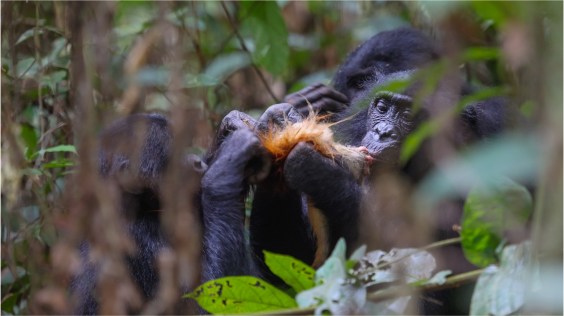
Female bonobos out-hunt the males, which undercuts old assumptions about which primates do the hunting.
1/5Big Think· Ethan Siegel· Oct 29
Neither Zwicky nor Rubin discovered dark matter on their own
Astrophysicist Ethan Siegel traces dark matter from Fritz Zwicky's flawed 1933 cluster estimate to Vera Rubin's 1970s galaxy rotation curves. He argues it was accepted because many independent lines of evidence agreed, so it has no single discoverer.
Why it matters · It shows how a correct idea can rest on bad numbers, why the skeptics were reasonable, and how science really reaches agreement: by many measurements pointing the same way.
Know this first
Context from the editor, not the article · 32 sec
1 · What dark matter is
Dark matter is a proposed form of matter that has gravity but doesn't emit, absorb or reflect light. It is not made of the protons, neutrons and electrons in ordinary matter. Astronomers infer it only from its gravitational pull on things they can see.
2 · Weighing things by motion
Objects held together by gravity move faster when there is more mass pulling on them. If you measure how fast stars or galaxies move, you can estimate the mass needed to keep them bound. Then you compare that with the mass you can see.
3 · Redshift and expansion
Light from a receding object is stretched toward redder wavelengths. This is redshift. In an expanding universe, more distant galaxies recede faster, so redshift gives both a galaxy's speed and, through the Hubble constant, its distance.
2/5Psyche· Carey Baraka· Oct 28
How Ellah Wakatama became the most powerful editor in African literature
Kenyan writer Carey Baraka profiles Ellah Wakatama, a Zimbabwean-born editor in Britain. Starting from a childhood in wartime Rhodesia, she spent decades getting African writers onto Western publishers' lists.
Why it matters · It shows how a few gatekeepers, mostly unseen, decide which books a culture keeps, and what it costs to be the lone outsider among them.
Know this first
Context from the editor, not the article · 25 sec
1 · Achebe as editor
Chinua Achebe, author of Things Fall Apart (1958), was also founding editor of Heinemann's African Writers Series. For a generation the series was the main route for African writers to reach readers, including Ngũgĩ wa Thiong'o.
2 · Rhodesia to Zimbabwe
In 1965 Rhodesia's white-minority government declared independence from Britain. Two liberation movements, ZANU and ZAPU, fought a long war against it. Free elections and independence as Zimbabwe followed in 1980.
3 · What editors do
In publishing, an editor chooses which manuscripts to buy, shapes them line by line, and argues for them inside the firm. Writers see editors as decisive. Readers rarely know their names.
3/5The Marginalian (Maria Popova)· Maria Popova· Oct 29
Florida Scott-Maxwell on why mothers never stop hoping we'll improve
Maria Popova revisits a passage from Florida Scott-Maxwell's 1968 memoir The Measure of My Days. It reads a mother's smothering and her lifelong hopes for her children as the side effects of love that won't let go.
Why it matters · It turns a common adult grievance, the parent who still judges you, into something you can understand, and that may change how you treat both your mother and yourself.
Know this first
Context from the editor, not the article · 29 sec
1 · Who Scott-Maxwell was
Florida Scott-Maxwell (1883–1979) was born in Florida, wrote plays and campaigned for women's votes in Scotland, then trained as a psychologist under Carl Jung. She wrote The Measure of My Days, a notebook on old age, in her eighties.
2 · The Marginalian's format
Maria Popova's The Marginalian, called Brain Pickings until 2021, is a one-woman site. A typical post frames a passage from an older book with her own commentary and then links it to other writers on the same theme.
3 · Winnicott and the mother
Donald Winnicott, a British psychoanalyst, argued that children need a "good enough" mother, one who is reliably present but who also lets the child meet small frustrations. That balance is the backdrop to this passage.
4/5Nautilus· Jake Currie· Oct 28
Biologists warn bird flu could set off a vulture death spiral
Biologists writing in Conservation Biology warn that H5N1 bird flu could collapse vulture populations. Fewer vultures leave more infected carcasses, which spread more disease. They propose monitoring, vaccination and biosecurity measures.
Why it matters · It shows how a scavenger nobody likes does disease-control work for everyone, and how losing it can feed the very outbreak that's killing it.
Know this first
Context from the editor, not the article · 26 sec
1 · What vultures do
Vultures are obligate scavengers. They strip carcasses quickly, and their very acidic stomachs destroy many pathogens that would otherwise linger in rotting meat and spread to other animals or to people.
2 · H5N1 bird flu
H5N1 is a highly pathogenic strain of avian influenza. Since about 2020 it has spread worldwide among wild birds and has jumped into many mammals, including dairy cattle. Scientists call this a panzootic, an animal pandemic.
3 · A collapse that already happened
In the 1990s and 2000s, India's vultures fell by over 95% after eating cattle treated with diclofenac, a veterinary painkiller. Carcasses piled up and feral dogs multiplied. The article doesn't mention this case.
5/5Nautilus· David Nield· Oct 28
Reading the weather on a starless world from a single pixel of light
Astronomers ran a standard statistics method over James Webb Space Telescope light from the brown dwarf SIMP 0136. They found its weather is a predictable patchwork of hot, thin clouds and cool, tall ones.
Why it matters · It shows how a general-purpose statistical tool can pull physical causes out of one blurry dot of light. That idea reaches well beyond astronomy.
Know this first
Context from the editor, not the article · 29 sec
1 · What a brown dwarf is
A brown dwarf forms the way a star does, from a collapsing cloud of gas, but it never gets massive enough to sustain hydrogen fusion. It glows from leftover heat and cools slowly over billions of years.
2 · Weather from a flicker
Distant worlds are too small and too far away to photograph in detail. As one rotates, cloudier or hotter regions turn toward us and away again, so its brightness at each wavelength rises and falls in a repeating pattern.
3 · Principal Component Analysis
PCA is a common statistics technique. It takes data with many measured variables and finds the few independent patterns that explain most of how the data varies, which compresses a complicated signal down to its main ingredients.
The bending of light from background objects by a massive foreground object. It lets astronomers weigh galaxy clusters directly.
Velocities of Coma Cluster galaxies measured in 1987. The wide spread is the motion Zwicky used to infer hidden mass.1 / 4
Who discovered dark matter? The usual answer names one of two people. Fritz Zwicky argued in 1933 that the Coma galaxy cluster held far more mass than its starlight showed, and he coined the term dunkle Materie, German for "dark matter." Vera Rubin's 1970s measurements of rotating galaxies brought the idea into mainstream astronomy. In a Big Think essay, first published in 2023 and updated this month, astrophysicist Ethan Siegel argues that neither one discovered it. In his view, the question misunderstands how science reaches conclusions.
Zwicky's factor of 400
Zwicky measured the 1 of individual galaxies in the Coma Cluster, about 300 million light-years away. Redshift is the stretching of light that shows how fast something is moving away from us. The cluster as a whole was receding at about 2% of the speed of light, but its galaxies swarmed around inside it at very different speeds. Keeping them bound took far more gravity than the visible stars could supply: by his count, more than 400 times as much.
Siegel stresses that Zwicky's skeptical contemporaries had good reasons:
Distance. It relied on a badly overestimated 2, the universe's expansion rate. That value implied a universe younger than the Earth.
Mass per unit of light. Zwicky assumed the cluster's stars matched the Sun. Real galaxies carry about three times as much mass per unit of light as he assumed.
Hidden ordinary matter. Some could be hiding as gas, dust or dim stellar remnants.
As these errors were fixed, the mismatch fell to 160, then 50, then below 10 once X-ray telescopes found hot gas between the galaxies. Today it is about 6.
Rubin's flat curves
Other hints persisted. Rubin used sensitive image-tube spectrographs built by her collaborator Kent Ford. With them she measured how fast stars orbit at different distances from the centers of Andromeda and about ten other spiral galaxies. If mass followed light, the outer stars should move more slowly, as the outer planets do around the Sun. Instead the speeds stayed flat as far out as she could measure.
Siegel says referees, out of inertia and in some cases sexism, pressed her to publish the data without saying what they meant. She kept presenting them anyway.
Why there is no single discoverer
By the late 1970s, Rubin's curves joined other evidence:
X-ray data on clusters.
Star motions in dwarf galaxies.
3, the calculation of how much ordinary matter the early universe made, which came up short.
Siegel also credits Horace Babcock, Jean Einasto, Ivan King and Jim Peebles. Dark matter was accepted because many independent lines of evidence agreed, he concludes, not because one person saw it first. The case is now strong enough that any workable alternative has to add a new field that mimics dark matter anyway.
The usual story of dark matter has two candidates for discoverer. One is Fritz Zwicky, who in 1933 argued that a galaxy cluster held far more mass than its light suggested. He gave the unseen stuff the name dunkle Materie, German for "dark matter." The other is Vera Rubin, whose 1970s measurements of rotating galaxies brought the idea into mainstream astronomy. In a Big Think essay, first published in 2023 and updated this month, astrophysicist Ethan Siegel argues that neither one discovered it. In his view, asking who did gets wrong how science reaches a conclusion.
What astronomers knew in 1933
Siegel starts by pointing out how far astronomy had come by the 1930s. The 100-inch (2.54-meter) Hooker Telescope was working, and its mirror was larger than the one on today's Hubble Space Telescope. A 200-inch telescope was being built. Astronomers knew that spiral "nebulae" were separate galaxies millions of light-years away. They understood how a star's brightness, mass, color and temperature are related. They knew the universe was expanding, and they had a first measurement of the 1, the rate that links a galaxy's distance to how fast it is receding.
Zwicky's argument
Zwicky studied the Coma Cluster, a rich group of galaxies about 300 million light-years away. Today more than 1,000 member galaxies are known. He measured the 2 of each galaxy he could pick out. Redshift is the stretching of light that shows how fast something is moving away from us. On average the cluster was receding at about 2% of the speed of light, which is expected from cosmic expansion. But individual galaxies had redshifts well above or below that average. They were moving fast inside the cluster, "like a hive of bees," as Siegel puts it.
The cluster showed no sign of flying apart, so something had to be holding those fast galaxies in place. Zwicky's reasoning went like this:
Add up the starlight to estimate the mass in stars.
Use the average redshift and the Hubble constant to find the distance.
Use the spread of speeds to work out how much mass gravity needs to keep the cluster bound.
The mass gravity required came out more than 400 times larger than the mass he got from starlight. He argued that no small error could explain a gap that big.
Why the skeptics were reasonable
Siegel points out that Zwicky was a known iconoclast. Still, the doubts about his result were mostly sound, not just loyalty to the consensus. Siegel lists three:
Distance. The Hubble constant of the time was so large that it implied a universe about 2 billion years old, younger than the Earth. If that number was wrong, the distance to the cluster was wrong too, and the mass estimate depends on the distance.
The 3. This is how much mass comes with each unit of light. Zwicky assumed the cluster's stars matched the Sun. But a galaxy's light comes mostly from hot, blue, massive stars. The real ratio is about three times the figure he used, so there was more ordinary mass in stars than he counted.
Astronomers at the time also lacked the tools that later settled these questions. Infrared, radio and X-ray astronomy reveal matter that can't be seen in visible light. Gravitational lensing, the bending of background light by a mass in front of it, weighs clusters directly.
The shrinking mismatch
Over the following decades, the skeptics' objections held up. Walter Baade found that 5, the pulsating stars used to measure galaxy distances, come in two distinct types. Mixing them up had inflated the Hubble constant. With the correction, distances came out smaller and the universe much older. That alone cut Zwicky's factor of 400 to about 160. A better understanding of starlight, including ultraviolet and infrared light outside the visible band, brought it to about 50. From the 1960s, X-ray observations found large amounts of hot gas in clusters, and the factor dropped below 10. The modern figure is about 6. Many astronomers expected that the remaining gap would also disappear as more ordinary matter turned up.
As a rough illustration of the arithmetic: if the cluster really is about 6 times more massive than all its ordinary matter, Zwicky's 400 overstated the gap roughly 70-fold. His conclusion was right. His number was badly wrong.
Hints that wouldn't go away
Other evidence kept pointing the same way. Radio observations of gas in galaxies showed that speeds near the center were no higher than speeds farther out. Improved cluster measurements shrank the gap but never closed it. Star clusters, globular clusters and dwarf galaxies also seemed to need unseen mass. Astronomers worked this out with the 6, a relationship between a bound system's gravitational energy and its motion. Siegel notes that nobody was yet putting these clues together into one case.
Rubin's 7
Rubin worked with Kent Ford, who built intensified image-tube cameras for spectrographs. These let her measure very small velocity differences in faint regions far from a galaxy's center. She started with Andromeda and extended the work to about ten other spiral galaxies. In each, she measured the rotation curve: how fast stars orbit at different distances from the center.
If mass followed light, most of a galaxy's mass would sit in its bright central bulge. Outer stars would then orbit more slowly, the way Neptune moves more slowly than Mercury. Instead, the curves stayed flat as far out as she could measure.
Siegel says the data were clear but their meaning was not. Most referees, for reasons he describes as ranging from inertia to "clear-cut cases of sexism," told her to leave any interpretation out of her papers. She kept presenting the results anyway. Siegel adds that she never received a Nobel Prize and died in 2016.
How agreement formed
By the late 1970s, Rubin's curves joined several other lines of evidence:
X-ray data on clusters.
Measurements of large-scale structure.
Motions of stars in dwarf galaxies and of galaxies falling into larger structures.
8, the calculation of how much ordinary matter the early universe produced. It suggested there was too little ordinary matter to make up the total.
Later, maps of the 9, the leftover radiation from the early universe, made by the COBE, WMAP and Planck satellites, also required dark matter.
Siegel lists people whose work Rubin built on:
Horace Babcock, for early measurements of Andromeda's rotation.
Jean Einasto, for applying the virial theorem to cosmology.
Ivan King, for work on star clusters and dwarf galaxies.
Jim Peebles, for Nobel-winning work on large-scale structure.
Siegel's conclusion is that dark matter has no single discoverer. It was accepted because many independent measurements agreed. He adds that the case is now strong enough that any workable alternative, such as modified gravity, has to add a new field that behaves just like dark matter. What dark matter actually is remains outside the essay's scope.
Remember
Zwicky's dark matter estimate of 400 times the visible mass shrank to about 6 as distances, starlight and hot gas were better understood.
The 1930s skeptics had legitimate objections. The conclusion turned out right even though the numbers behind it were wrong.
Rubin's flat rotation curves persuaded astronomers by joining X-ray, dwarf-galaxy and early-universe evidence, not on their own.
Ellah Wakatama at home, with bookshelves behind her.1 / 2
"Adopted by Ellah Wakatama"
At a writing weekend in Nairobi, Kenyan writer Carey Baraka and other East African authors were trying to work out how to get their manuscripts published. A Somali prizewinner gave his answer: they needed to be adopted by Ellah Wakatama. They laughed, but Baraka says the joke was true. No publisher in East Africa would take their work, and African writers had long depended on a literary godparent. The first was Chinua Achebe, who edited Heinemann's 1, the main route into print for a generation that included Ngũgĩ wa Thiong'o.
Wakatama is officially editor-at-large at the British publisher 2. Baraka calls her the most powerful person in English-language African literature. Her own name for her lifelong project is "the bookshelf that my grandchildren will refer to."
A reader made by exile and war
Her father, Pius, was a newspaper seller who became a Shona-language novelist. A residency in Iowa took the family to the US, where Ellah, unable to speak English, went silent for six months and then stuttered. A speech therapist worked with her using The Lion, the Witch and the Wardrobe. "Every book I open, I'm looking for Narnia," she says. Back in wartime Rhodesia, her mother sent her to a whites-only school and refused to buy green yarn when the class knitted balaclavas for the regime's soldiers.
Doris Lessing and then Tsitsi Dangarembga's Nervous Conditions convinced her that "the bookshelf was wrong." At 30 she joined Penguin. Its Modern Classics list, the series for 20th-century literature, included Russians and Japanese writers but no Achebe, so she licensed African authors for it.
Editing as politics
At the publisher 3, she backed Nii Ayikwei Parkes's decision to italicise English words in his novel and leave the Twi and Ga words in plain type. That makes Western readers do the translating African readers have always done. She paid for her career: smaller budgets, being overlooked, and colleagues asking why she got an 4 (a British honour). "For surviving this," she would answer. At the literary magazine 5 she finally had money to commission writers.
She warns that the large 6 paid to Black writers after 2020 can backfire. An advance is paid against future royalties, so a $500,000 book that sells 10,000 copies counts as a failure and leaves the author in debt.
In 2017 she offered to edit Dangarembga's self-published third novel for free. She placed it with Graywolf Press and wrote herself a fee into the contract if it made the 7 shortlist. Nobody expected it to. It did.
A literary godparent
At a writing weekend in Nairobi, Kenyan writer Carey Baraka and other East African authors tried to work out how to get their manuscripts published. They talked about finding agents in London or New York, or moving there. Then a prize-winning Somali writer offered his answer: they needed to be "adopted by Ellah Wakatama." Everyone laughed. Baraka writes that the joke rested on three uneasy truths. No publisher in East Africa would take their work. They would have to find their own way into Western publishing. And for generations, African writers had made it with the help of a literary godparent.
The first godparent was Chinua Achebe. He is best known for Things Fall Apart, but he mattered more as editor of Heinemann's 1 (AWS). For many writers that series was the only way to reach readers. Ngũgĩ wa Thiong'o got his first book published by handing his manuscript to Achebe. Baraka argues that Wakatama now holds that role. Officially she is editor-at-large at 2, an independent British publisher. In practice he calls her "the most powerful … person in Anglophone African literature," someone who works as editor, agent, publisher and godparent all at once. Her own name for the project is "the bookshelf that my grandchildren will refer to." Baraka's profile asks how a child from Harare came to have that much influence.
Narnia and brown wool
Wakatama was born in Rhodesia and spent her first four years with her grandparents in a village. Her father, Pius, sold newspapers and never finished high school. He read the fiction in the South African magazine DRUM, decided he could write it himself, and went on to become a Shona-language novelist. That led to a residency at the University of Iowa, and the family went with him. There, young Ellah, who spoke only Shona, was snubbed by Black American girls. Being misunderstood by people who looked like her upset her so much that she stopped speaking for six months. When she started again, she stuttered in English. A speech therapist worked with her using The Lion, the Witch and the Wardrobe, and promised a peach melba if she could say "wardrobe" without stumbling. Years later, on a school trip to see a wardrobe that had belonged to C S Lewis, she packed socks and a flashlight because she meant to stay in Narnia. "Every book I open, I'm looking for Narnia," she says.
The family returned in 1976, in the middle of the liberation war. Her mother, Winnie, enrolled her in Bishopslea, a school that admitted only white girls. The government responded by deporting the British headmistress who had let her in. When the class was told to knit balaclavas for Ian Smith's troops, Winnie refused to buy green yarn and gave her brown instead. Pius pushed his children to argue with him. He also took in people in trouble, once bringing home a student whose family meant to marry her off: "This is Florence, she's your sister." Wakatama says this gave her the belief "that you have to be impacting the world."
Finding the gaps in the bookshelf
Two books shaped her as a reader. In 1980, the year Zimbabwe became independent, she read Doris Lessing's The Grass Is Singing. She felt pulled in two directions: Lessing spoke "for my gender," but the Black servant Moses "was my relative." At her Mennonite college in Indiana, she refused to read "dead white males," and her professor told her to write her own reading list. On it she found Tsitsi Dangarembga's Nervous Conditions (1988), the first book in English by a Black Zimbabwean woman. She felt Dangarembga "had peeked inside our most secret diaries." "The bookshelf was wrong," Wakatama concluded.
More than a decade of jobs in education that she hated came next. Then her parents told her she was wasting her mind, and her seven-year-old daughter said, "We can't live with you because you're so unhappy." At 30 she joined Penguin, first as a temp and then as an assistant. 3, its list of 20th-century literature, had Russian, Japanese and French writers but no Achebe and no Ngũgĩ. She licensed work by Dambudzo Marechera, Bessie Head and Ngũgĩ, and pushed for the poet Linton Kwesi Johnson. He became the first Black poet, and the second living poet, to be included in the series. She was also often treated as an outsider there: "I didn't look like an editor because none of the editors looked like me."
Editing as politics
At 4, an imprint of Random House, she copyedited Ian McEwan's On Chesil Beach. It contains one mistake, and she still blames herself. With a small budget, she looked for authors on the Arts Council of England's grant lists and found Biyi Bandele's Burma Boy and Nii Ayikwei Parkes's Tail of the Blue Bird. Parkes reversed the usual rule for multilingual books. Normally the non-English words are set in italics. In his book, narrated largely by a man who doesn't speak English, the English words are italicised and the Twi and Ga words are not. That puts the effort of translation on the Western reader. Wakatama called the choice political and protected it from standard copyeditors. Parkes, for his part, rejects the idea of "godparents" for African writing, since nobody uses the idea for Western writers.
Her career had real costs. She had smaller budgets than her colleagues. One book she fought for and lost was later bought by another division for five times the price. When she received an 5 in 2011, colleagues asked what it was for. "For surviving this," she would answer. After her brother Nhamu died, she moved to the literary magazine 6. There she finally had a proper commissioning budget, and she began training editors in Nigeria, China and Sri Lanka.
Warnings and a winning bet
She is wary of quick fixes. After George Floyd's murder in 2020, publishers paid young Black writers huge 7. An advance is paid against future royalties, so a book that earns $500,000 up front and then sells 10,000 copies counts as a failure. The author starts the next book in debt, and publishers conclude that such books don't sell.
The profile ends with Dangarembga. In 2017 she was planning to self-publish her third novel. Wakatama, who had never met her, offered to edit it for free and introduced her to Graywolf Press, an American independent publisher. Over lunch at the Wakatama family home, Dangarembga learned that Pius was the writer she had once exchanged letters with. Wakatama wrote a clause into the contract: she would get a large fee if This Mournable Body made the 8 shortlist. Everyone agreed because it "was never going to happen." It was shortlisted.
The piece is a portrait, not an analysis. It leaves open a question that Parkes's objection raises: whether African literature should still depend on individual godparents at all.
Remember
Wakatama's childhood split between Shona and English trained her to read across cultures, which she believes makes African readers better readers.
Italicising English words instead of African ones moves the centre of a book and makes outsiders do the work.
Wakatama warns that a huge advance on a modest seller can end an author's career instead of launching it.
Cover of The Measure of My Days, the notebook Scott-Maxwell wrote in her eighties.
Maria Popova's new post on 1, her one-woman site of reading and commentary, is built around a few paragraphs by Florida Scott-Maxwell. The passage comes from The Measure of My Days (1968), a notebook Scott-Maxwell wrote in her eighties. She had been a playwright, a 2 and an analyst trained under 3.
Popova's starting point
Popova argues that one of life's hardest realizations is that mothers "are neither saints nor saviors." They are people who loved us "the best way they knew how, with the cards they were dealt and the tools they had." Accepting that is a life's work, she writes, and accepting it "not with bitterness but with love" is a triumph.
Scott-Maxwell's explanation
Scott-Maxwell doesn't excuse the overbearing mother. She explains her. A mother's "inability to let them be," she writes, comes from "a painful law that the life that passed through her must be brought to fruition." The word "law" turns the hovering into a compulsion the mother suffers, not a choice she makes. Her image for it is harsh on purpose: a smothering mother is "like any frightened mother cat eating its young to keep it safe." Protection pushed far enough destroys what it means to protect.
The underlying problem, she says, is that "it is not easy to give closeness and freedom, safety plus danger." A child needs both, and they pull in opposite directions. Popova notes that the same tension comes back in adult romantic love.
Why mothers keep watching
Scott-Maxwell's sharpest line explains a familiar complaint: "No matter how old a mother is she watches her middle-aged children for signs of improvement." She reads this as a mother's need to know the "seeds of value sown in her" came to something. A mother "never outgrows the burden of love."
Then she makes a surprising turn. Mothers are "forever surprised and even faintly wronged" that their children are "just people." Many half expect a newborn to be "a redeemer." This mirrors Popova's opening: children must learn their mothers aren't saints, and mothers must learn their children aren't saviors.
Scott-Maxwell still leaves room for hope. "Perhaps they are right," she writes. The rare quality a mother saw in the infant may survive "in the burdened adult." Popova links this to Maurice Sendak's line about keeping "your child self intact and alive."
Limits
This is a reflection, not a study. It speaks only of mothers, generalizes from one woman's experience, and assumes a basically loving parent. Its lasting point is the symmetry: both disappointments come from the same hope, seen from opposite ends.
Maria Popova's latest essay on 1, her one-woman site of reading and commentary, is short. Most of it is a passage from Florida Scott-Maxwell's 1968 memoir The Measure of My Days, wrapped in Popova's argument about how adults should come to see their mothers. The source material is a few paragraphs long, so this summary stays short too.
Popova's claim
Popova opens with what she calls one of life's hardest and most freeing realizations: mothers "are neither saints nor saviors." They are people who loved their children "the best way they knew how, with the cards they were dealt and the tools they had." That holds however painful the childhood was or however tangled the adult relationship has become. Accepting this, she argues, is "a whole life's work." Accepting it "not with bitterness but with love" is a life's triumph.
The claim isn't new; versions of it run through a lot of therapy and memoir. What Popova adds is a witness who could see it from both sides. Scott-Maxwell was born in Florida in 1883 and lived until 1979. She wrote plays, campaigned for women's suffrage in Scotland, and later trained as an analyst under 2. She wrote The Measure of My Days as a notebook in her eighties. By then she was a mother of grown children and an old woman looking back over the whole arc of parenthood.
The "painful law"
Scott-Maxwell's central move is to explain the overbearing mother instead of excusing her:
A mother's love for her children, even her inability to let them be, is because she is under a painful law that the life that passed through her must be brought to fruition.
The phrase "painful law" matters. It makes the mother's hovering a compulsion she suffers, not a choice she enjoys. Scott-Maxwell then gives a stark image. A mother who "swallows" her child whole, smothering its independence, "is only acting like any frightened mother cat eating its young to keep it safe." The metaphor is extreme on purpose. The urge to protect, pushed far enough, destroys what it means to protect, and from the inside it still feels like love.
Then comes the line Popova uses as her epigraph:
It is not easy to give closeness and freedom, safety plus danger.
This is the core of the argument. A child needs two things that pull against each other: the mother close enough to feel safe, and far enough away to take risks. Getting both right is hard, and most mothers will lean one way. Popova links this to Kahlil Gibran's writing on the balance between intimacy and independence in romantic love. She suggests adult love "is always an echo of our formative attachments," so the tension a mother faces comes back later in every partnership. The idea also matches the work of 3, the British psychoanalyst Popova recommends at the end. Winnicott held that a child does best with a "good enough" mother, reliably present but not perfect, rather than one who removes all frustration.
Why the judging never stops
The passage that best explains everyday family friction is about age:
No matter how old a mother is she watches her middle-aged children for signs of improvement.
Scott-Maxwell doesn't call this nagging. She calls it a need to know that "the seeds of value sown in her have been 4," meaning sifted and brought to something worthwhile. A mother "never outgrows the burden of love," and carries "the weight of hope for those she bore" to the end.
Then comes her most unexpected observation. Mothers are "forever surprised and even faintly wronged" that their children turn out to be "just people." Many mothers, she writes, half expect a newborn "will somehow be a redeemer" who makes the world better. This mirrors Popova's opening. Children have to learn their mothers aren't saints, and mothers have to learn their children aren't saviors. Both disappointments come from the same inflated hope, felt from opposite ends.
Scott-Maxwell doesn't end in disillusion, though. "Perhaps they are right," she allows. The rare quality a mother glimpsed in the infant may still be "active in the burdened adult." Popova pairs this with Maurice Sendak's remark that life is largely about "having your child self intact and alive and something to be proud of." On this reading, the mother's watching isn't only pressure. It also keeps a memory of who the child was before life weighed them down.
What the piece leaves open
This is a meditation, not an argument with evidence. Scott-Maxwell speaks from her own experience and Jungian training, and she generalizes freely: "a mother," "any frightened mother cat." The passage says nothing about fathers, about mothers whose failures go beyond excess love, or about whether understanding the "painful law" makes it any easier to live with. Popova's framing assumes a basically loving mother; she doesn't address readers whose mothers weren't. Her suggested next reads take the theme in other directions: Gibran on children, Winnicott on the mother's role in society, Alison Bechdel's Winnicott-inspired graphic memoir Are You My Mother?, and Mary Gaitskill on living through a parent's dying.
The idea worth keeping is the symmetry. The disappointment a child feels at an ordinary mother and the one a mother feels at an ordinary child come from the same hope, and Scott-Maxwell suggests both can be held "not with bitterness but with love."
Remember
Scott-Maxwell calls a mother's grip a "painful law" she suffers, not a choice she makes.
Closeness and freedom pull against each other, so most mothers will lean too far one way.
Children expect saintly mothers and mothers expect redeemer children; both disappointments come from one hope.
An animal pandemic: one disease spreading widely across many species and regions.
The bare head of an Andean condor, one of the New World vultures that bird flu threatens.
The warning
Biologists have published a letter in 1 warning that 2, the highly pathogenic bird-flu strain now spreading among animals worldwide, could cause vulture populations to collapse. Vultures are already in trouble: 16 of the 23 species are classed as threatened.
What vultures do for us
Vultures eat dead animals almost completely, bones included. That makes them a disease filter. They regularly swallow tissue carrying rabies, anthrax and botulism, and their highly acidic stomachs destroy much of it. Without them, carcasses rot in the open and feed rats, flies and feral dogs. South Asia went through this in the 1990s and 2000s, though the article doesn't mention it. A veterinary drug wiped out most of the region's vultures, and dog numbers and rabies risk rose afterward.
Why bird flu hits them hard
The same habits that make vultures useful also expose them to the virus. They catch H5N1 from infected carcasses, and from each other when they crowd around a meal. Jon Morant of the University of the Basque Country, one of the authors, calls this a paradox: "As more vultures die, the capacity to eliminate the carrion reduces, the pathogens spread and contagion increases."
That is a 3. Fewer vultures leave infected carcasses out longer. More infected carcasses then kill more vultures. In small populations, the loop could tip a decline into a collapse.
What the authors propose
Monitor vulture populations for infection. Pay special attention to migratory species that cross borders, such as the Egyptian vulture.
Vaccinate the most threatened populations. A programme already exists for the California condor.
The stakes for people
H5N1 can already infect cattle, pigs and pets, and each new host is another chance for it to move into humans. The authors argue that keeping the scavengers that clear away infected carcasses is also a way of protecting public health.
The piece reports a call to action, not new data. It gives no count of vultures killed by H5N1 so far, and it doesn't say whether vaccination could work beyond a small, closely managed species like the condor.
The warning
A group of biologists has published a letter in 1 about a risk that gets little attention in coverage of avian flu. 2, the highly pathogenic bird-flu strain now spreading among animals worldwide, could push the world's vultures into collapse. The authors argue that this would leave an ecosystem without one of its main ways of getting rid of disease.
The starting position is already bad. According to the article, 16 of the 23 vulture species are designated as threatened. Many of these populations have no slack left, so a new disease could finish off what other pressures began.
Why vultures matter for disease
Vultures are carrion feeders. They eat decaying animals almost completely, bones included. Along the way they swallow tissue carrying rabies, anthrax and botulism, and much of it is destroyed in their highly acidic stomachs. An analogy (ours, not the article's): they work like a municipal waste service that also sterilises what it collects. A carcass a vulture flock strips in hours is a carcass that isn't sitting in the open for days, feeding flies, rats and feral dogs.
There is a real case of what happens when that service stops, though the article doesn't cite it. In South Asia in the 1990s and 2000s, vulture numbers fell by more than 95% after the birds ate cattle carcasses containing diclofenac, an anti-inflammatory drug that is toxic to them. Uneaten carcasses built up, feral dog numbers rose, and researchers have linked the loss to more rabies exposure in people.
Why scavengers are on the front line
The same habits that make vultures useful also put them at risk from H5N1. They catch it two ways. The first is through food, because birds and mammals killed by the virus become carcasses that vultures eat. The second is through each other, since vultures gather in large, crowded groups at a single carcass, which gives the virus easy routes to spread between birds.
Jon Morant of the University of the Basque Country, an author of the letter, describes the result as a paradox. In his words: "As more vultures die, the capacity to eliminate the carrion reduces, the pathogens spread and contagion increases." This is a 3. Here is an illustrative sequence, not data from the letter:
An outbreak kills a share of a local vulture population.
Fewer vultures means carcasses, including infected ones, stay in the open longer.
Those carcasses keep the virus circulating among other scavengers, wild birds and surviving vultures.
More vultures die, and the loop tightens.
In a small population, this loop could cause a collapse instead of a gradual decline.
What the authors propose
The letter sets out a list of countermeasures:
Watch vulture populations for signs of infection, with particular attention to migratory species that cross borders, such as the Egyptian vulture. A bird that travels between continents can carry the virus, and the problem, across jurisdictions.
The human angle
The article closes on a broader point. H5N1 can now infect cattle, pigs and domestic pets, and every new host is another chance for the virus to adapt to humans. Vultures that remove infected carcasses reduce how much virus is around. In that sense, the authors suggest, protecting them is also a public-health measure.
What the article leaves open
The source is a short report on a letter, not on new data, so several questions go unanswered. It gives no figures on how many vultures H5N1 has killed so far, or on which species have been hit. It doesn't say how well vultures' stomach acid works against influenza in particular, as opposed to the bacteria and viruses it names. It doesn't address whether condor-style vaccination can scale to wild flocks of common species that number in the thousands and range across borders. It also doesn't say who would pay for any of this. The proposals are reasonable, but for now they are a call to action, not a plan that has been tested.
Remember
A disease that kills scavengers can feed itself, because dead scavengers leave more infected carcasses behind.
Crowded feeding at one carcass makes vultures especially exposed to spread from bird to bird.
The California condor vaccination programme shows vaccinating wild vultures can be done, at least for small populations.
The article's lead image, credited to Dr. Evert Nasedkin, accompanying the story of the brown dwarf SIMP 0136.
Weather on a distant world can reveal how it formed, what it's made of, and whether it could support life. The problem is that we can't see these objects as anything but a dot. In a study in the journal Astronomy & Astrophysics, a team led by Merle Schrader describes a way to read weather from that dot more precisely. The method works out which physical causes drive the changes, not just whether the light changes.
The target
The object is SIMP 0136, a 1: it formed like a star but never got massive enough to ignite fusion. It sits about 20 light-years away in the constellation Pisces and is roughly 200 million years old. At 13 times Jupiter's mass, it is also called a 2, meaning a planet-sized body with no star to orbit. That 13-Jupiter figure is about where astronomers usually draw the line between giant planets and brown dwarfs, which is why both labels get used. Its temperature is thought to reach 1,243 3, about 1,778°F.
The method
The 4 observed SIMP 0136 as it rotated, recording its light across many wavelengths over time. All of this comes from what Schrader calls "a single pixel spread across the light spectrum." The team then applied 5, a long-established statistics technique that breaks a complicated, changing dataset into a few independent patterns of variation.
On its own, PCA only finds patterns. It doesn't say what they mean. So the researchers paired it with basic atmospheric physics to work out which physical change could produce each pattern of brightening and dimming across the spectrum.
What they found
The weather turned out to be driven mainly by two things: changes in temperature, and changes in how tall the clouds are. The surface is a patchwork of hotter regions with thinner clouds and cooler regions with thicker clouds that tower upward. As the object spins, these patches rotate in and out of view in a predictable routine.
Caveats
SIMP 0136 is an easy target. It is close, bright, and has no star drowning out its light, so good raw data is relatively easy to get. The method still needs testing on harder objects, including gas giants that orbit stars. The article doesn't report how confident the results are or how much of the variation each pattern explains.
A team led by Merle Schrader has shown a new way to read the weather on a world outside our solar system. Their study appeared in the journal Astronomy & Astrophysics. It goes further than detecting that a distant object's light flickers: it works out which physical changes in the atmosphere cause the flicker. Their test subject was SIMP 0136, a nearby 1, and the data came from the 2.
Why weather on far worlds is hard to see
Weather on a planet or planet-like body holds clues to how it formed, what it's made of, and, for some worlds, how likely it is to host life. But objects outside the solar system are far too small and distant to image in any detail. In Schrader's words, all astronomers observe directly is "a single pixel spread across the light spectrum." There are no maps or cloud photos, just a stream of brightness measurements at many wavelengths.
The useful part is rotation. As a world spins, regions with different temperatures and cloud cover turn toward us and away again, so its light rises and falls in a repeating cycle. Different wavelengths come from different depths in the atmosphere, so each one responds differently. The difficulty is that many causes overlap. A hotter patch, a hole in the clouds and a taller cloud deck can all change the light, and they all appear together in the same pixel.
The target: SIMP 0136
SIMP 0136 is a brown dwarf: an object that formed like a star, from a collapsing cloud of gas, but never became massive enough to ignite fusion. It lies about 20 light-years away in the constellation Pisces and is roughly 200 million years old. Its mass is 13 times Jupiter's, which puts it right at the conventional boundary between giant planets and brown dwarfs. That's why the article also calls it a 3, a planetary-mass object with no star to orbit. Its atmosphere is thought to reach 1,243 4, about 1,778°F. Astronomers have studied it closely before, so it is a good place to test a new method.
How the method works
The core tool is 5, a long-established statistics technique used everywhere from genetics to finance. PCA takes data with many measured variables and finds a small set of independent "components." These are patterns of co-variation, ranked by how much of the total change each one explains.
Here is an illustrative way to picture it, not taken from the study. Suppose JWST records a spectrum every few minutes as SIMP 0136 turns. Each spectrum contains brightness at hundreds of wavelengths. Over a full rotation, most of those wavelengths don't vary independently. Some groups brighten and dim together, while others move in opposite directions. PCA might find that one pattern, say "these wavelengths rise together while those fall," accounts for most of the variation, a second pattern accounts for much of the rest, and everything beyond that is mostly noise. A rough analogy is listening to a mixed recording and working out that it is mostly two instruments, along with the shape of each instrument's sound.
PCA doesn't say what the components are. That's where the team brought in what the article calls "atmospheric physics fundamentals." Because physics predicts how a temperature change or a shift in cloud height should show up across different wavelengths, the researchers could match each statistical pattern to a likely physical cause. This step turns an abstract decomposition into a statement about weather.
What they found
According to the study, two factors mainly drive the weather on SIMP 0136: changes in temperature, and changes in the vertical structure of its clouds. The atmosphere is a patchwork of two kinds of region:
hotter areas with thinner clouds
cooler areas with thicker clouds that extend high up
These patches rotate in and out of view in predictable routines, which is why the light curve repeats. The finding goes beyond saying "this object is variable," which was already known for brown dwarfs. It gives a ranked account of what causes the variability.
What it could be used for
The researchers expect the approach to carry over to other brown dwarfs and to giant gas planets, whose atmospheres work along broadly similar lines. The attraction is that PCA is generic, cheap and well understood. It doesn't need a full, detailed atmospheric model at the start, only enough physics to interpret what it pulls out.
Caveats and open questions
The article itself is brief, and several things it doesn't cover matter for judging the result:
An easy test case. The authors say SIMP 0136 is a relatively easy target for getting the necessary raw data. It is close, bright, and has no host star whose glare would swamp its light. Planets orbiting stars will be much harder.
Missing numbers. The article doesn't report how much of the variation each component explains, how many components were used, or how confident the physical interpretation is.
Interpretation is a choice. PCA's components are mathematically independent, but real atmospheric processes need not be. Temperature and cloud height may be linked, so assigning each statistical pattern to a single cause involves judgment that the article doesn't spell out.
A deeper question. As a brown dwarf, SIMP 0136 has no sunlight, so its weather is powered by its own internal heat. Weather on planets lit by a star may behave differently, so lessons from this object may only partly transfer.
The broader point is methodological. With careful statistics and a little physics, a single unresolved point of light can yield a rough account of the weather on another world, including which way the clouds rise and where the heat is.
Remember
PCA only finds patterns. Physics is what turns those patterns into real causes like temperature or cloud height.
At 13 Jupiter masses, SIMP 0136 sits right on the line between giant planet and brown dwarf.
Starless, nearby objects make easy test cases. Planets orbiting stars will be much harder to read this way.
Hidden ordinary matter. Gas, dust, black holes, dim stellar remnants and ionized plasma give off little visible light. They could sit in the 4, the space between the galaxies. Why invent a new kind of matter when known kinds might account for the gap?
Stock 4, the supplementary feeding sites conservationists run, with meat that isn't infected.
Enforce 5 for people who handle vultures, with gloves, masks and protective gear, especially around small or threatened populations.
Adapt all of this to the economic conditions of each country where vultures live.
Monitoring.
Vaccination. Vaccinate the most threatened populations. The authors point out that a programme already exists for the California condor, a critically endangered New World vulture, so the approach has been tried.
Clean food. Keep vulture 4, the supplementary feeding sites used in conservation, stocked with meat that isn't infected. This turns a possible source of infection into a safe one.
Biosecurity for people. Researchers and handlers should use gloves, masks and protective equipment, Morant says, "especially when working with small populations or with threatened species."
Context. All of this should fit the socioeconomic conditions of each country where vultures live. Many threatened species are in Africa and South Asia, where resources for wildlife surveillance are limited.