On Quitting, Being Wrong, and Driving Slowly · Morning Gist
Friday, October 305 stories · 16 min
On Quitting, Being Wrong, and Driving Slowly
Five essays on the limits of certainty: what physics, mathematics, failed ambitions and a slow family drive teach about humility and knowing what you value.
Picked from 21 new articles across 14 sources · arrow keys for other days
Today in 30 seconds
30s left
Fired physicist Zahaan Bharmal uses chaos theory and cosmology to argue that science teaches humility, not the 'first principles' certainty Musk and Cummings sell. story 1 ↓
A month after his cancer surgery, Aube Rey Lescure's father drives along the North Korean border at 30 mph, and father and daughter finally talk. story 2 ↓
If AI solves the famous math problems, Atoosa Kasirzadeh says only the prize-checklist view of progress is in trouble. Dantzig and Wiener show another way. story 3 ↓
After more than 20 PhD rejections, Mario Juarez-Garcia quit philosophy. One bad office week showed him quitting is worth it when it teaches you something. story 4 ↓
Ethan Siegel ranks sciences by how precisely they predict, and treats expert agreement as the best guide when respected theories turn out wrong. story 5 ↓
1/5Aeon· Zahaan Bharmal· Oct 29
A physicist who was fired uses physics to make sense of a messy life
Fired from his first consulting job in 2001, physics graduate Zahaan Bharmal argues in Aeon that physics, used as a way of thinking rather than rhetoric, explains crashes, resilience and why people hate unfairness more than inequality.
Why it matters · The essay questions the fashionable "first principles" talk of Musk and Cummings and offers a more careful idea of what borrowing from science can do.
Know this first
Context from the editor, not the article · 27 sec
1 · Reductionism
The philosophical view that any system can be explained by breaking it into smaller parts, ending at physics. It explained heat as atomic motion and led to the Standard Model of particles, but struggles with complex human systems.
2 · Chaotic systems
Systems that follow fixed rules yet are so sensitive to starting conditions that tiny differences grow into wildly different outcomes. Weather and three orbiting bodies are classic examples. They are predictable in principle but not in practice.
3 · The 2001 dot-com bust
Internet company valuations collapsed in 2000–01, pulling down tech stocks and tightening budgets across the economy. Consulting firms cut staff, often starting with the most recent hires.
2/5Longreads· Aube Rey Lescure· Oct 29
A father, his daughter and a slow car trip along the North Korean border
Novelist Aube Rey Lescure joins her estranged father, a new driver recovering from colon cancer, on a three-day family drive along China's border with North Korea. Giving him directions from the passenger seat becomes the way they reconnect.
Why it matters · The essay shows how a family can reconnect through shared tasks and small gestures rather than big conversations, and it is set somewhere few readers will ever see up close.
Know this first
Context from the editor, not the article · 31 sec
1 · The Yalu River border
The Yalu River separates northeastern China from North Korea. Dandong, on the Chinese bank, is the main trade and crossing point. Its riverfront high-rises look straight across at North Korean territory, and that view has become a tourist draw.
2 · China's road-trip boom
Within one generation, millions of Chinese families have gone from rationing to owning cheap domestic cars. "Self-driving tourism" is the Chinese internet's name for family road trips, and it now works as a marker of having made it.
3 · North Korean labor abroad
North Korea has long sent workers to Chinese factories, many of them in seafood processing, and the state keeps most of their wages. UN sanctions passed in 2017 ordered these workers sent home. Reporting suggests many stayed under tight control.
3/5Noema· Atoosa Kasirzadeh· Oct 29
If AI can solve math's famous problems, what are mathematicians for?
Philosopher Atoosa Kasirzadeh argues that AI solving famous math problems only ends one narrow idea of mathematical progress. Using linear programming and cybernetics as examples, she says new mathematics often begins with a messy real-world problem.
Why it matters · It turns a story about automation into a question about what a field values, and the same question applies to any discipline that machines start to outperform.
Know this first
Context from the editor, not the article · 28 sec
1 · The Millennium Prize problems
In 2000 the Clay Mathematics Institute named seven major unsolved problems, among them the Riemann hypothesis and Navier-Stokes fluid equations, and offered $1 million for each. Before AI, only one, the Poincaré conjecture, had been solved.
2 · Formalizing proofs
Proof assistants such as Lean check every logical step of a proof by machine. Mathlib is the community's shared library of formalized mathematics. Writing a long proof like Wiles's Fermat proof in this form has been a multi-year human project.
3 · Pure versus applied
Mathematicians have long split their field into pure work (proofs inside abstract systems, like number theory) and applied work (models of real problems, like operations research). Pure work has usually carried more prestige.
4/5Psyche· Mario I Juarez-Garcia· Oct 29
Quitting a goal can teach you who you are, argues a philosopher
Philosopher Mario Juarez-Garcia argues that our culture of grit overlooks a real benefit of quitting. When you abandon a goal, you can find out about skills, limits and desires that you couldn't have known in advance.
Why it matters · It changes the question from "when is the best moment to quit?", which nobody can answer, to "would quitting teach me something?", which applies to careers, relationships and projects.
Know this first
Context from the editor, not the article · 23 sec
1 · The cult of grit
Popular psychology, especially Angela Duckworth's research on 'grit', made sustained passion and perseverance a celebrated trait. Popular culture adds underdog stories where refusing to quit is what brings success.
2 · Expected utility
In decision theory, you choose the option whose outcomes, each weighted by its probability, give the highest average payoff. In principle, this tells you when quitting beats continuing.
3 · Means versus ends
Standard rational choice theory treats goals as given by your preferences and outside the reach of reason. Rationality only judges whether the means you pick will actually get you to those goals.
5/5Big Think· Ethan Siegel· Oct 30
Ethan Siegel on what to do when a respected scientific theory is wrong
A reader asked whether to trust their own experience or a respected theory. Astrophysicist Ethan Siegel answers that it depends on how measurable the field is, how far experts agree, and where the theory has been tested.
Why it matters · It offers a practical way to judge expert claims when the experts and institutions themselves are sometimes behind or wrong.
Know this first
Context from the editor, not the article · 27 sec
1 · Theories have valid ranges
A theory can be superseded and still be correct within its range. Newton's gravity was replaced by Einstein's general relativity, but it is accurate enough to fly to the Moon. It only fails near light speed, at quantum scales or near huge masses.
2 · What consensus means
In science, consensus is not a vote. It is what happens when many independent experts, working from different evidence, reach the same conclusion. Where experts still disagree, the evidence usually doesn't yet force one answer.
3 · The Ask Ethan column
Ethan Siegel is an astrophysicist who writes Starts With A Bang for Big Think. In his recurring "Ask Ethan" column, he answers reader questions at length.
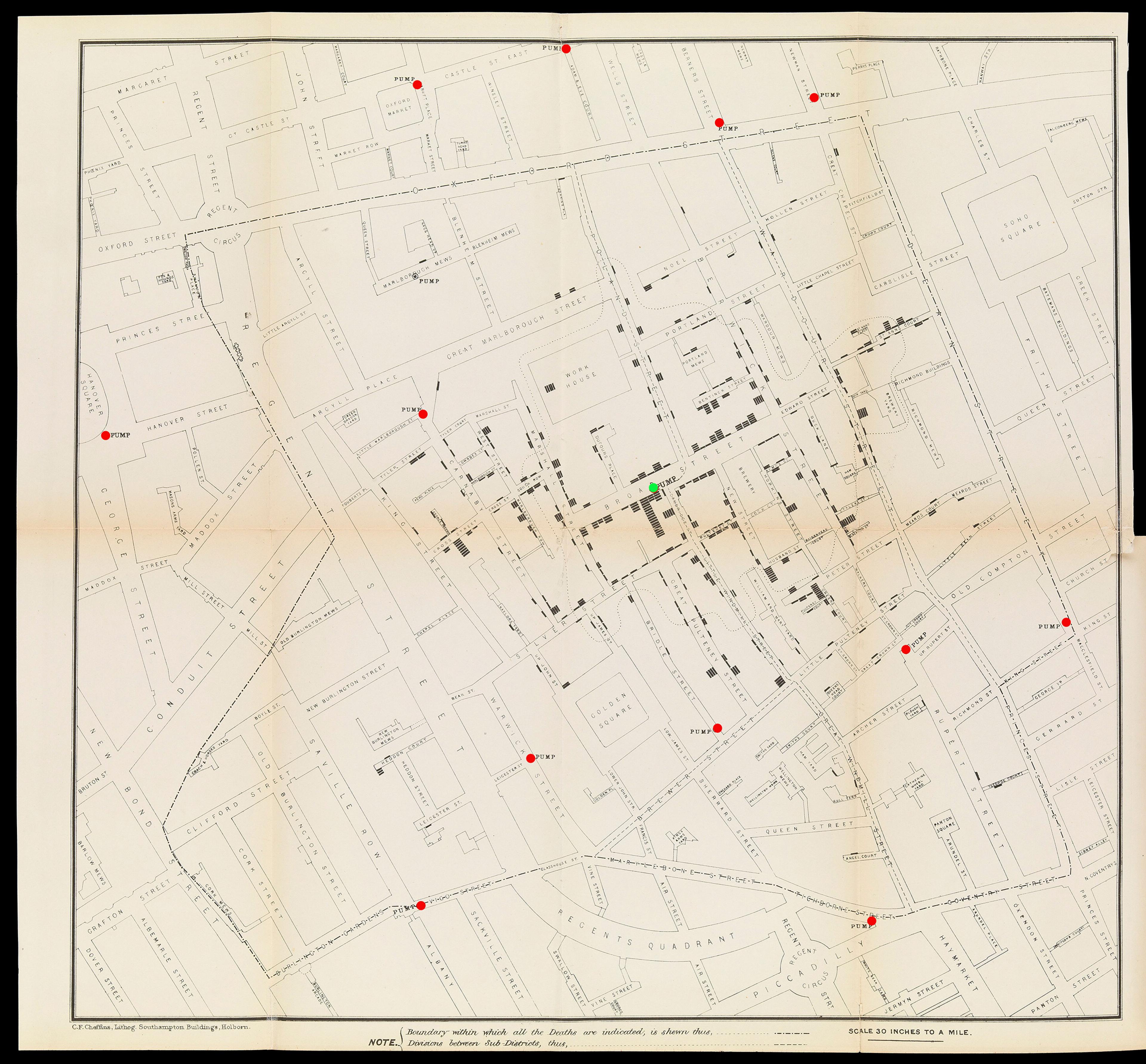
John Snow's 1854 map of cholera cases in Soho, an example of following the data to a cause.1 / 2
In the summer of 2001, nine months into his first job as a management consultant in London, Zahaan Bharmal was fired by a senior partner he had never spoken to. The meeting was held in a first-floor office so he could walk down one flight of stairs and leave without seeing anyone. He had been working past midnight and had been told he had "partner potential". In an essay for Aeon, he writes that the firing seemed to break the laws he had relied on since school: cause and effect, action and reaction.
Physics as a habit, not a hammer
Bharmal read physics at Oxford. He sees two problems with how the subject is treated now. Students find it abstract and remote. English 1 entries (exams taken at 18) were 37% lower in 2006 than in 1991, girls made up only 23% of entries in 2026, and the country is about 3,500 physics teachers short. Meanwhile Dominic Cummings, Elon Musk and Charlie Munger praise physics and "first principles", and he suspects they often use it as rhetoric.
He rejects 2, the idea that everything comes down to physics. It explained heat and found the fundamental particles, but nobody can predict an election from the atoms in voters' brains. What he values is a habit: build a model, test its assumptions, follow the data. 3 did this in 1854 when he mapped cholera cases in Soho and traced them to one water pump.
Three lessons
Chaos. The dot-com crash that cost him his job, like the 2008 financial crisis, behaved like a 4: governed by rules but so sensitive to starting conditions that small failures spread. In 1961 5 reran a weather simulation with inputs rounded to three decimal places instead of six and got completely different weather.
Surge capacity. In such systems, effort doesn't produce proportional results. Power grids get through heatwaves because engineers leave spare capacity. Bharmal argues people need the same slack: time to recover, and skills and contacts beyond one career path.
Inequality vs unfairness. Later, as a civil servant envying friends in consulting, he noticed that the unfairness stung more than the pay gap. In a Yale study, children asked to split 11 coins between two people who had done equally well threw one coin away rather than divide them unevenly. Nature, he notes, depends on unevenness: galaxies formed from tiny clumps in the early universe, and rivers branch unequally so water can flow. These systems fail when flow is blocked. He reads Brexit and the eurozone crisis as revolts against blocked opportunity that tipped over like water at boiling point.
What he wants
These are analogies, not proofs, and Bharmal warns against using physics to bulldoze nuance. He wants schools to teach ways of thinking alongside equations, and to stop splitting 16-year-olds into science and arts tracks. In his view, physics should teach people to live with uncertainty, not promise them certainty.
In the summer of 2001, Zahaan Bharmal was nine months into his first job as a management consultant in London when a senior American partner asked to see him. He had never spoken to the man, whom colleagues nicknamed the Burger King for the Whopper Meal he ate at his desk every day. Bharmal had been working past midnight and had been told at his first review that he had "partner potential". The partner fired him in a first-floor office, picked, Bharmal later realised, so he could walk down one flight of stairs and out of the building without seeing anyone. He was told not to go back to his desk.
What hurt most, he writes in an essay for Aeon, was that it broke the rules he had used to make sense of the world since he was a teenager: cause and effect, action and reaction. As a lonely, anxious boy at a competitive London school, he had found in physics "a world that was perfectly ordered", where understanding the system counted for more than popularity. He went on to read physics at Oxford, then left it behind for politics and economics. The essay describes how the subject came back to him after the firing, as a way of thinking rather than a set of equations.
A subject that is both unpopular and fashionable
Bharmal points to an odd split. In schools, physics has a perception problem. In England, entries for 1 physics (the exams taken at 18) were 37 per cent lower in 2006 than in 1991. The numbers have since recovered, but only 23 per cent of 2026 entries came from girls, a share that has barely moved in decades. More than half of GCSE physics classes (for 14- to 16-year-olds) are taught by non-specialists, and the country is about 3,500 physics teachers short. Students still describe the subject as abstract, difficult and cut off from real life.
Yet physics is also being name-checked by powerful people. Dominic Cummings, the strategist behind Brexit, quotes Richard Feynman: "The most important thing is not to fool yourself and you are the easiest person to fool." Elon Musk credits "first-principles thinking", which means throwing out convention and reasoning up from basic truths. The investor Charlie Munger praised the "logic and power" of physics for decades. Bharmal asks whether these figures are thinking like physicists or just borrowing the subject's authority.
Against 2, for model-checking
He separates two things people can mean by "thinking like a physicist". The first is reductionism, the belief that any system, broken down far enough, comes down to physics. It has worked spectacularly. Nineteenth-century physicists showed that temperature is just the speed of moving atoms, which folded the study of heat into physics. The same instinct later produced quarks, leptons, the Higgs boson and the 3, the theory that catalogues the fundamental particles. But Bharmal argues it reaches a limit with people. Nobody could predict an election by tracking the atoms in voters' brains, and there would be no point, because economics, psychology and political theory already exist. Physics, he says, is only worth bringing in if it adds something.
What he values is the second meaning: a habit of building models of a system, testing their assumptions and following the data. His example is 4, a physician, not a physicist. During the 1854 cholera outbreak in Soho, Snow did not know what caused the disease. He mapped the cases anyway and traced the cluster to a single water pump on Broad Street, which helped found epidemiology, the study of how diseases spread through populations.
Lesson one: chaos
The immediate cause of his firing was simple enough. The dot-com bubble had burst, budgets tightened and the rule was last in, first out. Bharmal places this alongside the 2008 subprime crisis, the 2011 eurozone crisis, the 2013 fall of the rupee, China's 2015 stock-market turbulence and COVID-19. He sees two things in common. Almost nobody predicted exactly when or how they would hit. And each began with small failures that spread. The subprime crisis was set off in part by incidents like the collapse of one local mortgage lender in Southern California.
Physicists call such systems chaotic: deterministic, meaning fully governed by rules, yet extremely sensitive to starting conditions. The three-body problem shows this. Two orbiting bodies follow neat, predictable paths forever. Add a third, and a tiny change in starting positions can throw the whole system into disorder. In 1961 the mathematician 5 reran a weather simulation with inputs rounded to three decimal places instead of six. The forecasts diverged so sharply that he first suspected a computer fault. In Bharmal's reading, careers behave the same way: governed by causes, but not proportional to effort.
Lesson two: 6
If outcomes don't scale with effort, working as hard as possible isn't the answer. Bharmal turns to engineering. A power grid runs smoothly until a heatwave switches on millions of air conditioners at once. Grids survive those spikes because engineers deliberately leave spare capacity. Without it, a small disruption can turn into a blackout. He argues that he, like most people, had been running with no spare capacity at all, with every hour scheduled and everything riding on one career. His alternatives are time slack (room to recover) and career slack (side projects, new skills and networks beyond a single path). Slack won't prevent a crisis, he writes, but it helps you get through one.
Lesson three: inequality is not unfairness
Bharmal joined the civil service and spent most of his twenties there, but he resented consulting friends on six-figure salaries who were turning money into more money through assets. He realised the gap itself wasn't what stung. The sense that the game was unfair was. He cites a Yale study in which children split coins between two people based on how they did on a task. Equal performers got five each. A better performer got six to four. But when two equal performers had to share 11 coins, the children threw one coin away rather than divide them unfairly.
He finds the same distinction in nature. The early universe was a smooth, uniform fog. Galaxies formed only because tiny quantum fluctuations let matter clump unevenly, so without unevenness there would be no stars or life. Rivers and blood vessels branch into a few large channels feeding many small ones, an uneven design that lets things flow efficiently. These systems fail when the flow is blocked, as when a river silts up or an artery clogs. He maps this onto society. People accept that some have more, he argues, as long as the game isn't rigged. He reads the 2008 bank bailouts, the eurozone squeeze, Occupy, the Arab Spring, Brexit and Trump as revolts against blocked opportunity. They resemble 7, like water that heats steadily with no visible change until it reaches boiling point and suddenly turns to gas.
What it adds up to
These are analogies, not derivations. A river does not prove anything about wage fairness, and the essay works best when read as a set of thinking tools rather than evidence. Bharmal seems to agree. He warns that in the hands of Musk or Cummings, physics can become "a weapon", used to flatten nuance in the name of clarity. His proposals are about schools: teach frameworks and wonder alongside equations, and end the UK practice of making 16-year-olds choose three or four subjects, which pushes them onto a science track or an arts track. His conclusion is that physics should not offer certainty. It should help people live with uncertainty.
Remember
Bharmal values physics as model-testing, not as the reductionist claim that everything comes down to atoms.
Chaotic systems don't reward effort in proportion, so building in slack is a better strategy than maximising effort.
Children would rather throw a coin away than split coins unfairly. Bharmal argues people tolerate inequality but not rigged games.
A month after surgery to remove a 12-centimeter tumor from his colon, Aube Rey Lescure's father proposes a road trip. He has seen leaf-peeping videos on 1, the Chinese version of TikTok, and wants to drive along the 2, the border between northeastern China and North Korea. In her Longreads essay the novelist lists why the idea is absurd. He got his license recently from a weak driving school and has already hit a parked car. The point of the trip north was to visit her thrifty 81-year-old grandmother, 3. And father and daughter barely speak.
The distance
They have been estranged since her parents divorced and she moved to the US at 16. Mostly they trade birthday messages on 4, China's main messaging app. At his cancer follow-up, he introduces her to the doctor as his niece. "It's too complicated otherwise," he says. She is half-white, he is Chinese.
The drive
From 5, the family's border hometown, the four of them set off: father, daughter, Nainai and 6, the youngest uncle who cares for her. Her father drives at about 30 mph with his foot on the brake, blasting EDM. Nainai refuses a viral leg of lamb on principle and protests "I'm being tied up!" whenever her granddaughter fastens her seatbelt. Through the window Rey Lescure sees the border up close: barbed wire for miles, security cameras flashing, and showcase towers on the North Korean bank that sit dark at night. A relative describes driving North Korean women between seafood factories and guarded dorms. They want to go home, he says, because they are not allowed to settle.
Her father once tried a version of this freedom himself. A missionary sponsored him to go to Virginia, where he cleaned community-college hallways and found that America was not what he had imagined. He came back to China. On this drive, Rey Lescure writes, he "can summon a version of infinitude."
What the car allowed
Rey Lescure's argument is that a practical task opened a channel that talking never had. Reading him directions ("turn left, turn right, merge") becomes "probably the most we've talked in decades." He shows his care in small acts. He buys her a rotisserie chicken, a reference to an old family joke, and has noodles with an appetite he never shows in Shanghai. The foliage turns out to be real, and she runs through it alone in a mountain park. They visit her grandfather's grave, and she kneels with her forehead to the stone.
Back in Shanghai, at another hospital, he tells a doctor, "My daughter." She doesn't overstate the change. Navigation, she writes, was "the only mode of speech we shared, unfamiliar but safe."
The novelist Aube Rey Lescure, writing for Longreads, describes a three-day family drive along the 1, the border between northeastern China and North Korea. Her father came up with the trip after watching autumn-foliage videos on 2, the Chinese version of TikTok, whose reds she suspects were digitally boosted. On paper the plan made no sense. It also gave her a way back to him.
Four reasons to say no
Rey Lescure lists the objections. Neither she nor her father can really drive. He recently got a license from what she calls a "shoddy" driving school in 3, the border town their family comes from. He bought an $8,000 Chinese SUV and has already hit a neighbor's parked car, which the compound's security camera recorded. The visit north was meant to see her 81-year-old grandmother, 4, who is cared for by 5, the youngest uncle. Nainai's thrift is extreme: she collects a faucet drip too slow for the water meter to register and uses it to flush the toilet. Worst of all, her father is one month out of surgery to remove a 12-centimeter malignant tumor from his colon. He told her only after the operation. "We'll just drive very slowly," he says.
What the trip has to cross is the distance between them. After her parents divorced and she moved to the US at 16, they became, in her word, estranged. Their contact is mostly birthday messages on 6, China's all-purpose messaging app. In Shanghai he sits at his computer watching political commentary videos and avoids eye contact. At a follow-up appointment at Fudan University's cancer center, where he refuses both preventive chemotherapy and chemo pills, a doctor asks who she is. He answers, "This is my niece." Later he explains, "It's too complicated otherwise." She is half-white, he is Chinese, and she says nothing.
The borderland
The trip goes from Dandong south to the town of Donggang, then north along the river and inland into the 7, a mountainous area with a nature reserve. Rey Lescure records the place in plain detail. From her 28th-floor hotel room she can see "deep into" North Korea's dim night. On the North Korean bank stand new white condominium towers, many dark at night. Locals say they were built for Chinese eyes, and rumor says Kim Jong-un paid for them with money from selling weapons to Russia. On the Chinese promenade, panda-shaped binoculars unlock when you scan a QR code. A barbed-wire fence runs alongside the road for miles, with security-camera flashes every hundred meters. Along the way she passes rotting fishing boats, a sign reading "we collect toads, make toad oil," and a bank's LED warning against border money laundering.
One conversation shows the border's human side. A cousin's husband drives North Korean women between seafood factories and military-style dorms. Asked whether they would rather stay, he says they want to go home: "there's no future of marrying and settling. They're not allowed." Rey Lescure notes that her father once dreamed of crossing borders too. In his twenties an American missionary sponsored him to go to Bridgewater, Virginia. There he cleaned the hallways of a community college. He never learned to drive in America, and the country "was not the place he thought it to be." He came back to China after she was born and never left again.
Comedy in the car
Much of the essay is funny, and the humor carries its feeling. The father drives at about 30 mph, his top speed, with his foot on the brake, and only to EDM: Calvin Harris, hardcore techno from Douyin, a dance remix of "My Heart Will Go On." "Driving is more epic this way," he explains. Nainai objects to every expense. She refuses to touch a viral spit-roasted leg of lamb, then quietly hides 200 renminbi (about $28) under a relative's photo frame to repay a lunch. Each time her granddaughter fastens her seatbelt she shouts that she's "being tied up!", and by the end this is a running joke between them. Her real reason for coming turns out to be a pharmacy run on her health-insurance allowance, which buys two huge tubs of protein powder that she keeps calling "milk powder." Nobody packs her overnight medicine, so the car turns around. They rent a three-story lakeside villa for under $200. The tap water runs rusty red, but the family runs up and down the stairs amazed at a detached house. Her father tells Nainai it cost 400 RMB.
The argument
Underneath the comedy, Rey Lescure is making a case: closeness can come through a practical task rather than talk. Directing her father from the passenger seat ("Turn left, turn right, merge onto this state road"), she realizes this is "probably the most we've talked in decades." The care shows in actions instead of words. He buys a rotisserie chicken before picking her up, a nod to an old family joke about her love of it that neither has mentioned in over a decade. He asks for "simple noodles in clear broth," hungry in a way he never is alone in Shanghai. She reads the trip as a small version of the open road he once went to America looking for. Inside China, she writes, "he can summon a version of infinitude."
The foliage turns out to be real. On the last morning she runs alone through the national park, a 8 site one step below China's top 5A rating for tourist attractions, past red maples, and feels "very proud of my dad and his TikTok vision." Afterward they visit her grandfather's grave. The men search the wrong row, and she walks straight to the right one: row 14, number 11. Her father tells her to kneel and touch her forehead to the stone.
What shifted
Back in Shanghai he goes back to his screens. But he brings her plates of peeled pomelo, and on bike rides he sometimes glances back to check on her. At another hospital, when a doctor looks at her, he says, "My daughter." The essay leaves the bigger questions open: whether the cancer will come back, what happened to him in America, and whether directions can grow into a fuller way of talking. Rey Lescure doesn't push the reconciliation further than it went. Navigation, she writes, was "the only mode of speech we shared, unfamiliar but safe."
Remember
Doing a task together, like navigating, can reopen a relationship that face-to-face talk had shut.
The Yalu border mixes Chinese leisure tourism with fences, cameras and North Korean contract labor.
The father's slow, small road trip echoes the open-road dream he once took to America and gave up.
Atoosa Kasirzadeh, a philosopher trained in mathematics, writes in Noema about a field in shock. By her account, unreleased AI systems have recently fully formalized Andrew Wiles's proof of Fermat's Last Theorem. They have also produced a solution to the 1 problem and, on October 26, solved another of the 2 problems. The essay does not explain how these results were checked.
Mathematicians' reactions range from despair to cautious hope. One PhD student wrote of a "spiritual crisis." One philosopher said the future of human mathematicians belongs to "priests… monks. Not researchers." Terence Tao, by contrast, expects the community to "emerge stronger."
Two ideas of progress
Kasirzadeh argues that the despair rests on a narrow picture she calls the checklist model. In it, progress means ticking off problems set in advance, like Olympiad questions, famous conjectures or the Millennium Prizes. Credit goes to whoever ticks a box first, ideally a lone genius. The model is easy to measure, which is why both math prizes and AI benchmarks rely on it. It is also exactly what AI now does well.
Her alternative is the generative encounter model. New mathematics often starts when someone meets a messy real-world problem and decides how to turn it into mathematics.
Two examples
George Dantzig, advising the US Air Force, found thousands of clerks scheduling logistics by hand. No theorem was waiting to be proved. He rewrote planning as 3: one goal to maximize or minimize, plus a set of linear constraints such as planes, pilots and fuel. The constraints form a many-sided geometric shape, and the best plan always sits at one of its corners. His 4 walks from corner to corner until it finds the best one. A whole field grew from this. Integer programming followed when someone pointed out that you can't fly half a plane.
Norbert Wiener, trying to aim anti-aircraft guns at planes that dodge, treated gunner, plane and pilot as one feedback system and built a statistical predictor. His predictor lost the military contract to a simpler Bell Labs design. But the mathematics behind it, filtering theory and then 5, reshaped engineering and biology.
What she proposes
Kasirzadeh blames the old ranking of "pure" mathematics over "applied" for treating theorem-proving as the whole of the subject. Dantzig, who rejected that split, put it bluntly: "Mathematicians are snobs." She wants credit to shift from "Who proved it?" to "Who decided this was worth proving, and how did we check it?" She lists four problems no checklist contains: provably secure software, a real theory of deep learning, how many interacting AI agents behave, and ways to make sense of machine proofs too long for humans to read.
She admits her argument has a limit. A future superintelligence might automate the choice of questions too, and she leaves that open.
Atoosa Kasirzadeh, a philosopher who trained in mathematics, writes in Noema that mathematics is going through an identity crisis. She also thinks most of the alarm is aimed at the wrong target. By her account, unreleased frontier AI systems have recently done several remarkable things. They have fully formalized Andrew Wiles's proof of Fermat's Last Theorem. They have produced a solution to the 1 problem. They have generated hundreds of manuscripts, each claiming a major result. And on October 26 they solved another 2 problem. The essay reports these claims without detail, and it does not say how the results were checked.
The reactions
Kasirzadeh collects how mathematicians have responded. Kirwin Hampshire, a PhD student, wrote an essay called "The Dark Night of Mathematics" describing "a profound spiritual crisis." He fears that human proof-finding will shrink to an artisanal craft. A Fields Medalist ended a talk by saying, "We need to develop new theories of care and love." The mathematical philosopher Logan Graves wrote that the era of human mathematicians "is ending, if not ended," and that its future belongs to "priests, then… monks. Not researchers." Others are more hopeful. Terence Tao expects the community to "emerge stronger," and he coined the phrase "proof post-scarcity." Daniel Litt is optimistic too, but only if institutions and incentives are redesigned.
To sort through this, Kasirzadeh poses four questions. What counts as mathematical progress? How is mathematicians' agency being disrupted? How should future mathematicians be educated? How should credit and reward be reorganized? Most of the essay answers the first, because she thinks the other three depend on it.
Two models of progress
The first she calls the checklist model. Progress means ticking off well-defined problems that were set in advance: Olympiad problems, famous conjectures, Freek Wiedijk's list of 100 theorems to formalize, the Millennium Prizes. Credit goes to whoever ticks a box first, ideally a lone genius. The model is tidy and easy to measure. That is why it supports both mathematics' prestige economy (medals and prizes) and AI's culture of benchmarks. It is also exactly the kind of progress AI now does well. Once machines can tick the boxes, a reward system built only for humans who tick them loses its social weight. Steven Strogatz has said that the age of the lone mathematical hero is over. Kasirzadeh agrees, and adds that this is not the end of human mathematicians.
The second is the generative encounter model. Here mathematics is open-ended. New fields start when someone meets a messy problem in the world and decides how to turn it into mathematics. Proving theorems is one part of the work, not all of it.
Dantzig: from clerks to polyhedra
Her main example is George Dantzig, the student famous for solving two unsolved problems he mistook for homework. Later he advised the US Air Force Comptroller. At the time, thousands of clerks drew up supply and personnel schedules by hand, using trial and error. No theorem was waiting to be proved. Dantzig's job was to find a useful abstraction.
He split each planning problem into two parts. One was a linear objective, such as minimizing cost. The other was a set of linear inequalities for the constraints: so many planes, pilots, gallons of fuel. He called this a "3 problem," taking "program" from the military's word for a schedule. Geometrically, the inequalities carve out a 4, a many-sided shape with no dents, where every point inside is a feasible plan. The best plan always sits at one of its corners. A small illustration: with two variables, say tanker flights and cargo flights, the constraints form a polygon on a page, and the cheapest plan is one of its vertices. Dantzig's moves along the shape's edges from corner to corner, each step improving the objective, until it reaches the best one.
None of this was on anyone's list. Dantzig built a community of operations researchers, mathematical economists and industrial engineers around problems that had not existed ten years earlier. Then the next encounter came. Linear programming handles continuous quantities like fuel, but nobody can fly half an airplane. That gap led to 6, which opened its own new branches.
Wiener: aiming at the future
Her second example is Norbert Wiener and wartime anti-aircraft fire. A gun aimed at a moving, evading plane will miss, so the gun has to aim where the plane will be. Wiener stopped treating the pilot as an opponent to be outguessed. Instead he treated gunner, gun, shell, pilot and aircraft as one system joined by feedback loops, and he added a statistical "predictor." That move turned gunnery into a set of questions about time series: how to separate signal from noise, how to predict a random process from its past, what it formally means for a system to be goal-directed. The answers became filtering and prediction theory, and then 7. In the Macy Conferences of the late 1940s and early 1950s, biologists, psychiatrists, anthropologists and engineers met around these problems. Her key point is that Wiener's predictor lost the military contract to a simpler Bell Labs design. Judged as a checklist item, it failed. Judged as mathematics, it reshaped fields from factory automation to neural networks.
The snobbery problem
Kasirzadeh traces the checklist model to the old hierarchy of pure over applied. She recalls graduate peers working on the Riemann hypothesis who told operations researchers like her, "What you do is not real mathematics." Dantzig, asked the same question, said he did not distinguish between the two and that "Mathematicians are snobs." Her argument is that the hierarchy made one kind of work, proving hard theorems, stand in for all of mathematics. AI is now automating exactly that kind of work.
What to do instead
She proposes changing the central question from "Who proved it?" to "Who decided this was worth proving, why, and how did we make sure it was right?" She points to existing large collaborations as models: the Polymath projects, Lean's 8, and the Fermat formalization effort. She names four areas that are on no checklist:
provably secure computing infrastructure;
a rigorous mathematical science of how deep learning works;
the mathematics of many AI agents interacting, using game theory and mechanism design;
methods for explaining and verifying machine proofs that are too long or too strange for humans to read.
What stays open
She raises the strongest objection herself. A superintelligence could automate the encounters too: posing the questions, judging which ones matter, deciding the rewards. Then the real worry is not automated proof but automated purpose. She does not answer it. She says only that no one can know whether that day comes, and that the transition is where the future gets built. Her alternative is persuasive as history but thin as policy, because she says little about how credit would actually be assigned in practice.
Remember
Wiener's predictor lost its military contract, yet the mathematics behind it, filtering theory and cybernetics, outlasted the weapon.
Prize problems and AI benchmarks share one assumption: progress is a list of boxes set in advance.
Kasirzadeh wants credit to go to choosing and checking problems, not only to solving them.
Mario I Juarez-Garcia spent three years applying to philosophy PhD programmes in the United States and got more than 20 rejections. Then he had to decide whether to give up. In an essay for Psyche, he argues that the usual way of framing that decision is wrong.
The textbook answer doesn't help
Decision theory gives a tidy rule: quit when the 1 of quitting (the probability-weighted payoff) is higher than that of carrying on. In real life, Juarez-Garcia says, those numbers are just personal guesses, and they get tangled up with nagging questions. What if the next attempt works? Will all that past effort go to waste? What kind of person gives up?
The culture around us pushes one way. "Quitter" is an insult. Philosophers have added to this too. Robert Nozick held that honouring past effort strengthens commitment. Jennifer Morton and Sarah Paul suggest starting long projects convinced you will succeed, even when the evidence says otherwise. Elizabeth Jackson treats hope as what makes it rational to keep going.
Choosing dinner from the cupboard
Juarez-Garcia says this "culture of perseverance" hides what he calls the 2: failing can reveal skills, limits and passions you could not have known beforehand. He borrows an analogy from entrepreneurship researcher Saras Sarasvathy. You can choose dinner by picking a recipe and buying what it needs, so the goal dictates the means. Or you can look in the cupboard and improvise, so the ingredients dictate the dish. Sarasvathy argues that successful entrepreneurs work the second way. They drop bad ideas until they find what they're good at, and only then do they persevere.
Goals we set early in life are often based on teenage illusions. Philosopher David Schmidtz calls such goals "3": provisional aims whose real job is to help you find better ones. Failure can also teach you about your circumstances rather than about yourself. Here the author quotes Descartes' maxim about changing your desires rather than the order of the world.
The week that decided it
Juarez-Garcia did quit. He dropped his part-time teaching job in Mexico City and took over a friend's office job. Within a week he found it more demoralising than the rejections had been. That told him that doing philosophy was what really moved him. He applied for two more years and was accepted by the University of Arizona.
He admits the gamble might not have paid off. His argument is that the useful question isn't "when is the best moment to quit?" but "would I know myself better if I gave up?" He reached clarity not because he persevered, but because for one week he didn't.
Mario I Juarez-Garcia spent three years applying to philosophy PhD programmes in the United States and collected more than 20 rejections. Being a professional philosopher had been his lifelong goal, and the world seemed to be telling him it was a teenage dream. In an essay for Psyche he uses that moment to ask something general: how do you know when to give up? His answer is that we usually ask the wrong question.
Why the clean formula fails
In theory the answer is simple. Decision theory says to abandon a goal when the 1 of quitting exceeds the expected utility of continuing. Expected utility means the payoff of each possible outcome weighted by how likely it is. Juarez-Garcia argues that this tidiness falls apart in practice. Nobody has reliable probabilities for "next year's applications succeed" or reliable values for "a life in philosophy". The estimate becomes, in his words, "arbitrary", and it is shaped more by personality than by anything objective.
Other questions crowd in that the formula can't settle. What if the next try is the one that works? Do past efforts go to waste? (Economists would call that last worry the sunk-cost trap, but it doesn't feel like a fallacy from the inside.) And there is the question of identity: what kind of person gives up?
A culture, and a philosophy, of perseverance
Juarez-Garcia argues that the surrounding culture tilts the scales. Popular stories celebrate people who keep trying against the odds and win. "Losers" and "quitters" are insults.
He points out that academic philosophy has recently strengthened this outlook. Robert Nozick held that honouring our past efforts builds a commitment that helps us resist the temptation to quit and reach long-term goals. Jennifer Morton and Sarah Paul suggest starting long-term projects with a firm belief that you will succeed, even against the evidence, because in favourable conditions that belief can overcome inertia. Elizabeth Jackson emphasises hope as what makes it rational to keep pursuing a goal despite signs of failure. Taken together, he says, philosophers "contribute to a culture of perseverance."
His objection is not that grit is bad. It is that this culture hides what it denies. Quitting has a positive value, which he calls the 2: abandoning a goal can reveal skills, limitations and passions that could not have been known before the failure.
Two ways to choose a goal
To make the case, he goes back to how goals get chosen in the first place. Standard 3 separates ends from means. Your preferences set your goals, and reason has no say over them. Once a goal is fixed, rationality only assesses the means. On this picture, any failure is a failure of means, and in a culture of perseverance that usually means a failure of effort.
Juarez-Garcia draws on the entrepreneurship theorist Saras Sarasvathy for an alternative, which she illustrates with something ordinary: deciding what to cook for dinner.
Recipe-first: choose a dish from a cookbook, buy the ingredients, follow the instructions. The goal determines the means.
Cupboard-first: look at what you already have and improvise. The means determine the goal.
Sarasvathy holds that successful entrepreneurs mostly work cupboard-first. They try things and fail until they find what they do well, and only then do they persevere. They give up on bad ideas before landing on the right one.
Juarez-Garcia's move is to apply this to a whole life. The difference, he notes, is that we often don't know what is in our cupboard. Long-term goals are like unlabelled ingredients, and you only learn what they're good for by trying them. "What are the chances that we get the right combination of ingredients on the first try?" Likewise, what are the chances that a teenager's first life goal, chosen "from a place of ignorance and childish illusion," will fulfil them as an adult?
Provisional goals and what failure teaches
He links this to the philosopher David Schmidtz. In "Choosing Ends" (1994), Schmidtz describes 4, goals "achieved through a process of coming to have other ends." The word comes from the Greek for midwifery, the image Socrates used for drawing out knowledge. A maieutic end is held provisionally, and its main job is to help you find the next goal. Juarez-Garcia's examples: realising you aren't talented enough to be a musician, noticing that you sabotage relationships that feel too close, or finding that you don't want to spend years on a dissertation. Paying attention to why you failed is paying attention to your own abilities and drives. He adds that this search may have to start again several times in a life. That isn't always because the lessons didn't stick. People change as their circumstances change.
Sometimes, he notes, failure teaches you about your circumstances rather than yourself. His examples are an ambitious young woman in rural West Virginia who can't afford college, an Indigenous writer in Chiapas whose work in his mother tongue will reach few readers, and a literature chair watching an administration wind down the humanities. When your situation can't be changed, he invokes Descartes' maxim to "conquer myself rather than fortune, and change my desires rather than the order of the world." The woman might find a route to success that doesn't involve college. The writer might write some texts in English. The professor might make a living outside academia.
The week that answered the question
Juarez-Garcia's proposed replacement question is: would I know myself better if I gave up? He says this is what persuaded him to quit. He didn't renew his part-time (5) teaching contract at the Universidad Iberoamericana in Mexico City, and he took over a friend's old office job.
After one week he found the job so unmotivating that it was "worse than the sting of rejections." That confirmed that doing philosophy was what moved him. What he actually needed to give up was the office job. He kept applying for two more years. He was rejected in the first year, then accepted at the University of Arizona.
What the argument leaves open
He is candid that the risk could have failed, and that giving up philosophy might have led somewhere better. His point is that his certainty came not from persevering but from having stopped for a week. That makes the argument closer to a case for running small experiments in quitting than a defence of quitting itself.
The essay leaves some practical questions unanswered. It doesn't say how to tell a lesson about yourself from a temporary bad mood, or how big a trial quit needs to be to teach you anything. Not everyone can afford to experiment either: walking away from a contract or a degree costs more for some people than for others. And his own story ends happily partly because a door reopened. Still, the reframing holds: Nietzsche's "what does not kill me makes me stronger" leaves out that what doesn't make us stronger may still show us who we are.
Remember
Expected-utility rules for quitting fail in practice because life's probabilities and payoffs are personal guesses.
Sarasvathy's cupboard-first cooking: let available means shape the goal, and drop goals that don't fit.
A short trial of quitting can show whether you actually miss the goal you dropped.
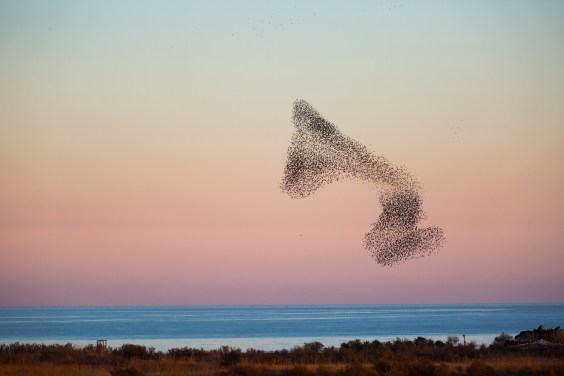
An exploding white dwarf star. Its predictable brightness lets astronomers use it to measure cosmic distances.
Apollo mission paths, planned with Newtonian gravity even though Einstein's theory replaced it.1 / 4
The question
A reader of astrophysicist Ethan Siegel's "Ask Ethan" column at Big Think posed a dilemma. When a respected scientific theory clashes with your own experience, must you reject either the science or what you saw yourself? Siegel's answer is to stop treating "respected" as one category. He judges a theory by how measurable its field is, how far experts truly agree, and where it has been tested.
Physics sets the bar
Siegel calls physics the simplest science, not the hardest, because it studies systems with the fewest moving parts. Newton's mechanics, from the late 1600s, predicted reality in hard numbers. They only measurably fail at quantum scales, in nuclear reactions, near light speed and close to huge masses. Even after Einstein replaced Newton's theory, it was still good enough to fly Apollo to the Moon. Siegel's point is that a superseded theory isn't false. Every theory holds within a range and to a certain precision. He quotes Lord Kelvin: knowledge you can't express in numbers is "of a meagre and unsatisfactory kind."
Experts can lag
He also argues that professionals repeat outdated ideas. Meteor showers come from comet debris streams, not comet tails. Siegel says that most or all type Ia supernovae, the exploding white dwarfs astronomers use as distance markers, come from two white dwarfs merging. The textbook story has one white dwarf growing past its mass limit instead. Time didn't begin at the hot Big Bang, because 1, a burst of extremely rapid expansion, came before it.
A ladder of confidence
Chemistry, geology and atmospheric science sit near the top: their terms are clear, their measurements are quantified, and their predictions can be tested. Much of biology is solid but full of misinformation. Siegel cites three examples: claims that 2, heritable changes in how genes are switched on, revives Lamarck's idea that acquired traits are inherited; the lab-leak theory of COVID-19's origin; and the claim that most "junk DNA" has a function. He argues that public-health agencies such as the CDC are now spreading misinformation themselves.
Consensus as the test
His main rule of thumb: broad agreement among many different experts usually reflects overwhelming evidence, and disagreement means a question is still open. Consciousness research, which can't even define consciousness, is his example. But agreement among a field's own adherents, as in acupuncture or 3, proves little when the field's foundations are what's in doubt.
What's missing
He ends with Feynman's warning: "you are the easiest person to fool." The column never says when personal experience should count against a theory. Some of his own "settled" examples, such as the share of DNA that is junk and how most type Ia supernovae form, are still debated among specialists.
The question
In his latest "Ask Ethan" column at Big Think, astrophysicist Ethan Siegel takes on a reader's dilemma. Onahmic Acharjya writes: "Either I deny the validity of deeply respected scientific positions, or I deny the validity of my own immediate subjective experiences, and neither of those seem particularly good."
Siegel doesn't pick a side. He starts by asking for humility: nobody holds all the evidence humanity has gathered, and even that evidence doesn't cover everything that exists. He then offers a tool for judging how much weight a respected theory deserves. Its strength depends on three things: how measurable its field is, how far experts actually agree, and the range of conditions over which it has been tested.
Physics as the benchmark
Siegel's first move is to flip a common assumption. Physics is often called the hardest science. He calls it the simplest, because it studies systems with the fewest moving parts, and that is why it advanced so early. By the late 1600s, Newton's mechanics and his law of universal gravitation tied the motion of planets to the motion of objects on Earth and made predictions that matched measurement in numbers.
Siegel says very few fields today, more than 300 years later, have matched that level of success. Newton's predictions only measurably break down in four places:
at quantum scales
in nuclear reactions
near the speed of light
very close to extremely concentrated masses
Inside those limits, Newton is still good enough to plan the Apollo trajectories. Siegel quotes Lord Kelvin's 1883 lecture as the standard to aim for: if you can measure something "and express it in numbers, you know something about it." If you can't, your knowledge is "of a meagre and unsatisfactory kind."
The lesson is that being superseded is not the same as being false. A theory has a range of validity and a precision to which it has been confirmed. Quantum field theory and general relativity will also hit limits. Siegel's example is a question nobody can yet answer: what happens to an electron's gravitational field as it passes through a double slit?
Experts are often behind
Siegel's second point is that knowledge doesn't spread evenly, even among professionals. He lists ideas he says are outdated but still repeated by educated people:
Meteor showers. Showers come from the debris streams that comets and asteroids leave along their orbits, not from comet tails, which get blown out of the Solar System.
Galaxy mergers. When spiral galaxies merge, they more often form gas-rich disk galaxies than ellipticals.
Type Ia supernovae. These are the exploding white dwarfs that astronomers use as standard brightness markers. The textbook story says a white dwarf pulls material from a giant companion until it passes the 1, about 1.4 times the Sun's mass, the most a white dwarf can hold up. Siegel says that "up to 100%" are instead caused by two white dwarfs merging.
The start of time. Space and time did not begin with the hot Big Bang. A period of 2, a burst of extremely rapid expansion, came before it and set it up, and no one knows what came before inflation.
His summary: "Just because something is known by humanity doesn't mean it's known, accepted, used, or taught by all of the leaders in the field."
A ladder of confidence
Siegel then moves through the sciences in rough order of how firm their footing is. Chemistry is nearly as reliable as physics, though the systems it studies are far more complex. Geology, oceanography and atmospheric science also qualify. In these fields, terms are well defined, measurements can be quantified, models rest on physical mechanisms, and predictions can be checked against data. Plate tectonics is respected because of what he calls "mountains of evidence." The Cretaceous–Paleogene boundary layer is his example: its iridium-rich clay shows that the impactor that ended the dinosaurs came from space.
He calls evolutionary biology, ecology, virology, immunology, genetics and agriculture "extremely solid," while noting they are full of misinformation. He gives three cases where he says the mistaken view is the popular one:
Epigenetics and Lamarck. Epigenetics covers heritable changes in how genes are switched on, without changes to the DNA itself. Some people read it as proof of , the idea that traits acquired in life get passed on. Siegel says this downplays Darwinian selection and DNA.
Siegel goes further in medicine. He argues that bodies such as the CDC and NIH are now undermining vaccines, fluoridation and other major public-health gains, and he calls the CDC's 2025 schedule the least reliable it has ever been. The result, in his words, is an "infodemic," where partly wrong information carries the weight of authority.
Consensus as the signal
In consciousness research, he notes, the field doesn't even agree on what consciousness is. That gives the heuristic at the heart of the column. When many different experts agree, it is normally because overwhelming evidence points to one conclusion. When they don't agree, the question is "usually, but not always" still open.
There's a trap, though. Some fields have adherents who all agree with each other because they are defending the field's right to exist, while critics question its foundations. Astrology, Myers-Briggs typing and homeopathy are, in his view, essentially settled as pseudoscience. Acupuncture, chiropractic and naturopathy sit in a grey zone: some people report benefits, but controlled trials show no measurable effect. He also places 6 there, because it can't tell which mental traits were shaped by evolution rather than by culture. Fringe fields attract enthusiasts, so agreement within them proves little.
What he concludes, and what's missing
Siegel ends with four reminders:
Unestablished ideas may still turn out true.
Agreed-upon ideas get overturned or superseded.
Outlier data often exposes flaws in established ideas.
Every theory holds only to a certain precision and over a certain range.
Overturning Newton for slow objects falling on Earth would be astonishing. A test showing that single-celled paramecia are conscious would not. Peer review guarantees nothing. He closes with Feynman: "you must not fool yourself—and you are the easiest person to fool."
The column is really a field guide to expert claims more than an answer to the reader. It never directly addresses the reader's lived experience: when a personal observation should count against a theory, and when it is one of the noisy anecdotes that controlled trials exist to filter out. Readers should also note that several examples Siegel presents as settled, including the junk-DNA fraction, the share of type Ia supernovae from mergers, and the status of evolutionary psychology, are still argued over among specialists. By his own consensus test, those claims deserve some caution too.
Remember
A superseded theory isn't false: Newton's gravity, replaced by Einstein's, still plans Moon missions within its limits.
Agreement among many different experts is meaningful; agreement among a fringe field's own adherents proves little.
Even top experts and textbooks can be years behind; established knowledge spreads unevenly.
The origin of SARS-CoV-2. He says the virus's own genome rules out a lab origin through 4, meaning experiments that make a pathogen more transmissible or more harmful. He cites a 2022 Nature analysis showing the genome is a patchwork of fragments matching different bat coronaviruses.
Junk DNA. Many people, and many AI chatbots, cite 5, a large project to catalogue activity across the human genome, as proof that most non-coding DNA has a function. Siegel sides with biologist Larry Moran, who argues that about 90% of the genome is junk.