Today: soil fungi that trade nutrients for carbon, cheaper quantum building blocks, a 75,000-year-old stab wound, reactive microplastics and brain implants that let people speak.
Picked from 43 new articles across 10 sources · arrow keys for other days
Today in 30 seconds
30s left
Soil fungi hold back phosphorus and send it to the plants that pay the most carbon, Toby Kiers explains on Quanta's podcast. story 1 ↓
On Google's Willow chip, a method called "cultivation" cut magic-state errors about 40-fold using 54 qubits. The study is published in Science. story 2 ↓
A round hole in a Neandertal shoulder blade from Shanidar Cave points to a wooden spear. The same person had survived an earlier face injury. story 3 ↓
All six common plastics tested made damaging hydroxyl radicals in water, and the most water-repellent made the most. That was enough to damage red blood cells. story 4 ↓
One ALS patient has spoken nearly 2 million words through a brain implant, and a wireless device has started its first safety trial. story 5 ↓
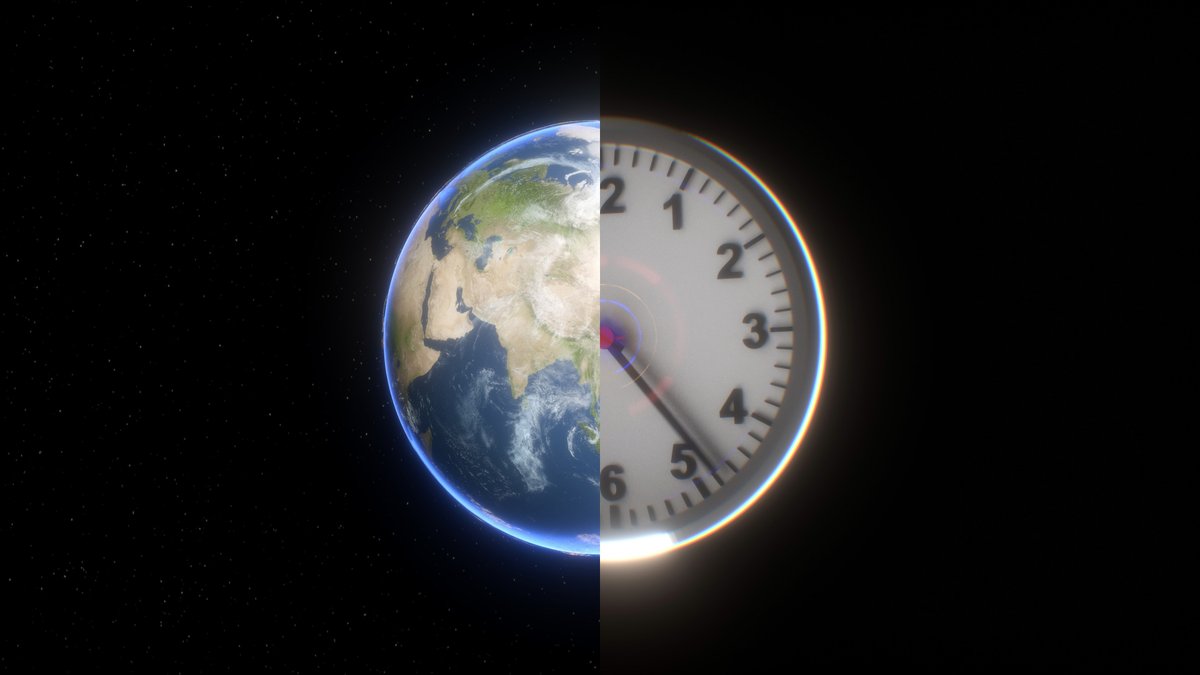
Timekeepers voted to end leap seconds and will let clocks drift up to an hour from Earth's rotation before making a correction.
1/5Quanta Magazine· Steven Strogatz and Janna Levin· Oct 15
How brainless soil fungi strike deals with plants, and why it matters
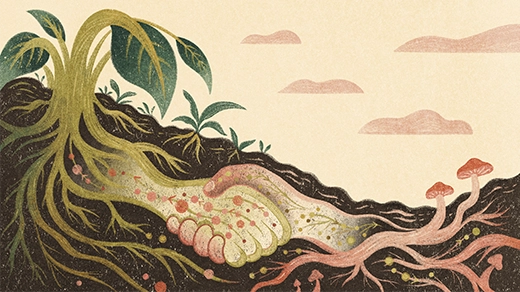
Evolutionary biologist Toby Kiers describes years of experiments showing that root fungi and plants favour the partners that give them more. Fungi even move phosphorus to plants that pay more carbon for it.
Why it matters · These fungi move a large share of Earth's land carbon and plant nutrients, yet 90% of their diversity hotspots lie outside protected land.
Know this first
Context from the editor, not the article · 28 sec
1 · What mycorrhizal fungi are
Mycorrhizal fungi grow threads into or around plant roots. The plant feeds them sugars and fats made by photosynthesis. In return the fungi deliver phosphorus, nitrogen and water from soil the roots can't reach well on their own.
2 · Biological markets
Evolutionary biologists borrow ideas from economics and game theory to study partnerships between species. The questions are who trades with whom, at what 'price', and how partners stop cheaters who take resources without giving any back.
3 · A podcast, not a paper
This piece is an interview on Quanta's podcast The Joy of Why. It sums up two decades of Kiers's published work and her lab's current hypotheses. It does not report one new study.
2/5Scientific American· Oct 15
Google's Willow chip cuts quantum "magic state" errors about 40-fold
Google researchers made magic states, special qubit states that quantum computers need for their hardest operations, by checking a rough state and then spreading it across more qubits. Errors fell roughly 40-fold.
Why it matters · Making magic states could take up most of a future quantum computer, so a cheaper way to make them affects when useful machines arrive.
Know this first
Context from the editor, not the article · 29 sec
1 · Why qubits need protection
Physical qubits make errors often. Error correction spreads one reliable "logical" qubit across many physical ones and checks them repeatedly, so a useful machine needs far more hardware qubits than the number it computes with.
2 · Clifford gates aren't enough
Most quantum operations people use belong to a family called Clifford gates. An ordinary computer can simulate circuits built only from them efficiently. To get a real quantum advantage, a machine needs at least one extra gate from outside that family.
3 · Where magic states fit
The usual extra gate, the T gate, is hard to perform reliably on error-corrected qubits. The common workaround is to prepare a special "magic state" in advance and use it up to perform the gate.
3/5Science News· Freda Kreier· Oct 15
Round hole in a 75,000-year-old Neandertal shoulder blade points to a wooden spear
Researchers studying Neandertal remains from Shanidar Cave in Iraq found an unhealed, round puncture in a shoulder blade, likely made by a wooden spear around the time of death. A broken front tooth shows an older face injury.
Why it matters · Violent injuries rarely leave clear marks on bones. This case shows how comparisons with butchery marks and test stabbings let researchers identify the weapon behind a 75,000-year-old wound.
Know this first
Context from the editor, not the article · 29 sec
1 · Shanidar Cave
A cave in Iraqi Kurdistan, first excavated in the 1950s and 60s, that has yielded the remains of about ten Neandertals. It is one of the most important Neandertal sites anywhere, and a Cambridge-led team resumed digging there in the 2010s.
2 · Reading injuries in bone
Living bone repairs itself over weeks, laying down new tissue around a wound. A break with no sign of healing therefore happened at or near death. Healed injuries mean the person survived.
3 · Earlier evidence at Shanidar
Earlier finds at the site include a Neandertal with a rib wound that was probably caused by a stabbing, and another who lived for years with severe injuries. Researchers have long cited that second case as possible evidence of care.
4/5Ars Technica Science·
Jacek Krywko
· Oct 15
Microplastics in water produce damaging reactive molecules at their surfaces
A Columbia University team reports in Nature that plastic particles in water generate hydroxyl radicals at their surfaces. The radicals clumped proteins and broke apart red blood cells in lab tests. Whether this harms people remains unknown.
Why it matters · It points to a specific chemical way microplastics could do harm, instead of just piling up in the body, and suggests plastics could be redesigned to avoid it.
Know this first
Context from the editor, not the article · 25 sec
1 · Microplastics everywhere
Microplastics are plastic fragments smaller than five millimeters. They have been found in drinking water, human blood, arteries and brains, but nobody has yet shown whether, or how, they cause disease.
2 · Reactive oxygen species
Reactive oxygen species (ROS) are unstable oxygen-containing molecules, such as hydroxyl radicals. They damage DNA, proteins and fats. An excess of them is called oxidative stress, and our own metabolism produces them all the time.
3 · A contested earlier field
Wei Min's lab previously reported that tiny water droplets generate ROS at their surface where they meet air. Critics argued those signals came from contamination or measurement artifacts.
5/5Science News· Laura Sanders· Oct 15
Brain implants are giving a voice back to people with ALS
Electrodes in the speech area of the brain, plus AI decoders, let people who can no longer talk produce text or synthetic speech. One man with ALS uses his system up to 14 hours a day.
Why it matters · Speech decoding has moved from "can it work?" to working daily in a real home, and the remaining problems are now engineering, safety and access.
Know this first
Context from the editor, not the article · 25 sec
1 · What ALS does
Amyotrophic lateral sclerosis kills the nerve cells that carry movement commands from brain and spinal cord to muscles. The brain still plans movements, including speech, but the muscles stop receiving the instructions.
2 · Brain-computer interfaces
Neurons signal with tiny electrical pulses that implanted electrodes can record. Software learns which activity patterns go with which intended actions, so a computer can act on them and skip the damaged route to the muscles.
3 · Motor cortex, not thoughts
Speech implants sit on the motor cortex, the strip of brain that sends movement commands. They decode attempted mouth and throat movements, not silent thoughts in general.
Toby Kiers, an evolutionary biologist at Vrije Universiteit Amsterdam and a recent MacArthur Fellow, went on Quanta's podcast The Joy of Why. She talked about a question her lab has worked on for years: how do soil fungi with no brain manage to trade strategically with plants?
An old trade
1, whose name means "fungus-root", partner with more than 80% of plant species. The partnership began about 450 million years ago. For tens of millions of years the fungi did the job of roots, before plants evolved roots of their own. Plants send down carbon as sugars and fats. Fungi break down minerals, sometimes with help from bacteria, and send back phosphorus, nitrogen and water. Up to 80% of a plant's phosphorus passes through a fungus first.
Kiers cites her group's 2023 estimate: plants send about 13 billion tons of CO2 a year into these networks, roughly a third of fossil-fuel emissions. Not all of it stays underground. The fungi respire some of it away. But sticky fungal compounds lock part of it into the soil.
Experiments on the market
Her lab grows networks on Petri plates split into compartments. In one setup, one root system meets two fungal strains. The plant gave more carbon to the strain that supplied more phosphorus. In the reverse setup, one fungal network links two root systems. The fungus gave more phosphorus to the plant that supplied more carbon.
Other results:
Fungi send less phosphorus to shaded plants, which can make less carbon.
Fungi trade differently when competing fungi are present.
Fungi hoard phosphorus until a plant offers more carbon. Kiers tracked this by tagging phosphorus with 2, glowing nanoparticles. A fungus moved phosphorus from a phosphorus-rich side of its network to the far side, where the plant "paid" more.
Kiers prefers "information processing" to "intelligence". She says these strategies are encoded in the fungi's DNA and don't imply intent. She also stresses that plates are much simpler than real soil, where bacteria live on and ride along fungal threads.
Open questions
Her lab is still trying to explain how a single unbroken fungal tube carries flows in two directions at once. One idea: molecular motors drag fat droplets toward the growing tips. That builds up pressure, which pushes water and nutrients back the other way.
In 2021 Kiers founded 3, the Society for the Protection of Underground Networks. It maps fungal diversity using soil DNA. A 2025 Nature paper from the group found that 90% of mycorrhizal biodiversity hotspots lie outside protected areas.
On the latest episode of Quanta Magazine's podcast The Joy of Why, mathematician Steven Strogatz interviewed Toby Kiers. She is an evolutionary biologist at Vrije Universiteit Amsterdam and a recent MacArthur Fellow. The conversation sums up about two decades of her published work and some of her lab's open hypotheses. The central puzzle: underground fungi have no brain or nervous system, yet in experiments they act as if they choose trading partners and set prices.
The partnership
1 (myco, fungus; rhizal, root) form intimate associations with more than 80% of land plant species. The partnership evolved about 450 million years ago and helped plants move from water onto land. Kiers notes that for tens of millions of years the fungi served as the plants' root system. Roots came later.
The trade works like this. Plants photosynthesise and send carbon down as sugars and lipids, or fats. Fungi digest minerals outside their bodies, sometimes working with bacteria that help dissolve rock. They pass phosphorus, nitrogen and water back to the roots. Kiers says up to 80% of a plant's phosphorus first passes through a fungal network. That includes the phosphorus that ends up in the backbone of our own DNA.
Her lab studies 2, the type whose threads grow inside root cells. Their threads are a few microns wide, thinner than a human hair. Unusually, they lack 3, the internal walls that divide most fungal threads into compartments. A whole network is therefore one open pipe, and some call these the largest cells on Earth.
Why ordinary people should care
Kiers cites a 2023 study from her group. It estimated that plants send about 13 billion tons of CO2 a year into mycorrhizal networks, roughly a third of annual fossil-fuel emissions. The episode summary calls this "sequestered". Kiers herself is more careful. The fungi respire some of that carbon back out. Part of it, though, ends up in sticky, hard-to-break-down compounds that hold soil together and keep carbon underground. Without this scaffolding, she says, soil would erode. She adds that 59% of all species live underground, so protecting biodiversity has to include soil.
Running experiments on a market
Kiers studies the partnership as an "underground economy". Both sides pay a cost: photosynthesis is expensive for the plant, and foraging is expensive for the fungus. So the question is what decides who gives how much to whom.
Her lab runs deliberately "manipulative" experiments on Petri plates. A typical plate is a circle cut into three compartments. A root system sits in the middle, and different fungi, or different amounts of nutrients, go in the side "arenas". Labelled carbon shows where the plant's resources go.
Plants discriminate. Given a better and a worse fungal strain, plants consistently sent more carbon to the strain that returned more phosphorus.
Fungi discriminate too. In the reverse setup, one fungal network linked two root systems that gave different amounts of carbon. The fungus sent more phosphorus to the more generous plant. Kiers calls this "reciprocal exploitation".
Cheating also runs the other way. Some orchids don't photosynthesise at all and take carbon from the fungal network.
Kiers's PhD work showed that plants can also punish. Soybeans house 5, bacteria that turn nitrogen from the air into fertilizer, inside root nodules. The enzyme that does this stops working in oxygen, so the nodule tightly controls how much oxygen gets in. Kiers forced the bacteria to "cheat" by growing them in argon, an inert gas they can't make fertilizer from. The plants sensed which individual nodules were failing and cut off their oxygen, suffocating the bacteria.
How a brainless organism "decides"
Kiers prefers "information processing" to "intelligence", though she accepts the latter word depending on how it's defined. She stresses that words like "decision" can suggest intent where there is none. The strategies are built into the organism's DNA, yet they adjust within one fungus's lifetime. How the fungus integrates information is still unknown. Candidates include electrical signalling and the internal flows themselves acting as a kind of calculator.
The lab tracks this physically. With biophysicists at 6, an Amsterdam physics institute, it built imaging robots that follow about half a million network nodes per experiment. These are the junctions where threads branch or fuse. Fluorescent tags on lipids let them watch carbon arrive at forks. In one clip, a blob of carbon went left, backed up, then split almost exactly in half. Kiers notes that this is one observation, not a result.
Two-way traffic in a single pipe
The biggest open problem she describes is physical. Carbon flows out to the growing tips while nutrients and water flow back, through the same open tube at the same time. The lab's working hypothesis has two parts. First, molecular motors haul lipid droplets along internal tracks toward the tips. Fat doesn't mix with water, which helps keep the two streams apart. Second, pulling fluid toward a closed end builds pressure, which pushes liquid the other way. The fungus may adjust that pressure by opening and closing 7, which are water channels. This is presented as an idea under study, not an established finding.
Caveats Kiers raises herself
The plates are drastically simplified, and Kiers says so. In real soil, bacteria move along fungal threads as if on "highways", trade phosphorus, and release compounds that can steer the network. Lab results show what fungi can do, not how often they do it in the field.
Mapping and protecting the networks
Frustrated that decades of research weren't reaching policymakers, Kiers founded 8 in 2021. The name stands for the Society for the Protection of Underground Networks. It funds about 140 "Underground Explorers" and has about 600 associates in more than 80 countries. They take soil cores on grids, as on a recent trip to the Himalayan foothills of Bhutan, then extract and sequence the fungal DNA. The data feed an "Underground Atlas" meant for decision-makers. A 2025 Nature paper from the effort found that 90% of mycorrhizal biodiversity hotspots lie outside protected areas.
Still unexplained
The basic biology of these fungi is not settled. Work led by geneticist Vasilis Kokkoris in Amsterdam finds two distinct genomes living in one network. Spores carry hundreds of nuclei that are not all identical. These fungi have long been considered asexual, but there are hints of some unusual form of sex. That raises a basic question: is the individual the network, or each nucleus inside it? Kiers also mentions growing evidence that fungal spores help clouds form over rainforests. The interview doesn't give the strength of that evidence.
Remember
Lab experiments show both plants and fungi favour the partners that give more. The trade runs on reciprocity, not altruism.
Of the roughly 13 billion tons of CO2 a year sent into fungal networks, some is respired back out; not all stays stored.
How one unbroken fungal tube carries flows in two directions at once is still an open physics question.
Google researchers report in Science that they have made "1" more cheaply on 2, Google's 105-qubit superconducting quantum chip. Using a technique called 3, they cut the error rate of these states about 40-fold.
Why magic states matter
Ordinary computers build everything from simple logic gates like AND and NOT. Quantum computers have a counterpart, the 4, but a regular computer can efficiently imitate circuits made only of them. "But there is one particular gate that unlocks the quantum computer's power," says lead author Emma Rosenfeld of Google Quantum AI. It is usually the 5.
On error-corrected machines, the T gate is carried out by consuming a magic state: a qubit prepared in one exact mix of 0 and 1. The state is used up, and any flaw in it becomes a flaw in the calculation.
The standard way to make good magic states is 6, which turns many imperfect copies into a few better ones. It is costly. Rosenfeld says up to 95 percent of a quantum computer could end up making magic states.
Plant, check, grow
Cultivation, proposed by Google colleagues in 2024, works on a single state instead of many. On Willow, the team:
Encoded a rough magic state in a few qubits.
Checked it. Asking a qubit "0 or 1?" would collapse the delicate state, so they asked only "Are you the right magic state: yes or no?"
Spread states that passed across more qubits for stronger protection.
The state starts small, gets checked and then grows, which is where the gardening name comes from.
Results
Faulty states fell from about 4 in 1,000 to roughly 1 in 10,000.
The experiment used 54 of Willow's 105 qubits.
The check discarded 92 percent of attempts.
"The Google experiment shows that cultivation works in practice," says Kenneth Brown of Duke University, who was not involved. He notes that the method depends on throwing most attempts away.
Still a long way off
Breaking 7 encryption would need magic states that fail only about once in 10 billion tries. Simulating molecules, which Rosenfeld considers more reachable, needs one failure in a million to one in 100 million. At about one in 10,000, the team is at least 100 times short of even the easier goal.
The article leaves two questions open: whether errors keep falling as states are grown larger, and whether the high discard rate still saves resources compared with distillation at full scale.
Researchers at Google Quantum AI report in Science that they have made 1 more cheaply on Google's 2 processor, a superconducting quantum chip with 105 qubits. Magic states are carefully prepared qubit states that quantum computers need for their most powerful operations. The team used a technique called 3. Using 54 of Willow's 105 qubits, it cut the error rate of the finished states by about a factor of 40. That is real progress on a recognized bottleneck, but the states are still thousands to millions of times too unreliable for the applications people most want.
Why quantum computers need "magic"
An ordinary computer builds every calculation from a few simple logic gates, such as AND, OR and NOT. "Quantum computers have their own analogy of these operations called the 4," says Emma Rosenfeld, the study's lead author. The catch is that a normal computer can efficiently imitate any circuit built only from Clifford gates. That makes them useful but not enough on their own.
"But there is one particular gate that unlocks the quantum computer's power," Rosenfeld says. "Physicists call it a non-Clifford gate, most often a 5." In error-corrected machines this gate is usually not applied directly. Instead it is carried out by consuming a magic state: a qubit prepared in one very specific mix of 0 and 1. The state is used up when the gate is performed, and any flaw in it becomes a flaw in the gate. "It has to be made very, very precisely," Rosenfeld says.
The expensive standard method
The established way to get precise magic states is 6. Many imperfect copies go in, and a smaller number of better copies come out. One way to picture it (an analogy, not the actual procedure) is a refinery that takes in a lot of crude and keeps only a little of the purest product. Each round costs extra qubits and time. "You can have up to 95 percent of your quantum computer being spent just generating these high-fidelity magic states," Rosenfeld says. In other words, most of a future machine could be a magic-state factory rather than a computer.
How cultivation works
In 2024, Rosenfeld's colleagues at Google Research proposed cultivation. Instead of combining many copies, it works on one state at a time. The steps on Willow were:
Plant. Encode a rough magic state in a small number of qubits.
Check. Measure it without destroying it. Normally a measurement asks a qubit "Are you 0 or 1?", which collapses it to one of those answers and ruins the delicate mix. The team instead asked a yes/no question: "Are you the right magic state?" A state that passes keeps its quantum character.
Grow. Spread states that pass across more qubits, which gives them stronger error protection.
The garden name comes from this sequence: the state starts small, gets checked, then grows. The article doesn't explain how the "are you the right state" measurement is built at the circuit level.
The results
Error rate: Without cultivation, about 4 attempts in 1,000 produced a faulty state. With it, errors fell about 40-fold, to roughly 1 in 10,000.
Hardware: 54 physical qubits out of Willow's 105.
Discard rate: The check rejects low-quality states, and 92 percent of attempts were thrown away.
"The Google experiment shows that cultivation works in practice," says Kenneth Brown, director of the Duke Quantum Center at Duke University, who was not involved. He also flags the discard rate. Cultivation trades qubits for retries: it needs fewer qubits at once than a distillation factory, but most runs end in the bin. Whether that trade pays off at scale depends on how fast the attempts can be repeated, which the article doesn't quantify.
How far there is to go
The target depends on the job. According to the article:
Application
Acceptable magic-state failure rate
Breaking 7 encryption (used in web security, banking, e-ID cards)
Even the easiest of these targets is 100 times better than today's result, and code-breaking is about a million times better. Rosenfeld sees molecular simulation as the more realistic near-term goal and calls the work "a step in the right direction." "We're more galvanized than ever to get to these near-term scientific applications," she says.
What remains open
This is a peer-reviewed demonstration on real hardware, not a simulation, which counts for something. But several questions are unanswered in the article. Will the error rate keep falling as states are grown onto larger, better-protected patches of qubits? Can the 92 percent discard rate shrink, or does it get worse as targets tighten? Will practical machines use cultivation alone, or cultivation feeding a smaller distillation stage? And how much of the "95 percent" overhead does it actually save in a full design? The experiment shows the method works. Whether it is the cheapest way to make magic states at useful scale is still unproven.
Remember
Distillation could use up to 95 percent of a quantum computer, so making magic states is a major cost.
Cultivation trades hardware for retries: it uses fewer qubits but discarded 92 percent of attempts on Willow.
At about one error in 10,000, magic states need to be 100 to a million times better.
Shanidar A's 75,000-year-old shoulder blade. Wooden spears tend to leave round holes like this one.1 / 2
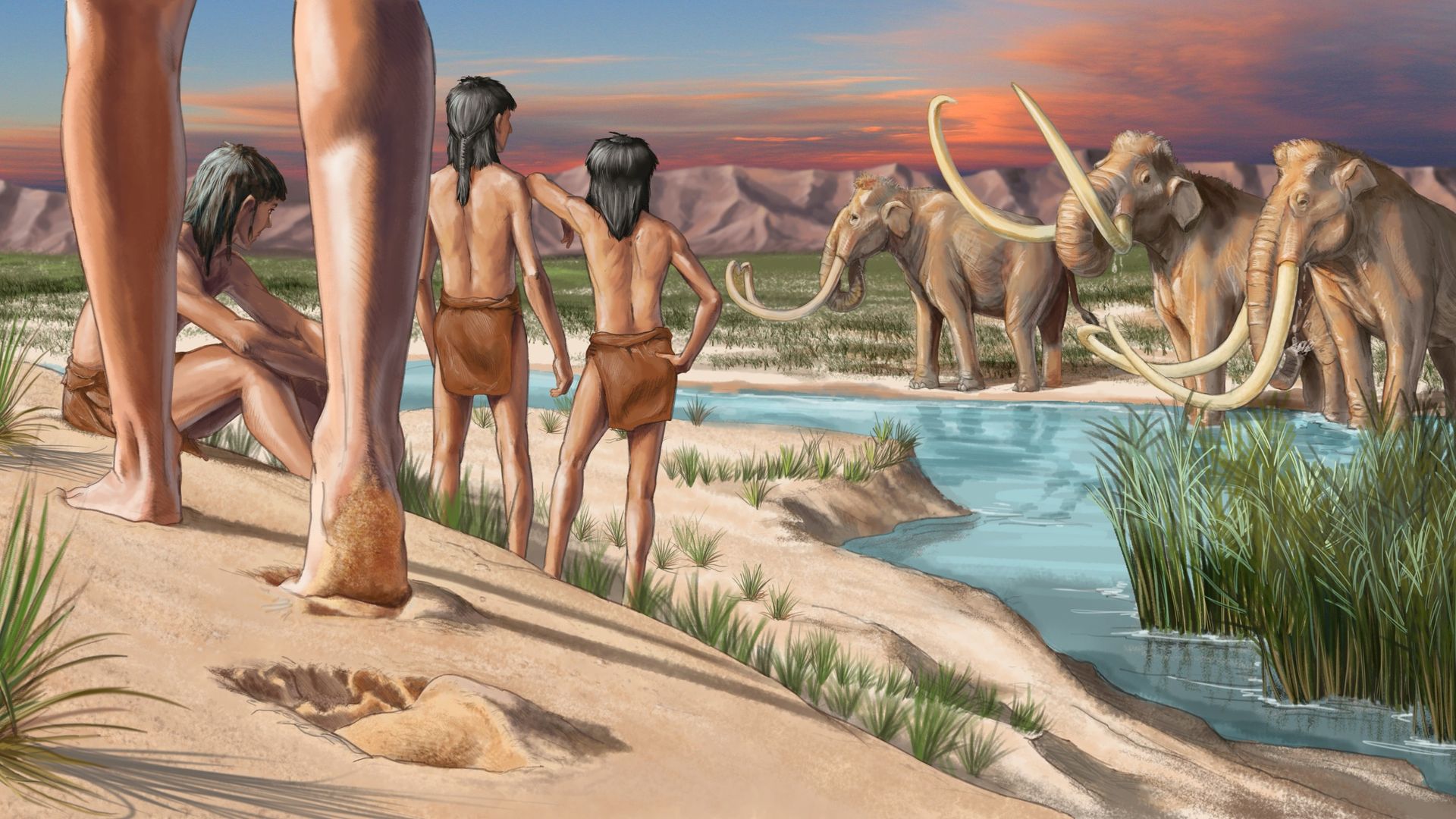
A Neandertal who died about 75,000 years ago in what is now northern Iraq was probably stabbed with a wooden spear around the time of death. Years earlier, the same person survived a blow that shattered a front tooth. The study, published October 15 in Scientific Reports, describes remains found during new excavations at 1, a well-known Neandertal site in Iraqi Kurdistan.
Why this kind of evidence is rare
Most ways of dying leave no trace on the skeleton. "There's a lot of ways to die that leave absolutely no mark on your skeleton," says Libby Cowgill of the University of Missouri, who wasn't involved. Neandertal bones often show healed injuries, usually blamed on hunting. Signs of 2 hurting each other go back 430,000 years. At Shanidar, an earlier find included a rib that was probably stabbed.
Working out what made the hole
Digging that began in 2019 turned up at least three new individuals. One, whom the team named 3, left ribs, hand bones, teeth and a shoulder blade with a strikingly round hole in it.
The team ruled out other explanations step by step:
Not roots or insects. They lifted the bone out in its sediment and tested for that kind of damage. The pattern didn't fit.
Fresh bone. Bone fragments in the surrounding dirt suggest the shoulder blade was pierced while the body was fresh.
No healing. Microscope and X-ray images showed no repair around the hole, so the wound happened shortly before or after death.
To identify the weapon, they compared the hole with butchered animal bones and with wounds made by stabbing carcasses with reconstructed Stone Age spears. Stone points usually leave diamond-shaped holes, and wooden points leave round ones. Bruno Maureille of the University of Bordeaux, who wasn't on the team, says it was "absolutely, without any question" a wooden spear.
A survived injury
A badly broken incisor points to a serious blow to the face. 4, a hardened mineral deposit on teeth, had built up over the break. That means the person lived with the injury for years. Emma Pomeroy of the University of Cambridge, part of the team, argues that eating and drinking would have been very painful at first, so Shanidar A likely needed care. The authors present this as speculation.
Caveats
The wound happened around death but isn't proven to have caused it. The article doesn't say whether it was an attack or an accident. The bones only "probably" belong to one person, and survival alone can't prove that others helped.
A Neandertal who lived about 75,000 years ago in what is now northern Iraq appears to have been stabbed with a wooden spear around the time they died. Years earlier, the same individual survived a blow that shattered a front tooth. The finding, published October 15 in Scientific Reports, comes from new excavations at 1. The study team reads the remains as evidence of both violence and care in one Neandertal life.
Why skeletal trauma is rare evidence
Most causes of death leave nothing on bone. Disease, blood loss from soft-tissue wounds, drowning and starvation all leave the skeleton intact. "There's a lot of ways to die that leave absolutely no mark on your skeleton," says Libby Cowgill, a biological anthropologist at the University of Missouri who was not involved in the study. That makes bones that do record trauma valuable.
Neandertal skeletons often show healed injuries, which are usually blamed on hunting large animals at close range. But there is also scattered evidence of 2 hurting each other. Hominids here means modern humans and their extinct relatives. That evidence goes back as far as 430,000 years. At Shanidar itself, an earlier find included a Neandertal rib that was probably damaged by a stab wound.
The find
An excavation that began at Shanidar in 2019 turned up remains from at least three previously unknown individuals. Among them were ribs, hand bones, teeth and a shoulder blade with a hole in it. The team thinks these probably belonged to one person, whom they named 3.
The hole puzzled the team at first. "It's so round, it's like, what is it?" recalls Emma Pomeroy, a biological anthropologist at the University of Cambridge and a member of the team.
Ruling out other causes
The researchers worked through the alternatives in steps:
Was it damage after burial? Plant roots and insects can bore into buried bone. The team lifted the shoulder blade out still inside its block of sediment and tested for this kind of damage. The pattern didn't match.
Was the bone fresh when it broke? They found fragments of the shoulder blade in the surrounding dirt. The researchers took this to mean the bone was pierced while the body was still fresh, not cracked long after as a dry fossil.
When did it happen? Under a microscope and on X-rays, the edges of the hole showed no healing. Living bone starts to remodel around a wound fairly soon, so the injury happened shortly before or after death.
That third point limits what the study can claim. The evidence fits a fatal stabbing but does not prove one. A wound inflicted just after death would look the same.
Matching the weapon
To identify the weapon, the team compared the hole with two reference sets. The first was fossilized animal bones that had been butchered and were found alongside human tools. The second was wounds made by archaeologists who stabbed animal carcasses with reconstructed 4 (Old Stone Age) weapons.
The two kinds of spear leave different marks. A stone point has edges and a tapering triangular shape, and it usually punches a diamond-shaped hole. A sharpened wooden tip is roughly conical, and it tends to leave a round hole. Shanidar A's puncture is round.
Bruno Maureille, an anthropologist at the University of Bordeaux who was not on the team, is emphatic. He says the wound was "absolutely, without any question" made by a wooden spear.
The article does not say who held the spear. It doesn't say whether it was another Neandertal or an accident. It also doesn't give the hole's measurements or how many reference wounds were compared.
An older injury, and a case for care
The remains also included a broken incisor. It was shattered badly enough that the researchers infer a serious blow to the face. 5, the hardened mineral deposit that builds up on teeth, had formed over the break. That deposit takes time to build up, so the tooth must have split years before Shanidar A died.
Pomeroy argues that the injury would have been very painful at first and would have affected eating and drinking. She says it is "likely [to] have needed some care." The paper presents this as speculation. A broken tooth shows that the person survived. It cannot show that others helped. Shanidar has prompted similar arguments before: an individual found there decades ago lived with severe disabilities, and researchers have long cited that case as possible evidence of care.
Pomeroy's broader point is that violence and care in one set of remains show Neandertal "behavior is complex. Like us."
What remains open
Accident, hunting or attack? A wooden spear wound near the time of death fits deliberate violence, but the article gives no evidence that settles intent.
Cause of death. The wound happened around death. That is not the same as having caused it.
One individual? The bones "probably" belong to one person. The link between the old tooth injury and the spear wound depends on that attribution.
Care. Surviving a bad injury fits the idea of help from the group, but survival alone can't confirm it.
The result is peer-reviewed. The weapon identification has strong outside support, while the claims about intent and care are more tentative.
Remember
Living bone heals around wounds, so an unhealed hole dates an injury to around the time of death.
Hole shape can identify the weapon: stone points tend to leave diamond-shaped holes and wooden points round ones.
Tartar over a broken tooth shows the injury was years old, but it can't prove anyone helped.
Plastics are popular partly because they're chemically inert: a cup doesn't react with the coffee inside it. A new study in Nature suggests that once plastic is broken into small particles and sits in water, it is less inert than assumed. Chemist Wei Min's team at Columbia University reports that the boundary between plastic and water produces 1, a highly reactive kind of 2, the molecules behind 3.
How they found it
The idea came from the lab's earlier work on water droplets, which it has reported generate ROS where they meet air. To test plastic, the team stirred polystyrene powder into water containing methyl orange, a yellow dye that ROS break down. Over 10 days, nearly 90 percent of the dye disappeared. When the same test was run in ethanol or other solvents, the dye stayed intact, so the reaction needed water.
4, which detects molecules with an unpaired electron, confirmed that hydroxyl radicals were present. A fluorescent sensor that lights up only on contact with them glowed brightest at the particle surfaces. All six common plastics tested made radicals. The most water-repellent ones, polyethylene and polypropylene, made the most.
Why water-repellent surfaces matter
Water molecules pressed against a water-repellent surface lose some of the hydrogen bonds that normally hold them to their neighbors, and that raises their energy. The team's simulations showed that hydroxide ions in this strained layer need far less energy to lose an electron and become radicals. A negative charge that builds up on the plastic lowers the cost further.
Because the earlier droplet work was accused of picking up contamination, the team used several independent detection methods. They also coated the particles with a detergent-like 5. The more surfactant they added, the fewer radicals appeared. Min still says impurities can't be "100 percent" ruled out.
Biological effects, with caveats
A test protein, 6, clumped on plastic surfaces. Caffeine, which mops up radicals, largely prevented the clumping. Mouse red blood cells broke apart on contact with the particles, and the damage from each plastic tracked how many radicals it made.
Min cautions that none of this shows microplastics make people sick this way. The effect fades within a few microns of the surface. Nobody knows how many particles people take in. The lab plastics were fresh, and weathered particles produced weaker signals. Smaller 7, which have more surface area for the same mass, could be worse, but the team didn't test particle size.
Plastic is useful partly because it is chemically inert: bags, food containers and cups don't react with what we put in them. But plastics shed microplastics, which now turn up in drinking water, blood, arteries and brains. Whether those particles cause disease is still an open question. A new study in Nature from chemist Wei Min's group at Columbia University offers a possible way they could. In water, the surface of a plastic particle appears to generate 1, among the most damaging of the 2.
Where the idea came from
Min's lab works on 3, the study of how water behaves when broken into tiny droplets, especially at the boundary where it meets air. Those droplets have been reported to produce ROS, oxygen-containing molecules that, as Min puts it, "bump into proteins, lipids, DNA, and cause damage." They can break or mutate DNA and cause proteins to misfold. Many animal studies have linked microplastic toxicity to 4, the damage caused by too much ROS. That led the team to ask whether a water–plastic boundary might behave like a water–air one.
The evidence, step by step
A fading dye. The team stirred polystyrene powder into water containing methyl orange, a yellow dye that ROS break down. Over 10 days the solution faded almost to colorless, losing nearly 90 percent of the dye. When the same experiment was run in ethanol or other solvents, the dye survived, so whatever was happening required water.
Direct detection.5 detects radicals, molecules with an unpaired electron that makes them highly reactive. It found hydroxyl radicals in the polystyrene–water mixture.
Location. A fluorescent probe that glows only after reacting with hydroxyl radicals lit up mainly on the particle surfaces, and the glow kept building over time. That points to the surface as the source, not the surrounding water.
Generality. The team tested six common plastics: polyethylene, polypropylene, polystyrene, PVC, PET and acrylic. All six produced radicals. The most water-repellent, polyethylene and polypropylene, were the most active. PET and acrylic, which carry chemical groups that attract water, were the least active.
The proposed mechanism
In ordinary water, each molecule sits in a network of hydrogen bonds with its neighbors. Next to a water-repellent surface, the first few layers of molecules lose some of those partners. "Their structure is no longer the regular water structure. They are perturbed, and their energy is also significantly increased," Min said.
Water always contains a small number of hydroxide ions (OH⁻). Turning one into a hydroxyl radical (OH•) means removing one electron. In bulk water, that takes a lot of energy. The group's simulations showed that at a polyethylene surface, hydroxide ions short on hydrogen bonds need far less energy to give up that electron. Plastics also build up a negative electric charge in water, which lowers the cost further.
One way to picture it (an analogy, not the authors'): a hydroxide ion in bulk water is held by many hands, while one at the plastic surface has lost several of its grips and is easier to pull apart. This also explains the ranking of the plastics. The more water-repellent the surface, the more the water near it is disturbed, and the more radicals form.
Answering the contamination objection
Min's droplet work has drawn criticism from researchers who argue that the reported reactive chemicals come from contamination or measurement artifacts. The team designed this study with that objection in mind:
They used several independent detection methods: the dye, electron spin resonance and the fluorescent probe.
They added a detergent-like 6 that coats the plastic and disrupts the water layer on its surface. As they added more surfactant, the plastic's charge weakened and radical output fell. "We only change one parameter while keeping all the rest [the same]," Min said. The plastics and the water stayed the same throughout.
Min notes that impurities are usually stable molecules with no reason to spontaneously make radicals.
He doesn't claim the case is closed: "We cannot 100 percent rule out the involvement of impurities. But our controls and our theoretical computation studies highly suggest that this is intrinsic to the microplastic-water interface."
Effects on biological material
Proteins and DNA tend to collect on plastic surfaces. Lysozyme, a standard test protein, formed clumps there. Adding caffeine, which scavenges radicals, largely stopped the clumping, which implicates the radicals as the cause. Mouse red blood cells that touched polystyrene particles broke into fragments. Across plastic types, the damage tracked how many radicals each plastic produced. The effect persisted in blood serum, which is closer to conditions inside the body than pure water.
What it doesn't show
Min warns against reading this as proof that microplastics make people sick through ROS. Our cells produce ROS constantly through ordinary metabolism, and he concedes that comparing the size of this effect with that background is tricky. Several other unknowns remain:
Range. "If you are really at the interface, you could be significantly affected by this effect, whereas if you are just a few microns away, you don't feel it anymore," Min said. The damage is local.
Exposure. No one yet knows how many microplastics an average person takes in each year from food, water and air.
Where it goes next
If water-repellent surfaces drive the chemistry, the researchers suggest plastics could be made less water-repellent, either by changing their molecular structure or by adding additives. Their stated next step is the question this study leaves open: how much, if at all, this surface chemistry contributes to disease in animals and humans. For now, the result is a carefully controlled lab finding about chemistry and cells, not evidence of harm to people.
Remember
The more water-repellent the plastic, the more radicals it made. Polyethylene and polypropylene were most active; PET and acrylic least.
Coating particles with a surfactant cut radical output, which supports the plastic–water boundary itself as the source, not contamination.
The effect works only within microns of the surface and weakens on aged particles. Any harm to humans is unproven.
Casey Harrell at his home setup; wires from a port on his head link the implant to computers.1 / 4
Casey Harrell has 1 (amyotrophic lateral sclerosis), a disease that kills the nerves controlling muscles. It took his speech soon after his 2020 diagnosis. Today he talks through a brain implant for 10 to 14 hours a day and has communicated nearly 2 million words, his UC Davis team reported in June in Nature Medicine. A Science News feature uses his case to show where speech 2 (BCIs), implants that turn brain activity into words, now stand.
How it works
In ALS the brain still sends speech commands, but they never reach the muscles. In 2023 surgeons placed four small electrode grids on Harrell's 3, the strip of brain that directs the lips, tongue and throat. When he tries to speak:
the electrodes record neural activity
machine-learning models map that activity to 4, the individual sounds that make up words
a 5, a predictive text system like phone autocomplete, assembles the phonemes into likely sentences
the text appears on screen, and a computer voice can read it aloud.
On day one the vocabulary was limited to 50 words. On day two it grew to more than 125,000. Harrell's second sentence that day was "I'm looking for a cheetah." A researcher watching remotely thought it was an error. Harrell's 4-year-old daughter had just walked in wearing a cheetah costume.
The limits
The system is wired through a port on his head, so it only works at home, and it is slow. One answer to the author's question took about two minutes. Last year the team reported in Nature a version that turned his brain signals straight into sound with only a 10-millisecond delay, but just over half of the output was intelligible. The trade-off for now: text is accurate but slow, and direct voice is fast but hard to understand.
What's next
The company 6 is testing a portable, fully implanted alternative: a dime-sized module with 421 electrodes. It was implanted in June in a 68-year-old woman. Its first goal is safety. Early, unpublished reports say she told researchers "I have a lot to say" and has phoned her grandchildren. Separately, a UC San Francisco team reported in Nature Neuroscience that two paralyzed people used brain signals to control both the words and the gestures of digital avatars.
UC Davis neurosurgeon David Brandman thinks a routine implant for ALS patients could be about five years away. The obstacles are real: cost, brain surgery, too few skilled clinicians, and the risk that neural signals drift or fade as disease progresses. Researchers say these problems are not solved yet.
Casey Harrell, a climate activist with 1, has used a brain implant to communicate nearly 2 million words. ALS (amyotrophic lateral sclerosis) is a disease that destroys the nerves controlling the muscles. His team at the University of California, Davis reported the word count in June in Nature Medicine. Harrell uses the system 10 to 14 hours a day and calls himself "the world's biggest power user." In a feature for Science News, Laura Sanders uses his case to survey where speech 2 (BCIs) stand. These are implants that turn brain activity into words. This piece is a feature, not a new study. It draws on several peer-reviewed papers and on early, still-unpublished results from a company trial.
The problem
ALS affects an estimated 35,000 people in the United States. As motor nerves die, people lose control of their muscles, including those used for speech. Harrell's speech began to fail soon after his 2020 diagnosis. He called what followed "a slow-motion car crash" as fewer and fewer people could understand him. The brain's commands are still there; they just never reach the muscles. A BCI aims to intercept those commands at the source.
The basic idea is old. Researchers have recorded from brains with electrodes since the 1950s. Monkey studies later showed that animals could steer a robotic arm with brain signals alone. In 2004 the 3 trial put an electrode grid into a paralyzed man, Matthew Nagle, who then moved a computer cursor by thought. UC Davis neuroscientist Sergey Stavisky calls that "the starting gun" of the modern field.
Why speech is hard
Speech is far more complex than moving a cursor. Saying "hello" involves more than 100 muscles. Take the "h," which linguists call a 4. The diaphragm fills the lungs, chest and abdominal muscles push air through relaxed vocal cords, and then the lips, jaw and tongue move in fast sequences. A decoder has to work out which of these many coordinated movements a person is trying to make, from neural data alone.
How Harrell's system works
In 2023 surgeons placed four small electrode grids on the left side of Harrell's brain. They sit on the 5, along a ridge called the precentral gyrus that controls speech movements. When he tries to speak, the system runs in stages:
Electrodes pick up the neurons' electrical activity.
Machine-learning models match short chunks of that activity to 6, the individual sounds that make up words (the "h" in "hello" is one).
A predictive 7 turns the stream of phonemes into the most likely words and sentences, much as phone autocomplete picks a plausible next word.
The text appears on a screen. If Harrell chooses, a computer voice reads it aloud.
The language model's vocabulary size matters. In the first home session the decoder used just 50 words to limit computing load. Researchers asked Harrell to attempt a set sentence, "What good is that?", and it appeared on screen. Some of the team cried. The next day the vocabulary grew to more than 125,000 words, a harder task with more freedom. Harrell's second sentence was "I'm looking for a cheetah." Leigh Hochberg of Brown University, watching remotely, assumed it was a decoding error. In fact Harrell's 4-year-old daughter had just run into the room in a cheetah costume. The system had decoded a sentence nobody had planned for.
What it can and can't do
Harrell now sends email and Slack messages, plays Wordle with his family and is starting a climate consultancy. But it is still a research device. Wires run from a port on top of his head, so he can only use it at home. It is also slow. When Sanders asked him for an old Washington, D.C., address, the answer took about two minutes. Harrell compares it to running for the last car of a departing train: he can be part of a conversation if people wait for him. It also handles nonword sounds poorly.
The system is brain-to-text. Harrell calls direct brain-to-voice "the holy grail." Last year the team reported in Nature an algorithm that turned his brain signals straight into sound with a 10-millisecond delay, close to real time. But only just over half of the sounds were intelligible to listeners. The trade-off is clear. Text routed through a language model is accurate but slow. Direct sound synthesis is fast but hard to understand.
The next devices
The Austin, Texas, company 8 is testing a fully implanted, portable alternative. In June, University of Michigan neurosurgeon Matthew Willsey implanted its dime-sized "cortical module," which carries 421 electrodes, in the speech motor cortex of a 68-year-old woman. The module sends data to a transceiver implanted in her chest, then to a receiver on her chest. From there the signals become spoken words played through computer speakers. The trial's first goal is safety. Real-time speech, with words flowing out as they are thought rather than after a full sentence, comes later. In September researchers reported that she told them, "OK, I have a lot to say," and she has called her grandchildren by phone. These are early reports, not published results.
Researchers also want to decode more than words. Paradromics neuroscientist Vikash Gilja argues that pitch, which marks questions, and pacing, which signals sarcasm or concern, both come from muscle movements and so should be decodable. At UC San Francisco, Samantha Brosler and colleagues reported in September in Nature Neuroscience that two people with paralysis used brain signals to control both the speech and the gestures of digital avatars, such as nods, shrugs and a thumbs up. Gestures add a second channel: "maybe" with a nod means something close to yes.
What's still open
UC Davis neurosurgeon David Brandman, an investigator on the Paradromics trial, estimates he is about five years from offering an implant to a newly diagnosed ALS patient as standard care. The article lists reasons that may not happen. These include high costs, invasive brain surgery and too few skilled clinicians and technologists to meet demand. There is also a scientific worry. The brain changes over time, especially as disease progresses, so neural signals may drift or fade until the decoder garbles messages or has too little to work with. "These are real challenges, and the field is working on them," Stavisky says. "But they're not solved yet."
The article also gives no numbers for accuracy or words per minute, so it is hard to compare the systems directly from this piece.
Remember
Implants read attempted mouth and throat movements from the motor cortex, not thoughts in general.
Text routed through a language model is accurate but slow, and direct brain-to-voice is near-instant but only about half intelligible.
Neural signals may drift as disease progresses, which could make decoders unreliable over time.
Context matters. Fungi sent less phosphorus to shaded plants. They also traded differently depending on how many competing fungi were present.
Hoarding and arbitrage. Fungi can hold phosphorus back, Kiers says, "waiting basically until the plant is able to provide more carbon". To see this, her team attached 4 to phosphorus. Quantum dots are fluorescent nanoparticles that glow in pure colours set by their size. In one experiment a fungus took up phosphorus on a nutrient-rich side of its network and actively moved it to the far side, where the plant paid more carbon. Because the dots come in several colours, phosphorus added at different times can be tracked separately.
about 1 in 10 billion
Simulating molecules
1 in a million to 1 in 100 million
This experiment
about 1 in 10,000
Aging. The study mostly used fresh powders bought for the lab. Older particles with more oxidized surfaces gave somewhat weaker signals. Real-world plastics vary widely, with some made 50 years ago and some made five days ago.
Size. Microplastics are usually defined as particles under five millimeters, with a lower cutoff somewhere between 100 and 1,000 nanometers. The team didn't test how size affects the effect. Breaking the same mass of plastic into nanoparticles creates much more surface area, which Min suspects could make the effect larger and might be "another reason for 7 to be more dangerous." That idea is untested.