Bethe strings, bone needles and locked horns · Morning Gist
Saturday, October 175 stories · 16 min
Bethe strings, bone needles and locked horns
Today's science is about reading the unseen: quantum strings measured from how clouds spread, Ice Age life from a campsite, and dinosaur fights from skull stress.
Picked from 32 new articles across 10 sources · arrow keys for other days
Today in 30 seconds
30s left
Innsbruck physicists infer strings of at least six bound cesium atoms, the Bethe strings first predicted in 1931, from how fast released clouds spread. story 1 ↓
A 13,800-year-old camp near Fairbanks may hold the Americas' oldest dwelling and needles, plus an earth oven and possible early dogs. story 2 ↓
Artemis II astronauts saw golf-ball-sized rocks striking the moon, and their spoken notes and sketches proved more useful than their photos. story 3 ↓
Simulations of 195 dying stars find that neutrinos changing flavor may decide whether stars of 16–30 solar masses explode or collapse quietly. story 4 ↓
Stress tests on six skulls suggest Triceratops wrestled with locked horns, while Centrosaurus stabbed up and down and Psittacosaurus didn't fight. story 5 ↓
A University of Maryland investigation found duplicated images and other data problems, leading to the retraction of four neural tube studies.
1/5Live Science· Larissa G. Capella · Oct 16
Ultracold atoms in a line show signs of Bethe strings, predicted in 1931
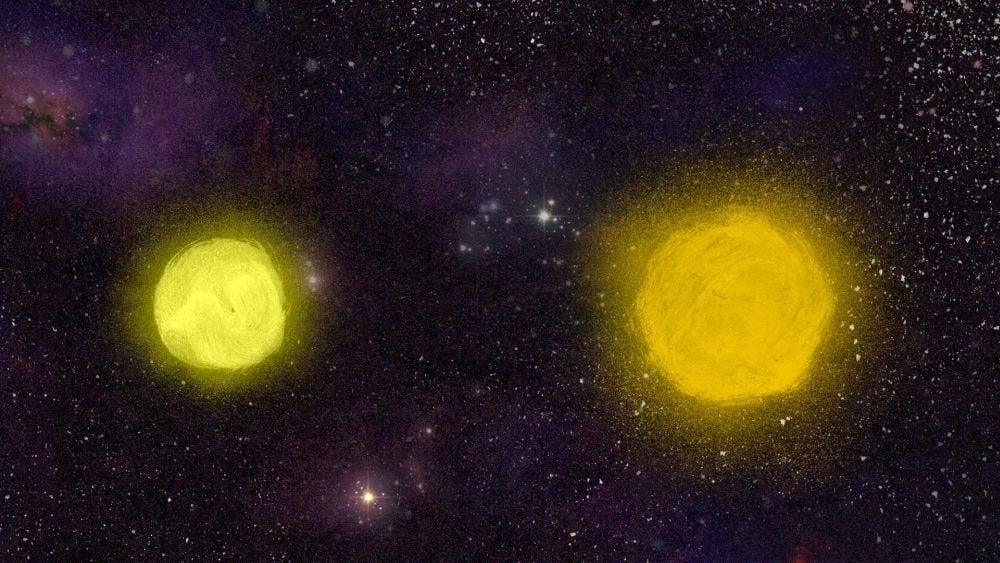
Physicists in Innsbruck trapped cesium atoms in thin tubes and made them attract each other. From how the atoms spread out when released, they inferred clusters of six or more atoms that a 1931 theory predicts.
Why it matters · It's a cleanly tunable test of how many interacting quantum particles behave together, the problem behind magnets and electronics, and it shows how physicists infer things they can't see.
Know this first
Context from the editor, not the article · 29 sec
1 · Bethe's 1931 solution
Hans Bethe solved exactly how a one-dimensional row of interacting spins behaves. His method, the Bethe ansatz, is one of the few exact solutions for many interacting quantum particles, a problem that is usually impossible to calculate.
2 · Bose-Einstein condensate
When certain atoms are cooled to billionths of a degree above absolute zero, they share a single quantum state and act as one coherent wave. Experimenters use condensates as a clean starting material for building quantum systems.
3 · Tuning atomic interactions
In alkali atoms such as cesium, a magnetic field can tune how strongly atoms repel or attract each other through an effect called a Feshbach resonance. That lets physicists dial interactions smoothly from repulsive to attractive.
2/5Live Science· Kristina Killgrove · Oct 16
Alaska site holds possible oldest dwelling and needles in the Americas
Archaeologists dug up a 13,800-year-old camp near Fairbanks, Alaska. It holds what may be the Western Hemisphere's oldest dwelling and oldest needles, plus tools showing ties to both Siberia and early peoples farther south.
Why it matters · The first Americans left few traces in Beringia, so a rich, long-used base camp is rare direct evidence of how they actually lived.
Know this first
Context from the editor, not the article · 28 sec
1 · Beringia and the land bridge
During the last ice age, low sea levels exposed land between Siberia and Alaska. This region, Beringia, linked Asia and North America and is the route the ancestors of Indigenous Americans are thought to have taken.
2 · When people arrived
Recent genetic and archaeological studies put the first entry into the Americas around 21,000 years ago. Huge ice sheets over Canada separated Beringia from the rest of the continent for much of that time.
3 · Why evidence is scarce
Most known Beringian sites are small seasonal hunting camps: a hearth, some tools, chipped stone. They are scattered across a vast, remote area, and few have been excavated intensively, so daily life there is poorly known.
3/5Science News· Lisa Grossman· Oct 16
Artemis II crew saw golf-ball-sized rocks hitting the moon
NASA has released the first science from April's Artemis II lunar flyby. The crew saw five flashes from roughly 8.5-gram rocks hitting the moon, picked out color differences linked to minerals, and showed that trained eyes add real data.
Why it matters · This is the first real test in more than 50 years of what trained people add to lunar science that cameras can't, and it is shaping how NASA plans its landings.
Know this first
Context from the editor, not the article · 31 sec
1 · The Artemis program
Artemis is NASA's program to return people to the moon. Artemis II was a crewed 10-day loop around the moon in April 2026 with no landing. A later mission, Artemis IV, is meant to put astronauts on the surface.
2 · Lunar impact flashes
The moon has no air, so small rocks hit it at full speed instead of burning up. Each strike releases a brief flash of light. On the moon's dark side, telescopes or eyes can spot these flashes and count them.
3 · Why moon colors matter
The moon looks gray, but faint differences in tint follow what the surface is made of, such as titanium or iron content or volcanic glass. Mapping these tints is a long-standing way to map lunar geology from a distance.
4/5Universe Today· Brian Koberlein· Oct 16
Neutrino flavor changes may decide whether big stars explode or vanish
Physicists Mariam Gogilashvili and Irene Tamborra simulated 195 collapsing stars and found that neutrinos switching type can decide between a supernova and a quiet collapse into a black hole, especially for stars of 16–30 solar masses.
Why it matters · It ties a basic property of neutrinos to an old astronomical puzzle: why we see fewer exploding big stars than star-formation rates predict.
Know this first
Context from the editor, not the article · 32 sec
1 · How massive stars die
Stars above roughly 8 solar masses end by fusing heavier and heavier elements until an iron core forms that can't release energy through fusion. The core collapses in under a second, and either rebounds into a supernova or keeps falling into a black hole.
2 · Neutrino flavors
Neutrinos are nearly massless, uncharged particles that come in three flavors: electron, muon and tau. Because they have tiny masses, a neutrino can turn from one flavor into another as it travels. This is called oscillation or flavor conversion.
3 · Neutrinos as supernova engine
In the standard theory, the collapse launches a shock wave that stalls. Neutrinos pouring out of the hot core heat the matter behind the shock. If the heating is enough, the shock revives and the star explodes. If not, it collapses.
5/5Science News· Jake Buehler· Oct 16
Stress simulations suggest how horned dinosaurs fought with their heads
Bristol researchers built 3-D models of six horned-dinosaur skulls and simulated combat forces on them. The results suggest each species was built for a different fighting style, and that combat styles diversified as the group evolved.
Why it matters · No one can watch extinct animals fight, so this study shows how engineering methods can turn fossils into testable ideas about behavior.
Know this first
Context from the editor, not the article · 30 sec
1 · Who the ceratopsians were
Ceratopsians were plant-eating dinosaurs, mostly from the Cretaceous period. Many had horns and a bony frill at the back of the skull. Triceratops is the best known. Early members of the group were small and had no horns.
2 · Why fighting was suspected
Researchers have long guessed that ceratopsians used their horns against members of their own species, as deer and antelope do today. Some fossil skulls carry healed injuries in particular spots on the frill and cheek, which fits head-to-head fights.
3 · Testing bones in a computer
Paleontologists already test fossils by simulating the loads they could bear, for example Tyrannosaurus bite forces and the impacts on armored dinosaurs' tail clubs. Areas of high simulated stress are where real bone would be more likely to break.
Physicists at the University of Innsbruck report evidence for "1," clusters of bound particles first predicted by mathematics from 1931. They made many of them at once in a gas of ultracold cesium atoms, including some with more than six atoms. The work appeared Aug. 29 in Nature Communications.
The prediction
In 1931, Hans Bethe solved exactly how a row of electron spins behaves. He found that a few flipped spins can bind together and travel down the row as one unit. Later, physicists showed that his math also covers atoms moving along a line. If those atoms attract each other, they should form clusters called Bethe strings. Exact solutions like this are rare for systems of many interacting particles, which is why testing them matters.
Single strings had already been seen in magnetic crystals and superconducting circuits, one at a time. Theory says that many strings of different sizes can change how a whole system behaves, and testing that needs lots of strings at once. Atoms make this hard. In 3D, attracting atoms clump into molecules, release energy and fly out of the trap. In 1D they can't pass each other. "They are really a bit like pearls on a string," said co-author Hanns-Christoph Nägerl.
How they did it
The team cooled tens of thousands of cesium atoms into a 2, a near-absolute-zero state in which the atoms share one quantum state. Lasers then split it into thousands of thin tubes, each holding up to a few dozen atoms in single file. A magnetic field turned the atoms' mutual repulsion down to zero and then into attraction.
The strings can't be seen, so the team released the atoms and measured how fast the clouds spread. When the atoms could expand only along their tubes, the strings stayed intact. When the atoms were freed in 3D, the strings broke and their 3 became motion. The 3D clouds spread with about three times the energy. That pointed to strings of at least six atoms. The data also matched 4, a theory that treats the gas as a fluid made of several kinds of particles, strings included.
Caveats
"That some theory fits to your data is not a proof that something exists," Nägerl said. The strings are inferred, not observed. They are also short-lived: they decay into ordinary molecules, and the coldest runs lost about 40% of the atoms.
More direct tests could come from 5, which images single atoms. Nägerl also proposes building strings from molecules shielded with 6, which keeps them from colliding, though he admits the idea is untested.
Physicists at the University of Innsbruck report evidence for "1": bound clusters of particles moving along a line, predicted by mathematics first worked out in 1931. Using tens of thousands of ultracold cesium atoms held in thin tubes, the team appears to have produced many strings of different sizes at the same time, some with more than six atoms. The result was published on Aug. 29 in Nature Communications. Co-author Hanns-Christoph Nägerl is careful to call it evidence, not proof.
A prediction from the early days of quantum mechanics
In 1931, physicists were trying to use the new quantum mechanics to explain why some materials are magnetic. Hans Bethe took a simplified case: a single row of electrons, each with a spin pointing up or down. He found an exact solution for how the row behaves. One feature stood out. If a few spins in the row flip, they can bind together and travel down the row as a single unit.
Decades later, physicists found that Bethe's method also works for heavier particles, such as atoms, moving along a line. If those particles attract each other, the math predicts they bind into clusters. These are Bethe strings.
Why should anyone care about a toy model? Magnets, phone chips and almost everything else are made of huge numbers of interacting particles, and their collective behaviour is usually too hard to calculate. One-dimensional systems with exact solutions are rare places where theory makes firm predictions. Ultracold atoms give experimenters a clean, adjustable version of such a system to test those predictions.
Why many strings at once is hard
Small Bethe strings have been seen before, in magnetic crystals and in superconducting quantum circuits, but only one at a time. Theory says that a crowd of strings, in many sizes, can change how a whole system behaves. Testing that requires making lots of strings together, and doing it with atoms runs into a basic problem: attraction.
In three dimensions, a gas of mutually attracting atoms collapses. The atoms clump together and form molecules. That releases energy, which kicks atoms out of the trap, and the gas quickly disappears. In one dimension the picture changes. "They are really a bit like pearls on a string, right? Like on a necklace, they cannot go past," Nägerl told Live Science. "In 3D, everything would collapse. But in 1D, it does not collapse."
How the experiment worked
Cool. The team chilled tens of thousands of cesium atoms into a 2, a state near absolute zero in which the atoms share a single quantum state.
The fully released 3D clouds spread with about three times the energy of the 1D ones. That extra energy is roughly what was locked up holding the atoms together.
An analogy (ours, not the article's): imagine weighing a set of compressed springs, first still clamped and then released. The extra speed of the released pieces tells you how much energy the clamps were holding, even though you never saw inside them.
From this difference, the team estimated how tightly the atoms had been bound. The answer pointed to strings of at least six atoms. The data also closely matched 4, a theory that treats the gas as a fluid made of many kinds of particle, including strings of different sizes. Instead of following every atom, it tracks how each kind of particle flows over time.
What it doesn't show
Nägerl stresses the limits. "That some theory fits to your data is not a proof that something exists," he said. The strings are inferred from an energy budget and a theory match, not observed.
They also don't last. Up close, the atoms still feel the three-dimensional world, and the strings eventually decay into ordinary cesium molecules. In the coldest runs the team lost about 40% of its atoms. "Transiently you create these Bethe string states," Nägerl said. "But I don't think they are long-lived." The article doesn't say how long the strings survive, or exactly how the six-atom figure follows from the threefold energy difference.
What could come next
There are two possible routes to more direct evidence. The first is Nägerl's own idea, which he says is untested: physicists have recently learned to shield ultracold molecules with 5, which keeps them from colliding at close range. Strings made from shielded molecules might last long enough to study directly. "I've had nobody do a theory check on my claims now, but I think intuitively this should work," he said. The second is 6, which images atoms one at a time and could pick out individual strings.
For Nägerl, the strings are "a little diversion" on the way to a bigger goal. He wants an experiment where physicists control both how each particle moves and how its spin flips, so they can build model materials piece by piece, "like a LEGO type." His team has already started using lasers to control the spins of atoms in its one-dimensional gas. Because Bethe strings form whenever the atoms attract, he notes, that work can't ignore them.
Remember
Going down to one dimension stops attracting atoms from collapsing; in 3D they clump into molecules and escape the trap.
The evidence is indirect: a threefold energy difference between 3D and 1D releases, plus agreement with theory.
The strings are fleeting. They decay into cesium molecules, and up to 40% of the atoms were lost.
Natural volcanic glass that breaks into very sharp edges. Its chemistry can often be traced to a specific source.
A broken bison bone from the site, which also yielded a hearth, needles and stone tools.
Archaeologists working in interior Alaska have found what may be the oldest dwelling in the Western Hemisphere. The same site has the hemisphere's oldest known needles and possibly some early dogs. The site sits about 55 kilometers (34 miles) southeast of Fairbanks and is called Shégˊ Xdaltthˊíˊ, which means "They Were There" in the Alaska Native Athabascan language. People used it on and off for about 1,000 years, starting around 13,800 years ago. Kelly Graf of the University of Kansas led the study, which was published on Oct. 14 in the peer-reviewed journal 1.
Why a base camp matters
Evidence suggests the ancestors of Indigenous Americans reached the continent about 21,000 years ago by way of 2, the ice-age land link between Siberia and Alaska. Most sites there are small seasonal hunting camps, which leave little behind. Graf expected "a hearth or two." Her team found tens of thousands of artifacts.
What they found
The earliest layer contains a hearth, a small pit, and a stain in the soil where a wooden post once stood. Together these probably mark a lean-to or an early tent. The authors call it the "earliest potential case" of a habitation structure in North America, and the word "potential" matters. Nearby was an earth oven full of charcoal and animal bones, probably used to slow-cook meat for a large family group. The team also found stone tools, bone needles and an antler pendant.
Links in two directions
Toward Asia: The site has diamond-shaped 3, stone points flaked on both faces and mounted on a shaft. They resemble tools from northern Siberia. Obsidian, a volcanic glass, was carried in from a source hundreds of miles to the northwest.
The team also found bones from more than a dozen wolf-like animals. Analysis of one jaw showed it came from neither a dire wolf nor a gray wolf. It belonged to a wolf-like population found only in central Alaska. Genetic studies suggest that North America's first dogs came from Siberian wolves, so the authors argue these people may have kept dogs. They note the evidence is only circumstantial.
Toward the south: The team found eight fragments of bone needles. Until now, eyed needles had turned up only at 4 sites, those of early peoples living south of the ice sheets in temperate North America. The antler pendant also resembles ornaments found farther south. It is unclear whether people actually traveled between the regions. "At least we can say there is a connection," Graf said.
What's still open
Spencer Pelton, an archaeologist at the University of Wyoming who was not involved, calls it the oldest site in the Americas whose remains show people living there for long stretches. Only a few small parts of Alaska have been dug intensively. Just two sites, including the Bluefish Caves in Yukon (24,000 years old), hint that people settled Beringia much earlier. Graf plans more digs with Alaska Native elders, two of whom are co-authors.
Archaeologists digging in interior Alaska report a camp that may contain the oldest dwelling in the Western Hemisphere. The site sits about 55 kilometers (34 miles) southeast of Fairbanks. Alaska Native elders named it Shégˊ Xdaltthˊíˊ, which means "They Were There" in the Athabascan language. People returned to it on and off for roughly a millennium, starting about 13,800 years ago. The study, led by Kelly Graf of the University of Kansas, was published on Oct. 14 in the peer-reviewed journal 1. It focuses on that earliest occupation, which the authors read as evidence of people "settling in" to a new land.
The problem: a thin record of the first Americans
Recent genetic and archaeological work suggests the ancestors of today's Indigenous Americans entered the continent around 21,000 years ago. They came through 2, the region that connected northeast Asia and northwest North America while ice-age sea levels were low. Studying them there is hard. Known Beringian sites tend to be small seasonal hunting camps, spread over a huge, remote area. A typical find is a few tools and the debris from 3 (shaping stone into tools) around a hearth. That shows where people hunted, but says little about how they lived.
Graf expected exactly that. "I had no idea that we'd stumble into a base camp with tens of thousands of artifacts," she told Live Science. "It was a total surprise!"
The possible dwelling
Wooden structures rarely survive 14,000 years, so archaeologists infer them from what is left. In the earliest layer the team found three things together: a hearth, a small pit, and a dirt stain marking where a wooden post once stood. When a post rots in place, it leaves a patch of soil with a different color and texture. Put that next to a fireplace and a pit, and the simplest explanation is a shelter built around the fire. The team suggests a lean-to or an early tent house.
The authors describe it carefully, as "the earliest potential case of a habitation structure in North America." The headline claim of the "oldest dwelling" rests on this reading. A single post stain is suggestive, not a floor plan.
Close by was an earth oven: a pit filled with charcoal and animal bones. The authors think it was used to slow-cook meat for a large family group. The team also recovered stone tools, bone needles and a pendant carved from antler. A photo from the dig shows bison bone among the remains. "Early Alaskans knew their surroundings well," the researchers wrote.
Connections to Asia
Several finds point west. The stone tools include diamond-shaped 4, points flaked on both faces and fixed to a shaft or handle. They are made from 5 and basalt, both volcanic rocks. This shape is unique to central Alaska, but it resembles tools typically found much farther west, in what is now northern Siberia.
Obsidian artifacts show that people carried this volcanic glass from a source hundreds of miles to the northwest. The article doesn't explain how the source was identified. Archaeologists usually do it by matching the chemical makeup of an artifact to known volcanic deposits.
Then there are the 6, members of the dog family. The site held bones from more than a dozen wolf-like animals. Analysis of one jaw ruled out a dire wolf (Aenocyon dirus) and the Pleistocene Beringian or gray wolf (Canis lupus). It came from a wolf-like population found only in central Alaska. Current genetic evidence suggests North America's early domestic dogs came from Siberian wolves. The authors argue that the timing and location of this site make it plausible the people kept dogs. They call this circumstantial evidence. The jaw shows the animals were unusual, not that they were tame. "Like humans, potentially, the canids… were recent immigrants from Asian Beringia," they wrote.
Connections to the south
Other finds point to peoples living south of the great ice sheets that covered Canada. The team found eight fragments of bone needles, part of what they describe as a sewing kit. Until now, eyed needles in the Americas had come only from 7 sites, the camps of early peoples in temperate North America. That makes these the oldest needles found in the Western Hemisphere. They also tie this site to cultures farther south.
The antler pendant points the same way. It is drilled with a hole at one end and shaped into a point at the other, like ornaments from more southerly sites. The authors call the mix of Asian-style and American-style traits at one site "truly notable." In their view it shows a "strong cultural connection between early Beringians and Americans."
What that connection means is still open. "It would be hard to pin down whether or not they were moving back and forth during a lifetime, but at least we can say there is a connection," Graf said. Shared styles could come from people traveling, from trade, or from a common cultural ancestry. This site alone cannot tell these apart.
How strong is the case?
Spencer Pelton, a University of Wyoming archaeologist who was not involved, wrote a commentary in the same journal. He calls Shégˊ Xdaltthˊíˊ "the oldest site in the Americas containing a large and rich assemblage of features, artifacts, and faunal refuse indicative of prolonged residential occupation." In other words, its strength is the range of evidence at one spot, not a single striking object.
The weaker claims are the ones with qualifiers attached: a potential dwelling and possible dogs. The article also doesn't say how the 13,800-year date was obtained or how precise it is.
What's left to learn
Graf points out how little has been sampled. "Alaska is a big place and so remote, so there are really just a few small areas that have been intensively investigated." The researchers note that only two known sites suggest people settled Beringia much earlier than this one. One is the Bluefish Caves in Yukon, dated to 24,000 years ago. So the gap between the genetic arrival date of about 21,000 years ago and well-documented camps like this one remains mostly empty.
The project works with local communities. Two co-authors are elders from the Alaska Native corporations nearest the site. They named it and visited to discuss where to dig and what might turn up. Graf hopes to bring younger Alaska Native people into future field seasons.
Remember
The "oldest dwelling" claim rests on a hearth, a pit and one post stain; the authors call it "potential."
Tools there resemble both Siberian points and southern Paleoindian needles and ornaments, tying the two regions together.
The possible dogs are circumstantial: one jaw shows an unusual Alaskan wolf-like population, not tameness.
The crew's custom tablet software, showing a moon map and a checklist of planned observations.1 / 4
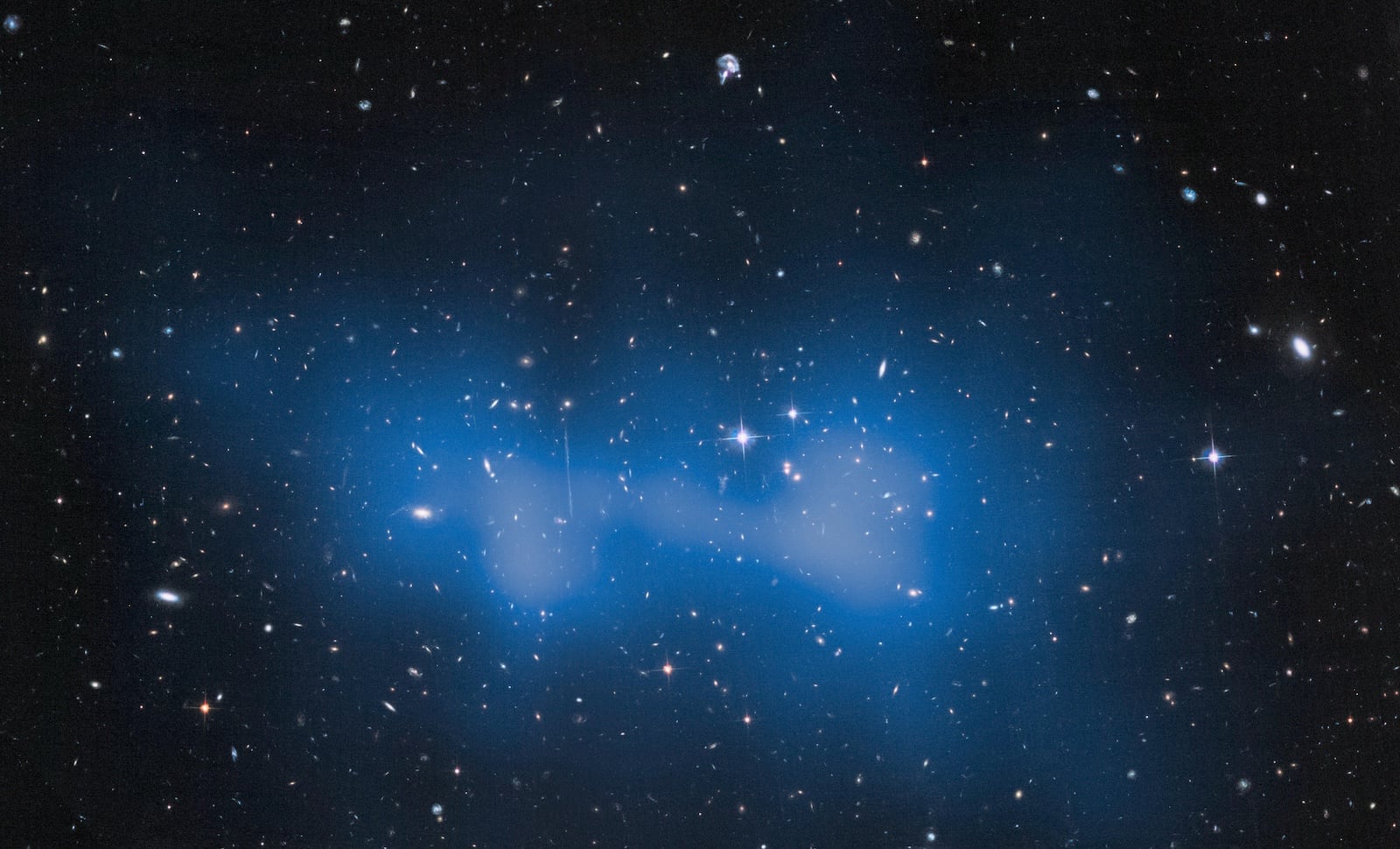
NASA has released the first science results from 1, the April 2026 mission that flew four astronauts around the moon. On October 7, the science team published three reports and a public data archive. The results were presented at a scientists' workshop meeting, and the article doesn't say whether they have been peer reviewed, so treat the numbers as early.
Why put people there at all?
Robotic orbiters have mapped the moon for decades. So the team wanted to test what trained human observers add. Their answer: the most valuable data weren't the photos. They were the crew's spoken and written descriptions.
The astronauts trained in lunar geology before launch. During about seven hours close to the moon, they worked in pairs. One pair reported to mission control. The other recorded spoken notes and drew on custom moon maps on their tablets, which flight science lead Kelsey Young calls "field notebooks." Christina Koch, for example, sketched the layered textures of the 2, a giant impact crater.
Five flashes from tiny rocks
During a 54-minute stretch when the moon blocked the sun, the crew watched the dark lunar surface for 3. These are brief sparks where small rocks hit the airless moon. They saw five, each lasting less than a second.
Models predict how often rocks of each size should hit the moon, and small ones are far more common. Comparing the crew's flash rate with those predictions points to rocks of about 8.5 grams and 4.5 centimeters across, roughly golf balls. Jennifer Heldmann of NASA's Ames Research Center says these are likely the smallest meteorites ever seen hitting the moon. Their craters would be too small for NASA's orbiting cameras to spot.
Heldmann puts the chance of a dangerous strike during a planned two-week landing in 2028 at under 1 in 10 million. That estimate rests on only five events.
Colors that cameras miss
The team says the moon's faint tints are easier to see by eye than by camera. Matched against data going back to the 1970s:
Blues track titanium-rich volcanic rock.
Browns track iron content.
Greens track glass from eruptions or impacts.
The crew also studied the 4, the line between day and night. Its long shadows preview the lighting astronauts will face at the south pole, where NASA plans to land.
Lessons for landings
The cameras weren't calibrated before flight. The windows that would have helped correct the images were charred during reentry, so some photo data can't be fully fixed. The team wants more training in spoken description, since astronauts in spacesuits can't write notes. It also concluded that working in pairs, discussing what they saw, produced better science.
On October 7, NASA's 1 science team released three reports and a large public data archive from the crewed lunar flyby in April. This is the first systematic look at what the four astronauts recorded during about seven hours close to the moon. The release came three days before the team's six-month deadline. It also fell on the 67th anniversary of 2, the Soviet probe that took the first photograph of the moon's farside. The results were presented at a virtual Lunar Surface Science Workshop meeting. The article calls them reports and doesn't say whether any have gone through peer review, so treat the specific numbers as early.
The question being tested
Artemis II, the second mission in NASA's program to return people to the moon, flew Reid Wiseman, Victor Glover, Christina Koch and Canadian astronaut Jeremy Hansen on a 10-day trip around the moon. It was the first time in more than 50 years that people had been near it. Robotic orbiters have mapped the moon in fine detail for decades, so planetary scientists keep coming back to one question, as flight science operations lead Kelsey Young puts it: what can humans add that a camera can't?
The team's answer from this flight is a little surprising. The most valuable data were not the photos. They were the crew's spoken and written descriptions.
How the crew observed
Before launch, the astronauts trained in lunar geology and in describing what they saw. Field geologist Cindy Evans of NASA's Johnson Space Center, one of their instructors, says the crew worked as an extension of the science team: "They understood the language of geology."
During the flyby they worked in pairs. One pair talked with mission control and gave the science team regular updates. The other pair recorded themselves describing what they saw and drew with a stylus on custom moon maps loaded onto their tablets. Young calls these high-tech field notebooks. Field geologists on Earth rely on notes and sketches to capture nuance and context that photos miss. Koch, for example, made a rough sketch of the 3, a huge multi-ringed impact crater, marking differences in texture and layering. "You're capturing that nuance really quickly before it leaves your brain," Young says.
For 54 minutes the moon blocked the sun. That eclipse gave the crew a view of the 4 (the sun's faint outer atmosphere), interplanetary dust, stars and planets, and the moon's darkened face.
Five flashes, tiny rocks
At the top of the team's priority list were 5. These are brief sparks that appear where small rocks hit the airless moon. No one knew in advance whether the crew would see any. They saw five. Jennifer Heldmann of NASA's Ames Research Center describes them as "pinpricks of light lasting less than a second, with no color." Hansen called each one "just like a bloop," with no streak like a meteor leaves. The crew marked where each flash appeared on a picture of the dark moon.
The way the team got from flashes to rock size is a rate comparison. Theoretical models predict how many impacts of each size the moon should get per minute. Small rocks are far more common than large ones. So the number of flashes the crew saw per minute points to a particular size range. The match came out at rocks of about 8.5 grams and just over 4.5 centimeters across, roughly golf balls. Heldmann says this is probably a record for the smallest meteorites ever seen optically hitting the moon. Their craters are likely less than a meter wide, too small for NASA's 6, a mapping spacecraft that has circled the moon since 2009, to see.
These numbers matter for safety. For 7, planned for 2028 as a two-week surface mission using a Blue Origin or SpaceX lander, Heldmann puts the chance of a dangerous impact at less than 1 in 10 million. For a moon base lasting a decade the chance is higher but still low. One caveat: the estimate rests on just five events and on the impact models used, and the article doesn't give error bars.
Color and light
The moon's faint colors were another priority. Tint and brightness change with surface roughness, temperature and mineral content, and the team says human eyes pick these up better than cameras. The crew also watched how colors shifted as the viewing angle and lighting changed. Planetary scientist Ariel Deutsch called it "a cool demonstration of the value of human eyes as scientific sensors."
The team compared the crew's descriptions with data going back to the 1970s to link colors to composition:
Blues match titanium-rich volcanic rocks.
Browns reflect different iron levels.
Greens come from glass made in volcanic eruptions or asteroid impacts.
Future crews could use these links to map terrain and pick out materials for samples or resources.
The crew was also struck by the 8, the line between lunar day and night, where long shadows make the ground look "impossibly rugged," in Wiseman's words. The lighting there is a preview of the moon's south pole, where Artemis plans to land and where the sun stays low on the horizon.
Lessons and loose ends
Some lessons are practical. Because of time pressure, nobody calibrated the cameras before flight. The team is now calibrating them on the ground. It can't account for how the spacecraft windows affected the images, though, because the windows were charred during reentry. That weakens some of the photographic data for good.
The team also recommends more training in spoken description. Astronauts in spacesuits on the surface won't be able to write notes, so audio will carry most of the record. Young wants astronauts trained as field scientists no matter where they land.
The paired setup, two at the windows and two talking to the ground, produced better science, the team concluded, because the crew discussed and interpreted what they saw together. Glover said the talk also brought "better human connection."
Some moments resisted description entirely. As Earth rose from behind the moon, Glover and Koch managed little beyond "Oh my gosh." "If you can see that and talk," Koch said, "you just ain't right."
The article leaves some questions open. How much of the color work goes beyond what calibrated orbital instruments could do? How well would a flash-based impact estimate hold up with more observing time? The full archive is now public for others to check.
Remember
The impact-rate estimate comes from comparing five flashes against models; that's a small sample with no stated error bars.
The cameras went uncalibrated and the windows were charred on reentry, which permanently limits the photographic data.
Surface crews will rely on spoken notes, so NASA plans to train astronauts in verbal field description.
Simulation results: which progenitor masses explode or collapse at each assumed level of flavor conversion.1 / 2
What's new
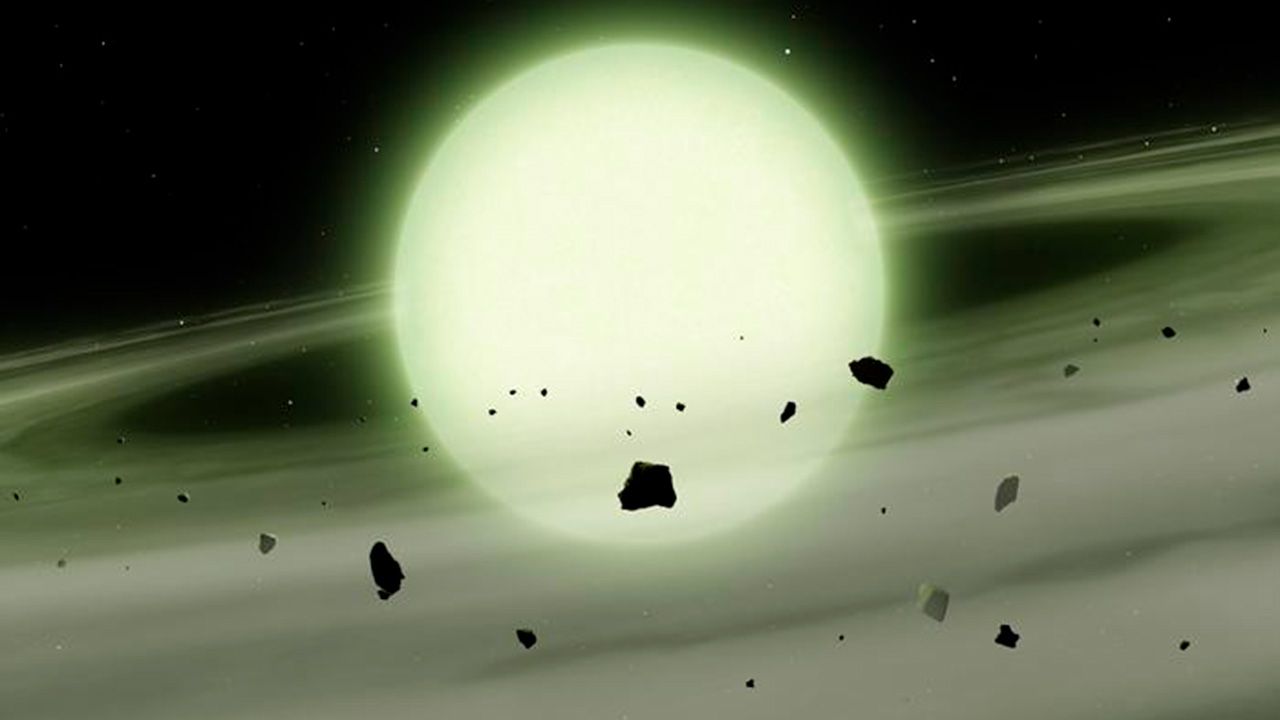
Some massive stars die in a 1. Others seem to collapse quietly into a black hole with no explosion at all. Mariam Gogilashvili and Irene Tamborra, in a peer-reviewed letter in 2, report that neutrinos changing type inside the dying star can decide which happens.
The setup
Once a star of more than about eight 3 builds an iron core, fusion can no longer support it, and the core collapses in a fraction of a second. The core rebounds and launches a shock wave. In detailed models this shock tends to stall. The standard view is that the flood of neutrinos escaping the core heats the matter behind the shock and restarts it. If the heating is too weak, the star becomes a "4" and its core turns into a black hole.
Neutrinos come in three 5: electron, muon and tau. Because they have tiny masses, they can change from one flavor to another. According to the article, most collapse simulations ignore this.
The article says flavor matters because the flavors differ in mass. Be skeptical of that. Neutrino masses are far too small to affect the weight of a stellar core. A likelier link, from standard supernova physics, is that flavors differ in energy and in how they interact with matter, so conversion changes how much heat reaches the shock. The article doesn't spell out the paper's mechanism.
What they did
The full calculation of 6 is too hard, so the team set conversion to a range of assumed levels instead of computing it. They then simulated core collapse in 195 stars of 9 to 120 solar masses at each level and recorded whether each star exploded or collapsed.
Results
Even a small amount of conversion can flip a star's fate.
Stars of 16–30 solar masses are the most sensitive. With conversion included, most of them collapse directly into black holes.
Lighter and heaviest stars still explode unless conversion is especially strong.
That window matches a known puzzle: astronomers find few 7 of observed supernovae heavier than about 17 solar masses, and they count fewer supernovae than star-formation rates predict.
Caveats
The conversion levels were assumed, not derived. The study shows flavor conversion can control the outcome, not how much of it happens in real stars. Testing it will take sky surveys that catch stars before and during collapse, or a neutrino burst from a supernova in our own galaxy.
The news
Some massive stars die in a 1, a blast that can briefly outshine a whole galaxy. Others seem to just disappear, their cores falling straight into a black hole with no explosion at all. What decides between the two has been an open question for decades. A new paper by Mariam Gogilashvili and Irene Tamborra, published as a peer-reviewed letter in 2, suggests part of the answer is neutrino flavor: neutrinos inside a collapsing star switching from one type to another. In their simulations, even a modest amount of switching was enough to flip some stars from exploding to failing.
How a big star dies
A star of more than about eight 3 spends its life fusing hydrogen, then helium, then heavier elements, each stage faster than the last. Eventually it builds an iron core. Fusing iron takes energy in rather than releasing it, so nothing holds the core up against gravity anymore. The core collapses within a fraction of a second, overshoots, and rebounds, sending a shock wave outward.
The difficult part, which the Universe Today article skips, is that in detailed models this shock usually stalls. What revives it is generally thought to be neutrinos. A collapsing core releases an enormous flood of them, carrying off most of the energy of the event. They interact with matter so weakly that most escape. A small fraction, though, gets absorbed in the hot material just behind the shock and heats it. If that heating is strong enough, the shock restarts and the star explodes. If it isn't, matter keeps falling onto the core until it becomes a black hole: a "4." Small changes in how neutrinos deposit energy can therefore tip the result one way or the other.
Where flavor comes in
Neutrinos have no electric charge and partner with the three charged leptons: the electron, the heavier muon and the heavier still tau. Each lepton has its own neutrino, and these three types are called 5. Physicists once thought neutrinos were massless, which would fix each neutrino's flavor permanently. Experiments later showed that neutrinos have tiny masses, and that this lets them oscillate, or switch flavor, as they travel. In the extremely dense neutrino gas near a collapsing core, neutrinos can also affect one another's flavor, which makes the process very hard to calculate.
According to the article, most core-collapse simulations don't track these flavor changes. It explains why they matter by saying that the flavors have different masses, so conversion could change whether the core has enough mass to collapse. Treat that explanation with caution. Neutrino masses are so tiny that their weight is irrelevant to a stellar core. A more plausible link, based on standard supernova physics rather than anything the article states, is that flavors are produced with different energies and interact with matter differently. Converting one flavor into another would then change how much heat neutrinos leave behind the shock. The article doesn't describe the paper's actual mechanism, so the exact physical link remains unclear from this coverage.
What the team did
Because a full flavor-conversion calculation is out of reach, the authors used a parametric shortcut. Instead of computing conversion from first principles, they set the amount of 6 to a series of fixed levels and checked how the outcome changed at each. As an analogy (this one is ours, not the article's), it's like testing a bridge design under a range of assumed wind speeds when you can't yet forecast the actual wind.
They used this approach on 195 7 stars, meaning the stars just before collapse, with masses from 9 to 120 times the Sun's. Each star was run at several conversion levels, and each run was scored as either an explosion or a direct collapse to a black hole. The article doesn't say whether the simulations are one-, two- or three-dimensional, or how the conversion levels were chosen.
The results
Even a small amount of flavor conversion can change the outcome for an individual star.
The effect is strongest for stars of 16–30 solar masses. With conversion included, most stars in this range collapse directly into black holes.
Lighter stars and the heaviest stars still mostly explode, unless the flavor conversion is especially strong.
The chart from the paper shows explosion versus collapse across progenitor mass at each assumed conversion threshold.
Why the 16–30 range is interesting
This mass window lines up with a known puzzle. When astronomers look through archival images for the stars that later went supernova, they find few progenitors heavier than about 17–18 solar masses, though stars that massive should exist. Separately, as the article notes, counts of supernovae appear to fall short of what galaxies' star-formation rates predict. If many stars in the 16–30 range collapse without exploding, both gaps would make sense. Astronomers have also watched at least one candidate failed supernova, a red supergiant in the galaxy NGC 6946 that brightened briefly and then faded from view. Failed supernovae are therefore observed, not only predicted.
Caveats
The result shows that flavor conversion can control the outcome. It doesn't show how much conversion actually happens in real stars, because the conversion levels were chosen by hand rather than calculated. The authors' conclusion depends on which of those levels nature picks. Core-collapse outcomes are also sensitive to other factors, including the star's internal structure, rotation and the dimensionality of the simulation, and the article doesn't address how those interact with flavor effects. The finding is best read as a strong case that flavor conversion should be included in supernova models, not as a measured explanation of the missing supernovae.
What would settle it
The article points to observation: wide-field sky surveys that repeatedly image large parts of the sky, catching stars before they explode or vanish, and sometimes during the transition. A clean tally of which stars explode and which disappear, by mass, could be compared with these predictions. Another test is a neutrino burst from a supernova in our own galaxy. Detectors caught about two dozen neutrinos from Supernova 1987A, hours before its light arrived, and a nearby event today would deliver thousands. That would put flavor effects to a direct test.
Remember
The paper never calculated flavor conversion. It assumed set levels, so it shows a sensitivity, not a measurement.
The article's explanation, that flavors differ in mass, is dubious. Energy deposition behind the stalled shock is the more plausible link.
A neutrino burst from a supernova in our galaxy would directly test flavor effects in a collapsing core.
Simulated loads on a Triceratops skull: single-horn stab, horns interlocked partway up, and horns locked at an angle.1 / 2
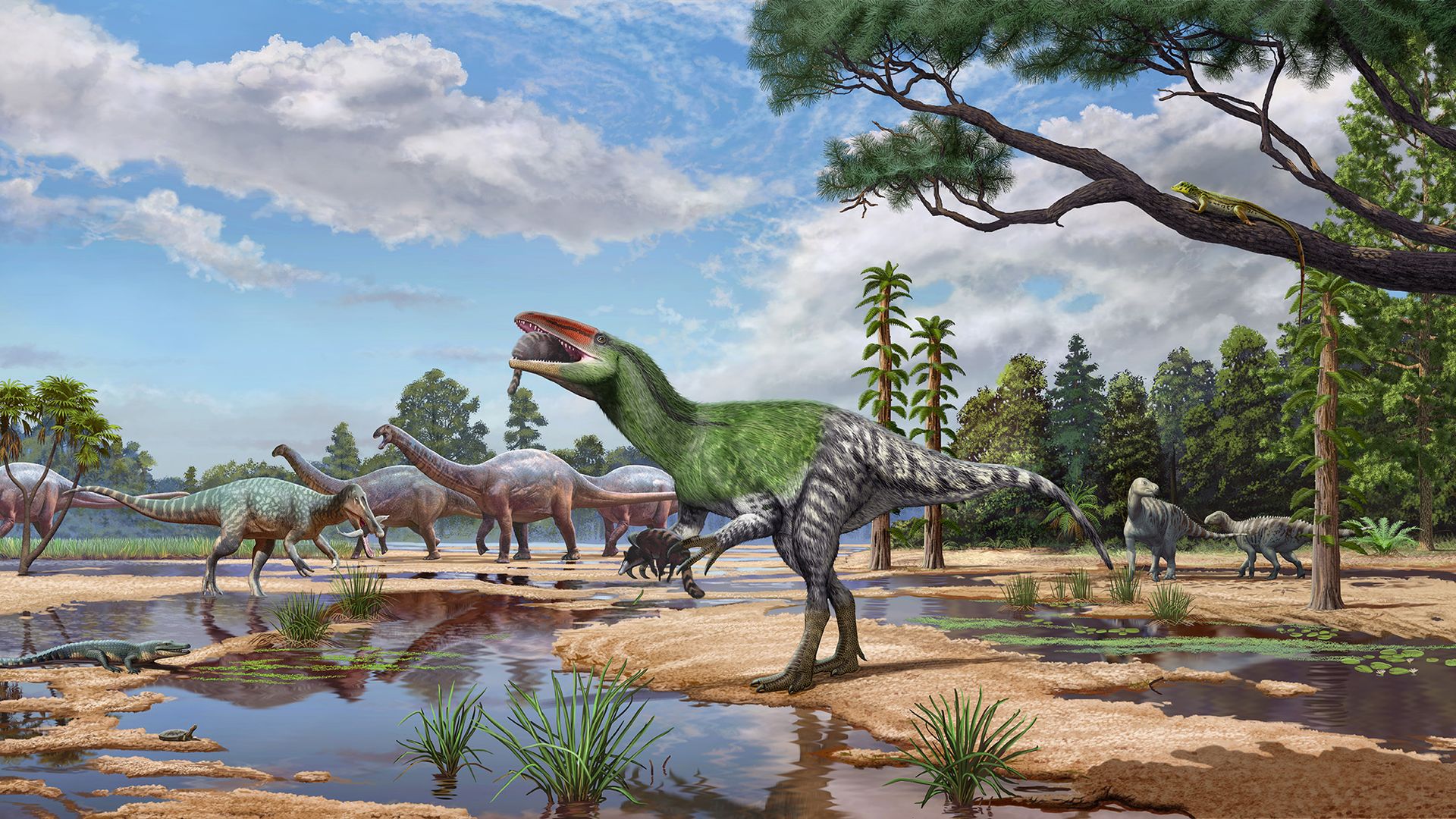
Paleontologists have long suspected that Triceratops and its relatives used their horns to fight each other. They had little evidence for how. A study published September 24 in the peer-reviewed journal 1 tackles the question with engineering. Its answer: different species seem to have been built for different fighting styles.
The problem
2, the horned dinosaurs, had striking headgear of horns and bony 3. Some fossil skulls show healed injuries in particular spots on the frill and cheek, which suggests head-to-head clashes. But injuries alone can't tell you whether an animal rammed, stabbed or wrestled.
What the team did
Eric Austin Ames Jr. and colleagues at the University of Bristol made digital 3-D models of six skulls from five species, chosen from across the group's family tree. They then applied simulated combat forces from different directions and in different ways: a single horn stabbing, horns interlocked partway up the shaft, horns locked at an angle, and ramming.
The reasoning goes like this. Where a skull shows high stress, the bone was more likely to fail. So a species probably evolved to fight in ways its skull could handle.
What they found
4, a hornless, husky-sized species from about 125 million years ago, had a skull poorly suited to any kind of combat.
In general, the larger, later species could handle a wider range of fighting styles.
Ames's interpretation
Ames thinks horns and frills first evolved for display, to signal to rivals and mates, and were soon put to use in contact fights. As the horns diversified, so did fighting styles, a pattern also seen in modern plant-eaters such as antelope. Like antlers, the horns could probably also be turned on predators.
Caveats
The models came from surface scans, so they don't capture the complex internal structure of these huge skulls. Paleontologist Andrew Farke, who was not involved in the study, says more detailed models could reveal more. The method also shows what a skull could withstand, not what the animal actually did. It is a mechanical argument about likely behavior, based on a small sample of skulls.
Researchers have long assumed that Triceratops and its relatives used their horns as weapons against each other. What was missing was any detail about how those fights worked. A study published September 24 in the peer-reviewed journal 1 adds that detail by treating fossil skulls the way an engineer treats a bridge part: put it under load and see where it is likely to fail. The answer differs from species to species. Triceratops looks built for locking horns and wrestling, 2 for stabbing up and down, and the early, hornless 3 for avoiding fights.
Why the question is hard
4 are the horned dinosaurs, a group of plant-eaters known for horns over the nose and eyes and for a bony 5 sweeping back from the skull. The idea that they fought members of their own species is old. It comes partly from comparison with living horned mammals and partly from the fossils themselves. "We know from many fossils that ceratopsian skulls tended to get banged up a little bit … in very particular spots on the frill or on the cheek," says Andrew Farke, a paleontologist at the Raymond M. Alf Museum of Paleontology in Claremont, California, who was not involved in the study.
Injuries show that fights happened. They say much less about the moves. A dent in a frill doesn't tell you whether the opponent charged head-on, jabbed upward or twisted sideways with locked horns. Nobody can watch these animals fight, so any answer has to come from the physical structure of the bones.
The method: virtual stress tests
6 has already been used on other dinosaurs. Researchers have calculated the bite stresses in the skulls of theropods such as Tyrannosaurus and the forces on the tail clubs of armored dinosaurs, says vertebrate paleontologist Eric Austin Ames Jr., the study's lead author.
Ames and his University of Bristol colleagues, A.J. Rowe and D.J. Button according to the figure credit, built digital 3-D models of six skulls belonging to five ceratopsian species. They chose species spread across the group's evolutionary tree, so early, small forms could be compared with later giants. The five named are Psittacosaurus, Protoceratops, Centrosaurus, Triceratops and 7. The article doesn't say which species supplied two skulls.
The team then applied simulated combat forces to each model. They varied the direction of the force and the way the weapon was used. For Triceratops, for example, the published figure shows three setups:
Single-horn stab: force concentrated on the tip of one horn, as if jabbing an opponent.
Interlocked horns: force applied about a quarter of the way up the horn shaft, as when two animals lock horns and push.
Angled lock: horns engaged at an angle, which creates twisting loads.
Ramming and side-to-side loads were also tested. The simulation maps stress across the whole skull.
The key step is from stress to behavior. High stress means a greater risk of the bone failing. Ames argues that natural selection would favor fighting in ways the skull handles well, so a fighting style that keeps stress low is a plausible guess at how the animal actually fought. An analogy: if you know a tool's shape and material, you can tell whether it was built for prying or for hammering, even if you never see anyone use it.
Results across the family tree
Psittacosaurus, from about 125 million years ago, was hornless and about the size of a husky. Its skull handled no form of combat well. Fighting, if it happened, was a bad idea.
Protoceratops, about the size of a pig, coped fairly well with ramming.
Centrosaurus, a rhino-like species with a large nose horn, looks like a specialist. "When we tested [the skull] with vertical forces, it actually handled the stresses really well," Ames says. "But when we tried side-to-side, it did not perform very well." That fits an animal that lunged and jabbed rather than wrestled.
Triceratops and Spiclypeus, both three-horned, tolerated the forces of interlocked horns and grappling.
In general, the larger species that appeared later in the group's history could handle a wider range of fighting styles than the early ones.
Ames's evolutionary story
Ames thinks horns and frills probably first evolved for display, to signal to rivals and potential mates, and were soon used in actual contact. "Throughout their evolutionary history, their [horns' traits] started to really explode in diversity and that coincided with different 8 combat styles," he says, meaning fighting styles used within a species. "This is something we see in modern herbivores." Modern antelope, deer and buffalo use different horn shapes for different kinds of sparring. Ames adds that, like antlers, the horns could have been turned on predators too: "These adaptations are kind of like a Swiss Army knife."
This part of the story is interpretation built on top of the mechanical results. The simulations themselves don't show that display came first.
Limits and open questions
Simplified anatomy. The models were built from surface scans of fossil skulls. They don't capture the complex internal structure of these large skulls, such as cavities and variation in bone density, which affects how stress actually spreads. Farke says more detailed internal models could reveal more.
Capability is not behavior. The method shows what a skull could withstand. It doesn't show what the animal did. A skull that copes well with interlocking is consistent with wrestling but doesn't prove it.
Small sample. Six skulls cover five species out of a large and varied group, so the broad trend from "no fighting" to "many fighting styles" rests on a few points.
Cross-checks still needed. An obvious next step, not reported in the article, would be to compare the predicted high-stress areas with where real injuries cluster on fossil frills and cheeks.
Even so, the study turns a long-standing assumption into specific, testable claims about each species. Those claims can be refined as better scans and more fossils become available.
Remember
High simulated stress marks where bone would likely break, which lets researchers infer the fighting styles a skull tolerated.
Centrosaurus handled vertical stabbing well but sideways forces poorly, which suggests a specialist that jabbed at rivals.
Later, larger ceratopsians tolerated more fighting styles than early ones, though the sample is only six skulls.
Slice. Laser beams divided the condensate into thousands of thin tubes. Each tube held up to a few dozen atoms in a single file.
Flip the interaction. The atoms started out repelling each other. Using a magnetic field, the researchers gradually turned the repulsion down to zero and then turned it into attraction. If Bethe is right, this is where the strings should form.
Release and compare. The strings can't be imaged directly, so the team measured them indirectly by switching off the trap and timing how fast the cloud spread. They did this two ways. In one, atoms could expand only along their tubes, so any strings stayed intact. In the other, atoms were freed in all three dimensions. The strings then broke apart and their 3 turned into motion.
Protoceratops, about the size of a pig, coped fairly well with ramming.
5, a rhino-like species with a nose horn, handled up-and-down stabbing well but did poorly with side-to-side forces. Ames reads this as a specialized stabber that lunged at rivals.
Triceratops and 6, both three-horned, tolerated the forces of locked horns and wrestling.