Quantum error correction gets better with size, a fat-handling route to Alzheimer's, the limits of organoids, a quake modeled from pre-quake data, and a closer look at ultraprocessed food.
Picked from 65 new articles across 10 sources · arrow keys for other days
Today in 30 seconds
30s left
Quantinuum's Helios: each step up in logical-qubit size cut errors about 12-fold; a 73-qubit logical qubit hit roughly 5 errors per million. story 1 ↓
MIT found APOE4 traps fat in brain cells by weakening Wnt signaling; a drug restored the signal in lab-grown cells and mice. story 2 ↓
Brain organoids still lack blood vessels, so their centers die and most studies stop near a second-trimester fetal stage. story 3 ↓
Using only pre-quake data, a simulation predicted how Myanmar's 2025 M7.7 rupture ran along its twisted fault. Timing still can't be forecast. story 4 ↓
Preliminary NIH analysis of 5,000+ people: ultraprocessed foods low in sugar, salt and saturated fat showed no link to poor health markers. story 5 ↓
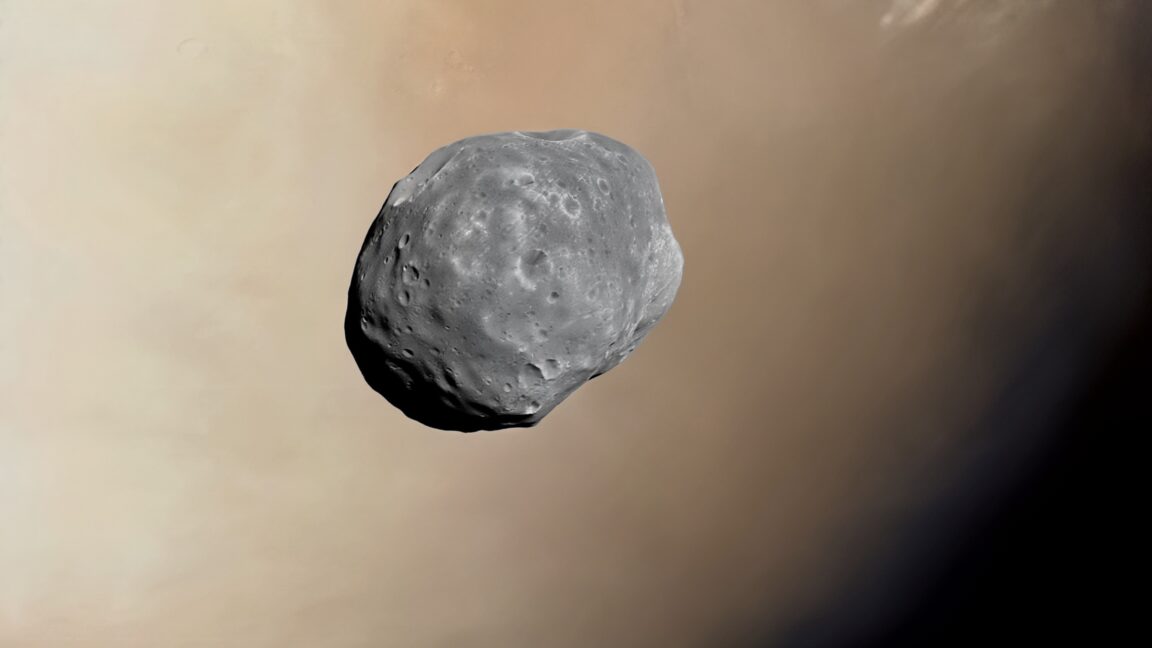
Japan launched MMX, aiming to land on Mars's moon Phobos in 2029 and return a soil sample to Earth by 2031.
1/5Ars Technica Science·
John Timmer
· Oct 20
Quantinuum's error-corrected qubits get about 12 times better per size step
Quantinuum built error-protected "logical" qubits from 13, 37 and 73 physical qubits. Each size step cut memory errors about twelvefold, the strongest scaling reported so far, though the machine can host only one of the largest.
Why it matters · How fast errors fall as logical qubits grow decides whether useful quantum computers need thousands of physical qubits per logical one or far fewer.
Know this first
Context from the editor, not the article · 29 sec
1 · Why qubits need correction
Physical qubits lose their quantum state easily, with error rates around one in a thousand operations. Useful algorithms need error rates millions of times lower, so many physical qubits are combined into one protected logical qubit.
2 · The breakeven point
Adding qubits to a logical qubit helps catch errors but also adds new places for errors to happen. Only when hardware errors are rare enough does growing the logical qubit improve it. That threshold is called breakeven.
3 · Code distance
A code's distance is roughly how many errors it can absorb at once before the stored information fails. Codes in some families come in sizes with distance 3, 5, 7 and so on, each needing more hardware qubits.
2/5Live Science· Zunnash Khan · Oct 19
Alzheimer's risk gene APOE4 traps fat in brain cells by muting a growth signal
MIT researchers found that APOE4, the biggest genetic risk factor for late-onset Alzheimer's, lets fat build up in brain cells by weakening a signaling pathway. Repairing that pathway reduced the fat in cells and in mice.
Why it matters · Most Alzheimer's drugs target amyloid and tau. This study points to fat handling as a third target, with a specific chain of molecules that drugs could act on.
Know this first
Context from the editor, not the article · 30 sec
1 · What APOE4 is
The APOE gene comes in three common versions: APOE2, APOE3 and APOE4. Its protein carries fats such as cholesterol between cells. Carrying APOE4 raises the risk of late-onset Alzheimer's roughly 3- to 12-fold, depending on whether a person has one copy or two.
2 · Amyloid and tau
Alzheimer's research has long centred on two proteins that clump in patients' brains: amyloid-beta, which forms plaques between cells, and tau, which forms tangles inside neurons. Recently approved antibody drugs remove amyloid, but they slow decline only modestly.
3 · The brain's support cells
Neurons depend on glial cells. Astrocytes supply neurons with nutrients and regulate their surroundings. Oligodendrocytes wrap the long outgoing fibres of neurons, called axons, in myelin, a fatty insulating layer that speeds up signals.
3/5The Transmitter· Claudia López Lloreda· Oct 21
Lab-grown mini-brains have improved, but still can't replace animal research
Brain organoids, small balls of human brain tissue grown from stem cells, now contain more cell types and can be linked into simple circuits. They still lack blood vessels, mature slowly and vary from batch to batch.
Why it matters · As the U.S. and Europe move away from animal research, whether organoids can stand in for animals affects which brain questions can be studied at all.
Know this first
Context from the editor, not the article · 25 sec
1 · What a brain organoid is
Stem cells, often reprogrammed from adult skin or blood, are coaxed in a dish to form 3D clusters that develop some brain-like layers and cell types. They were first described in 2013.
2 · Why vessels matter
In a living brain, blood vessels carry oxygen and nutrients deep into tissue. In a dish, molecules only diffuse a short distance from the surface, which limits how big healthy tissue can grow.
3 · The policy backdrop
U.S. and European agencies are shifting away from animal studies, including those on nonhuman primates. That has put pressure on alternatives such as organoids to show they can answer the same questions.
Scientists used satellite data and a rare video of the ground tearing open to model Myanmar's 2025 quake. The fault twists along its length, and it shook hardest on the side it tilts toward.
Why it matters · The study suggests that a fault's shape and its record of built-up strain can forecast how a future large quake behaves, though not when it will strike.
Know this first
Context from the editor, not the article · 28 sec
1 · Strike-slip faults
On a strike-slip fault, the two blocks of crust slide past each other sideways rather than one riding up over the other. Myanmar's Sagaing Fault and California's San Andreas Fault are both of this type.
2 · What fault 'dip' means
A fault is a surface running down into the Earth, and it is rarely perfectly vertical. Its dip is the angle and direction it tilts as it goes deeper, a bit like a wall leaning one way.
3 · Locked faults store strain
The plates on either side of a fault can keep moving while the rocks at the fault itself stay stuck. That stuck, or 'locked', stretch builds up elastic strain, which an earthquake releases suddenly.
5/5Scientific American· Oct 20
Is it the processing or the nutrients that makes ultraprocessed foods harmful?
New survey data suggest that the sugar, salt, saturated fat and low fiber in ultraprocessed foods may drive their health risks more than the processing does. Feeding trials, though, suggest processing also makes people eat more.
Why it matters · U.S. dietary guidelines now tell people to avoid highly processed foods. If the label doesn't track the real harm, it could push people away from foods that do them no damage.
Know this first
Context from the editor, not the article · 21 sec
1 · The Nova classification
Nova, developed by Brazilian nutrition researchers, sorts foods by how much they are processed, not by nutrients. Its top tier, "ultraprocessed," covers industrial products made from extracted or modified ingredients and additives, such as sodas, packaged breads, flavored yogurts and chips.
2 · Observational versus controlled
Most links between ultraprocessed food and disease come from observational studies, which track what people already eat. These can't fully separate cause from confounders. Controlled feeding trials assign diets and can show cause, but they are usually small and short.
Image: Scientific American
This year's U.S. dietary guidelines tell people to avoid highly processed foods. Ultraprocessed foods already make up at least half of the average diet in the U.S. and the U.K., and heavy consumption has been linked to heart disease, diabetes and early death. What isn't settled is why. Is the processing itself harmful, or is it the sugar, salt, saturated fat and low fiber these foods usually contain?
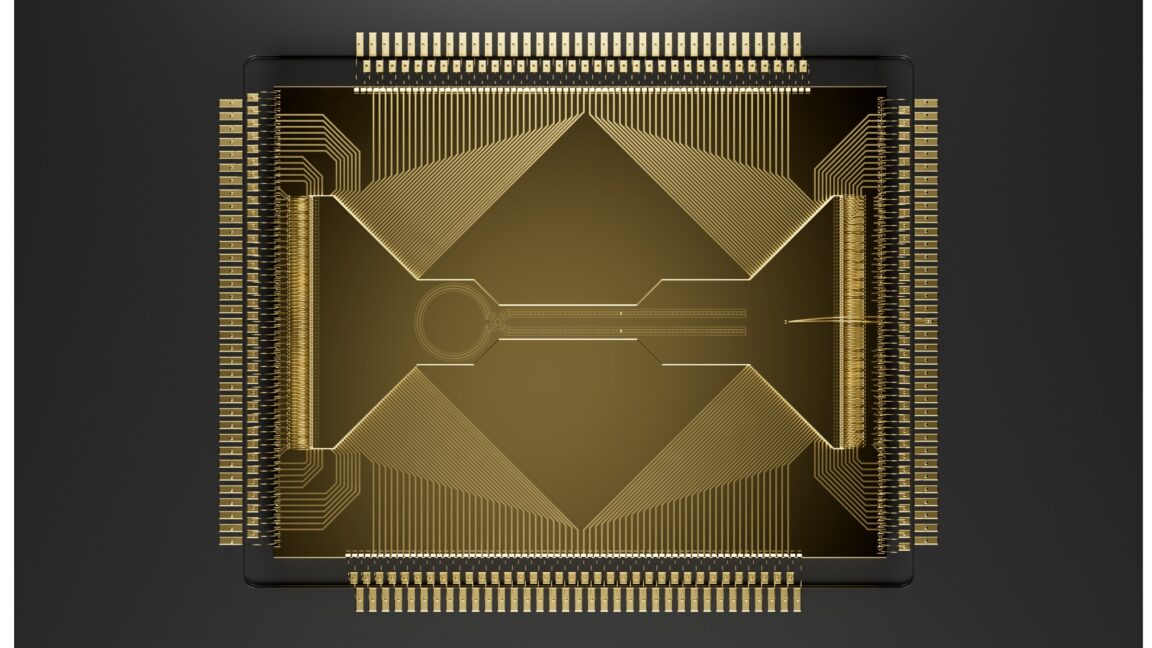
Quantinuum's Helios chip, the trapped-ion processor that ran the error-correction experiments.
Quantinuum announced on Monday that error-protected qubits on its new Helios machine improve sharply as they grow. Each step up in size cut errors about twelvefold. Ars Technica's John Timmer calls it the best scaling he knows of. The results come from a company announcement. The article doesn't say whether they have been peer reviewed.
The problem
Complex quantum algorithms need 1: groups of physical qubits linked so that errors can be detected and corrected. Some qubits hold data, others are measured, and the pattern of their links is called a 2. A code's 3 is roughly how many simultaneous errors it can survive. Bigger codes have larger distance but more qubits that can fail. Past the 4, growing the code helps.
Several companies have passed breakeven, but errors typically fell only about twofold per step in distance. Here is an illustrative example: cutting errors a billionfold takes about 30 steps at a factor of 2 but only 9 at a factor of 10. Small factors could mean thousands of physical qubits per logical one.
The hardware
Helios is a 5 computer. Its qubits are charged atoms that electric fields move around a ring and into arms where lasers act on them. Any ion can be paired with any other, so Helios can run almost any code. Quantinuum also tackled 6, where a qubit drifts out of its two working energy states. A laser fix cuts leakage errors 6.5-fold, and software swaps leaked qubits out for reset.
The results
Using a 7, one family of codes, the team built logical qubits that simply held a stored state:
distance 3 (13 qubits): error rate about 5 × 10⁻⁴
distance 5 (37 qubits): about 4 × 10⁻⁵
distance 7 (73 qubits): about 5 × 10⁻⁶
Errors were so rare that the team ran 20 correction rounds before checking. Three decoders kept up in real time: a standard algorithm and two neural networks. Those decoders are the software that interprets the error-detection measurements.
For a two-qubit gate, an actual operation, bare hardware failed about once in a thousand. A distance-5 code brought that to about 7 × 10⁻⁵. Helios can't hold two distance-7 codes, so that size wasn't tested on the gate.
The caveats
The best result applies only to an idle qubit, and the machine holds just one. Timmer notes that error rates are still too high for complex algorithms. But past a certain point, small hardware gains produce large logical gains, and these results suggest Quantinuum is near it. The open question, he argues, is whether the company can add qubits as fast as its roadmap promises.
On Monday, the quantum computing company Quantinuum announced results from its newest machine, Helios. They show error-corrected qubits getting far better as they grow. Each step up in the size of a logical qubit cut its error rate by roughly a factor of 12. John Timmer, Ars Technica's science editor, says that is the best scaling he knows of. The results come from a company announcement. The article doesn't say whether they have been peer reviewed.
The problem: more qubits, more errors
Complex quantum algorithms will need 1: groups of physical "hardware" qubits linked so that errors can be detected and fixed. Some of the qubits in a logical qubit hold data. Others are used for measurements, and all of them are entangled with one another. The arrangement of those links is called an error-correction 2. Measuring the measurement qubits produces 3, which shows whether an error happened, where, and what kind it was. The data qubits are never read directly.
Each code has three key properties: how many hardware qubits it needs, how many logical qubits it holds, and its 4, roughly how many simultaneous errors it can survive. Some code families come in a series of sizes with the same basic geometry but increasing distance, such as 3, 5 and 7.
The catch is that every added hardware qubit is another thing that can fail. If hardware error rates are too high, a bigger logical qubit performs worse. Past the 5, it performs better. Several companies have already shown breakeven. The trouble is by how much.
Why the scaling factor matters
The standard test is to build the same code at distance 3, then 5, then 7, and measure the logical error rate each time. The ratio between steps is the scaling factor. Most past demonstrations got a factor close to 2.
Here is an illustrative example (not from the article). Suppose a logical qubit starts at an error rate of one in a thousand and you need one in a trillion, nine orders of magnitude lower. With a factor of 10 per step, nine steps get you there. With a factor of 2, you need about 30 steps, and each step adds hardware qubits. Timmer notes that low scaling factors could mean many thousands of hardware qubits per logical qubit, which is impractical.
The hardware: Helios
Quantinuum builds 6 computers. Each qubit is an ion, an atom missing one or more electrons. Because ions are charged, electric fields can move them around. Helios circulates ions around a ring and shifts selected ones into one of two arms, where lasers perform operations and measurements. Any two ions can be brought together, so any qubit can be entangled with any other. That lets Helios run essentially any code.
Quantinuum's hardware already had low error rates. Earlier machines lacked enough qubits to build large codes, and Helios fixes that. The team also tackled 7, where a qubit drifts out of the two energy states used for computing into a nearby unused one. A new laser scheme pushes leaked qubits back and runs during the laser cooling the ions already need. It cuts leakage errors by a factor of 6.5. A software system also swaps leaked data qubits with measurement qubits, which can then be reset and reused.
Experiment 1: quantum memory
The team used a 8, one family of error-correction codes, at three sizes:
That works out to roughly a twelvefold improvement per step. The logical qubit only had to hold a fixed state, acting as memory. Errors were now so rare that one round of correction couldn't measure them reliably. So the team ran 20 rounds of correction before checking whether the state survived.
Each round's syndrome data must be interpreted ("decoded") fast enough to keep up, which gets harder as distance grows. Quantinuum showed three real-time decoders: a standard algorithm, a convolutional neural network, and a transformer-based neural network. The team also showed that each round's syndrome data correlated only with the rounds just before and after it. That suggests no hidden systematic error source was biasing detection.
Experiment 2: a two-qubit gate
Real computation means operating on logical qubits, not just storing them. A two-qubit gate needs two logical qubits, and Helios can fit only one distance-7 code at a time. So this test compared bare hardware qubits with distance-3 and distance-5 codes. On bare hardware the gate failed about once in a thousand times (10⁻³). Distance 3 helped only modestly. Distance 5 dropped the logical error rate to about 7 × 10⁻⁵, well beyond breakeven even for an active operation.
How to read it
Timmer offers two views. The skeptical one: even the best rate is too high for complex algorithms. It was reached only for a qubit sitting idle, and the machine holds just one such qubit. Many error-corrected operations at useful error rates remain far off.
The optimistic one: this is the best scaling yet. Logical error rates depend on hardware error rates in a way that, past a certain point, small hardware gains produce very large logical gains. Timmer says the results don't prove Quantinuum has reached that point, but suggest it is close.
Open questions
The main question, Timmer argues, is whether Quantinuum can raise qubit counts as quickly as its roadmap promises. If it can, it may not need much lower hardware error rates to produce useful logical qubits. Competitors face a different mix of problems: lowering hardware error rates, adding qubits, or linking several processors into one computer. The article doesn't give Quantinuum's roadmap numbers. It also doesn't say how fast trapped-ion operations are compared with rival approaches, which matters for real workloads.
Remember
What matters is how fast errors fall per size step, not just passing breakeven. Most past demos managed about 2×, this one about 12×.
Running 20 correction rounds and decoding them in real time, including with neural networks, was needed just to measure such rare errors.
Helios fits only one distance-7 logical qubit, so adding qubits is now Quantinuum's main hurdle.
Myelin (orange) coating a nerve fibre. APOE4 oligodendrocytes struggle to make this fatty insulation.
The gene variant 1 raises the risk of late-onset Alzheimer's disease three- to 12-fold. A study published October 15 in Cell Stem Cell offers a step-by-step account of one way it does damage: it weakens a cell-signaling system, and fat then piles up inside brain cells. The team was led by Li-Huei Tsai at MIT. When they repaired the signal with a drug in mice, the fat cleared. The work hasn't been tested in people.
A third suspect
Most Alzheimer's research targets two proteins that clump in patients' brains, 2 and 3. Tsai calls lipid (fat) droplets a "third thing that people didn't pay attention to, until recently." The APOE gene makes proteins that carry fat around cells, and the APOE4 version does that job less efficiently.
Her group has spent about a decade on this. Earlier, they found APOE4 causes cholesterol to build up in 4, star-shaped cells that support neurons. It does the same in 5, which wrap neurons' outgoing fibres in 6, a fatty insulation that speeds up signals. In mice, a drug that cleared the excess cholesterol improved myelin and cognitive test scores. What remained unknown was why the fat builds up.
Finding the cause
The team grew APOE4 oligodendrocytes from stem cells. They then switched genes on and off one by one to see which changed the number of fat droplets. The results pointed to the 7, a set of genes cells use to communicate. A gene in this pathway called 8 acts as a brake on it. Disabling DKK1 strengthened the signal and reduced fat droplets.
Brain tissue from APOE4-carrying organ donors also showed low Wnt signaling. Rosie Jackson of the University of Dundee, who wasn't involved, said this "establishes a very strong link" between the pathway and fat buildup.
The mechanism works like this. APOE4 raises the levels of an enzyme. The enzyme breaks down a protein that relays Wnt signals, so the signal weakens. In mice, a drug blocking that enzyme restored the signal, reduced the fat and helped the cells make myelin normally. The article doesn't name the enzyme, protein or drug.
What it could mean
Jackson argues Alzheimer's will likely need several drugs aimed at different targets, and that lipids will be "a really important part of that." Co-author Joel Blanchard of Mount Sinai says the open question is how to clear lipids safely in humans.
Blanchard's other work suggests APOE4 also drives scarring in the cells that support blood vessels and disrupts the "trash collectors" inside astrocytes. In his view, APOE4 cells put their energy into storing fat instead of breaking down harmful proteins. That leads to his hope that fixing fat storage might fix several problems at once. That idea remains unproven.
A study published on October 15 in the journal Cell Stem Cell proposes a step-by-step explanation for why 1, the strongest common genetic risk factor for late-onset Alzheimer's disease, causes fat to build up in brain cells. The team was led by neuroscientist Li-Huei Tsai at MIT. They traced the problem to a weakened cell-signaling system called the Wnt pathway. When they repaired that pathway with a drug in mice, the fat cleared and the cells made 2 properly again. None of this has been tested in people yet.
A third suspect besides amyloid and 3
For decades, Alzheimer's research has focused on two proteins that accumulate in patients' brains: 4 and tau. Tsai told Live Science there is a "third thing that people didn't pay attention to, until recently". That third thing is droplets of fat, or lipids, collecting inside brain cells.
The suspicion falls on APOE. This gene makes proteins that move fat around cells in the body and brain. The APOE4 version raises the risk of late-onset Alzheimer's three- to 12-fold, and according to Tsai its protein does that transport job less well. What remained unclear was how this inefficiency plays out in different kinds of brain cells. "APOE4 can influence many different cell types," Tsai said. "It's not just one cell type."
A decade of building the case
Tsai's group has worked on this question for about ten years. In earlier lab work they found that APOE4 causes cholesterol to build up in 5, the star-shaped cells that support neurons. Genetic analyses suggested the variant disrupts how these cells process fat.
A later study looked at 6, the cells that wrap neurons' outgoing fibres in myelin, a fatty insulation that helps signals travel efficiently. APOE4 oligodendrocytes also accumulated cholesterol. In mice, a drug that helped the cells get rid of the excess cholesterol improved their myelin production. The mice also did better on cognitive tests.
Those studies showed what goes wrong and that clearing the fat helps. They did not explain why the fat builds up in the first place, and that is what the new paper tackles.
How the screen worked
The researchers grew oligodendrocytes carrying APOE4 from stem cells. They then switched specific genes on or off, one at a time, and watched whether fat droplets became more or less common. This is a genetic screen. Rather than guessing which genes matter, you let the cells' response point to them.
The screen pointed to the 7, a large group of genes that cells use to communicate with each other. One key gene in it is 8, which acts as a brake on Wnt signaling. Disabling DKK1, which lifts the brake and strengthens the signal, reduced the amount of fat droplets in the cells. In other words, weak Wnt signaling goes along with more fat, and boosting it means less.
To check that this was not just a quirk of cells grown in a dish, the team examined brain tissue from organ donors who carried APOE4. They found signs of low Wnt signaling there too. Rosie Jackson, a cell biologist at the University of Dundee who was not involved, said this "establishes a very strong link" between the pathway and fat-droplet formation.
The molecular chain
Next the team asked how APOE4 weakens Wnt signaling in oligodendrocytes. As the article describes it, the chain runs like this:
APOE4 raises the levels of a particular enzyme.
That enzyme breaks down a protein that helps relay Wnt signals inside the cell.
With less of the relay protein, Wnt signaling drops.
Low Wnt signaling is linked to the build-up of fat droplets and poorer myelin production.
An analogy may help. Picture the Wnt signal as a message passed hand to hand along a line of couriers. APOE4 sends in a shredder (the enzyme) that destroys some of the couriers (the relay protein), so less of the message arrives.
The Live Science article does not name the enzyme, the relay protein or the drug. In mice, a drug that blocked the excess enzyme restored normal Wnt signaling, reduced fat buildup and helped the oligodendrocytes make myelin properly.
What it might mean for treatment
Jackson argues the work "opens up a new wave of potential therapeutics" aimed at the accumulated fats, alongside drugs against amyloid-beta and tau. "I think that this is becoming a really common idea in the field — that we're going to need multiple medications that target slightly different elements," she said, "and targeting lipids will be a really important part of that."
Co-author Joel Blanchard, a neuroscientist at the Icahn School of Medicine at Mount Sinai, called it "very encouraging" that helping cells clear and move lipids is a possible route to treatment. He noted that the open question is how to do this safely and effectively in humans.
A broader picture of APOE4
Blanchard's own research suggests APOE4 harms more than fat handling and myelin. In cells that support the brain's blood vessels, the variant may drive scarring and contribute to amyloid-beta buildup. In astrocytes, it may interfere with the cells' internal "trash collectors", which also lets harmful proteins build up.
Blanchard frames this as a problem of where cells spend their energy. Cells with other APOE versions can devote a lot of energy to breaking down unwanted proteins. APOE4 cells, he says, put all their energy toward storing fat. If that is right, fixing fat storage "could rescue not just one thing but multiple things that go wrong in the course of Alzheimer's disease". That idea is still a hypothesis, and Blanchard says more research is needed.
What remains open
The evidence comes from stem-cell-derived cells, mouse experiments and post-mortem human tissue. The donor tissue shows that low Wnt signaling occurs in APOE4 brains, but it cannot show that low Wnt signaling causes disease in people. The article reports no cognitive results for the mice treated with the enzyme-blocking drug. The earlier cholesterol-clearing drug did improve cognition in mice. Wnt signaling also controls many processes throughout the body, so raising it in the brain could have side effects. The article doesn't address this, but it is the kind of safety problem Blanchard flags. The new study also concentrates on oligodendrocytes, while the researchers themselves stress that APOE4 affects many cell types.
Remember
The study traces fat buildup to a chain: APOE4 boosts an enzyme that destroys a Wnt relay protein, weakening the signal.
Evidence comes from lab-grown cells, mice and donor brain tissue; nothing has yet been tested in living humans.
Researchers increasingly expect Alzheimer's will need combination drugs, with fat handling as one target alongside amyloid and tau.
Human brain organoids are pea-sized clusters of brain tissue grown from stem cells. They are being promoted as an alternative to animal research as the U.S. and Europe move away from it. A review of the field by The Transmitter shows how far organoids have come since 2013, and why researchers say they aren't ready to replace animals yet.
What has improved
Labs can now grow organoids that include support cells such as 1 (the brain's immune cells) and astrocytes, along with interneurons. They can also fuse organoids modeled on different brain regions into 2. One Stanford group linked four of them along the pain pathway, from sensory neurons and spinal cord to thalamus and cortex, and the combined tissue responded to painful stimuli.
The core problem: no plumbing
Organoids have no working blood vessels. As one grows to about 5 millimeters across, oxygen and nutrients can't diffuse to its center. Those cells die and leave a 3, which can throw off how the surviving tissue develops. So most studies use organoids aged 3 to 4 months, roughly the brain of a second-trimester fetus. Christiaan Huffels of University Medical Center Utrecht says their neurons behave electrically like immature neurons.
Labs have tried several workarounds:
adding the cells that line blood vessels, or growth factors that encourage vessel growth
growing organoids on scaffolds or 3D-printed vessels
slicing organoids so every cell sits near the culture fluid
transplanting organoids into rodent brains, which supply real blood vessels
Elly Hol of the same Utrecht center says the vessel-like structures that form don't actually function. Paola Arlotta's Harvard team has kept organoids alive for up to 7 years in a special culture medium, and they matured in step with a child's brain. They still had a dead core.
Timing and variability
During normal development, chemical signals called 4 tell cells what to become, in a set order and place. Organoids lack most of these cues, so their cells can develop out of step. 5, which deliver precisely controlled gradients of these signals, are one fix. Even so, the same recipe and the same cell line can produce very different organoids, even within one lab.
Can they replace animals?
UC San Diego's Alysson Muotri argues that full replacement should be the goal. Penn's Hongjun Song says it depends on the question. Organoids may be enough for studying tumor biology, but circuit-level questions will need both organoids and animals.
Human brain organoids are small clusters of brain tissue grown from stem cells. As the U.S. and Europe move away from animal research, they are being promoted as a replacement for animal studies of the brain. A survey of researchers by The Transmitter's Claudia López Lloreda shows a field that has advanced a lot since organoids first appeared in 2013. It also shows a field whose leading practitioners agree it isn't ready to take over from animals. The piece is a feature drawing on many studies and interviews, not a report on a single new result, and one of the striking claims it cites is unpublished.
How far organoids have come
Early organoids were mostly neurons and their precursor cells. Labs can now include 1 (the brain's resident immune cells), astrocytes (support cells) and interneurons (local inhibitory neurons). Some organoids now contain all six major brain cell types: neurons, astrocytes, microglia, oligodendrocytes, pericytes and 2, the cells that line blood vessels. Others are steered toward particular regions. Telencephalic organoids, for example, mimic the cell mix and development of the amygdala.
A Stanford group pioneered 3, in which organoids modeled on different regions are fused so their neurons connect. Last year the group built a four-part assembloid of somatosensory, dorsal spinal cord, thalamic and cortical organoids. Together these trace the pain pathway, and the assembloid responded to noxious stimuli. More recently the team fused midbrain-hindbrain organoids, which contain serotonin-producing neurons, with cortical organoids to study neuromodulation.
Three big problems remain: no working blood supply, cells in the wrong arrangement and developing at the wrong time, and poor reproducibility.
Problem one: no blood vessels
An organoid starts as a microscopic ball and can grow to a 5-millimeter sphere, about the size of a pea. Without vessels, oxygen and nutrients reach the interior only by diffusion, which works over short distances. The center starves and dies, forming a 4 that can distort how the surviving cells develop. Alysson Muotri of UC San Diego points out that vessels also do more than keep cells alive: "Vascularization is intrinsic to brain formation."
Because of this, most studies use organoids aged 3 to 4 months, before necrosis sets in. That is roughly the brain of a second-trimester fetus. It is useful for studying development but not for questions about the mature or ageing brain, such as neurodegeneration. Christiaan Huffels of University Medical Center Utrecht says the neurons' electrical behavior looks immature or premature.
The workarounds fall into four groups:
Biological: add endothelial cells, fuse the organoid with a separate vascular organoid, or add or overexpress angiogenic growth factors, the signals that drive vessel growth. These produce vessel-like structures that even carry proteins associated with the blood-brain barrier.
Elly Hol, a glial biologist at Utrecht, sums up the limit of these approaches: "We sometimes do get something that looks like vasculature, but not one that is really functioning."
Speeding up or extending maturation
A second set of strategies tries to get older-seeming tissue. Organoids transplanted into rodent cortex gain a working blood supply, integrate into the host brain and develop more complex shapes than organoids kept in a dish. Muotri's group found that organoids kept for a month on the International Space Station expressed more genes linked to neuronal maturity than Earth-grown controls. His unpublished data also show signs of cellular senescence, a marker of ageing. He claims the 30 days equal about 10 years of ageing on Earth, a figure readers should treat as preliminary.
Harvard's Paola Arlotta took the slow route. She grew organoids for up to 7 years in an "6" (APM), a culture fluid that supports neuronal activity. They kept pace with human brain development, gaining the cell types and epigenetic features (chemical marks on DNA that control gene activity) of a postnatal brain. The core persisted, though with weaker signs of oxygen starvation and cell death. Arlotta thinks removing it will require pumping medium through the organoid's center.
Problem two: wrong place, wrong time
In an embryo, 7, chemical signals released from particular sources, form gradients that tell cells what to become and when. Organoids lack most of these cues. A new study found that radial glial cells, the stem cells that produce neurons, made neurons earlier in organoids than in the mouse brain. Hydrogels and induced signaling centers add morphogens but tend to bathe the whole organoid evenly. Microfluidic devices, chips with tiny fluid channels, can deliver gradients precise in space and time. A 2024 study used one to build a structure resembling the neural tube, the embryo's precursor to the brain and spinal cord.
Problem three: every batch is different
Muotri compares organoid protocols to cake recipes: the same instructions in different hands give different results, even inside his own lab. Hol notes that some variability mirrors real human diversity. Song argues the field still needs standardization, such as scaffolds that force organoids into the same size, architecture and composition.
Replacement, or partnership?
Corinna Ross, director of the Southwest National Primate Research Center, is blunt: "Garbage in is garbage out." If the organoids aren't ready, the questions won't be answered. Muotri says full replacement should be the goal. Song's view is that it depends on the question. Tumor biology might be studied in organoids alone. For circuit-level function, even if every problem above is solved, "we will need both."
The article leaves open whether perfusion systems can produce truly functional vessels, how to validate maturity claims like the space-ageing figure, and which research questions organoids can already fully answer.
Remember
Without working blood vessels, most organoid studies stop at 3–4 months, roughly the brain of a second-trimester fetus.
Organoids have been kept up to 7 years in a special medium, maturing like a child's brain, yet still with dead cores.
Researchers expect organoids may replace animals for some questions, like tumor biology, but not for circuit-level function.
A house split in two near Mandalay by the March 2025 magnitude 7.7 earthquake.
The magnitude 7.7 earthquake that struck near Mandalay, Myanmar, on March 28, 2025, killed at least 3,700 people and shook buildings in Bangkok, 1,330 km (830 miles) away. A peer-reviewed study published Oct. 14 in Nature Communications finds that the fault behind it has a twisting, almost helical shape, and that this shape decided where the shaking was strongest.
What the team found
The quake ruptured the 1, a 2, meaning the crust on each side slides sideways past the other. Researchers combined detailed satellite data with supercomputer simulations of the rupture. They found the fault is not a flat vertical sheet underground. At its northern end it tilts, or 3, to the west. In the middle it stands vertical, and at its southern end it dips east.
The simulations were checked against something new: a security camera video of the ground cracking open as the fault broke. This had never been filmed before, and it gave the team a direct observation to test the model against.
Why the tilt matters
Co-author Alice-Agnes Gabriel, a geophysicist at the 4, says shaking is generally stronger on the side a fault dips toward. California's 5 also tilts, and it is thought capable of a magnitude 7.8 quake, often called the "Big One". It dips inland, toward the thinly populated high desert. If it behaves like the Sagaing Fault, the desert side would shake harder than the coast.
Gabriel cautions that local ground conditions still matter a great deal. Los Angeles sits on a basin filled with sediment that would "jiggle like jelly" in a big quake, so everyone near a major fault should prepare.
Could it have been forecast?
Before the quake, parts of the Sagaing Fault were known to be 6: the rocks were jammed together while the plates on either side kept moving, so strain had been building for 186 years. Feeding in only what was known beforehand (the fault's deep shape and how long each section had been locked), the model reproduced the rupture's path, shape and speed.
That does not mean anyone could have predicted the date. "We cannot predict when and where an earthquake might happen," Gabriel said, "but we may be able to predict certain aspects of it."
The San Andreas has been building strain for more than a century, and the team is now updating its Big One model. The results are meant to inform building codes, emergency planning and public preparedness. The article does not give the size of the effect, for example how much stronger the shaking is on the dip side.
On March 28, 2025, a magnitude 7.7 earthquake struck near Mandalay, Myanmar. It killed at least 3,700 people and shook buildings in Bangkok, 1,330 km (830 miles) away. A peer-reviewed study published Oct. 14 in Nature Communications reconstructs how the fault broke. It finds the fault has a twisting, almost helical shape that shaped where the ground shook hardest. The authors argue the lessons carry over to California's 1.
The problem: forecasting how, not when
Seismologists cannot predict the date of an earthquake. They can try to predict what a large quake on a given fault will look like: how far the rupture runs, how fast it travels, and which areas get the worst shaking. That is the information engineers and emergency planners need. The main tool is the physics-based rupture simulation. A supercomputer models the fault surface, the stresses on it and the surrounding rock, then lets a virtual rupture spread. Alice-Agnes Gabriel, a geophysicist at the 2 (University of California, San Diego) and a co-author, runs these models. As she notes, they are only as good as the data that goes into them. Real large quakes on well-observed faults are rare, so each one is a chance to test the models.
The fault and the evidence
The quake ruptured the 3, a 4, where blocks of crust slide sideways past each other. Gabriel calls it analogous to many strike-slip faults that threaten cities worldwide, including the San Andreas.
The team used two kinds of evidence. One was detailed satellite data on how the ground moved. The article doesn't say which satellite methods were used. The other was a security camera video showing the ground cracking open as the rupture passed. According to the article, this had never been captured on video before. The footage gave the team direct 5: a timed, local observation that a simulated rupture has to match.
What they found: a twisting fault
The models showed the Sagaing Fault is not a vertical plane underground. Its dip, the direction it tilts as it goes deeper, changes along its length. The northern end 6 west, the middle is vertical and the southern end dips east. As an analogy, picture a long ribbon held upright and given a half-twist: lean one way at one end, upright in the middle, lean the other way at the far end.
This matters because, Gabriel says, shaking is generally stronger on the side toward which a fault dips. (The article states this rule without explaining the physics behind it.) So along a twisted fault, the side that takes the harder shaking switches partway along.
Implications for the San Andreas
The San Andreas is also tilted and is thought capable of a magnitude 7.8 quake, the scenario often called the "Big One". It dips inland, toward California's high desert, which has fewer people than the coast on the other side. If the Big One behaves like the Myanmar quake, the high desert side would shake more intensely than the coastal side. The researchers think the comparison holds partly because the San Andreas, like the Sagaing, has been building strain for more than a century.
Gabriel warns against reading this as good news for coastal cities. Small local differences can change how hard the ground moves, such as how much sediment sits on top of the bedrock. Los Angeles lies on a sediment-filled basin that would "jiggle like jelly" in a large quake. Soft basins can trap and amplify seismic waves, so the dip effect is one factor among several. Everyone near a dangerous fault should prepare for major shaking.
The test: could it have been predicted?
The most important part of the study is a test of forecasting. Before the quake, monitoring had shown that some segments of the Sagaing Fault were 7. The plates on either side kept moving, but the rocks at the fault were jammed together, so elastic strain built up. Those locked segments had been accumulating strain for 186 years.
The researchers asked whether a model using only pre-quake information could have reproduced the earthquake. That information was the fault's detailed shape deep underground and how long each section had been locked. They report that it could predict the rupture's path, shape and speed. "This really shows how we can use this long-term fault-monitoring data," Gabriel said. Similar predictions, she suggests, could be made for the San Andreas and other major faults.
There is an important caveat. This is a forecast made in hindsight: the modelers knew the answer and checked whether their pre-quake inputs could have reached it. That is a reasonable first test, but not the same as a forecast made before a quake happens. The article also doesn't say how closely the predicted shaking matched what was observed, or how sensitive the result is to uncertainty in the fault's deep shape, which is hard to map on faults that haven't recently ruptured.
Where this fits
Earlier studies of the same quake, which Live Science has also covered, described the Sagaing Fault as unusually simple and mature, with a smooth, efficient rupture. Those traits may also help forecast quakes on other faults. Mature, straight faults may be easier to model than tangled ones, so it is an open question how well the approach works on more complicated fault systems.
What comes next
The team is updating its model of a Big One on the San Andreas. The results are meant to inform the public, building codes and emergency managers. The article doesn't say when the update is due or what it is expected to show, for example how much stronger shaking would be on the desert side than the coastal side.
Remember
The Sagaing Fault dips west in the north, stands vertical in the middle and dips east in the south.
Strain had built up on locked fault segments for 186 years; pre-quake data reproduced the rupture's path and speed.
Soft sediment basins such as Los Angeles's can make shaking worse regardless of which way the fault tilts.
The two explanations are hard to pull apart because most 1 foods are also nutritionally poor. To get around this, an 2 (National Institutes of Health) team led by Leah Lipsky analyzed national survey data from more than 5,000 people. They took foods that 3, a widely used classification system that ranks foods by how processed they are, labels ultraprocessed. They then checked each one for what dietary guidelines say to limit: added sugar, salt, saturated fat, refined grains and alcohol.
About 90 percent of the calories people got from ultraprocessed foods came from items high in those nutrients. Eating them was linked to higher 4, more body fat, higher insulin and more inflammation. The other ultraprocessed foods showed no such links. These included canned beans and vegetables, low-sugar yogurt, diet sodas and low-fat products.
The work is preliminary. It was presented at a July conference, hasn't been peer reviewed, and is 5, so it can't prove cause. Lipsky argues that "ultraprocessed" is the wrong starting point for judging foods. She also says the answer isn't reformulated junk food but more food "straight from the produce section." Other large studies agree that processed meats, cheese and sweetened drinks carry most of the risk, while breads and cereals don't.
But processing may still matter
Controlled 6, which assign people to diets, tell a different story. In a 2019 NIH study, 20 adults were offered diets matched for calories, sugar, fat, salt and fiber. On the ultraprocessed version they ate about 500 extra calories a day and gained weight. In an English trial of 50 people, both diets met healthy-eating guidance, but participants lost twice as much weight on the minimally processed one. Both studies were short.
Nutrition scholar Marion Nestle explains one likely mechanism. Corn chips begin as kernels that are cooked in alkali, ground into dough, shaped and fried. That destroys the corn's structure and leaves something close to predigested food, which the gut absorbs fast and people overeat.
Food scientist David Julian McClements concludes that both factors are real, but processing effects are "much smaller" than nutrient effects. He wants researchers to find which processed foods cause harm, redesign them and test the results, though such trials are slow and costly.
Ultraprocessed foods make up at least half of the average diet in the U.S. and the U.K. Over the past few years, eating a lot of them has been linked to heart disease, diabetes and early death. This year those findings reached federal policy: new U.S. dietary guidelines tell the public to avoid highly processed foods.
That advice assumes the processing is the problem. There are two main theories. One is that industrial processing changes food so that we eat more without noticing and digest it faster. The other is that particular additives, such as preservatives and emulsifiers, disturb the gut and how the body handles blood glucose. A competing explanation is simpler: 1 foods tend to be high in sugar, salt and saturated fat and low in fiber, and those nutrients may account for most of the harm. A Scientific American report pulls together new and older evidence on this question. The honest answer is that both explanations probably matter, but not equally.
Why this is hard to untangle
The two explanations overlap. Most ultraprocessed products are also nutritionally poor, so a study that finds ultraprocessed food linked to disease can't easily tell which property is responsible. The category is also broad. A diet of instant oatmeal for breakfast, a turkey sandwich on whole wheat for lunch, a mozzarella pasta bake for dinner, and low-fat yogurt with dried fruit for dessert meets federal guidelines. Almost all of its calories still come from ultraprocessed foods. In 2023 a U.S. Department of Agriculture team built a full menu like this to show that it can be done.
The new 2 analysis
To test whether all ultraprocessed foods behave alike, a team at the National Institutes of Health (NIH) led by nutrition epidemiologist Leah Lipsky used national dietary survey data from more than 5,000 people. The researchers took foods that 3, a common food-classification system, already labels ultraprocessed. They then checked each food for the things dietary guidelines say to cut back on: added sugar, salt, saturated fat, refined grains and alcohol.
They used that check to split ultraprocessed foods into two groups:
High in nutrients to avoid. About 90 percent of the calories people got from ultraprocessed foods came from this group. Eating these foods was associated with higher 4 and body fat, higher insulin levels and more inflammation.
Low in nutrients to avoid. This group included canned beans and vegetables, low-sugar yogurt, diet sodas and low-fat products. These foods were not associated with the same poor health markers.
If processing itself were the main driver, both groups would be expected to show similar associations. They didn't, which points toward nutrient profile. Two caveats apply. The work is preliminary: it was presented at the American Society for Nutrition's July meeting and has not yet been through peer review. It is also 5, so it can't establish what actually causes the effects.
Lipsky warns against reading this as permission to eat a diet made only of "better" ultraprocessed foods. She argues that the "ultraprocessed" label is the wrong place to start when judging a food's health effects. She also argues that manufacturers reformulating products to market them as healthier misses the point. The goal, she says, is to get people eating more "straight from the produce section."
Other large studies point the same way. Within the ultraprocessed category, processed meats, cheese and sweetened drinks carry most of the risk. Breads, cereals and plant-based alternatives don't show the same links to poor health.
The case that processing still matters
Controlled 6 pull the other way. In 2019 a different NIH team fed 20 adults an ultraprocessed diet and an unprocessed diet, with the food on offer matched for calories, sugar, fat, salt and fiber. On the ultraprocessed diet, people ate roughly 500 extra calories a day and gained weight. Because the nutrients were matched, something other than nutrients drove the overeating.
In a study reported last year, researchers in England gave 50 people two diets. Both met U.K. healthy-eating guidance, but one was made of ultraprocessed foods and the other of minimally processed ones. People lost weight on both, but on average they lost twice as much on the minimally processed diet.
Both trials were short. Marion Nestle, professor emerita of nutrition at New York University, says they all point the same way: people do better on less ultraprocessed diets. She offers a mechanism. Processing can physically destroy a food's structure. Corn chips start as whole kernels, which are cooked in an alkaline solution to loosen the hull, ground into a wet dough, shaped and fried. The original structure of the corn is gone, leaving something close to a predigested food that the gut breaks down faster than whole corn. Nestle says that softness, ease of chewing and appealing combinations of fat, salt and sugar mean that "something about [ultraprocessed foods] encourages people to eat more without realizing it."
Weighing the two
David Julian McClements, a food scientist at the University of Massachusetts Amherst, takes a middle position. The foods that end up labeled ultraprocessed, he notes, are mostly the ones nutritionists have warned about for decades under the loose name "junk food." He thinks processing has real effects, but that they are "much smaller than the [nutritional]-composition effects."
One way to fit the evidence together, offered here as a reading rather than a finding: the feeding trials show that processing can raise how much people eat when everything else is held equal. The survey data suggest that in real diets, the nutrient load of the worst ultraprocessed foods explains most of the long-term risk.
What's still open
The article leaves several questions unresolved. It doesn't say whether the low-nutrients-to-avoid group in the NIH analysis was eaten in large enough amounts to detect a harm if one existed. It also doesn't identify which processing steps or additives, if any, matter on their own. McClements proposes a slow, expensive program: find which processed foods cause harm and why, redesign those foods, and run trials to see whether the redesign helps. He argues this is more realistic than asking people to give up ultraprocessed food, since most "haven't got the time, the energy, the money or the inclination" to cook from scratch. Nestle's advice is simpler: "Eating less junk food is good health advice."
Remember
About 90% of ultraprocessed calories came from foods also high in sugar, salt, saturated fat or refined grains.
Nutrient-matched feeding trials still found people ate about 500 more calories a day on ultraprocessed diets.
Processed meats, cheese and sweetened drinks carry most of the risk; breads, cereals and canned beans largely don't.
Engineering: grow organoids on scaffolds that mimic a vascular network, or around 3D-printed channels that distribute nutrients. Studies report better cell proliferation and neural differentiation.
Slicing: cut an organoid after a few months so no cell is far from the medium. In 5 cultures, the top of each slice is exposed to air and the bottom sits in culture fluid. These slices survive for months, longer than whole organoids, and grow functional axon tracts. Hongjun Song's Penn lab has shown slices can form an expanded cortical plate, the developing cortex's main neuron layer.
Culture tweaks: a recent protocol suggests keeping fewer organoids per plate and changing the medium more often. This improves oxygen and nutrient supply and shrinks the core.